
10 Best Pilates Mats in 2026
This post contains affiliate links. As an Amazon Associate, we earn from qualifying purchases.
For most people starting Pilates, the Gaiam Essentials Thick Yoga Mat is the smartest choice. Its 10mm cushioning protects joints on hard floors, the textured surface keeps you stable, and the included carrying strap makes it easy to take anywhere. If you need more padding, the Retrospec Solana Extra Thick Mat offers a full inch of foam, while the Manduka PRO Yoga and Pilates Mat delivers lifetime durability for serious home practitioners.
The right Pilates mat is the difference between a session you finish and one you cut short. Too thin and your hips and knees ache. Too wide or heavy and it becomes a chore to store or carry. You need a balance of cushioning, grip, size, and weight that matches how and where you actually practice.
We built this guide by combing through manufacturer specs, expert round-ups, and patterns in owner feedback to find the ten best Pilates mats for different needs. Each pick earned its spot for a specific reason, and we lay out the trade-offs so you can match the mat to your body, your floor, and your routine.
Top 10 Pilates Mats in the Market
Certain content that appears on this site comes from Amazon. This content is provided "as is" and is subject to change or removal at any time.
The Best Pilates Mats, Reviewed
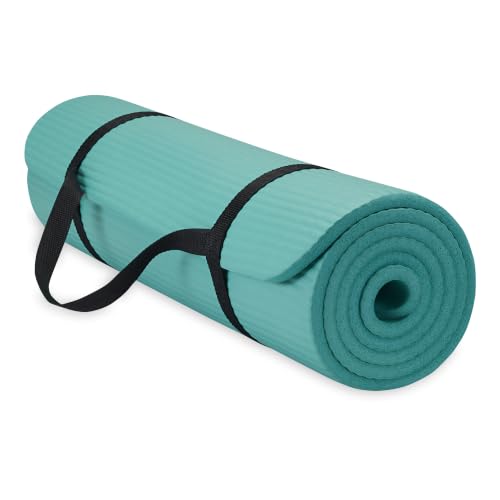
Gaiam Essentials Thick Yoga Mat
What We Like
- 10mm cushioning for joint comfort
- Textured non-slip surface
- Lightweight with included carrying strap
Trade-offs
- Initial foam odor requires 24-48 hours airing
- Narrower than some mats at 24 inches wide
A 10mm thickness of plush NBR foam makes this mat a natural pick if your knees or hips complain during floor work. That extra cushioning absorbs impact on hard surfaces like tile or wood, so you can hold a low lunge or roll through Pilates hundreds without wincing. It’s light enough at 2.1 pounds to carry from room to room with the included strap, and the textured surface helps keep you planted during dry workouts. For anyone starting out or focusing on low-impact routines, the comfort-first design removes a common barrier: the discomfort of a thin mat on a hard floor.
The 10mm NBR foam cushions joints during floor work, but that softness means less stability for standing balance poses. For comparison, the Manduka PRO’s denser 6mm construction offers a firmer platform, though it weighs 7.5 pounds and costs more. This mat’s 24-inch width is standard, and reviewers note it works well for Pilates, stretching, and recovery routines where comfort is the priority.
Retrospec Solana Extra Thick Mat

What We Like
- 1-inch thick foam cushions joints
- Non-slip surface for steady practice
- Lightweight at 2.2 pounds with strap
- Latex-free and BPA-free materials
Trade-offs
- 24-inch width limits side-to-side movement
The Solana’s 1-inch thickness cushions your knees, hips, hands, and spine against the floor, which helps during poses that put weight on those areas. The non-slip material keeps the mat from sliding on the floor and helps you stay balanced during practice. At 2.2 pounds and with a nylon carrying strap, it’s light enough to take to a studio or store at home.
At 72 inches long, this mat fits average-height users comfortably, but taller folks may find their feet hanging off the end during full-body stretches. The BalanceFrom GoCloud matches the 1-inch thickness and a similar weight, but its 71-inch length is even shorter. For most people, though, the Solana’s cushioning and portability make it a practical choice for regular Pilates and yoga practice.
BalanceFrom GoCloud Extra Thick Mat

What We Like
- 1-inch thick high-density foam cushions joints
- Double-sided non-slip surface for stability
- Moisture-resistant and easy to clean
- Lightweight with included carrying strap
Trade-offs
- 24-inch width is narrower than some mats
- 1-inch thickness makes it bulkier to roll up than thinner mats
A full inch of high-density foam means this mat absorbs impact where it counts, spine, hips, knees, and elbows. So you can hold a tabletop position or roll through a spine stretch without wincing on a hard floor. That extra thickness makes it a natural fit for anyone who wants joint-friendly cushioning during floor-based Pilates or gentle stretching, especially if you’re working on tile or hardwood. The double-sided textured surface helps keep the mat from sliding around as you shift weight, and the moisture-resistant top wipes clean with soap and water, which is handy after a sweaty session.
The trade-off is that generous padding comes in a 24-inch width, which feels snug if you like to spread your arms wide in a star stretch or need extra room for lateral movements. At 2.2 pounds with a carrying strap, it’s easy to take to a studio or stash in a closet.
Product photos
Manduka PRO Yoga and Pilates Mat

What We Like
- Lifetime durability guarantee
- Ultra-dense 6mm joint protection
- Closed-cell surface seals out moisture
Trade-offs
- At 7.5 lb, heavy to carry to class
- 6mm cushioning is thinner than extra-thick mats
- Only 71 inches long for taller practitioners
The trade-off is weight: at 7.5 pounds, this mat is noticeably heavier than the Gaiam Essentials Thick Yoga Mat (2.1 pounds), so it’s less convenient to haul to a gym or studio. The 6mm thickness is firmer than the 10mm or 1-inch cushioning on the BalanceFrom GoCloud or Retrospec Solana mats, which some people prefer for extra padding on hard floors. If your practice involves a lot of floor work and you want a stable, long-lasting surface, the PRO’s density is worth the heft.
Product photos
Gaiam Reversible Yoga Mat

What We Like
- 6mm cushioning for joint comfort
- Non-toxic, 7P-free PVC construction
- Free downloadable yoga workout included
Trade-offs
- Requires 2-3 days to air out initial odor
- At 3.1 lb, heavier than some travel mats
The 6mm thickness on this Gaiam mat hits a sweet spot for Pilates. It provides enough padding to keep your spine and hips comfortable during floor work, but not so thick that you lose stability in balancing poses. That 68-inch length covers most people well, though taller practitioners might find themselves reaching past the edge in long stretches. It’s a lightweight enough mat to carry to class, and the non-toxic 7P-free PVC means you’re not breathing in questionable chemicals while you work out.
The main trade-off here is that initial odor: the mat needs a couple of days to air out before first use, which is a small inconvenience if you’re eager to start. Compared to the 10mm Gaiam Essentials mat, this one is thinner at 6mm versus 10mm, so it offers less cushioning but is lighter and more portable. If you prioritize a reversible design and a non-toxic build over maximum padding, this mat is a practical choice. The included free yoga class is a nice bonus for beginners, too.
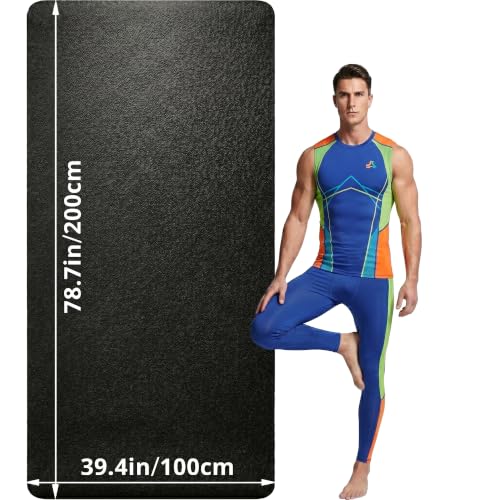
Wimwum Extra Long Yoga Mat
What We Like
- Extra-long 79" length for tall users
- 8mm thick cushioning protects joints
- Lightweight 3.5 lbs with carrying accessories
- Double-sided non-slip grip on hard floors
Trade-offs
- 8mm is thinner than 10mm or 1" mats
- TPE material less durable than PVC
This mat measures 79 inches long and 40 inches wide, giving you extra room to stretch out in wide-legged poses or lie flat without your feet hanging off the edge. The 8mm TPE cushioning protects knees and elbows during floor work, and the double-sided non-slip grip keeps you steady even when things get sweaty. Despite its size, it weighs only 3.5 pounds and comes with carrying accessories, so you can roll it up and take it to the studio easily.
The trade-off here is thickness: 8mm is thinner than the 10mm Gaiam Essentials or the 1-inch BalanceFrom GoCloud mats. So if you have very sensitive joints or plan to do a lot of prone Pilates moves, you might want a thicker layer. There’s also a mild new-mat smell that needs a day or two airing out, common with TPE, but worth knowing if you’re sensitive to scents. Compared to the Manduka PRO (which is heavier at 7.5 pounds and 6mm thick), this Wimwum is a lightweight, budget-friendly alternative that prioritizes portability and generous dimensions.
Product photos
Gruper Eco Friendly Yoga Mat

What We Like
- Eco-friendly TPE material, safer than PVC
- Double-layer anti-skid texture on both sides
- Free carrying strap and storage bag included
Trade-offs
- 6mm thickness offers less cushioning for knees
- Not machine washable; hand-clean only
- Designed for barefoot use only, no shoes or pets
With a carrying strap and storage bag included, this mat is easy to transport to the gym or studio. The TPE material is a thoughtful swap from standard PVC, giving you a softer, more eco-conscious surface that still holds up to Pilates and floor work. If you care about what touches your skin and the planet, this is the sort of simple upgrade that makes daily practice feel a little lighter.
The 6mm thickness works well for most flows and stretches, but if your knees or tailbone are sensitive during kneeling poses or rolling exercises, you might feel the floor more than you’d like. The 10mm Gaiam Essentials mat offers more cushioning, so the Gruper mat has less padding. It’s a smart pick for the eco-conscious mover who values a light carry over extra squish.
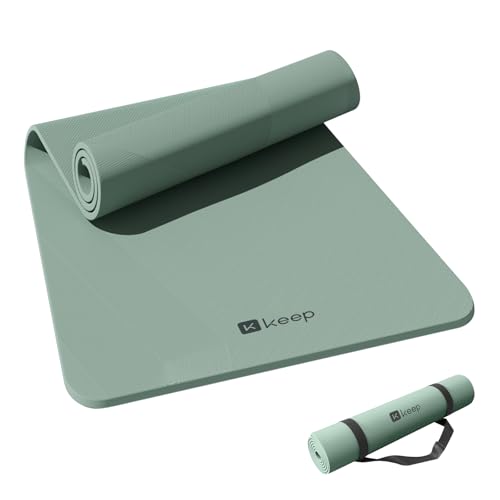
KEEP Non-Slip Large Yoga Mat
What We Like
- Extra-wide 32-inch surface
- Double-sided non-slip texture
- Eco-friendly TPE material
- Lightweight with carrying strap
Trade-offs
- 7 mm padding is thinner than some alternatives
- Requires airing out before first use
At 32 inches wide, this mat gives you noticeably more room than the standard 24-inch models. So you can spread out for wide-legged stretches or side planks without worrying about your hand or foot slipping off the edge. The top layer uses a fingerprint-like anti-slip texture for precise grip, while the bottom layer has a comprehensive anti-slip pattern to stop the mat from shifting on the floor. Made from TPE, it’s a lighter alternative to some other materials, and at under three pounds with a strap included, you can carry it to the gym or yoga class without much effort.
The trade-off for that generous width is that the 7 mm cushioning is thinner than the 10 mm mat from Gaiam Essentials or the 1-inch mats from Retrospec Solana and BalanceFrom GoCloud. If you practice on a hard surface, you might find yourself wanting a little more padding. But for anyone who values room to move and a secure, non-slip surface over maximum plushness, this mat strikes a smart balance.
Product photos
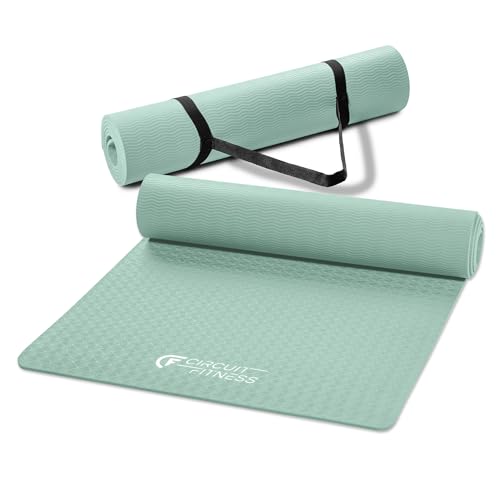
Circuit Fitness by Marcy Exercise Mat
What We Like
- Weighs only 1.5 pounds
- Includes shoulder carry strap
- Closed-cell TPE resists moisture
- Textured grip on both sides
Trade-offs
- 6mm thickness offers less cushioning for bony areas
- TPE material less durable than natural rubber
At just 1.5 pounds with a shoulder carry strap included, this mat is built for people who actually move their gear. The 74-inch length gives taller users a bit more room than standard 72-inch mats, and the closed-cell TPE material means sweat won’t soak in, just wipe it down and roll it up. The dual-sided textured surfaces help it stay put on hardwood or tile, so you are not fighting a slipping mat during floor work or standing balances. If your Pilates routine happens at a studio, a gym, or wherever you can find floor space, the lightness and portability make it a natural grab-and-go companion.
The 6mm thickness keeps the mat light enough to carry anywhere, but you’ll feel the floor more during moves that put pressure on your tailbone or knees. Reviewers who prioritize portability over plushness find this trade-off acceptable. For comparison, the 10mm Gaiam Essentials mat offers more cushioning if you prefer more padding.
Product photos
Fitvids High Density Exercise Mat
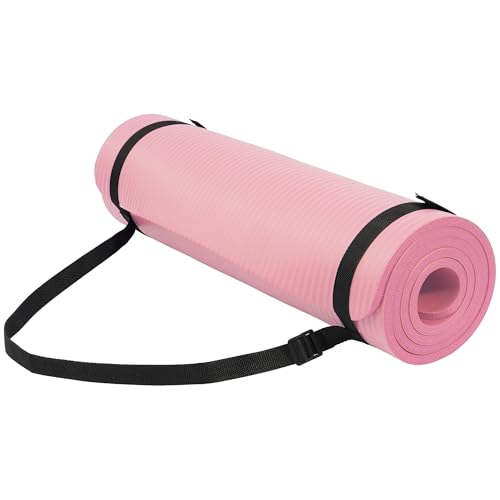
What We Like
- Half-inch thick foam cushions joints
- Double-sided anti-slip for stability
- Moisture-resistant, easy to wipe clean
- Includes carrying strap for portability
Trade-offs
- At 0.5 inches, thinner than 1-inch mats
- Standard 24-inch width limits arm space
A full half-inch of high-density foam sits between you and the floor, which makes a real difference when your knees or tailbone press into a hard surface during Pilates rolling or kneeling moves. That cushioning is the main reason this mat works well for anyone starting out or dealing with sensitive joints, especially if you practice on tile or wood. The double-sided anti-slip surface helps stop the mat from shifting during faster transitions, and the moisture-resistant material means you can wipe it down quickly after a sweaty session. It also comes with a carrying strap, so taking it to a studio or stashing it at home is straightforward.
The half-inch thickness provides noticeable cushioning for joints on hard floors. But it is thinner than the 1-inch Retrospec Solana Extra Thick Mat, which may matter more if you spend long periods on your back or do a lot of floor work. The 24-inch width is standard, while the Manduka PRO offers a 26-inch width for those who prefer extra lateral space. For everyday Pilates and yoga where you want reliable grip and joint comfort, this Fitvids mat delivers the features listed in its specifications.
Product photos
How We Evaluated Pilates Mats
We started with the technical specs that matter most for Pilates: thickness, width, length, weight, and material type. Manufacturer data told us the density of the foam, the dimensions, and whether the surface was textured or smooth. We cross-referenced that with what expert reviews and experienced practitioners say about grip in a sweaty class and durability over months of use.
Three criteria carried the most weight. Thickness came first because Pilates involves lying on your back and side for long stretches, and a mat that is too thin makes bony spots hurt. Width and length mattered next, especially for taller users and anyone who moves their arms and legs out wide during exercises like the Saw or the Roll-Up. Finally, we looked at portability: a mat you dread carrying is a mat you use less often.
This is a research-led evaluation, not a hands-on test. We have not unrolled every mat on a studio floor or sweat through a hundred classes on each one. That honesty helps you make a decision with your eyes open.
What To Look For In Pilates Mats
A Pilates mat is simpler than a reformer or a set of rings, but the wrong one can ruin a session. Focus on the thickness for joint comfort, the width for arm and leg clearance, and the material for grip and longevity.
Choose a mat that is at least 6mm thick for hard floors, 24 inches wide for standard practice, and made from PVC, TPE, or natural rubber depending on your grip and eco-priority.
Thickness and Cushioning
Pilates involves a lot of time on your back, side, and knees. A mat that is too thin transfers every floor imperfection into your spine and hip bones. Most standard mats are 4mm to 6mm thick, which works on carpet but can feel punishing on tile or hardwood. Extra-thick mats at 10mm or even one inch provide serious relief for sensitive joints. The trade-off is bulk: thicker mats are heavier and harder to roll tightly.
Width and Length
Standard Pilates mats are 24 inches wide and 68 to 72 inches long. That fits most people, but if you are tall or like to spread your arms wide during the Hundred or the Saw, you will appreciate an extra-long or extra-wide mat. A 79-inch length keeps your head and heels on the mat. A 32-inch width gives your arms room to reach without touching the floor. The downside is storage: larger mats do not fit neatly into standard yoga mat racks.
Material and Grip
PVC is the most common material because it is durable, grippy, and affordable. It has a strong initial odor that needs a few days to air out. TPE is lighter and more eco-friendly but less durable over time. Natural rubber offers excellent grip but can irritate people with latex allergies. Closed-cell surfaces repel sweat and bacteria, which matters if you practice hot Pilates or use your mat for hot yoga.
A good rule of thumb: if you practice on carpet, a thinner mat works fine. If you practice on hardwood or tile, go for 8mm or more.
Pilates Mats Compared
The table below lays out the ten Pilates mats side by side so you can compare thickness, dimensions, weight, and material at a glance.
| Product | Thickness | Dimensions | Weight | Material | Carrying Strap |
|---|---|---|---|---|---|
| Gaiam Essentials Thick Yoga Mat | 10mm | 72 x 24 in | 2.1 lb | NBR foam | Included |
| Retrospec Solana Extra Thick Mat | 1 inch | 72 x 24 in | 2.2 lb | Latex-free, BPA-free | Nylon carrying strap |
| BalanceFrom GoCloud Extra Thick Mat | 1 inch | 71 x 24 in | 2.2 lb | High-density foam | Included |
| Manduka PRO Yoga and Pilates Mat | 6 mm | 71 x 26 in | 7.5 lb | OEKO-TEX certified PVC | N/A |
| Gaiam Reversible Yoga Mat | 6mm | 68" x 24" | 3.1 lb | PVC (7P free) | Easy-Cinch Strap |
| Wimwum Extra Long Yoga Mat | 8mm | 79" x 40" x 0.3" | 3.5 lbs | TPE | Included |
| Gruper Eco Friendly Yoga Mat | 6mm | 72 x 24 in | 1.7 lb | TPE (eco-friendly) | Included |
| KEEP Non-Slip Large Yoga Mat | 7 mm | 72"Lx32"Wx7mm Thick | 2.8 lbs | TPE | Included |
| Circuit Fitness by Marcy Exercise Mat | 6mm | 74 in x 24 in | 1.5 lb | Closed-cell TPE | Included |
| Fitvids High Density Exercise Mat | 0.5 inches | 71 x 24 in | N/A | High-density foam | Included |
Frequently Asked Questions
What thickness should a Pilates mat be?
For hard floors, look for at least 6mm of cushioning. Many people prefer 10mm or even one inch if you have sensitive knees or hips. Thinner mats around 4mm work on carpet but offer little relief on tile or wood.
How wide does a Pilates mat need to be?
Standard width is 24 inches, which works for most body types. If you are broad-shouldered or like to stretch your arms wide, a 32-inch wide mat like the KEEP Non-Slip Large Yoga Mat gives you more room without your hands sliding off the edge.
Can I use a yoga mat for Pilates?
Yes, any mat labeled for yoga works for Pilates, but the needs differ slightly. Yoga mats tend to be thinner for balance in standing poses, while Pilates mats are thicker for floor work.
How do I clean a Pilates mat?
Most PVC and TPE mats wipe clean with a mild soap and water solution. Avoid machine washing unless the manufacturer says it is safe. Natural rubber mats need a gentler cleaner to avoid breaking down the surface over time.
What is the difference between TPE and PVC mats?
TPE is lighter, more eco-friendly, and often has a softer feel, but it wears out faster than PVC. PVC is more durable and offers better grip on smooth floors, but it has a stronger chemical smell when new and is not recyclable.
The Bottom Line
The Gaiam Essentials Thick Yoga Mat is the best overall pick for most people because it balances thick cushioning, a non-slip surface, and a lightweight design with a carrying strap. It suits beginners and regular practitioners alike who want joint comfort without a heavy mat to haul around.
If your priority is maximum cushioning for sensitive joints, grab the Retrospec Solana Extra Thick Mat or the BalanceFrom GoCloud Extra Thick Mat, both a full inch thick. Tall users should look at the Wimwum Extra Long Yoga Mat, and anyone who wants a studio-grade mat that will last for years should invest in the Manduka PRO Yoga and Pilates Mat.
The single most important factor is thickness. A mat that protects your spine and hips on a hard floor will keep you coming back to your mat. Everything else, width, weight, material, is a close second that depends on your body and where you practice.
