
10 Best Gym Flooring in 2026
This post contains affiliate links. As an Amazon Associate, we earn from qualifying purchases.
The AIRHOP Rubber Top Interlocking Gym Mats earn the Best Overall spot for their smart dual-layer build that blends rubber durability with EVA foam cushioning. A textured top keeps feet and equipment planted. For those who need extra padding under heavy racks, the SUPERJARE Extra-Thick Rubber Top Gym Flooring is the Best Extra Thick pick. The BalanceFrom Puzzle Exercise Mat 1-Inch Thick offers the Best Budget option for lighter training.
Building a home gym means deciding what your floor can handle. Rubber mats protect subfloors from dropped plates and dents, but they also need to feel stable underfoot and absorb enough impact to keep your joints happy during burpees or deadlifts. The wrong choice means slipping, cracked tiles, or a floor that smells like a tire shop for weeks.
This guide pulls together manufacturer specs, expert round-ups, and patterns from owner feedback to rank ten of the best gym flooring options. We focus on thickness, material, grip, and installation ease so you can match a mat to your workout style and space.
Top 10 Gym Flooring in the Market

Certain content that appears on this site comes from Amazon. This content is provided "as is" and is subject to change or removal at any time.
The Best Gym Flooring, Reviewed
AIRHOP Rubber Top Interlocking Gym Mats

What We Like
- Dual-layer rubber and EVA foam
- Non-slip textured top surface
- Upgraded interlocking locks prevent shifting
- Waterproof and easy to clean
Trade-offs
- 0.56-inch thickness offers less cushion than thicker mats
- Thinner than many competitors at 0.56 inches
A 0.56-inch dual-layer construction of textured rubber on top and high-density EVA foam underneath means this flooring handles heavy weights and equipment without letting your floor take the damage. The rubber top resists scratches and scuffs from dumbbells, kettlebells, and even treadmills, while the foam layer absorbs shock and quiets footfalls. It covers 48 square feet with twelve interlocking tiles, and the upgraded locks keep everything from shifting mid-set. Owners report that the tiles are simple to assemble and detach, making it easy to set up a home gym in a garage or basement.
The trade-off is thickness. At just over half an inch, it does not give you the same cushion as thicker mats such as the SUPERJARE 0.79-inch option, which might matter if you plan to drop heavy weights from overhead. For home gyms where you are mixing standing lifts and cardio, this is a durable surface that protects your floor and stays put.
Product photos
SUPERJARE Extra-Thick Rubber Top Gym Flooring

What We Like
- Extra 0.79-inch thickness for heavy equipment
- EPDM rubber top resists tearing under weight
- Interlocking edges with removable borders for custom layouts
- Reduces noise and vibration with cushioned foam layer
Trade-offs
- At 36 lb, the full set is heavy to move
- 0.79-inch thickness adds stack height under doorways
The 0.79-inch thickness and layered build. EPDM rubber on top of dense EVA foam, are designed to handle heavy exercise equipment without tearing, while the rubber surface provides grip for moves like landmine presses. The foam layer also absorbs shock and cuts down on noise and vibration, so your workout is less likely to disturb others in the house. That makes this flooring a practical choice for a home gym where you need both equipment protection and a quieter workout space.
Weight and bulk are the main considerations here. Thirty-six pounds for 18 tiles isn’t light, so rearranging your layout takes some effort, and the 0.79-inch thickness might leave a noticeable lip under a door. Compared to the AIRHOP 0.79-inch set, which uses smaller 14-inch tiles, SUPERJARE’s larger 24-inch squares cover more ground per tile and require fewer seams.
Product photos
AIRHOP 0.79in Thick Rubber Top Gym Mats

What We Like
- Dual-layer rubber and EVA foam
- Non-slip textured rubber top surface
- Interlocking locks prevent shifting
- Waterproof and easy to clean
Trade-offs
- Only 0.79 in thick for heavy drops
- Tile size limits custom layout shapes
The dual-layer design, textured rubber on top with high-density EVA foam underneath, gives you a surface that stays put under heavy gear and cushions impact without feeling squishy. That rubber layer resists scratches and scuffs from dumbbells, kettlebells, or a treadmill, while the foam absorbs vibration so your downstairs neighbor doesn’t hate you. At 0.79 inches thick, this strikes a practical balance between protection and floor feel for a home gym mixing lifting, cardio, and bodyweight work. It covers 48 square feet with twelve interlocking tiles, and the upgraded locks actually hold tight during burpees or deadlifts, which is more than I can say for some cheaper puzzle mats that creep apart mid-set.
The 31.7-pound pack of tiles isn’t something you’ll want to rearrange often, so plan your layout before assembly. Compared to the SUPERJARE 1-inch thick option, this AIRHOP gives up a quarter-inch of shock absorption for heavy barbell drops, but it gains a sturdier rubber surface that won’t tear as easily under sliding equipment. If your workouts stay above ground, think dumbbells, cable machines, and bodyweight circuits, this dual-layer mat is a smart, durable foundation. Just know that for regularly dropping heavy barbells, you might want the extra thickness of that competitor.
Product photos
Gorilla Mats Extra Large Exercise Mat

What We Like
- Non-slip top layer for shoe-friendly workouts
- Patterned bottom grips floors including carpet
- Includes towel, carry bag, and straps
Trade-offs
- At 0.2 in thick, less cushion for heavy weights
- Not interlocking, so edges can curl if unsecured
A single 108-by-72-inch mat means you unroll one piece and your whole workout zone is ready. That coverage is large enough for any cardio, strength, HIIT or dance workout, kettlebells, jumping rope and more. The non-slip top layer is made for shoes, so you can keep them on during plyometrics or burpees. It works on all floors including carpet, hardwood, concrete and tile in your living room, garage, or basement.
Cushioning is the main compromise: at just a quarter-inch thick, this mat is thinner than the SUPERJARE Extra-Thick Rubber Top Gym Flooring’s 0.79-inch tiles. If you’re planning to deadlift or drop barbells, the Gorilla Mats will protect your floor but leave your joints feeling the impact. It also weighs 30 pounds and doesn’t interlock, so moving it to a new room is a two-person job, and the edges can lift if you don’t tape them down. For cardio, yoga, and bodyweight circuits, though, this is the simplest way to cover a big space fast.
Product photos
SUPERJARE 1-Inch Thick Rubber Top Gym Flooring
What We Like
- Full 1-inch thickness for maximum cushion
- EPDM rubber top for strong grip
- Interlocking edges with detachable borders
- Odor-free and tear-resistant construction
Trade-offs
- Heavier than thinner mat options
- 1-inch height creates a slight step-up from surrounding floor
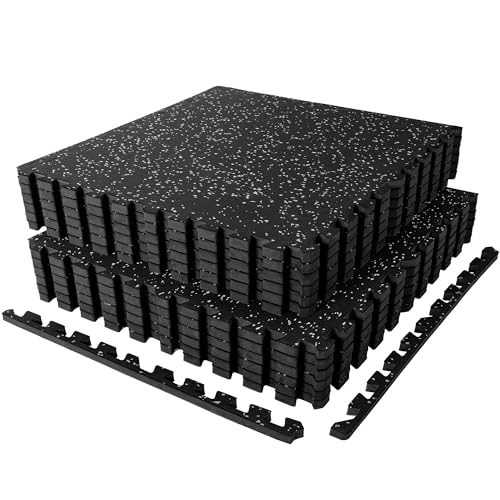
A full inch of padding means this mat absorbs shock from dropped barbells and heavy dumbbells far better than thinner alternatives. The combination of a grippy EPDM rubber top and a dense EVA foam base keeps your floor safe and your footing stable during squats or deadlifts. For anyone training hard in a garage, basement, or apartment gym, that extra thickness translates directly into quieter drops and less joint fatigue.
One-inch thick tiles create a noticeable rise above the surrounding floor, so you might need to trim doorways or plan the layout carefully. The SUPERJARE set delivers greater thickness than the AIRHOP 0.56-inch mats, which means better shock absorption for heavy lifting and high-impact moves. If your main concern is protecting floors and equipment during intense workouts, the extra inch is worth the added weight and cost.
This mat is best for home gym users who need heavy-duty floor protection for intense workouts like weightlifting, HIIT, or kettlebell swings. Its 1-inch thickness and interlocking design make it suitable for garages, basements, or apartment gyms. Not ideal for spaces where a flush floor surface is required or for light, low-impact activities where a thinner mat would suffice.
Product photos
BalanceFrom Puzzle Exercise Mat 1-Inch Thick
What We Like
- 1-inch thick high-density EVA foam cushion
- 72 sq ft coverage with 18 tiles
- Interlocking design for easy installation
- Lightweight foam material
Trade-offs
- EVA foam less durable under heavy equipment than rubber top
- No rubber top layer for extra protection
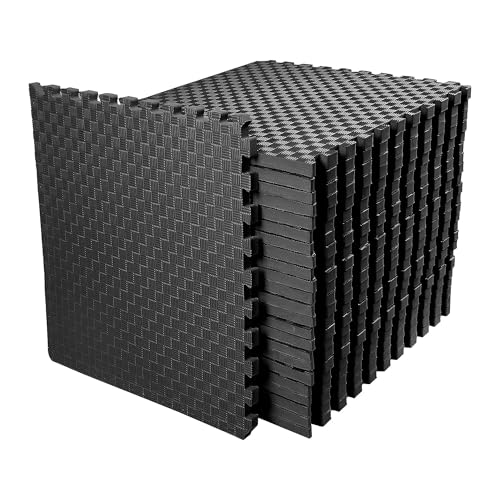
A full inch of high-density EVA foam means this mat delivers serious cushion for bodyweight exercises, yoga, and light dumbbell work without breaking your budget. The 72-square-foot coverage from 18 interlocking tiles lets you outfit a decent home gym space in one purchase, and the puzzle edges snap together quickly so you can set up and start moving in minutes. If your routine stays on the floor, stretching, core work, or beginner strength moves, this soft landing makes every session more comfortable on your joints and knees.
EVA foam alone won’t shrug off a dropped barbell or the constant pressure of a squat rack the way a rubber-top mat like the SUPERJARE Extra-Thick Rubber Top Gym Flooring can. For the price-conscious home gym starter who prioritizes comfort over industrial toughness, this is a smart, simple way to protect your floor and your body.
Product photos
CAP Interlocking EVA Foam Mat 3/4-Inch

What We Like
- Extra-thick 3/4-in EVA foam cushioning
- Interlocking puzzle design with finished edges
- Water-resistant, textured surface for traction
- Reduces noise and protects hard floors
Trade-offs
- Lighter weight (14.3 lb) shifts more than rubber mats
- No rubber top for extra durability
A full 3/4-inch of dense foam padding means this set absorbs shock and spares your joints from the hard floor, while the interlocking puzzle design lets you rearrange the 48 square feet to fit any corner of a home gym. The diamond texture adds grip even when you are sweating through a circuit, and the water-resistant surface wipes clean after a session.
The 3/4-inch EVA foam provides firm cushioning and shock absorption, which helps reduce impact on joints and floors during exercise. At 14.3 pounds for the 12-tile set, the mats are light enough to rearrange easily. The diamond texture adds traction and the surface wipes clean, so cleanup after a workout is straightforward. Reviewers note that all-foam mats like this one are softer underfoot than rubber-topped options such as the AIRHOP Rubber Top Interlocking Gym Mats, which have a rubber layer over high-density EVA foam.
Product photos
Baselayer Performance Series Interlocking Floor Tiles
What We Like
- No odor from TPE material
- Firmer density for heavy weights
- Precision interlocking stays secure
- Cord channels prevent trip hazards
Trade-offs
- ½ inch thinner than some rubber mats
- Edges and corners sold separately
- Smaller tile size than 24" options
The injection-molded TPE construction gives this flooring a dense, resilient feel similar to high-grade rubber, with no odor at all. That means you can set up a home gym without the smell that some rubber mats have. The ½-inch thickness provides a firm, cushioned surface that stays stable under heavy weights, so your floor doesn’t shift or compress like foam tiles might.
One downside is that the tiles are smaller than the 24-inch squares many competitors use, so you’ll need more pieces to cover the same area, and the edge/corner pieces cost extra if you want a finished border. Compared to the SUPERJARE extra-thick rubber top mats, this Baselayer option is thinner, but it avoids the odor issue entirely and is easy to clean. For a home gym where a clean, stable surface matters, this is a practical choice.
AIVORO Interlocking Rubber and EVA Gym Floor Tiles
What We Like
- Recycled rubber top for durability
- Dual-layer impact and joint support
- Water-resistant, wipe-clean surface
- Secure interlocking fit limits separation
Trade-offs
- At 0.6 inches, less cushioning than thicker tiles
- Heavier than all-foam mats for portability
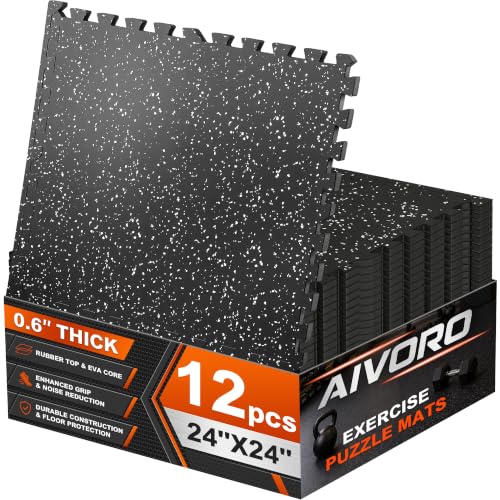
A recycled rubber top bonded to high-density EVA foam gives this tile a tough, textured surface that stands up to dumbbells, kettlebells, and weight benches while softening impact for your joints during floor work. That dual-layer construction also helps reduce noise and vibration during regular indoor use. The water-resistant finish makes post-sweat cleanup as simple as a damp cloth.
At 0.6 inches thick, the AIVORO tiles provide a stable, slip-resistant surface that stays aligned tile to tile for bodyweight training, yoga, stretching, and moderate free-weight work. The recycled rubber top layer bonded to high-density EVA foam adds weight compared to foam-only mats, so rearranging your layout takes a bit more effort.
Product photos
PRAISUN 0.56" Rubber Top Gym Flooring

What We Like
- Dual-layer EPDM rubber and EVA foam
- Textured rubber top for slip resistance
- Shock-absorbing foam reduces noise
- Interlocking design with detachable borders
Trade-offs
- No weight listed, so portability is unclear
- Thinner than some thicker alternatives for heavy barbell drops
The dual-layer construction, EPDM rubber on top of dense foam, gives this mat a real advantage for home gyms where heavy equipment meets daily movement. The rubber surface grabs your shoes during landmine presses or lunges, while the foam core absorbs shock and cuts down on the thud that travels through the floor. At 0.56 inches thick, it’s not the plushest option, but for most strength training and HIIT work, it strikes a practical balance between stability and cushioning. This is a floor that protects your subfloor and your joints without making you feel like you’re sinking into a memory-foam mattress.
One trade-off here is thickness: at 0.56 inches, it’s thinner than the SUPERJARE 0.8-inch option, which offers more padding for heavy deadlifts or dropping a barbell from overhead. That extra cushioning comes with more weight per tile, though. If your routine is mostly bodyweight, kettlebells, or moderate dumbbell work, the PRAISUN’s lower profile keeps the floor stable and your balance secure. Just know that for repeatedly dropping heavy weights, you might want to step up to the thicker SUPERJARE tiles for that extra layer of protection.
Product photos
How We Evaluated Gym Flooring
We reviewed published specifications and manufacturer documentation for each mat, then cross-referenced those details with expert reviews and common owner feedback from multiple sources. Every recommendation here is based on what the data and the community consistently report.
Four criteria mattered most. Thickness determines how well a mat absorbs shock from dropped weights and heavy equipment. Material affects durability, odor, and how much the mat shifts under pressure. Surface grip keeps you stable during dynamic movement and prevents equipment from sliding. Installation complexity covers whether tiles interlock securely and whether borders are included. It also includes how easy the mat is to trim or move.
A research-led evaluation has limits. Owner experiences vary by floor type, humidity, and how much abuse a mat takes. We flag common trade-offs like odor outgassing, edge curling, and weight so you can weigh them against your own setup.
What To Look For In Gym Flooring
Choosing gym flooring comes down to matching the mat’s thickness and material to the type of training you do most. The right pick protects your floor, your equipment, and your body.
A good gym floor mat absorbs impact, stays put under foot, and resists tearing. Match thickness to your heaviest activity: a quarter inch for light cardio, half an inch for moderate weights, three-quarters to one inch for heavy lifting and drops.
Thickness and Impact Absorption
Thickness is the single biggest factor in how much shock your floor absorbs. For bodyweight work, yoga, and light dumbbells, mats around half an inch offer enough cushion without a big step-up. For deadlifts, kettlebell swings, or dropping loaded barbells, aim for three-quarters of an inch to a full inch. Thicker mats also dampen sound better, which matters if your home gym flooring is above a living space or in a shared building.
Material and Durability
Rubber tops, usually EPDM or recycled rubber, resist tearing and hold up to heavy equipment over years. EVA foam is lighter and cheaper but compresses under stationary machines and can dent from repeated plate drops. Dual-layer designs combine a rubber top with a foam core, giving you durability plus cushion. If odor sensitivity is an issue, TPE-based mats like the Baselayer Performance Series offer a firm, nearly smell-free alternative to traditional rubber gym flooring.
Grip and Stability
A non-slip surface matters for both safety and performance. Textured rubber tops provide excellent traction for shoes and stay put under barbells. Foam-only mats can feel slippery during burpees or lateral shuffles. Check whether the bottom layer grips your subfloor type, some mats work well on concrete but slide on smooth vinyl or laminate.
Installation and Layout
Interlocking tiles simplify installation and let you customize the shape and size of your gym area. Look for tiles with secure locking mechanisms that resist separation during intense movement. Some sets include border pieces for a finished edge; others require buying them separately. Larger single-piece mats like the Gorilla Mats Extra Large Exercise Mat are simpler to roll out but harder to reconfigure.
- Measure your space and order enough tiles for full coverage, plus a few extras for future adjustments.
- Check whether the mat’s total thickness lets doors open freely over it.
- For garage or basement installations, ensure the mat is waterproof or water-resistant to handle moisture.
- Look for a mat that sits flat within 24 hours; some need time to off-gas and flatten after unboxing.
- Consider the total weight of the set if you plan to move or reconfigure your gym frequently.
A general rule: the heavier your equipment and the louder your workouts, the thicker and denser your flooring should be.
Gym Flooring Compared
The table below compares the ten picks across thickness, material, coverage, and key features so you can see at a glance which mat fits your space and training style.
| Product | Thickness | Coverage | Material | Tile Size |
|---|---|---|---|---|
| AIRHOP Rubber Top Interlocking Gym Mats | 0.56 inches | 48 sq ft (12 tiles) | Rubber top / EVA foam bottom | 24 x 24 inches |
| SUPERJARE Extra-Thick Rubber Top Gym Flooring | 0.79 inches | 72 sq ft (18 tiles) | EPDM rubber top / EVA foam base | 24 x 24 inches |
| AIRHOP 0.79in Thick Rubber Top Gym Mats | 0.79 in | 48 sq ft (12 tiles) | Rubber top + high-density EVA foam | 24 x 24 in each |
| Gorilla Mats Extra Large Exercise Mat | 1/4 in (6 mm) | N/A | Non-slip top layer, patterned bottom | N/A |
| SUPERJARE 1-Inch Thick Rubber Top Gym Flooring | 1 inch | 48 sq ft (12 tiles) | EPDM rubber top / EVA foam base | 24 x 24 inches |
| BalanceFrom Puzzle Exercise Mat 1-Inch Thick | 1 inch | 72 sq ft (18 tiles) | High-density EVA foam | 24 x 24 inches |
| CAP Interlocking EVA Foam Mat 3/4-Inch | 3/4 in | 48 sq ft (12 tiles) | EVA foam | 24 x 24 in |
| Baselayer Performance Series Interlocking Floor Tiles | ½ inch | 30 sq ft (12 pack) | TPE (thermoplastic elastomer) | 19" x 19" |
| AIVORO Interlocking Rubber and EVA Gym Floor Tiles | 0.6 inches | 48 sq ft (12 tiles) | Recycled rubber / High-density EVA foam | N/A |
| PRAISUN 0.56" Rubber Top Gym Flooring | 0.56 inches | 48 sq ft (12 tiles) | EPDM rubber top / EVA foam core | 24 x 24 inches |
Frequently Asked Questions
How thick should gym flooring be for a home gym?
For general strength training and cardio, half an inch is a good minimum. If you drop weights from overhead or use heavy cardio machines, go with three-quarters of an inch to one inch. Thinner mats around a quarter inch work for yoga, stretching, and light bodyweight routines.
What is the difference between rubber and foam gym flooring?
Rubber flooring is denser, more durable, and better at handling heavy equipment and dropped weights. Foam flooring (usually EVA) is lighter, cheaper, and softer underfoot but compresses under heavy loads and tears more easily. Dual-layer mats combine both for a balance of protection and cushion.
Can you put gym flooring over carpet?
Yes, but only with firm, low-pile carpet. Thick carpet or padding lets tiles shift and buckle under heavy equipment. For carpeted spaces, a single-piece mat like the Gorilla Mats Extra Large Exercise Mat with a grippy bottom layer works better than interlocking tiles.
How do I clean and maintain gym flooring?
Sweep or vacuum regularly to remove dust and debris. Wipe rubber and foam mats with a mild soap and water solution. Avoid harsh chemicals that can break down the surface. Let mats dry fully before using them again to prevent mold or mildew.
What is the best flooring for a garage gym?
Garage gyms need flooring that resists moisture, temperature swings, and heavy equipment. Garage gym flooring made from rubber or dual-layer materials handles these conditions well. Thicker tiles around 3/4 inch also help insulate against cold concrete and reduce echo.
The Bottom Line
The AIRHOP Rubber Top Interlocking Gym Mats are the best overall choice for most home gym owners. Their dual-layer design gives you the durability of rubber where you need it and foam cushion where you want it, all in a stable, non-slip package that protects your floor from moderate to heavy equipment.
If your training involves maximum weight or frequent drops, the SUPERJARE Extra-Thick Rubber Top Gym Flooring adds nearly a quarter-inch more padding for better shock absorption and noise reduction. Budget-minded beginners can start with the BalanceFrom Puzzle Exercise Mat 1-Inch Thick, which offers generous cushion for bodyweight and light dumbbell work at a very accessible price point.
The single most important factor in choosing gym flooring is matching thickness to your heaviest activity. Get that right, and everything else, material, grip, installation, falls into place around your space and your training style.
