How to Do Step Ups: Form, Box Height, and Sets
This post contains affiliate links. As an Amazon Associate, we earn from qualifying purchases.
To do step ups, put one whole foot on a box, keep the knee tracking over the toes, and drive through the heel until the standing leg is straight, then lower under control. Box height, tempo, and knee tracking decide whether the movement builds your legs or irritates your knees.
The box is the variable that decides everything else. Set it too high and the hip runs out of room, so the low back arches to finish the rep and the trailing foot takes over. Set it low and the movement turns into a lunge that never reaches full hip extension. This is why learning how to do step ups properly starts with choosing the right box height.
What follows covers box height, the five cues I run through before adding weight, the three faults that show up as knee pain, and how to program step ups so they fit around the rest of your week.
Key Takeaways
- Set the box so the top sits level with your kneecap. Higher than that and the low back finishes the rep instead of the leg.
- The trailing foot balances, it does not push. Any scuff or shove off the back foot means the stance leg is doing less work.
- Three sets of six to eight per leg is a solid default, and you stop two reps short of failure rather than grinding out the last one.
- Knee cave and heel lift are load problems. Drop the weight before you change the exercise.
- Pair step ups with a squat and a hinge in the same session, so the single-leg work supports the rest of your training instead of replacing it.
What Step Ups Actually Train
Step ups are a single-leg squat pattern. The leg on the box does the job a barbell squat gives both legs at once, and the other leg mostly balances.
A step up loads one leg through a full squat pattern while the trailing leg only assists balance. Hip and knee extension on the box leg raise the body’s center of mass; the trailing foot supplies balance, not drive. Reducing push-off from the trailing foot shifts the work onto the stance leg.
That single-leg demand is the whole point. The squat pattern trains both legs together, which means the stronger side quietly covers for the weaker one. Step ups remove that option. Each leg has to hold its own line, and the hip stabilizers on the stance side get real work they never see during a bilateral set.
There is also a balance component that carries over to everything else. Stairs, curbs, getting out of a low car. The stance leg has to control the descent while the trunk stays stacked, and that control is what most people lose first as they age.
I spent years treating step ups as a warm-up filler. They are not filler.
How High Should the Box Be?
Knee height, no higher. Put your foot on the box and look at where the top edge sits relative to your kneecap. If the box is at or just below that line, the hip has room to reach full extension with a flat foot.
Go above it and the geometry changes. The hip runs out of range before the leg finishes, so the pelvis tilts and the low back arches to complete the rep. The trailing foot starts pushing off because the stance leg physically cannot finish alone.
| Goal | Box height | What changes |
|---|---|---|
| Learning the pattern | Mid-shin to just below the knee | Short range, easy to control |
| General leg strength | Level with the kneecap | Full hip extension, flat foot |
| Glute emphasis | Kneecap height plus a pause at the top | Longer time under tension |
| Conditioning | Kneecap height, quicker tempo | Breathing hard before the leg quits |
Start smaller than you think you need to. A low box that you control beats a high box that controls you, and the how to do step ups question gets answered before you add range.
Common mistake: Stacking a riser under the box in week one because it looks more impressive. The heel lifts, the knee drifts forward, and by the third session the front of the kneecap is sore on stairs.
If you train at home, an adjustable step platform solves the height problem better than a stack of books, and the best step platform options hold their height under load instead of flexing.
The Five Cues I Run Through Before Adding Weight
Five things happen in this order: foot, knee, hip, ribs, breath. Run them in sequence on every rep until the sequence runs itself.
- Plant the whole foot, heel included. If the heel hangs off the edge, the calf takes the load and the knee drifts forward over the toes.
- Track the knee over the middle toes. A knee that caves inward puts shear through the joint on every single rep, and the soreness shows up the next morning.
- Drive through the heel and finish tall. Skip the finish and the glute never fully contracts, so the quad does the work and the hip stays untrained.
- Stack the ribs over the pelvis. Arching the low back to reach the top moves the work off the leg and onto the spine.
- Lower for a slow two count. Dropping fast skips the eccentric, which is where most of the strength gain actually lives.
The descent deserves its own attention. Most people treat the way down as a reset before the next rep. It is half the exercise, and it is the half that builds the control you actually use on a staircase when you compare a how to do step ups.
Why Do Step Ups Hurt My Knees?
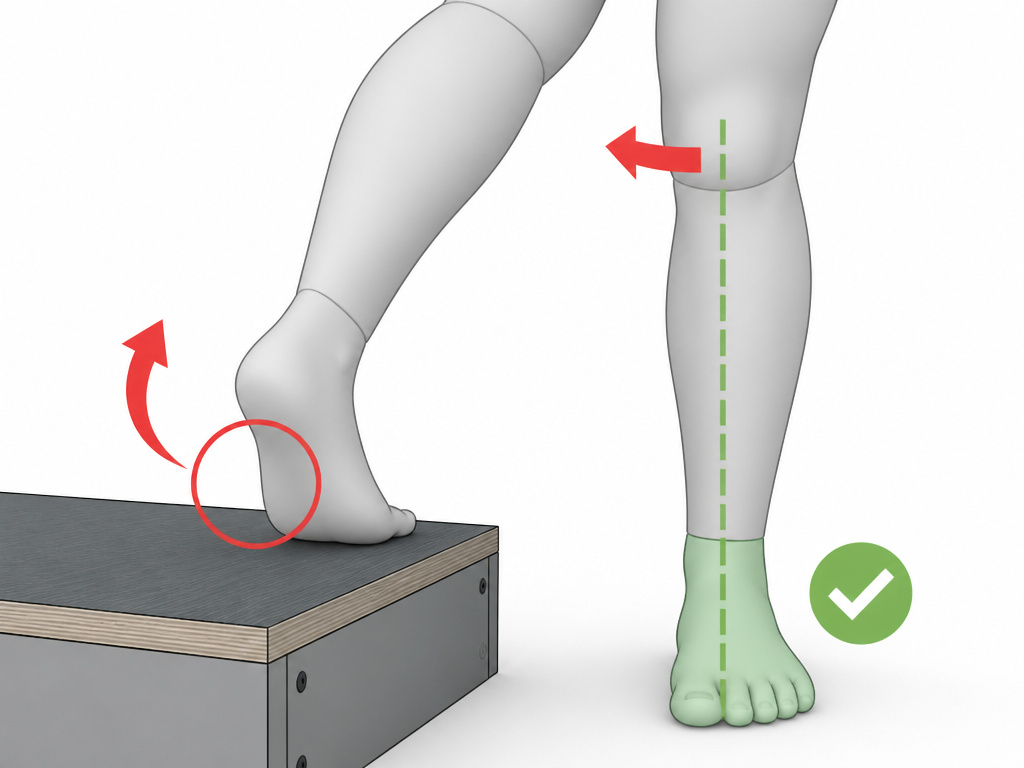
Knee pain during step ups starts at the foot. A heel that lifts or a knee that drifts inward changes the angle the joint travels through, and the front of the kneecap takes the load instead of the whole leg.
The Heel Lifts Off the Box
A lifted heel means the box is too high or the ankle is stiff. The calf shortens and the knee travels forward, which loads the patellar tendon on every rep. Lower the box first. If the heel still lifts, work ankle mobility before you add load back.
The Knee Caves Inward
The knee caving toward the midline is a hip control problem. The glute on the stance side is not holding the femur in line, and the joint absorbs the wobble. Drop the dumbbells and do the set with a hand on the outside of the knee as a physical reminder.
The Low Back Arches at the Top
Arching to finish tells you the hip ran out of extension. Either the box is too tall or the hip flexors are tight enough to block the last few degrees. Lower the box and see whether the arch disappears.
A quiet foot on the box is the tell. When the stance leg is doing the work, the foot lands flat and silent. When the trailing foot pushes off, you hear a scuff against the box surface on every rep.
Easy to miss: A step up that feels fine in the set and leaves the front of the knee aching on stairs two days later. That delay is the signal to film one set from the side before you add weight again.
How Many Sets and Reps Should You Do?
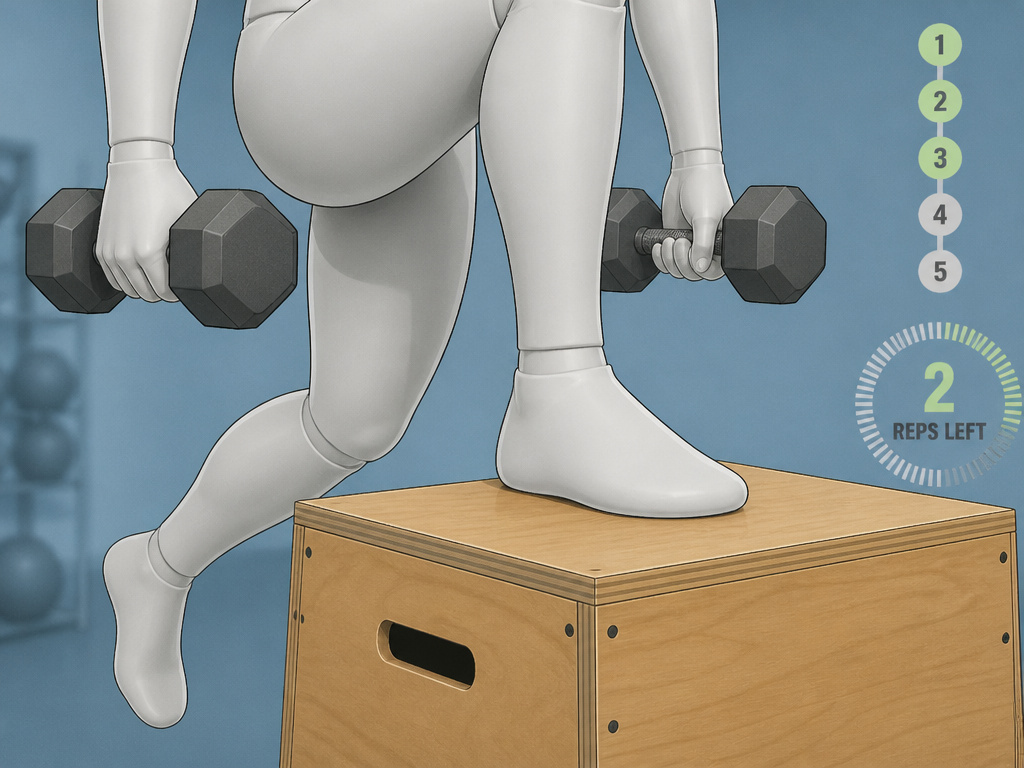
Three sets of six to eight per leg is plenty for most people, and the last rep should still look like the first. My default is to stop two reps short of failure, because grinding out a sloppy final rep teaches your body a pattern you then have to unlearn.
If the last two reps of a set look different from the first two, the set was over two reps ago. Stop on the rep that still looks clean and add load next week instead.
Three ways to program them:
- Strength: three sets of six to eight per leg with dumbbells, stopping two reps short of failure.
- Balance: two sets of eight, pause at the top, no weight.
- Conditioning: three rounds of ten per leg with short rest, and you’ll be breathing hard by round two.
Notice that none of these chase soreness. Leg day shouldn’t be a punishment. Two moderate sessions a week with clean technique beat one brutal session that leaves you walking funny until Thursday.
Step Ups vs Split Squats vs Reverse Lunges
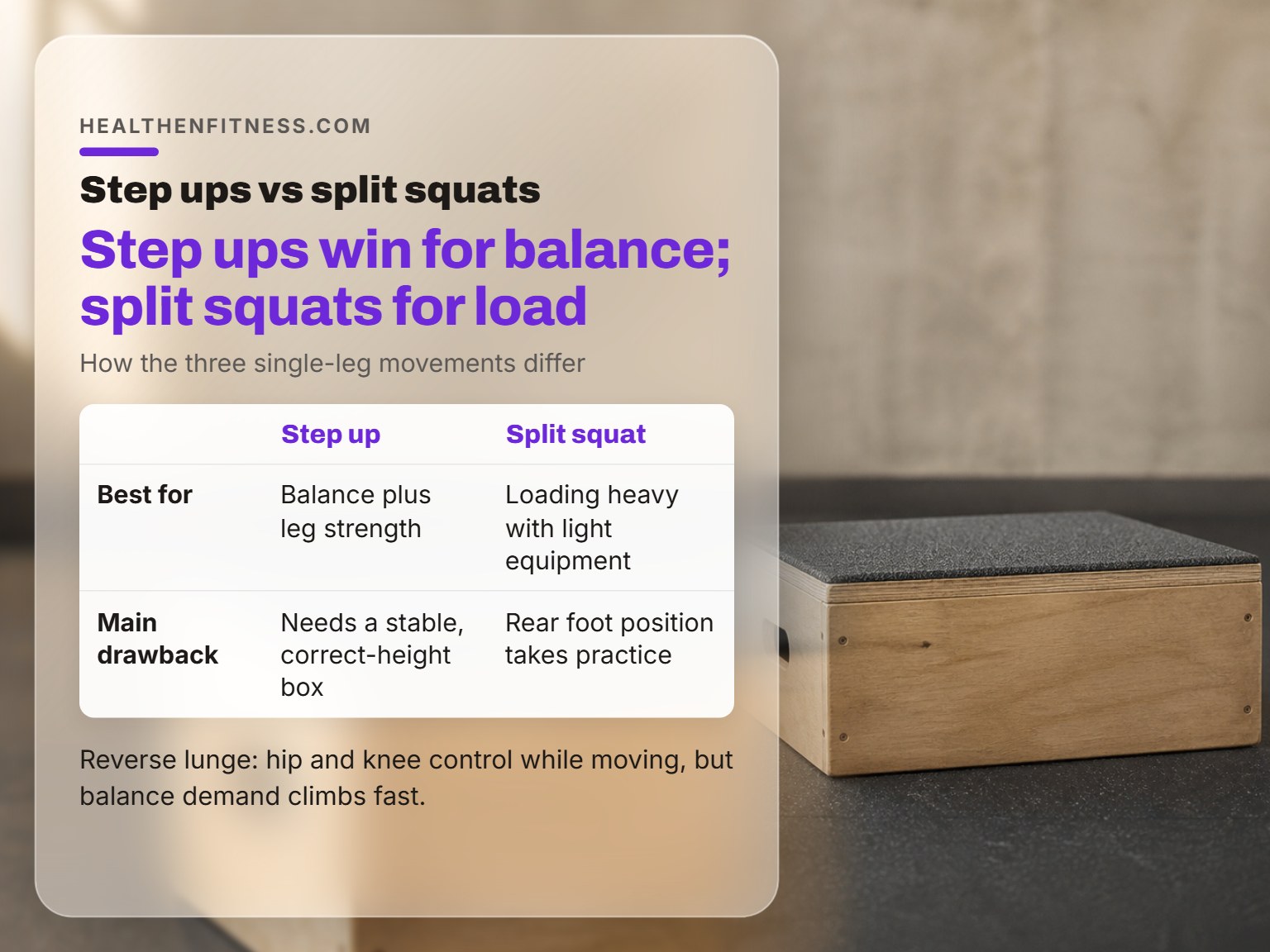
If balance is the goal, step ups win. If raw leg strength with less balance demand is the goal, the split squat wins.
| Movement | Best for | Main drawback |
|---|---|---|
| Step up | Balance plus leg strength | Needs a stable, correct-height box |
| Split squat | Loading heavy with light equipment | Rear foot position takes practice |
| Reverse lunge | Hip and knee control while moving | Balance demand climbs fast |
The Bulgarian split squat sits at the harder end of that family. Elevating the rear foot loads the front leg harder than a step up, and it does it without a box to drive off. If you have never done one, start with a low rear-foot elevation and expect the balance to be the limiting factor for the first few sessions.
Reverse lunges cover the moving version. They train the same single-leg pattern with a step back instead of a step up, which suits anyone whose knees complain about stepping onto a raised surface.
My honest take: step ups and split squats do most of the work, and the lunge variation is the one you rotate in when you get bored. Leg extensions and leg curls as your main leg builders are the thing I’d skip for a beginner. They isolate a muscle and skip the balance and coordination that make the leg useful.
How to Load Step Ups Without Wrecking Your Week
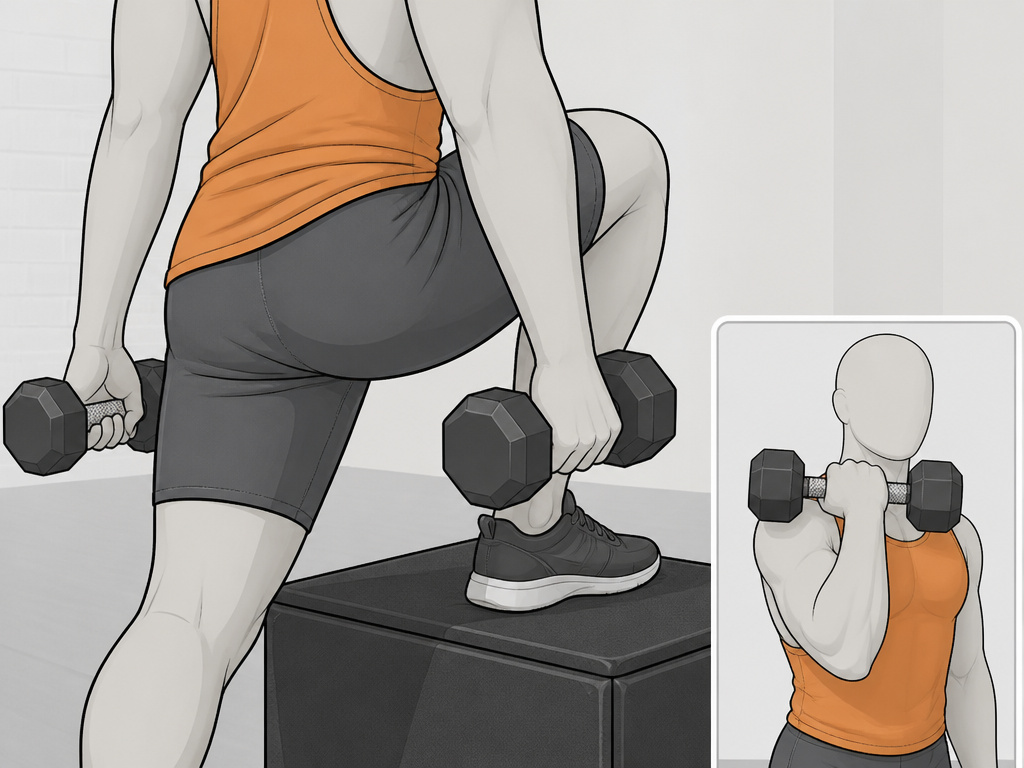
Dumbbells held at the sides are the simplest load, and a Rogue plyo box or a Rep Fitness plyo box handles the height without flexing underfoot. Add weight only after eight clean bodyweight reps per leg.
Three ways to add load:
- Add a pair of Rogue dumbbells at the sides first, since the load sits close to the body and the balance demand barely changes.
- Move to a front-racked position with one dumbbell at the chest, which shifts the challenge onto the trunk.
- Wear a weighted vest only after the bodyweight version is clean for eight reps per leg, and only if you already own one.
Keep the weekly volume honest. If you squat on Monday, a set of step ups on Wednesday and again on Saturday is enough to build the pattern without burying your legs. Progressive overload works like seasoning a pot of soup: a pinch at a time, tasted as you go, because you cannot take the salt back out.
That is the argument for adding a rep or a small amount of weight each week rather than jumping to the heaviest dumbbells on the rack. The leg strengthening exercises that hold up over years are the ones you can recover from.
Making Step Ups Harder Without Any Weight
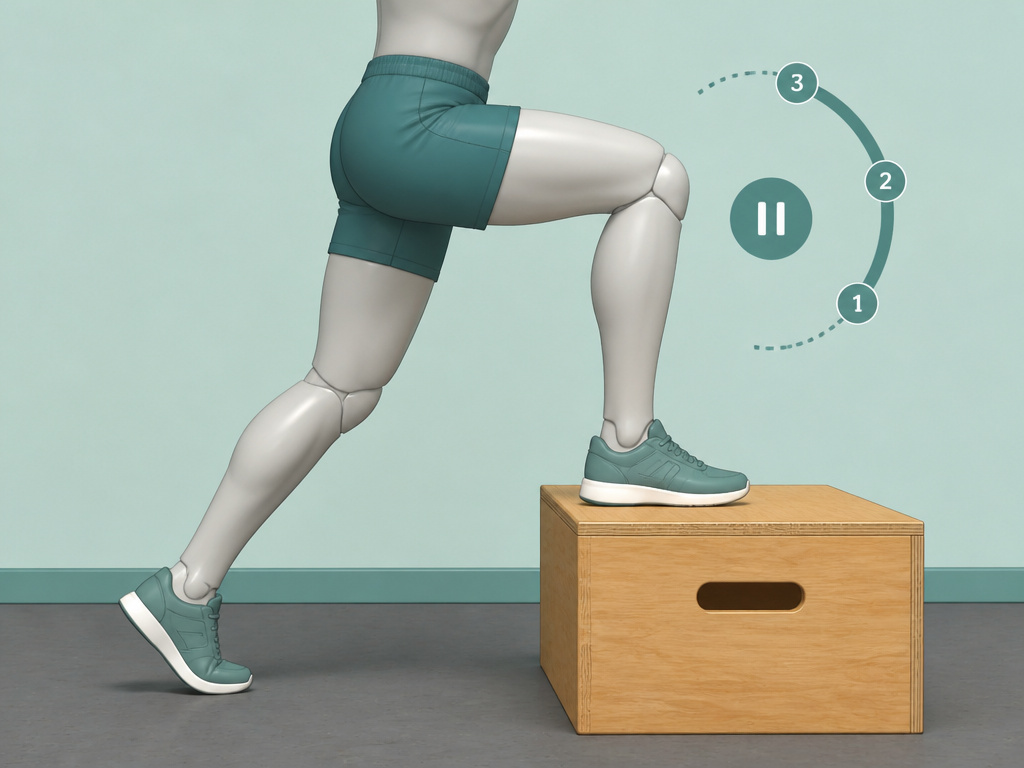
Stuck with a low box and nothing to hold? Tempo and range will keep you busy for months.
Slow the descent to three seconds and pause for a full second at the bottom with the trailing toe just touching the floor. That single change makes a bodyweight step up feel like a different exercise, and it builds the control that carries into bodyweight progression across the rest of your training.
I’ve watched people add weight to a step up they couldn’t control at bodyweight. The extra load just made the wobble heavier.
Two more options that cost nothing: raise the box by one increment and accept fewer reps, or add a two-second hold at the top with the standing leg locked. Both are harder than they sound.
If you want the same single-leg work with a cardio edge, faster sets of step-ups for cardio do the job, and they pair well with the step workouts people already run at home.
Frequently Asked Questions
How many times a week should I do step ups?
Twice a week is enough for most people, slotted into two full-body or leg sessions. Three times works if the volume per session stays low. Daily step ups rarely last more than a few weeks before the knees or the enthusiasm give out.
Are step ups better than squats?
They train different things. Squats load both legs together and let you move more total weight. Step ups force each leg to work alone and add a balance demand squats don’t have. Most people benefit from both in the same week rather than choosing one.
What if I don’t have a box?
Sturdy bench, a bottom stair, or an adjustable step platform all work. The test is simple: put your whole foot on it and check that the surface sits at or below your kneecap. Anything that flexes, tips, or slides is not safe to drive off.
Should I push off with my back foot?
No. The trailing foot touches down for balance and comes off the floor without driving. If you hear a scuff or feel a push, the stance leg is doing less work than you think.
Do step ups build glutes?
They do, because the stance leg finishes in full hip extension, which is the glute’s main job. A pause at the top with the standing leg locked adds time in that position. Chasing a taller box does not help, since the low back takes over before the glute finishes.
The Bottom Line
One threshold is worth carrying out of here: if the box top sits above your kneecap, you are training your low back and your hip flexors more than your leg. Drop the height, own the pattern, then add load.
The other thing I’d push back on is the idea that step ups need to be brutal to count. Two moderate sets per leg, twice a week, done with a flat foot and a knee that tracks straight, will do more for your legs over a year than any single session that leaves you sore for four days.
This all changes if you are coming back from knee surgery or a long layoff. Generic step-up advice is not written for a joint with a repair in it, so get a clinician to clear the range of motion first.
Do this today: set a box level with your kneecap and do two sets of eight per leg with no weight, watching your heel the whole time.
