
10 Best Exercise Trackers in 2026
This post contains affiliate links. As an Amazon Associate, we earn from qualifying purchases.
The Garmin vívoactive 5 GPS Smartwatch is the best overall exercise tracker because it packs 30+ built-in sports apps, 11-day battery life, and inclusive features like a Wheelchair mode into one versatile watch. For Google loyalists, the Fitbit Charge 6 offers direct integration with Maps and Wallet, while the WHOOP 5.0 delivers deep recovery data without a screen.
Picking the right tracker means matching features to your actual routine. A runner needs accurate GPS and pace data; a swimmer needs water resistance ratings; a gym-goer might prioritize rep counting or heart-rate zone tracking over standalone navigation.
We built this guide by analyzing manufacturer specs, expert round-ups, and patterns in owner feedback across the full spectrum of exercise trackers. Our goal is to help you find the device that fits your workouts, your phone, and your lifestyle without guesswork.
Top 10 Exercise Trackers in the Market
Certain content that appears on this site comes from Amazon. This content is provided "as is" and is subject to change or removal at any time.
The Best Exercise Trackers, Reviewed
Garmin vívoactive 5 GPS Smartwatch

What We Like
- 11-day battery life in smartwatch mode
- 30+ built-in indoor and GPS sports apps
- Body Battery energy monitoring with sleep and nap insights
- Wheelchair mode for push tracking and adapted workouts
Trade-offs
- Health data presented as close estimations, not medical-grade
- No onboard music storage for offline listening
An 11-day battery life in smartwatch mode means you can wear this thing all week without hunting for a charger, perfect for anyone who wants health tracking to fade into the background of daily life. The bright AMOLED display and over 30 built-in sports apps cover everything from walking and HIIT to swimming and golf, so you don’t need to dig through menus to start a workout. Body Battery energy monitoring ties sleep, stress, and activity into one simple number that tells you when to push and when to rest. For someone building a steady fitness habit, that kind of clarity is gold.
What you gain here is a deeper health picture: automatic nap detection, HRV status, and recovery time estimates that help you understand how your body actually responds to training. The wheelchair mode is a thoughtful addition that tracks pushes instead of steps, making this one of the few trackers that genuinely adapts to how you move. No guesswork, just practical data to help you recover smarter and train steadier.
Fitbit Charge 6 Fitness Tracker
What We Like
- Real-time heart rate on compatible gym machines
- Built-in GPS for outdoor tracking
Trade-offs
- Google Health Premium subscription required after 3-month trial
- No onboard music storage for phone-free listening
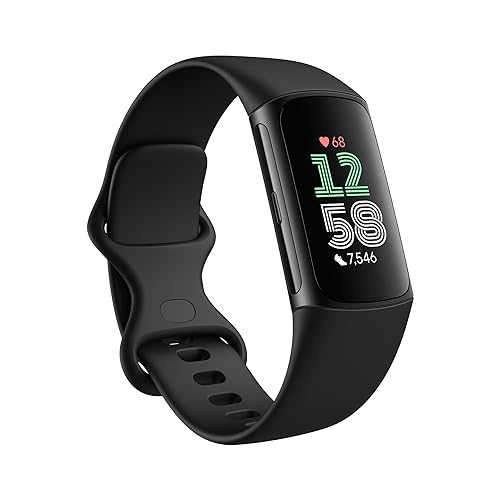
A built-in GPS and 40-plus exercise modes already make this a capable fitness tracker, but the real draw is how it pulls Google’s everyday tools into your wrist.
Compared to the Garmin vívoactive 5, which offers similar health monitoring without a subscription tie-in, the Charge 6 leans harder on Google’s ecosystem. If you live in Google’s world and want a tracker that plays nicely with Maps, Wallet, and YouTube Music controls, this is the one to grab.
Amazfit Bip Max Smart Watch
What We Like
- Huge 2.07" AMOLED display for easy visibility
- 20-day battery life reduces charging hassle
- 4GB storage for offline maps and media
- GPS with 5 satellite systems for precise tracking
Trade-offs
- No built-in music streaming without phone
- Zepp App required for full map downloads
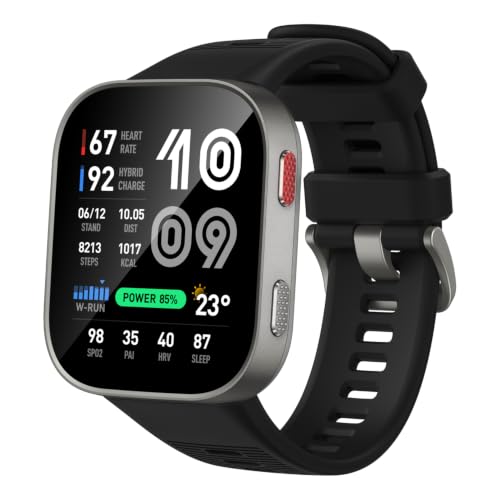
The 2.07-inch AMOLED display is large and bright, making it easy to glance at stats during a run without squinting. That generous size, paired with a lightweight aluminum body, makes it a comfortable companion for both daily wear and workouts. With up to 20 days of battery life, you can leave the charger at home during a two-week trip and still have days to spare. The 4GB of onboard storage lets you download offline maps from the Zepp App, so you can explore unfamiliar trails without pulling out your phone. For someone who values a spacious, bright display and doesn’t want to hunt for an outlet every night, this watch delivers exactly that.
The trade-off is the larger case size, which sits bigger on the wrist than some slimmer models. If you prefer a discreet band that disappears under a sleeve, this one might feel a bit chunky. But if you want a screen that shows your pace, distance, and route clearly at a glance, the Bip Max makes that trade worthwhile. The 150+ sports modes include dedicated modes for HYROX, strength training, and yoga, and the BioCharge recovery score helps you decide when to push or rest. It’s a well-rounded tracker for anyone who wants a big, bright window into their fitness without constant recharging.
Product photos
Xiaomi Smart Band 10 Pro Fitness Tracker
What We Like
- 21-day battery with fast charging
- 2000-nit AMOLED readable in sunlight
- 5ATM waterproof for swimming
- Dual device sync for notifications
Trade-offs
- TPU strap needs cleaning and breaks to avoid irritation
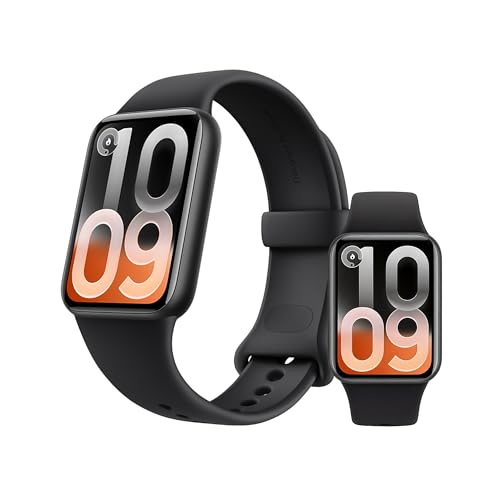
A 21-day battery on light usage means you can forget about charging for weeks, not days, a real relief if you travel, forget cables, or just hate another nightly plug-in. The 1.74-inch AMOLED display hits 2000 nits, so it stays crisp even under direct sun, and the 5ATM water resistance lets you take it swimming without worry. With 150+ sports modes and independent GNSS positioning, this band covers running, cycling, and pool laps without needing your phone along. It suits anyone who wants a lightweight, low-maintenance tracker that prioritizes endurance over smartwatch extras.
Battery performance stands out as a defining strength here. Under light usage, the band can run for up to 21 days on a single charge, with 15 days under normal conditions and 8 days if the always-on display is enabled. When it does need power, fast charging brings it back to full in just over an hour, which fits easily into a morning routine. That kind of endurance means fewer interruptions for charging, making it a practical choice for anyone who prefers a straightforward fitness tracker over a full smartwatch. Reviewers note that the long battery life reduces the hassle of frequent charging, especially during extended trips or busy weeks.
Fitpolo Smart Watch GPS Fitness Tracker
What We Like
- Built-in GPS with compass and barometer
- 1.32" AMOLED always-on display
- 120+ exercise modes and 5ATM waterproof
- 10+ day battery life on single charge
Trade-offs
- Health monitoring labeled non-medical use only
- Compatibility limited to smartphones, not tablets or PCs
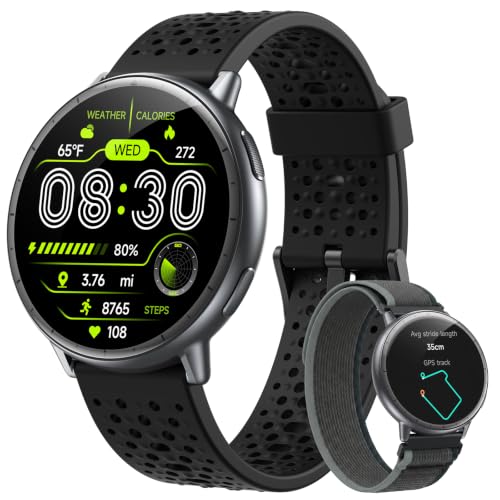
A built-in GPS that works without your phone, paired with a compass and barometer, means you can track outdoor routes, distance, and pace even when you leave your phone behind. That makes this Fitpolo an especially practical companion for trail runners, hikers, or anyone who wants to travel light. The 1.32-inch AMOLED display offers clear, vibrant visuals indoors and out, and with over 120 exercise modes plus 5ATM water resistance, it handles swimming and other workouts. For someone looking to get solid GPS tracking without extra frills, this watch delivers the core features that matter most.
Health-tracking features like heart rate, SpO2, and stress scores are clearly marked as non-medical, so this isn’t a clinical-grade monitor. And unlike the Amazfit Bip Max, which offers 4GB of onboard storage for offline maps, the Fitpolo keeps things simpler. But if your priority is reliable GPS, a vivid screen, and battery life that stretches past a week, this watch gives you exactly those strengths.
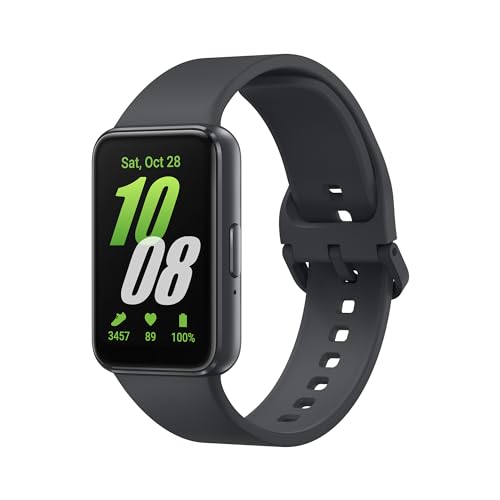
Samsung Galaxy Fit 3 Fitness Band
What We Like
- Vibrant 1.6" AMOLED display
- Swim-ready 5ATM & IP68 water resistance
- Up to 14 days battery life
- 101+ workout modes with auto detection
Trade-offs
- No US warranty (international model)
- Not compatible with iPhone or iOS
- Samsung Pay not supported
A 1.6-inch AMOLED display that’s bright and responsive means you can glance at your stats mid-set without squinting, even outdoors. The battery is rated for up to 14 days, so you won’t need to charge it every night. The 5ATM and IP68 rating means it’s swim-ready and dust-resistant, so you can wear it in the pool or rinse it off after a workout. If you use an Android phone, this band is compatible with your device.
The international model carries no US warranty, so if something breaks, you’re covering the cost yourself. It works only with Android phones, no iPhone or iOS support, and Samsung Pay is not available, meaning you’ll still need your wallet or phone for payments. The 101+ workout modes with auto detection cover most gym and outdoor activities, and the 1.6-inch AMOLED display is vibrant and responsive for easy navigation.
Google Fitbit Edge Activity Tracker

What We Like
- Personalized coaching built with Gemini
- Quick-charging: 5 minutes for a day
- Altimeter for elevation tracking
Trade-offs
- Premium subscription needed for full coaching features
- Requires subscription for full coaching features
A five-minute charge gives you a full day of power, so even if you forget to plug it in overnight, you are back in action before your morning coffee cools. That quick-charging trick, paired with built-in GPS and an altimeter for capturing elevation during climbs, makes this a natural fit for anyone who wants a coach that actually adapts to their schedule. The Google Health Coach, built with Gemini, tailors workout plans around what is happening in your life, not just a generic template. So when work gets hectic or you need a lighter day, the plan pivots with you. It also tracks sleep stages and gives a Sleep Score with advanced metrics, helping you see how your nights affect your days.
The catch is that the personalized coaching and deeper health insights, like blood pressure tracking and insulin resistance signs, require a Google Health Premium subscription after the free three-month trial. That ongoing cost is something to consider if you plan to lean heavily on the AI guidance rather than just the glanceable display and basic stats. The Garmin vívoactive 5 includes a sleep coach and Body Battery energy monitoring out of the box with no subscription. The Fitbit Edge offers a smarter, more adaptive coaching engine but asks for a monthly commitment to unlock its full potential. For someone who wants a fitness companion that learns from their life and adjusts on the fly, this is the tracker to grab, just be ready to pay for that brainpower.
Product photos
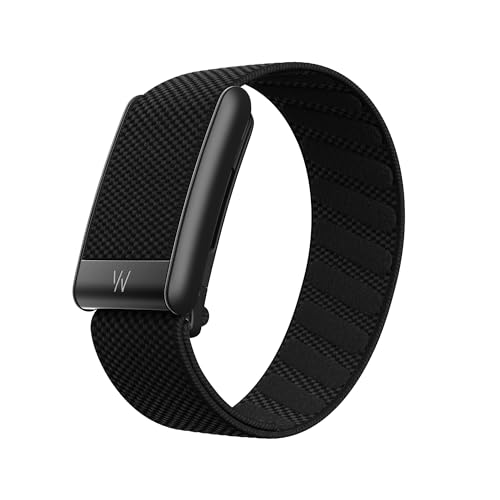
WHOOP 5.0 Screenless Fitness Tracker
What We Like
- Screenless design for uninterrupted sleep tracking
- AI coach turns 140+ metrics into insights
- Healthspan calculates pace of aging
Trade-offs
- Requires 12-month membership for full use
- No screen means no glanceable stats
A screenless design means no bright display to interfere with sleep or pull attention during the day. Instead, the device continuously tracks heart rate, HRV, blood oxygen, and skin temperature against your personal baseline. Sleep tracking covers REM, deep, light, and awake time, plus sleep need, debt, consistency, and efficiency. Daily wearers report gaining an average of 2.3 more hours of sleep per week. The lightweight, comfortable form factor stays on all night without irritation, so you wake up to a full picture of your recovery.
You lose the convenience of glancing at your heart rate or the time, and the 12-month membership is baked into the purchase, so this isn’t a buy-it-and-forget device. The Garmin vívoactive 5 includes GPS for outdoor workouts, while the WHOOP focuses entirely on the data behind your performance rather than navigation or smartwatch features. If you want to dig into sleep, recovery, and stress patterns with an AI coach that adapts to your habits, the screenless approach works well. If you need GPS tracking during a run, you will want a smartwatch instead.
Product photos
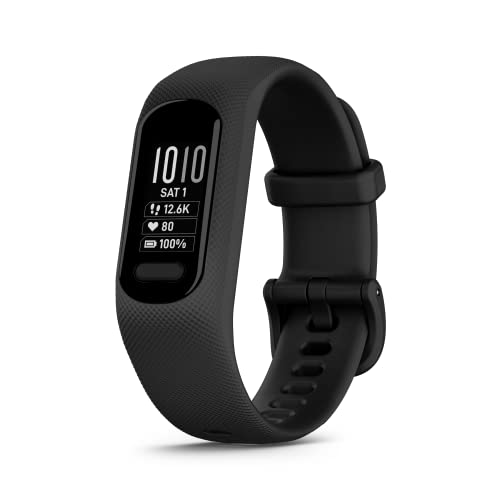
Garmin vívosmart 5 Fitness Tracker
What We Like
- Sleep quality score and improvement insights
- Up to 7 days battery life
- Swim and shower safe
Trade-offs
- Pulse Ox not available in all countries
- Relies on smartphone GPS for outdoor tracking
- No built-in GPS for standalone runs
A sleep quality score plus personalized tips on how to improve your rest through the Garmin Connect app makes this tracker a standout for anyone who wants more than just a rough bedtime log. With up to 7 days of battery life and swim-proof design, it fits easily into a nightly routine without constant charging or removal.
The vívosmart 5 leans on your smartphone’s GPS for outdoor walks, runs, and rides, so you will need to carry your phone to track distance and pace. But for sleep-focused buyers who want deep nightly data and a comfortable band that stays on 24/7, the vívosmart 5 delivers meaningful insights without the bulk.
Product photos
Xiaomi Mi Smart Band 10 Fitness Tracker

What We Like
- 1-hour fast charging
- 21-day battery life
- 1500 nits sunlight-readable display
- Enhanced sleep monitoring insights
Trade-offs
- Xiaomi Fit app only supports metric system
- No built-in GPS for standalone run tracking
A 21-day battery life that recharges fully in just one hour means you can practically forget about charging routines, slap it on your wrist and leave the cable at home for weeks at a time. That fast-charging advantage makes this tracker ideal for anyone who wants reliable fitness tracking without the nightly plug-in ritual, especially if you’re juggling work, workouts, and sleep. The large 1.72-inch AMOLED display with 1500 nits brightness keeps everything readable even under direct sun, so you’re not squinting mid-run just to check your pace.
The Xiaomi Fit app only works with metric units out of the box; you’ll need to connect it to Google Fit if you prefer pounds and inches. If you’re after a no-fuss, long-lasting tracker that charges faster than most competitors and you’re comfortable with metric or a quick app workaround, this is a smart pick.
Product photos
How We Evaluated Exercise Trackers
This evaluation is research-based: we reviewed specifications, manufacturer documentation, and expert round-ups, then cross-referenced those with common patterns in owner feedback. Our recommendations come from what the data and the community tell us about real-world performance.
We focused on four criteria that matter most for exercise trackers. Battery life came first because a dead tracker is useless mid-week. GPS accuracy and connectivity followed, standalone GPS for runners, connected GPS for casual walkers. We weighed health-sensor quality (heart rate, sleep tracking, SpO2) against the trade-offs of non-medical-grade data. Finally, we considered ecosystem fit: how well a tracker works with your phone, your apps, and your preferred style for tracking workouts.
An honest limit of this method is that individual comfort and day-to-day accuracy vary by wrist size, skin tone, and activity type. What works for one person may not work for another, which is why we highlight trade-offs clearly for each pick.
What To Look For In Exercise Trackers
Before you buy, know what your workout demands. A marathoner needs different hardware than a yoga enthusiast or a weightlifter.
Match the tracker’s sensors, battery, and display to your primary activity. GPS for outdoor sports, water resistance for swimming, and a comfortable band for all-day wear are the non-negotiable basics.
Battery Life and Charging
Battery life determines whether your tracker stays on your wrist or sits on a charger. For daily wear and sleep tracking, look for at least 7 days between charges. The Xiaomi Smart Band 10 Pro delivers 21 days with fast charging, while the Garmin vívoactive 5 offers 11 days in smartwatch mode. If you forget to charge often, prioritize models with quick-charge features, the Google Fitbit Edge can get a day of use from just five minutes of charging.
GPS and Activity Tracking
Built-in GPS lets you run or hike without your phone, logging accurate pace and distance. The Garmin vívoactive 5 and Fitpolo Smart Watch GPS both include standalone GPS, while the Garmin vívosmart 5 relies on your phone’s GPS. For gym workouts, look for auto-detection of exercises and rep counting. The Samsung Galaxy Fit 3 tracks 101+ workout modes with auto-detection, which is helpful for varied routines.
Display and Comfort
A clear display matters for glancing at stats mid-workout. The Amazfit Bip Max‘s 2.07-inch AMOLED is great for visibility, while the Xiaomi Smart Band 10 Pro’s 2000-nit screen is readable in direct sunlight. For sleep tracking, a lighter band like the Xiaomi Smart Band 10 Pro (featherlight design) is more comfortable overnight. Screenless options like the WHOOP 5.0 trade glanceability for uninterrupted sleep data.
Health Sensors and Accuracy
Heart rate, sleep stages, and SpO2 are standard, but accuracy varies. The Fitbit Charge 6 offers real-time heart rate on compatible gym machines, while Garmin’s Body Battery gives recovery insights from sleep and nap data. Remember that these are consumer-grade sensors, they provide close estimations, not medical diagnoses. For weightlifting, dedicated fitness trackers for weight lifting may offer better rep counting than general-purpose models.
- Check if the tracker is waterproof to 5ATM for swimming.
- Confirm phone compatibility (Samsung Galaxy Fit 3 is Android-only; WHOOP works with both).
- Look for subscription costs (Fitbit Charge 6 and WHOOP 5.0 require paid plans for full features).
- Verify if the display is always-on or requires a wrist raise.
- Read about strap materials. TPU bands need regular cleaning to avoid skin irritation.
A tracker that fits your wrist comfortably 24/7 will give you more consistent data than one with better specs you take off at night.
Exercise Trackers Compared
The table below compares the 10 best exercise trackers side by side, highlighting battery life, GPS capability, display size, and key trade-offs to help you narrow your choice.
| Product | Display | Battery Life | Sports Modes |
|---|---|---|---|
| Garmin vívoactive 5 GPS Smartwatch | AMOLED | Up to 11 days smartwatch mode | 30+ indoor and GPS |
| Fitbit Charge 6 Fitness Tracker | N/A | N/A | 40+ |
| Amazfit Bip Max Smart Watch | 2.07" AMOLED | 20 days typical | 150+ including HYROX |
| Xiaomi Smart Band 10 Pro Fitness Tracker | 1.74" AMOLED | Up to 21 days | 150+ |
| Fitpolo Smart Watch GPS Fitness Tracker | 1.32" AMOLED touchscreen | Up to 10+ days | 120+ modes |
| Samsung Galaxy Fit 3 Fitness Band | 1.6" AMOLED | Up to 14 days | 101+ with auto detection |
| Google Fitbit Edge Activity Tracker | N/A | Up to 1 week | N/A |
| WHOOP 5.0 Screenless Fitness Tracker | Screenless | 14+ days | N/A |
| Garmin vívosmart 5 Fitness Tracker | Touchscreen + button | Up to 7 days | N/A |
| Xiaomi Mi Smart Band 10 Fitness Tracker | 1.72" AMOLED | 21 days | N/A |
Frequently Asked Questions
What is the difference between a fitness tracker and a smartwatch?
A fitness tracker focuses on health and activity metrics like steps, heart rate, and sleep, often with longer battery life. A smartwatch adds app notifications, music storage, and sometimes cellular connectivity, but usually needs more frequent charging. The Garmin vívoactive 5 sits between both categories.
Do I need built-in GPS in an exercise tracker?
If you run, hike, or cycle outdoors and want to leave your phone behind, built-in GPS is essential. For gym workouts, treadmill running, or walking with your phone, connected GPS (using your phone’s signal) works fine and saves battery. The Garmin vívosmart 5 uses connected GPS; the Fitpolo Smart Watch has standalone GPS.
How accurate are calorie burn estimates on fitness trackers?
Calorie burn accuracy varies by device and activity. Trackers estimate calories using heart rate, age, weight, and movement data, but individual metabolism and muscle mass affect real burn. Use the number as a trend guide rather than a precise measurement.
Can I wear an exercise tracker while swimming?
Yes, if it has a water resistance rating of 5ATM or higher. The Xiaomi Smart Band 10 Pro, Samsung Galaxy Fit 3, and Fitpolo Smart Watch are all rated 5ATM, meaning they are safe for swimming and showering. Always check the depth rating before submerging.
What should I look for in a tracker for weight lifting?
For strength training, look for automatic rep counting, set tracking, and heart rate monitoring. Some models like the Samsung Galaxy Fit 3 detect specific exercises, but many fitness trackers rely on manual logging for gym sessions. The Garmin vívoactive 5 includes strength training profiles with rep counting.
The Bottom Line
The Garmin vívoactive 5 GPS Smartwatch is the best overall exercise tracker for most people because it balances long battery life, inclusive activity tracking, and detailed recovery insights in a single device. It works for runners, swimmers, gym-goers, and wheelchair users alike.
If you live inside the Google ecosystem, the Fitbit Charge 6 is a strong alternative with direct integration. For data purists who want sleep and recovery metrics without a screen, the WHOOP 5.0 delivers deep data, just be ready for the membership fee.
The single most important factor in choosing an exercise tracker is how consistently you will wear it. A feature-packed watch that spends half its time on the charger or feels bulky at night will give you less useful data than a simpler band you never take off.
