
10 Best Smartwatch Fitness Trackers in 2026
This post contains affiliate links. As an Amazon Associate, we earn from qualifying purchases.
For most of us, the Apple Watch Series 12 GPS Smartwatch is the best overall smartwatch fitness tracker because it delivers heart rate readings every five seconds and packs durable safety features into a design that works for daily life. If you cannot stand daily charging, the Garmin vívoactive 5 offers up to 11 days of battery, and the Fitbit Versa 4 helps beginners decide when to push and when to rest.
The real challenge with fitness trackers is matching the hardware to how you actually move. A marathon runner needs precision GPS and ultramarathon battery life, while a gym-goer might prioritize quick charging and a bright display over satellite tracking. Features like blood pressure monitoring and AI coaching sound great on paper, but they only help if they fit your routine.
We built this guide by combing through manufacturer specifications, expert round-ups, and patterns in owner feedback across dozens of models. Our goal was to cut through the noise and help you find the one tracker that will actually stay on your wrist past the first month.
Top 10 Smartwatch Fitness Trackers in the Market
Certain content that appears on this site comes from Amazon. This content is provided "as is" and is subject to change or removal at any time.
The Best Smartwatch Fitness Trackers, Reviewed
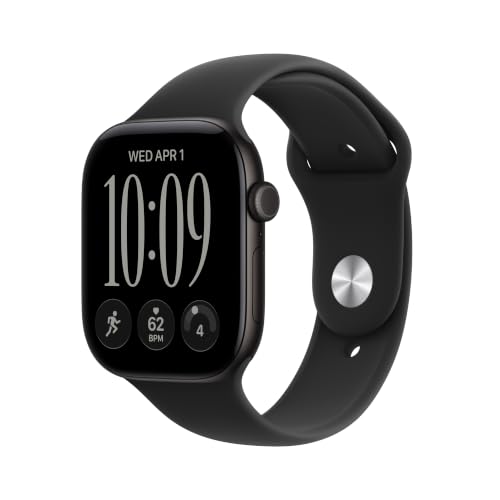
Apple Watch Series 12 GPS Smartwatch
What We Like
- Heart rate readings every 5 seconds
Trade-offs
- 24-hour battery needs daily charging
- Siri AI features rolling out gradually
- Some Audio Intelligence features delayed to 2026
A heart rate sensor that takes a reading every five seconds means you get a detailed picture of how your heart responds throughout the day, not just a few snapshots. That frequent data, combined with HRV readings every five minutes for stress and recovery insights, gives you a clearer sense of when your body is ready for effort or needs rest. The readiness experience pulls from your recent activity, vitals, and sleep to help you decide whether to push hard or take it easy. For anyone who wants health insights that feel personal, this watch delivers that depth without requiring you to dig through complex menus.
Product photos
Garmin vívoactive 5 GPS Smartwatch

What We Like
- Up to 11-day battery life
- Bright AMOLED display
- 30+ built-in sports apps
- Wheelchair mode with push tracking
Trade-offs
- No cellular connectivity for standalone calls
- No onboard music storage for offline playback
Up to 11 days between charges means you can track sleep, workouts, and daily stress without constantly hunting for a charger. That AMOLED screen stays crisp and colorful when you check a morning report or glance at your Body Battery energy levels after a nap. This watch suits anyone who wants detailed health insights, sleep coaching, HRV status, recovery time, without the daily charging ritual that some other smartwatches demand.
The trade-off is that you give up built-in cellular connectivity, so phone-free calls or texts aren’t an option here. Compared to the Apple Watch Series 12, the Garmin vívoactive 5 focuses on endurance and wellness metrics rather than app ecosystem depth. If your priority is battery life that keeps up with multi-day adventures and you don’t mind keeping your phone nearby, this is a smart, straightforward pick.
Apple Watch Ultra 4 GPS Smartwatch
What We Like
- Precision dual-frequency GPS for accurate tracking
- 100m water resistance for swimming and diving
- Up to 45 hours max extended workout tracking
Trade-offs
- No general satellite texting, only emergency services
- Bulky 49mm case feels oversized for small wrists.
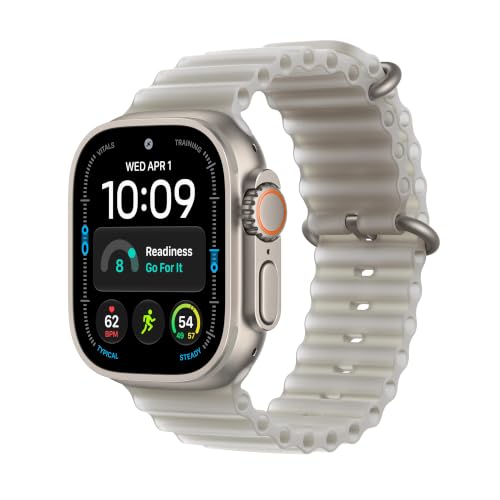
Multi-day battery life gives this smartwatch ultramarathon stamina, so runners can go the distance without hunting for an outlet. Up to 45 hours of Max Extended Workout tracking covers even the longest training sessions. A 15-minute fast charge delivers up to 18 hours of use, enough to get through a full day after a quick top-off. Precision dual-frequency GPS locks onto your route reliably in dense tree cover or between tall buildings, making it a natural fit for endurance athletes who train for hours, not minutes, and want a watch that keeps up without begging for a charger.
If your idea of endurance is a weekend backpacking trip without a power bank, you’ll need to pack the fast charger, though 15 minutes gives you 18 hours of use, which is a solid compromise.
Product photos
Garmin Venu 4 Fitness Smartwatch
What We Like
- Stainless steel build for durability
- Up to 12 days of battery life
- 80+ preloaded sports apps
- Built-in flashlight for visibility
Trade-offs
- Health data is estimation, not medical grade
- Pulse Ox sleep tracking not available in all countries
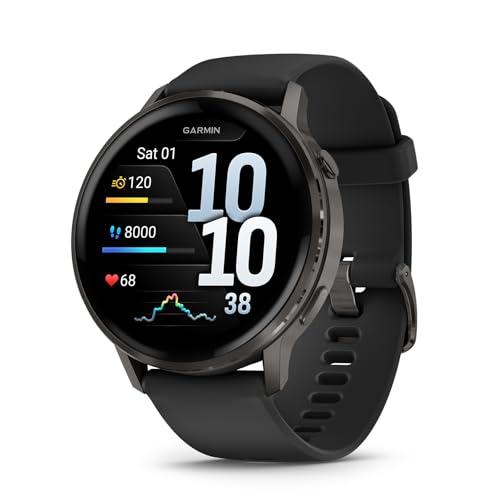
A stainless steel design that can handle daily bumps and sweat sessions gives this smartwatch a sturdy, premium feel you notice every time you strap it on. With up to 12 days of battery life, you can track sleep, stress, and workouts without hunting for a charger midweek. The 80-plus preloaded sports apps mean whether you are into cycling, yoga, or just walking the dog, there is a mode ready to log your effort. It suits someone who wants a tough, good-looking watch that blends fitness tracking with everyday wear, no fuss.
The health monitoring is designed as a close estimation rather than a medical device, so it should not be relied on for clinical decisions. Compared to the Apple Watch Series 12, which offers GPS and heart rate tracking in a similar fitness-focused package, the Garmin Venu 4 focuses on battery longevity and sports variety. If you prefer a watch that lasts through a long weekend and looks sharp doing it, this one delivers without the daily charging habit.
Fitbit Versa 4 Fitness Smartwatch
What We Like
- Daily Readiness Score guides workout vs. recovery
- 6+ days battery life between charges
Trade-offs
- No onboard music storage mentioned
- Lacks advanced training metrics for serious athletes
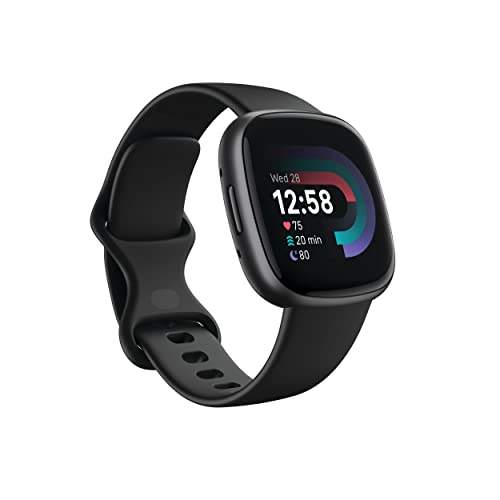
This is a fitness companion first, not a training lab for elite athletes. It does not include advanced metrics like running dynamics or onboard music storage, so if you need those, the Garmin Venu 4 offers more depth. For anyone who wants clear daily guidance on whether to hit the gym or take a rest day, plus sleep and stress tracking, the Versa 4 delivers exactly that.
Product photos
Amazfit Bip 6 Smart Watch

What We Like
- 14-day battery life
- Free downloadable maps with turn-by-turn directions
- 140+ workout modes including HYROX Race
- Lightweight aluminum build
Trade-offs
- No onboard music storage for phone-free runs
- Lacks advanced training metrics like VO2 max or recovery coach
A 14-day battery means you can leave the charger at home during a two-week trip or just forget about nightly charging altogether. That kind of endurance is rare at this price point, and it makes the Amazfit Bip 6 a natural fit for anyone who wants fitness tracking without the constant battery anxiety. The vivid 1.97″ AMOLED display stays readable in bright sunlight. With 140+ workout modes, GPS from five satellite systems, and free downloadable maps for navigation, it covers the essentials for runners, hikers, and gym-goers alike without demanding a daily plug-in.
If you’re a data-obsessed athlete who needs every physiological number, you may feel limited. But for someone who wants reliable activity tracking, solid GPS, and health monitoring that lasts, this watch delivers where it counts, and lets you spend more time moving and less time hunting for a charger.
Product photos
Samsung Galaxy Watch9 Smartwatch
What We Like
- Wake-free AI voice assistant
- Personalized Fitness Index coaching
- Advanced Sleep Coaching with bedtime guidance
- Blood pressure monitoring (calibrated separately)
Trade-offs
- Blood pressure calibration needs separate cuff
- No built-in GPS for phone-free tracking
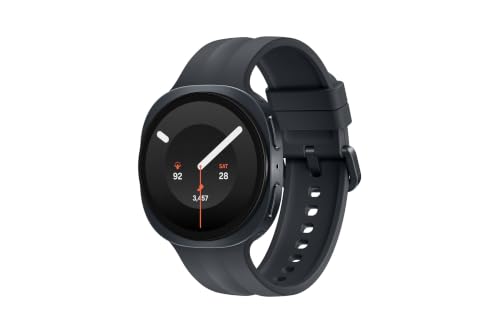
The Samsung Galaxy Watch9 puts a wake-free AI assistant right on your wrist, so you can ask for coaching or check your stats without fumbling for a wake word. Its Fitness Index delivers tailored guidance based on your own fitness level, whether you are building endurance for a long hike or adding muscle. For anyone who wants a smartwatch that actively coaches rather than just tracks, this is the one that feels like a personal trainer who actually listens.
The Watch9 offers blood pressure monitoring, but you need to calibrate it with a separate cuff, which adds an extra step and cost. Compared to the Garmin Venu 4, which does not list blood pressure monitoring in its features, the Samsung gives you deeper health insight but demands a bit more setup. If you want a watch that provides AI assistance and tracks your sleep patterns, this watch fits the bill.
Samsung Galaxy Watch 7 Smartwatch

What We Like
- Personalized Energy Score with Galaxy AI
- Improved heart rate tracking filters movement
- Detects moderate to severe sleep apnea
- Wellness Tips for goal tracking
Trade-offs
- Wellness insights analyzed on phone, not watch
- No built-in GPS for phone-free outdoor runs
A personalized Energy Score that calculates your physical readiness based on yesterday’s activity means you start each day knowing if it’s a go-hard or recover-light kind of morning. That kind of AI-driven insight, paired with improved heart rate tracking that filters out body movement for cleaner readings, makes this a smart companion for anyone who wants data that actually adapts to them. It suits the fitness enthusiast who values daily readiness and sleep apnea detection over raw sports metrics.
The catch is that the Wellness Tips and sleep insights are analyzed on your phone, not the watch itself, so you lose some on-the-wrist immediacy. That trade-off matters if you prefer glancing at your wrist for everything. The Galaxy AI’s sleep apnea detection and personalized Energy Score still offer a level of health insight few competitors match at this size.
aeac Smart Watch for Women

What We Like
- Ultra-clear AMOLED touchscreen with 200+ faces
- Full health tracking: SpO2, heart rate, sleep
- 110+ sport modes including swimming
- 10-day battery on a 2-hour charge
Trade-offs
- No built-in GPS for phone-free tracking.
- Battery life shorter than some competitors.
A two-hour charge that keeps the watch running for ten full days is the kind of practical freedom that makes daily fitness tracking feel effortless rather than another device to babysit. The 1.32-inch AMOLED screen stays crisp and responsive, while the 110+ sport modes cover everything from yoga to swimming thanks to the 3ATM water resistance. This is a smartwatch built for someone who wants comprehensive health monitoring, blood oxygen, heart rate, stress, and sleep analysis, without the ritual of hunting for a charger every night.
The aeac smart watch delivers clear call quality through high-definition speakers and microphones, and its AI assistant enables voice commands for hands-free calls. Owners get up to 10 days of use on a 2-hour charge, which means less time tethered to a charger. The 1.32-inch AMOLED display offers sharp visuals, and with over 200 watch faces to choose from, you can make it your own. For everyday health tracking, heart rate, blood oxygen, stress, and sleep, this rose-gold option covers the essentials without fuss.
Product photos
Zeacool Fitness Tracker Smart Watch
What We Like
- 1.47" AMOLED HD touch screen
- IP68 waterproof for swimming and diving
- 123 sport modes for activity tracking
- Magnetic fast charging with 10-14 day battery
Trade-offs
- App-dependent for detailed sports data and sleep scoring
- No built-in GPS for outdoor runs or hikes
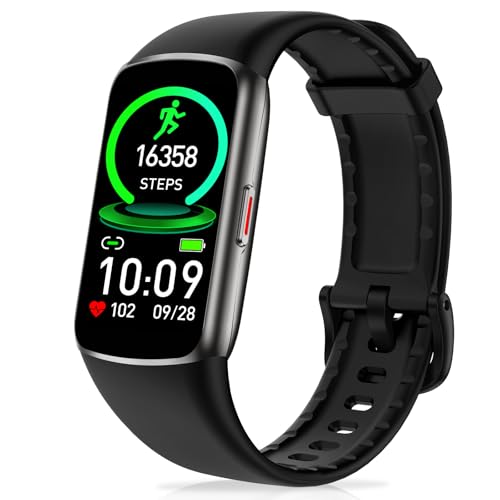
Magnetic fast charging brings the battery from empty to full in a short session, and regular use delivers up to 10 to 14 days of operation. That kind of endurance means you can leave the charger at home during a long weekend trip without worrying about the watch dying. Standby time stretches to 30 days under ideal conditions, so even if you forget to charge it for a week, the device still has plenty of power left. Owners report that this battery life easily outlasts many competing fitness watches, which often require a nightly recharge.
This watch relies on the Da Fit app for detailed sports data and sleep scoring, so the experience depends on how well that app works with your phone. For someone starting out or upgrading from a basic step counter, this watch delivers a lot of screen and sensor for the money.
How We Evaluated Smartwatch Fitness Trackers
Our evaluation is research-based. We analyzed manufacturer specifications, studied expert round-ups from the fitness and tech press, and looked for consistent patterns in long-term owner feedback. We encourage you to read a few first-hand reviews before buying.
We focused on four criteria that matter most for fitness tracking. First, heart rate accuracy, the core metric that powers calorie estimates, recovery scores, and training zones. Second, battery life, because a tracker you have to charge mid-week is one you stop wearing. Third, GPS reliability, especially for runners and cyclists who need accurate pace and distance data without carrying a phone. Fourth, ecosystem and coaching features, the software that turns raw data into useful guidance.
The honest limit of a research-led evaluation is that individual fit matters enormously. A watch that feels great on one wrist may chafe on another, and a display that looks crisp indoors may wash out on a sunny trail. Use our criteria as a starting point, then check the return policy.
What To Look For In Smartwatch Fitness Trackers
The best smartwatch is the one you actually wear every day. That means finding the right balance between features, battery life, and comfort for your specific workout habits.
Focus on heart rate sensor quality, battery life that matches your charging tolerance, GPS type (phone-dependent or built-in), and the coaching or recovery features that keep you consistent.
Heart Rate Sensor Accuracy
Optical heart rate sensors have improved dramatically, but they still struggle during high-intensity interval training and weightlifting sets where wrist movement creates noise. The Apple Watch Series 12’s five-second reading interval helps capture rapid changes, while the Samsung Galaxy Watch 7 uses improved movement filtering to reduce artifacts. For the most accurate data during intense exercise, many athletes pair their watch with a separate chest strap. Our heart rate monitor accuracy comparison explains the trade-offs between chest strap vs wrist sensors in detail.
Battery Life and Charging Speed
Battery life ranges from roughly 24 hours to 14 days depending on the model and features enabled. The Garmin vívoactive 5 and Venu 4 both deliver over a week between charges, while the Amazfit Bip 6 stretches to 14 days. If you prefer a premium smartwatch, the Apple Watch Series 12 needs daily charging, but the aeac Smart Watch for Women can top up to 10 days of use in just two hours.
Consider your routine: do you have a consistent charging moment (like during a shower), or do you need a device that survives a weekend camping trip?
GPS and Navigation
Built-in GPS lets you track runs, hikes, and bike rides without bringing your phone. The Apple Watch Ultra 4 uses precision dual-frequency GPS for accurate tracking even in dense urban areas or under tree cover. Several budget-friendly models, including the Zeacool Fitness Tracker and the aeac Smart Watch, rely on your phone’s GPS, which works fine for gym workouts but limits phone-free outdoor activity. If you run or cycle without your phone, prioritize watches with standalone GPS.
Coaching and Recovery Features
The most useful fitness trackers do more than count steps, they tell you what to do next. The Fitbit Versa 4’s Daily Readiness Score guides workout vs. Recovery, while the Samsung Galaxy Watch9 offers AI-powered coaching and sleep guidance. For endurance athletes, the Apple Watch Ultra 4 provides extended workout tracking up to 45 hours.
- Confirm the watch supports the specific sport modes you need (swimming, HYROX, cycling, etc.)
- Check if health features like blood pressure monitoring require separate calibration or a phone app
- Verify water resistance rating if you swim or shower with your watch
- Read owner comments about screen brightness and readability in direct sunlight
- Consider the watch face size and weight, a 49mm case may feel bulky on smaller wrists
A smartwatch you charge every day is better than one you never put on because the battery lasted two weeks but the interface frustrated you.
Smartwatch Fitness Trackers Compared
The table below compares the ten smartwatch fitness trackers side-by-side to help you weigh battery life, GPS capability, and key features at a glance.
| Product | Display | Battery Life | Sports Modes |
|---|---|---|---|
| Apple Watch Series 12 GPS Smartwatch | Ceramic Shield 2 | Up to 24 hours | N/A |
| Garmin vívoactive 5 GPS Smartwatch | AMOLED | Up to 11 days | 30+ built-in |
| Apple Watch Ultra 4 GPS Smartwatch | N/A | 45 hours max extended workout | N/A |
| Garmin Venu 4 Fitness Smartwatch | Bright, colorful display | Up to 12 days | 80+ preloaded |
| Fitbit Versa 4 Fitness Smartwatch | N/A | 6+ days | 40+ exercise modes |
| Amazfit Bip 6 Smart Watch | 1.97" AMOLED | 14 days | 140+ workout modes |
| Samsung Galaxy Watch9 Smartwatch | N/A | N/A | N/A |
| Samsung Galaxy Watch 7 Smartwatch | N/A | N/A | N/A |
| aeac Smart Watch for Women | 1.32" AMOLED | 10 days | 110+ sport modes |
| Zeacool Fitness Tracker Smart Watch | 1.47" AMOLED HD Touch | 10-14 days typical | 123 sport modes |
Frequently Asked Questions
Which smartwatch fitness tracker has the most accurate heart rate monitoring?
The Apple Watch Series 12 is widely recognized for its consistent heart rate readings, which it captures every five seconds. However, all wrist-based optical sensors can struggle during high-intensity intervals or weightlifting. For the most precise data during intense exercise, pairing any smartwatch with a separate chest strap is still the gold standard.
How long should a smartwatch fitness tracker battery last?
Battery life varies enormously by model and usage. Entry-level fitness trackers often last 7 to 14 days, while full-featured smartwatches like the Apple Watch Series 12 need daily charging. The Garmin vívoactive 5 offers up to 11 days, and the Amazfit Bip 6 reaches 14 days. Your choice depends on how often you are willing to charge.
Do I need a smartwatch with built-in GPS?
You only need built-in GPS if you want to track outdoor runs, hikes, or bike rides without carrying your phone. If you always bring your phone to the gym or on runs, a watch with phone-dependent GPS works fine. For ultramarathon runners or triathletes, the Apple Watch Ultra 4 offers dual-frequency GPS for the best accuracy.
What is the difference between a fitness tracker and a smartwatch fitness tracker?
Fitness trackers focus primarily on step counting, sleep tracking, and basic activity logging, often with simpler displays and longer battery life. Smartwatch fitness trackers add features like app ecosystems, cellular connectivity, music storage, and advanced coaching. The line has blurred, but smartwatches generally offer more features at the cost of more frequent charging.
Can a smartwatch fitness tracker monitor sleep accurately?
Yes, most modern smartwatches track sleep stages, duration, and consistency using heart rate and movement data. The Samsung Galaxy Watch7 and Galaxy Watch9 include advanced sleep coaching with bedtime guidance. Keep in mind that sleep tracking is most useful for spotting trends over time rather than diagnosing specific issues.
The Bottom Line
The Apple Watch Series 12 GPS Smartwatch earns our Best Overall pick because it combines reliable heart rate tracking with safety features and a polished daily-wear experience. It is the right choice for anyone who wants accurate health data and does not mind charging each night. For endurance athletes, the Apple Watch Ultra 4 delivers precision GPS and ultramarathon battery life in a rugged build.
If daily charging is a dealbreaker, the Garmin vívoactive 5 offers up to 11 days of battery with a bright AMOLED display and 30-plus sports apps. Budget-conscious shoppers should look at the Amazfit Bip 6, which stretches to 14 days and includes free downloadable maps. The Fitbit Versa 4 is ideal for beginners who want clear guidance on when to train and when to rest.
The single most important factor is consistency. The best smartwatch fitness tracker is the one that fits your wrist, matches your charging tolerance, and gives you data you actually use. Start with battery life, then narrow by the features that keep you moving.
