
10 Best Electrical Muscle Stimulation in 2026
This post contains affiliate links. As an Amazon Associate, we earn from qualifying purchases.
The AUVON Wireless TENS Unit Muscle Stimulator is the best overall electrical muscle stimulation device for active people, thanks to its wireless all-in-one design, 24 modes, and fast-charging case. For athletes focused on explosive power, the Compex Wireless USA 2.0 targets fast-twitch fibers, while the budget-friendly TENS 7000 delivers dual-channel therapy without the wireless price tag.
Choosing the right stimulator means balancing portability, program variety, and treatment goals. A runner recovering from shin splints needs different features than a weightlifter warming up before squats, and the wrong pick can leave you tangled in wires or stuck with modes you never use.
This guide is research-based, drawing on manufacturer specifications, expert round-ups, and patterns in owner feedback to help you match the right device to your routine. We break down what each model does best so you can buy with confidence.
Top 10 Electrical Muscle Stimulators in the Market
Certain content that appears on this site comes from Amazon. This content is provided "as is" and is subject to change or removal at any time.
The Best Electrical Muscle Stimulators, Reviewed
AUVON Wireless TENS Unit Muscle Stimulator

What We Like
- Wireless all-in-one design with charging case
- 24 modes and 30 intensity levels
- 10-minute fast charge gives 1 hour therapy
- Medical-grade, latex-free electrode pads
Trade-offs
- Only 6 pads included for multi-area use
- Not suitable for users with pacemakers or epilepsy
A 10-minute charge buys you a full hour of wireless relief, that kind of convenience makes the AUVON TX6224 the easiest muscle stimulator to actually use every day. It combines TENS, EMS, and massage into 24 modes with 30 intensity levels, so you can find a setting for a tight neck or stiff shoulders. The charging case holds both pods and pads in one compact package, meaning no tangled wires and no hunting for AAA batteries when you need it most. For anyone who wants drug-free pain management that fits into a gym bag or desk drawer, this is the setup that removes every excuse not to use it.
The trade-off is pad longevity: those medical-grade electrodes are good for about 45 uses before the gel loses grip. You only get six pads in the box (two large for the back, four small for joints). That means you’ll likely reorder pads sooner than with a unit that includes a dozen. If you value grab-and-go simplicity over long-term pad cost, the AUVON wins. Just keep a spare pack of pads handy if you use it daily.
Product photos
Compex Edge 3.0 Muscle Stimulator

What We Like
- Water resistant silicone sleeve for durability
- Up to 8 hours of stimulation per charge
- USB rechargeable for convenience
- Includes TENS program for pain relief
Trade-offs
- Only 4 programs limit workout variety
- No wireless pods for cord-free use
Up to 8 hours of stimulation per charge means you can pack this in your gym bag and not worry about finding an outlet mid-week. The Compex Edge 3.0 is built around a simple idea: help you warm up before lifting or ease down after, without overcomplicating things. With two strength programs, one recovery program, and a TENS option, it covers the essentials for someone who wants to prep muscles for work or soothe them afterward. The water resistant silicone sleeve also means sweat or a splash from your water bottle won’t send it to an early grave, which matters when you’re using it regularly around workouts.
The trade-off here is that four programs is a tight lineup. If you enjoy experimenting with different pulse patterns or need a wider range of recovery modes, you might find yourself wanting more. The Edge 3.0 keeps things simple and focused on pre- and post-workout use. It is not trying to be a full pain management toolkit or a deep recovery system. It is a straightforward companion for the person who wants to add electrical stimulation to their gym routine without a steep learning curve.
Product photos
iSTIM M2 Wireless TENS EMS System
What We Like
- 3-in-1 TENS, EMS, and NMES therapy
- 18 modes for tailored recovery
- Wireless design for on-the-go use
- 6 premium pads with Japanese gel
Trade-offs
- No carrying case or storage included
- Limited to 18 modes, fewer than some competitors.
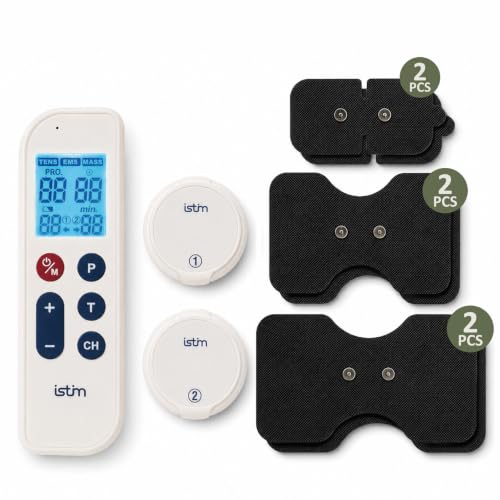
This device combines TENS, EMS, and NMES therapy in one unit, giving you 18 modes to choose from: 9 for TENS pain relief, 5 for EMS muscle stimulation, and 4 for massage. The dual-channel output lets you treat two areas at once, each with its own intensity, so you can address a sore shoulder and a tight calf simultaneously. For someone who wants a single wireless tool that covers everyday aches and post-workout recovery without juggling separate units, this offers a flexible, space-saving solution.
The kit includes six electrode pads in three sizes, made with Japanese gel for good conductivity. Compared to the Compex Edge 3.0, which has 4 programs and snap electrodes, the iSTIM M2 offers more modes and wireless operation. If you prefer a simpler device with fewer options, the Edge 3.0 is an alternative. But for a wireless system that combines TENS pain relief with EMS muscle activation, the iSTIM M2 covers both in one compact package.
Product photos
Compex Wireless USA 2.0 Muscle Stimulator

What We Like
- Explosive Strength program targets fast-twitch fibers
- Wireless PODs for full mobility during use
- Includes TENS program for pain management
- Rechargeable battery station included
Trade-offs
- Only 10 programs total limit variety
- Wireless PODs require frequent recharging during long sessions
The Resistance, Strength and Explosive Strength programs are designed to activate fast-twitch, Type II muscle fibers, the ones tied to power and force, so this device targets explosive movement training. It includes 10 programs total (4 Strength, 2 Warmup, 3 Recovery, 1 TENS), each with 5 levels of progression, which gives you room to increase intensity as you get stronger. Wireless PODs let you move freely between sets without cords getting in the way, and the color display helps you navigate options quickly during a workout.
The trade-off here is that you get 10 total programs, which is fewer than some all-purpose stimulators offer. If you want many massage patterns or pain-relief modes, other devices like the AUVON Wireless TENS Unit provide 24 modes for more variety. But the Compex focuses on strength, warmup, recovery, and TENS programs with five levels of progression. At 1.0 pounds, it is portable enough to carry in a bag.
TENS 7000 Digital TENS Unit

What We Like
- Includes carrying case and 4 pads
- Dual channel for two body areas
- Multiple TENS therapy modes included
Trade-offs
- Requires spare 9V batteries for extended use
- No wireless freedom for movement during treatment
With over 3 million units sold since 2008, this wired, dual-channel TENS unit comes with a hard carrying case, two lead wires, four reusable electrode pads, a 9V battery, and a user manual. It is designed for drug-free pain relief and is a leader in physical therapy equipment, according to the manufacturer. The included accessories let you start treating back pain, neck pain, tennis elbow, or bursitis right away. If you want a straightforward device that doesn’t rely on Bluetooth or charging cables, this is a reliable option.
Over 3 million units have been sold since 2008, making this one of the most widely adopted TENS units among medical professionals for drug-free pain relief. The kit includes the medical-grade unit, two lead wires, four reusable electrode pads, a 9V battery, a user manual, and a hard carrying case, so everything needed to start a session is in the box. Because the unit runs on a single 9V battery, users who want longer sessions without interruption will need to keep spare batteries on hand.
Product photos
AUVON 3-in-1 TENS Unit Muscle Stimulator

What We Like
- 40 intensity levels for gradual relief
- 24 pre-programmed modes for variety
- Includes 12 pads with US adhesive gel
- Compact aluminum alloy body
Trade-offs
- Wired pads can tangle during portable use
- No wireless connectivity for hands-free movement
With 40 intensity levels and 24 pre-programmed modes, this unit lets you dial in just the right amount of stimulation without that jarring shock feeling. That gradual ramp-up is exactly what makes it a smart pick if you’re new to TENS therapy or prefer to ease into relief rather than jump straight to high power. The dual A/B channels also let you run two or four pads at once, so you can target both shoulders or your lower back and hip at the same time. It’s a drug-free option that gives you room to find your own pace.
This is a wired unit, which means you’ll have lead wires and pads to manage while you move around. If you want to walk freely or use it at the gym between sets, the wireless AUVON model in this guide might suit you better. But if you don’t mind the cables and want the most gradual control for the price, the 40 levels here give you finer steps than many competitors offer. The unit comes with a Type-C cable and a storage pouch for keeping accessories together.
AVCOO TENS EMS Unit Muscle Stimulator
What We Like
- 30 modes and 30 intensity levels
- 30-hour battery life for long sessions
- Includes 12 pads in three sizes
Trade-offs
- No wireless or remote control for convenience
- Requires wired connection between pads and unit at all times
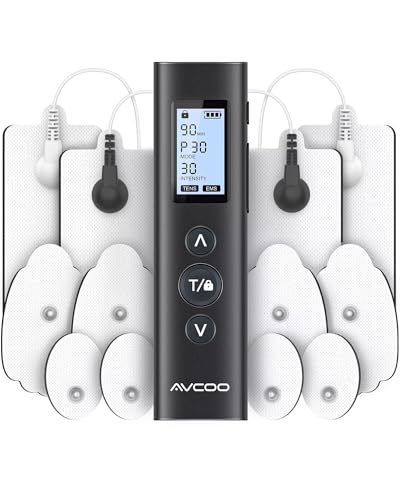
At just 0.09 pounds and with a slim design, this AVCOO unit is easy to carry in a gym bag or jacket pocket without adding bulk. Its 30-hour usage time means fewer interruptions for recharging, and with 30 modes and 30 intensity levels, it offers a range of options for pain relief and muscle stimulation. It’s a practical choice for anyone who wants a compact device that fits into a busy routine without taking up much space.
The trade-off for that tiny size is that you’re stuck with wires connecting the pads to the unit, which can get a little annoying if you’re trying to move around freely. But if your priority is a device that fits anywhere and runs for days without a recharge, this one delivers exactly that, no frills, just solid, portable relief.
Product photos
AVCOO 3-in-1 TENS Unit Muscle Stimulator

What We Like
- 30 modes and 40 intensity levels
- 12 electrode pads in 3 shapes
- Body-part targeting on screen
- 40-hour rechargeable battery
Trade-offs
- Wired leads limit movement during use
- No wireless or app control
A body-shaped interface that flashes the exact area you select makes targeting specific spots like your elbow, shoulder, or lower back genuinely intuitive. With 30 modes and 40 intensity levels, you can dial in everything from a gentle warm-up to a deeper pulse without that jarring shock feeling. The kit comes with 12 pads in three shapes, rectangular, palm, and oval, so you can fit tricky curves around your waist or shoulder blade more easily than with one-size-fits-all pads. That flexibility, paired with the on-screen guidance, is why this unit stands out for anyone who wants to treat a particular ache rather than just buzz a general zone.
The AVCOO 3-in-1 TENS unit keeps you connected to two lead wires, so you’ll need to stay put during a session, no roaming around the house. The wireless AUVON model lets you move freely, but it offers fewer modes and pads. The AVCOO’s rechargeable battery lasts up to 40 hours, and the USB port works with a laptop or power bank, making it easy to charge on the go. That wired, focused approach is ideal for spot treatment.
Belifu Dual Channel TENS EMS Unit
What We Like
- Dust-proof drawstring storage bag included
- Fastening cable ties prevent wire tangles
- 10 reusable adhesive pads for extended use
- Rechargeable battery with level indicator
Trade-offs
- Pads last up to 50 uses before replacement
- Wired leads require cable management
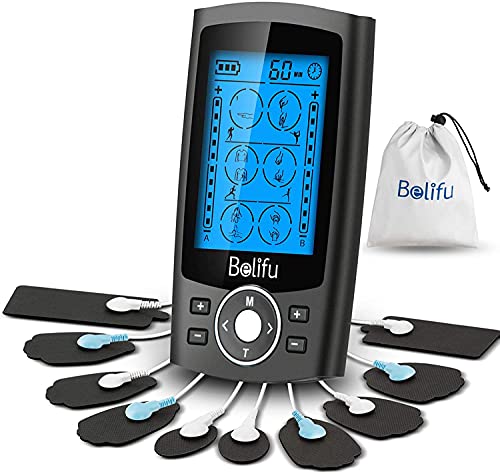
The Belifu Dual Channel TENS EMS Unit comes with a dust-proof drawstring storage bag and fastening cable ties, so you can keep everything organized and tangle-free after each session. That makes it a great fit if you travel with your stimulator or just hate wrestling with loose wires in your gym bag. With 24 preprogrammed modes and 20 intensity levels per channel, you have plenty of room to dial in the right feel for sore shoulders, a tight back, or tired legs from a long workout.
The included pads are rated for up to 50 uses, which is standard for this class but means you will eventually need replacements. And unlike the wireless AUVON Wireless TENS Unit, the Belifu uses wired leads, so you are tethered to the device during treatment. If you prioritize a tidy, portable setup and do not mind the cords, the included storage accessories make this an easy pick for home or on-the-go relief.
ReliveX Wireless TENS Unit Muscle Stimulator
What We Like
- Fully wireless pads and remote
- All-in-one charging case powers everything
- 6 programs with 16 intensity levels
- Ready to use out of the box
Trade-offs
- Only 2 pads limit coverage area
- Remote must be pointed directly at pads to work
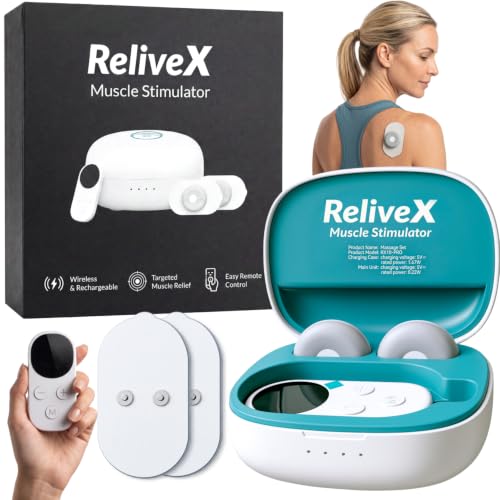
Two cordless pads that stay put during movement, plus a charging case that powers the pads and remote together. You can grab the kit and use it on your back, shoulders, or legs without hunting for batteries or untangling wires. That all-in-one case is the real convenience win for anyone who wants to slip a stimulator into a gym bag or keep it on a desk drawer. With 6 programs and 16 intensity levels, you have enough range to find a comfortable pulse for different muscle groups without drowning in options.
The ReliveX Wireless TENS Unit Muscle Stimulator comes with only two pads, so you can treat just one muscle group at a time. The AUVON Wireless 24 Modes unit includes six pads for broader simultaneous coverage. With 6 programs and 16 intensity levels, you get straightforward controls that are easy to learn, but you sacrifice the deep customization found in models with more programs. If you want a grab-and-go device without cords and don’t need to treat multiple areas in one session, this setup works well. If you need to cover several spots at once, a six-pad unit is a better fit.
Product photos
How We Evaluated Electrical Muscle Stimulators
We built this guide by analyzing manufacturer specifications, studying expert round-ups from coaching and physical therapy circles, and identifying consistent patterns in owner feedback across hundreds of user experiences. Our goal was to cut through the marketing and find which devices actually work well for real-world use.
Four criteria mattered most. Portability and design determined whether a unit could travel from gym to office to home without hassle. Program and intensity range separated devices that adapt to different body areas and goals from one-trick ponies. Battery life and charging convenience decided if a stimulator would be ready when you are or dead in your bag. Electrode pad quality and quantity affected how many sessions you get before buying replacements. It also affected how many muscle groups you can treat at once.
A research-based evaluation has limits. We rely on what owners consistently report and what the specs tell us. Your experience may vary based on body type, pain tolerance, and consistency of use. The best device is the one you actually reach for.
What To Look For In Electrical Muscle Stimulators
Before you buy, understand the three main therapy types and how they match your goal. TENS targets pain relief by blocking pain signals, EMS contracts muscles for recovery and strength, and NMES stimulates nerves for re-education. Many devices combine these, but not all do it well.
Choose a device whose therapy modes match your primary goal: TENS for pain, EMS for recovery and strength, or a combined unit for both. Prioritize wireless if you move during sessions, wired if you want lower cost and more pad options.
Therapy Modes and Program Count
A device with 18 to 30 modes offers enough variety to treat different body parts without overwhelming you. The AUVON Wireless unit packs 24 modes and 30 intensity levels, giving fine control from a gentle hum to a deep contraction. Fewer than 6 modes may limit you to one or two applications, while more than 30 often includes redundant variations that rarely get used.
Wireless vs. Wired Design
Wireless units like the AUVON and Compex Wireless USA 2.0 let you walk, stretch, or do light housework during a session. Wired models like the TENS 7000 and Belifu Dual Channel cost less and support more pads simultaneously, but the cables can tangle and anchor you to a chair. If your sessions happen while you cook, commute, or stretch, go wireless. If you sit still for 20 minutes, wired saves money.
Battery Life and Charging
A 10-minute fast charge that delivers an hour of therapy, as the AUVON Wireless offers, is convenient for daily use. Devices with 30 to 40 hours of battery life, like the AVCOO units, are ideal for travelers who may not charge for days. Avoid models requiring disposable 9V batteries unless you plan to use them only at home near a drawer of spares.
Electrode Pad Quality and Quantity
Medical-grade, latex-free pads with Japanese gel, like those on the iSTIM M2, stick well for 20 to 30 uses before losing adhesion. Pads that come in multiple sizes, as the AVCOO units provide, let you target small joints or large muscle groups with the right coverage. Expect to replace pads every 20 to 50 uses; factor that into your long-term cost.
- Count how many pads come in the box and what sizes they are.
- Check whether replacement pads are easy to find and reasonably priced.
- Confirm the gel is hypoallergenic if you have sensitive skin.
- Look for storage solutions like the Belifu’s dust-proof bag and cable ties.
A good rule: budget for replacement pads after several sessions, and buy a device whose pads are widely available, not proprietary and discontinued.
Electrical Muscle Stimulators Compared
The table below compares all 10 devices across the features that matter most, so you can see at a glance which one fits your routine.
| Product | Modes | Intensity Levels | Battery/Power |
|---|---|---|---|
| AUVON Wireless TENS Unit Muscle Stimulator | 24 | 30 | 790 mAh, rechargeable case |
| Compex Edge 3.0 Muscle Stimulator | 4 | N/A | Up to 8 hours, USB rechargeable Lithium Ion |
| iSTIM M2 Wireless TENS EMS System | 18 | N/A | Rechargeable, wireless |
| Compex Wireless USA 2.0 Muscle Stimulator | 10 | N/A | Rechargeable battery station |
| TENS 7000 Digital TENS Unit | N/A | N/A | 1 included 9V battery |
| AUVON 3-in-1 TENS Unit Muscle Stimulator | 24 | 40 | N/A |
| AVCOO TENS EMS Unit Muscle Stimulator | 30 | 30 | 30 hours |
| AVCOO 3-in-1 TENS Unit Muscle Stimulator | 30 | 40 | 40 hours, USB |
| Belifu Dual Channel TENS EMS Unit | 24 | 20 per channel | Rechargeable lithium (USB) |
| ReliveX Wireless TENS Unit Muscle Stimulator | 6 | 16 | Rechargeable with charging case |
Frequently Asked Questions
What is the difference between TENS and EMS?
TENS (Transcutaneous Electrical Nerve Stimulation) targets pain relief by sending gentle pulses that block pain signals from reaching the brain. EMS (Electrical Muscle Stimulation) causes actual muscle contractions to improve recovery, reduce soreness, and build strength. Some devices, like the iSTIM M2, combine both therapies in one unit.
Can electrical muscle stimulation help build muscle?
EMS can contribute to muscle growth when used consistently alongside resistance training. Devices with programs specifically for strength, like the Compex Wireless USA 2.0‘s Explosive Strength program, target fast-twitch muscle fibers that are key for power. EMS alone will not replace lifting weights, but it can enhance recovery and activation.
How often should I use a muscle stimulator?
Most manufacturers recommend 20 to 30 minute sessions, one to three times per day, depending on the therapy mode and your tolerance. Start at low intensity and increase gradually. Give each muscle group at least a few hours of rest between sessions to avoid overstimulation.
Are wireless muscle stimulators as effective as wired ones?
Yes, wireless units like the AUVON Wireless and ReliveX Wireless deliver the same electrical stimulation as wired models. The difference is convenience, not effectiveness. Wireless devices are ideal for movement during sessions, while wired units often support more pads and lower cost.
Do muscle stimulators work for back pain?
Many owners report significant relief from lower back pain when using TENS therapy on the AUVON 3-in-1 or the TENS 7000. The electrical pulses help interrupt pain signals and can reduce muscle tension. For chronic or severe back pain, consult a physical therapist before starting any stimulation routine.
The Bottom Line
The AUVON Wireless TENS Unit Muscle Stimulator is the best overall pick for active people who want portable, wire-free relief at home, the gym, or the office. Its fast-charging case, 24 modes, and medical-grade pads make it the most versatile choice for anyone who moves through their day and wants therapy to move with them.
If your budget is tight, the TENS 7000 delivers dual-channel wired therapy with a carrying case and four pads included for a fraction of the cost. For athletes focused on explosive power, the Compex Wireless USA 2.0‘s fast-twitch fiber program is worth paying more for.
The single most important buying factor is matching therapy type to your goal. Choose TENS for pain relief, EMS for muscle recovery and strength, and a combined unit only if you genuinely need both. A stimulator that matches your routine will get used; one that doesn’t will collect dust.
