
10 Best Treadmills For Home Use in 2026
This post contains affiliate links. As an Amazon Associate, we earn from qualifying purchases.
The NordicTrack T Series 5 Treadmill wins as the best overall for home runners. Its KeyFlex Cushioning reduces joint impact, and the iFIT auto-adjust features change speed and incline as you follow along. The Horizon Fitness 7.0AT offers a heavy-duty build for stable training, while the ProForm Carbon TLX folds up for compact storage.
A home treadmill has to work with your space, your joints, and your motivation style. A machine that shakes, feels punishing on the knees, or collects dust because the workouts are boring will not help you stick with it. The right choice balances cushioning, incline range, footprint, and the kind of coaching that actually makes you want to step on.
This guide is research-based. We looked at manufacturer specifications, expert round-ups, and patterns in owner feedback to find the ten treadmills that solve real home-gym problems. Whether you need a foldable deck, a quiet motor, or a wide running surface, there is a pick here for you.
Top 10 Treadmills For Home Use in the Market
Certain content that appears on this site comes from Amazon. This content is provided "as is" and is subject to change or removal at any time.
The Best Treadmills For Home Use, Reviewed
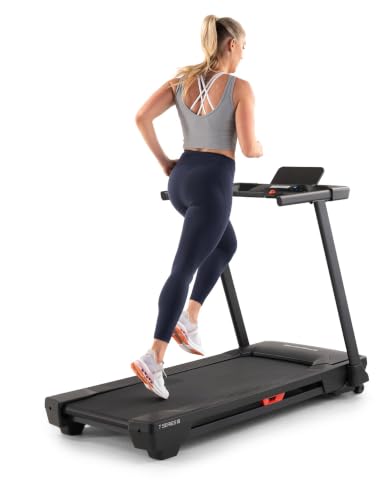
NordicTrack T Series 5 Treadmill
What We Like
- KeyFlex Cushioning reduces joint impact
- 0-10% incline targets more muscle groups
- iFIT auto-adjusts speed and incline
Trade-offs
- iFIT membership required for auto-adjust features
- Bluetooth HR monitor sold separately
A 0-10 MPH speed range and 0-10% incline let you walk, jog, or run without outgrowing the machine too quickly. The KeyFlex Cushioning absorbs impact with each stride, which makes it easier on your knees and hips during daily home workouts. That means you can focus on moving instead of fiddling with buttons. This treadmill suits someone who wants a connected, adaptable experience without paying for a commercial-grade frame or a giant footprint.
The trade-off is that the most useful features. SmartAdjust, ActivePulse, and the full workout library, require an iFIT membership. Without it, you lose the auto-adjust magic that sets this model apart. At 130 pounds, it is lighter than the Horizon Fitness 7.0AT, so it may feel less planted during aggressive running intervals. But if you value smart coaching and joint-friendly cushioning over raw heft, the NordicTrack T Series 5 delivers that balance in a compact package that fits most home gym corners.
Horizon Fitness 7.0AT Treadmill

What We Like
- QuickDial speed and incline controls
- 257-pound frame for stability during runs
Trade-offs
- No built-in touchscreen for standalone workouts
- 257-pound weight makes relocation difficult
A 257-pound frame and a 20-by-60-inch running deck give this treadmill a solid feel during use. The QuickDial controls and Rapid Sync Technology let you adjust speed or incline quickly while you run. For runners who want a stable platform that can handle regular training without extra features, the Horizon 7.0AT delivers that foundation.
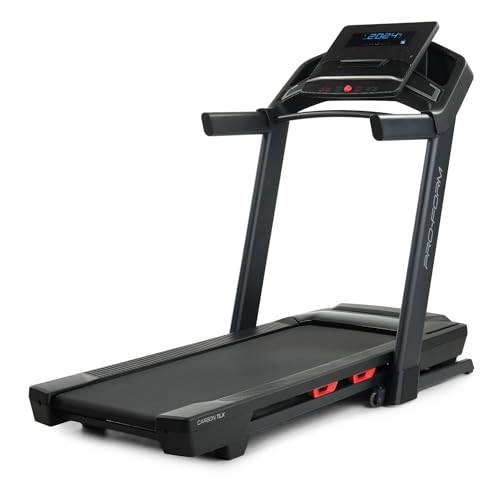
ProForm Carbon TLX Treadmill
What We Like
- ProShox cushioning reduces joint impact
- 0-12% incline for varied intensity
- Folds compact with hydraulic landing
- 7-inch LCD display tracks metrics
Trade-offs
- 221 lb makes repositioning a two-person task
- iFIT membership needed for auto-adjust features
- Heart rate monitor sold separately
A 0-12 MPH speed range and 0-12% incline give you room to walk, jog, or push a hard run, while ProShox cushioning soaks up impact to protect your knees and hips. That combination makes this treadmill a great fit if you want to fold it away after each workout. The folding frame and hydraulic foot bar are designed for easy, smooth landing, and the unit can be rolled away when folded. It suits someone who wants a sturdy, space-saving machine that can handle both steady cardio and hill intervals.
At 221 pounds, this treadmill demands a permanent spot and a second person to move it. That weight gives it a stable, solid feel while running, unlike lighter options such as the NordicTrack T Series 5 at 130 pounds. The ProForm Carbon TLX folds for storage, but you won’t want to relocate it daily.
Product photos
NordicTrack Commercial 2450 Treadmill

What We Like
- 24" tilting and pivoting touchscreen
- -3% decline to 12% incline range
- RunFlex cushioning reduces joint impact
- SmartAdjust auto-adapts speed and incline
Trade-offs
- 268.2 lb weight makes repositioning a chore
- iFIT Pro Membership required for key features
- Bluetooth HR monitor sold separately
A 24-inch touchscreen that tilts and pivots means you can follow a yoga class on the floor or watch a show mid-sprint without craning your neck. That screen is the centerpiece of an interactive experience where iFIT’s SmartAdjust learns your performance and automatically tweaks speed and incline to keep your effort honest. The -3 percent decline to 12 percent incline range targets more muscle groups than a flat belt ever could, and RunFlex cushioning softens each footstrike so your knees don’t pay for those hill repeats tomorrow. This is the treadmill for someone who wants the studio-class energy without leaving their living room.
Commitment is the real issue here: the 268.2-pound frame stays planted during hard intervals, but moving it to vacuum underneath means wrestling a heavy machine, even with the folding frame and wheels. More importantly, the features that make this treadmill shine, auto-adjusting workouts, ActivePulse heart-rate control, streaming, all require a premium iFIT Pro Membership. Compared to the Horizon Fitness 7.0AT, which keeps its programming built into the console with no subscription, the NordicTrack offers deeper coaching but adds an ongoing cost. Best for runners ready to subscribe to guided training, not ideal for anyone who wants a no-strings treadmill that just works.
Product photos
SOLE F63 Folding Treadmill

What We Like
- Quiet brushless motor for smooth operation
- Spacious cushioned deck reduces joint impact
- Folds with hydraulic assist and transport wheels
- Bluetooth speakers and USB-C charging port
Trade-offs
- No built-in touchscreen or app screen
- Freight delivery with curbside service only
The SOLE F63 suits anyone who wants a reliable folding treadmill for steady home training, especially if noise is a concern and you prefer a straightforward LED display over a flashy touchscreen.
The display is a clear 4-window LED with dial-style controls on the hand grips, so you can adjust speed and incline without fumbling. Delivery is curbside only, meaning you will need to bring the box inside and assemble it yourself or arrange help. For someone who values quiet operation and a cushioned stride over interactive screens, the F63 delivers where it counts.
BowFlex T16 Treadmill

What We Like
- Extra-wide 22" x 60" running deck
- 15% motorized incline for hill workouts
- Folding SoftDrop frame for storage
- Lifetime frame and motor warranty
Trade-offs
- At 295 lbs, it's very heavy to move
- Requires 77.2" floor space when unfolded
A 22-inch-wide by 60-inch-long running deck is the single most defining feature here. That extra width gives you room to stride naturally without worrying about stepping off the belt, especially during longer runs or when you’re tired and your form starts to wander. The FlexZone XL cushioning helps reduce joint impact, so you can log more miles without your knees complaining the next day. This treadmill suits anyone who wants a stable, spacious platform for serious training at home, for intervals, hill repeats, or walking while watching Netflix on the 16-inch HD touchscreen.
The big trade-off is the weight and footprint. At 295 pounds and 77.2 inches long, this isn’t a machine you’ll easily tuck into a corner or haul up stairs alone. The SoftDrop folding system helps, but it’s still a substantial piece of equipment. Compared to something like the Horizon Fitness 7.0AT, which is lighter and more compact, the BowFlex T16 demands more dedicated floor space and a bit more muscle to set up. If you have a permanent home gym spot and want a deck that feels like a commercial club, this is the one. If you need to stash your treadmill in a closet after each run, you might prefer a lighter folding model.
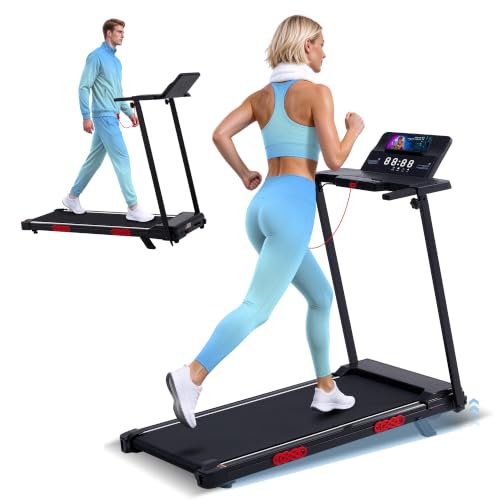
OURPEACE Portable Treadmill
What We Like
- 400-lb weight capacity for stability
- Fold-down handles save floor space
- 12 preset programs add variety
- Anti-slip belt with shock absorption
Trade-offs
- At 40.3 lb, light but not ultralight
- Short 41.5-inch length limits stride
- No incline adjustment mentioned
A 400-pound weight capacity and a 3.5 HP motor fit into a machine that is 41.5 inches long, so you get real walking and running power without needing a dedicated gym space. The handles fold down after use, letting it tuck under a bed or against a wall, and the 12 preset programs add variety to your workouts. This is the compact option for anyone who needs a space-conscious machine that handles daily use without feeling flimsy.
The running surface is where compromises show up. At 41.5 inches long, this is a short deck, so taller users or anyone with a longer stride will feel cramped during runs. Compared to the NordicTrack T Series 5, which stretches 68.3 inches, the OURPEACE is clearly built for walking and jogging, not full-speed sprints. That is fine if you are honest about your space and your goals. If you need a full-length deck, look at the bigger options. If you need something that fits in a corner and still handles serious walking, this is the one.
Product photos
WELLFIT Folding Treadmill

What We Like
- Auto-aligning belt needs no manual adjustment
- Handlebar controls let you adjust without bending
- 5-layer cushion belt reduces joint impact
- Folds with built-in wheels for easy storage
Trade-offs
- Short 49.2-inch deck limits stride for running
- Belt width 16 inches feels narrow for taller users
A 36 x 16-inch cushioned belt with auto-alignment takes the hassle out of treadmill upkeep, so you can focus on walking or light jogging without stopping to fix a drifting belt. This WELLFIT model is built for the budget-conscious home user who wants a compact, joint-friendly walking pad that stores easily and doesn’t require bending to change speed. The handlebar controls, remote, and app options give you flexibility, and the 5-layer cushioning makes it gentle on knees and ankles, perfect for seniors or beginners easing into daily movement.
The compact size is the main compromise: at 49.2 inches long and with a 16-inch-wide belt, this is a walking and light jogging machine, not a full-stride runner’s deck. If your goal is steady walking or short jogs in a small apartment, this is a smart, affordable choice. For serious running or taller users, a larger treadmill would be a better fit.
Product photos
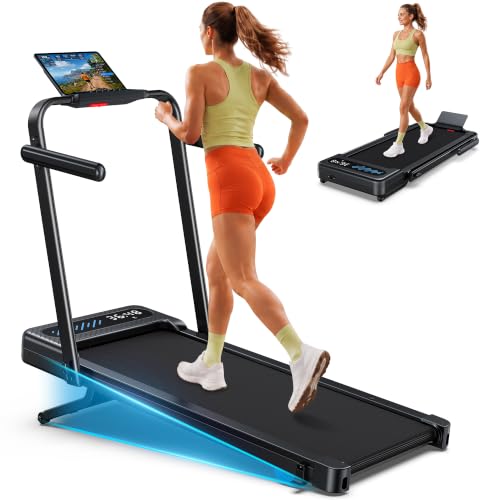
WELLFIT Walking Pad With Auto Incline
What We Like
- 12% auto incline for uphill training
- 375 lb capacity supports heavier users
- Foldable with transport wheels for storage
Trade-offs
- 16-inch belt width limits running stride
- Max 7.6 MPH not for serious runners
A 375-pound weight capacity and a 12% auto incline make this walking pad unusually accommodating for heavier users who want real hill training without stopping to adjust a lever. This is the pick for someone who wants the convenience of a foldable, storable pad but refuses to compromise on incline range or build strength.
The trade-off shows up in the 16-inch belt width and 7.6 MPH top speed. That narrow deck works fine for walking and moderate jogging, but it feels cramped if you try to open your stride for faster running. Compared to the NordicTrack T Series 5, which is a larger, heavier treadmill, the WELLFIT gives up some running room for a much lighter, more storable frame. If your goal is daily walking with occasional hill sprints, this pad fits. If you plan to run regularly, look at the full-size options.
LONTEK 18% Incline Treadmill
What We Like
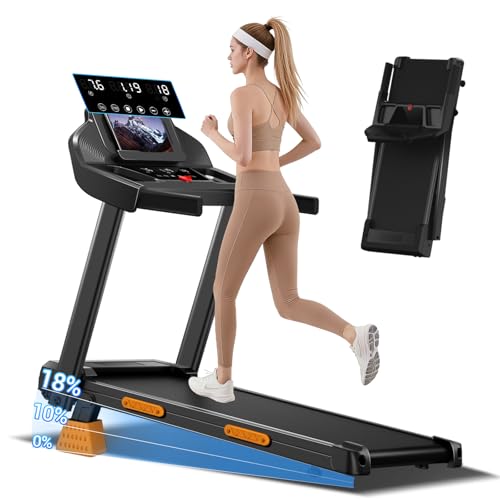
- 18% manual incline boosts calorie burn
- 3.0 HP brushless motor stays under 45 dB
- Folds to 4.1 inches for easy storage
Trade-offs
- Manual incline requires stopping to adjust attachments
- Running belt at 37.5 inches limits long strides
- Smaller footprint than full-size home treadmills
A 400-pound weight capacity on a machine that folds down to just over four inches thick is the kind of spec that makes you do a double-take. The LONTEK’s 3.0 HP brushless motor keeps noise under 45 decibels, so you can walk or jog without waking the whole house. The manual incline goes all the way to 18 percent, enough to turn a steady walk into a serious climb. This is the treadmill for anyone who wants real incline training on a budget, especially if floor space is tight and you need something that slides under a bed or sofa between workouts.
Product photos
How We Evaluated Treadmills For Home Use
We studied manufacturer specs, expert round-ups, and the patterns that show up in owner feedback for each model. That means we looked at deck dimensions, motor power, cushioning systems, incline ranges, weight capacities, and folded footprints, then checked how those numbers translate into real-world use.
The four criteria that mattered most were cushioning, incline range, footprint and storage, and motor reliability. Cushioning protects joints on a stationary running surface, and incline range adds variety to target different muscle groups. Footprint and storage matter because home gyms share space with living areas, and motor reliability is critical since a dead motor means a dead treadmill. These factors separate a machine that gets used daily from one that becomes a clothes rack.
A research-led evaluation has limits. We did not run on every deck or measure decibel levels in a lab. What we can do is identify the specs and design choices that consistently produce satisfied owners and steer you away from the ones that cause returns.
What To Look For In Treadmills For Home Use
Before you buy, match the treadmill’s specs to your height, stride, workout style, and floor space. A machine that fits your body and your room is the one you will actually use.
Focus on deck length and width, cushioning type, motor horsepower, incline range, and folded dimensions. Your height and stride determine the minimum deck you need. Your joints decide how much cushioning matters. Your floor plan decides whether folding is a must.
Deck Size and Your Stride
The running deck is the most important measurement. For walking, a 45-inch deck works. For running, you want at least 50 inches, and more if you are over six feet tall. A deck that is too short forces you to shorten your stride, which throws off your gait and makes every run feel cramped.
Width matters too. A 20-inch belt is standard, but wider decks around 22 inches give bigger runners more room to land naturally. The BowFlex T16 and the SOLE F63 both offer spacious decks that reduce the chance of stepping on the edge.
Cushioning and Joint Impact
Running on pavement is harder on joints than running on a quality treadmill deck, but only if the cushioning is good. Look for systems that absorb shock at the point of impact and then give you a firm push-off. NordicTrack’s KeyFlex and RunFlex systems, ProForm’s ProShox, and SOLE’s cushioned decks all reduce the stress that accumulates over longer runs.
If you have existing knee or hip concerns, prioritize models with adjustable or multi-zone cushioning. The difference between a firm deck and a forgiving one becomes obvious around mile three.
Motor Power and Noise
A continuous-duty motor in the right range is the sweet spot for home running. Lower horsepower motors can overheat during longer sessions, and underpowered treadmills often produce a whining sound that bothers everyone in the house. The SOLE F63 uses a quiet brushless motor that stays smooth even at higher speeds.
If you live in an apartment or share a wall, motor noise and belt friction matter as much as any feature. A loud treadmill will get complaints, or stop getting used.
Incline Range and Training Variety
Incline turns a flat walk into a hill workout and engages your glutes and hamstrings more than running on a level surface. A 0 to 10 or 12 percent range covers most home training needs. The NordicTrack Commercial 2450 goes further with a -3 percent decline that simulates downhill running, which changes how your quads and knees work.
For walkers who want a simpler setup, the WELLFIT Walking Pad With Auto Incline and the LONTEK 18% Incline Treadmill offer steep grades without the bulk of a full-size machine. Just remember that manual incline requires stopping to adjust the attachments.
- Measure your ceiling height if the treadmill folds upright, some folded models need significant clearance.
- Check the weight capacity against your body weight plus a safety margin.
- Look at the warranty: longer frame and motor warranties signal better build quality.
- Consider the folded footprint against your storage spot before you order.
- Read the delivery details, some models arrive with curbside service only.
A rule of thumb: if the deck is shorter than your running stride, the treadmill will not work for running no matter how many features it has.
Treadmills For Home Use Compared
The table below compares all ten treadmills across deck size, motor power, incline range, weight, and folded dimensions so you can see at a glance which one fits your home.
| Product | Speed Range | Cushioning | Weight |
|---|---|---|---|
| NordicTrack T Series 5 Treadmill | 0-10 MPH | KeyFlex Cushioning | 130.0 lbs |
| Horizon Fitness 7.0AT Treadmill | 0.5 – 12 MPH | 3-Zone Variable Response | 257.0 lbs |
| ProForm Carbon TLX Treadmill | 0-12 MPH | ProShox | 221 lb |
| NordicTrack Commercial 2450 Treadmill | 0-14 MPH | RunFlex shock absorption | 268.2 pounds |
| SOLE F63 Folding Treadmill | 0-12 mph | 18mm cushion | N/A |
| BowFlex T16 Treadmill | 0.5-12 MPH | FlexZone XL cushioning | 295.0 pounds |
| OURPEACE Portable Treadmill | 0.6-10.0 MPH | N/A | 40.3 pounds |
| WELLFIT Folding Treadmill | N/A | 5-Layer Cushion Belt | 43.5 lb |
| WELLFIT Walking Pad With Auto Incline | Max 7.6 MPH | Shock Absorption | 57.0 pounds |
| LONTEK 18% Incline Treadmill | 0.6-7.5 MPH | 7-Layer Shock-Absorbing | 43.6 pounds |
Frequently Asked Questions
How much floor space do I need for a home treadmill?
Unfolded, most home treadmills need a space roughly several feet long and several feet wide. Folded models like the ProForm Carbon TLX and the SOLE F63 reduce the footprint significantly, some drop to under 40 inches in length when stored upright. Measure your room before buying and leave clearance around the back and sides for safety.
What is the best treadmill cushioning for joint pain?
Look for cushioning systems that absorb impact at the belt and deck rather than transferring it to your legs. NordicTrack’s KeyFlex and RunFlex, ProForm’s ProShox, and the multi-layer belts on WELLFIT models all reduce joint stress. If you have existing knee or hip issues, a treadmill with adjustable or zoned cushioning gives you more control over the feel of each stride.
Can I use a treadmill in an apartment without bothering neighbors?
Yes, but you need a model with a quiet motor and good belt insulation. The SOLE F63‘s brushless motor stays under typical conversation volume, and the LONTEK 18% Incline Treadmill is rated under 45 dB. Place a thick treadmill mat underneath to absorb vibration, and avoid running during late hours. Heavy, stable frames also produce less floor noise than lightweight ones.
How often should I lubricate my treadmill belt?
Most manufacturers recommend lubricating the belt every three to six months, or after roughly 40 hours of use. Check your owner’s manual for the specific lubricant type, silicone-based is common. A dry belt creates friction that wears out the motor and deck faster. If you feel hesitation or hear squeaking when you step, it is time to lubricate.
What motor size do I need for running at home?
A continuous-duty motor rated in the right range is sufficient for regular running at typical speeds. Motors with lower ratings are better suited for walking. Higher horsepower motors handle longer sessions and heavier users without overheating. The NordicTrack T Series 5 and the Horizon 7.0AT both use motors in this reliable range.
The Bottom Line
The NordicTrack T Series 5 Treadmill is the best overall pick for most home runners. It gives you the cushioning your joints need, the incline range to vary your training, and the iFIT platform to keep workouts interesting, all in a compact frame that does not dominate your living space. If you want interactive coaching without a built-in touchscreen, the Horizon Fitness 7.0AT delivers a stable, heavy-duty platform instead.
Budget-conscious buyers should look at the WELLFIT Folding Treadmill for walking and light jogging, or the LONTEK 18% Incline Treadmill if steep grades and a tiny folded footprint matter more than speed. For runners who need a wide deck and a lifetime warranty, the BowFlex T16 is worth paying more for.
The single most important buying factor is deck length. No feature, no app, no warranty will make a treadmill enjoyable if your stride does not fit. Measure your height, measure your stride, and choose a deck that gives you room to move naturally. Everything else is secondary.
