
10 Best Workout Watches For Women in 2026
This post contains affiliate links. As an Amazon Associate, we earn from qualifying purchases.
The Apple Watch SE 3 GPS Smartwatch earns our best overall spot because it packs temperature sensing for cycle tracking, fall and crash detection, and Siri AI workout tips into a familiar smartwatch experience. For style, the Garmin Lily 2 blends fitness tracking with a jewelry-like design. The Garmin Vivoactive 5 wins for battery life with an 11-day charge.
The challenge is finding a watch that actually fits your routine. That means accurate heart data for serious training, a slim band for yoga, or a week of battery so you stop scrambling for the charger. A running watch won’t serve the Pilates lover, and a fashion-forward tracker might frustrate the marathoner.
We built this guide by comparing specs, manufacturer claims, and patterns in owner feedback across ten models. You’ll get clear criteria, a direct recommendation for your needs, and a few honest trade-offs to weigh before you buy.
Top 10 Workout Watches For Women in the Market
Certain content that appears on this site comes from Amazon. This content is provided "as is" and is subject to change or removal at any time.
The Best Workout Watches For Women, Reviewed
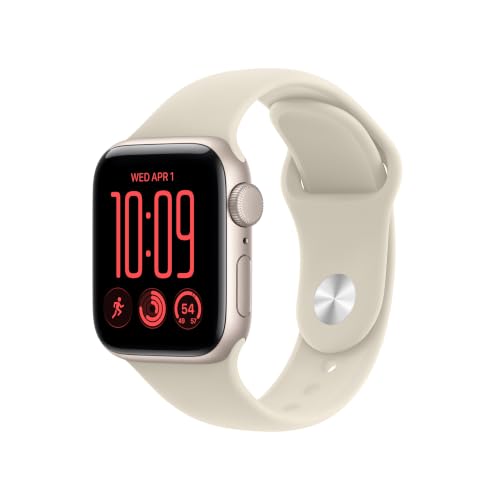
Apple Watch SE 3 GPS Smartwatch
What We Like
- Temperature sensing for cycle tracking
- Fall and crash detection with emergency SOS
- Siri AI for workout and wellness tips
Trade-offs
- Requires iPhone to stay connected
- 0.5 pounds feels heavier than some rivals
Temperature sensing provides data for the Vitals app and Cycle Tracking app, giving users a clearer picture of their overall health. Sleep tracking goes beyond simple duration by calculating a sleep score, and the watch can alert wearers to potential sleep apnea. These features turn the device into a practical health tool for daily wellness monitoring, not just a basic step counter. The combination of cycle insights and sleep analysis helps users identify patterns that might otherwise go unnoticed, making it easier to have informed conversations with healthcare providers.
Product photos
Garmin Lily 2 Smartwatch

What We Like
- Tracks yoga, Pilates, cardio, dance fitness
- Patterned lens reveals display with a tap
- Metal case with silicone band
Trade-offs
- GPS requires phone connection for accuracy
- GPS requires phone connection for tracking
A patterned lens that reveals a bright touchscreen with a tap means this watch blends a stylish look with health tracking. The metal case and silicone band offer a refined appearance, while the built-in heart rate monitor, Body Battery energy monitoring, and sleep score give you a daily view of your health. It works well for anyone who wants a device that fits both workouts and social settings without a bulky sporty look.
The trade-off is that the GPS relies on your phone, so if you run or hike without carrying it, you won’t get accurate distance or pace data. That puts it behind the Garmin Vivoactive 5, which has built-in GPS for phone-free tracking. But if you always have your phone along and value a smaller, more elegant design over standalone GPS, the Lily 2 delivers a polished look that few competitors match.
Garmin Vivoactive 5 GPS Smartwatch

What We Like
- 11-day battery in smartwatch mode
- Body Battery energy monitoring with sleep insights
- 30+ built-in sports apps including wheelchair mode
- Automatic nap detection and logging
Trade-offs
- Always-on display halves battery to 5 days
- No built-in speaker for music or calls mentioned
An 11-day battery in smartwatch mode means you can track workouts, sleep, and stress without hunting for a charger every few nights. That’s a full workweek plus a weekend of hiking or yoga, and the AMOLED display provides bright, colorful visuals. The Body Battery feature uses your sleep, naps, stress, and workout data to tell you when you’re running on empty or ready to push harder, so you learn to pace yourself instead of burning out. For anyone who wants health insights that actually fit into a busy life, this watch keeps going as long as you do.
The Vivoactive 5 lasts up to 11 days in smartwatch mode, but running the display always-on cuts battery to five days. You will need to decide whether you want a glowing screen or longer charge intervals. If battery life is your top priority and you don’t mind leaving your phone nearby for calls, this Garmin is a strong endurance pick.
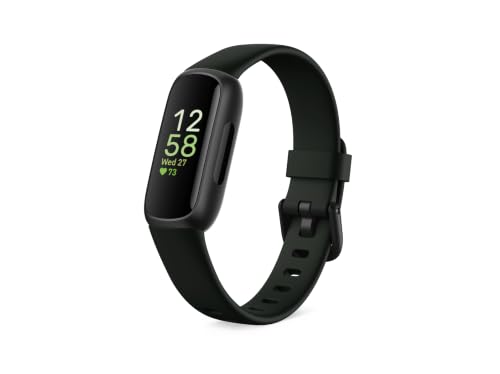
Google Fitbit Inspire 3 Fitness Tracker
What We Like
- Daily Readiness Score for workout pacing
- 40+ exercise modes plus auto tracking
- Stress Management Score and breathing sessions
- Automatic sleep tracking with smart alarm
Trade-offs
- No built-in GPS for outdoor runs
- Requires smartphone for full setup
A Daily Readiness Score that tells you whether to push hard or take it easy is the kind of feature that makes this tracker feel like a coach on your wrist, not just a step counter. It suits anyone who wants stress management, sleep tracking, and 24/7 heart rate monitoring without spending on a full smartwatch. The 40-plus exercise modes cover everything from yoga to HIIT. The automatic exercise tracking catches your movement even when you forget to start it.
The Inspire 3 does not include built-in GPS, so tracking distance and pace during outdoor runs or rides requires carrying your phone. For those who prefer phone-free workouts, the Garmin Lily 2 includes built-in GPS, making it a better fit for outdoor athletes. For gym sessions, daily walks, and monitoring stress and sleep, the Inspire 3 covers the essentials in a slim, comfortable design.
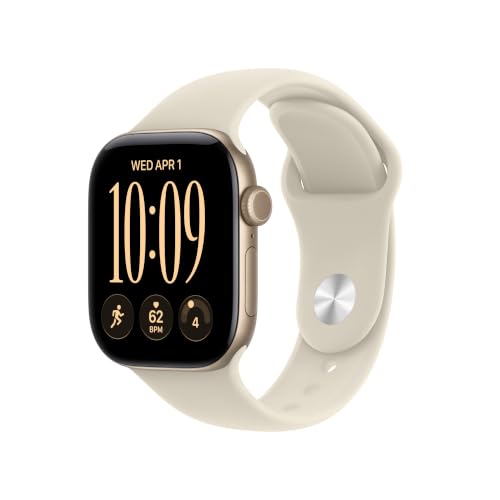
Apple Watch Series 12 GPS Smartwatch
What We Like
- Most accurate heart rate sensing in a wearable
- HRV measured every five minutes for stress insights
- Background heart rate readings every five seconds
- Fast charge: 15 min for 12 hours use
Trade-offs
- Battery life limited to 24 hours normal use
- Siri AI features rolling out in English only
- Some Audio Intelligence features beta late 2026
The heart rate sensor that reads every five seconds and measures HRV every five minutes makes this the closest thing to a clinical-grade recovery tracker you can wear on your wrist. For anyone who wants to know not just how hard they worked out but how well their body is bouncing back, that constant stream of data removes guesswork about whether to push or rest. It suits the woman who treats her workouts like data points and wants the clearest picture of her cardiovascular health, from overnight vitals to daily readiness scores, all without needing a second device.
The 24-hour battery life means you will charge it daily, even if a 15-minute top-up gets you through a full day. The Garmin Lily 2 lasts multiple days but lacks the same depth of heart-rate and HRV tracking. If you prefer fewer charging stops and don’t need minute-by-minute heart metrics, the Lily 2 is lighter on your wrist and your routine. But for heart health tracking, the Apple Watch Series 12 sets the standard, just keep the charger nearby.
Product photos
Samsung Galaxy Watch 8 Bluetooth Smartwatch

What We Like
- Thinner, lighter design for all-day comfort
- Advanced Sleep Coaching with bedtime guidance
- Running Coach with real-time feedback
- Blood pressure monitoring capability
Trade-offs
- Blood pressure cuff sold separately for calibration
- Requires separate blood pressure cuff for calibration.
At just 0.1 pounds and a thinner-than-ever silhouette, this watch is built to disappear on your wrist during workouts and daily life. The snug sporty fit means you won’t feel it bouncing around during a run or adjusting on a yoga mat, which is exactly what you want when you’re focused on form. It pairs that comfort with a Running Coach that analyzes your performance in real time and offers training programs for 5Ks or marathons, plus Advanced Sleep Coaching to help you recover better. For anyone who wants a watch that stays out of the way but still delivers serious fitness feedback, this is the one to grab.
The Samsung Galaxy Watch 8 weighs only 0.1 pounds, so it feels nearly weightless on your wrist during all-day wear and sleep tracking. The blood pressure feature requires a separate cuff for initial calibration, meaning it is not a standalone health monitor. For everyday gym sessions and sleep tracking, this watch strikes a nice balance between comfort and capability.
Product photos
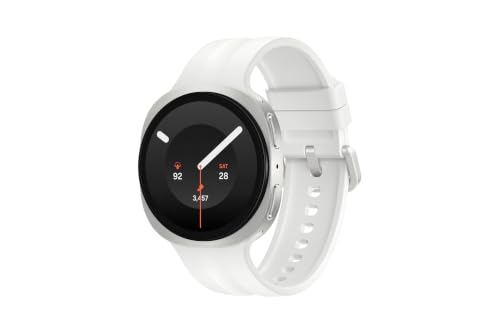
Samsung Galaxy Watch9 Bluetooth Smartwatch
What We Like
- Personalized AI coaching for fitness goals
- Tracks sleep patterns with tailored guidance
- Blood pressure monitoring with calibration
Trade-offs
- Blood pressure requires separate cuff for calibration
- No built-in GPS for standalone outdoor tracking.
The Samsung Galaxy Watch9’s Fitness Index delivers tailored coaching based on your actual fitness level, so you’re not following generic plans that ignore where you’re starting from. That personalized guidance makes it ideal for women who want to build endurance or muscle without guessing their next step. The Vitals feature tracks health patterns while you sleep, catching shifts from your usual metrics and offering insights that help you adjust your routine. It’s a watch that learns you, not one that just counts steps and calls it a day.
Blood pressure monitoring needs a separate cuff for calibration, so it’s not a grab-and-go health tool out of the box. The Garmin Lily 2 includes built-in GPS and Body Battery energy monitoring, while the Galaxy Watch9 focuses on AI-driven coaching and sleep guidance instead. If you want a coach on your wrist that adapts to your body’s signals and helps you train smarter, this is the pick. Just be ready to pair it with a cuff if you want that blood pressure data.
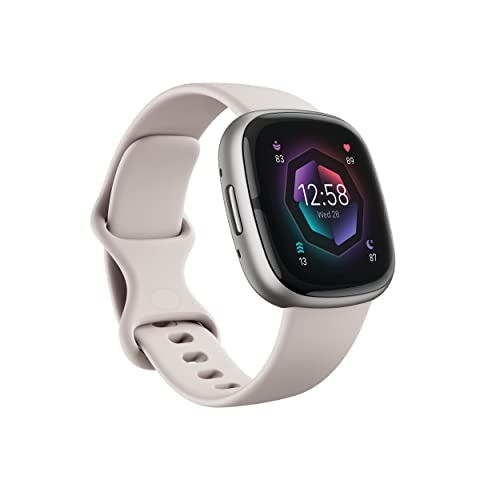
Fitbit Sense 2 Health Smartwatch
What We Like
- All-day stress detection with cEDA
- ECG app for atrial fibrillation assessment
- Built-in GPS and workout intensity map
- 6+ day battery life
Trade-offs
- No onboard music storage for phone-free listening
- Requires a subscription for full features
All-day stress detection with cEDA and a daily Stress Management Score give you data on your body’s stress response, paired with mindfulness content to help you act on it. For anyone whose priority is managing stress and improving sleep alongside fitness, this watch puts those tools front and center.
There is no onboard music storage, so you’ll need your phone for audio during workouts. The Garmin Vivoactive 5 offers Body Battery energy monitoring and built-in sports apps, while the Sense 2 focuses on stress and sleep tools with its ECG app and SpO2 tracking. If winding down after exercise is your main challenge, this watch supports that goal.
aeac Smart Watch for Women

What We Like
- 110+ sport modes for varied activities
- AMOLED display with 200+ watch faces
- 3ATM waterproof for swimming and wet conditions
- 10-day battery on 2-hour charge
Trade-offs
- No built-in GPS for route tracking
- Stress and sleep analysis lack clinical validation details
With 110 sport modes packed into a slim 43mm body, this watch covers everything from yoga laps to swimming laps without making you swap gear. The 1.32-inch AMOLED screen stays crisp even in bright gym lighting, and the 3ATM water resistance means you can keep it on through a rainy run or a dip in the pool. For someone who likes variety, mixing HIIT with a lunchtime swim and an evening walk, the sheer number of activity options is a real time-saver, letting you track each session without digging through menus.
Navigation is a trade-off: unlike the Garmin Lily 2, this watch doesn’t have built-in GPS. So if you run or cycle without your phone, you won’t get accurate distance or pace data. That said, the 10-day battery means you charge it twice a month, not twice a week, a practical win for anyone who forgets their charger as often as I forget to stretch after leg day.
Product photos
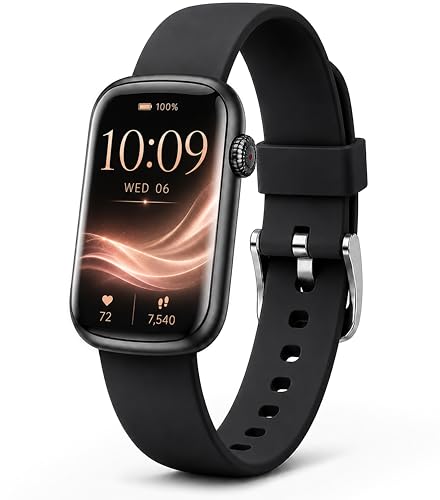
MorePro Health Fitness Tracker
What We Like
- 1.47" slim display with 300+ watch faces
- 24/7 heart rate and blood pressure monitoring
- Women's health tracking with cycle calendar
- IP68 waterproof for daily wear
Trade-offs
- Blood oxygen is on-demand, not continuous
- Not compatible with iPads or tablets
- Only 7 sports modes, fewer than some rivals
A 1.47-inch slim display and lightweight build make this tracker easy to wear all day, which is exactly the point for anyone who wants fitness data without a bulky gadget. It covers the essentials: 24/7 heart rate, blood pressure, sleep tracking, and even a menstrual calendar, so you can keep tabs on your health through workouts, workdays, and everything in between. The IP68 waterproof rating means it handles hand washing, sweat, and light rain without worry, and with over 300 watch faces, it doubles as a fashion accessory that fits your outfit or mood.
The blood oxygen readings require you to manually check, not a continuous stream. The seven sports modes cover running, climbing, cycling, basketball, walking, elliptical, and yoga, which covers the basics but won’t satisfy someone who wants a larger variety of workout options. The Garmin Lily 2 offers built-in GPS and Body Battery energy monitoring, while the MorePro keeps things simpler. That is perfect if you want reliable health stats and a slim profile without paying for advanced metrics you might not use. It’s a solid everyday companion, not a hardcore training tool.
Product photos
How We Evaluated Workout Watches For Women
Our research started with the fundamentals: what each watch actually tracks and how it tracks it. We looked at GPS capability (built-in versus phone-connected), heart rate sensing accuracy, battery life, and the number of sport modes. We also checked water resistance ratings and display quality since those matter for swimming, outdoor runs, and everyday wear.
We then sorted by the three criteria that matter most to women choosing a workout watch. Those are fit and comfort for smaller wrists, health-tracking depth (cycle tracking, stress monitoring, sleep stages), and whether the watch works independently of a phone. A watch that needs an iPhone to function is useless to an Android owner, and a tracker without GPS is a poor choice for runners who leave their phone behind.
A research-led evaluation has limits: we don’t have lab data on sensor accuracy or long-term durability. We rely on manufacturer documentation, expert round-ups, and the patterns reported by thousands of owners. If you need clinical-grade heart monitoring, talk to your doctor, but for everyday fitness, these ten watches cover the range well.
What To Look For In Workout Watches For Women
Start with your primary activity and your phone’s operating system. From there, battery life, sensor accuracy, and fit will narrow the field fast.
Choose a watch that matches your main workout, your phone (iPhone or Android), and your tolerance for charging. GPS type, heart rate accuracy, and strap size are the three dealbreakers.
GPS: Built-in vs. Connected
If you run, cycle, or hike without your phone, you need a watch with built-in GPS. Models like the Fitbit Sense 2 and Apple Watch SE 3 have it onboard. Connected GPS (used by the Garmin Lily 2 and Fitbit Inspire 3) relies on your phone’s signal, which drains your phone battery and means you must carry it. For gym workouts, yoga, or treadmill sessions, connected GPS is fine and saves cost and weight.
Heart Rate and Health Sensors
The depth of heart data varies widely. The Apple Watch Series 12 reads HRV every five minutes and takes background heart readings every five seconds, useful for stress and recovery insights. The Fitbit Sense 2 adds all-day stress detection with cEDA and an ECG app for atrial fibrillation assessment. If you only need resting heart rate and calorie burn, a simpler tracker like the MorePro Health Fitness Tracker will do. For serious training, prioritize continuous monitoring and HRV tracking.
Battery Life and Charging
Battery life ranges from 24 hours (Apple Watch Series 12) to 11 days (Garmin Vivoactive 5). A watch that needs daily charging works if you’re near a plug each night. A multi-day battery is better for travelers, shift workers, or anyone who forgets to charge. Also check charging speed: the Apple Watch Series 12 gets 12 hours of use from a 15-minute charge, which is handy in a pinch.
- Confirm the watch works with your phone (Apple Watch requires iPhone; Samsung watches work best with Android).
- Check water resistance depth for swimming or shower wear.
- See if the display is always-on or needs a tap to wake.
- Verify the strap is replaceable and available in smaller sizes.
- Look for subscription requirements. Fitbit Sense 2’s full features need a paid plan.
A watch that needs daily charging will feel like a chore unless you already charge your phone every night.
Workout Watches For Women Compared
The table below lays out the key specs for each of our ten picks so you can compare GPS type, battery life, and standout features side by side.
| Product | Display Size | Battery Life | Health Sensors |
|---|---|---|---|
| Apple Watch SE 3 GPS Smartwatch | 40mm | 18 hours | Heart rate, temperature sensing |
| Garmin Lily 2 Smartwatch | 35mm | Up to 5 days | Heart rate, Body Battery, sleep, stress |
| Garmin Vivoactive 5 GPS Smartwatch | 42mm | Up to 11 days | Heart rate, Body Battery, sleep, HRV |
| Google Fitbit Inspire 3 Fitness Tracker | N/A | N/A | 24/7 heart rate, sleep, stress |
| Apple Watch Series 12 GPS Smartwatch | 42mm | Up to 24 hours | Heart rate, HRV |
| Samsung Galaxy Watch 8 Bluetooth Smartwatch | 40mm | Long-lasting charge | Heart rate, blood pressure, sleep |
| Samsung Galaxy Watch9 Bluetooth Smartwatch | 40mm | N/A | Heart rate, blood pressure, sleep, Vitals |
| Fitbit Sense 2 Health Smartwatch | N/A | 6+ days | Heart rate, SpO2, stress, ECG |
| aeac Smart Watch for Women | 1.32" AMOLED | Up to 10 days | Heart rate, SpO2, sleep, stress |
| MorePro Health Fitness Tracker | 1.47" slim display | 7 days | Heart rate, blood pressure, blood oxygen |
Frequently Asked Questions
Which workout watch is best for yoga and Pilates?
The Garmin Lily 2 tracks yoga, Pilates, cardio, and dance fitness with a patterned lens display that reveals the screen when you tap. Its lightweight metal case and silicone band stays comfortable on the mat. The Samsung Galaxy Watch 8 also works well for studio classes thanks to its slim, light design.
Do I need a watch with built-in GPS for gym workouts?
No. If you exercise indoors on a treadmill, in a spin class, or in a yoga studio, connected GPS (which uses your phone’s signal) is sufficient. Watches like the Fitbit Inspire 3 and Garmin Lily 2 use connected GPS and are lighter and more affordable as a result. Built-in GPS matters most for outdoor runners and cyclists.
How accurate are wrist-based heart rate monitors on fitness watches?
Wrist-based optical sensors are reliable for steady-state exercise and resting heart rate. The Apple Watch Series 12 offers the most accurate heart rate sensing available in a wearable, with readings every five seconds. For high-intensity intervals or weightlifting, chest straps remain more accurate. The data is excellent for trends, not medical diagnosis.
What is the best budget fitness watch for women?
The Google Fitbit Inspire 3 Fitness Tracker is our budget pick. It offers 40+ exercise modes, automatic activity tracking, sleep tracking with a smart alarm, and a Daily Readiness Score, all without built-in GPS. It requires a smartphone for setup but delivers strong health tools at an affordable price point.
Can a fitness watch track my menstrual cycle?
Yes. Several models include women’s health tracking. The Apple Watch SE 3 uses temperature sensing for cycle tracking, and the MorePro Health Fitness Tracker includes a cycle calendar. The Samsung Galaxy Watch 8 and Galaxy Watch9 also offer cycle tracking features. These tools log periods, predict fertility windows, and note symptoms.
The Bottom Line
The Apple Watch SE 3 GPS Smartwatch is the best overall for iPhone users who want a health-focused smartwatch with safety features and fast charging. It covers cycle tracking, crash detection, and workout coaching in one package. If you use Android, skip it and look at the Samsung or Garmin options instead.
If battery life is your priority, the Garmin Vivoactive 5 delivers 11 days between charges with deep sleep and recovery insights. For style, the Garmin Lily 2 looks like jewelry and tracks yoga and Pilates. Budget shoppers should start with the Fitbit Inspire 3, which packs stress management and sleep tracking without a high price.
The single most important factor is phone compatibility. An Apple Watch needs an iPhone, and Samsung watches work best with Android. Once that’s settled, the rest is about your workout, your wrist size, and how often you want to charge. Pick the watch that fits your life, not the one with the longest feature list.
