
10 Best Watches For Exercise in 2026
This post contains affiliate links. As an Amazon Associate, we earn from qualifying purchases.
For most of us, the right watch turns a good workout into a smarter one. The Garmin Forerunner 165 Running Smartwatch earns our Best Overall spot because it blends adaptive daily workout suggestions with impressive battery life and safety features, all in a lightweight package. If your priority is shedding every gram, the COROS PACE 4 is our Best Ultralight Design pick, while the Apple Watch Series 12 leads for deep health tracking.
The problem with choosing a workout watch today is that every model claims to track everything. The real difference lies in how well a watch fits your specific routine, whether you run trails, lift in a gym, or swim laps. Battery life, display visibility, and the quality of your heart rate data matter far more than a long list of modes.
This guide is built from manufacturer specs, expert round-ups, and patterns in owner feedback across hundreds of watches. We focused on the criteria that actually affect your training: GPS accuracy, battery longevity, comfort, and the depth of recovery metrics. Our goal is to help you match a watch to your workout, not the other way around.
Top 10 Watches For Exercise in the Market
Certain content that appears on this site comes from Amazon. This content is provided "as is" and is subject to change or removal at any time.
The Best Watches For Exercise, Reviewed
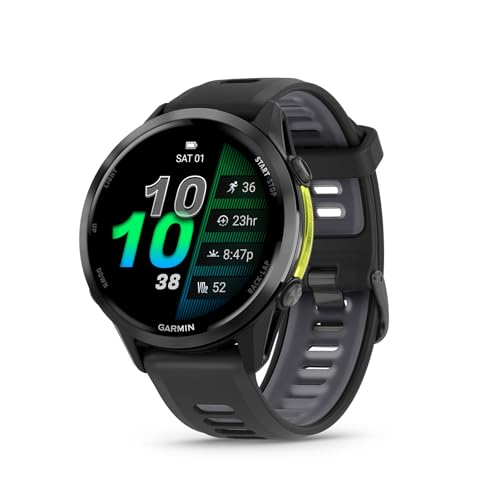
Garmin Forerunner 165 Running Smartwatch

What We Like
- Personalized daily suggested workouts adapt to your recovery
- Up to 11 days battery in smartwatch mode
- Safety features: incident detection and assistance
- 25+ activity profiles for varied training
Trade-offs
- No built-in offline maps for trail navigation
- Lacks voice control found on some competing sport watches
An 11-day battery in smartwatch mode means you can wear this thing all week without hunting for a charger, even with daily runs. That alone makes it a practical companion for anyone who wants fitness tracking to blend into real life rather than become another chore. The personalized daily suggested workouts adjust based on how you performed and recovered, which takes the guesswork out of what to do each morning. It’s a watch that treats you like an individual, not a data sheet. For runners and gym-goers who want reliable GPS, heart rate, and training guidance without overcomplicating things, this is the one that gets out of your way and lets you move.
The 43mm case is light and comfortable for all-day wear, but if you have larger wrists or prefer a bigger screen for glancing at stats mid-run, it might feel a bit compact. Compare that to the Garmin Forerunner 970, which adds a built-in flashlight, handy for early morning or evening workouts. Still, the 165 delivers the core training features that matter most: adaptive workouts, recovery time estimates, and safety alerts that can share your location with contacts. It’s a focused tool for the athlete who values simplicity and battery life over extra bells.
COROS PACE 4 Ultralight Sport GPS Watch

What We Like
- Ultralight 32g with nylon band
- 41-hour GPS battery life
- Voice recording and voice control
- 1.2" AMOLED with auto-brightness
Trade-offs
- Nylon band weight not standard silicone
- No built-in music storage mentioned
Thirty-two grams with the nylon band is lighter than most energy gels, which means you genuinely forget it’s on your wrist mid-run or during a HIIT session. That ultralight feel, paired with 41 hours of continuous GPS tracking, makes it a watch you can wear for a full training block without needing to plug it in every few days. The 1.2-inch AMOLED screen is crisp and bright enough to glance at mid-stride, and the voice recording tool lets you log where you were and how you felt without fumbling with your phone. If you want a watch that disappears on your wrist while still giving you serious training data, this is the one to grab.
The trade-off for that featherlight build is a 1.2-inch AMOLED display, which is crisp and bright with auto-adjusting brightness for easy reading in all environments. You won’t get onboard music storage, so you’ll still need your phone for playlists. But for runners and gym-goers who prioritize weight and battery life over screen real estate, the COROS PACE 4 delivers exactly what it promises, a no-nonsense training companion that stays out of your way.
Product photos
Garmin Forerunner 970 Premium GPS Running Smartwatch
What We Like
- Brightest AMOLED display for outdoor visibility
- Lightweight titanium bezel with sapphire lens
- Built-in LED flashlight for low-light runs
- Multi-band GPS with full-color maps
Trade-offs
- HRM 600 chest strap required for running economy metrics
- ECG app not available in all countries
With up to 26 hours of GPS battery life, you can track long runs or multi-day events without needing to recharge mid-race. That endurance pairs with a bright AMOLED touchscreen and button controls, so you can see pace and maps clearly even in direct sunlight. The titanium bezel and sapphire lens keep the weight down while resisting scratches from trail branches or gym equipment. For runners who want every data point, running economy, step speed loss, training readiness, this watch delivers, though you will need the separate HRM 600 chest strap to unlock those deeper metrics.
The Garmin Forerunner 970’s built-in LED flashlight gives you greater awareness in the dark during early morning or late-night runs, so you don’t have to fumble for a headlamp. Its full-color maps and multi-band GPS let you confidently run any route, and dynamic round-trip routing can create a new path to match your target mileage if you stray off course. For athletes who train in low light or explore unfamiliar terrain, these features make a real difference in daily use.
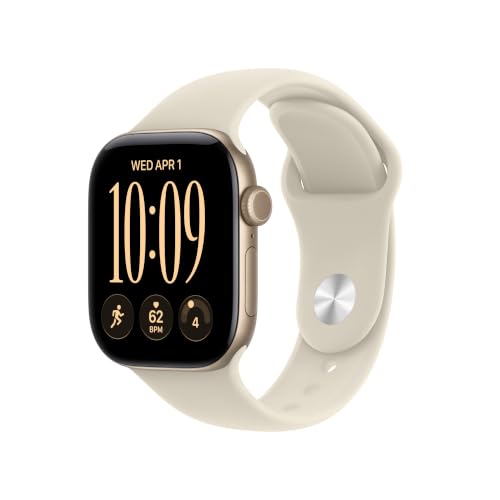
Apple Watch Series 12 GPS Smartwatch
What We Like
- Heart rate readings every 5 seconds
- HRV measured every 5 minutes
- Blood oxygen readings available
- Fall and crash detection included
Trade-offs
- 24-hour battery needs daily charging
- 0.5-pound weight is heavier than some sport watches
Heart rate readings every five seconds and HRV tracking every five minutes mean this watch keeps a closer eye on your cardiovascular system than most wearables. That constant stream of data feeds into the Vitals app and readiness experience, so you get a clear picture of your recovery and whether today calls for a hard workout or an active rest day. For someone who wants to train smart, not just hard, that kind of insight turns guesswork into a plan you can trust.
The daily charge is the main trade-off for the depth of health data you get here. At up to 24 hours of normal use, you’ll plug it in every night, which is a different habit than the COROS PACE 4’s 19 days of daily use. But if your priority is heart rate variability readings every five minutes, background heart rate every five seconds, blood oxygen readings, overnight sleep scores, and safety features like fall and crash detection, that nightly top-off is a fair swap for that level of detail.
Product photos
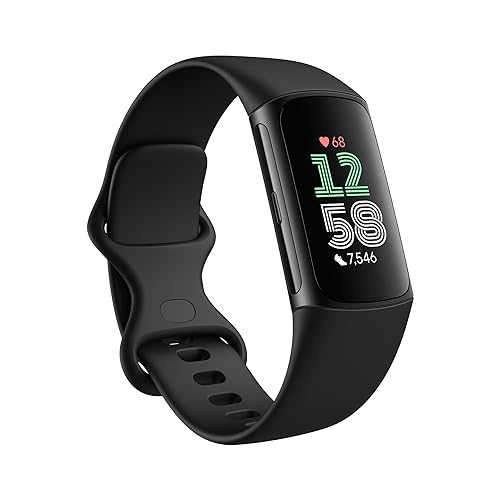
Fitbit Charge 6 Fitness Tracker
What We Like
- Google Maps turn-by-turn directions
- Heart rate on compatible gym machines
- YouTube Music controls on wrist
- Google Wallet tap-to-pay
Trade-offs
- Google Health Premium subscription needed for full coaching
- No onboard music storage for phone-free runs
- Smaller screen than dedicated running watches
The Fitbit Charge 6’s built-in GPS and 40+ exercise modes already make it a capable workout companion, but its real standout is how it pulls Google’s everyday tools onto your wrist. Turn-by-turn directions from Google Maps keep you on route during runs or rides without pulling out your phone, and tap-to-pay with Google Wallet handles quick snack stops mid-exercise. For anyone who lives inside Google’s ecosystem, using Maps, Wallet, and YouTube Music daily, this tracker connects your workout to your routine rather than leaving it as a disconnected activity.
The deeper coaching features, like personalized plans built with Gemini, require a Google Health Premium subscription (you get a three-month trial, then it’s extra). The Charge 6 is best for exercisers who value convenience and connectivity with Google services over standalone music or advanced training metrics. It’s the gym buddy that keeps you linked, not the one that replaces your phone entirely.
Amazfit Bip 6 Smart Watch

What We Like
- 14-day battery life
- 140+ workout modes
- Free downloadable maps
- 24/7 health monitoring
Trade-offs
- No onboard music storage
A 14-day battery life means you can train hard all week and still have charge left for recovery days, no nightly plug-in required. That two-week stamina makes the Amazfit Bip 6 a natural fit for anyone who wants a smartwatch that keeps up with their routine without becoming another device to remember to charge. With 140+ workout modes, free downloadable maps, and 50m water resistance, it covers everything from gym sessions to open-water swims, all while tracking heart rate, sleep, and stress around the clock.
At just 0.1 pounds, the Amazfit Bip 6 is lighter than the COROS PACE 4, so it won’t weigh you down during a long run or hike. Its battery lasts up to 14 days, meaning you can go two weeks without needing to recharge, which is plenty for most weekly training cycles. For someone who wants a full feature set without constant charging, this watch delivers a practical daily companion.
Product photos
SUUNTO Run GPS Sport Running Watch

What We Like
- Ultralight 36g strap weight
- 4GB offline music storage
- Dual-band GNSS for accurate tracking
- Fast charging in one hour
Trade-offs
- 20-hour GPS battery limits ultramarathon use
- No built-in flashlight for low-light runs
Four gigabytes of offline music storage means you can leave your phone behind and still have a playlist to push through that last mile. At just 36 grams with the textile strap, this watch practically disappears on your wrist, no bouncing, no chafing, just a clean run. It suits runners who want distraction-free training with precise dual-band GNSS tracking, plus the ability to monitor training load and recovery through the SUUNTO app. The bright AMOLED touchscreen is easy to glance at mid-stride, and the crown control keeps navigation simple even with sweaty fingers.
For the daily runner who values music on the move, accurate route tracking, and a watch that doesn’t feel like a brick on your wrist, this is a smart pick.
Product photos
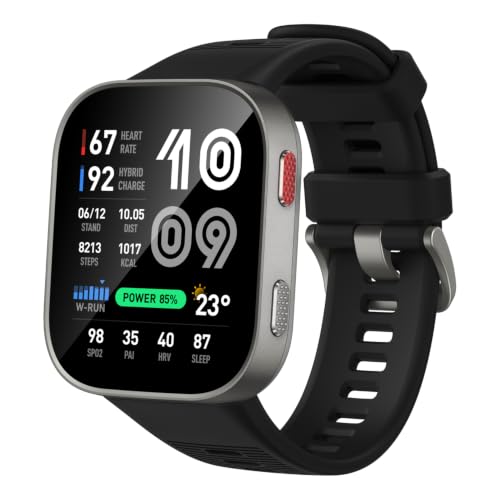
Amazfit Bip Max Smart Watch
What We Like
- Massive 2.07-inch AMOLED display
- Up to 20 days of battery life
- 4GB storage for offline maps
- 150+ sports modes with HYROX mode
Trade-offs
- No Bluetooth calling or text reply
- Zepp Coach lacks daily suggested workouts like Garmin's higher-end models
A 2.07-inch AMOLED display that big means you can glance at pace, distance, or a map mid-run without squinting or fumbling with a phone. That screen real estate, paired with 4GB of onboard storage for offline maps and 20 days of battery life, makes this watch a practical companion for anyone who wants to leave their phone behind and still navigate trails or streets with confidence. It suits exercisers who value readability and long battery over compact size, especially those doing hybrid training or HYROX-style workouts where quick data access matters.
The 2.07-inch AMOLED display is the main event here, giving you a bright, large screen that’s easy to read during workouts or daily use. That screen size comes on a watch that weighs just 0.1 pounds, so it’s light on the wrist even if the face is sizable. Compared to the Garmin Forerunner 165’s 43mm case, the Bip Max will have a bigger footprint, but the trade-off is that massive display for maps and stats.
Product photos
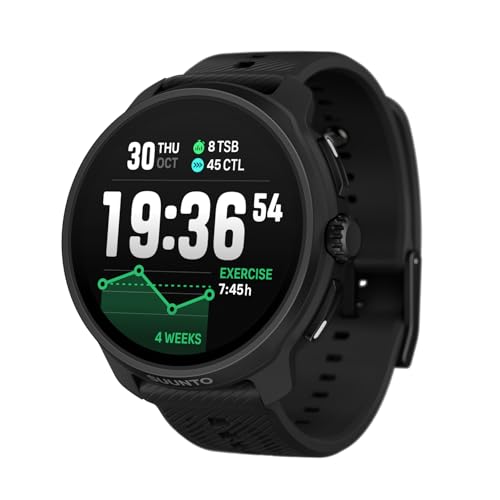
SUUNTO Race 2 GPS Sports Watch
What We Like
- Dual-band GPS for technical terrain
- ClimbGuidance keeps you on course
- 55-hour GPS battery for long races
- 115+ sport modes for variety
Trade-offs
- Heavier build than ultralight trail watches
- No built-in music storage mentioned
A 55-hour battery in best GPS mode means you can tackle long endurance events without worrying about your watch dying during the effort. That is the kind of freedom trail racers need, and the dual-band GNSS keeps your track accurate even when you are weaving through dense trees or running in a steep canyon. With ClimbGuidance built in, you get real-time feedback on ascents so you can pace yourself on technical climbs. This watch is built for athletes who treat trails like a second home and want a tool that matches their endurance, not a gadget that quits before they do.
The Suunto Race 2’s battery lasts up to 16 days in daily use, so you can leave the charger at home during a long training block. That endurance comes from a design that prioritizes function over featherweight. The watch has a larger AMOLED display than the original Suunto Race, which means brighter, easier-to-read screens during runs. For comparison, the COROS PACE 4 weighs 0.4 pounds and offers 19 days of daily use, so if every gram matters for your race kit, the Race 2 might feel a bit more substantial on your wrist. Most trail runners will find the trade-off fair: the dual-band GPS and ClimbGuidance tools keep you on course on technical terrain, making that extra weight worthwhile.
Product photos
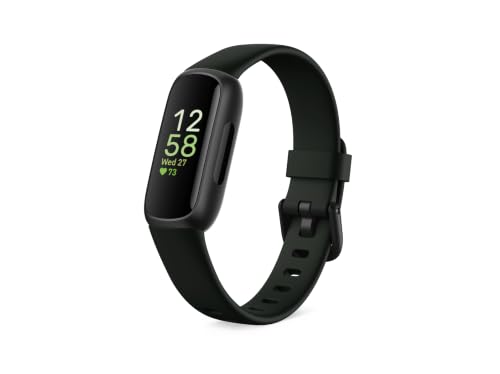
Google Fitbit Inspire 3 Fitness Tracker
What We Like
- Daily Stress Management Score
- Mindfulness and relax breathing sessions
- Automatic sleep tracking with Smart Wake
Trade-offs
- No built-in GPS for outdoor runs
- Lacks advanced training metrics for serious athletes
A daily Stress Management Score backed by mindfulness sessions and guided breathing exercises means this tracker treats your mental state as seriously as your step count. For anyone whose workout motivation gets derailed by a hectic day or restless night, that focus on recovery and calm makes it a genuinely supportive companion.
The trade-off is that it skips built-in GPS, so if you run or bike outdoors you will need your phone along for accurate distance and pace. The Garmin Forerunner 165 includes its own GPS, which is a difference worth noting. But if your exercise is more about daily walks, gym sessions, and keeping stress in check than chasing personal records, the Inspire 3 delivers a calm, complete view of your health without the bulk or cost of a full sports watch.
How We Evaluated Watches For Exercise
We started by studying manufacturer specifications and expert round-up analyses to identify which features consistently separate capable sport watches from general-purpose smartwatches. Then we cross-referenced those specs with patterns in owner feedback, what people actually praised or complained about after months of daily wear.
Three criteria mattered most. First, GPS and heart rate accuracy because a watch that misreads your pace or effort is worse than no watch at all. Second, battery life in both smartwatch and GPS mode, since a dead watch mid-run is useless. Third, comfort and weight, a watch you want to wear all day tracks your recovery better than one you take off.
A research-led evaluation has limits. We haven’t run marathons or done CrossFit in every model here, so we rely on documented specs and what owners consistently report. For the most hands-on feel, we recommend reading detailed reviews from athletes who use these watches daily, like our roundup of the best smartwatches for exercise.
What To Look For In Watches For Exercise
Choosing a workout watch means matching its core features to your primary activity. Here is what to check first.
Focus on GPS accuracy, battery life, heart rate tracking quality, and display readability. A watch that nails these four will serve you for years, regardless of how many sport modes it lists.
GPS Accuracy and Connectivity
For outdoor runners, cyclists, and hikers, GPS is non-negotiable. Look for dual-band or multi-band GNSS support, which locks onto satellites more reliably under tree cover or between buildings. The SUUNTO Race 2 uses dual-band GPS for technical terrain, while the Garmin Forerunner 970 uses multi-band with full-color maps. Many watches with built-in GPS now also support GLONASS and Galileo for faster fix times. If you train in a city or on trails, this is the feature to prioritize over screen size.
Battery Life and Charging Speed
Battery life varies wildly between watches designed for daily wear and those built for ultramarathons. The Amazfit Bip 6 offers 14 days in smartwatch mode, while the SUUNTO Run lasts 20 hours in GPS mode. For gym-goers who charge nightly, the Apple Watch Series 12 works fine. For weekend adventurers, a watch that lasts through a long race without dying is essential. Fast charging, like the SUUNTO Run’s one-hour full charge, is a practical bonus.
Heart Rate and Recovery Metrics
Consistent heart rate tracking is the foundation of training load analysis. The Apple Watch Series 12 reads heart rate every five seconds and HRV every five minutes, giving you deep recovery data. For the most accurate heart rate tracking during high-intensity intervals, some athletes pair their watch with a chest strap monitor. If you care about stress management, the Fitbit Inspire 3 offers a daily Stress Management Score that helps you decide whether to push or rest.
Display Readability and Weight
A bright AMOLED display makes outdoor workouts easier. The Garmin Forerunner 970 has the brightest AMOLED we’ve seen, while the COROS PACE 4 uses a 1.2-inch AMOLED with auto-brightness. Weight matters for all-day wear, the COROS PACE 4 is ultralight at 32g with a nylon band, while the Apple Watch Series 12 is heavier at 0.5 pounds. A watch you forget you’re wearing is one you’ll actually use.
- Check if the watch supports your primary activity’s GPS mode (running, cycling, swimming).
- Verify battery life in GPS mode, not just smartwatch mode.
- Look for a heart rate sensor that offers continuous readings, not spot checks.
- Consider weight and thickness if you plan to wear it 24/7 for sleep tracking.
A good rule: the watch you will actually wear to every workout is better than the one with the longest feature list.
Watches For Exercise Compared
The table below compares the ten watches across the specs that matter most for exercise, so you can see at a glance which model fits your training style.
| Product | Display | Battery Life (Smartwatch) | GPS |
|---|---|---|---|
| Garmin Forerunner 165 Running Smartwatch | AMOLED touchscreen | 11 days | Built-in |
| COROS PACE 4 Ultralight Sport GPS Watch | 1.2" AMOLED touchscreen | 19 days | Accurate GPS |
| Garmin Forerunner 970 Premium GPS Running Smartwatch | Brightest AMOLED touchscreen | Up to 15 days | Multi-band GPS |
| Apple Watch Series 12 GPS Smartwatch | N/A | Up to 24 hours | N/A |
| Fitbit Charge 6 Fitness Tracker | N/A | N/A | Built-in |
| Amazfit Bip 6 Smart Watch | 1.97" AMOLED | 14 Days | 5 satellite systems |
| SUUNTO Run GPS Sport Running Watch | 1.32" AMOLED touchscreen | 12 days | Dual-band GNSS |
| Amazfit Bip Max Smart Watch | 2.07" AMOLED | 20 days | 5 satellite systems + offline maps |
| SUUNTO Race 2 GPS Sports Watch | 1.5" AMOLED | 16 days | Dual-band GNSS |
| Google Fitbit Inspire 3 Fitness Tracker | N/A | N/A | N/A |
Frequently Asked Questions
What is the best watch for running with music?
The SUUNTO Run is our top pick for runners who want offline music. It has 4GB of storage for playlists and podcasts, plus dual-band GNSS for accurate tracking, all in an ultralight 36g package with the strap.
How accurate are wrist-based heart rate monitors for exercise?
Wrist-based optical sensors are good for steady-state runs and daily tracking, but they can lag during high-intensity intervals or weightlifting. For the most accurate readings during HIIT, many athletes prefer a chest strap monitor paired with their watch.
Which watch has the longest battery life for multi-day adventures?
The Amazfit Bip 6 leads with 14 days of smartwatch battery life, while the SUUNTO Race 2 offers 55 hours in GPS mode for long trail races. The COROS PACE 4 also impresses with 41 hours of GPS tracking in an ultralight body.
Do I need a watch with built-in GPS for gym workouts?
Not necessarily. For treadmill runs and indoor strength training, connected GPS that uses your phone’s signal works fine. If you run outdoors without your phone, a watch with built-in GPS is essential for accurate pace and distance.
What is the difference between a fitness tracker and a smartwatch for exercise?
A fitness tracker focuses on activity data, sleep, and recovery with longer battery life, while a smartwatch adds apps, notifications, and sometimes cellular connectivity. Our tracker vs smartwatch guide breaks down which is better for your gym routine.
The Bottom Line
The Garmin Forerunner 165 Running Smartwatch is the best overall watch for exercise because it balances adaptive training guidance, long battery life, and safety features at a weight that doesn’t slow you down. It suits runners and gym-goers who want a coach on their wrist without the bulk of a full-sized sports watch.
If your budget is tighter or you want the lightest possible design, the COROS PACE 4 delivers ultralight comfort and impressive 41-hour GPS battery. For those who need deep health metrics like HRV and blood oxygen, the Apple Watch Series 12 offers the most comprehensive health tracking in the list.
The single most important factor when choosing a workout watch is honesty about your routine. A watch built for ultramarathons is overkill for daily gym sessions, and a general smartwatch will frustrate a trail runner. Match the tool to the workout, and you will actually use it.
