
10 Best Electric Muscle Stimulators in 2026
This post contains affiliate links. As an Amazon Associate, we earn from qualifying purchases.
The best electric muscle stimulator for most people is the AUVON Wireless TENS EMS Unit, thanks to its all-in-one wireless design, fast-charging case, and versatile 24-mode mix of TENS and EMS therapy. For those who want deep control over their sessions, the Belifu 4-in-1 TENS EMS Unit offers independent dual-channel customization, while the Compex Wireless USA 2.0 is built specifically for athletic recovery.
Shopping for a muscle stimulator can feel overwhelming with all the modes, channels, and pad types out there. The real challenge is matching the device to your specific need. That could be quick pain relief after a long day at a desk, post-workout recovery for sore legs, or treating a persistent lower back issue.
This guide is built on a deep dive into manufacturer specs, expert round-ups, and patterns in owner feedback. We break down the ten best options by what they actually do best, so you can pick the right tool for your routine without the guesswork.
Top 10 Electric Muscle Stimulators in the Market
Certain content that appears on this site comes from Amazon. This content is provided "as is" and is subject to change or removal at any time.
The Best Electric Muscle Stimulators, Reviewed
AUVON Wireless TENS EMS Unit

What We Like
- Wireless all-in-one design with charging case
- 24 modes combine TENS, EMS, and massage
- 10-minute fast charge gives 1 hour of therapy
- Includes 6 medical-grade latex-free pads
Trade-offs
- Only 2 pods limits simultaneous coverage areas
- 40-hour battery only when using a single pod
Twenty-four modes and thirty intensity levels mean you can dial in exactly the kind of relief your sore shoulders or aching lower back need, blending TENS, EMS, and massage therapy in one compact wireless system. The charging case itself is the real trick here: drop the pods in for just ten minutes and you get a full hour of treatment, so you are never stuck waiting for a recharge mid-session. That kind of convenience makes it easy to grab on your way out the door or keep at your desk for a quick midday reset. It is a genuinely thoughtful setup for anyone who wants drug-free pain relief without fussing with tangled wires or bulky boxes.
The AUVON Wireless TENS EMS Unit comes with two pods, so you can treat two areas at once. That’s fine for a neck and a shoulder, but if you want to cover both legs and your lower back in one session, you’ll need to swap pads or run separate sessions. The iSTIM EV-805 offers four channels, but the AUVON focuses on portability and simplicity. For everyday aches and muscle soreness, those two pods and the fast-charging case provide targeted, no-hassle relief that makes sticking with therapy feel doable.
Product photos
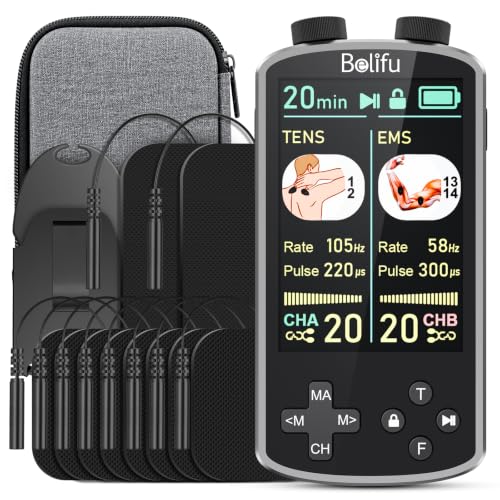
Belifu 4-in-1 TENS EMS Unit
What We Like
- Independent dual channel for targeted therapy
- 3.8-inch color display for easy adjustments
- Up to 60 hours of continuous use
Trade-offs
- Wired design limits movement during use
- No wireless or app control for remote operation
- Larger than pocket-sized units for travel
The independent dual channel means you can run different pulse and intensity settings on two body areas at once, handy if your neck and lower back both need attention after a long day. The 3.8-inch color display makes navigating those options straightforward, and the 60-hour battery life means you won’t be hunting for a charger every few sessions. It’s a strong fit for anyone who wants to dial in their pain relief or recovery routine without settling for a one-size-fits-all approach.
The trade-off is that this is a wired unit, so you’ll have cables running from the device to the pads. That’s not a dealbreaker for home or office use, but if you need to move freely around the gym or during a walk, a wireless option like the AUVON Wireless model might suit you better. The Belifu also isn’t pocket-sized, it’s about the size of a small paperback, so it’s less discreet for on-the-go use. Still, for the level of customization and the clear display, the convenience of wires is a fair compromise.
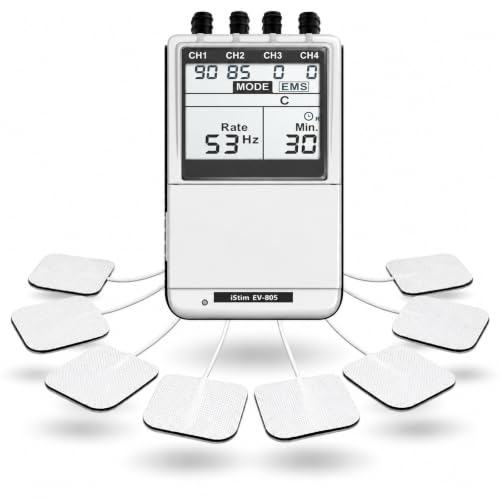
iSTIM EV-805 TENS EMS 4 Channel
What We Like
- 24 electrode pads in multiple sizes
- 4 channels for flexible pad placement
- 24 preset programs including TENS and EMS
- Rechargeable with backlit display
Trade-offs
- At 0.9 pounds, heavier than some portable units
- Four channels require managing multiple lead wires
Four channels let you cover multiple muscle groups at once, which is the main reason to pick this unit over simpler two-channel models. You can treat your lower back and shoulders simultaneously, or work both legs in a single session, without having to reposition pads mid-routine. The 24 included electrode pads in different sizes give you plenty of spares and options for targeting small or large areas. The 24 preset programs split between TENS for pain and EMS for muscle activation mean you are not stuck guessing which mode to use.
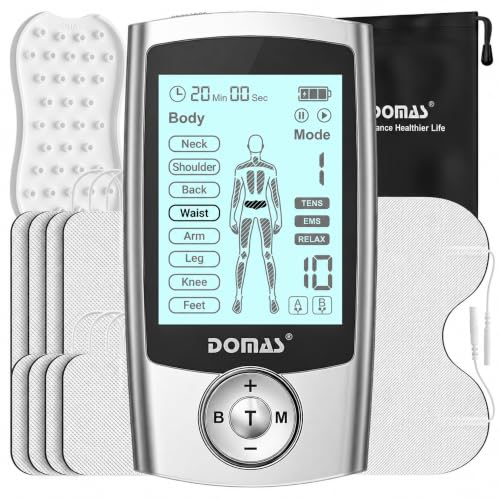
DOMAS TENS Unit with XL Butterfly Pad
What We Like
- XL butterfly pad for lower back coverage
- Anatomical LCD map with dedicated body button
- TENS + EMS dual therapy in one unit
- Ultra-slim 10.5mm design for portability
Trade-offs
- Only one large pad included for lower back focus
- Wired pads restrict movement during use
The 4×6-inch butterfly pad is the standout feature here, it’s contoured to fit your lower back and delivers broad coverage that smaller pads can’t easily provide. With 24 pre-set programs and 20 intensity levels, you can choose between TENS for pain relief or EMS for muscle conditioning, all controlled through a white backlit screen with a one-touch pause. The anatomical LCD map and dedicated body button let you target eight areas from neck to feet without guessing which program does what. For anyone focused on lumbar tension, this unit simplifies the process.
The DOMAS TENS unit includes a 4″x6″ XL butterfly pad designed specifically for the lower back, so it delivers broad, uniform coverage for lumbar tension and muscle fatigue. That focused design means the included pads and wired connection work best when you’re seated or lying down, not for moving around the house. If you need to stim your shoulder while walking, the AUVON Wireless model is a wireless alternative. But for targeted, straightforward lumbar therapy from the couch or desk, the DOMAS’s dedicated butterfly pad and anatomical body map let you select one of eight body areas directly, so you don’t have to guess which program to use.
Compex Wireless USA 2.0 Muscle Stimulator

What We Like
- Wireless PODs for full mobility during use
- TENS program for pain management included
- Recovery programs help flush out lactic acid
Trade-offs
- Single TENS program limits pain mode variety
- No heat or massage functions included
Ten dedicated programs, four for strength, three for recovery, two for warmup, and one for TENS pain relief, make this a purpose-built tool for athletes who want more than just a muscle tingle. This is the one to grab if your main goal is bouncing back faster after heavy sessions, not just managing everyday aches.
The single TENS program limits its use for pain management compared to units with multiple modes, like the AUVON Wireless which offers 24 modes. At one pound, it’s heavier than some wired units, so clipping it to your waistband during a run might feel a bit bulky. Still, if recovery and strength progression are your priorities, the Compex delivers focused programming that cheaper units rarely match.
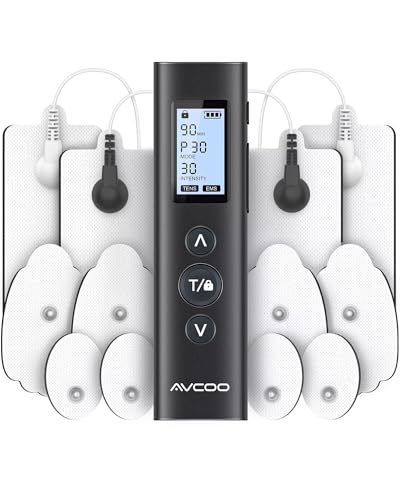
AVCOO 30 Modes TENS EMS Unit
What We Like
- 30 modes and 30 intensity levels
- 12 medical-grade pads in three sizes
- 30-hour battery life per charge
- Slim, portable design at 0.09 lb
Trade-offs
- Only two channels for simultaneous use
- No wireless operation, pads connect via leads
Thirty modes and thirty intensity levels give you more fine-tuning than most budget units offer, so you can dial in exactly the pulse pattern and strength that feels right for your neck, back, or legs. The 12 pads in three sizes mean you can treat different body areas without buying extras, and 30 hours of battery life keeps it running through a full week of daily sessions. That combination of flexibility and long runtime makes this a smart pick if you want versatile pain relief and muscle stimulation without spending on premium bells and whistles.
30 modes and 30 intensity levels give you fine control over your therapy, so you can dial in exactly the sensation you want for back, shoulder, or neck pain. The unit also includes 12 pads in three sizes, rectangular, palm-shaped, and oval, so you can target different muscle groups without buying extra electrodes. For someone who wants plenty of program variety and a full set of pads right out of the box, this delivers a lot of flexibility for the price.
Product photos
TENS 7000 Rechargeable TENS Unit

What We Like
- Rechargeable battery skips disposable replacements
- Up to 100mA for deep pain relief
- Targets back, neck, shoulders, and more
- Compact size fits a gym bag easily
Trade-offs
- Only 4 electrode pads limit coverage area
- No wireless or remote control convenience
The built-in rechargeable battery eliminates the need for constant battery replacements, so you can focus on recovery without worrying about running out of power mid-session. With adjustable intensity up to 100mA, this unit provides deep and effective pain relief for back, neck, or shoulders. Its 4.0-inch length and slim profile slide into a pocket or gym bag corner, making it easy to take from home to office to car. That straightforward design makes it a natural fit for anyone who wants reliable, no-fuss pain relief without extra features they will never use.
Four electrodes limit how much ground you can cover at once, so a larger area like your entire lower back may need repositioning mid-session. Compared to the Belifu 4-in-1 TENS EMS Unit, which offers 36 modes and 20 intensity levels, the TENS 7000 focuses on TENS therapy for pain relief and muscle recovery. If you want muscle-building EMS programs or more pad placement options, that extra versatility might matter. But for someone focused squarely on pain relief and muscle recovery, this rechargeable unit keeps the essentials simple, effective, and easy to grab on the way out the door.
Product photos
Beurer EM59 3-in-1 TENS EMS Heat
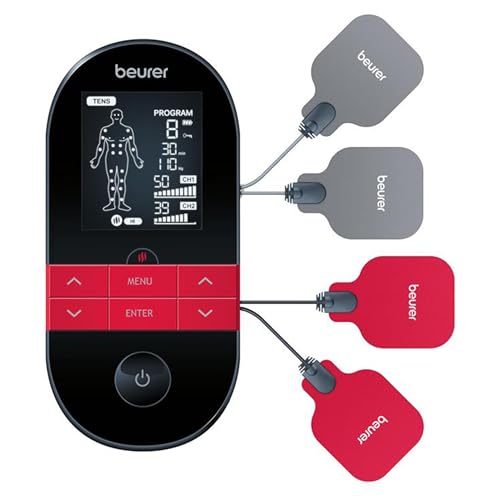
What We Like
- Adds heat therapy to TENS and EMS
- 64 preset programs plus 6 custom
- Two independently adjustable channels
- Compact with belt clip for portability
Trade-offs
- No wireless pads, wires connect to unit
- Heat only, not adjustable temperature levels
- Only two channels limit pad placement options
Sixty-four preset programs and six customizable settings mean you can dial in everything from gentle nerve comfort to focused muscle recovery without guessing. That variety, paired with two independently adjustable channels, lets you target specific spots like a tight shoulder or a sore knee while keeping intensity separate on each side. The device combines TENS, EMS, and heat therapy in one unit, offering more than just electrical pulses for daily relaxation or post-workout relief.
The heat is a fixed feature, so there’s no way to adjust temperature. You get what the device gives you. And unlike wireless options such as the AUVON Wireless TENS EMS Unit, the EM59 keeps you tethered by wires to the unit. For someone who values targeted warmth and program variety over cord-free movement, though, that’s a fair swap. The rechargeable battery and safety auto-off add practical peace of mind, especially if you tend to drift off during a session.
Juhdy 5-in-1 TENS EMS 4 Channel
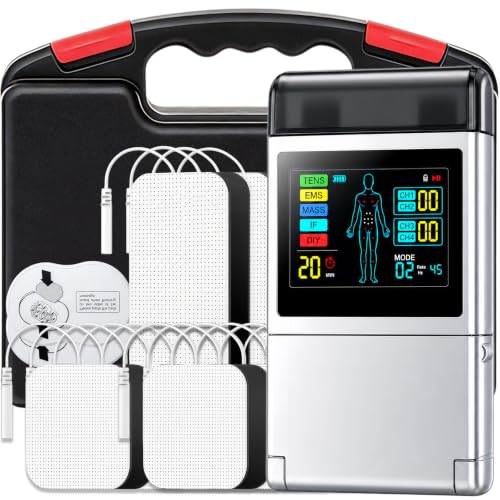
What We Like
- 80 modes cover TENS, EMS, massage, IF, DIY
- 4 channels support up to 8 pads at once
- 30 intensity levels for fine-tuning
- Large color LCD with easy controls
Trade-offs
- 80 modes can feel overwhelming to navigate
- No wireless operation: cables connect each channel
- DIY modes require manual frequency and pulse width adjustment
Eighty modes is a lot of flexibility, more than most units in this guide offer. With 15 TENS programs for pain relief, 35 EMS for muscle work, plus massage, IF, and 10 DIY slots, you can dial in everything from a gentle shoulder relax to a deeper leg recovery. The 4-channel design lets you treat up to eight body areas at once, and the 30 intensity levels give you fine control so you don’t jump from too light to too much. That large color screen makes it easier to see what program you’re on, and the USB rechargeable battery means you can use it at home, the gym, or on the road without hunting for AAs.
All those modes can take time to explore. If you just want a quick, no-fuss session, scrolling through 80 options might feel like more than you need. And while the DIY modes are powerful for customization, they require you to manually adjust frequency and pulse width, so they’re best for someone who enjoys tinkering rather than grabbing a preset and going.
Product photos
iSTIM M2 Wireless TENS EMS System
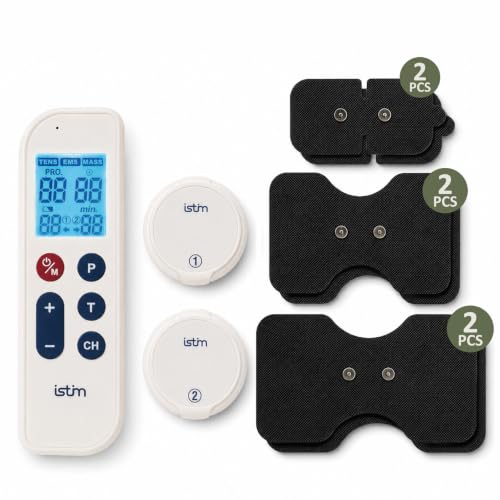
What We Like
- Wireless design for tangle-free use
- Dual channel targets two areas independently
- 18 modes cover TENS, EMS, and massage
- Premium Japanese gel pads for sensitive skin
Trade-offs
- Only 6 pads included for dual-channel use
- 18 modes fewer than some competitors' 24+ modes
An 18-mode wireless dual-channel stimulator splits its programs across TENS, EMS, and massage, so you can switch between pain relief and muscle recovery without dealing with cords or outlets. The dual-channel output lets you treat two areas at once, with independent intensity control for each channel. Six electrode pads in three sizes come with Japanese gel that’s suitable for sensitive skin, which means comfortable sessions for most users. It’s a practical kit for drug-free relief and muscle care on the go.
Eighteen modes, while versatile, won’t match the program count of something like the AUVON Wireless model with 24 modes if you want more variety. Six pads are included, which covers two areas simultaneously thanks to the dual-channel design. That said, the wireless build and pads suited for sensitive skin make this a convenient companion for home, office, or travel recovery.
Product photos
How We Evaluated Electric Muscle Stimulators
We started by looking at the core specifications that define each unit: channel count, mode variety, power output, and battery life. From there, we cross-referenced manufacturer claims with expert round-ups and patterns in owner feedback to understand how these devices perform in real-world use. Our goal was to separate marketing hype from practical value.
The four criteria that mattered most were channel count, wireless capability, mode versatility, and portability. Channel count determines how many body areas you can treat at once. A single-channel unit is fine for one spot, but a four-channel system like the iSTIM EV-805 lets you cover both quads and calves simultaneously.
Wireless design matters if you plan to move around during a session, while mode variety (TENS for pain, EMS for muscle conditioning, massage for relaxation) determines how many use cases one device can handle. Portability, from pocket-sized units to heavier desktop models, decides whether the device stays at home or travels with you.
An honest limit of this research-led evaluation is that we cannot replicate the subjective feel of each pulse pattern or pad adhesion over weeks of daily use. What we can do is identify which devices consistently deliver the features and reliability that owners report matter most, and which trade-offs you should expect from each design choice.
What To Look For In Electric Muscle Stimulators
Finding the right stimulator comes down to matching the hardware to your body and your routine. Here is what to consider before you buy.
Look for a device with enough channels to treat the areas you need. It should also have a mode mix that covers both TENS and EMS, and a power source that fits your lifestyle. Wireless works for mobility, wired for longer sessions.
Channels and Pad Placement
The number of channels determines how many independent body areas you can treat in one session. A single-channel unit works for one spot like a sore shoulder. Two channels let you treat both sides of the lower back or a quad and a calf at the same time. Four channels, like the iSTIM EV-805, let you cover multiple large muscle groups without moving pads around.
Modes: TENS vs. EMS vs. Massage
TENS (Transcutaneous Electrical Nerve Stimulation) targets pain relief by interrupting pain signals to the brain. EMS (Electrical Muscle Stimulation) causes muscle contractions for recovery and conditioning. Many modern units combine both, and some add a massage mode. If you need both pain relief and recovery, skip a single-mode device and choose one with at least 10-20 modes covering TENS, EMS, and massage.
Wireless vs. Wired Design
Wireless stimulators use small pods that stick directly to the skin and communicate with a remote or phone app. They let you move freely during a session. Wired units connect pads to a central device via lead wires, which can tangle but often offer longer battery life and more power. If you plan to use the stimulator while walking around the house or at the gym, go wireless. For stationary use at a desk or on the couch, wired is fine.
- Count the channels you need before you look at anything else, more channels mean more coverage.
- Check the pad size and shape: large butterfly pads work better for the lower back, small round pads fit joints and shoulders.
- Confirm the unit has a rechargeable battery if you want to skip buying 9-volt batteries every few weeks.
- Look for medical-grade, latex-free pads if you have sensitive skin.
A good rule of thumb: match the channel count to the number of body areas you want to treat at once, not the number you might treat someday.
Electric Muscle Stimulators Compared
The table below compares each pick side by side on the specs that matter most, channel count, wireless capability, and mode variety, so you can see at a glance which device fits your needs.
| Product | Modes | Pad Count | Battery Life |
|---|---|---|---|
| AUVON Wireless TENS EMS Unit | 24 | 6 | 40h |
| Belifu 4-in-1 TENS EMS Unit | 36 | N/A | Up to 60 hours |
| iSTIM EV-805 TENS EMS 4 Channel | 24 | 24 | Rechargeable (USB) |
| DOMAS TENS Unit with XL Butterfly Pad | 24 | 9 | N/A |
| Compex Wireless USA 2.0 Muscle Stimulator | 10 | N/A | Rechargeable battery station |
| AVCOO 30 Modes TENS EMS Unit | 30 | 12 | 30 hours |
| TENS 7000 Rechargeable TENS Unit | N/A | 4 | Built-in rechargeable |
| Beurer EM59 3-in-1 TENS EMS Heat | 64 | 4 | Rechargeable battery |
| Juhdy 5-in-1 TENS EMS 4 Channel | 80 | 16 | USB rechargeable |
| iSTIM M2 Wireless TENS EMS System | 18 | 6 | N/A |
Frequently Asked Questions
Can I use a muscle stimulator every day?
Yes, most manufacturers recommend using TENS or EMS units for 20-30 minute sessions up to three times per day. Always follow the specific instructions for your device and never place pads over broken skin or open wounds.
What is the difference between TENS and EMS?
TENS targets pain relief by sending electrical pulses that interfere with pain signals to the brain. EMS causes muscle contractions to help with recovery, reduce soreness, and improve circulation. Many modern units combine both, which is ideal if you need pain relief and muscle recovery.
Are wireless muscle stimulators as powerful as wired ones?
Wireless units have improved significantly and now offer comparable power for most users. However, wired units often deliver higher maximum intensity and longer battery life. For deep, stationary therapy, a wired device may be the better choice. For mobility and convenience, wireless is the winner.
How do I choose the right electrode pads?
Pad size and shape matter for the body area you are treating. Large rectangular pads work well for the lower back and quads. Small round pads fit shoulders, knees, and elbows. Butterfly-shaped pads are contoured specifically for the lower back. Always check that replacement pads are available for your model.
Can muscle stimulators help with muscle growth?
EMS can contribute to muscle conditioning and recovery, which supports strength training. Some studies show that EMS, when used consistently alongside resistance training, can improve muscle activation. However, it is not a replacement for actual exercise and should be used as a supplement to your routine.
The Bottom Line
For most people, the AUVON Wireless TENS EMS Unit is the best overall choice. Its wireless design, fast-charging case, and 24-mode versatility make it the easiest device to grab and use whether you are at home, in the office, or on the go. It is the one we would recommend to someone buying their first stimulator.
If your needs are more specific, one of the other picks likely fits better. The Belifu 4-in-1 gives you deep control over every pulse setting. The Compex Wireless USA 2.0 is built for athletes who prioritize recovery. The DOMAS with its XL butterfly pad is purpose-built for lower back pain. And the AVCOO offers impressive mode variety at a budget-friendly price.
The single most important factor in choosing a muscle stimulator is matching the channel count and therapy type to your specific goal. Pick TENS for pain, EMS for recovery, or a combo unit for both, then count the channels to make sure you can treat all the areas you need in one session.
