
9 Best Plant Based Protein Powders in 2026
This post contains affiliate links. As an Amazon Associate, we earn from qualifying purchases.
If you want a clean, versatile plant protein that works for shakes, smoothies, or baking, the Orgain Organic Vegan Protein Powder is our best overall pick. It blends organic plant protein with chia seeds and packs 6g of prebiotic fiber with no added sugar. For athletes chasing maximum muscle recovery, the Garden of Life Sport Organic Vegan Protein Powder delivers 30g protein and over 5g BCAAs. And for anyone who prioritizes digestive support, the Garden of Life Raw Organic Protein Powder adds live probiotics and enzymes.
The hardest part of choosing a plant based protein powder is balancing protein content, ingredient quality, and taste. Many powders either skimp on protein to keep calories low or load up on artificial sweeteners to mask an earthy flavor. You need a powder that matches your specific goal, whether that is building muscle, losing weight, or simply getting more protein without digestive discomfort.
This guide is based on a careful review of manufacturer specifications, ingredient labels, third-party certifications, and patterns in owner feedback. We focused on protein content, ingredient purity, digestive support, and taste to help you pick the right powder for your routine.
Top 9 Plant Based Protein Powders in the Market
Certain content that appears on this site comes from Amazon. This content is provided "as is" and is subject to change or removal at any time.
The Best Plant Based Protein Powders, Reviewed
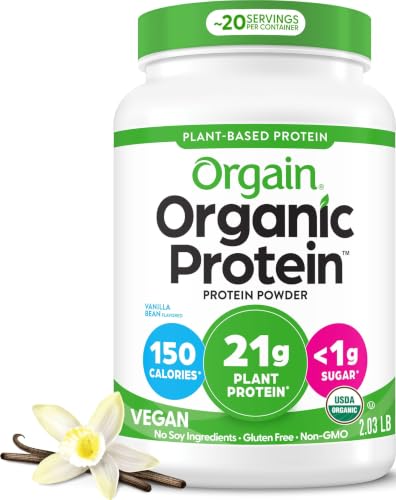
Orgain Organic Vegan Protein Powder
What We Like
- Organic plant protein blend with chia seeds
- Contains 6g prebiotic fiber for gut support
- No added sugar or artificial ingredients
- Versatile for shakes, smoothies, or baking
Trade-offs
- 21g protein is lower than some 30g options
- No soy-free option for those avoiding soy ingredients
Twenty-one grams of organic plant protein from peas, brown rice, and chia seeds delivers all nine essential amino acids, so you get a complete protein source in every scoop. The 6g of prebiotic plus fiber supports gut health, a feature many protein powders skip entirely. The vanilla bean flavor mixes easily with water, almond milk, or oat milk, and also works stirred into overnight oats or baked goods, giving you options beyond standard shakes.
The trade-off is that 21g per scoop is modest compared to Garden of Life Sport’s 30g. So if you are chasing serious muscle gain after heavy lifting, you might need an extra scoop or a different tub. But for everyday protein support, meal replacement, or a post-run refuel, the clean ingredient list, organic certification, and gut-friendly fiber make this the most balanced all-rounder in the guide.
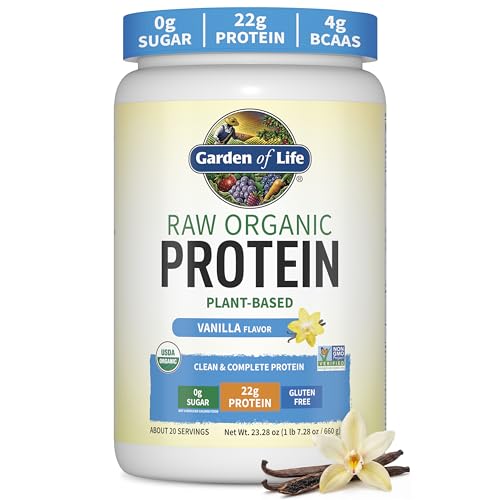
Garden of Life Raw Organic Protein Powder
What We Like
- Includes live probiotics for digestion
- Contains digestive enzymes like lipase and lactase
- Certified USDA Organic and Non-GMO
- Only 130 calories and 1g net carbs
Trade-offs
- 20 servings per container, fewer than larger tubs
- 1.4-pound tub is heavier than some plant protein powders
With 22 grams of protein and just 130 calories per scoop, this powder keeps your macros lean while still giving your muscles what they need to rebuild after a workout. What really sets it apart is the built-in digestive support: live probiotics like Bacillus subtilis DE111 plus enzymes such as lipase, lactase, and papain. That means less bloating and better absorption, which is exactly what you want if your stomach tends to protest after a protein shake.
This powder provides 22 grams of protein per serving, which is less than the 30 grams found in the Garden of Life Sport version from the same brand. If your main goal is maximizing protein per scoop, that Sport option delivers more with similar digestive benefits. But for everyday use where gut comfort and clean ingredients matter as much as the protein count, this vanilla shake mixes smooth, tastes genuinely good, and skips the chalky texture that plagues many plant powders.
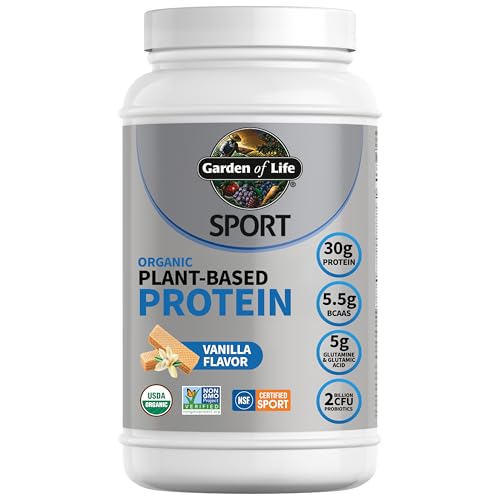
Garden of Life Sport Organic Vegan Protein Powder
What We Like
- 30g organic plant protein per serving
- Over 5g BCAAs for muscle recovery
- 2 billion CFU probiotics for digestion
- NSF Certified for Sport, no banned substances
Trade-offs
- Not intended for anyone under 18
- Requires 12 fl oz liquid per serving
- Vanilla flavor only in this size
With 30 grams of organic protein per serving from peas, navy beans, lentils, and garbanzo beans, this powder delivers over 5 grams of BCAAs and 5 grams of glutamine. That helps muscles recover faster after intense training. It also includes 2 billion CFU of clinically studied probiotics to support digestion and immune health during heavy workouts. The formula is USDA Organic, NSF Certified for Sport, and Non-GMO Project Verified, with no soy, dairy, or artificial additives, so athletes can trust what they’re putting in their bodies.
The vanilla flavor is the only option in this container. You’ll need to mix two scoops with a full 12 ounces of water or non-dairy milk, which means a bigger shake than some single-scoop powders. Compared to Orgain’s 21-gram protein offering, this Garden of Life version delivers more protein and added recovery ingredients like tart cherries and turmeric. That makes it a stronger choice for athletes focused on reducing downtime between sessions. Just keep in mind it’s not intended for anyone under 18.
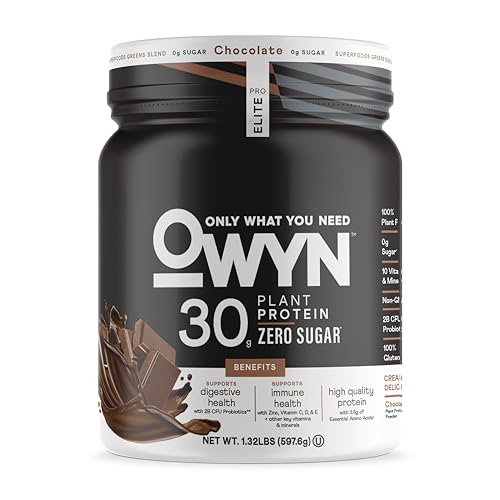
Owyn Pro Elite High Protein Powder
What We Like
- Zero sugar per serving
- 30g complete plant protein
- Free of top allergens
Trade-offs
- Only 12 servings per container
- Chocolate flavor only in this size
Thirty grams of plant protein with zero sugar is the headline here, and it delivers exactly what it promises. That protein comes from organic pumpkin seeds, chia, and Peato, a blend that covers all nine essential amino acids and naturally occurring BCAAs for muscle recovery. Add in a superfood greens mix of kale, spinach, and broccoli plus 2 billion CFU probiotics, and you get a recovery shake that also supports digestion and daily nutrition. This makes the Owyn Pro Elite a strong fit for anyone watching their sugar intake closely, whether on a keto plan or just trying to avoid empty calories after a workout.
You only get 12 servings per tub, so if you drink protein daily, you will be reordering often. Compared to the Garden of Life Sport Organic Vegan Protein Powder, which also offers 30g of plant protein but includes probiotics for digestive health, the Owyn edges ahead for sugar-free fans. The Garden of Life gives you more servings per container. If you need a protein powder that keeps carbs low and ingredients clean, this is your pick. Not ideal for those who prefer unflavored options or need a larger tub to last longer between orders.
Product photos
Optimum Nutrition Gold Standard Plant Based Protein

What We Like
- 24g protein from pea, rice, fava blend
- All 9 essential amino acids included
- 0g sugar, no artificial colors or flavors
- Mixes smooth with a glass and spoon
Trade-offs
- Only two flavors: Creamy Vanilla and Rich Chocolate Fudge
- Not suitable for those avoiding pea protein
Twenty-four grams of protein per scoop from a blend of pea, rice, and fava bean gives you a complete amino profile, including all nine essentials your body needs for recovery. That matters when you’re training regularly and want a plant-based option that doesn’t compromise on muscle support. The real win here is how it tastes and mixes, the manufacturer specifically designed it to dissolve smoothly with just a glass and spoon, no shaker required. For anyone who’s choked down gritty, chalky vegan shakes before, this is the kind of experience that makes you actually look forward to your post-workout drink.
You’re getting a more processed blend to achieve that silky texture and flavor. So if you prefer a single-ingredient, unflavored pea isolate like NAKED Pea, this won’t be your pick. But for the person who wants a great-tasting, ready-to-mix plant protein that fits into a busy routine, and still delivers zero sugar, no artificial stuff, and a full amino lineup, this is the one to grab. It’s the kind of everyday staple that makes sticking with your nutrition goals feel easy.
EarthChimp Organic Vegan Protein Powder
What We Like
- 1 billion CFU probiotics per serving
- 0g added sugar, no artificial sweeteners
- USDA organic with plain English ingredients
- Dairy, lactose, gluten, and soy free
Trade-offs
- Only 20g protein per serving
- Contains organic dates and banana for natural sweetness
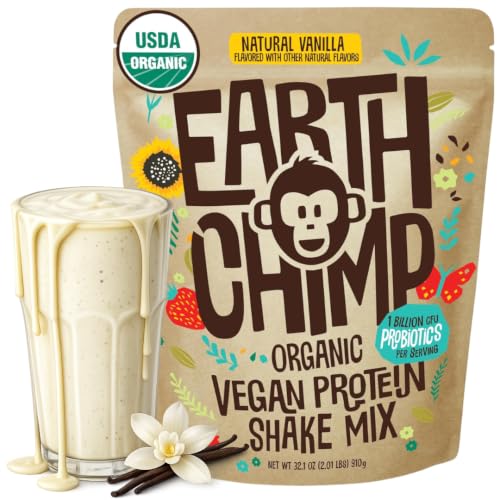
Each serving delivers 1 billion CFU of probiotics and 4g of fiber from agave and flax, alongside 20g of complete protein from organic pea. That combination is unusual in a plant protein powder, most focus on protein alone, so you get a built-in source of fiber and live cultures without needing to add them separately. The flavor is vanilla with a hint of cinnamon and a touch of monk fruit, sweetened naturally with organic dates and banana, with no sugar alcohols or artificial additives. For someone who wants a clean protein that also supports regularity, this is a practical everyday option.
At 20g of protein per serving, this powder sits below the 24g you get from Optimum Nutrition Gold Standard Plant Based Protein. That means it works well for a breakfast smoothie or a midday snack, but if you need a bigger protein hit after heavy lifting, you may want a higher-dose option. The ingredient list is refreshingly simple, organic dates, banana, baobab, cocoa, cinnamon, turmeric, so you know exactly what you are getting. It is a smart pick for anyone who values whole-food transparency and wants probiotics built into their daily routine.
Product photos
NAKED Pea Protein Powder

What We Like
- Single ingredient: 100% yellow pea protein
- NSF Certified for purity and safety
- 27g protein with 5.7g BCAAs per serving
- Unflavored, no artificial sweeteners or additives
Trade-offs
- Unflavored: needs added ingredients for taste
- Not a blend: lacks variety of protein sources
27 grams of protein per serving from a single ingredient, 100% yellow pea protein, makes this about as straightforward as plant-based protein gets. There are no artificial sweeteners, flavors, or colors to sort through, just a clean NSF Certified powder that delivers 5.7 grams of BCAAs in each scoop. For anyone who wants total control over what goes into their shake, this is the kind of simplicity that takes the guesswork out of your post-workout routine. It works especially well if you prefer to add your own fruit, greens, or even a splash of tea rather than relying on a pre-made flavor profile.
Unflavored means you are the flavor department. If you want a grab-and-go vanilla or chocolate shake straight from the tub, something like Orgain Organic Vegan Protein Powder comes ready to drink with a built-in taste. But if you value knowing exactly what you are putting in your body and do not mind a little DIY blending, Naked Pea gives you a clean canvas with no hidden extras. It is a no-nonsense pick for anyone who wants protein without the additives.
Product photos
Sunwarrior Organic Plant Based Protein Powder
What We Like
- No fillers, synthetics, or animal products
- Manufactured in Southern Utah with batch oversight
- Hemp seed and pea protein blend
Trade-offs
- Vanilla only flavor limits variety
- Hemp seed base has an earthy taste some dislike
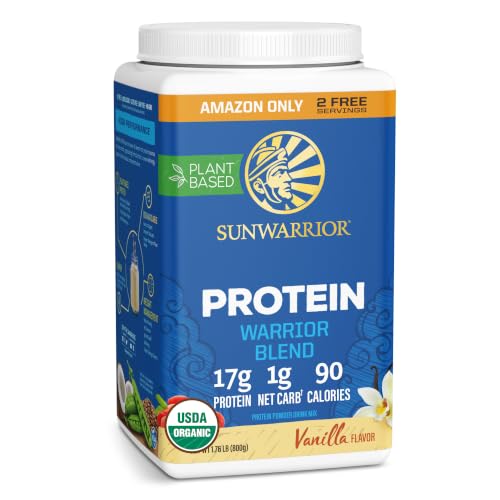
Switching from whey to a plant-based protein doesn’t have to mean dealing with bloating or cramping, because this blend offers benefits without those side effects. Sunwarrior mixes, blends, and packages everything in Southern Utah, so each batch gets close attention from start to finish. If you want a clean plant-based option that skips synthetics, fillers, and animal products entirely, this one keeps it simple and transparent.
The vanilla-only lineup is the main trade-off here; if you crave chocolate or unflavored, you will need to look elsewhere. For anyone ready to leave whey behind and wants a straightforward, third-party tested blend, this is a reliable step forward.
Product photos
Truvani Organic Plant Based Protein Powder

What We Like
- Sweetened with organic monk fruit, no added sugar
- USDA Organic and non-GMO certified
- Free from soy, wheat, dairy, gluten, and stevia
- Smooth blend, not chalky or grainy
Trade-offs
- Only 20g protein per serving, lower than some competitors
- 18 servings per container means fewer shakes per tub
With 20 grams of protein from organic pea, pumpkin seed, and chia seed, Truvani delivers a clean, plant-based option that skips the artificial sweeteners and fillers. The use of organic monk fruit means you get a gentle sweetness without added sugar or stevia, which is a rare find in this category. It fits well for anyone who wants a straightforward, certified organic protein powder that respects dietary restrictions like gluten or dairy sensitivity. The smooth texture makes it easy to mix into a quick shake without that chalky mouthfeel some powders leave behind.
The trade-off here is protein content per serving. At 20 grams, it trails behind picks like Garden of Life Sport Organic Vegan Protein Powder, which packs 30 grams per scoop. That difference matters if you’re focused on post-workout recovery or building muscle efficiently. But if your priority is a clean ingredient list with no weird additives and a sweetener you can actually pronounce, Truvani earns its place as the go-to for monk fruit fans. Just plan to use an extra scoop or pair it with a meal if your protein needs run higher.
Product photos
How We Evaluated Plant Based Protein Powders
We built this guide by examining product specifications, ingredient lists, and third-party certifications from each manufacturer. We also looked at expert round-ups and analyzed common themes in owner feedback to understand what works and what doesn’t.
Four criteria mattered most. First, protein content and completeness: we looked at grams per serving and whether the powder provides all nine essential amino acids. Second, ingredient quality: we prioritized organic certifications, non-GMO labels, and the absence of artificial additives, fillers, and added sugars. Third, digestive support: we noted the presence of probiotics, enzymes, and prebiotic fiber, since plant proteins can be harder on digestion. Fourth, taste and mixability: we considered flavor options and how easily the powder blends into liquids without grit.
This evaluation has limits. Our recommendations are based on what the specifications and owner feedback reveal about each product’s strengths.
What To Look For In Plant Based Protein Powders
Choosing the right plant based protein powder means matching your goals to the powder’s protein content, ingredient list, and added benefits. Here is what matters most.
Look for at least 20g protein per serving if you want a solid post-workout shake. Prioritize organic, non-GMO, and third-party tested powders for clean ingredients. Check for added probiotics, enzymes, or fiber if digestion is a concern. Pick a flavor that you will actually enjoy drinking every day.
Protein Content and Amino Acid Profile
The amount of protein per serving varies widely, from 20g to 30g. If you are using protein for muscle recovery after heavy lifting, aim for a higher amount per scoop. For everyday supplementation or weight management, 20g may be enough. Check whether the powder provides a complete amino acid profile, all nine essential amino acids, since some single-source plant proteins like pea or hemp are incomplete on their own. Blends that combine pea, rice, and fava bean protein tend to offer a more balanced profile.
Ingredient Quality and Certifications
Not all plant protein powders are created equal when it comes to purity. Look for USDA Organic and Non-GMO Project Verified seals to avoid pesticides and genetically modified ingredients. Third-party certifications like NSF Certified for Sport or Informed Sport add an extra layer of assurance, especially for athletes subject to drug testing.
Avoid powders with artificial sweeteners, colors, or preservatives. Some brands use monk fruit or stevia for natural sweetness, which is a better choice for clean eating. For a deeper look at this category, check our guide to plant protein powders for more detail.
Digestive Support Additives
Plant proteins, especially pea and hemp, can cause bloating or gas for some people. Many manufacturers add probiotics, digestive enzymes (like lipase and lactase), or prebiotic fiber to ease digestion. If you have a sensitive stomach, a powder with these extras can make a noticeable difference. The amount of probiotics is measured in colony-forming units (CFUs); look for at least 1 billion CFU per serving for meaningful gut support.
Taste, Texture, and Sweetener Type
Taste is subjective, but a few patterns hold true. Powders sweetened with monk fruit or stevia tend to taste cleaner than those using artificial sweeteners. Unflavored options like pure pea protein give you full control over flavor but require extra mixing with fruit, milk, or cocoa. Blended powders that combine pea, rice, and fava protein often have a smoother texture and less earthy aftertaste. If you are new to plant protein, starting with a chocolate or vanilla flavor from a reputable brand is a safer bet.
- Check the serving size: some powders require two scoops to reach the advertised protein count.
- Look at the number of servings per container: a 20-serving tub lasts less than three weeks if you drink one shake daily.
- Verify the protein source if you have allergies: pea, soy, and hemp are common bases.
- Consider the liquid requirement: some powders need 12 fl oz or more to mix smoothly.
- Read recent owner feedback about flavor changes or batch consistency.
A good rule of thumb: pick the powder that matches your primary goal first, then check the ingredient label for extras you do not want.
Plant Based Protein Powders Compared
The table below compares the nine plant based protein powders side by side, focusing on protein content, key features, and best-use scenarios.
| Product | Protein per serving | Dietary features | Weight |
|---|---|---|---|
| Orgain Organic Vegan Protein Powder | 21g | Vegan, gluten-free, kosher | 2.0 pounds |
| Garden of Life Raw Organic Protein Powder | 22g | Vegan, gluten-free, lactose-free | 1.4 pounds |
| Garden of Life Sport Organic Vegan Protein Powder | 30g | Vegan, gluten-free, USDA Organic, NSF Certified for Sport | 2.0 pounds |
| Owyn Pro Elite High Protein Powder | 30g | Gluten-free, soy-free, vegan | 1.3 pounds |
| Optimum Nutrition Gold Standard Plant Based Protein | 24g | Gluten free | 1.8 pounds |
| EarthChimp Organic Vegan Protein Powder | 20g | Dairy free, lactose free, gluten free, soy free | 2.0 pounds |
| NAKED Pea Protein Powder | 27g | NSF Certified | 5.0 pounds |
| Sunwarrior Organic Plant Based Protein Powder | N/A | Non-GMO, Soy, Dairy, Filler & Gluten Free | 1.8 pounds |
| Truvani Organic Plant Based Protein Powder | 20g | No soy, wheat, dairy, gluten, stevia | 1.1 pounds |
Frequently Asked Questions
What is the best plant based protein powder for building muscle?
The Garden of Life Sport Organic Vegan Protein Powder is a strong choice for muscle building. It delivers 30g of organic plant protein per serving with over 5g of BCAAs for recovery. It is also NSF Certified for Sport, meaning it is tested for banned substances. For a more versatile everyday option with added fiber, the Orgain Organic Vegan Protein Powder works well for general fitness.
How much protein do I need per serving from plant protein powder?
Most people need between 20g and 30g of protein per serving for effective post-workout recovery or meal supplementation. If you are using the powder as a meal replacement or snack, 20g is usually sufficient. For heavy strength training or muscle gain, aim for a higher amount. Check the label, because some powders require two scoops to reach the stated amount.
Are plant based protein powders easier to digest than whey?
Many people find plant based protein powders easier on the stomach than whey, especially if they are lactose intolerant. However, some plant proteins like pea can cause bloating. Powders with added probiotics and digestive enzymes, such as the Garden of Life Raw Organic Protein Powder, are designed to improve digestion. If you have a sensitive stomach, look for a powder with these extras.
What should I look for in a clean plant protein powder?
A clean plant protein powder should be USDA Organic and Non-GMO Project Verified, with no artificial sweeteners, colors, or preservatives. It should have a short ingredient list that you can recognize. Third-party testing, such as NSF Certification, adds confidence. For a focused selection, explore our organic plant protein recommendations for certified options.
Can plant protein powder help with weight loss?
Plant protein powder can support weight loss by helping you feel full and reducing overall calorie intake when used as a meal replacement or snack. Powders with higher protein per serving and zero added sugar, like the Owyn Pro Elite High Protein Powder, are better suited for weight management. For more on this topic, see our guide to plant protein for weight loss.
The Bottom Line
The Orgain Organic Vegan Protein Powder earns our best overall pick because it balances clean organic ingredients, added prebiotic fiber, and versatile use in shakes, smoothies, or baking. It is the right choice for anyone who wants a reliable, everyday plant protein without artificial additives. If your main goal is maximum muscle recovery, the Garden of Life Sport Organic Vegan Protein Powder gives you 30g of protein and over 5g BCAAs in a certified organic, NSF-tested formula.
For budget-conscious shoppers or those with specific needs, the other award picks offer clear advantages. The Garden of Life Raw Organic Protein Powder is ideal if digestive support matters most. The Optimum Nutrition Gold Standard Plant Based Protein wins on taste and mixability for those who want a smooth, great-tasting shake. The NAKED Pea Protein Powder is the best choice if you want a single-ingredient, unflavored powder with full control over flavor.
The single most important factor is matching the protein content and ingredient profile to your specific goal. Whether you are building muscle, losing weight, or just adding clean protein to your diet, pick the powder that fits your protein target and digestive needs first. Everything else, flavor, mixability, serving size, comes second.
