
How to Reach Your Protein Goal Without Supplements
This post contains affiliate links. As an Amazon Associate, we earn from qualifying purchases.
To reach your protein goal without supplements, build each meal around whole food protein and hit the RDA of 0.8 g/kg per day. For a 70 kg adult that is 56 g daily, which an 8 oz glass of milk, a cup of yogurt, a 3 oz piece of lean meat and a cup of dry beans cover between them.
That 0.8 g/kg figure is the floor, and the published sources do not agree on how far above it to aim. Cleveland Clinic puts the average healthy adult at 1.2 to 1.6 g/kg per day, between one and a half and two times the RDA, while the American Heart Association and the American Institute for Cancer Research both stay at 0.8. This disagreement leaves many people wondering how to reach your protein goal without supplements.
What follows covers the numbers, the plates, and the parts of the day where protein quietly goes missing. No powder needed, though I will tell you where it earns its place.
Key Takeaways
- Treat 0.8 g/kg per day as the floor. That is 56 g for a 70 kg adult, 47 g at 130 lb and 62 g at 170 lb.
- Spread it across meals. Cleveland Clinic’s Kate Patton, MEd, RD, CSSD, LD, is direct about consistency beating one big load at dinner.
- A 3 oz cooked portion of lean meat is about 21 g of protein, and a 3 oz serving of fish or poultry lands between 20 and 25 g.
- Plant protein absorbs about as well as animal protein, per AICR. The old worry came from animal studies using uncooked legumes and grains.
- Powder is a convenience, not a requirement. Cleveland Clinic advises using it on its own rather than piled on top of a full meal, while Baylor Scott & White Health calls supplements a quick, convenient option when you struggle to eat enough protein.
How Much Protein Do You Actually Need?
Start with 0.8 g/kg per day, the Recommended Dietary Allowance for adults 18 and older, per the American Heart Association protein guidance. That works out to 56 g for a 70 kg adult.
The Recommended Dietary Allowance for protein is 0.8 grams per kilogram of body weight per day for adults 18 and older. For a 70 kg adult, that equals 56 grams daily. A single day of milk, yogurt, lean meat and dry beans reaches that total without any fortified product or powder.
Where the sources part ways is the target above that floor. Your daily protein target is the number everything else here depends on, so it is worth seeing the spread laid out.
| Source | Daily target | Who it is for |
|---|---|---|
| American Heart Association | 0.8 g/kg (56 g at 70 kg) | Adults 18 and older |
| American Institute for Cancer Research | 0.8 g/kg (0.36 g/lb) | Adults; 47 g at 130 lb, 62 g at 170 lb |
| Cleveland Clinic (Kate Patton, MEd, RD, CSSD, LD) | 1.2 to 1.6 g/kg | Average healthy adult |
| American Institute for Cancer Research | 1.0 to 1.2 g/kg | Adults 70 and older |
Both are published positions from named organizations, and neither source reconciles the gap. The practical read is that 0.8 g/kg is the RDA and 1.2 to 1.6 g/kg is a clinician’s target for someone eating and training normally.
Where the RDA Comes From
The 0.8 g/kg figure traces to the Dietary Reference Intakes and gets restated by both the AHA and AICR. AICR converts it to 0.36 g per pound, which is how a 130 lb adult lands at 47 g and a 170 lb adult at 62 g.
Why the Cleveland Clinic Number Is Higher
Patton’s 1.2 to 1.6 g/kg range comes out of clinical nutrition practice and sits well above the RDA. It is a target with margin built in, not a correction of the RDA. If you train regularly, aim at the upper band and stop worrying about it.
What 56 Grams Looks Like on a Plate
Fifty-six grams is smaller than it sounds, and that is the first surprise when you look at how to reach your protein goal without supplements. Here is how the AHA breaks down the food side.
| Food | Portion | Protein |
|---|---|---|
| Milk | 8 oz | 8 g |
| Yogurt | 1 cup | 11 g |
| Lean meat | 3 oz cooked | 21 g |
| Dry beans | 1 cup | 16 g |
| Fish or poultry | 3 oz | 20 to 25 g |
A 3-ounce cooked portion of chicken looks smaller than most people expect. That visual is the whole portion-control lesson in one image.
Here is the sequence I use when someone tells me they cannot hit their number.
1.
- Measure one 3 oz cooked portion per meal. Skip this and you will pour more than a portion without noticing.
-
Add a second, cheaper protein to the same plate. A portion of beans next to the meat adds protein for very little money. 4.
-
Make breakfast and lunch the same shape as dinner. Skip this and you will fall short by evening, then try to cram the rest into one sitting.
If cost is the constraint, protein on a budget comes down to beans, eggs and tinned fish, in that order.
Why Protein at Breakfast Changes the Whole Day
It is 7am, you have a coffee and a slice of toast, and you are already behind on protein, which is how to reach your protein goal without supplements goes wrong. That gap does not close itself later.
I will say the unpopular part: chasing a shake within thirty minutes of training matters far less than getting protein at breakfast. Cleveland Clinic’s guidance is consistency across the day, not one perfectly timed hit.
That is the whole argument in one line. Patton’s point is that the body handles a steady trickle better than a single flood at dinner, and breakfast is where the trickle usually stops.
Here is what actually goes on the plate:
- Greek yogurt with berries. A cup of yogurt is about 11 g.
- Eggs, within the AHA’s one-whole-egg-a-day guide for healthy adults. People with dyslipidemia should be more cautious with eggs, per the same source, while Cleveland Clinic lists egg whites among complete proteins without a whole-egg daily cap.
- Cottage cheese on toast, salted and peppered. No cooking, and it does not need fruit to be edible.
- Last night’s dinner, reheated. Nothing sacred about breakfast food.
- Unsalted almonds or dry-roasted edamame, both of which Cleveland Clinic lists as snack options.
Cleveland Clinic also lists protein snack options such as cottage cheese and fruit, Greek yogurt and berries, and unsalted nuts, which is a useful guardrail if you are adding protein without adding weight. The full set of Cleveland Clinic protein intake tips is worth reading once, mostly because it is boring in the right way.
Do You Need to Combine Foods to Make Complete Protein?
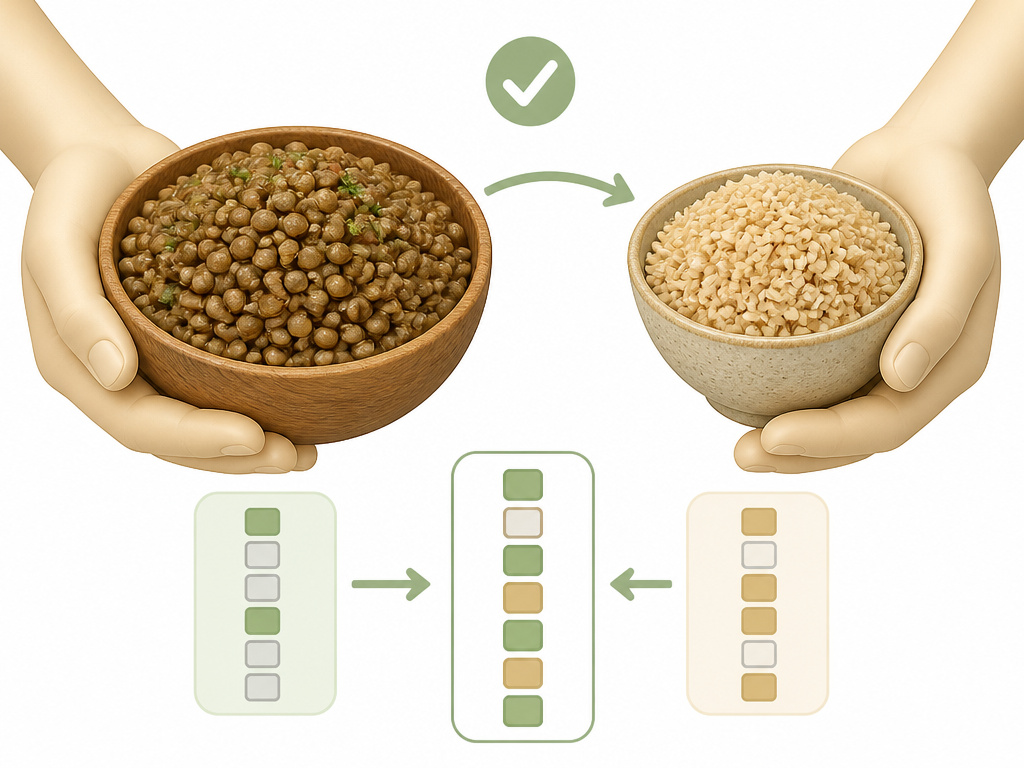
No. Your body does the combining for you, and the advice that says otherwise is decades out of date.
A complete protein contains all nine essential amino acids in proportions that match what the body needs. Dairy, lean meat, fish, poultry, egg whites and soy all qualify. So do hemp and chia seeds, buckwheat, quinoa and nutritional yeast, per the AICR plant-based protein guide.
Complete Proteins Without Meat
Soy foods such as tofu and edamame, hemp and chia seeds, buckwheat, quinoa and nutritional yeast all carry the full set. That is a short list, and it covers most of what a plants-only eater needs.
The Food-Combining Myth
Grains run a little low in lysine. Dry beans and lentils run high in it. Eat both across a day and the ledger balances itself.
Grains run low in lysine and beans run high. Eat both across a day and the body sorts out the rest, which is why the old food-combining charts died.
AICR is blunt about the absorption worry too. Past concerns came mainly from animal studies that used uncooked legumes and grains, and current evidence shows amino acid absorption from a plants-only diet is essentially the same as from a diet with animal foods. The protein for vegetarians question gets much easier once you know that. For a plants-only week, vegan meal planning around soy, lentils and grains covers the spread without much thought.
Where Protein Powder Fits, and Where It Doesn’t
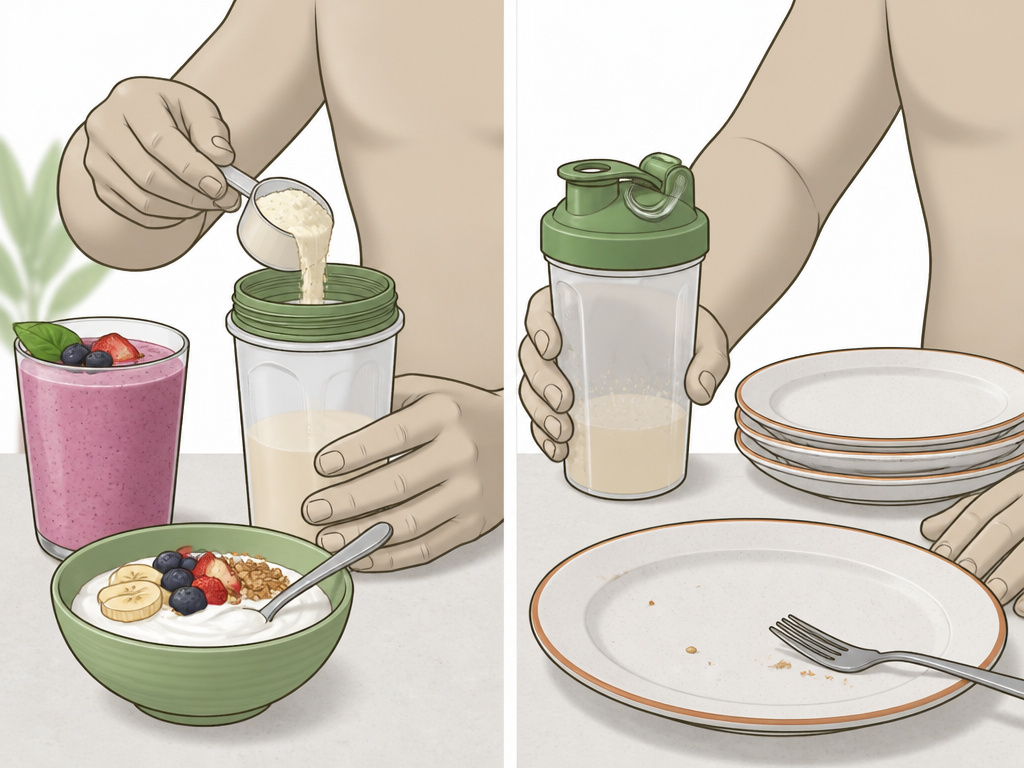
Powder is a convenience, and that is the entire case for it. That case is real, though, and the sources disagree on how to use it.
Patton’s caution is specific: do not consume protein powder in addition to eating a meal, because that is how you add weight rather than protein. Use it on its own as a post-workout recovery drink or a quick meal replacement. Baylor Scott and White Health takes the friendlier line, calling supplements a quick and convenient option when you are struggling to eat enough, and suggests adding them to smoothies, yogurt or water.
Where this goes sideways: Adding a scoop on top of a day that already had three full meals. Patton’s warning is about exactly that pattern, and it turns a protein problem into a calorie problem.
So if you have been asking yourself is protein powder necessary at all, the honest answer is that it depends on what is missing from your plate. If breakfast is the hole, a shake fills it. If nothing is missing, the shake is dessert with a nutrition label.
The Cheap, Boring Proteins That Do the Work
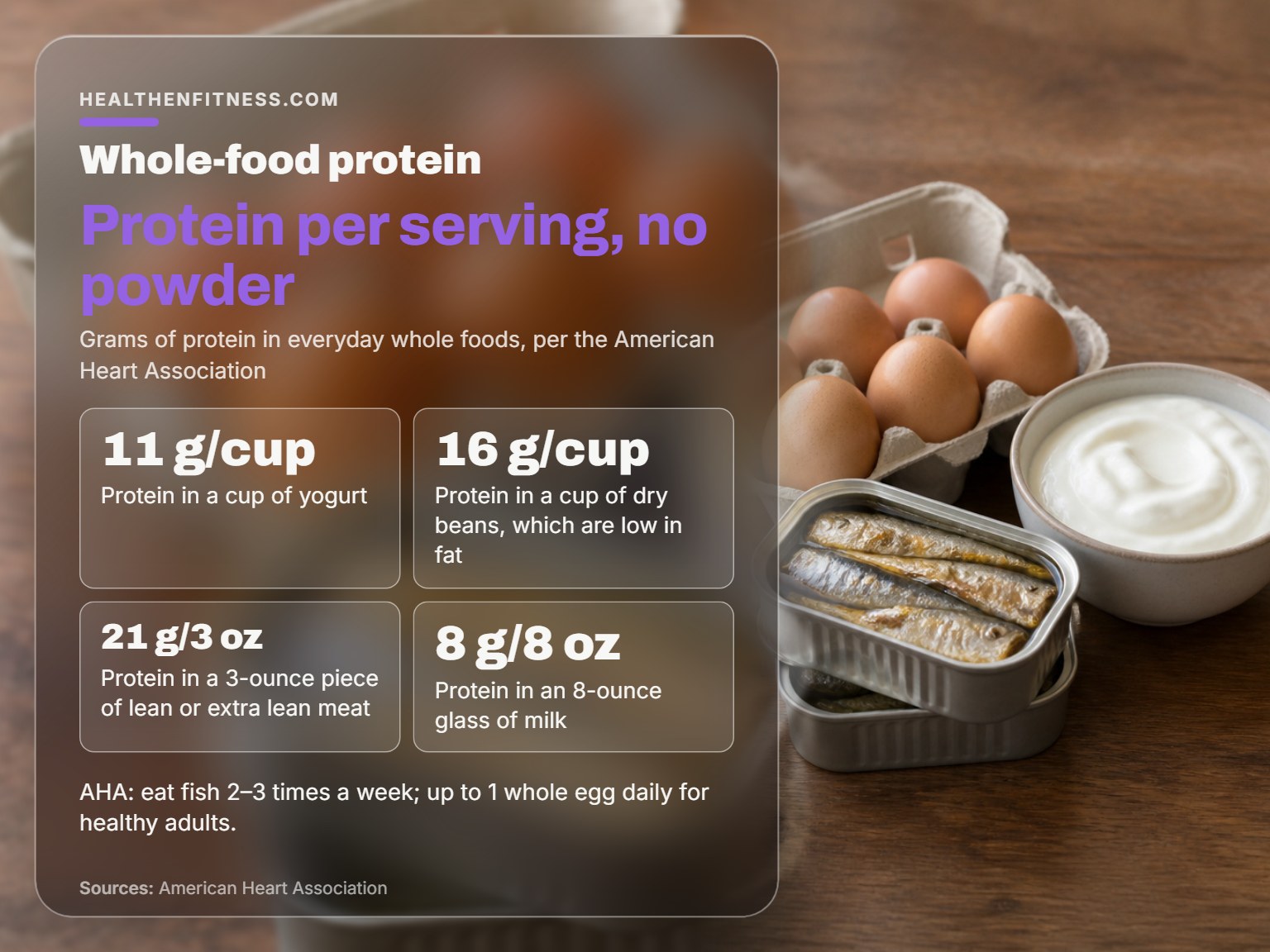
Greek yogurt, a carton of eggs and a stack of tinned sardines are the three things I would restock before I would restock powder.
Here is the short list I hand to anyone who says whole food protein is too much work:
- Tinned fish. Sardines, mackerel, tuna. The AHA specifically names oily fish and asks for it two to three times a week, and it also warns against fried seafood, which does not carry the same benefit.
- Eggs. Cheap, fast, and the AHA caps healthy adults at up to one whole egg or equivalent daily.
- Greek yogurt and cottage cheese. A cup of yogurt is about 11 g. Both work as a snack or a base.
- Dry beans and lentils. A cup of dry beans is about 16 g, and legumes are low in fat.
- Edamame. Dry-roasted, straight from the bag.
Notice what is not on that list: bars, ready-made shakes and anything with a nutrition panel longer than the ingredient list. AICR’s guidance is to save processed meats like bacon, sausage and cold cuts for occasional use, and to cap red meat at 12 to 18 ounces a week. Lean poultry, fish and plants carry the load.
What Changes With Age, Training, and Health Conditions
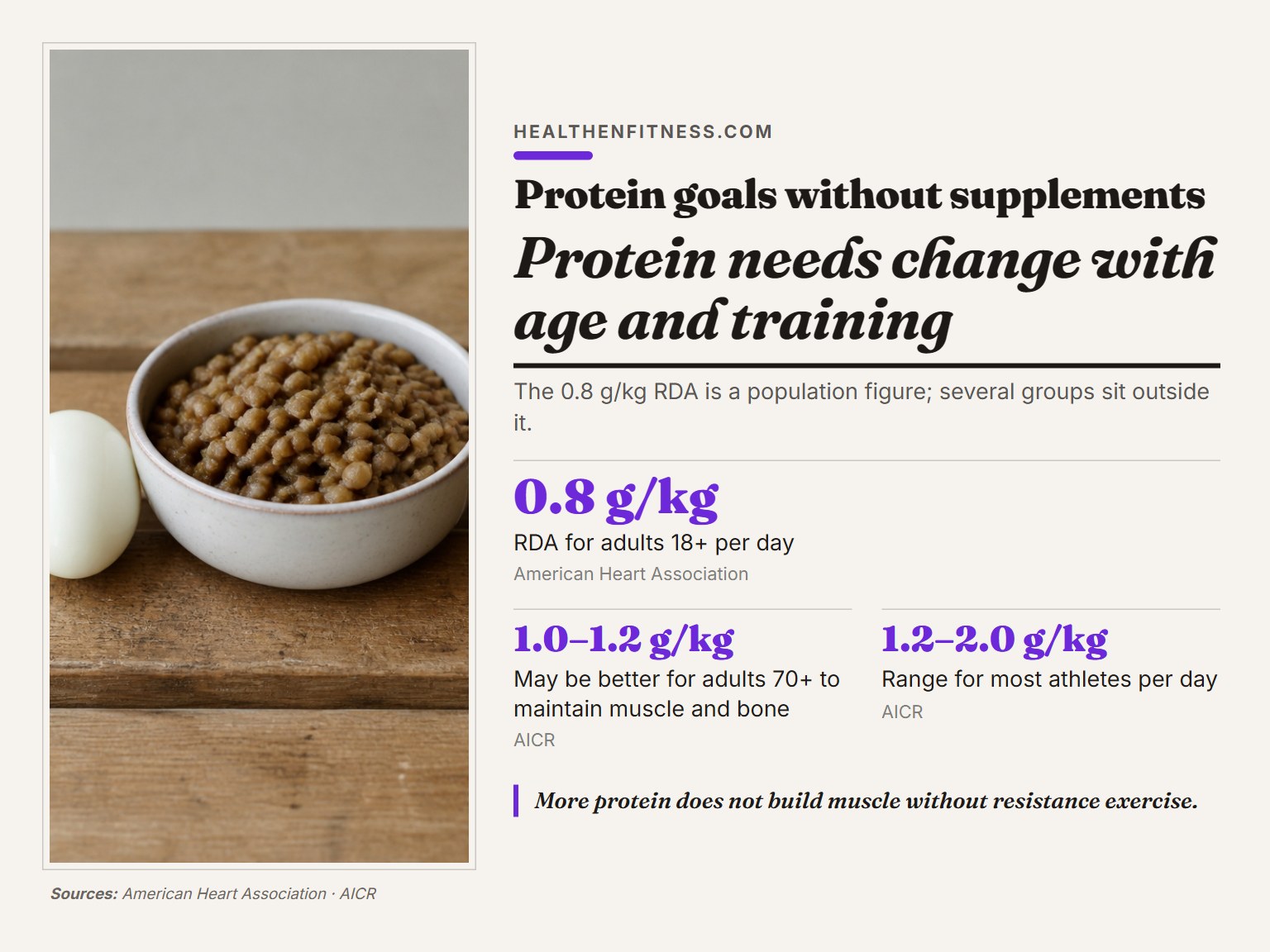
The standard 0.8 g/kg RDA is a population figure, and several groups sit outside it.
Adults Over 70
AICR suggests 1.0 to 1.2 g/kg per day may be better for maintaining muscle and bone after 70, and notes the research is still underway. That is an honest caveat rather than a settled number.
Athletes and Hard Training
AICR puts the range at 1.2 to 2.0 g/kg for most athletes, with one useful nuance: endurance athletes do not need as much extra protein as people doing a lot of high-intensity muscle-building work. A vegetarian diet for muscle gain runs on the same numbers, just with different vehicles.
The part nobody mentions: More protein does not build muscle on its own. AICR states plainly that resistance exercise drives the building and protein only supplies the raw material, so a higher target without training does nothing.
Two more edge cases worth knowing. People receiving or recovering from cancer treatment may need protein beyond the RDA, individualized by a registered dietitian. And AICR notes that simply increasing protein will not prevent muscle loss if total calories are too low. Pregnant women also need more protein to support the baby’s growth, per Baylor Scott and White Health.
Frequently Asked Questions
Can I hit my protein goal with only plant foods?
Yes. AICR states that people eating plants-only diets almost always get protein beyond the RDA as long as they meet their calorie needs, and that absorption from plant foods is essentially the same as from animal foods.
Is 0.8 g/kg enough if I lift weights?
It is the RDA, not a training target. Cleveland Clinic puts the average healthy adult at 1.2 to 1.6 g/kg per day, and AICR lists 1.2 to 2.0 g/kg for athletes. Pick the band that matches your training and stay consistent.
Do I need a shake right after training?
Cleveland Clinic’s emphasis is on spreading protein across the day rather than timing one hit. If a shake is the easiest way to get protein into a day that is otherwise short, use it. If your meals already carry it, skip the shake.
How much protein is in a palm-sized piece of meat?
About 21 g in a 3 oz cooked portion of lean meat, per the AHA. A 3 oz serving of fish or poultry lands between 20 and 25 g, per AICR.
Are eggs still fine every day?
The AHA says healthy individuals can include up to a whole egg or equivalent daily, and that people with dyslipidemia should be cautious with eggs. If that applies to you, ask your clinician rather than a blog.
Before You Go
Everything above assumes you are eating enough total calories. AICR makes the point that protein without adequate calories does not prevent muscle loss, so if you are undereating overall, fix that before you touch your protein number.
If you are over 70, move your target to 1.0 to 1.2 g/kg. If you train hard, 1.2 to 2.0 g/kg is the published range for athletes, and the lower end is fine for endurance work.
And if you want the single change with the biggest return, it is breakfast. Dinner is rarely the problem. I have watched people add protein to their day without changing a single dinner, just by moving some of it earlier.
Today, just add one palm-sized portion of protein to your breakfast and leave everything else alone.
