
10 Best Workout Watches in 2026
This post contains affiliate links. As an Amazon Associate, we earn from qualifying purchases.
For most of us, the right workout watch is the difference between guessing and knowing. The Apple Watch Ultra 4 Smartwatch earns our Best Overall spot with its rugged build, 45-hour extended workout tracking, and Precision dual-frequency GPS that keeps you on course even in tricky terrain. Serious runners and triathletes will appreciate its durability, while the Garmin Vivoactive 5 offers deeper health insights for everyday training, and the Amazfit Bip 6 delivers incredible battery life at a more accessible price.
The challenge with choosing a workout watch isn’t a lack of options, it’s finding one that actually matches how you move. A marathon runner needs different data than a gym-goer focused on strength training, and someone who hates charging devices every night needs long battery life above all else. We looked at GPS accuracy, battery performance, display quality, and sport-specific features to cut through the noise.
This guide is based on manufacturer specifications, expert round-ups, and patterns in owner feedback across dozens of models. We focused on what real athletes and casual exercisers actually need, then narrowed the field to ten watches that perform as described.
Top 10 Workout Watches in the Market
Certain content that appears on this site comes from Amazon. This content is provided "as is" and is subject to change or removal at any time.
The Best Workout Watches, Reviewed
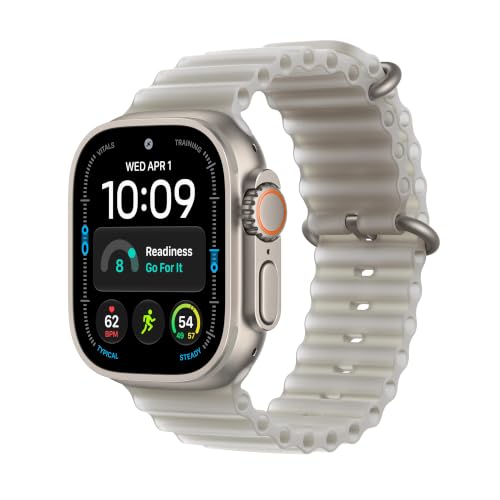
Apple Watch Ultra 4 Smartwatch
What We Like
- 45-hour max extended workout tracking
- Precision dual-frequency GPS
- Water resistant to 100m
Trade-offs
- Siri AI in English only at launch
- Some audio features in beta late 2026
A 45-hour max extended workout tracking mode means you can run an ultramarathon or spend a full weekend on the trail without hunting for a charger. If you push hard and want one device that keeps up with your longest days, this is the one to grab.
The trade-off is size. At 49mm with a titanium case, it is larger than something like the Garmin Forerunner 165, which sits at 43mm. That extra bulk gives you the bigger screen and rugged build, but it can feel heavy on a smaller wrist or under a dress shirt. The Siri AI features are rolling out in English first, and some audio intelligence tools won’t arrive until late 2026, so early adopters might wait a bit for the full voice experience. If you want a watch that prioritizes battery endurance and extreme durability over a slim profile, this is your pick.
Product photos
Garmin Vivoactive 5 GPS Smartwatch

What We Like
- Body Battery with nap and stress insights
- Sleep score and personalized sleep coaching
- Wheelchair mode for inclusive tracking
- 11-day battery in smartwatch mode
Trade-offs
- No advanced training metrics for serious athletes
- Lacks advanced training metrics for competitive athletes
The Garmin Vivoactive 5 packs an 11-day battery and a bright AMOLED display into a 42mm case that’s light enough to wear 24/7. That battery life matters because this watch is built around round-the-clock health monitoring. Body Battery energy tracking, automatic nap detection, HRV status, and personalized sleep coaching all work together to give you a clear picture of your recovery and daily readiness. It’s the right pick if you want a daily companion that gently nudges you toward better habits rather than a training computer that demands every detail of your workout.
The Vivoactive 5 focuses on health and lifestyle over hardcore performance metrics. If you’re chasing personal records or need advanced recovery tools like those on the Garmin Forerunner 165, you’ll find the Vivoactive’s workout benefit and recovery time features helpful but not as deep. For most people who want to sleep better, stress less, and keep moving with 30-plus sports apps, that’s a fair compromise. It’s a health-first watch that happens to track your runs, not a running watch that also checks your sleep.
Garmin Forerunner 165 Running Smartwatch

What We Like
- Personalized daily suggested workouts adapt to recovery
- Built-in GPS for pace, distance, and speed
- Brilliant AMOLED display with button controls
- Safety features: incident detection and Assistance
Trade-offs
- Requires smartphone for smart notifications and safety alerts
- No offline maps or onboard music storage
An 11-day battery life in smartwatch mode means you can wear this runner-focused watch all week without needing to plug it in, and still get 19 hours of GPS tracking for long runs or race days. That combination, paired with a lightweight 43mm AMOLED touchscreen and button controls, makes it a focused tool for anyone who wants distance, pace, and recovery data without unnecessary bulk. The daily suggested workouts that adjust based on your performance and recovery take the guesswork out of training, so you spend more time moving and less time planning.
This watch keeps things simple on purpose. Compare it to the COROS PACE 4 Ultralight Sport Watch, which offers a similar running focus but with a longer daily battery estimate and a slightly different feature set. For runners who want clear training guidance, reliable GPS, and a watch that stays out of the way, the Forerunner 165 delivers exactly that.
Amazfit Bip 6 Smart Watch

What We Like
- 14-day battery life
- 140+ workout modes including HYROX
- Free downloadable maps with turn-by-turn
- Lightweight aluminum build
Trade-offs
- No cellular connectivity for standalone calls
- Heavier than some GPS sport watches at 0.1 pounds
A 14-day battery life means you can train hard all week and still have juice for recovery days without needing to plug it in. That’s the kind of freedom that makes a watch feel like a partner, not a chore. The Amazfit Bip 6 suits anyone who wants a full-featured fitness companion. GPS tracking with five satellite systems, over 140 workout modes including HYROX, and 24/7 health monitoring, without the nightly plug-in ritual. It keeps things simple and reliable, so you can focus on moving, not managing.
You won’t get standalone cellular connectivity, so phone-free runs still need your phone nearby for calls or texts. Compared to the Garmin Vivoactive 5, the Bip 6 offers a much longer battery life and a larger AMOLED display, but the Garmin gives you Body Battery energy monitoring if that matters more to you. For most everyday athletes who value endurance over extras, the Amazfit Bip 6 is a smart, budget-friendly way to stay on track without the charging anxiety.
Product photos
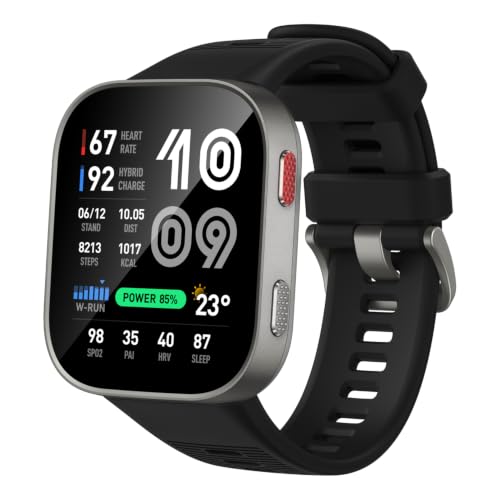
Amazfit Bip Max Smart Watch
What We Like
- Large 2.07" AMOLED display
- 20-day battery life
- 4GB storage for offline maps
- 150+ sports modes including HYROX
Trade-offs
- No Bluetooth call or text support
- No Bluetooth calling or text reply functionality
A 2.07-inch AMOLED screen makes it easy to glance at maps, stats, or workout prompts mid-stride without squinting. That generous screen pairs with a 20-day battery life, so you’re not hunting for a charger every few nights, just wear it, track your runs, and forget about it. If you value a crisp, roomy display that keeps up with daily training and weekend adventures, this watch is built around that priority.
The Amazfit Bip Max is bulkier than something like the Garmin Forerunner 165, but it packs 4GB of storage for offline maps and supports over 150 sports modes, including HYROX. That makes it a practical companion for anyone who wants big-screen navigation and long battery life over frills.
Product photos
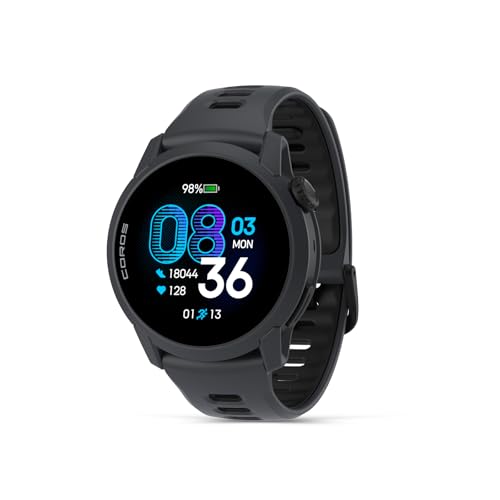
COROS PACE 4 Ultralight Sport Watch
What We Like
- Weighs just 32g with nylon band
- 11.8mm thin for 24/7 wear
- 19 days daily battery life
- Voice recording and voice control
Trade-offs
- Smaller 1.2" display than some rivals
- GPS battery life shorter than daily use
Weighing 32 grams with the nylon band, this watch is lighter than many competitors, so it stays comfortable during sleep tracking or all-day wear. The 11.8mm thin profile and 19 days of daily battery mean you can wear it continuously without frequent charging.
The 1.2-inch AMOLED display is smaller than the Amazfit Bip 6’s 1.97-inch screen, so if map reading or data-dense workout screens are your priority, you may prefer a larger display. Voice control and voice recording let you log thoughts mid-stride without using the touchscreen or buttons. For runners who value comfort over screen size, this watch offers a lightweight design with long battery life.
Product photos
SUUNTO Run GPS Sport Watch

What We Like
- Ultralight 36g design for comfort
- Dual-band GPS for precise route tracking
- 4GB offline music storage
- Fast charging in one hour
Trade-offs
- No offline maps for navigation in unfamiliar terrain
- No offline maps for navigating unfamiliar trails.
Weighing 36 grams with the textile strap, this watch is among the lightest in this guide, which reduces wrist fatigue during long runs. It pairs a 1.32-inch AMOLED touchscreen with dual-band GNSS for accurate route tracking, and it offers 12 days of normal battery life with fast charging that reaches full in one hour. For daily training and recovery monitoring, it provides features like Training Stress Score and 4GB of offline music storage, making it a practical choice for runners who prioritize low weight and core metrics.
The 20-hour GPS battery covers most weekly training and a marathon, but runners planning longer efforts may need to recharge more often. The textile velcro strap is lightweight and breathable, though some users may prefer a silicone band for easier cleaning after sweaty sessions. With offline music storage and training load tracking, this watch delivers focused functionality for runners who want essential tools without extra bulk.
Product photos
Polar Vantage M3 Multi-Sport Smartwatch

What We Like
- Dual-frequency GPS for precise navigation
- AMOLED display with Gorilla Glass 3
- Over 150 sports profiles
- Detailed recovery and training insights
Trade-offs
- 7-day smartwatch battery is shorter than some competitors
- No music storage for phone-free runs
Over 150 sports profiles and dedicated running power metrics mean this watch treats every workout like a data-rich experiment. The dual-frequency GPS locks onto your route with precision, and the AMOLED display stays readable even when you’re sweating through a trail run. It’s built for someone who wants to understand their training load and recovery, not just track miles. The watch weighs 0.1 pounds and is water-resistant up to 50 meters, so it handles wet conditions without issue.
A 1.28-inch AMOLED display with Gorilla Glass 3 resists scratches and stays readable in bright sun, so you can glance at it during a run without worrying about damage. The watch weighs just 53 grams, which keeps it comfortable on your wrist all day, and it’s water-resistant to 50 meters, meaning you can swim or shower without taking it off. Dual-frequency GPS locks onto signals more accurately in tricky spots like city canyons or dense woods, and turn-by-turn navigation from Komoot helps you follow a route without pulling out your phone.
Polar Street X GPS Running Watch

What We Like
- Shock-resistant with 50 m water resistance
- 170+ sport profiles for hybrid training
- Built-in GPS with route guidance
- Up to 10-day battery life
Trade-offs
- At 48 g, lightweight but less premium feel
- Plastic construction lacks premium metal feel
A 50-meter water resistance rating and shock-resistant build mean this watch is ready for rain, gym sweat, and the occasional drop without flinching. It suits anyone who wants a rugged everyday companion for running, strength work, and hybrid training across 170+ sport profiles. The built-in GPS with route guidance keeps you on track during city runs or outdoor sessions, while the 10-day battery life handles a full week of activity without needing to plug it in.
At 48 grams, the Polar Street X is light enough to wear all day without noticing it, yet it still feels rugged thanks to its shock-resistant build and 50-meter water resistance. Reviewers note that the lightweight design makes it ideal for gym sessions and daily wear, though the plastic construction doesn’t have the heft of a metal-cased watch like some competitors.
SUUNTO Race S GPS Sports Watch

What We Like
- 60g lightweight all-day comfort
- 30-hour GPS battery with fast charging
- Dual-band GNSS for precise tracking
- Offline maps with 2km zoom-out
Trade-offs
- 13-day daily battery less than some competitors
- No cellular connectivity for phone-free calls
A 60-gram body with a crisp 1.32-inch AMOLED screen means this watch is light enough for all-day wear while staying readable in bright conditions. The dual-band GNSS receives signals from five satellite systems to help track your route in dense cities or remote areas. With over 95 preset sports modes and recovery metrics like HRV and VO₂ max, it offers tools for daily training and weekend outings.
The 13-day daily battery is shorter than the COROS PACE 4’s 19-day stamina, so multi-week trips without charging may require a different watch. But for most users, the 30-hour GPS mode and one-hour full recharge provide enough power for regular workouts and adventures without adding extra weight.
How We Evaluated Workout Watches
We started with the basics: what does a workout watch actually need to do well? For this guide, we focused on four criteria that matter most for active use. First, GPS accuracy, if you run or cycle outdoors, a watch that loses signal or tracks wobbly routes is useless. We prioritized models with dual-frequency or multi-band GPS, like the Garmin Forerunner 165 and Polar Vantage M3, which lock onto satellites more reliably near buildings and trees.
Battery life came next. A watch that dies mid-workout or needs charging every other day defeats its purpose. We looked for at least seven days of smartwatch mode battery life, with the Amazfit Bip 6 leading at 14 days and the COROS PACE 4 offering 19 days of daily use. For GPS-heavy activities, we checked continuous tracking time, the Apple Watch Ultra 4’s 45-hour max is a standout for ultrarunners and adventurers.
We also evaluated durability and water resistance. A workout watch should survive sweat, rain, and the occasional drop. Models like the Polar Street X with shock resistance and 50-meter water resistance earned points for gym and outdoor use. Finally, we considered sport-specific features: adaptive training suggestions for runners, recovery insights for multi-sport athletes, and heart rate monitoring with sleep coaching for those focused on overall health.
Because this is a research-led evaluation, we didn’t test these watches in a lab ourselves. Our recommendations come from analyzing specs, reading expert reviews, and identifying consistent praise or complaints in owner feedback. The best watch for you depends on your primary activity and how much you value battery life versus advanced metrics.
What To Look For In Workout Watches
Start with your primary activity, then let battery life, GPS accuracy, and display type guide your choice. A runner needs different features than a swimmer, and a gym-goer prioritizing strength training has different needs than a triathlete.
Pick a watch that matches your main workout. Runners need accurate GPS and adaptive training plans. Gym-goers should prioritize heart rate monitoring and rep counting. Battery life should last at least a week for daily wear, and water resistance must match your environment.
GPS Accuracy
If you run, cycle, or hike outdoors, GPS accuracy is non-negotiable. Watches with dual-frequency or multi-band GPS, like the Garmin Forerunner 165 and Suunto Race S, lock onto signals faster and maintain accuracy near tall buildings or under tree cover. Single-band GPS can drift, especially on winding trails or urban routes. For casual walkers, standard GPS is fine, but serious runners should prioritize dual-band models. For a deeper look at options, our guide to best GPS workout watches covers the top performers.
Battery Life
Battery life determines how often you charge, and that convenience matters daily. The Amazfit Bip 6 offers 14 days, while the COROS PACE 4 stretches to 19 days in daily use. GPS-active battery life is different, the Apple Watch Ultra 4 manages 45 hours of extended tracking, while the Suunto Run gives 20 hours. If you run ultramarathons or multi-day adventures, prioritize extended GPS battery. For gym-only use, a week of smartwatch battery is sufficient.
Display and Durability
AMOLED displays offer vibrant colors and sharp text, as seen on the Garmin Forerunner 165 and Amazfit Bip Max with its large 2.07-inch screen. They look great indoors but can be harder to read in direct sunlight. Transflective displays, common on Garmin and Suunto models, are always-on and readable in bright sun but less vivid. Durability matters for outdoor use, look for water resistance of at least 50 meters and shock resistance if you trail run or hike. The Polar Street X is built for rough conditions.
- Check if the display is AMOLED or transflective based on where you exercise most.
- Confirm water resistance matches your activities (50m for swimming, 100m for diving).
- Verify GPS type: dual-frequency for runners, single-band for casual use.
- Compare GPS-active battery life, not just smartwatch mode.
- Make sure the watch supports your phone’s OS (Android or iOS).
A workout watch is only useful if you wear it daily. Prioritize comfort and battery life over flashy features you won’t use.
Workout Watches Compared
The table below compares key specs for our top picks, so you can see at a glance which watch fits your needs.
| Product | Display | Battery Life | GPS | Workout Modes |
|---|---|---|---|---|
| Apple Watch Ultra 4 Smartwatch | N/A | 2+ days | Precision dual-frequency | N/A |
| Garmin Vivoactive 5 GPS Smartwatch | AMOLED | Up to 11 days | Built-in GPS | 30+ built-in |
| Garmin Forerunner 165 Running Smartwatch | AMOLED touchscreen | Up to 11 days | Built-in GPS | 25+ built-in |
| Amazfit Bip 6 Smart Watch | 1.97" AMOLED | 14 days | 5 satellite systems | 140+ |
| Amazfit Bip Max Smart Watch | 2.07" AMOLED | 20 days typical | 5 satellite systems | 150+ |
| COROS PACE 4 Ultralight Sport Watch | 1.2" AMOLED touchscreen | 19 days daily | Accurate GPS | N/A |
| SUUNTO Run GPS Sport Watch | 1.32" AMOLED touchscreen | 12 days | Dual-band GNSS | 34+ |
| Polar Vantage M3 Multi-Sport Smartwatch | 1.28" AMOLED touchscreen | Up to 7 days | Dual-frequency GPS | Over 150 |
| Polar Street X GPS Running Watch | AMOLED | 10 days | Built-in GPS | 170+ |
| SUUNTO Race S GPS Sports Watch | 1.32" AMOLED | 13 days | Dual-band GNSS | 95+ |
Frequently Asked Questions
What is the best workout watch for everyday fitness?
The Garmin Vivoactive 5 is a strong choice for everyday fitness with its Body Battery energy monitoring, sleep coaching, and wheelchair mode for inclusive tracking. It offers 11 days of battery life in smartwatch mode and covers most activities without overwhelming you with advanced metrics.
How accurate are calorie burn estimates on smartwatches?
Calorie burn estimates vary by device and algorithm. Most watches use heart rate data and personal metrics like age and weight to estimate calories, but they are not perfectly accurate. For a detailed breakdown of how these estimates work and their limitations, our article on calorie burn accuracy explains what you can reasonably expect.
Which workout watch is best for runners?
The Garmin Forerunner 165 is built specifically for runners, with personalized daily suggested workouts that adapt to your recovery, built-in GPS for pace and distance, and safety features like incident detection. It’s lightweight and has a brilliant AMOLED display with button controls for easy use during runs.
What is the best workout watch for weightlifting?
For weightlifting, look for a watch with good heart rate monitoring and rep counting. The Polar Vantage M3 offers over 150 sports profiles and detailed recovery insights, which help track strength training progress. Our guide to best fitness trackers for weightlifting covers the top options for gym-based strength work.
Should I get a fitness tracker or a smartwatch for the gym?
It depends on your priorities. A fitness tracker like the Amazfit Bip 6 focuses on battery life and workout modes, while a smartwatch like the Apple Watch Ultra 4 offers more apps and connectivity. Our comparison of fitness tracker vs smartwatch for the gym breaks down the differences to help you decide.
The Bottom Line
The Apple Watch Ultra 4 Smartwatch is our Best Overall pick for serious athletes who need rugged durability, multi-day battery for extended workouts, and precision GPS. It’s built for runners, triathletes, and outdoor adventurers who push their gear as hard as themselves. If you prefer a lighter, more compact everyday smartwatch, this isn’t the one for you.
For those focused on 24/7 health insights and inclusive activity tracking, the Garmin Vivoactive 5 delivers sleep coaching, stress monitoring, and wheelchair mode in a comfortable all-day package. Budget-conscious shoppers will find exceptional value in the Amazfit Bip 6, which offers 14-day battery life and 140+ workout modes without breaking the bank.
The single most important factor in choosing a workout watch is matching its features to your primary activity. A runner needs accurate GPS and adaptive training plans; a gym-goer needs reliable heart rate monitoring and recovery insights. Pick the watch that fits your routine, and you’ll wear it every day.
