
10 Best Workout Wearable in 2026
This post contains affiliate links. As an Amazon Associate, we earn from qualifying purchases.
The best workout wearable for most people is the Garmin vívoactive 5 GPS Smartwatch, with its bright AMOLED display, 11-day battery, and built-in sleep coaching. Runners should look at the Garmin Forerunner 165, while gym-goers who want live heart rate data on machines will prefer the Fitbit Charge 6.
Picking the right wearable means balancing battery life, screen type, and the metrics you actually use. A runner needs GPS accuracy and adaptive coaching; a lifter might care more about recovery data and a comfortable band.
We built this guide by combing through manufacturer specs, expert round-ups, and patterns in owner feedback. No testing claims here, just honest comparisons to help you choose with confidence.
Top 10 Workout Wearables in the Market
Certain content that appears on this site comes from Amazon. This content is provided "as is" and is subject to change or removal at any time.
The Best Workout Wearables, Reviewed
Garmin vívoactive 5 GPS Smartwatch

What We Like
- Bright AMOLED display for clear outdoor viewing
- Up to 11 days battery in smartwatch mode
- 30+ built-in sports apps including wheelchair mode
- Personalized sleep coaching and HRV tracking
Trade-offs
- No onboard music storage for phone-free runs
With up to 11 days of battery life in smartwatch mode, you can track your health and workouts for over a week without needing to charge. The bright AMOLED display makes it easy to see your stats in most lighting conditions. Over 30 built-in sports apps, including wheelchair mode for push tracking, cover everything from walking to golf, making it a versatile companion for daily fitness and recovery. Body Battery energy monitoring and personalized sleep coaching help you understand when to push and when to rest, giving you insights to keep moving consistently.
The 1.7-inch case is compact and lightweight at 0.1 pounds, which feels comfortable on smaller wrists, but if you prefer a larger display for reading notifications or maps, you might find it a bit snug. Compared to the Garmin Forerunner 165, this watch offers broader health features like stress tracking and menstrual cycle tracking, while the Forerunner focuses more on running-specific metrics. It’s a versatile companion for anyone who wants a smartwatch that supports a wide range of activities without demanding daily charging, just don’t expect it to replace your phone for music on the go.
Fitbit Charge 6 Fitness Tracker
What We Like
- Real-time heart rate on gym machines
- Built-in GPS for outdoor workouts
- Google Maps turn-by-turn directions
Trade-offs
- Requires compatible exercise machines for heart rate link
- YouTube Music controls, not full music storage
- Google Health Premium subscription needed after trial
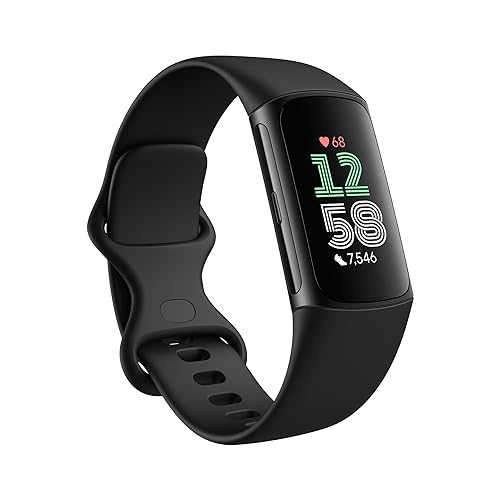
Seeing your heart rate on compatible exercise machines like treadmills and ellipticals is a rare feature that makes this tracker a natural fit for gym-goers who rely on equipment for their workouts. It tracks key metrics from calories and Active Zone Minutes to Daily Readiness and sleep, and includes 40+ exercise modes, built-in GPS, and a stress management score that monitors your body’s response to the day. For someone who spends more time on gym machines than on open roads, this covers the essentials without needing a separate device.
The heart rate link only works with compatible exercise machines, so if your gym’s gear isn’t supported, you lose that integration. Compared to the Garmin vívoactive 5, which offers 24/7 health monitoring and a sleep coach, the Charge 6 leans harder on Google’s ecosystem with Maps, Wallet, and a three-month Health Premium trial that eventually requires a paid subscription. For someone already comfortable with Google services and gym machines that are compatible, this is a focused, practical tool.
Garmin Forerunner 165 Running Smartwatch

What We Like
- Personalized daily suggested workouts adapt to recovery
- Brilliant AMOLED display with button controls
- Up to 19 hours GPS battery life
- Morning report with sleep, HRV, and training outlook
Trade-offs
- Safety features require paired smartphone and network coverage
- No cellular option for standalone calls or texts
A built-in GPS tracks pace, distance, and speed with wrist-based heart rate, so you can get run data without carrying your phone. Daily suggested workouts adapt based on your performance and recovery, and Garmin Coach offers race adaptive training plans that provide workout suggestions for specific events. The AMOLED touchscreen display with traditional button controls makes it easy to operate, even during a run. If you want a running watch that gives you structured, data-informed training guidance, this model delivers that focus.
The Forerunner 165’s safety features require a paired smartphone with network coverage to send your live location to emergency contacts. Trail runners in remote areas should keep that in mind. Unlike the Apple Watch Ultra 4, which includes its own cellular radio, this Garmin focuses on running metrics and offers up to 11 days of battery in smartwatch mode and up to 19 hours in GPS mode. That battery range means you can go several days between charges during normal use, and the adaptive daily suggested workouts adjust based on your performance and recovery.
Apple Watch Ultra 4 GPS Cellular Smartwatch
What We Like
- Precision dual-frequency GPS for distance running
- Sapphire crystal display and titanium case
- Up to 45-hour Max Extended Workout tracking
Trade-offs
- 49mm case is large for smaller wrists
- Satellite texting limited to emergency services only
- Siri AI features rolling out with usage limits
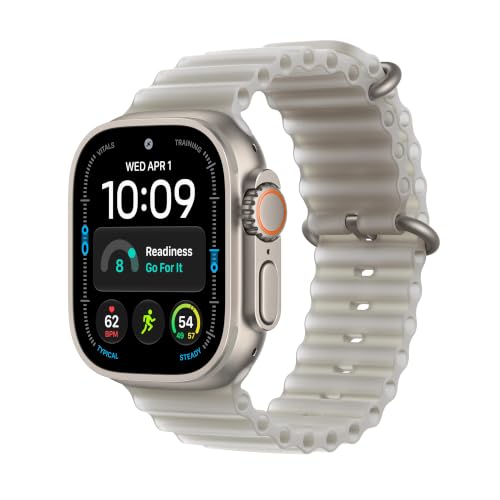
The titanium case and sapphire crystal display handle rough trails and water up to 100 meters, so you don’t have to baby it during a river crossing or a muddy descent. It suits ultrarunners, triathletes, and anyone who wants a rugged companion that keeps up with extreme days.
The trade-off is size: at 49mm, this watch is a chunky piece of kit on a smaller wrist. Satellite texting is also limited to emergency services, not casual messaging, so it’s a safety tool rather than a full communication device. That said, if you need battery life that outlasts your longest training day and a build that survives whatever the trail throws at you, this watch delivers where lighter fitness bands tap out.
Product photos
Samsung Galaxy Fit 3 Fitness Band
What We Like
- 14-day battery for less charging
- Swim-ready with 5ATM & IP68
- Large vibrant AMOLED screen
- Auto detects common workouts
Trade-offs
- Not compatible with iPhone or iOS
- No Samsung Pay support
- International model lacks US warranty
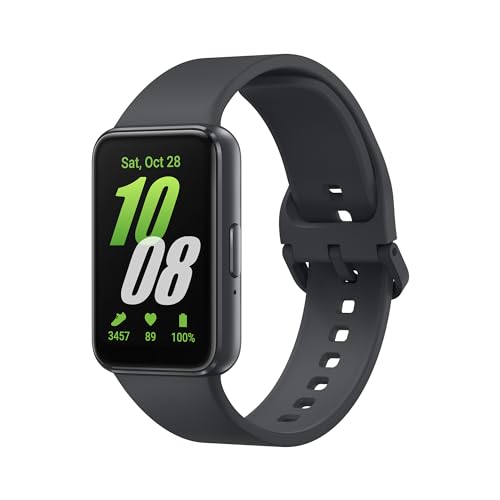
An up-to-14-day battery means you can wear this band through two full weeks of workouts, sleep tracking, and daily life before reaching for the charger. That kind of stamina makes it the go-to choice for anyone who forgets to plug things in or simply wants one less chore in their routine. The vibrant 1.6-inch AMOLED display gives you clear stats at a glance, and with 101+ workout modes plus auto detection for common exercises, it quietly logs your effort without making you tap through menus mid-set.
This band works only with Android phones and has no US warranty, so iPhone owners should skip it. Its 1.6-inch AMOLED display and 101+ workout modes make it a dedicated fitness tracker, and the battery lasts up to 14 days. For Android users who want long battery life without extra frills, this delivers.
Xiaomi Mi Smart Band 10 Fitness Tracker

What We Like
- 21-day battery life with fast charging
- Large 1.72" AMOLED display at 1500 nits
- Swimming direction tracking via electronic compass
- Enhanced sleep stage monitoring
Trade-offs
- Xiaomi Fit app uses metric system only
- Requires third-party app for imperial measurements
A 21-day battery life means you can wear this tracker for three full weeks of workouts and daily life before hunting for the charger. When you do need power, an hour gets you back to full. The 1.72-inch AMOLED display reaches 1500 nits HBM brightness, making messages readable even in direct sunlight. A new high-precision electronic compass tracks swimming direction for pool sessions, and enhanced sleep monitoring gives you insights into your sleep stages and quality.
Product photos
Fitbit Inspire 3 Fitness Tracker
What We Like
- Daily Stress Management Score included
- Relax breathing sessions built in
- Automatic sleep tracking with Sleep Score
Trade-offs
- No built-in GPS for standalone runs
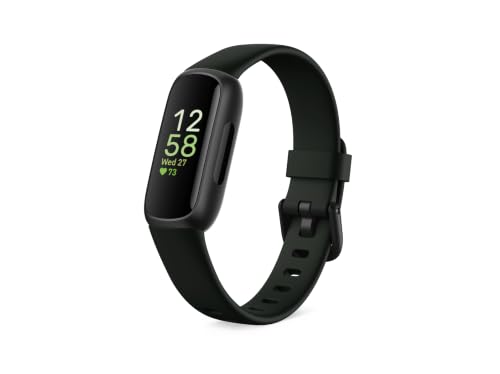
A daily Stress Management Score, paired with guided mindfulness and relax breathing sessions, makes this tracker a rare tool for anyone who wants to keep an eye on their mental load as much as their step count. It suits the person whose biggest fitness hurdle isn’t motivation but the feeling of being stretched thin. Someone who could use a gentle nudge to breathe, reset, and actually recover between workouts. The 24/7 heart rate sensor backs up that stress data with real numbers, while automatic sleep tracking ties your rest quality straight into your readiness for the next day.
The Inspire 3 focuses on stress management and sleep tracking rather than mapping every mile, so it keeps things simpler and lighter on the wrist with a small screen that won’t distract you from the moment. If your priority is managing daily stress and sleep rather than outdoor run tracking, this tracker suits that focus. Reviewers report it stays comfortable for all-day wear, which helps you keep it on for consistent sleep and stress data.
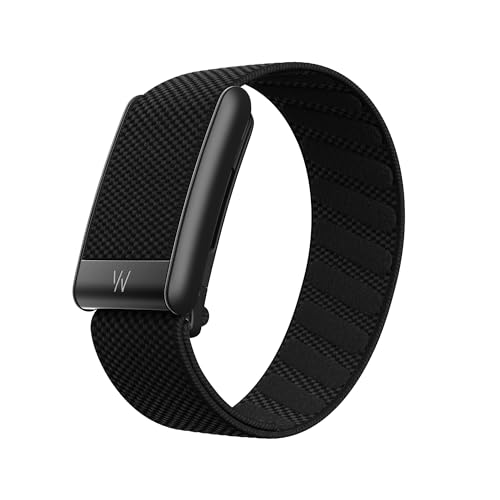
WHOOP 5.0 Screenless Fitness Wearable
What We Like
- Screenless design for comfortable 24/7 wear
- 14+ day battery with on-wrist charging
- AI Coach turns 140+ metrics into action
- Healthspan tracks biological aging pace
Trade-offs
- Requires ongoing membership after first year
- No display for glancing at stats mid-workout
A 14-day battery and a screenless design mean you can wear this thing through sleep, showers, and sweaty sessions without ever taking it off to charge. That’s the whole point for data-driven recovery: the WHOOP 5.0 collects 140+ metrics around the clock, from HRV and skin temperature to blood oxygen and sleep stages. Then it feeds them into an AI coach that tells you what to do next. If you’re the type who wants to know whether that extra rest day actually helped or if yesterday’s hard run is still taxing your system, this wearable hands you the numbers and the nudge. It’s built for people who treat recovery as seriously as training, not for those who just want a step count.
Committing to a membership model means the first 12 months are included, but after that you pay to keep the insights flowing. And because there’s no screen, you won’t glance at your wrist mid-set to see your heart rate; you check the app instead. Compared to something like the Garmin vívoactive 5, which gives you on-wrist stats and GPS without a subscription, the WHOOP asks for more patience and a different habit. But if your goal is deep sleep and recovery data that actually adapts to how you live, this is the one that delivers the granularity without the distraction of a glowing display.
Product photos
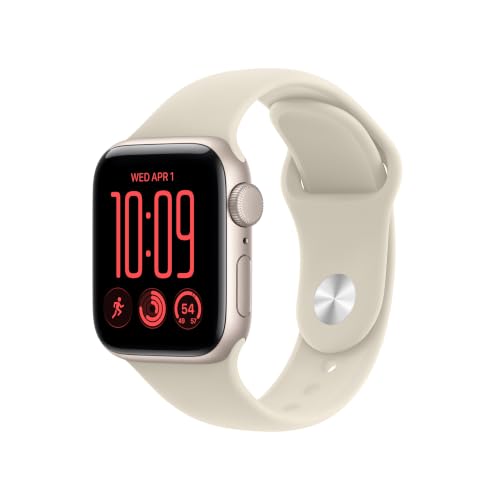
Apple Watch SE 3 GPS Smartwatch
What We Like
- Charges up to twice as fast as SE 2
- All-day 18-hour battery life
- Temperature sensing for health insights
- Fall and crash detection for safety
Trade-offs
- Requires an iPhone to stay connected
- 18-hour battery needs daily charging
An 18-hour battery that can grab eight more hours of charge in just 15 minutes means you can forget to plug it in overnight and still have power for your morning run. That fast charging makes the Apple Watch SE 3 a perfect companion for anyone who lives a busy, on-the-go life and doesn’t want to fuss with cables. It tracks your workouts with real-time metrics, monitors your sleep, and even keeps an eye on your heart rate and cycle patterns. You get a full picture of your health without spending a ton of time managing the watch itself.
If you don’t own an iPhone, this watch simply won’t work for you. It relies on an iPhone or Wi-Fi to send texts, take calls, and use Siri. But if you’re already in the Apple ecosystem, you get a smartwatch that tracks workouts from running to strength training, monitors sleep with a sleep score and apnea alerts, and automatically calls emergency services if it detects a hard fall or severe car crash. The 18-hour battery lasts from sunup to sundown, and a 15-minute charge gives you up to 8 hours of use, so it keeps up with a busy day.
For someone who wants a straightforward health and fitness tracker that also handles everyday communication and safety, the Apple Watch SE 3 delivers. It gives you temperature-sensing insights for cycle tracking, real-time workout metrics with Workout Buddy, and the ability to send texts or take calls right from your wrist. You can customize the watch face and swap bands to match your style, and Siri AI can suggest post-workout stretches or healthy recipes. Just keep in mind that you need an iPhone to stay connected, and the all-day battery means you’ll charge it nightly.
Product photos
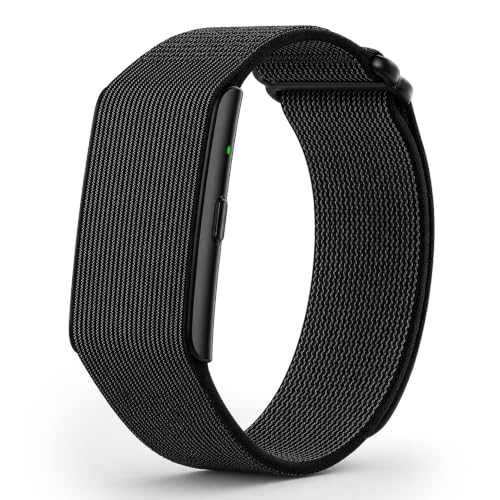
Domhong Screenless Fitness Tracker Band
What We Like
- 170+ sports modes with connected GPS
- IP68 water resistance for sweat and rain
- Free QwatchPro app, no subscription
Trade-offs
- No screen means no glanceable stats during workouts
- Connected GPS requires carrying your phone
- Readings are reference only, not medical grade
A 20- to 30-day battery and a 25-gram weight mean you can wear this screenless tracker for weeks without thinking about charging. It monitors heart rate, SpO2, HRV, sleep stages, and stress, syncing to the free QwatchPro app, which provides AI-powered wellness insights and Daily Energy tracking to help you decide when to train or rest. With 170+ sport modes and connected GPS that maps outdoor routes through your phone, it covers everything from yoga to trail runs without demanding your attention or a subscription. This is the tracker for anyone who wants useful health data without another glowing display competing for their focus.
No screen means no way to check your pace, reps, or heart rate mid-workout without pulling out your phone. That puts it in a different lane from a smartwatch with a display, such as the Garmin vívoactive 5, which shows real-time stats on your wrist. But if your goal is to log data quietly and review trends later, the Domhong’s long battery and lightweight comfort make it a simple option. Just know that its readings are wellness reference tools, not clinical measurements, so treat the numbers as helpful guides rather than hard medical facts.
Product photos
How We Evaluated Workout Wearables
Our research started with the specs that matter most: battery life, GPS accuracy, display quality, and sensor suites. We cross-referenced manufacturer documentation with expert round-ups and thousands of owner reviews to find consistent strengths and trade-offs across the top workout watches and bands on the market.
We prioritized four criteria. Battery life came first, a wearable that dies mid-week is useless. Display readability outdoors mattered for runners and cyclists. Heart rate accuracy and recovery metrics were critical for lifters and endurance athletes. Finally, we weighed ecosystem lock-in: some devices require subscriptions or specific phones.
A research-led evaluation has limits. We haven’t worn every band on every run.
What To Look For In Workout Wearables
Start with your primary workout type, then match battery life, GPS needs, and screen preference to your daily routine.
Battery life sets the rhythm of your week. GPS accuracy determines whether your run data is reliable. Heart rate sensors and recovery metrics tell you when to push and when to rest.
Battery Life and Charging Speed
Battery life is the single biggest practical difference between wearables. A band like the Xiaomi Mi Smart Band 10 lasts 21 days and charges fast, while an Apple Watch SE 3 needs daily charging. If you train every day and forget to charge, a longer battery saves frustration. Ultramarathon runners need the Apple Watch Ultra 4‘s 45-hour workout tracking. For most people, a 7-to-14-day battery hits the sweet spot.
Display Type and Outdoor Visibility
AMOLED screens offer vibrant colors and deep blacks, but some are brighter than others. The Xiaomi Mi Smart Band 10 hits 1500 nits for sunny-day clarity, matching higher-end watches. If you run or bike outdoors, prioritize peak brightness over pixel count. A dim screen that washes out in sunlight defeats the purpose of glanceable stats.
Heart Rate Accuracy and Recovery Features
Optical heart rate sensors vary widely. The Fitbit Charge 6 stands out for connecting directly to compatible gym machines, giving you real-time feedback on the display. For data-driven recovery, the WHOOP 5.0 tracks 140+ metrics and estimates biological aging pace. If you lift, look for fitness trackers that measure heart rate variability and resting heart rate accurately.
- Check whether the wearable requires a subscription for advanced metrics (WHOOP, Fitbit Premium).
- Confirm GPS type: connected GPS uses your phone; built-in GPS works standalone.
- Verify phone compatibility, some bands only work with Android or iOS.
- Look for swim rating (5ATM or IP68) if you train in water.
- Consider screenless options like the Domhong band if you want zero distractions.
A wearable that tracks the wrong metrics for your sport is just an expensive notification machine.
Workout Wearables Compared
The table below compares the ten wearables side-by-side on battery life, GPS type, display, and best-use scenario so you can spot the right fit fast.
| Product | Display | Battery Life | GPS |
|---|---|---|---|
| Garmin vívoactive 5 GPS Smartwatch | Bright AMOLED | Up to 11 days smartwatch mode | Built-in GPS |
| Fitbit Charge 6 Fitness Tracker | N/A | N/A | Built-in |
| Garmin Forerunner 165 Running Smartwatch | AMOLED touchscreen | Up to 11 days smartwatch, 19 hr GPS | Built-in GPS |
| Apple Watch Ultra 4 GPS Cellular Smartwatch | N/A | 2+ days | N/A |
| Samsung Galaxy Fit 3 Fitness Band | 1.6" AMOLED | Up to 14 days | N/A |
| Xiaomi Mi Smart Band 10 Fitness Tracker | 1.72" AMOLED | 21 days | N/A |
| Fitbit Inspire 3 Fitness Tracker | Touchscreen | N/A | N/A |
| WHOOP 5.0 Screenless Fitness Wearable | Screenless | 14+ days | N/A |
| Apple Watch SE 3 GPS Smartwatch | N/A | 18 hours | N/A |
| Domhong Screenless Fitness Tracker Band | Screenless | 20-30 days | Connected GPS |
Frequently Asked Questions
What is the difference between a fitness tracker and a smartwatch?
A fitness tracker focuses on activity, sleep, and health metrics with longer battery life and a simpler interface. A smartwatch adds apps, notifications, and cellular options but often requires daily charging. The choice between a fitness tracker and a smartwatch comes down to whether you need wrist-based phone features or just workout data.
Which workout wearable has the best battery life?
The Xiaomi Mi Smart Band 10 leads with 21 days of battery life and fast charging. The Samsung Galaxy Fit 3 offers 14 days. Most GPS smartwatches last 5 to 11 days depending on usage. If you train daily and hate charging, a fitness band with a long battery is the practical choice.
Do I need built-in GPS on my fitness tracker?
You need built-in GPS if you run or cycle without your phone. Connected GPS uses your phone’s antenna and drains the phone battery. The Garmin Forerunner 165 and Apple Watch Ultra 4 have accurate built-in GPS. Bands like the Fitbit Inspire 3 skip it to save cost and size.
Can I wear a workout wearable while swimming?
Yes, if the device has a 5ATM or IP68 rating. The Samsung Galaxy Fit 3 is swim-ready with both ratings. The Xiaomi Mi Smart Band 10 even tracks swimming direction with its electronic compass. Always check the water resistance rating before taking any wearable in the pool.
What is the best workout wearable for weightlifting?
For lifters, recovery metrics matter more than GPS. The WHOOP 5.0 tracks HRV, sleep, and strain without a screen. The Garmin vívoactive 5 offers personalized sleep coaching and HRV tracking. Look for fitness trackers for lifting that measure heart rate variability and resting heart rate rather than step count.
The Bottom Line
The Garmin vívoactive 5 is the best overall workout wearable for most people. It balances long battery life, a bright AMOLED screen, and health-focused features like sleep coaching and HRV tracking. If you are a runner who needs adaptive daily suggestions, the Garmin Forerunner 165 is a better fit.
Budget-conscious shoppers should start with the Xiaomi Mi Smart Band 10 for its 21-day battery and bright display at an affordable price. Android users who want a swim-ready band with auto-detection will appreciate the Samsung Galaxy Fit 3. For data nerds who prioritize recovery, the screenless WHOOP 5.0 delivers deeper insights than any watch.
The single most important factor is matching the wearable to your primary workout. A runner needs GPS accuracy; a lifter needs recovery metrics; a gym-goer needs heart rate integration. Pick the one that fits your routine, not the one with the most features.
