
10 Best Weightlifting Belts For Men in 2026
This post contains affiliate links. As an Amazon Associate, we earn from qualifying purchases.
The RDX Cowhide Leather Weightlifting Belt takes the Best Overall spot. It combines genuine cowhide durability with a 7 mm thickness that absorbs pressure well, a dual-prong steel buckle, and a comfortable suede inner lining. For heavy-duty training, the Best Heavy-Duty Leather award goes to the Dark Iron Fitness Genuine Leather Belt, which offers reinforced double-stitching. The Gymreapers Leather Belt is our pick for a lightweight, portable option.
Choosing the right lifting belt comes down to your training style. Powerlifters need stiff support for max-effort squats and deadlifts, while general gym-goers may prefer a lighter, more flexible belt that doesn’t get in the way during conditioning work. Material, buckle type, and thickness all affect how a belt performs under load.
This guide is research-based, drawing on manufacturer specifications, expert round-ups, and patterns in owner feedback to help you match a belt to your goals. We cover ten distinct options, from competition-legal models to quick-adjust nylon belts, so you can lift with confidence.
Top 10 Weightlifting Belts For Men in the Market
Certain content that appears on this site comes from Amazon. This content is provided "as is" and is subject to change or removal at any time.
The Best Weightlifting Belts For Men, Reviewed
RDX Cowhide Leather Weightlifting Belt

What We Like
- Genuine cowhide leather for durability
- 7 mm thickness absorbs pressure well
- Dual-prong steel buckle prevents slipping
- Suede inner lining adds comfort
Trade-offs
- Not IPF-compliant for competition use
- Width options require choosing one upfront
A 7 mm genuine cowhide leather belt with a dual-prong steel roller buckle gives you the kind of reliable bracing that makes heavy squats and deadlifts feel more controlled. The wide padded back supports your lower back during the brace, and the suede inner lining keeps it comfortable against your skin even through longer sessions. With ten adjustment holes and two width options, it adapts well to different body types and lifting styles, making it a strong everyday choice for anyone focused on steady strength progress.
This belt lacks IPF approval, so competitive powerlifters who need a regulation belt for meets should look elsewhere. Compared to the Gymreapers 6mm Genuine Leather Power Belt, the RDX is 1 mm thicker, which can help with pressure absorption during heavy lifts. For anyone wanting a durable belt for regular gym work without competition rules, reviewers find it a practical choice.
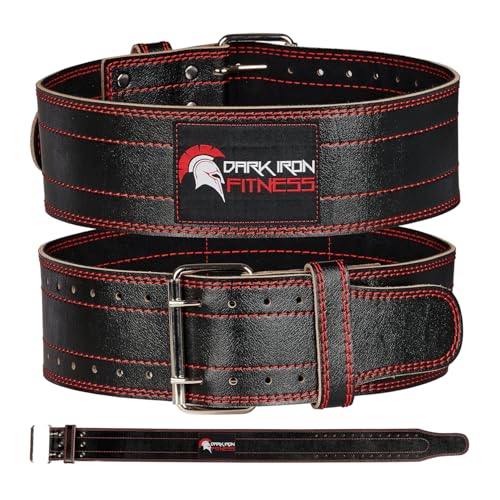
Dark Iron Fitness Genuine Leather Weightlifting Belt
What We Like
- Reinforced double-stitching along edges for durability
- 12 adjustment holes for precise, custom fit
- Contoured 4-inch width balances comfort and stability
Trade-offs
- At 1.5 pounds, heavier than lighter synthetic belts
- Heavier than some leather belts (1.5 lb vs 1.2 lb Gymreapers)
A 4-inch wide genuine leather belt provides rigid support where your lower back needs it most during heavy squats and deadlifts. The double-prong metal buckle is designed to stay secure during max lifts, and with twelve adjustment holes spaced at one-inch intervals, you can fine-tune the fit precisely. This belt is built for lifters who value stability over convenience and are willing to break in the leather for a custom fit over time.
The trade-off is weight and bulk. At 1.5 pounds, it’s heavier than the Gymreapers 6mm Genuine Leather Power Belt, which weighs 1.2 pounds. If you prefer a lighter carry or switch between lifts quickly, that extra heft might matter. But for dependable core support under a loaded barbell, the reinforced stitching and thick leather give you the confidence to push through heavy sets without worrying about your gear.
Product photos
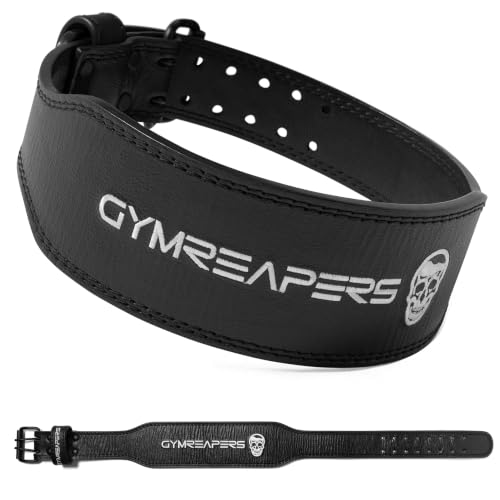
Gymreapers Leather Weightlifting Belt
What We Like
- Real reinforced leather won't rip or tear
- Lightweight at only 1.2 pounds
- Form-fitting 4-inch width for support
- Rolls up compact for gym bag storage
Trade-offs
- Single-buckle design less secure for heavy deadlifts
- Single buckle limits stability for very heavy lifts
At 1.2 pounds, this belt is lightweight and rolls up compactly for easy storage in a gym bag. The 4-inch width provides back support during training, and the real reinforced leather is built to resist ripping or tearing. It’s a comfortable everyday option for lifters who want real leather without the bulk of heavier belts.
The adjustable metal buckle is simple and functional, but compared to the Dark Iron Fitness belt’s double prong closure, some users may prefer a different locking style. This belt’s lighter construction makes it more suitable for general strength work than for maximal load attempts where a stiffer belt might be preferred. The lightweight feel and easy storage are practical advantages for regular gym use.
Product photos
Iron Bull Strength Powerlifting Belt

What We Like
- 10mm single-cut suede leather
- 4-inch width for even core support
- Lifetime warranty against defects
Trade-offs
- Requires break-in period for comfort
- Heavier than slimmer training belts
A 10mm single-cut suede leather belt provides firm, consistent support for heavy lifts, and the IPF certification means it meets the standards set by the International Powerlifting Federation. The 4-inch width spreads pressure evenly across your back and abs, so you get stable core compression without digging in awkwardly. This belt suits lifters who want a durable belt that follows official standards.
Suede leather takes a short break-in period to mold to your shape, so your first few sessions might feel a bit stiff compared to a thinner belt. But once it conforms, the 10mm thickness offers the support that many lifters appreciate for heavy loads. If you’re okay with a little patience upfront, this belt delivers competition-grade performance and a lifetime warranty that backs its build.
Gymreapers 6mm Genuine Leather Power Belt

What We Like
- Double prong buckle won't slip
- 6mm thickness for stable support
- Full 4-inch width for core stability
- Genuine leather built to last
Trade-offs
- 6mm is thinner than some powerlifting belts
- No padding for comfort during long sets
A 6mm genuine leather belt with a double prong buckle and full 4-inch width provides reliable support during maximal squats and deadlifts. The belt won’t pinch, slip, or shift when secured, so you can focus on bracing your core rather than adjusting your gear. This belt is a straightforward tool for building intra-abdominal pressure during compound lifts.
The 6mm thickness is thinner than some powerlifting belts like the Iron Bull Strength 10mm, which some lifters may prefer for heavier loads. But if you want a balance of stability and flexibility for a variety of lifts, this Gymreapers belt keeps things simple. Just double-check your waist measurement against the 37-inch length before ordering.
RDX IPF Compliant Powerlifting Belt

What We Like
- IPF, USPA, IPL compliant for meets
- 13mm option for extra rigidity
- Dual-pronged roller buckle stays locked
- 12 adjustment holes for custom fit
Trade-offs
- Requires careful waist measurement, not pant size
- 13mm version is too stiff for daily gym training
Built to meet IPF competition standards, this 13mm genuine cowhide belt gives you the rigid support needed for maximal squats and deadlifts. The uniform 4-inch width spreads pressure evenly across your torso, and the dual-pronged roller buckle locks in place so you can focus on your lift without constant adjustments. If you’re prepping for a powerlifting meet, this belt provides the stability and precise sizing to brace hard and stay confident under the bar.
The 13mm option is noticeably stiff, which can feel unforgiving if you’re newer to lifting or prefer a little flex between sets. Compared to the Gymreapers Leather Weightlifting Belt, this RDX belt demands a more deliberate fit and a break-in period. But for lifters who want IPF compliance and the security of 12 adjustment holes to dial in the perfect tightness, that extra rigidity is exactly the point.
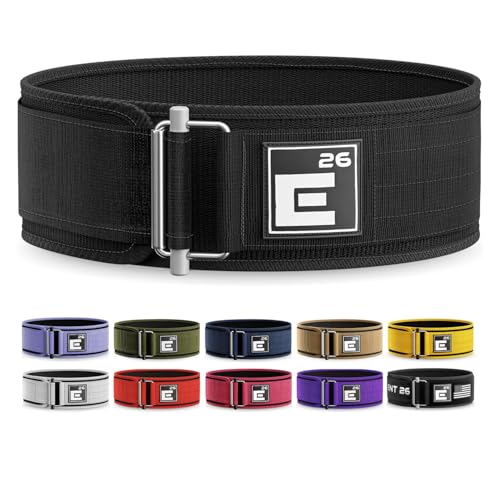
Element 26 Self-Locking Weight Lifting Belt
What We Like
- Self-locking buckle won't slip under load
- Breathable nylon resists sweat buildup
- No break-in period needed
- Infinitely adjustable for precise fit
Trade-offs
- Nylon is more flexible than stiff leather belts
- Not ideal for lifters who prefer stiff leather support.
The full metal self-locking buckle automatically engages under load, so you never have to worry about the belt popping open mid-squat or deadlift. That peace of mind makes this a great pick if you train alone or push through heavy singles and want a belt that stays put without constant adjustment. The pliable nylon conforms to your core right out of the box with zero break-in, and the infinite adjustment lets you dial in exactly the pressure you need for each lift, from snatches to jerks.
Nylon belts are more flexible than the stiff leather used in models like the Dark Iron Fitness Genuine Leather belt, so if you prefer an unyielding wall of support for maximal loads, this won’t feel as solid. At 0.6 pounds and 36 inches long, it packs small and breathes well, making it a smart companion for CrossFit-style workouts or gym bags where weight and sweat matter. Best for lifters who value speed, adjustability, and competition legality over the brute rigidity of a traditional leather belt.
Product photos
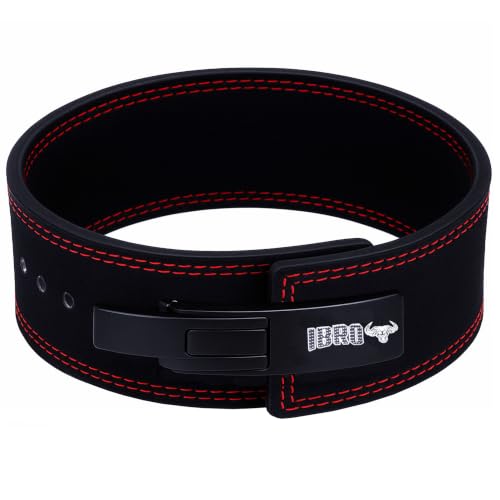
IBRO Powerlifting Lever Belt
What We Like
- Quick-release lever for consistent tightness
- Genuine leather with double stitching
- Three thickness choices for different needs
- Easy 2-minute setup with QR guide
Trade-offs
- Arrives unassembled, requires Phillips screwdriver
- Lever screws need checking before each session
- Stiff out of the box, needs break-in sessions
The steel lever buckle locks to the exact same tightness every set and opens in one motion between squats or deadlifts, so you spend less time fiddling and more time bracing. With genuine leather and double stitching, it holds its shape without folding or rolling, even as it softens over your first few sessions. The 10mm thickness is the all-round choice for most weightlifting, while the 13mm option is built for experienced powerlifters and strongman training. Setup involves wrapping the belt around your waist and fitting the lever into the holes where it closes snugly; a QR card provides a setup video, though a Phillips screwdriver is needed and not included.
The main trade-off is the initial stiffness and the need to tighten the lever screws before each session, which is a small maintenance step compared to the convenience of a lever buckle. Unlike a double-prong belt, the IBRO gives you the same fit set after set once dialed in, without adjusting holes. It is not ideal if you want a belt that works out of the box without any assembly, but for lifters who value speed and consistency between heavy sets, this lever design delivers.
Product photos
Beast Power Gear Lever Weightlifting Belt

What We Like
- Quick locking lever buckle for fast fit
- 10mm premium leather resists stretching
- 4-inch width wraps torso evenly
- Suede lining adds comfort
Trade-offs
- Lever buckle does not allow mid-session adjustments like prong belts
- Requires sizing chart measurement, not pants size.
A heavy duty lever buckle that snaps shut in seconds means you can dial in a secure fit faster than fiddling with a traditional prong belt. That speed matters when you’re between sets and want to keep your focus on the bar. The 10mm premium leather resists stretching so your support stays consistent rep after rep, and the 4-inch width wraps your torso evenly to brace your abs and lower back for heavier squats and deadlifts.
At 3.9 pounds, this belt is noticeably heavier than the Gymreapers Leather Weightlifting Belt at 1.2 pounds. That extra heft feels solid and durable, but it also means you’ll notice it in your gym bag. For lifters who prioritize a fast, locked-in fit and don’t mind a little extra bulk, this belt delivers.
POZTEV Powerlifting Lever Belt

What We Like
- Quick-release lever for instant adjustments
- Customisable fit with easy tightening
- 10mm thick leather for durable lumbar support
- Lifetime customer support with 1-year replacement
Trade-offs
- Only one size range (26"-32") limits fit options
- No padding for those who prefer extra comfort
A lever buckle that lets you loosen or tighten in milliseconds means you can dial in support between sets without fumbling with prongs or straps. The 10mm pre-broken leather provides solid, consistent back support for heavy squats and deadlifts, and the 4-inch width covers your lumbar area without digging in. It is a straightforward, no-fuss tool for anyone who wants to focus on the lift, not the belt.
A lever buckle lets you loosen or tighten the belt in milliseconds, which is a big time-saver between heavy sets. The mechanism feels different if you’re used to a double-prong closure, and the single size range of 26 to 32 inches means it won’t fit every waist. If your waist is outside that range, you’d need a belt with a different sizing system.
Product photos
How We Evaluated Weightlifting Belts For Men
We built this guide by studying manufacturer specifications, material claims, and construction details for dozens of belts. We also reviewed patterns in owner feedback from experienced lifters to understand what holds up in real gym use and what falls short over time.
The four criteria that mattered most were material quality, buckle security, thickness, and fit range. Genuine leather belts offer the best durability and stiffness, but nylon belts win on breathability and no break-in. A dual-prong or lever buckle keeps the belt tight under heavy loads, while single-prong designs are adequate for lighter training.
Thickness directly affects support: 10 mm and 13 mm belts provide rigid bracing for powerlifting, while 6 mm and 7 mm belts balance comfort and stability for general lifting. Finally, a wide adjustment range and proper sizing prevent the belt from shifting mid-lift.
A research-led evaluation has limits, we don’t claim to have tested each belt in the gym. This approach helps you narrow the field quickly without trying every option yourself.
What To Look For In Weightlifting Belts For Men
Before you buy, understand the three key choices that define a belt’s performance: material, buckle type, and thickness. Each decision trades off comfort, stiffness, and convenience.
Choose genuine leather for durability and stiffness, nylon for breathability and no break-in. Match the buckle to your need for quick adjustments or rock-solid security. Pick thickness based on your training goal: 10 mm or more for powerlifting, 6-7 mm for general lifting.
Material: Leather vs. Nylon
Genuine cowhide leather is the standard for heavy lifting because it resists stretching and provides consistent support under load. The RDX Cowhide and Dark Iron Fitness belts use reinforced leather with double stitching, which owners report lasts for years. Nylon belts like the Element 26 Self-Locking model are more flexible and breathable, making them a good choice for high-rep work or hot gyms.
They also require no break-in period, unlike stiff leather belts that need several sessions to mold to your torso. For a deeper look at material options, our guide to leather weightlifting belts covers the best genuine and synthetic choices.
Buckle Type: Prong, Lever, and Self-Locking
The buckle is what keeps the belt tight during a heavy lift. Dual-prong buckles, found on the Gymreapers Power Belt and the RDX Cowhide, provide even pressure distribution and prevent slipping. Single-prong buckles are lighter but less secure for maximal loads.
Lever buckles, like those on the IBRO and Beast Power Gear belts, allow fast, repeatable tightening between sets, ideal for lifters who want consistent tension without fiddling with holes. Self-locking nylon belts offer infinite adjustability and are popular in CrossFit-style workouts. Our lever weightlifting belts guide breaks down the best quick-release options in detail.
Thickness and Width
Thickness determines how much intra-abdominal pressure you can generate. A 10 mm or 13 mm belt, like the Iron Bull Strength or RDX IPF models, provides the rigid bracing needed for competition-level squats and deadlifts. Thinner 6 mm and 7 mm belts are more comfortable for dynamic movements and general training. Width should be uniform, 4 inches is the standard for even core support. Some belts offer contoured designs that follow your ribcage and hips, which can improve comfort during the squat.
- Measure your waist at the navel, not your pant size, to find the correct belt length.
- Check if the belt is IPF-certified if you plan to compete in sanctioned meets.
- Look for a lifetime warranty or generous return policy, especially on leather belts that require a break-in.
- Consider the belt’s weight if you carry it in a gym bag, lightweight models roll up compactly.
A good rule: the belt should be tight enough that you can still breathe deeply into your belly, but not so loose that it shifts when you brace.
Weightlifting Belts For Men Compared
The table below compares each belt’s material, buckle type, thickness, and best use case so you can quickly see which model fits your training style.
| Product | Material | Width | Closure |
|---|---|---|---|
| RDX Cowhide Leather Weightlifting Belt | Genuine cowhide leather | 4 inch and 6 inch | Dual-prong roller buckle |
| Dark Iron Fitness Genuine Leather Weightlifting Belt | 100% genuine leather | 4 inches | Double-prong metal lever |
| Gymreapers Leather Weightlifting Belt | Real reinforced leather | 4 inches | Adjustable metal buckle |
| Iron Bull Strength Powerlifting Belt | Suede leather | 4 inches | Double prong |
| Gymreapers 6mm Genuine Leather Power Belt | Genuine leather | 4 inches | Double prong buckle |
| RDX IPF Compliant Powerlifting Belt | Genuine cowhide leather | 4 inches | Dual-pronged roller buckle |
| Element 26 Self-Locking Weight Lifting Belt | 100% premium nylon | 4 inches | Full metal self-locking buckle |
| IBRO Powerlifting Lever Belt | Genuine leather core, suede finish | 4 inches | Quick-release steel lever |
| Beast Power Gear Lever Weightlifting Belt | Premium leather with suede lining | 4 inches | Heavy duty lever buckle |
| POZTEV Powerlifting Lever Belt | Pre-broken strong leather | 4 inches | Lever buckle |
Frequently Asked Questions
What thickness weightlifting belt should I get?
For powerlifting and max-effort lifts, choose a 10 mm or 13 mm belt for maximum rigidity. For general strength training, CrossFit, or Olympic lifting, a 6 mm or 7 mm belt offers a good balance of support and flexibility.
How tight should a weightlifting belt be?
The belt should be snug enough that you can brace your core against it, but not so tight that it restricts your breathing. You should be able to slide your hand between the belt and your stomach with some resistance.
Do I need a leather or nylon lifting belt?
Leather belts are more durable and provide stiffer support, making them ideal for heavy squats and deadlifts. Nylon belts are lighter, more breathable, and require no break-in, making them a better choice for high-rep training or warm climates.
How do I measure my waist for a lifting belt?
Measure your waist at the level of your navel while standing upright. Do not use your pant size, belt sizing is based on your actual circumference, and most brands provide a size chart that matches measurement to belt length.
Can I use a weightlifting belt for deadlifts?
Yes, a weightlifting belt can help you brace your core and maintain a neutral spine during heavy deadlifts. A 4-inch wide belt with a secure buckle, like the Dark Iron Fitness or Gymreapers double-prong models, works well for this movement.
The Bottom Line
The RDX Cowhide Leather Weightlifting Belt is our Best Overall pick for lifters who want a durable, thick leather belt for heavy training and general gym use. Its 7 mm thickness, dual-prong buckle, and suede lining deliver reliable support without the stiffness of a 10 mm competition belt.
If your budget allows for a heavy-duty option, the Dark Iron Fitness Genuine Leather Belt offers reinforced double-stitching and a precise fit for max-effort squats and deadlifts. For lifters who need an IPF-compliant belt for meets, the Iron Bull Strength Powerlifting Belt is the right choice.
The single most important factor when buying a belt is matching its stiffness and buckle type to your training goal. A belt that supports your heaviest lifts will serve you for years, while one chosen for convenience alone may leave you wanting more when the weight gets serious.
