
10 Best Forearm Exercise Equipment in 2026
This post contains affiliate links. As an Amazon Associate, we earn from qualifying purchases.
For serious forearm development, the LIZAAL Forearm Strengthener & Wrist Roller takes Best Overall thanks to its heavy-duty nylon strap, steel buckles, and comfortable non-slip silicone handle that supports over 250 lbs. The FitBeast Wrist Roller offers a thicker foam grip for reduced hand fatigue, while the FitBeast Grip Strengthener stands as our Budget Pick for affordable, adjustable resistance.
Building forearm strength often gets overlooked in standard gym routines, yet it directly impacts grip endurance, wrist stability, and pulling power for exercises like deadlifts and rows. The challenge is finding equipment that matches your current strength level while allowing room for progression.
This guide is research-based, drawing on manufacturer specifications, expert round-ups, and patterns in owner feedback to help you choose from ten top contenders. We break down what each product does best so you can match one to your training goals.
Top 10 Forearm Exercise Equipment in the Market

Certain content that appears on this site comes from Amazon. This content is provided "as is" and is subject to change or removal at any time.
The Best Forearm Exercise Equipment, Reviewed
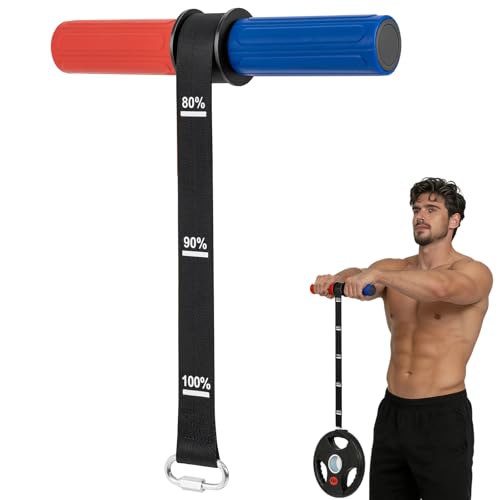
LIZAAL Forearm Strengthener & Wrist Roller
What We Like
- Non-slip thicker silicone handle
- Supports over 250 lbs load
- Heavy-duty nylon strap and steel buckles
- Compact and portable design
Trade-offs
- Requires separate weight plates or dumbbells
- No built-in resistance adjustment
The 250+ lb load capacity means this wrist roller can handle weights from light plates up to heavy loads, so it works for a range of training levels without needing a different tool. The thicker silicone handle provides a non-slip grip even when your palms get sweaty, making each rotation feel comfortable and efficient. It suits anyone looking for a single tool that covers grip strength, wrist stability, and forearm endurance without taking up much space.
The LIZAAL Forearm Strengthener requires you to provide your own weight plates, dumbbells, or other loads. So it’s not a self-contained unit like the FitBeast Wrist Roller which includes a foam handle and weighs 1.3 pounds. That same design lets you start with a light load for rehabilitation and later increase weight for progressive training, giving you more flexibility as your strength improves.
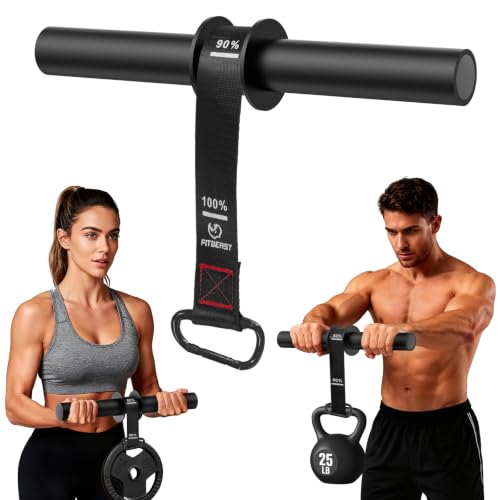
FitBeast Wrist Roller Forearm Exerciser
What We Like
- Thicker foam grip reduces hand fatigue
- Supports up to 220 lbs strap load
- Reinforced pin prevents loosening over time
- Smooth rolling with stable alignment
Trade-offs
- Requires separate weight plates or kettlebells
A 23% thicker foam grip than typical trainers means you can roll through sets without your hands cramping up or the handle twisting in your palms. That familiar Olympic barbell diameter helps if you already spend time in the gym, and the reinforced pin design keeps the strap tracking straight instead of wobbling mid-rep. For anyone who wants to build wrist stability and forearm endurance at home, this roller makes steady progress feel manageable from day one.
You will need to provide your own weight plates, kettlebells, or a loaded backpack to hang from the nylon strap. The strap supports loads up to 220 lbs, so you can start light and add weight as you get stronger. It’s a straightforward tool that respects the principle of starting light and adding weight slowly, no gimmicks, just controlled work.
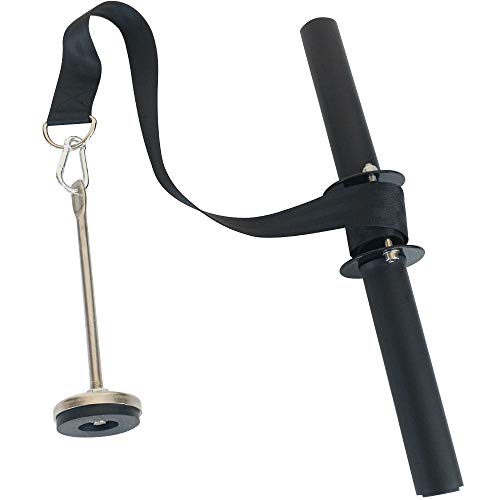
Orangelight Wrist and Forearm Blaster
What We Like
- Works with Olympic plates and kettlebells
- Steel construction prevents breaking or cracking
- Nylon strap for durability and safety
Trade-offs
- 1.5 lb base adds little weight unloaded
- 40-inch length needs floor space to use
The bar itself weighs 1.5 pounds, so you’ll need to add your own weight plates to get meaningful resistance. Its 40-inch length means it takes up floor or bench space, unlike the FitBeast Wrist Roller which weighs 1.3 pounds and is more compact. If you already have standard plates and a spot to set up, the steel construction is built to last. For those who need something portable, a smaller design might work better.
Product photos
MuscleForge Wrist Roller & Forearm Strengthener

What We Like
- Supports up to 130 lbs load
- Non-slip foam grips for comfort
- Trains forearm flexors and extensors
- Compatible with 25mm and 50mm plates
Trade-offs
- At 2.0 lb, heavier than some wrist rollers
- Requires separate weight plates for loading
- 0.0-inch height means no vertical stand included
A 130-pound maximum load capacity means this wrist roller can handle serious weight without breaking down, making it a strong fit for lifters who want to push past beginner-level forearm work. The non-slip foam grips keep your hands comfortable even during heavy sets, and the load pin accepts both 25mm and 50mm plates, so you can use standard or Olympic-style weights. This is the tool for someone who already has a plate collection and wants to train grip, wrist, and forearm strength with progressive overload that actually challenges them.
The MuscleForge weighs two pounds on its own, which is heavier than some other rollers like the Orangelight Wrist and Forearm Blaster at one and a half pounds. You also need to provide your own weight plates, so if you are looking for an all-in-one setup with built-in resistance, a resistance bar like the THERABAND FlexBar might be simpler for home use. But if you already have plates and want a heavy-duty wrist roller for progressive overload, this roller fits the bill.
Product photos
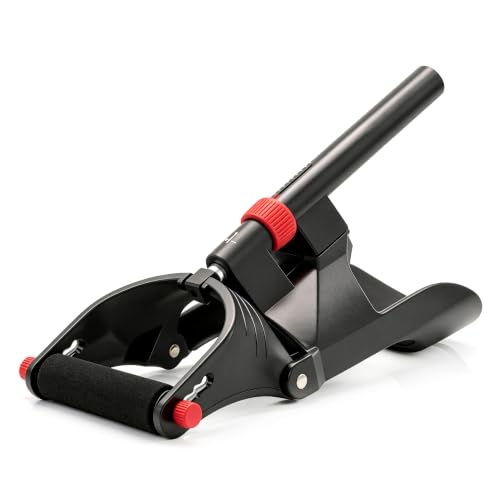
IronVibe Forearm Strengthener & Wrist Trainer
What We Like
- Adjustable resistance for gradual progression
- Ergonomic padded forearm contact area
- Compact and easy to carry anywhere
- Targets wrist flexion and extension muscles
Trade-offs
- Built-in resistance cannot be increased with external weights
- No external weight attachment for added load
At just 1.1 pounds and 13 inches long, the IronVibe Forearm Strengthener is built to slip into a bag or desk drawer without fuss. That slim profile, paired with adjustable resistance, means you can work wrist flexion and extension anywhere, during a lunch break, on a plane, or while catching up on shows. The soft polyurethane padding on the forearm contact area keeps things comfortable, so you can actually stick with a routine without sore spots. It’s a practical pick for anyone who wants forearm training to fit around a busy day, not the other way around.
This design uses built-in adjustable resistance rather than external weight plates, which keeps the unit simple and portable but means you cannot increase load by adding plates. For steady, consistent work on wrist and forearm endurance, especially when you’re on the move, that trade makes sense. If your main goal is raw overload in a home gym, a roller with a rope and weight plate might suit you better.
Product photos
IronMind Twist Yo' Wrist

What We Like
- Unique thumbs-up position targets radial/ulnar deviation
- Multi-directional wrist strengthening from elbows to fingertips
- Durable polymer roller with climbing-grade cord
- Compact 4-inch roller fits easily in a gym bag
Trade-offs
- 1.0-pound base weight limits heavy-load progress without adding weight
- No built-in resistance adjustment, requires external plates or bands
The Twist Yo’ Wrist targets a thumbs-up position that wrist curls and conventional rollers don’t emphasize, working radial and ulnar deviation for gains in strength, endurance and muscle mass from your elbows to your fingertips. That makes it a smart pick for climbers, arm wrestlers, and anyone who needs control in rotational wrist movements rather than just up-down curl strength. Its compact 4-inch polymer roller and climbing-grade cord keep it portable enough to toss in a bag, and the all-American build from IronMind suggests it will outlast cheaper plastic alternatives.
The Twist Yo’ Wrist weighs 1 pound out of the box, so you start light and will need to add weight plates or attach resistance bands to build serious forearm strength. Its 4-foot climbing-grade cord is short enough to keep the roller close when you anchor it, which makes it easy to use on a low hook or a door anchor. The MuscleForge Wrist Roller can handle up to 130 pounds of load if you already own standard plates. But the Twist Yo’ Wrist focuses on a thumbs-up position that targets radial and ulnar deviation, a motion many wrist curls miss.
THERABAND FlexBar Resistance Bar
What We Like
- Light 10 lb resistance for beginners
- Compact 12-inch design is travel-friendly
- Non-slip grip for controlled exercises
- Trusted for rehab and therapy use
Trade-offs
- Only one resistance level per bar
- Light resistance limits advanced strength training
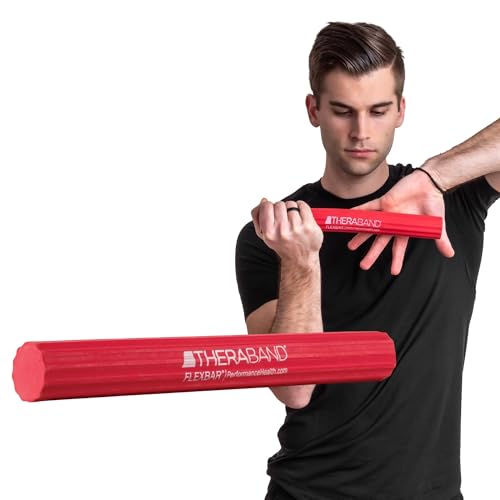
Ten pounds of resistance might not sound like much, but that is exactly the point. This red FlexBar is designed for controlled twisting and bending exercises that target the wrist and forearm without overwhelming someone rebuilding strength after tennis elbow, golfer’s elbow, or tendonitis. The 12-inch length and 1.25-inch diameter make it easy to grip, and the lightweight rubber construction means you can toss it in a bag for rehab at home, work, or the gym. No setup, no batteries, no fuss, just a simple tool that lets you focus on the movement itself. For anyone recovering from an injury or starting forearm training from scratch, this bar provides a safe, approachable entry point that respects your limits while still challenging the muscles that need it most.
This bar offers only one resistance level, so once 10 pounds feels easy, you will need to buy another color (green or blue) to keep progressing. That is a different approach from something like the FitBeast Grip Strengthener, which adjusts from 10 to 132 pounds in a single device, but it also means the FlexBar cannot accidentally be cranked too heavy during rehab. If you are strictly in recovery mode or just beginning, the simplicity and portability of this bar make it a smart, focused tool. For those who want to push into heavier forearm work without buying multiple products, a variable-resistance trainer might be a better fit.
FitBeast Grip Strengthener Forearm Strengthener

What We Like
- Adjustable resistance from 10 to 132 lbs
- Ergonomic handles reduce strain
- Compact and portable design
- Suitable for rehabilitation use
Trade-offs
- No counter or display for reps
- Single-hand focus only
With a resistance range spanning from 10 to 132 lbs, this grip strengthener grows with you from your first tentative squeeze to serious crushing power. That kind of adjustability makes it a natural fit for anyone who wants to build forearm strength without buying a new tool every few months. The extended ergonomic handles are designed to reduce strain and fatigue during workouts, so you can keep going longer. It’s also light enough to toss in a bag for office breaks or travel, and the steel spring feels built to last through daily use.
Simplicity is the key here: there’s no rep counter or display, so you’ll need to track your sets the old-fashioned way. And because it’s designed for one hand at a time, you won’t get the bilateral forearm work that a wrist roller like the FitBeast Wrist Roller Forearm Exerciser provides. But if you want an affordable, no-fuss tool that lets you dial in exactly the right resistance for grip training or injury recovery, this one delivers exactly what it promises.
Product photos
Teotopoa Grip Strength Trainer

What We Like
- Wide 11-360 lb resistance range
- LCD counter with accidental reset protection
- Ergonomic TPR rubber non-slip handles
- Portable at 0.5 pounds
Trade-offs
- Counter requires manual reset each session
- No wrist or forearm rotation movement
An adjustable resistance range of 11 to 360 pounds means this gripper can serve users from rehabilitation exercises to professional grip training, without needing to switch equipment. That’s a practical advantage if you want a single device that grows with your strength. It suits anyone recovering from hand stiffness or carpal tunnel syndrome, as well as athletes aiming for high-level grip work. The LCD counter tracks each squeeze, so you can focus on your reps instead of counting manually.
Its compact 2-inch handle width might feel cramped if you have larger hands, and the counter resets manually rather than automatically between sets. If your main goal is versatile, progressive grip training in a pocket-sized package, this is the one to grab.
Product photos
Hautrely Grip Strength Trainer with Automatic Counter
What We Like
- Battery-free mechanical counter tracks reps
- Adjustable resistance from 11 to 220 lbs
- Anti-slip silicone grips reduce hand strain
- Ergonomic shape fits all palm sizes
Trade-offs
- Counter only tracks up to 100 reps per set
- No wrist or forearm rotation movement
A mechanical counter that never needs batteries means you can track every rep without worrying about dead electronics mid-set. That’s the core appeal here: the Hautrely Grip Strength Trainer uses a simple analog dial (0-100 reps) that resets with a twist, so you always know where you stand. The adjustable resistance spans 11 to 220 lbs, which covers everything from rehab after a wrist strain to serious grip work for climbing or heavy deadlifts. Silicone-covered handles help prevent blisters, and the contoured shape is designed to fit most palm sizes comfortably. If you want a straightforward, no-fuss gripper that keeps your numbers honest without needing a charge, this is a clean pick.
This tool is a hand gripper, not a wrist roller. It works the crushing grip, squeezing the handles together, but doesn’t provide the rotational or rolling motion that builds forearm muscles through twisting or wrist flexion. If that’s your goal, you’d need a different device like a wrist roller. Also, the counter resets after 100 reps, so if you’re doing high-volume sets you’ll need to keep mental tabs or reset mid-session. For someone who wants a straightforward gripper with adjustable resistance and a battery-free counter, the Hautrely delivers. Just know it’s a gripper, not a full forearm workout station.
Product photos
How We Evaluated Forearm Exercise Equipment
We built this list by analyzing product specifications, manufacturer design claims, and patterns reported across owner communities.
The four criteria that mattered most were load capacity and progression potential, grip comfort and ergonomics, build durability, and portability. A wrist roller that maxes out at fifty pounds is fine for beginners but stalls an intermediate lifter fast. Likewise, a gripper with a rough handle causes hand fatigue before the forearms get worked.
A research-led evaluation has honest limits. We cannot verify that a strap holds exactly 250 pounds or that a foam grip lasts two years. What we can do is compare published specs, identify design weaknesses noted by multiple owners, and match each product to the type of lifter who will get the most from it.
What To Look For In Forearm Exercise Equipment
Choosing the right forearm tool comes down to matching the device to your training style and current strength level. The best forearm workout tools combine solid construction with a clear path for adding resistance as you improve.
Look for a device that matches your current strength level, allows for progressive overload, and targets the specific forearm movements you want to develop, wrist flexion, extension, or grip strength.
Load Capacity and Progressive Overload
The most important factor is whether the equipment can grow with you. Wrist rollers that require separate weight plates let you add small increments over time, which is ideal for long-term gains. Grippers with adjustable resistance, like those spanning 10 to 130 pounds, serve both rehab and heavy training. If a device maxes out too early, you will outgrow it within weeks.
Grip Comfort and Handle Design
Comfort determines how long you can train before grip fatigue sets in. Thicker foam or silicone padding reduces pressure points during high-rep sets. Non-slip textures matter especially when your palms get sweaty. For wrist rollers, a handle diameter that fits your hand size prevents the device from sliding or causing unnecessary strain.
Portability and Storage
Some forearm tools fit in a gym bag, while others need floor space for the rope to hang. If you train at home with limited room, a compact gripper or short roller works better than a 40-inch device. Travelers should prioritize lightweight, battery-free options that do not require separate weights.
- Check the maximum load rating and whether it uses your existing plates or kettlebells
- Feel the handle material, silicone and TPR rubber tend to outlast basic foam
- Measure your training space before choosing a long rope-style roller
- Confirm the resistance range covers both your current level and your next goal
- For grippers, decide if you want a rep counter or prefer a simpler mechanical design
A rule of thumb: buy for the strength level you will reach in three months, not the one you have today.
Forearm Exercise Equipment Compared
The table below compares all ten products side by side, highlighting their load capacity, key design features, and the type of lifter each suits best.
| Product | Handle Material | Weight | Resistance |
|---|---|---|---|
| LIZAAL Forearm Strengthener & Wrist Roller | Thicker silicone | N/A | N/A |
| FitBeast Wrist Roller Forearm Exerciser | Thicker foam grip | 1.3 pounds | N/A |
| Orangelight Wrist and Forearm Blaster | Soft foam | 1.5 pounds | N/A |
| MuscleForge Wrist Roller & Forearm Strengthener | Non-slip foam | 2.0 pounds | N/A |
| IronVibe Forearm Strengthener & Wrist Trainer | Soft polyurethane | 1.1 pounds | Adjustable, multiple levels |
| IronMind Twist Yo' Wrist | Polymer roller | 1.0 pounds | N/A |
| THERABAND FlexBar Resistance Bar | Non slip grip | N/A | 10 lbs (Red) |
| FitBeast Grip Strengthener Forearm Strengthener | Non-slip handle | 0.4 pounds | 10-132 lbs |
| Teotopoa Grip Strength Trainer | TPR rubber coating | 0.5 pounds | 11-360 lbs |
| Hautrely Grip Strength Trainer with Automatic Counter | Silicone grips | N/A | 11-220 lbs |
Frequently Asked Questions
What is the best forearm exercise equipment for beginners?
The THERABAND FlexBar Resistance Bar is our pick for Best for Rehabilitation. Its light 10-pound resistance is ideal for learning proper form and building a foundation. The compact 12-inch design makes it easy to use at home. The FitBeast Grip Strengthener also works well for newcomers thanks to its adjustable 10-to-132-pound range.
Can forearm equipment help with wrist pain or rehabilitation?
Yes. The THERABAND FlexBar is widely used in physical therapy for conditions like tennis elbow and general wrist stiffness. Adjustable grippers like the FitBeast Grip Strengthener also allow controlled, low-resistance movement that supports rehabilitation. For medical advice, consult a doctor or physical therapist.
How often should I train my forearms with this equipment?
Two to three sessions per week with at least one rest day between sessions allows for adequate recovery. Forearm muscles respond well to higher rep ranges, so aim for 3 sets of 15 to 20 reps per exercise. Listen to your body, if you feel joint pain rather than muscle fatigue, reduce resistance.
Do I need separate weight plates for wrist rollers?
Most wrist rollers, including the LIZAAL and FitBeast models, require you to attach your own weight plates or kettlebells. This design allows for progressive overload but means you need access to standard plates. The IronVibe Forearm Strengthener is an exception, it uses built-in adjustable resistance and needs no external weights.
What is the difference between a grip strengthener and a wrist roller?
A grip strengthener targets the muscles that close your hand, improving crush grip and finger strength. A wrist roller works the forearms through wrist flexion and extension, building endurance and stability. Serious lifters often use both grip strength equipment for hand power and a roller for wrist conditioning.
The Bottom Line
The LIZAAL Forearm Strengthener & Wrist Roller is our Best Overall pick for athletes who want a durable, loadable wrist roller that handles serious weight without slipping. Its silicone grip and steel-reinforced build make it a long-term investment for anyone training grip strength, wrist stability, or forearm endurance.
If you train on a budget, the FitBeast Grip Strengthener delivers adjustable resistance from 10 to 132 pounds at an affordable price point. For targeted rehab work, the THERABAND FlexBar offers a trusted, low-resistance starting point. Travelers will appreciate the IronVibe Forearm Strengthener, which packs built-in resistance into a compact design.
The single most important factor is choosing equipment that lets you add resistance over time. A device you outgrow in a month is money wasted, pick one that matches where you want to be, not just where you are now. For more ideas on building forearm size and strength, explore our guides on forearm exercises and forearm dumbbell exercises.
