
10 Best Fitness Trackers For Cycling in 2026
This post contains affiliate links. As an Amazon Associate, we earn from qualifying purchases.
For cyclists, the Garmin vívoactive 5 GPS Smartwatch is the best overall pick because it combines bright GPS tracking, long battery life, and recovery insights for everyday riding. If you need fast charging, the Apple Watch SE 3 delivers, while the Fitbit Charge 6 offers strong value with built-in GPS and heart rate monitoring.
The challenge with a cycling tracker is balancing ride-specific data, distance, pace, route, with the battery life to survive long days on the road or trail. Many general fitness watches skip critical features like GPS accuracy or recovery tracking that matter most to cyclists.
Specifications, manufacturer documentation, and patterns in owner feedback were used to build this guide. A tracker that fits your ride style and budget is available for weekend cruisers and commuters alike.
Top 10 Fitness Trackers For Cycling in the Market
Certain content that appears on this site comes from Amazon. This content is provided "as is" and is subject to change or removal at any time.
The Best Fitness Trackers For Cycling, Reviewed
Garmin vívoactive 5 GPS Smartwatch

What We Like
- Bright AMOLED display for easy outdoor reading
- 11-day battery life between charges
- 30+ sports apps including cycling and GPS
- Sleep coach and HRV status for recovery insight
Trade-offs
- No dedicated cycling power meter or pedal sensor
- Wrist-based heart rate less accurate than chest strap
An 11-day battery life in smartwatch mode means you can go up to 11 days between charges, a real relief when your training schedule already feels like a second job. The bright AMOLED display is designed for easy reading, and with more than 30 built-in indoor and GPS sports apps, cycling is right there alongside running, swimming, and HIIT. This watch suits the rider who wants health tracking beyond the bike too: sleep coaching, HRV status, and Body Battery energy monitoring help you know when to push and when to rest. It’s the kind of all-day companion that makes fitness feel less like a chore and more like a conversation with your own body.
The Garmin vívoactive 5 lasts up to 11 days in smartwatch mode, so you can go on a weekend trip without packing a charger. Its bright AMOLED display makes it easy to read in sunlight, and the Body Battery energy monitoring gives you a sense of when you’re rested or need a break based on sleep, naps, stress, and workouts. For most riders who want a smartwatch that handles daily life and weekend rides without fuss, this balance of battery, display, and recovery tools makes it the one to grab.
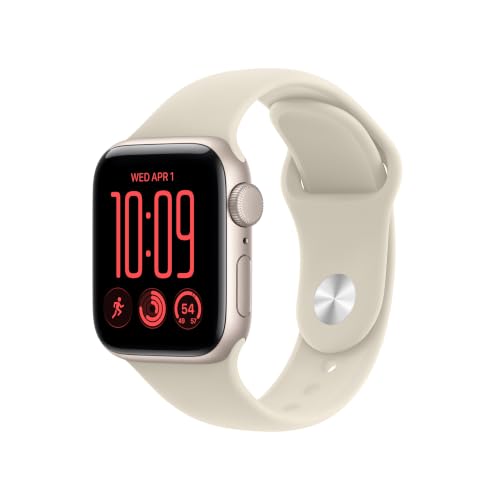
Apple Watch SE 3 GPS Smartwatch
What We Like
- Charges to 8 hours in 15 minutes
- Fall and crash detection for safety
- Works with iPhone and Wi-Fi
Trade-offs
- Requires iPhone to use fully
- 18-hour battery needs daily charging
The fast charging is the real standout here. You can get up to eight hours of battery in just 15 minutes, so a quick top-up between commutes or after forgetting to charge overnight is genuinely useful. The all-day 18-hour battery life means you can wear it from sunup to sundown without worrying about running out. Fall and crash detection automatically connects you with emergency services if you’re out on remote roads, which adds a practical safety layer. For anyone already in the Apple ecosystem, this watch fits naturally into your routine without extra fuss.
The trade-off is that 18-hour battery life requires daily charging, which is shorter than what you get from a Garmin vívoactive 5 that can stretch days between charges. The SE 3 also needs an iPhone to function, so Android riders are out of luck, and at half a pound it’s noticeably heavier than the Garmin Forerunner 165. If you prioritize fast charging and tight iPhone integration over multi-day battery and lightweight design, this watch earns its spot in your kit. Just plan to plug it in each night.
Product photos
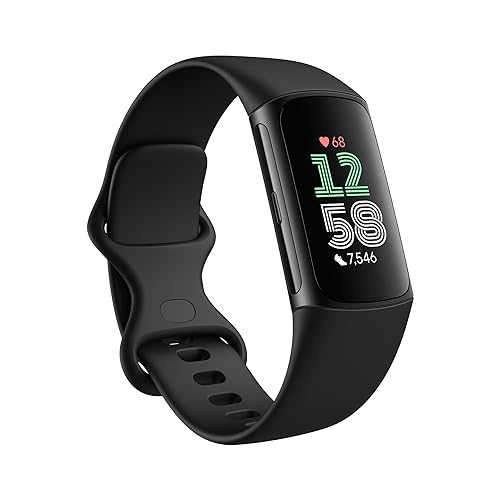
Fitbit Charge 6 Fitness Tracker
What We Like
- Built-in GPS for route tracking
- Real-time heart rate on compatible machines
- Google Maps turn-by-turn directions
Trade-offs
- No dedicated cycling power or cadence metrics
- Google Health Premium requires subscription after trial
Built-in GPS and over 40 exercise modes let the Charge 6 track outdoor activities without needing your phone nearby. The GPS helps log your route and distance, so you can focus on your workout. For someone who wants a capable everyday fitness tracker that handles a variety of activities, this is a smart pick that balances features and cost without going overboard.
The trade-off shows up if you’re after activity-specific data like power output or cadence, which this tracker doesn’t capture. Compared to the Garmin Forerunner 165, which offers training and recovery features with built-in GPS for distance, pace, and speed, the Charge 6 leans more toward general activity tracking and daily wellness. It’s a great companion for the person who wants heart rate, GPS, and sleep recovery in one package, but not for the data-obsessed athlete looking to dial in every metric.
Garmin Forerunner 165 Running Smartwatch

What We Like
- Daily suggested workouts adapt to recovery
- Training effect labels show workout impact
- Incident detection with live location sharing
- Lightweight 43mm design
Trade-offs
- Cycling-specific metrics not highlighted in specs
- No built-in cycling power meter support
With up to 19 hours of GPS battery life, you can cover a full day of outdoor activity and still have power left for daily wear between charges. The watch learns from your effort: daily suggested workouts adjust based on your recovery and performance, and training effect labels show how each workout impacts your fitness and what benefit you gained. That kind of feedback turns every session into a smarter workout, especially if you are balancing running with other activities like cycling or strength work.
The Forerunner 165 is built primarily for running and general fitness. Its 25+ activity profiles include cycling, but you will not find dedicated cycling power meter support or advanced bike-specific metrics here. Compared to the Garmin vívoactive 5, which offers 24/7 health monitoring and sleep coaching, the Forerunner focuses more on training guidance like daily suggested workouts and recovery time. If your main goal is understanding how your runs build fitness over time, the adaptive workout suggestions and recovery time estimates make the extra focus worth it.
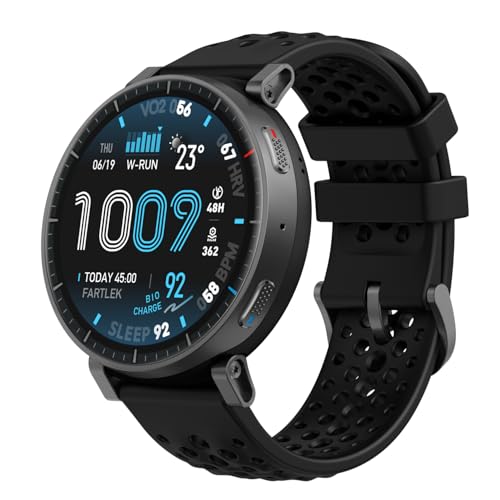
Amazfit Active Max Smart Watch
What We Like
- 3000-nit AMOLED visible in harsh sunlight
- 25-day battery for long rides without charging
- 4GB storage for offline maps and music
Trade-offs
- Bluetooth calls require Android for hands-free replies
- Hands-free message replies require an Android phone
Up to 25 days of battery life means you can go weeks without hunting for a charger, even with daily workouts and weekend adventures. The 3000-nit AMOLED display stays readable in harsh sunlight, so you can glance at your pace or route without squinting. For anyone who wants a watch that keeps up with daily training and long outings without constant plug-ins, this is one that keeps going when you do.
Size is the trade-off: at 48mm, this is a larger watch, so if you prefer a slim profile or have smaller wrists, the Garmin vívoactive 5 might feel more comfortable. But you give up the long battery life and the 4GB of onboard storage for offline maps and music. If you want maximum endurance and a screen you can actually see outdoors, the Active Max delivers where it matters most.
Product photos
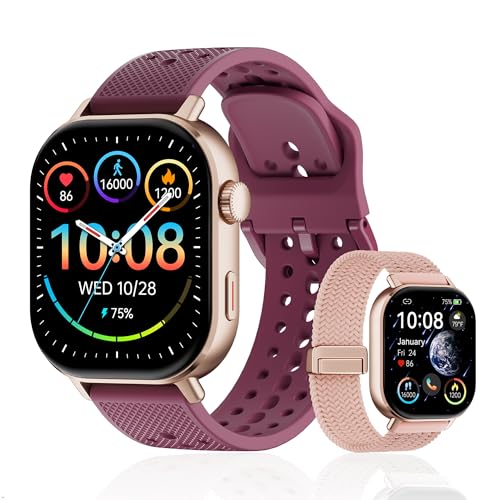
Moutarlier GPS Running Watch
What We Like
- 170+ sports modes including cycling
- GPS tracks pace and distance without phone
- Long battery life up to 7 days
- AMOLED screen with large numbers
Trade-offs
- GPS unavailable indoors and open-water swimming
- Not a standalone phone for calls
- No dedicated cycling-specific metrics shown
A 2.06-inch AMOLED display with large numbers makes it easy to read your pace or distance at a glance during outdoor activities. The built-in multi-system GPS tracks real-time pace, distance, and speed without needing your phone, and the 170+ sports modes include cycling, so you can log rides alongside running, hiking, or swimming. Battery life reaches up to seven days with heavy use, which covers a week of daily workouts without frequent charging.
GPS drops out indoors and during open-water swimming, so this watch is built for outdoor road or trail use, not for indoor sessions or pool-based cross-training. Compared to the Garmin Forerunner 165, which offers built-in GPS for distance, pace, and speed, the Moutarlier provides a broader range of sports modes but lacks the specialized running-focused features of that model. It also isn’t a standalone phone, but the Bluetooth speaker and microphone let you take hands-free calls when paired with your smartphone. For anyone wanting a bright screen, reliable GPS, and versatility across many activities, this watch covers the basics well.
Product photos
SUUNTO Run GPS Sport Watch

What We Like
- Ultralight 36g design with textile strap
- Dual-band GNSS for precise route tracking
- 4GB offline music storage
Trade-offs
- Cycling-specific metrics not highlighted in features
- No dedicated cycling navigation or route planning
- Training features focus primarily on running
At just 36 grams with its textile strap, this watch is light enough to feel barely noticeable during any activity. The dual-band GNSS provides real-time precise location tracking, and with up to 20 hours of training with high-precision GPS, it can handle long days out. The 4GB of offline music storage lets you carry your playlist on your wrist. For runners who want a comfortable, capable watch that also handles other sports, this is a practical option.
The SUUNTO Run weighs just 36 grams with its textile strap, which makes it light enough to forget you’re wearing it even on long runs. That weight is about a third of what the Apple Watch SE 3 weighs, so your wrist won’t feel loaded down during a marathon or a day of errands. For a runner who wants a dedicated watch that won’t get in the way, this is a practical choice.
Product photos
Polar Pacer GPS Fitness Tracker

What We Like
- Ultra-light at 0.1 pounds
- 35-hour battery in training mode
- Always-on MIP color display
- GPS tracks every step and turn
Trade-offs
- No advanced cycling-specific metrics like power
- Battery drops to 100 hours only in power save mode
At 0.1 pounds, this tracker is light enough that you might forget it is on your wrist during a run. The always-on MIP color display stays readable in bright conditions, so you can check your pace or distance at a glance. With up to 35 hours of battery life in training mode, it can handle long runs or a week of daily training without needing a charge. This is a tracker for runners who want essential GPS data like time, pace, and distance without the extra features of a full smartwatch.
The Polar Pacer delivers up to 35 hours of battery life in training mode, so you can run multiple long sessions without hunting for a charger. Its always-on MIP color display shows time, pace, distance, and laps clearly, even in bright sunlight. GPS tracks every step and turn, making it a straightforward tool for runners who want essential data without extra frills. Compared to the Garmin Forerunner 165, the Pacer’s battery advantage means fewer interruptions for charging on extended outings.
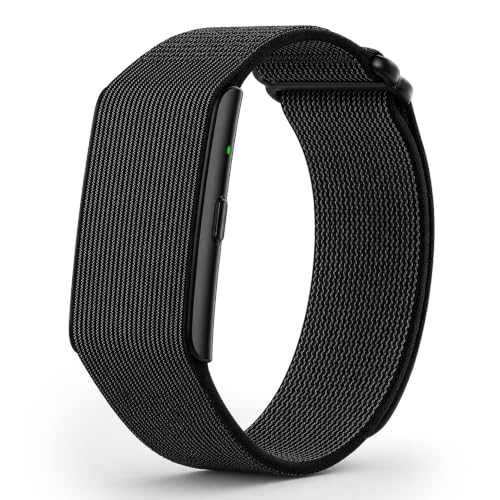
Domhong Screenless Fitness Tracker
What We Like
- Ultralight 25g won't weigh you down
- IP68 resists sweat and rain
- Free app with no subscription
Trade-offs
- No on-wrist display for quick glances
- Connected GPS requires carrying your phone
- No built-in cycling-specific metrics like cadence
A battery that lasts 20 to 30 days means you can strap this 25g band on your wrist and go weeks between charges, even with daily commutes and weekend century rides. It tracks heart rate, SpO2, HRV, and sleep through the free QwatchPro app, giving you recovery and energy insights without another glowing screen demanding your attention. For cyclists who want the data but hate the distraction of a smartwatch face, this is a refreshingly simple companion, just strap it on, sync your phone for GPS route mapping, and pedal.
You lose the convenience of glancing at your wrist mid-ride. Without a screen, you’ll need to check your phone or wait until after the ride to see your stats, which might frustrate riders used to real-time pace or distance. Compared to the Garmin Forerunner 165, which provides on-wrist metrics during activity, the Domhong is better suited for cyclists who prioritize battery endurance and minimalist wear over instant feedback. It’s a focused tool for the rider who values recovery data and long-term trends more than split-second splits.
Product photos
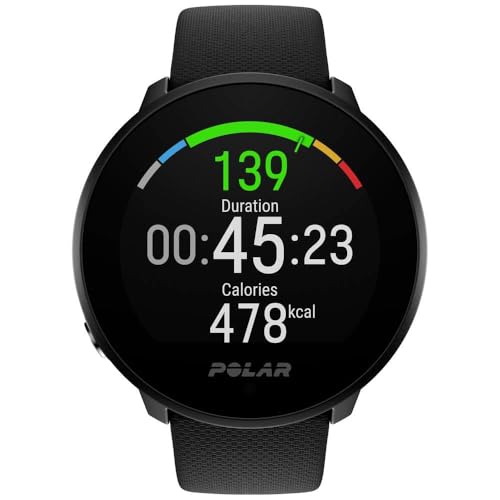
Polar Unite GPS Smartwatch
What We Like
- Specialized sleep and recovery tools
- Up to 50 hours training battery
- Lightweight at 0.1 pounds
- Single button use for simplicity
Trade-offs
- Watch mode battery only 4 days
- No advanced cycling-specific metrics listed
Specialized sleep and recovery tools, combined with wrist-based heart rate monitoring, help you understand how well you’re recovering between workouts. At just 0.1 pounds, it’s light enough to wear all day without noticing, and the single-button design keeps operation simple when you’re on the move.
Up to 50 hours of battery life in training mode means you can wear this watch through multiple long workouts and still have power left for sleep tracking without charging daily. The Polar Unite is a lightweight fitness tracking smartwatch with wrist-based heart rate monitoring and specialized sleep and recovery tools. If you want more running-specific metrics, the Garmin Forerunner 165 provides additional training features, but for building consistent activity and rest awareness, the Unite’s battery keeps going.
How We Evaluated Fitness Trackers For Cycling
The evaluation is based on manufacturer specs, expert round-ups, and common themes from rider feedback to understand what makes a tracker work for cycling.
Three criteria mattered most. First, GPS accuracy: a tracker must lock onto a signal quickly and hold it through tree cover or urban canyons. Second, battery life: a ride tracker that dies before the ride ends is useless. Third, sport-specific metrics: we favored trackers that at least track distance, pace, and heart rate, even if they lack advanced power meter support.
A research-led evaluation has limits. Owner experiences vary widely, and a tracker that works flawlessly for one rider might frustrate another. We focused on consistent feedback patterns to identify reliable performers across different riding styles.
What To Look For In Fitness Trackers For Cycling
Choosing a cycling tracker means matching features to your ride style. Prioritize GPS accuracy, battery life, and the metrics that matter most to you.
Look for a tracker with built-in or connected GPS, at least a week of battery life for regular rides, and heart rate monitoring. Consider screen readability in sunlight and durability against sweat and rain.
GPS Accuracy And Route Tracking
A cycling tracker’s GPS chip determines how well it records your route, distance, and pace. Look for multi-band or dual-band GNSS support if you ride under heavy tree cover or near tall buildings. Connected GPS, which uses your phone’s signal, works for casual riders but drains your phone battery. For serious route analysis, a tracker with built-in GPS like the Garmin vívoactive 5 or Fitbit Charge 6 is worth paying more for.
Battery Life For Long Rides
Battery life separates everyday trackers from cycling-specific ones. A tracker that lasts 7-11 days in smartwatch mode handles daily commutes and weekend rides without constant charging. For multi-day touring, look for 25-day battery options like the Amazfit Active Max. Fast charging is a bonus: the Apple Watch SE 3 can grab enough charge during a coffee stop to track a ride home.
Screen Readability And Durability
You glance at your tracker while moving, so a bright, always-on display matters. AMOLED screens offer vivid colors and are easier to read in direct sunlight at high brightness levels. For durability, look for an IP68 or 5 ATM water resistance rating to handle rain, sweat, and occasional splashes. A lightweight design, under 1.5 ounces, keeps the tracker comfortable on long rides.
- Check whether the display is always-on or requires a wrist raise to wake.
- Confirm the water resistance rating matches your riding conditions.
- Look for a watch face with large numbers for quick glances.
- Verify the strap material won’t irritate your wrist after hours of wear.
A tracker you can read without slowing down is a tracker you will actually use on every ride.
Fitness Trackers For Cycling Compared
The table below compares key specs across our top picks, so you can see at a glance which tracker fits your riding style.
| Product | Display | Battery Life | GPS |
|---|---|---|---|
| Garmin vívoactive 5 GPS Smartwatch | AMOLED | 11 days smartwatch mode | Built-in GPS |
| Apple Watch SE 3 GPS Smartwatch | N/A | 18 hours | GPS + Wi-Fi + iPhone |
| Fitbit Charge 6 Fitness Tracker | N/A | N/A | Built-in GPS |
| Garmin Forerunner 165 Running Smartwatch | AMOLED touchscreen | Up to 11 days | Built-in GPS |
| Amazfit Active Max Smart Watch | 1.5" AMOLED | Up to 25 days | Five satellite systems |
| Moutarlier GPS Running Watch | 2.06-inch AMOLED | 7 days heavy use | Built-in multi-system |
| SUUNTO Run GPS Sport Watch | 1.32" AMOLED touchscreen | 12 days | Dual-band GNSS |
| Polar Pacer GPS Fitness Tracker | Always-on MIP color | 35 hours (training mode) | GPS tracks every step and turn |
| Domhong Screenless Fitness Tracker | Screenless | 20-30 days | Connected GPS |
| Polar Unite GPS Smartwatch | N/A | Up to 50 hours (training) | Built-in GPS |
Frequently Asked Questions
What is the best fitness tracker for cycling?
The Garmin vívoactive 5 GPS Smartwatch is the best overall pick for most cyclists. It offers bright GPS tracking, an 11-day battery life, and recovery insights like sleep coach and HRV status, all in a versatile everyday smartwatch.
Can a fitness tracker measure cycling power or cadence?
Most fitness trackers in this guide use wrist-based sensors and do not support dedicated cycling power meters or pedal cadence sensors. For power and cadence data, you would need a cycling computer or a tracker compatible with external ANT+ sensors.
Do I need a fitness tracker with built-in GPS for cycling?
Built-in GPS lets you track your route and distance without carrying your phone. It is ideal for long rides or if you prefer to ride phone-free. Connected GPS, which uses your phone’s signal, works for shorter commutes but drains your phone battery faster.
How long should a fitness tracker battery last for cycling?
For regular riders, a battery life of at least 7 days in smartwatch mode is recommended. This covers daily commutes and weekend rides without frequent charging. For multi-day touring, look for trackers with 25 days or more of battery life.
What is the difference between a fitness tracker and a smartwatch for cycling?
A fitness tracker focuses on activity tracking, heart rate, and GPS, often with longer battery life and simpler interfaces. A smartwatch adds notifications, apps, and cellular options. For cyclists who want ride data without distractions, a decision between a fitness tracker and a smartwatch often comes down to whether you need phone features on your wrist.
The Bottom Line
The Garmin vívoactive 5 GPS Smartwatch is the best overall choice for cyclists who want a reliable everyday tracker with solid GPS, long battery life, and recovery insights. It suits commuters, weekend riders, and anyone who values versatility over specialized racing metrics.
If you ride with an iPhone and prioritize fast recharging, the Apple Watch SE 3 is a strong alternative. For budget-conscious riders, the Fitbit Charge 6 delivers built-in GPS and heart rate tracking at a more accessible price point. For the best GPS workout watches, look for multi-band support and long battery life.
The single most important factor is GPS accuracy, without it, your distance, pace, and route data are unreliable. Choose a tracker that locks on quickly and holds the signal through your ride, and everything else becomes easier to evaluate.
