
10 Best Incline Weight Benches in 2026
This post contains affiliate links. As an Amazon Associate, we earn from qualifying purchases.
The FLYBIRD WB5 Weight Bench earns our Best Overall pick for its exceptional versatility in a compact, foldable frame. For heavy lifters, the Keppi Bench1000 V2 Adjustable Bench offers commercial-grade capacity, while the CAP Elite Foldable Weight Bench delivers solid performance on a budget.
Finding the right incline bench means balancing weight capacity, adjustability, and the footprint your home gym can spare. A bench that wobbles under load or skips the angles you need most can turn a promising workout into a frustrating one.
This guide is built on manufacturer specs, expert round-ups, and patterns in owner feedback across the market. We break down what matters most so you can match the right bench to your training style and space.
Top 10 Incline Weight Benches in the Market
Certain content that appears on this site comes from Amazon. This content is provided "as is" and is subject to change or removal at any time.
The Best Incline Weight Benches, Reviewed
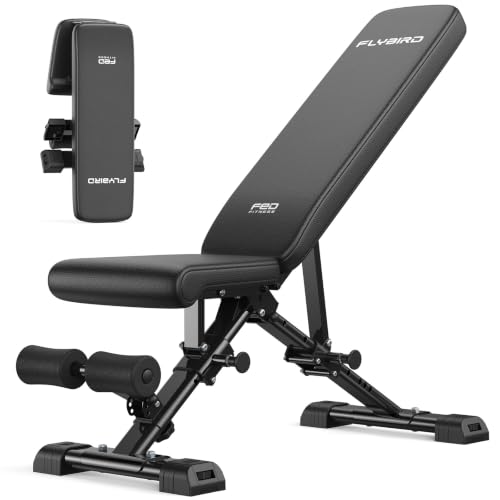
FLYBIRD WB5 Weight Bench
What We Like
- ASTM-certified 800 lb capacity
- 144 adjustable positions from -30° to 90°
- 30-inch elongated backrest for support
- Spring-lock quick adjustment system
Trade-offs
- At 28.5 lbs, lighter than many heavy-duty benches
- Narrow 13-inch width limits shoulder room during pressing
An 800-pound ASTM-certified capacity in a bench that folds to just over nine inches wide is the kind of spec that makes you stop and smile. That dual-triangle steel frame and double-locking mechanism give you the confidence to push heavy bench presses without wondering if the bench will wobble. The 144 adjustment positions, from a -30° decline all the way to a 90° upright lock, mean you can hit every major muscle group with one piece of gear. For someone building a home gym in a small apartment or a tight corner of the living room, this is the bench that fits your space and your ambition.
The trade-off is that at 28.5 pounds, this bench is lighter than many heavy-duty benches, which can make it feel less planted under maximal loads. That lightness makes it easy to move and store. But if you’re planning to load up near that 800-pound max and really go heavy, you might prefer the extra heft of a heavier bench for that planted, commercial-gym feel. For most home lifters, though, the combination of foldable storage, quick spring-lock adjustments, and a long 30-inch backrest that keeps your spine supported makes this the bench that does the most with the least fuss.
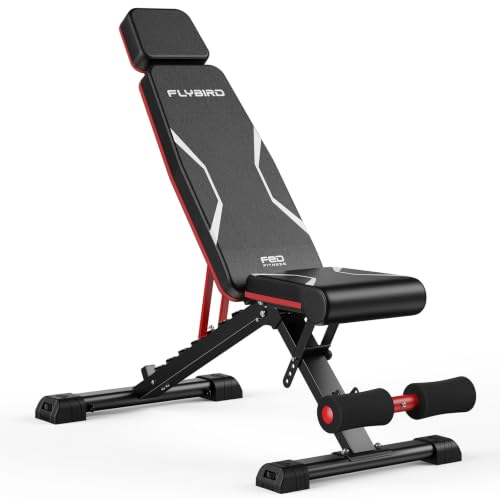
FLYBIRD Adjustable Weight Bench XL
What We Like
- Extended backrest fits users up to 6'5"
- 750 lb capacity with reinforced steel frame
- 96 total adjustment combinations
- Foldable for compact storage
Trade-offs
- Locking pin must be removed before folding
A 33-35 inch extended backrest and adjustable headrest mean tall lifters no longer have to hang their head off the end during presses. This bench is built for users up to 6’5″, with a 17.5 inch seat height that keeps hips and shoulders aligned whether you’re average height or well above it. The 750 lb capacity from a thickened alloy steel frame and reinforced welding gives you the confidence to push heavy without wobble, while 8 backrest, 4 seat, and 3 leg positions offer 96 combinations for incline, flat, or decline work. It folds down to a slim 7.5″ x 11.3″ x 33″ profile, so it tucks into a closet or corner when not in use.
The locking pin secures the bench only when fully unfolded and must be removed before folding, adding a small step to storage. For tall users who need a space-saving bench that adjusts quickly and supports serious training, the FLYBIRD XL delivers exactly what it promises without taking over your room.
Product photos
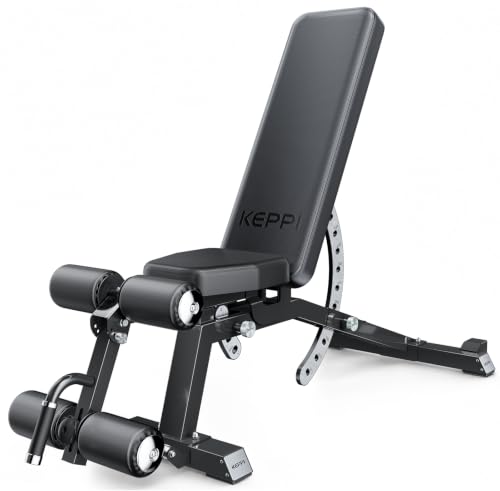
Keppi Bench1000 V2 Adjustable Bench
What We Like
- 1200 lb ASTM-certified capacity
- 36 angle combinations for full body
- 17.7 inch IPF-standard height
- 90% pre-assembled with transport wheels
Trade-offs
- At 58.4 lb, it's heavy to move often
- Decline foot catch uses foam rollers
A 1200-pound ASTM-certified capacity means this bench can handle the heaviest barbell presses and hip thrusts without a wobble, thanks to its fully welded 2×3-inch carbon steel frame. The 36 angle combinations let you target every major muscle group from decline to steep incline, and the 17.7-inch base height matches standard gym specs so your feet stay planted for better power transfer. This is the bench for anyone who wants commercial-grade stability at home and refuses to outgrow their gear.
At 58.4 pounds of welded steel, this bench isn’t something you’ll want to drag across the room every day, though built-in transport wheels help. Compared to the lighter, foldable FLYBIRD WB5 (28.5 lb), this bench trades portability for rock-solid durability. If your priority is a rock-steady platform for heavy progressive overload and you have a dedicated floor space, the Keppi Bench1000 V2 is the heavy-duty anchor your home gym needs.
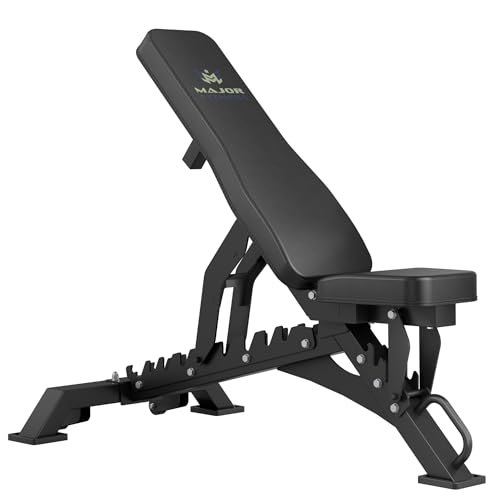
MAJOR LUTIE Weight Bench
What We Like
- 1300 lb capacity for heavy lifting
- 36 adjustable positions for versatility
- Quick C-shaped lock catch adjustments
- 2.5-inch thick padded backrest
Trade-offs
- At 59 lb, it's heavy to move
- No leg hold-down for decline exercises
A 1300-pound weight capacity puts this bench in a different league than most home gym options. That triangular steel frame and dual-track backrest support mean you can load up heavy dumbbells or a barbell without worrying about wobble. With 36 adjustable positions, including a full 90-degree upright, it covers everything from flat presses to seated shoulder work and decline crunches. This is the bench for anyone who lifts serious weight and wants commercial-grade stability at home.
At 59 pounds, this bench is heavy, but the built-in wheels and handle make it easy to roll around your gym space. Compared to the 28.5-pound FLYBIRD WB5, it’s clearly meant to stay put rather than be stored away. For decline work, you’ll need to brace your feet against the floor or a wall since the backrest doesn’t include a leg hold-down. If you want a rock-solid platform for progressive overload and don’t mind a permanent spot, this bench delivers where lighter options can’t.
Product photos
YOLEO Adjustable Weight Bench
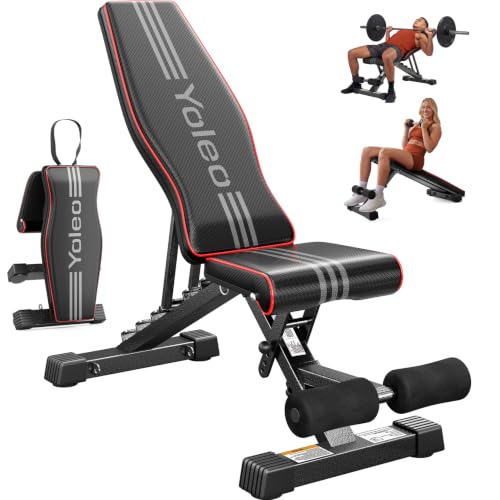
What We Like
- 98% pre-assembled, ready in seconds
- 84 adjustable positions for full body
- ASTM-certified 827 lbs capacity
- Folds compact for easy storage
Trade-offs
- 41-inch length short for tall users
- No seat back angle memory
With an ASTM-certified 827-pound capacity that most benches at this level don’t come close to, the YOLEO Adjustable Weight Bench proves you don’t need a PhD in assembly to start lifting. It ships 98 percent pre-assembled, just insert two pins and you’re pressing in under a minute. That alone makes it the obvious pick if you’d rather spend time training than wrestling with Allen keys and confusing diagrams. The 84 adjustable positions cover everything from flat bench to decline crunches to upright shoulder work, and the 13-inch wide seat plus 28-inch backrest keep you stable through every rep. It folds down small enough to slide under a bed or behind a sofa, so your living room doesn’t have to look like a gym when you’re not using it.
At 23.1 pounds, the bench is light enough to move around easily, and owners report it stays put during hard sets. The 41-inch length works well for most users, and the foldable design with a built-in transport handle makes it simple to store. For someone who values quick setup and a clutter-free space, this bench delivers exactly what it promises.
Yagud Adjustable Weight Bench

What We Like
- 880 lb capacity in a 20.5 lb frame
- Folds to compact 34" x 16" x 9.3"
- Tool-free assembly in 2 minutes
- High-density foam padding for comfort
Trade-offs
- Only 8 back positions, no seat angle adjustment
- No separate seat adjustment
At just 20.5 pounds, this bench folds down to a size that slides under a bed or leans in a closet, yet it still holds up to 880 pounds. That combination of portability and strength is rare, and it makes the Yagud a great pick if your workout space doubles as a living room or spare bedroom. The 8-level backrest covers incline, flat, and decline angles, so you can hit presses, rows, and sit-ups without needing a second bench. Assembly takes about two minutes with no tools, which means less time reading instructions and more time actually lifting.
At 20.5 pounds, this bench folds down to 34 by 16 by 9.3 inches, so it tucks into a closet or under a bed after your workout. The backrest adjusts to eight positions, letting you hit chest, back, shoulders, legs, and abs without taking up permanent floor space. Reviewers say the compact size works well for smaller home gyms where every square foot counts.
Product photos
CAP Elite Foldable Weight Bench

What We Like
- 800 lb capacity for serious training
- 23 adjustment combinations for versatility
- Foldable design saves floor space
- Locking pop pins for quick changes
Trade-offs
- At 30.4 lb, lighter than some heavier-duty benches
- Only 8 backrest positions limit fine-tuning angles
An 800-pound weight capacity in a bench that folds down to reclaim floor space is exactly what home gyms on a budget need. The CAP Elite Foldable Weight Bench gives you 23 adjustment combinations across eight backrest and three seat positions, so you can hit incline presses, flat bench work, and seated curls without needing a second bench. The 2-inch padding keeps longer sessions comfortable, and the locking pop pins make switching angles fast and secure. This is a practical, space-conscious choice for anyone building a home setup without breaking the bank.
The trade-off comes in its 30.4-pound frame, which is lighter than some heavier-duty benches on the market, though it still supports up to 800 pounds. While the eight backrest positions cover the essential incline and flat angles, they limit fine-tuning compared to benches with more adjustment options. If you prioritize a compact, affordable bench that covers the key positions and stores easily, this one delivers real value without overcomplicating your space.
Product photos
Amazon Basics Adjustable Workout Bench

What We Like
- 7-position adjustable backrest
- 3-position adjustable seat
- Space-saving foldable design
- Heavy-duty alloy steel frame
Trade-offs
- 660-pound limit too low for heavy powerlifting
A 660-pound weight capacity from heavy-duty alloy steel gives this bench real staying power for most home gyms, so you can press and row without worrying about wobble. It suits anyone who wants a straightforward adjustable bench that folds flat when floor space is tight, no complicated levers or extra parts to fuss with. The 7-position backrest and 3-position seat cover incline, decline, and flat work, making it easy to switch between exercises without overthinking your setup.
The frame weighs 30.4 pounds, which makes it easy to move around and store, though some heavier benches in this class may feel more stable under very heavy loads. If you plan to lift near the 660-pound capacity, the 15-inch-wide platform may be narrower than some users prefer. For most home lifters who value quick assembly and a no-nonsense fold, this bench delivers the basics without the headache.
Product photos
REP Foldable Incline Decline Bench

What We Like
- Folds for compact storage
- Flat, incline, and decline positions
- Premium steel construction
Trade-offs
- At 112 lb, it's heavy to move often
- Too heavy for quick room-to-room moves
With a 112-pound steel frame and flat, incline, and decline positions, this bench provides a stable platform for heavy lifting. The foldable design allows it to be stored compactly, making it suitable for home gyms where space is limited. It supports a wide range of exercises, including presses, sit-ups, and dumbbell routines.
At 112 pounds, this bench is significantly heavier than many foldable alternatives, which means it stays put during heavy lifts but isn’t something you’ll want to move around casually. The weight gives it a planted feel that supports intense pressing and decline work without wobble. For anyone who values stability over portability, that heft is a feature, not a flaw.
TYRSEN 1200LBS Adjustable Weight Bench

What We Like
- 1000 lb capacity from commercial-grade steel
- Extra headrest for users up to 6'5"
- Dual-bearing and dual back support for stability
- 23.6" extra-wide base with anti-slip caps
Trade-offs
- At 50.7 lb, it's not easily portable
- Weighs 50.7 pounds, limiting portability
A 1000-pound weight capacity from commercial-grade widened square tube steel means this bench is built for heavy lifting. The dual-bearing design and dual back support, paired with a 23.6-inch extra-wide base and anti-slip rubber caps, keep it stable during incline, flat, or decline presses. The adjustable headrest extends the backrest length to accommodate users up to 6’5″, so taller athletes get full support for their back and head, protecting the neck and spine during workouts.
Portability is the main trade-off here: at 50.7 pounds and without a folding mechanism, this bench stays put once you set it up. Compared to the FLYBIRD WB5, which folds and weighs just 28.5 pounds, the TYRSEN is better suited for a permanent home gym setup rather than for those who need to store it away. If you have the floor space and prioritize stability for heavy presses, this bench delivers the stability described in its design.
How We Evaluated Incline Weight Benches
We reviewed each bench against its stated specifications, including weight capacity, steel frame construction, and the range of backrest and seat positions. Manufacturer documentation provided the baseline for capacity claims and ASTM certifications. Expert round-ups from strength-training sources helped us identify which features actually matter for progressive overload and safety.
The three criteria that weighed heaviest were weight capacity, to ensure the bench can handle your heaviest press without failure. Adjustability range, meaning the number of incline and decline positions for targeting different muscle groups, and stability at the base also mattered, wider feet, anti-slip caps, and frame weight all reduce wobble. Foldability and assembly time mattered more for home gym users with limited space.
An evaluation like this cannot replace direct inspection of weld quality or long-term hinge wear. We rely on verified owner feedback patterns and published specs to flag common trade-offs. If you are deciding between two close contenders, the differences in seat adjustment or backrest padding may tip the scale.
What To Look For In Incline Weight Benches
Every incline bench makes the same promise: a stable platform for pressing at an angle. The details of frame steel, adjustment mechanism, and pad dimensions determine whether that promise holds at heavy loads or near the maximum capacity.
Choose a bench with a weight capacity at least a comfortable margin above your heaviest dumbbell or barbell press to leave a safety margin.
Weight Capacity and Frame Construction
The bench’s stated capacity matters less than the margin it gives you. If your heaviest dumbbell press is heavy per hand, a bench with a higher capacity leaves a comfortable buffer. Look for ASTM certification, which means the frame passed an independent safety standard. Steel gauge and cross-bracing determine how much the bench flexes under load; heavier frames generally wobble less.
Adjustability Range and Mechanism
A good incline bench lets you hit flat, multiple incline angles (30, 45, and 60 degrees are the most common), and ideally a decline position for full chest development. The adjustment mechanism should lock securely without slop. Spring-loaded pop pins are faster than bolt-and-collar systems, but both work well when the locking teeth are well-machined. Count the positions: more is better, but only if the increments actually match the angles you use.
Pad Dimensions and Comfort
Pad width affects pressing stability and shoulder clearance. A 12-inch pad is common; wider pads (13 to 14 inches) support the upper back better during heavy work but can restrict shoulder blade retraction for some lifters. Pad length matters for tall users who need full glute-to-head support. Look for high-density foam that does not compress to the frame over time. A textured or grippy cover prevents sliding during sweaty sessions.
- Confirm the bench height matches your squat rack or dumbbell rack if you plan to use it together.
- Check the folded dimensions if storage space is tight.
- Read owner feedback on the locking pin’s durability after several months of use.
- Measure your ceiling height if you plan to do overhead pressing from the bench.
- Look for transport wheels if you need to move the bench between rooms.
A bench that fits your body and your rack is worth more than one with the highest capacity on paper.
Incline Weight Benches Compared
The table below compares the 10 incline weight benches side-by-side on capacity, adjustability, weight, and key features.
| Product | Weight Capacity | Adjustable Positions | Weight |
|---|---|---|---|
| FLYBIRD WB5 Weight Bench | 800 lbs | 144 (-30° to 90°) | 28.5 lbs |
| FLYBIRD Adjustable Weight Bench XL | 750 lbs | 8 backrest, 4 seat, 3 leg | 27.0 lbs |
| Keppi Bench1000 V2 Adjustable Bench | 1200 lb | 36 (12 back + 3 seat) | 58.4 pounds |
| MAJOR LUTIE Weight Bench | 1300 lbs | 36 | 59.0 lbs |
| YOLEO Adjustable Weight Bench | 827 lbs | 84 | 23.1 lbs |
| Yagud Adjustable Weight Bench | 880 lb | 8 backrest positions | 20.5 lb |
| CAP Elite Foldable Weight Bench | 800 lb | 8 backrest, 3 seat | 30.4 pounds |
| Amazon Basics Adjustable Workout Bench | 660 pounds | 7 backrest, 3 seat | 30.4 pounds |
| REP Foldable Incline Decline Bench | N/A | Flat, incline, decline | 112.0 pounds |
| TYRSEN 1200LBS Adjustable Weight Bench | 1000 lbs | 8 backrest, 3 seat, 3 leg | 50.7 pounds |
Frequently Asked Questions
What is the difference between an incline bench and a flat bench?
An incline bench lets you set the backrest at an upward angle, typically between 15 and 90 degrees, to target the upper chest and shoulders more directly. A flat bench stays at 0 degrees and emphasizes the mid and lower chest. Many adjustable benches also offer decline positions for the lower chest and ab work.
How much weight capacity do I need in an incline bench?
Your bench should support at least a comfortable margin more than your heaviest press. If you dumbbell press heavy per hand, a bench with a higher capacity leaves a safe margin. Heavy lifters working toward heavy barbell presses should look for benches rated at 800 pounds or higher.
Can I use an incline bench for decline exercises?
Only if the bench specifically offers a decline position. Some adjustable benches go to -15 or -20 degrees, which works for decline presses and sit-ups. Benches that stop at flat (0 degrees) cannot be used for decline work. Check the range of motion before buying if decline is important to your routine.
How much space does an incline bench need in a home gym?
A typical bench measures about 50 inches long and 17 inches wide when flat. Foldable models can shrink to under 40 inches in height and 16 inches in width for storage. Leave at least 3 feet of clearance on each side for loading dumbbells and 6 feet behind the bench for a spotter or safety arms.
What is the best incline angle for upper chest development?
Most lifters target the upper chest with a 30- or 45-degree incline. A 30-degree angle shifts more load to the upper chest while keeping the shoulders in a safer position than steeper angles. Angles above 60 degrees activate the shoulders more than the chest.
The Bottom Line
The FLYBIRD WB5 Weight Bench is the best overall choice for most home gym owners. It balances a high 800-pound capacity, 144 adjustment positions, and a foldable frame that fits small spaces. If you are tall or need extra backrest length, the FLYBIRD Adjustable Weight Bench XL extends support for users up to 6’5″ without sacrificing storage convenience.
For heavy lifters who want a bench that can handle serious weight day after day, the Keppi Bench1000 V2 Adjustable Bench offers 1200 pounds of ASTM-certified capacity and IPF-standard height. Budget-conscious buyers will find the CAP Elite Foldable Weight Bench delivers 800 pounds of capacity and 23 adjustment combinations at a more accessible price point.
The single most important factor is matching the bench’s capacity and adjustability to your current and near-future lifting goals. A bench that is too light or too limited in angles will need replacing sooner than you expect.
