
10 Best Mats For Yoga And Pilates in 2026
This post contains affiliate links. As an Amazon Associate, we earn from qualifying purchases.
For most practitioners, the Gaiam Essentials Thick Yoga Mat is the best overall choice. It balances extra-thick 10mm cushioning with a lightweight, portable design and a textured surface that stays put on hard floors. If you need even more joint relief, the Retrospec Solana offers a full inch of padding, while the Manduka PRO is the premium choice for long-term durability.
The challenge with yoga and Pilates mats is finding the right mix of cushion, grip, and portability. A mat that feels great on your knees might be too soft for standing balances, and a durable mat can be heavy to carry to class. Your body, your floor type, and your practice style all matter.
We built this guide by analyzing manufacturer specifications, expert recommendations, and patterns in owner feedback. We focused on the criteria that matter most for both yoga and Pilates: thickness, grip, material, and portability. Our goal is to help you find a mat that supports your practice without confusion.
Top 10 Yoga And Pilates Mats in the Market
Certain content that appears on this site comes from Amazon. This content is provided "as is" and is subject to change or removal at any time.
The Best Yoga And Pilates Mats, Reviewed
Gaiam Essentials Thick Yoga Mat

What We Like
- Extra-thick 10mm cushioning for joints
- Textured surface reduces slipping on hard floors
- Lightweight at 2.1 pounds with strap
- Low-odor NBR foam, easy to wipe clean
Trade-offs
- Softer feel prioritizes comfort over firm stability
- At 24 inches wide, less room for broad stances
A 10mm thickness of plush NBR foam makes this mat a forgiving landing pad for knees, hips, and elbows during floor-based yoga or Pilates. That extra cushioning is a genuine relief when you’re lowering into a kneeling lunge or holding a tabletop position on tile or hardwood. It’s also light enough at just over two pounds to sling over your shoulder with the included strap and carry from room to room. For anyone starting out or returning to low-impact movement, the comfort-first design takes the sting out of hard surfaces so you can focus on your form rather than your aching joints.
The trade-off for that cloud-like feel is less ground connection than firmer mats provide. If you’re used to a dense, thin mat for standing balance poses, the softer NBR can feel a bit wobbly underfoot. There’s also a fresh-foam smell when you unroll it that needs a day or two to fade. But for gentle stretching, restorative yoga, and Pilates mat work where comfort matters more than precision, this mat delivers exactly what it promises without weighing you down.
Retrospec Solana Extra Thick Yoga Mat

What We Like
- 1-inch thick cushion for joints
- Non-slip surface for stability
- BPA-free and latex-free materials
- Includes nylon carrying strap
Trade-offs
- At 24 inches wide, narrow for broader movements
- Initial harmless odor requires airing out
A full inch of cushioning means this mat takes the sting out of any hard floor, whether you’re pressing your knees into a kneeling lunge or rolling through a supine stretch. That thick foam relieves pressure on hips, hands, and joints, making it a natural fit for anyone who finds standard mats too thin for comfort or recovery work.
The trade-off for that plush feel is space: at 24 inches wide and 72 inches long, the Solana is narrower than the Manduka PRO, which offers 26 inches of width. If you prioritize joint protection over sprawling room, this mat alleviates stress on pressure points such as joints, hips, hands, and knees. For taller folks or those who spread out wide during Pilates, the extra thickness comes with a tighter footprint.
Manduka PRO Yoga And Pilates Mat

What We Like
- Ultra-dense 6mm joint protection
- No-slip dot pattern bottom layer
- Closed-cell surface seals out moisture
Trade-offs
- At 7.5 lb, heavy to carry to class
- Thinner than extra-thick beginner mats
At 7.5 pounds, this mat is heavier than many alternatives, such as the Gaiam Essentials at 2.1 pounds. For home practice, the weight adds stability and keeps the mat firmly in place. However, if you need to carry your mat to a studio or travel frequently, the weight may be a consideration.
Product photos
Amazon Basics Extra Thick Exercise Yoga Mat

What We Like
- Extra thick 0.5-inch cushioning
- Lightweight at 2.2 pounds
- Textured grip surface for traction
- Generous 74-inch length
Trade-offs
- Lacks alignment lines for pose guidance
- NBR foam can feel tacky after hot workouts if not wiped down
Half an inch of NBR foam makes this mat a clear choice if your knees or hips complain on a hard floor. That extra padding soaks up impact during floor stretches, core work, or kneeling poses, so you can focus on holding the movement instead of shifting to find a soft spot. At just over two pounds and with a carrying strap included, it travels easily to a studio or park without feeling like a chore. For anyone starting out or sticking to a home routine on tile or wood, that cushion-to-weight balance is what makes it a smart budget-friendly option.
The Amazon Basics mat is half an inch thick, which gives it a clear advantage over thinner mats like the Manduka PRO at 0.2 inches for cushioning your joints during floor work. Compared to the Retrospec Solana at a full inch, you lose some plushness but gain a lighter carry at just 2.2 pounds. The textured surface helps keep the mat from sliding around, and a quick hand wash after use keeps it fresh for your next session.
Product photos
YOGATI Yoga Mat With Alignment Lines

What We Like
- Textured closed-cell surface stays non-slip when wet
- Lightweight 1.9 lb with included carrying strap
- Reversible two-tone design in warm sand and caramel
Trade-offs
- At 6 mm, less cushion than thicker mats for hard floors
- At 0.2 inches, less cushion than thicker mats for hard floors
The laser-etched center markings show where palms and heels belong, helping beginners learn correct form while experienced yogis fine-tune symmetry. At 0.2 inches thick, the dense dual-layer TPE foam softens knees, elbows, hips, and spine against hard ground yet remains firm enough to stand tall during tree or warrior sequences. That combination of guided placement and moderate cushion suits those learning correct form as well as experienced yogis refining their stance.
At 0.2 inches thick, this mat offers less padding than the 1-inch Retrospec Solana, so if your routine includes lots of kneeling or you have sensitive joints, you may want extra cushioning underneath. The lightweight 1.9-pound build and included shoulder harness let you carry it easily between home, studio, park, or beach, though the 72-inch length fits most users without extra room for very tall practitioners.
Product photos
Gaiam Dry-Grip Yoga Mat
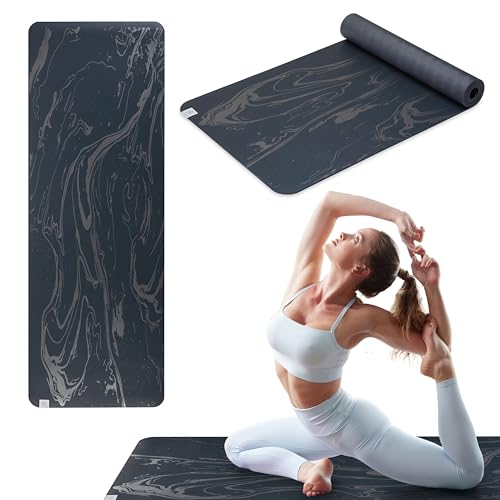
What We Like
- Moisture-wicking topcoat stays non-slip
- Cushioned support for joints and spine
- Lightweight and easy to carry
- Suitable for hot yoga and high-sweat sessions
Trade-offs
- At 24.1 inches long, shorter than standard mats
- Heavier than many portable mats at 4.8 lbs
The moisture-wicking topcoat helps wick away sweat to maintain traction and grip through every pose. This makes the mat a natural fit for anyone who heats up quickly, whether in a Bikram class or pushing through a sweaty Pilates session at home. The rubber base provides cushioning for hands, feet, knees, wrists, elbows, and spine, and at 4.8 pounds it’s light enough to carry to the studio without feeling like you’re hauling gear.
The trade-off is size: at 24.1 inches long, this mat is noticeably shorter than the standard 72-inch options like the Retrospec Solana. Taller practitioners may find their heels or head hanging off the edge during lying poses. It also weighs more than most travel-friendly mats, so if you’re looking for something ultralight to pack in a carry-on, the Gaiam Essentials Thick Mat at 2.1 pounds is a leaner choice. But if your main priority is staying planted when things get sweaty, the Dry-Grip delivers exactly what it promises.
Gruper Extra Thick Yoga Mat

What We Like
- Extra thick 10mm NBR cushioning
- Non-slip textured surface
- Includes carry bag and strap
- Longer than standard mats
Trade-offs
- 24-inch width narrow for broader stances
- NBR foam needs 2-3 days to air out
A 10mm thickness puts this mat squarely in the plush-cushion camp, which is exactly what you want if your knees or hips complain during floor poses or Pilates rolling exercises. The NBR foam provides good cushioning, and the surface texture helps keep your hands and feet planted when you’re holding a lunge or a downward dog. For someone starting out or returning to practice after a break, that extra layer of forgiveness makes it easier to stay consistent without dreading the hard floor.
One thing to consider is that at 24 inches wide, this mat leaves less room for wide-legged stretches or sprawling restorative poses compared to some wider mats. And because NBR is a closed-cell foam, you’ll want to unroll it and let it air out for a couple of days before your first session, the fresh-out-of-the-box smell is real. The included carry bag and strap make it easy to bring along.
KEEP 7mm Thick TPE Yoga Mat

What We Like
- Extra 7mm cushion for joint relief
- Dual-grip non-slip top and bottom
- Lightweight with carry strap
- Closed-cell TPE resists moisture and odors
Trade-offs
- At 24" wide, less roomy for broad poses
- Thinner than extra-thick NBR mats
The 7mm TPE cushioning in this mat is engineered to protect sensitive joints during floor work like planking and Pilates, offering more padding than typical thinner mats without sacrificing stability. That extra layer absorbs impact so you can hold poses longer and move through transitions with confidence. This mat suits anyone who wants joint-friendly support in a portable package, light enough to carry over your shoulder with the included strap, yet substantial enough for daily practice at home or in the studio.
At 24 inches wide, this mat matches the width of many budget options. So if you’re taller or tend to spread your arms in stretches, you’ll get the same length as the Gaiam Essentials Thick Yoga Mat but without extra breadth. The dual-grip texture keeps it stable on tile, carpet, and wood, though for hot yoga or heavy sweating the manufacturer recommends pairing it with a yoga towel for maximum traction. For most mixed yoga and Pilates routines, the 7mm cushion and lightweight build deliver a practical balance.
Product photos
Manduka PROlite Yoga Mat

What We Like
- Closed-cell surface resists moisture
- No-slip dot pattern keeps mat steady
- Lightweight 4.6 lb for easy carrying
- Lifetime durability from high-density build
Trade-offs
- Thinner than thick cushion mats at 4.7mm
- Narrower 24-inch width limits side space
- PVC material not preferred by some
At 4.6 pounds, the Manduka PROlite is light enough to carry over your shoulder and walk to class without feeling like you are hauling gym equipment. That weight comes from a dense 4.7mm closed-cell PVC construction that seals out sweat and spills, so the mat stays cleaner between washes than open-cell alternatives. The no-slip dot pattern on the bottom keeps the mat firmly in place on studio floors and home surfaces, preventing sliding during practice. This mat is built for durability and stability, with a streamlined size that fits smaller spaces and tight class settings.
One downside is that 4.7mm of cushioning is thinner than some thicker mats like the Retrospec Solana at 1 inch. If you prefer a softer landing or need more padding for joint-sensitive poses, the PROlite’s firm feel may not suit you. The 24-inch width also provides less side space than wider options like the Manduka PRO at 26 inches. But if you value portability, durability, and a non-slip foundation that stays put, this streamlined mat delivers exactly that without the bulk.
CAP 1/2 Inch Thick Yoga Mat
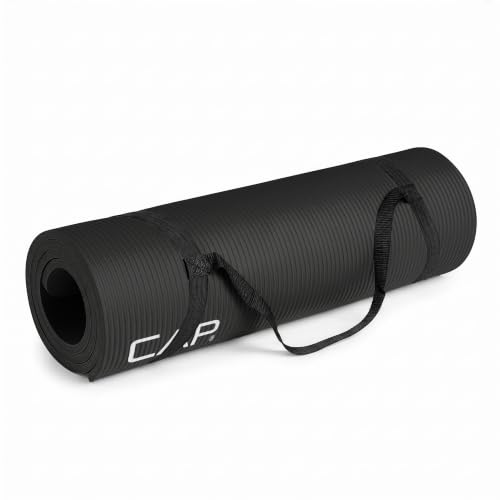
What We Like
- Half-inch thick NBR foam cushions joints
- Latex-free for sensitive users
- Textured surface aids grip
- Includes carry strap for portability
Trade-offs
- NBR foam can feel less stable for balancing poses
- Shorter than many competing yoga mats at 68 inches
A full half-inch of dense NBR foam means this mat puts serious cushion between your knees, elbows, and hips and a hard floor. That thickness makes it a natural fit for floor exercises like planks, sit-ups, and stretching where you spend time on your joints, not just standing poses. The surface texture helps keep you stable during those movements, and the included carry strap means you can roll it up and take it to the gym or studio without wrestling a loose mat.
A potential drawback is that the 68-inch length means taller practitioners may find their feet or head hanging off during lying-down stretches. And while NBR foam feels plush, it’s less firm than denser materials, so if you rely on precise balance in standing poses, you might sink a little more than you’d like. For joint-friendly floor work, though, this mat delivers exactly the thickness promises.
Product photos
How We Evaluated Yoga And Pilates Mats
We reviewed the top-rated mats by studying detailed product specs, material compositions, and manufacturer claims. We also examined patterns in user feedback across a wide range of practices, from gentle restorative yoga to high-sweat Pilates sessions.
Our evaluation focused on four key criteria. Thickness and cushioning were critical for joint protection during floor work and kneeling poses. Grip and texture determined how well a mat held its position on hardwood, tile, or carpet. Material quality affected durability, odor, and how the mat handled moisture. Portability, including weight and carrying accessories, mattered for anyone who takes their mat to a studio or gym.
A research-based evaluation has limits. The recommendations rely on the consistency of owner reports and expert consensus. The mats highlighted are those with clear specifications and reliable feedback patterns, noting common trade-offs like initial odor or width limitations where they appear.
What To Look For In Yoga And Pilates Mats
Choosing the right mat comes down to your body, your practice, and your floor. The best yoga and Pilates mats balance cushion, grip, and weight in a way that matches your needs.
Look for enough cushion for joint comfort on hard floors, a textured or non-slip surface for stability, and a material that resists moisture and odors. Consider weight if you carry your mat to class.
Thickness And Cushioning
Thickness is the most personal choice in a mat. A 6mm mat offers a good balance of cushion and stability for most yoga poses. Thicker mats, from 10mm to 1 inch, are ideal for Pilates floor work, stretching, and anyone with sensitive knees or wrists. The trade-off is that thicker, softer mats can feel unstable during standing balance poses like tree or warrior III.
Grip And Surface Texture
A mat that slips on the floor or under your hands disrupts your practice. Look for mats with a textured top surface or a no-slip dot pattern on the bottom. For hot yoga or sweaty Pilates, a moisture-wicking topcoat is essential. Closed-cell surfaces resist absorbing sweat, which also helps control odors over time.
Material And Durability
Common mat materials include NBR, TPE, PVC, and natural rubber. NBR foam is soft, thick, and affordable but can have an initial odor. TPE is lightweight and eco-friendlier. PVC mats like the Manduka PRO are dense and durable with a lifetime guarantee. Natural rubber offers excellent grip but can be heavy and may have a strong smell at first.
- Check the mat’s width: 24 inches is standard, but broader practitioners may prefer 26 inches.
- Consider the length: mats range from 68 to 74 inches; taller users need the longer option.
- Look for included straps or bags if you plan to carry the mat regularly.
- Verify the material is free of latex if you have a sensitivity.
A good rule of thumb: prioritize cushion for floor work and grip for standing poses.
Yoga And Pilates Mats Compared
The table below compares each mat’s thickness, weight, material, and key features side by side, making it easy to spot the differences.
| Product | Thickness | Material | Weight | Dimensions |
|---|---|---|---|---|
| Gaiam Essentials Thick Yoga Mat | 10mm (2/5 in) | NBR foam | 2.1 pounds | 72" L x 24" W |
| Retrospec Solana Extra Thick Yoga Mat | 1 inch | BPA-free, latex-free foam | 2.2 pounds | 72" x 24" |
| Manduka PRO Yoga And Pilates Mat | 6 mm | OEKO-TEX certified PVC | 7.5 pounds | 71 x 26 inches |
| Amazon Basics Extra Thick Exercise Yoga Mat | 0.5 inches | NBR foam | 2.2 pounds | 74 x 24 inches |
| YOGATI Yoga Mat With Alignment Lines | 6mm | Dual-layer TPE | 1.9 lb | 72 x 24 in |
| Gaiam Dry-Grip Yoga Mat | N/A | Rubber with cushioning | 4.8 lbs | 24.1 x 4.5 x 4.0 in |
| Gruper Extra Thick Yoga Mat | 0.4 in (10 mm) | NBR foam | 1.8 lb | 72 x 24 in |
| KEEP 7mm Thick TPE Yoga Mat | 7 mm | TPE (PVC/latex-free) | 2.0 lbs | 72" x 24" |
| Manduka PROlite Yoga Mat | 4.7mm | OEKO-TEX certified PVC | 4.6 lb | 71 x 24 in |
| CAP 1/2 Inch Thick Yoga Mat | 0.5 inches | Latex-free NBR foam | 2.1 pounds | 68 x 24 inches |
Frequently Asked Questions
What thickness of mat is best for yoga and Pilates?
For a mix of both practices, a medium thickness offers a good balance of cushion and stability. If you do more Pilates floor work or have sensitive joints, a thicker mat provides better joint relief. Thicker mats are softer, which can make balance poses more challenging.
How do I clean a yoga and Pilates mat?
Most mats can be wiped down with a mild soap and water solution after each use. Avoid harsh chemicals or machine washing, which can break down the material. Closed-cell mats resist moisture and are easier to keep clean, while open-cell mats like natural rubber may need more frequent care.
What is the difference between a yoga mat and a Pilates mat?
There is no strict difference, but Pilates often involves more floor work on the back and knees, making extra cushioning a higher priority. Yoga mats typically emphasize grip and stability for standing and balancing poses. Many mats work well for both, especially mid-thickness options.
Are thicker mats better for beginners?
Yes, thicker mats can be more comfortable for beginners who are still building strength in their wrists, knees, and hips. The extra cushion reduces discomfort during floor exercises and kneeling poses. As you progress, you may prefer a firmer mat for better balance.
How do I stop my mat from slipping on carpet?
Use a mat with a textured or dot-patterned bottom layer to improve grip on carpet. Some practitioners place a non-slip rug pad underneath their mat. For carpeted floors, thicker mats with more weight also tend to stay in place better than thin, lightweight options.
The Bottom Line
The Gaiam Essentials Thick Yoga Mat is the best overall pick for most people. It delivers thick 10mm cushioning, a slip-resistant surface, and a lightweight build that makes it easy to carry to class or use at home. It works well for both yoga and Pilates, especially on hard floors.
If your joints need even more padding, the Retrospec Solana offers a full inch of cushion at an accessible price. For those who want a mat that will last for years and are willing to carry a bit more weight, the Manduka PRO provides dense, durable support with a lifetime guarantee.
Your practice, your body, and your floor should guide your choice. Prioritize cushion for Pilates floor work and grip for yoga standing poses, and you will find a mat that keeps you comfortable and stable for the long haul.
