
10 Best Exercise Monitoring Bands in 2026
This post contains affiliate links. As an Amazon Associate, we earn from qualifying purchases.
The Fitbit Charge 6 Fitness Tracker is the best overall exercise monitoring band because it combines built-in GPS, real-time heart rate display on compatible gym machines, and useful Google services like Maps and Wallet. For those who want zero screen distractions, the Fitbit Air Screenless Activity Tracker offers a lightweight, focused alternative. Runners who need precise route tracking without a phone should consider the Suunto Run GPS Sport Watch.
Finding the right band comes down to matching features to your actual workout habits. Do you run outdoors and need GPS? Swim laps and need waterproofing? Or do you just want to know your step count and sleep quality without another screen in your face? Each priority points to a different device.
We built this guide by analyzing manufacturer specifications, expert round-ups, and patterns in owner feedback across ten top models. We focused on the features that matter most during real workouts. GPS accuracy, heart rate tracking, battery life, and water resistance, so you can match the right band to your routine.
Top 10 Exercise Monitoring Bands in the Market
Certain content that appears on this site comes from Amazon. This content is provided "as is" and is subject to change or removal at any time.
The Best Exercise Monitoring Bands, Reviewed
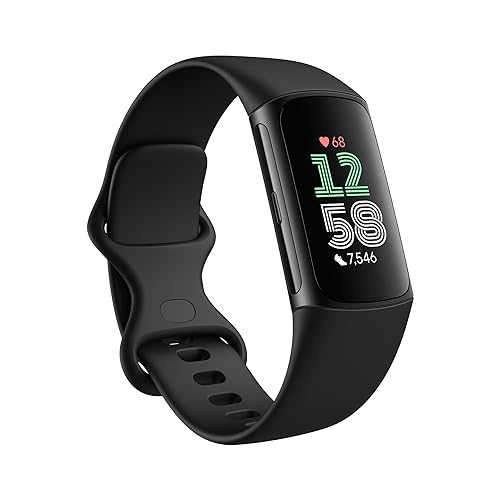
Fitbit Charge 6 Fitness Tracker
What We Like
- Built-in GPS for runs and rides
- Real-time heart rate on compatible gym machines
- Google Maps turn-by-turn directions on wrist
- Google Wallet tap-to-pay for quick stops
Trade-offs
- Requires linking to compatible exercise machines for heart rate display
- Google Health Premium subscription needed after 3-month trial
- No screenless option for minimalist users
A built-in GPS and 40-plus exercise modes mean you can track a run, a ride, or a gym session without carrying your phone. The heart rate feature that links to compatible treadmills and ellipticals is the kind of thoughtful detail that makes a workout feel connected. You glance at the machine’s display and see your pulse right there, no fumbling with straps. This band suits someone who wants a central hub for daily activity, sleep, and stress, with Google Maps directions and tap-to-pay convenience woven in. It’s the full-package tracker for people who like their fitness data in one place and don’t mind a screen to see it.
The included three-month Google Health Premium trial gives you personalized coaching built with Gemini, but after that the subscription costs extra if you want the deeper insights. Compared to the Garmin CIRQA Smart Band, which has no screen and no subscription, the Charge 6 offers more interactivity with Google Maps turn-by-turn directions and Google Wallet tap-to-pay. It’s a capable companion for anyone ready to embrace a feature-rich wearable.
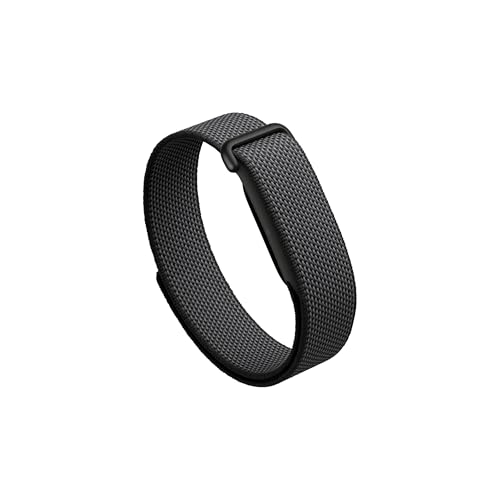
Fitbit Air Screenless Activity Tracker
What We Like
- No screen for distraction-free wear
- Lightweight micro-adjustable fit
- Up to 7 days battery life
Trade-offs
- No screen means no glanceable stats
- Google Health Premium subscription sold separately
The Fitbit Air weighs 0.0 pounds and measures 1.4 inches long, making it one of the smallest bands in this guide. That absence of a screen is the whole point: it lets you wear it through work, sleep, and workouts without a glowing distraction or a style clash. The micro-adjustable band (130-210 mm) clicks into bracelet, workout, or sleep bands in seconds, so it truly disappears on your wrist. For anyone who wants health tracking, heart rate, sleep, activity, without another screen vying for attention, this is the cleanest way to get it.
Choosing a screenless tracker means you won’t see your heart rate or step count at a glance during a workout. To check your stats, you’ll need to open the Google Fitbit app on your phone or wait for a summary notification. The trade-off buys you a design that weighs nothing and measures just 1.4 inches long, so it stays out of the way whether you’re lifting, running, or sleeping. Reviewers note the lightweight, micro-adjustable band (130-210 mm) fits quietly under sleeves and doesn’t snag on gear. For anyone who finds wrist screens distracting or bulky, this approach keeps the focus on movement rather than data.
Product photos
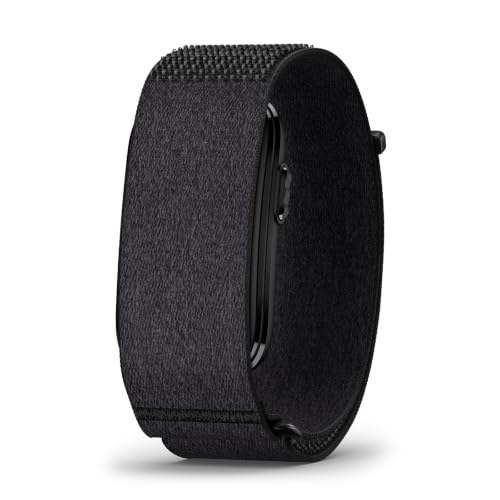
Garmin CIRQA Smart Band
What We Like
- No subscription needed for full features
- Screenless design for less distraction
- Up to 10 days battery life
- Automatically detects and adapts to activities
Trade-offs
- No on-device display for quick glances
- Requires smartphone GPS for outdoor route tracking
- Pulse Ox not available in all countries
With up to 10 days of battery life, you can wear this band through a full work week and a weekend without hunting for a charger. That alone makes it a low-hassle companion for anyone who wants health tracking without the constant reminder to plug in. The screenless design minimizes distraction while the soft fabric band stays comfortable for all-day and all-night wear. It automatically detects a variety of activities and adapts to more accurately classify them as you confirm or edit them in the Garmin Connect app. This is the band for people who want solid heart rate, sleep, and stress data without paying a monthly fee or staring at a tiny screen.
The biggest drawback here is that you can’t glance at your wrist for stats mid-run. Without a screen, you’ll need your phone to see current heart rate, time, or basic activity data during a workout. For outdoor routes you must pair with your smartphone’s GPS for accurate distance and pace tracking. Compared to the Polar Loop, which also has no screen and no subscription, the Garmin CIRQA offers up to 10 days of battery life versus the Polar’s 8 days. If you want to leave your phone behind and still see stats on your wrist, a band with a display like the Xiaomi Mi Smart Band 10 might work better, but you’ll lose the longer battery and the no-subscription promise.
Xiaomi Mi Smart Band 10

What We Like
- 21-day battery life
- 1-hour fast recharge
- 1500 nits bright display
- Swim direction tracking
Trade-offs
- Xiaomi Fit app only uses metric system
- Third-party app needed for imperial units
- No built-in GPS (relies on phone)
Twenty-one days of battery on a single charge means you can forget about the charger for nearly three weeks. That is the longest run in this guide by a wide margin, most competitors tap out at seven to fourteen days. For anyone who hates nightly charging or travels often, this band becomes a set-and-forget companion. The 1.72-inch AMOLED display is also plenty bright at 1500 nits, so you can read your stats in direct sunlight without squinting. And the new high-precision electronic compass tracks swimming direction, which is a rare feature for a band at this level.
The trade-off is that the Xiaomi Fit app only supports the metric system natively. If you prefer pounds and inches, you will need to connect it to Google Fit via a third-party app to see imperial measurements. Still, if battery life is your top priority and you are comfortable with a quick setup workaround, this band delivers an endurance that nothing else here matches.
Product photos
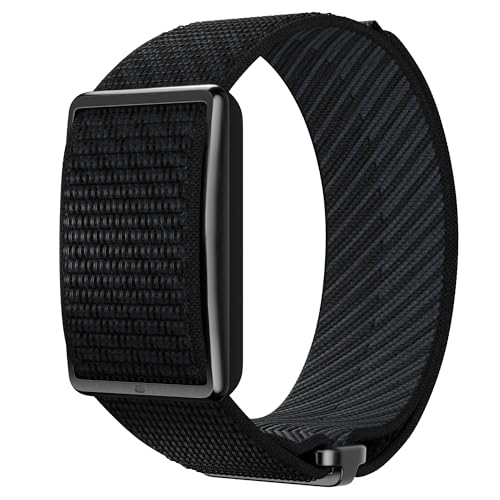
Polar Loop Screenless Health Band
What We Like
- No subscription fees for full app access
- Screen-free design for no distractions
- Lightweight 29g band you can wear 24/7
Trade-offs
- No screen means no quick glance at stats mid-workout
- No screen for quick stats during exercise
The Polar Flow app unlocks detailed sleep data and Nightly Recharge metrics from day one without any monthly fees or locked features. This straightforward approach keeps costs predictable and avoids the subscription model many fitness trackers require. Reviewers appreciate being able to see science-backed sleep monitoring and heart rate insights immediately after pairing the band. The app provides automatic detection and analysis of rest patterns, so users can understand their nightly recharge without extra payments. It’s a practical setup for anyone who wants continuous health monitoring without ongoing expenses.
You give up the convenience of glancing at your wrist for real-time stats during a run or gym set. Unlike the Fitbit Charge 6, which has a screen, the Loop requires you to pull out your phone to see data mid-exercise. That makes it less ideal for those who want live feedback on the move. But if your priority is a lightweight, discreet band that monitors your heart rate and sleep around the clock without interrupting your day, this is a focused tool that does exactly what it promises and nothing more.
Suunto Run GPS Sport Watch

What We Like
- Weighs only 36g for comfortable all-day wear
- Dual-band GNSS for precise route tracking
- 12-day battery life with daily activity monitoring
- 4GB offline music storage for phone-free runs
Trade-offs
- Thicker than some screenless bands at 11.5mm
- No swimming or pool tracking features mentioned
At just 36 grams with the textile velcro strap, this is one of the lightest GPS running watches you can strap on. That weight means you barely notice it during a long run or while wearing it all day for step and sleep tracking. The 1.32-inch AMOLED touchscreen gives you clear data at a glance, and the dual-band GNSS provides real-time precise location for outdoor activities. For runners who want a watch that feels like part of their wrist rather than a brick, the Suunto Run delivers a focused, no-nonsense experience. It also packs 4GB of offline music, so you can leave your phone behind and still have your playlist.
The trade-off for that featherlight design is battery life. You get 12 days of daily tracking, which is solid, but GPS mode tops out at 20 hours. That is plenty for weekly runs or even a marathon, but if you regularly tackle ultra distances or multi-day hikes, you will need to recharge more often. The textile strap is comfortable for running, but the watch itself is not rated for swimming. Still, for everyday runners who value a barely-there feel and precise navigation, this watch hits a sweet spot between features and weight.
Product photos
Garmin Vivosmart 5 Fitness Tracker
What We Like
- Swim-proof design for pool and shower use
- 7-day battery life in smartwatch mode
- Built-in pool swim activity profile
- Bright, bigger display with touchscreen and button
Trade-offs
- Relies on smartphone GPS for outdoor tracking
- Pulse Ox not available in all countries
- No onboard GPS for standalone distance tracking
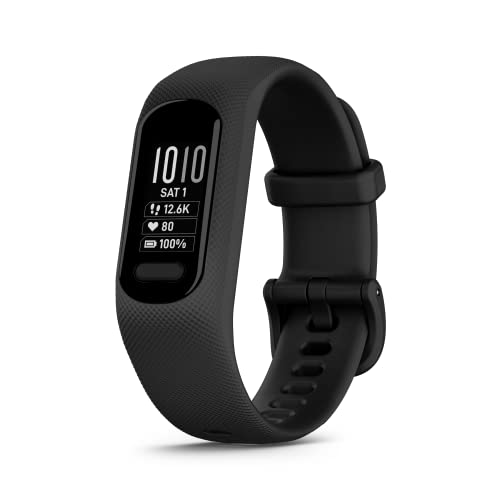
Safe for swimming and showering, the Garmin Vivosmart 5 is a fitness tracker you can wear in the pool and then keep on through a post-workout rinse. The built-in pool swim activity profile lets you log laps, and with up to 7 days of battery life in smartwatch mode, you don’t have to charge it every night. It also tracks heart rate, respiration, stress, and Body Battery energy levels, giving you a picture of how your body is handling exercise and recovery. If you swim regularly or want a band that handles water without worry, this tracker fits the bill.
One limitation is that the Vivosmart 5 relies on your smartphone’s GPS for tracking outdoor walks, runs, and rides. If you prefer to leave your phone behind, you won’t get distance or pace data during a run. The Garmin also uses a touchscreen with a physical button, which works in most conditions. For someone who wants a tracker that is safe for swimming with solid battery life, the Vivosmart 5 delivers where it matters most.
Zeacool Fitness Tracker

What We Like
- 5 ATM water resistance for swimming and diving
- AMOLED touchscreen with customizable watch faces
- 24/7 heart rate, blood oxygen, and blood pressure tracking
- Magnetic fast charging with 10-14 day battery
Trade-offs
- Blood pressure readings are not medical-grade
- App required for sleep score and detailed data
- No built-in GPS for outdoor run tracking
A 1.10-inch AMOLED HD touchscreen display is paired with 5 ATM water resistance, so you can wear it swimming, diving, or in the rain. It covers the core health bases: 24/7 heart rate, blood oxygen, blood pressure, sleep stages, and temperature monitoring, all logged through the Keep Health app. For anyone who wants a full-featured daily activity tracker, this covers the essentials without extra frills.
Unlike some other trackers, there is no built-in GPS, which means outdoor runs won’t map your route unless you carry your phone. The battery life of 10 to 14 days is solid for a color-screen band, and the magnetic charger makes topping it up painless.
Product photos
WHOOP 5.0 Screenless Fitness Wearable
What We Like
- Healthspan tracks aging pace from 9 metrics
- 14+ day battery charges on wrist without removal
- 24/7 stress monitor with real-time insights
Trade-offs
- Requires 12-month membership for full functionality
- No display means you must check phone for data
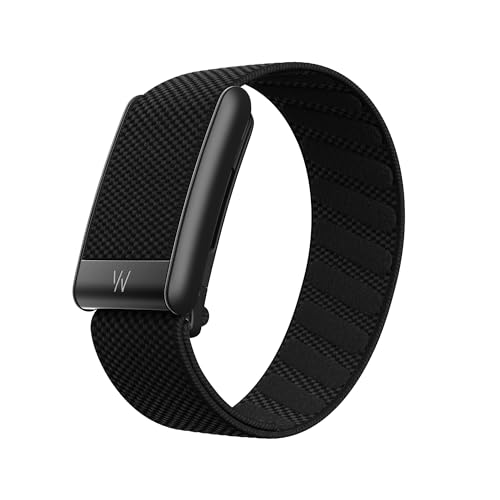
The WHOOP 5.0 tracks 140+ health and fitness metrics, then uses AI coaching to give you personalized recommendations on what to do next. The Healthspan feature calculates your WHOOP Age and Pace of Aging from nine key metrics, so you see how daily habits like training or alcohol affect your long-term health. It’s designed for anyone who wants data-driven guidance without staring at a screen all day.
The catch is the 12-month membership: you pay for the subscription, and the device comes free with it. That upfront commitment works if you plan to dig into the coaching and journaling features. But it’s a bigger ask than the subscription-free Garmin CIRQA Smart Band, which gives you screenless tracking with no ongoing cost. The WHOOP also lacks a display, so you’ll rely on your phone for every glance at your stats. That trade-off keeps the band light and comfortable for all-night sleep tracking, but might frustrate those who want quick wrist-check access.
Domhong Screenless Fitness Tracker Band
What We Like
- 170+ sports modes with connected GPS
- IP68 water resistance for sweat and rain
- Free app with no subscription needed
Trade-offs
- No on-wrist display for real-time stats
- Connected GPS requires carrying your phone
- Readings are for reference, not medical use
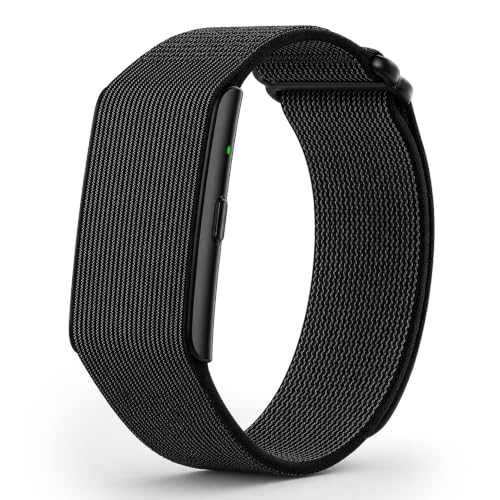
A battery that lasts 20 to 30 days means you can go weeks without charging, which is a real convenience for anyone tired of nightly plug-ins. It weighs just 25 grams, so you barely feel it during sleep tracking or a long run, and the IP68 rating handles rain, sweat, and hand washing without worry. This is the tracker for people who want consistent wellness data, heart rate, SpO2, HRV, sleep stages, and daily energy trends, without the distraction or battery anxiety of a screen.
You get no display on your wrist, so you have to pull out your phone to see your pace or heart rate during a workout. That feels fine if you already carry your phone for music or maps, but it is less convenient than a watch face you can glance at mid-stride. If you prefer a screen for quick checks, a model with a display would be the better fit. If battery endurance and a truly screen-free experience matter more, this band delivers.
Product photos
How We Evaluated Exercise Monitoring Bands
We looked at the specs and features of each band, comparing manufacturer claims with patterns found in expert round-ups and long-term owner feedback. We weighed common praise and complaints to separate marketing claims from real-world usefulness.
We prioritized four criteria that directly affect how a band performs during exercise. GPS accuracy came first for runners and cyclists who need reliable distance and route data without carrying a phone. Heart rate monitoring mattered for anyone training in a specific zone, especially for those who might prefer a chest strap vs wrist monitor for more precise data. Battery life determined how often you charge, critical for sleep tracking and multi-day trips. Finally, water resistance separated bands that survive sweat from those you can actually swim with.
The honest limit of a research-led evaluation is that individual fit and comfort vary from person to person. A band that feels great on one wrist might irritate another. We can point you to the most reliable options based on data and consensus, but the best final test is how the band feels during your own workout.
What To Look For In Exercise Monitoring Bands
Choosing an exercise monitoring band is simpler when you know which features actually change your workout experience. Here are the key factors to consider before you buy.
Focus on GPS (built-in or connected), heart rate sensor type, battery life, water resistance rating, and display preference. These five specs determine whether a band fits your running, swimming, gym, or everyday routine.
GPS: Built-In vs. Connected
If you run or cycle outdoors without your phone, you need a band with built-in GPS. The Fitbit Charge 6 and Suunto Run GPS Sport Watch both track routes independently. If you always carry your phone, connected GPS (which uses your phone’s antenna) works fine, bands like the Xiaomi Mi Smart Band 10 and Garmin Vivosmart 5 use this approach. It saves battery and cost, but your phone must be nearby for accurate distance data.
Heart Rate Monitoring and Display
Wrist-based optical heart rate sensors are standard on most bands, but accuracy can vary during high-intensity intervals or weightlifting. For the most reliable data, some athletes turn to dedicated heart monitors like chest straps. If you want real-time heart rate during gym workouts, the Fitbit Charge 6 can display it on compatible cardio machines. Screenless bands like the WHOOP 5.0 and Fitbit Air log your heart rate for later review on your phone.
Battery Life and Charging Habits
Battery life ranges from 7 days to over three weeks. The Xiaomi Mi Smart Band 10 leads with 21 days of use and a one-hour fast recharge, making it ideal for travelers. The WHOOP 5.0 charges on your wrist so you never remove it for power. If you plan to track sleep nightly, a band that lasts at least a week between charges is a practical minimum.
- Check the water resistance rating, 5 ATM or IP68 means swim-proof; IPX7 handles sweat and rain only.
- Decide if you need an on-wrist display for glancing at pace or reps during workouts.
- Confirm whether full features require a subscription (the WHOOP 5.0 and Fitbit Charge 6 have paid tiers).
- Make sure the band works with your phone’s operating system and preferred fitness app.
- Consider weight and thickness if you plan to wear the band 24/7.
A band you forget you’re wearing is better than one with every bell and whistle that sits in a drawer.
Exercise Monitoring Bands Compared
The table below compares the ten exercise monitoring bands across the specs that matter most during workouts. GPS type, battery life, display, and water resistance.
| Product | Display | Battery Life | Exercise Modes |
|---|---|---|---|
| Fitbit Charge 6 Fitness Tracker | Touchscreen (built-in) | N/A | 40+ exercise modes |
| Fitbit Air Screenless Activity Tracker | Screenless | Up to 7 days | N/A |
| Garmin CIRQA Smart Band | Screenless fabric band | Up to 10 days | 80+ activities |
| Xiaomi Mi Smart Band 10 | 1.72" AMOLED | 21 days | Multi-Sport Tracker |
| Polar Loop Screenless Health Band | Screenless | Up to 8 days | Automatic Detection |
| Suunto Run GPS Sport Watch | 1.32" AMOLED touchscreen | 12 days (daily use), 20h (GPS) | 34+ Sports |
| Garmin Vivosmart 5 Fitness Tracker | Touchscreen + button | Up to 7 days | Pool swim, walking, running, yoga, cardio, and more |
| Zeacool Fitness Tracker | 1.10" AMOLED HD Touch | 10-14 days (30-day standby) | 25 sport modes |
| WHOOP 5.0 Screenless Fitness Wearable | Screenless | 14+ days | N/A |
| Domhong Screenless Fitness Tracker Band | Screenless | 20-30 days | 170+ Sports |
Frequently Asked Questions
Which exercise monitoring band has the best battery life?
The Xiaomi Mi Smart Band 10 offers the longest battery life on this list, lasting up to 21 days on a single charge. It also recharges fully in about one hour, so you spend less time plugged in and more time moving.
Do I need a band with built-in GPS?
Only if you want to track outdoor runs, rides, or hikes without carrying your phone. Bands like the Fitbit Charge 6 and Suunto Run GPS Sport Watch have built-in GPS. If you always bring your phone, connected GPS bands such as the Garmin Vivosmart 5 work well and often cost less.
Are screenless exercise bands worth it?
Yes, for anyone who finds screens distracting or wants a lighter, more discreet band. The Fitbit Air and WHOOP 5.0 track your activity and sleep continuously without a display. You check your stats later on your phone. The trade-off is no real-time glance at pace or heart rate during a workout.
Can I swim with an exercise monitoring band?
It depends on the water resistance rating. Bands like the Garmin Vivosmart 5 and Zeacool fitness trackers are swim-proof with ratings of 5 ATM, meaning they are safe for pool swimming and showers. Always check the rating before submerging any band.
What is the difference between wrist-based and chest strap heart rate monitors?
Wrist-based optical sensors are convenient and comfortable for all-day wear. But they can be less accurate during high-intensity exercise or weightlifting. Chest strap vs wrist monitor comparisons show that chest straps typically provide more precise beat-by-beat data. For casual fitness, wrist-based is fine. For serious zone training, a chest strap is more reliable.
The Bottom Line
The Fitbit Charge 6 Fitness Tracker is the best overall choice for most active people because it packs built-in GPS, gym machine connectivity, and Google services into one comfortable band. It suits runners, gym-goers, and anyone who wants real-time stats on their wrist without pulling out a phone.
If you prefer a screenless experience, the Fitbit Air Screenless Activity Tracker and WHOOP 5.0 offer distraction-free tracking with long battery life. Budget shoppers will appreciate the Zeacool Fitness Tracker, which includes a bright AMOLED display and swim-proof design at a lower cost. Swimmers should look at the Garmin Vivosmart 5 for its dedicated pool swim profile.
The single most important factor is choosing a band that matches your primary activity. A runner needs GPS; a swimmer needs water resistance; a gym-goer needs heart rate accuracy. Get that one feature right, and everything else is a bonus.
