
5 Best Muscle Stimulators For Legs in 2026
This post contains affiliate links. As an Amazon Associate, we earn from qualifying purchases.
For anyone dealing with tired legs from long days of sitting, standing, or recovering from a workout, the FlowKeepers Calf Stimulator EMS Activator takes the top spot. Its FDA-cleared design focuses on circulation support and operates wirelessly and discreetly. If you want a multi-area toning solution, the OUJEALEE Fitness Belt EMS Stimulator is a strong choice, while the NURSAL TENS EMS Foot Massager excels at foot and lower-leg circulation.
The challenge with leg stimulators is matching the technology to your actual need. That need could be improving blood flow after a flight, easing muscle soreness, or adding a gentle contraction to aid recovery without expecting dramatic muscle growth. Many devices blur the line between EMS for toning and TENS for pain, and the wrong pick can leave you disappointed.
We built this guide by combing through manufacturer specifications, expert round-ups, and patterns in owner feedback to find the five stimulators that work well for leg-specific use. You’ll get clear picks for circulation, toning, and full-body EMS, along with the buying criteria that matter most.
Top 5 Muscle Stimulators For Legs in the Market
Certain content that appears on this site comes from Amazon. This content is provided "as is" and is subject to change or removal at any time.
The Best Muscle Stimulators For Legs, Reviewed
FlowKeepers Calf Stimulator EMS Activator

What We Like
- FDA-cleared for circulation support
- Designed by Yale neurologist to mimic walking
- Wireless and silent for discreet use
- 15 intensity levels with one-button operation
Trade-offs
- Not built for muscle building or fitness toning
- Contains BPA (California Prop 65 warning)
The FlowKeepers Calf Stimulator is FDA-cleared for circulation support and uses a timed pulse designed by a Yale neurologist to mimic the pumping action of walking. That design lets veins refill between contractions, which supports natural leg circulation rather than just forcing muscle contractions. With 15 intensity levels and a wireless, silent form that fits under clothing, it suits long flights, desk work, or bedtime use when your legs feel heavy and you cannot move around. The device is purpose-built for circulation, not for fitness muscle building or nerve blocking.
The FlowKeepers Calf Stimulator is a circulation-focused EMS device, not a fitness builder. If you want to strengthen or tone your calves, the OUJEALEE Fitness Belt offers 39 levels and multiple modes for active muscle conditioning. But for anyone whose main goal is refreshing tired legs during rest or travel, the FlowKeepers uses a patented timed interval created by a Yale specialist to mimic the pumping action of walking. It has 15 intensity levels and requires no app.
Product photos
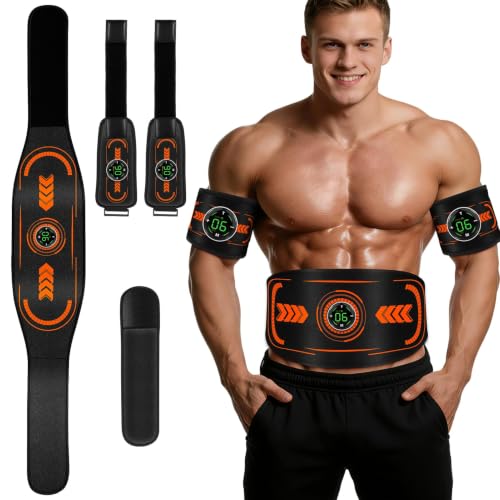
OUJEALEE Fitness Belt EMS Stimulator
What We Like
- 15 modes and 39 intensity levels
- Covers abs, arms, and thighs
- Sweatproof and odor-proof build
- USB rechargeable for portability
Trade-offs
- No leg-specific pads or straps included
- No calf or foot stimulation capability
Fifteen modes and 39 intensity levels give you room to start gentle and build up as your muscles adapt. That kind of range matters when you are targeting different body areas, from abs to arms to thighs, because each muscle group responds to a slightly different rhythm. The belt is also sweatproof and odor-proof, so you can wear it during a workout or while cooking dinner without worrying about the fabric soaking through. This is the pick for someone who wants one device that can move between body parts rather than buying a separate stimulator for each zone.
The trade-off is that the 46-inch belt is designed to wrap around a midsection or upper arm, and it does not come with leg-specific straps or pads. If your main goal is strictly calf or quad stimulation, a dedicated leg unit like the FlowKeepers Calf Stimulator might fit better because its two-pack design wraps each calf individually. But if you want the versatility to tone your thighs one day and your core the next, the OUJEALEE belt gives you that flexibility without cluttering your drawer with multiple gadgets.
Product photos
NURSAL TENS EMS Foot Massager

What We Like
- 25 treatment modes for targeted relief
- TENS and EMS in one unit
- Remote control for easy operation
- Ergonomic sole fits all foot shapes
Trade-offs
- Cannot be used while charging
- At 4.0 lbs, less portable than smaller stimulators
- Requires bare feet on the mat
The NURSAL TENS EMS Foot Massager combines two clinical technologies: TENS for pain signals and EMS for muscle contraction, targeting nerve discomfort and circulation in one session. With 25 treatment modes and intensity adjustable from 0 to 90, you can dial in exactly how much stimulation feels right for neuropathic, chronic, acute, or arthritic foot pain. The curved ergonomic sole accommodates any foot size without pinching, and the remote control means you don’t have to bend over to switch settings, a thoughtful touch if mobility is already a concern. This is a home-therapy tool designed for people who want drug-free relief and better blood flow without leaving the couch.
At 4.0 pounds and 15 inches wide, this mat stays firmly on the floor, so you can’t use it while moving around. You also need to charge it before each session because it doesn’t work plugged in. For someone focused on foot and leg pain relief, the 25 treatment modes and dual TENS/EMS technology make it a practical home option. If you need a portable device to take to the office, a smaller unit like the FlowKeepers Calf Stimulator (5.5 inches long) might fit your lifestyle better.
Product photos
NEWPINE Fitness Belt Muscle Stimulator

What We Like
- No messy gel sheets needed
- Stainless steel pads for steady contact
- Lightweight and portable for daily use
- Works on core, arms, and legs
Trade-offs
- Requires moistening pads before each use
- General fitness only, not medical-grade
The upgraded stainless steel pads work without gel sheets, so you just lightly moisten the surface and get steady contact on your abdominal area, arms, or legs. That means no messing with disposable adhesives, and the metal pads are durable enough for repeated use on different body areas. For someone who wants a straightforward stimulator for everyday muscle engagement and body shaping, this design keeps things simple without needing replacement gels.
The trade-off is that you need to dampen the pads before starting, which adds a small prep step compared to a unit that uses pre-gelled pads. And because it’s labeled for general fitness and relaxation purposes only, it won’t suit anyone looking for recovery or therapy use. For casual use at home, during work breaks, or while traveling, though, the durable pads and ultra-slim build make it a convenient companion.
JORAIXES 5-Piece EMS Muscle Stimulator

What We Like
- 10 modes and 30 frequencies per mode
- Wireless design for use anywhere
- Includes extension belt for fit adjustment
- Targets core, arms, and legs together
Trade-offs
- Leg belts are one size without adjustable tension
- No separate intensity controls for different body parts
A five-piece set covering core, arms, and legs means you can work multiple muscle groups in a single session without swapping pads or buying extra kits. With 10 modes and 30 adjustable frequencies per mode, you can dial in everything from gentle recovery to more demanding toning, all while the wireless design lets you move freely around the house. This setup suits someone who wants a full-body EMS experience that fits into everyday life, not just a targeted leg unit.
Product photos
How We Evaluated Muscle Stimulators For Legs
Our evaluation started with the technical specs: FDA clearance status, number of intensity levels, treatment modes, and power source. We cross-referenced these against expert commentary from physical therapy and sports medicine sources to understand which features actually contribute to safe, effective use. Owner feedback patterns helped us spot common issues like poor pad adhesion, confusing controls, and devices that claim leg coverage but only work on the abdomen.
Three criteria carried the most weight. First, leg-specific design, does the stimulator include calf straps, foot plates, or pads shaped for the legs, or is it a generic belt? Second, intensity range and control, more levels mean finer adjustments, which is critical for comfort and effectiveness. Third, power source and portability, wireless, rechargeable units are far more practical for daily use than corded machines that tether you to a wall outlet.
A research-led evaluation like this has honest limits. We haven’t tested these devices ourselves, so our recommendations are based on what the specs and community feedback tell us. That said, we focused on models with consistent, verifiable claims and clear user documentation so you can buy with confidence.
What To Look For In Muscle Stimulators For Legs
Choosing a leg stimulator means balancing the type of stimulation (EMS vs. TENS), pad placement options, intensity control, and power convenience. The right device for a desk worker with poor circulation looks very different from one for an athlete targeting quad recovery.
Focus on the stimulation type, pad or strap design for your target muscle group, intensity range, and power source. A dedicated leg device with wireless operation and at least 10 intensity levels offers the best balance of convenience and control for most buyers.
Stimulation Type: EMS vs. TENS
Electrical muscle stimulation (EMS) contracts muscles directly, making it the go-to for toning, gentle conditioning, and muscle recovery. Transcutaneous electrical nerve stimulation (TENS) targets nerve pathways to interrupt pain signals, which is better for pain relief from soreness or injury. Some devices combine both, like the NURSAL TENS EMS Foot Massager, which offers 25 treatment modes for targeted relief. If you’re unsure, start with a combo unit so you can experiment with both modalities.
Pad Placement and Coverage Area
A stimulator is only as good as its ability to reach the muscle you want. Dedicated leg devices include calf wraps, quad straps, or foot plates that hold electrodes in the right spot. Generic fitness belts often rely on adhesive pads that work on abs and thighs but miss the calves entirely. Check whether the unit comes with leg-specific accessories or requires a separate purchase. The best EMS devices in this category include clear diagrams or instructions for proper pad placement on the legs.
Intensity Levels and Control
More intensity levels give you finer control over the sensation, which is crucial because leg muscles can handle stronger stimulation than the abdomen or arms. Look for at least 10 levels, the FlowKeepers offers 15, and the OUJEALEE provides 39. One-button operation is a plus for ease of use, but multi-mode units with separate controls for different body parts are better if you plan to rotate between muscle groups. The top wireless muscle stimulators often include remote controls or app connectivity for adjusting settings mid-session.
Power Source and Portability
Wireless, rechargeable stimulators let you move around during a session, which is a major advantage over corded machines that tether you to a power outlet. USB rechargeable models like the OUJEALEE and NEWPINE are easy to top off at a desk or in a car. Battery life varies, so consider how long a typical session lasts (15-30 minutes) and whether the unit can handle several sessions between charges. Some devices, like the NURSAL foot massager, cannot be used while charging, which limits their practicality for long treatments.
- Check whether the device is FDA-cleared if you need it for medical-grade circulation support.
- Verify that replacement pads or gel sheets are available and affordable for the model you choose.
- Confirm the strap or pad size fits your leg circumference, some belts are one-size without adjustable tension.
- Look for a device with an auto-off timer to prevent overstimulation during sleep or rest.
- Read the fine print on materials, especially if you have skin sensitivities or concerns about BPA.
A stimulator with at least 10 intensity levels, wireless operation, and leg-specific pads or straps will serve most buyers better than a generic fitness belt with fewer adjustments.
Muscle Stimulators For Legs Compared
The table below compares the five picks side-by-side so you can see at a glance how they differ in stimulation type, intensity range, power source, and leg-specific features.
| Product | Technology | Intensity Levels | Modes |
|---|---|---|---|
| FlowKeepers Calf Stimulator EMS Activator | EMS | 15 | N/A |
| OUJEALEE Fitness Belt EMS Stimulator | EMS + TENS | 39 | 15 |
| NURSAL TENS EMS Foot Massager | TENS + EMS | 0 to 90 | 25 |
| NEWPINE Fitness Belt Muscle Stimulator | N/A | N/A | N/A |
| JORAIXES 5-Piece EMS Muscle Stimulator | EMS | 30 per mode | 10 |
Frequently Asked Questions
Can muscle stimulators build leg muscle?
EMS devices can help with muscle conditioning and toning by contracting the muscle fibers, but they are not a substitute for resistance training. For significant muscle growth, you need progressive overload from weight lifting. Some stimulators for muscle growth are designed to complement a strength routine, but they won’t replace it.
What is the difference between EMS and TENS for legs?
EMS (electrical muscle stimulation) contracts the muscle itself, which is useful for gentle conditioning, recovery, and circulation. TENS (transcutaneous electrical nerve stimulation) targets nerve pathways to block pain signals, making it better for soreness or injury. Many modern TENS and EMS devices combine both functions in one unit.
How often should I use a leg muscle stimulator?
Most manufacturers recommend 15-30 minute sessions, one to three times per day. Start on the lowest intensity and increase gradually. For workout recovery at home, a single session post-exercise is usually sufficient to aid blood flow and reduce stiffness.
Are wireless muscle stimulators as effective as wired ones?
Yes, modern wireless stimulators deliver the same electrical pulses as wired units. The main trade-off is battery life, wireless models need recharging, while corded units run indefinitely on wall power. For daily leg use, the freedom of movement from a wireless design usually outweighs the inconvenience of occasional charging.
Can I use a muscle stimulator while walking or working?
Some wireless models are designed for use during light activity, like walking or desk work, but you should avoid vigorous movement that could shift the pads. The FlowKeepers Calf Stimulator is one example that fits discreetly under pants and allows normal walking. Always follow the manufacturer’s guidance on activity during use.
The Bottom Line
For most people, the FlowKeepers Calf Stimulator EMS Activator is the best overall choice because it targets the specific problem of poor leg circulation with FDA clearance, a wireless design, and 15 intensity levels. It’s ideal for anyone who sits at a desk, flies frequently, or wants a clinically backed device that supports blood flow without trying to build muscle.
If your goal is to tone multiple body areas with one device, the OUJEALEE Fitness Belt EMS Stimulator offers the widest range of modes and intensity levels. For focused foot and lower-leg circulation at home, the NURSAL TENS EMS Foot Massager provides 25 treatment modes with both TENS and EMS in a single unit. Budget-conscious buyers who dislike gel pads should consider the NEWPINE Fitness Belt Muscle Stimulator with its stainless steel contact pads.
The single most important factor when buying a leg stimulator is matching the stimulation type to your goal, circulation support and recovery call for EMS, while pain relief calls for TENS. Pick the device that fits your specific need, and you’ll get real value from every session.
