
10 Best Fitness Trackers With Heart Rate Monitor in 2026
This post contains affiliate links. As an Amazon Associate, we earn from qualifying purchases.
For most people, the Apple Watch Series 12 GPS Smartwatch is the best fitness tracker with a heart rate monitor. It checks your pulse every five seconds and builds a complete readiness picture from activity, sleep, and vitals. Runners who want adaptive training guidance should look at the Garmin Forerunner 165, while the Fitbit Charge 6 connects your heart rate directly to compatible gym machines.
A heart rate monitor is only useful if it fits your routine without friction. The right tracker balances sensor accuracy, battery life, and the specific data you actually review, whether that’s resting HRV, workout zone time, or recovery scores.
We built this guide by comparing manufacturer specifications, expert round-ups from training and tech publications, and patterns in long-term owner feedback across each model’s key features. You get a clear breakdown of what each tracker does best and who it suits.
Top 10 Fitness Trackers With Heart Rate Monitor in the Market
Certain content that appears on this site comes from Amazon. This content is provided "as is" and is subject to change or removal at any time.
The Best Fitness Trackers With Heart Rate Monitor, Reviewed
Apple Watch Series 12 GPS Smartwatch
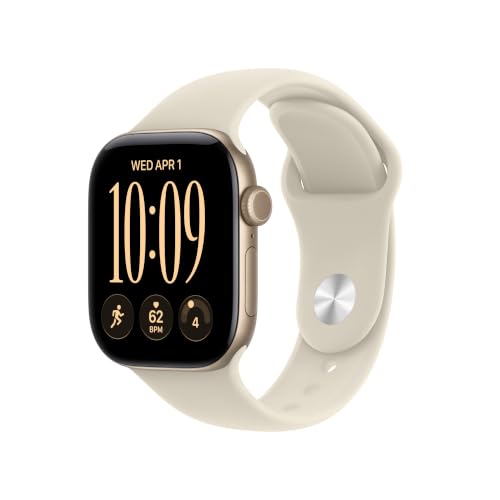
What We Like
- Fall and crash detection with emergency SOS
- Heart rate readings every 5 seconds, HRV every 5 min
- Readiness experience from activity, vitals, sleep
Trade-offs
- 0.5 lb weight is heavier than dedicated fitness bands
- Siri AI rollout in English only initially
The Apple Watch Series 12 takes a heart rate reading every five seconds in the background and measures HRV as often as every five minutes, so you get a constant pulse on your cardiovascular state without having to think about it. That steady stream of data feeds into a readiness experience that tells you whether to push hard or take it easy, which is exactly the kind of insight that helps a runner or gym-goer avoid overtraining. It also tracks overnight health metrics, sleep score, and blood oxygen, so you get a full picture of recovery without juggling multiple devices. For someone who wants one smartwatch that handles daily fitness, health insights, and safety features like fall and crash detection, this covers the bases.
Product photos
Fitbit Charge 6 Fitness Tracker
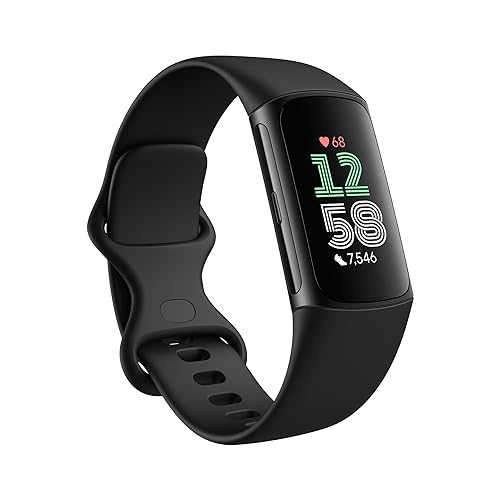
What We Like
- Links heart rate to compatible exercise machines
- Built-in GPS for outdoor runs and rides
- Google Maps turn-by-turn directions on wrist
- 40+ exercise modes with auto tracking
Trade-offs
- Google Health Premium subscription needed after trial
- No cellular option for phone-free workouts
The ability to see your real-time heart rate on compatible treadmills and ellipticals is the standout feature here. It bridges the gap between wearable data and gym equipment, so you can keep your eyes on the machine display instead of your wrist. With built-in GPS, 40+ exercise modes, and automatic activity tracking, this tracker is built for people who actually follow a structured routine, whether that’s a morning run, a spin class, or a full weight session. Google Maps turn-by-turn directions and Google Wallet tap-to-pay add everyday convenience that keeps you moving without fumbling for your phone.
After the 3-month Google Health Premium trial included with the tracker, personalized coaching and deeper insights require a paid subscription sold separately. For anyone who spends most of their workout time inside a gym and wants their tracker to talk directly to the machines they’re already using, this Fitbit makes that connection effortless.
Product photos
Apple Watch Ultra 4 Smartwatch
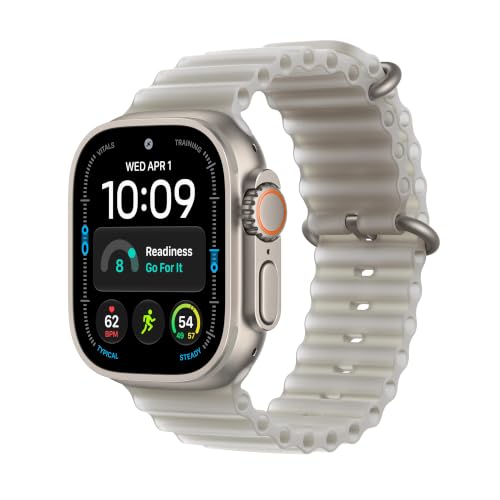
What We Like
- Multi-day battery for ultramarathon distances
- Most accurate heart rate sensing in a wearable
- Rugged titanium case, 100m water resistance
- Satellite SOS and crash detection
Trade-offs
- Some Siri AI features delayed until late 2026
- Large 49mm case is too big for small wrists.
The Ultra 4 delivers up to 45 hours of extended workout tracking, enough for an ultramarathon without a mid-race recharge. It also packs the most accurate heart rate sensing in a wearable, with HRV readings every five minutes and background heart rate every five seconds, giving you detailed recovery and stress data. The titanium case and sapphire crystal display handle extreme environments, and 100m water resistance makes it ready for high-speed water sports or open-water swims. This is the tracker for anyone who treats endurance as a way of life, not just a weekend hobby.
Product photos
Fitbit Inspire 3 Fitness Tracker
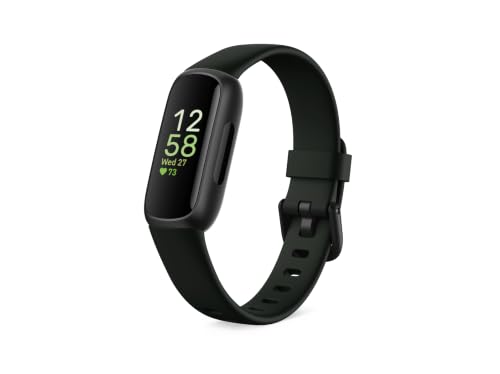
What We Like
- 24/7 heart rate and SpO2 tracking
- Daily Readiness Score and Stress Management Score
- 40+ exercise modes with auto tracking
- 3-month Google Health Premium included
Trade-offs
- Compatibility requires fairly recent phone OS
- Compatibility requires iOS 16.4+ or Android 11.0+
A 24/7 heart rate monitor paired with a Daily Readiness Score means you can gauge whether your body is primed for a tough workout or needs a recovery day, without guessing or overthinking. That combination, along with stress management tracking, mindfulness sessions, and automatic sleep scoring, makes this a well-rounded companion for someone building a sustainable fitness habit. It keeps the focus on energy and consistency rather than data overload, which is exactly what many of us need when we are just trying to move a little more each day.
The Inspire 3 focuses on daily wellness rather than outdoor navigation, so for walks, gym sessions, and general activity tracking it covers the essentials at a friendly price point. The included three-month premium membership lets you explore deeper insights before deciding if you need them.
Garmin vívoactive 5 GPS Smartwatch

What We Like
- Body Battery energy monitoring with nap insights
- Personalized sleep score and coaching
- Wheelchair mode tracks pushes, not steps
- Morning report and fitness age tracking
Trade-offs
- Wrist-based heart rate less precise than chest strap
- No onboard music storage for phone-free listening
The Body Battery energy monitoring, combined with automatic nap detection and personalized sleep coaching, gives you a genuinely useful window into your daily recovery. So you know when to push harder and when to take it easy. With up to 11 days of battery life in smartwatch mode and more than 30 built-in sports apps (including wheelchair mode that tracks pushes instead of steps), this is a tracker built for people who want more than just step counts. It suits anyone curious about how sleep, stress, and workouts interact, without needing to dig through confusing data.
The trade-off is that wrist-based heart rate monitoring, while convenient, can lag behind a chest strap during high-intensity intervals or rapid changes in effort. But if your priority is understanding your body’s energy and recovery patterns over the long haul, rather than just logging miles, the vívoactive 5 delivers insights that feel personal and actionable.
Garmin Forerunner 165 Running Smartwatch

What We Like
- Personalized daily suggested workouts adapt to recovery
- Built-in GPS tracks pace, distance, and speed
- AMOLED display with button controls for easy use
- Safety features include incident detection and Assistance
Trade-offs
- Heart rate is wrist-based, not chest-strap accurate
- Safety features require smartphone pairing and network coverage
With built-in GPS for pace, distance, and speed, you can leave your phone behind on a run and still get data right from your wrist. The watch also tracks recovery time and training effect labels, so you can see whether a workout built endurance or speed. Battery life reaches up to 11 days in smartwatch mode and up to 19 hours in GPS mode, so charging is infrequent. The AMOLED touchscreen paired with physical buttons makes it easy to scroll through stats even when your fingers are sweaty.
The wrist-based heart rate monitor is convenient but not as precise as a chest strap for interval work or max-effort sprints. So if you need beat-by-beat accuracy for structured training, you might still want a separate strap. Compared to the Apple Watch Series 12, the Forerunner 165 is lighter at 0.1 pounds versus 0.5 pounds and offers adaptive daily suggested workouts that adjust based on your recovery and performance.
Xiaomi Mi Smart Band 10 Fitness Tracker

What We Like
- 21-day battery life on one charge
- Fast charging in one hour
- 1500 nits brightness for sunlight
- Enhanced sleep stage monitoring
Trade-offs
- Xiaomi Fit app only supports metric system
- Requires third-party app for imperial units
Twenty-one days of battery life means you can pack this for a two-week trip without even thinking about a charger. That’s the kind of freedom that makes a fitness tracker feel like a tool, not a chore. The 1.72-inch AMOLED display is bright enough to read in direct sunlight thanks to 1500 nits, and the fast charging gets you back to full in just an hour. For anyone who wants heart rate monitoring and sleep tracking without the daily plug-in ritual, this band delivers exactly that, long stretches of uninterrupted use.
The Xiaomi Fit app defaults to the metric system, so if you prefer pounds and inches, you’ll need to connect it to Google Fit through a third-party app. That extra step isn’t a dealbreaker, but it’s worth knowing upfront. Compared to the Apple Watch Series 12, which offers a richer app ecosystem but only a fraction of the battery life, the Mi Smart Band 10 leans hard into endurance. It’s a straightforward, no-fuss companion for steady progress, not a mini smartphone on your wrist.
Product photos
WHOOP 5.0 Screenless Fitness Wearable
What We Like
- AI Coach turns 140+ metrics into advice
- 24/7 heart rate, HRV, SpO₂, skin temp
Trade-offs
- No built-in GPS for outdoor runs
- Requires paid membership beyond the first year
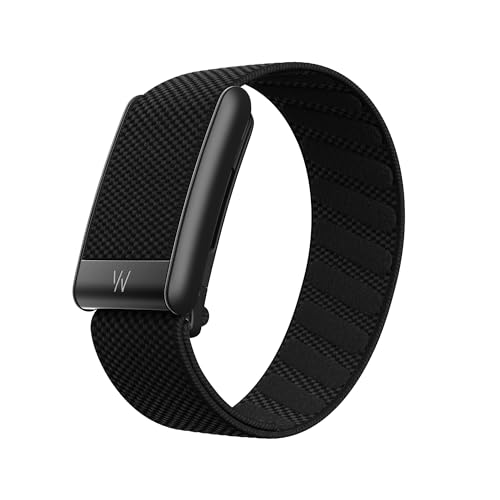
Continuous monitoring of heart rate, HRV, blood oxygen, skin temperature, and respiratory rate happens 24/7 against your personal baseline. The system achieves 99%+ accuracy for heart rate and HRV tracking. A real-time Stress Monitor shows how your body responds to stress throughout the day, helping you decide when to train, recover, or rest. All this data feeds into an AI Coach that turns 140+ health and fitness metrics into personalized recommendations on what to do next. You can also track 160+ daily behaviors in the WHOOP Journal to see how habits like training, alcohol, or travel affect your sleep and recovery.
Amazfit Helio Strap Screenless Activity Tracker

What We Like
- Tracks reps, sets, and rest periods
- Exclusive HYROX Race mode
- 24/7 heart rate and recovery tracking
- 10-day battery life
Trade-offs
- No screen means no on-wrist feedback during sets
- Requires Zepp App for all data and insights
A screenless design that tracks reps, sets, and rest periods with precision means you can focus entirely on your form instead of glancing at a display. The Helio Strap offers 27 sports modes and a dedicated HYROX race mode, so strength athletes get sport-specific tracking. Post-workout insights like VO₂ max and recovery time are available through the free Zepp App.
You trade on-wrist feedback for that focused experience. Without a screen, you rely entirely on the Zepp App to review your sets, reps, and recovery scores after the session. Compared to the Garmin Forerunner 165, which offers essential training and recovery features on your wrist, the Helio Strap demands a bit more post-workout attention. For anyone who prefers to set and forget during a lifting session and analyze later, that trade-off makes sense.
Product photos
Domhong Screenless Fitness Tracker Smart Band
What We Like
- IP68 water resistance
- 170+ sports modes
- No subscription required
Trade-offs
- No on-wrist display for quick glances
- Connected GPS requires smartphone nearby
- Readings are reference only, not medical grade
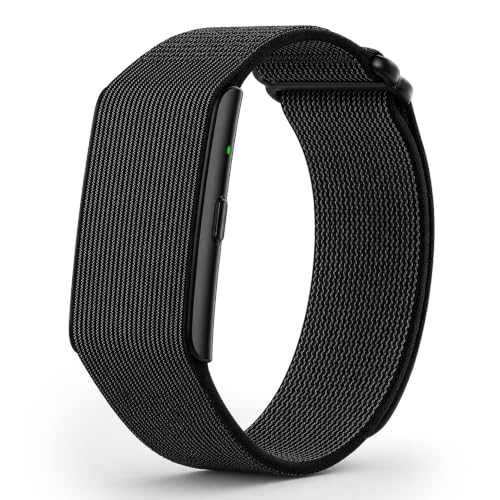
At just 25 grams with an IP68 rating, it shrugs off sweat, rain, and hand washing while staying light enough to forget you are wearing it. This is the tracker for anyone who wants reliable heart rate, SpO2, HRV, and sleep data without the distraction of another glowing screen on their wrist. The free QwatchPro app gives you AI-powered wellness insights and daily energy tracking with no subscription fees.
You give up the convenience of glancing at your wrist for stats mid-run. Without a display, you rely on vibration alerts and the smartphone app to see your numbers, and the connected GPS feature needs your phone along for outdoor routes. Compared to the Fitbit Charge 6, which has a display for quick checks, the Domhong asks you to lean into a more intentional, app-based review of your data. That trade-off makes perfect sense if you already have your phone handy during exercise and prefer a minimalist, low-maintenance wearable.
Product photos
How We Evaluated Fitness Trackers With Heart Rate Monitor
Our evaluation started with the core sensor hardware and how each brand processes the data. We looked at measurement frequency, how often the optical sensor samples heart rate during rest and exercise, and whether the tracker offers additional metrics like heart rate variability (HRV), SpO₂, and skin temperature. The best fitness trackers for heart rate combine consistent sampling with algorithms that filter out motion noise.
Three criteria mattered most for this category. First, accuracy across activity types: a tracker that works well for walking may lag during interval runs or weightlifting. Second, data accessibility: can you export to training platforms, see real-time zones on your wrist, or get actionable coaching from the numbers? Third, battery life and comfort, a device you charge daily is one you eventually stop wearing. We also weighed build quality, water resistance, and ecosystem lock-in because a great sensor is useless if it doesn’t pair with your phone.
This evaluation is based on manufacturer documentation, training community discussions, and aggregated owner reports to identify which models perform as described and which trade-offs matter in daily use. For a deeper look at sensor types, see our chest strap vs wrist monitor comparison.
What To Look For In Fitness Trackers With Heart Rate Monitor
The best tracker for you depends on how you move and what data you actually use. Start with sensor type and sampling rate, then match battery life and display to your daily habits.
Choose a tracker that samples heart rate at least every few seconds during exercise and offers HRV tracking for recovery insight. Prioritize battery life that matches your longest activity without recharging.
Heart Rate Sensor Type and Sampling Frequency
Optical sensors use green and infrared LEDs to detect blood flow through your skin. Most modern trackers sample every 1-5 seconds during workouts and every 5-10 minutes at rest. Higher-end models like the Apple Watch Ultra 4 and Garmin Forerunner 165 use multi-LED arrays that improve accuracy during high-intensity movement. If you need chest-strap precision for interval training or racing, consider a dedicated strap that communicates with your watch. Our guide to heart rate zones for cardio explains how to use that data once you have it.
Battery Life and Charging Convenience
A tracker you forget to charge is a tracker that misses your workout. Dedicated fitness bands like the Xiaomi Mi Smart Band 10 offer 21 days of battery, while full-featured smartwatches like the Apple Watch Series 12 last 1-2 days. Consider your routine: if you run marathons or backpack overnight, look for multi-day endurance models. For daily gym sessions, a tracker that fast-charges in under an hour is more practical than one with longer life but slower charging.
Display, GPS, and Workout Modes
- Does the tracker have a bright, always-on display for outdoor visibility?
- Is built-in GPS essential, or are you fine with connected GPS from your phone?
- How many exercise modes are preloaded, and does auto-detection work reliably for your main activities?
- Can you customize the watch face or data fields to show heart rate zone and elapsed time?
A good rule of thumb: pick the simplest tracker that gives you the one or two metrics you actually change behavior around, most people stop wearing feature-heavy devices they never use.
Fitness Trackers With Heart Rate Monitor Compared
The table below compares each tracker’s heart rate features, battery life, and key trade-offs at a glance.
| Product | Heart Rate Sensing | Battery Life | Display |
|---|---|---|---|
| Apple Watch Series 12 GPS Smartwatch | Every 5 seconds (background), HRV every 5 min | Up to 24 hours normal use | Ceramic Shield 2 (aluminum) |
| Fitbit Charge 6 Fitness Tracker | 24/7 + equipment link | N/A | N/A |
| Apple Watch Ultra 4 Smartwatch | N/A | Up to 45 hours extended workout | Sapphire crystal display |
| Fitbit Inspire 3 Fitness Tracker | 24/7 heart rate | N/A | N/A |
| Garmin vívoactive 5 GPS Smartwatch | Wrist-based heart rate, HRV | Up to 11 days smartwatch mode | Bright, colorful AMOLED |
| Garmin Forerunner 165 Running Smartwatch | Wrist-based heart rate | Up to 11 days smartwatch mode | AMOLED touchscreen |
| Xiaomi Mi Smart Band 10 Fitness Tracker | Heart Rate Monitor | 21 days | 1.72" AMOLED |
| WHOOP 5.0 Screenless Fitness Wearable | 99%+ HR and HRV | 14+ days | Screenless |
| Amazfit Helio Strap Screenless Activity Tracker | 24/7 with BioTracker | Up to 10 days | Screenless |
| Domhong Screenless Fitness Tracker Smart Band | Heart Rate, HRV | 20-30 days | Screenless |
Frequently Asked Questions
How accurate are wrist-based heart rate monitors compared to chest straps?
Wrist-based optical sensors are generally accurate for steady-state cardio like jogging or cycling, but can lag during interval sprints, weightlifting, or exercises with lots of wrist motion. Chest straps measure electrical signals directly from the heart and remain the gold standard for precision. For most daily training, a quality wrist tracker like the Apple Watch Series 12 or Garmin Forerunner 165 is sufficient.
Which fitness tracker has the best heart rate monitoring for running?
The Garmin Forerunner 165 is built specifically for runners, with wrist-based heart rate tracking, adaptive daily suggested workouts, and built-in GPS for pace and distance. The Apple Watch Series 12 also delivers excellent running accuracy with frequent heart rate sampling and a readiness score. For the most precise data during speed work, pairing either with a chest strap is a common solution.
Do I need a subscription to access heart rate data?
Most trackers provide basic heart rate data without a subscription. However, advanced features like personalized coaching, detailed sleep analysis, and long-term trend reports may require a paid plan. Fitbit offers Google Health Premium after a trial period, and WHOOP requires a membership beyond the first year. Apple and Garmin include most heart rate insights in their free apps.
Can a fitness tracker monitor heart rate during swimming?
Yes, many water-resistant trackers can monitor heart rate while swimming, but accuracy varies. The Apple Watch Ultra 4 is rated to 100 meters and uses a specialized algorithm for water contact. Most trackers with IP68 or 5 ATM ratings will record heart rate during pool laps, though optical sensors are less reliable during intense strokes. Check the manufacturer’s swim-tracking specifics before buying.
What is HRV and why does it matter for training?
Heart rate variability (HRV) measures the time variation between heartbeats and reflects your nervous system’s recovery state. A higher HRV generally indicates better recovery and readiness for hard training. Many modern trackers, including the WHOOP 5.0 and Garmin vívoactive 5, track HRV overnight and use it to suggest workout intensity or rest days.
The Bottom Line
The Apple Watch Series 12 GPS Smartwatch is the best overall fitness tracker with a heart rate monitor for anyone who wants the most complete health picture. It offers continuous pulse readings, HRV every five minutes, and a daily readiness score that combines activity, sleep, and vitals. It’s a premium device, but the depth of data justifies the investment for committed fitness enthusiasts.
If you prefer a lighter, more affordable option, the Fitbit Inspire 3 covers 24/7 heart rate and stress tracking without the bulk or price of a smartwatch. Runners should lean toward the Garmin Forerunner 165 for its adaptive coaching and GPS, while lifters and HYROX racers will appreciate the Amazfit Helio Strap‘s rep and set tracking.
The single most important buying factor is consistency: the best heart rate monitor is the one you actually wear every day. Choose a tracker that fits your wrist, your routine, and your patience for charging, and the data will follow.
