
10 Best Pilates Chairs For Home Use in 2026
This post contains affiliate links. As an Amazon Associate, we earn from qualifying purchases.
The Balanced Body EXO Pilates Chair wins as Best Overall because it packs 8 adjustable resistance levels into a compact, 55-pound frame that includes streaming workout guidance. For wider resistance tuning, the Balanced Body Pilates Combo Chair earns the Best Wide Resistance Range award, while the PAETA Pilates Combo Chair takes Best Solid Oak Build for its durable wood frame.
A Pilates chair for home use needs to balance workout versatility with a footprint that fits your living space. Too heavy and you cannot move it; too light and it may wobble during intense work. Resistance range, weight capacity, and portability matter as much as the quality of the build.
We researched specifications, manufacturer documentation, expert round-ups, and patterns in owner feedback to find the best Pilates chairs for home use. This guide breaks down what to look for and which model suits different home setups and training goals.
Top 10 Pilates Chairs For Home Use in the Market
Certain content that appears on this site comes from Amazon. This content is provided "as is" and is subject to change or removal at any time.
The Best Pilates Chairs For Home Use, Reviewed
Balanced Body EXO Pilates Chair

What We Like
- 8 adjustable resistance levels for progressive training
- Compact and portable at 55 lb
- Includes streaming workout video for guidance
- Versatile for cardio, sculpting, and core work
Trade-offs
- At 55 lb, it's light but still needs floor space
- No handles for seated upper-body exercises
Eight resistance levels from just two springs mean you can dial in exactly how much pushback you want, whether rebuilding strength after a long break or chasing that shaky-muscle burn. That adjustability, paired with a compact frame that weighs 55 pounds and measures under two feet tall, makes this chair feel like it was designed for a home where space is precious but you still want a proper workout. It suits someone who values clear progression and does not want to guess whether they are working hard enough or overdoing it. The included streaming video provides instructions and support to help you meet your fitness goals.
The single-pedal design means both feet move together, so you miss the split-pedal isolation that some moves demand. Balanced Body does offer a split-pedal option, but if you grab this one, you’re committing to bilateral work unless you get creative with foot placement. The EXO chair stays low and unobtrusive, making it a space-friendly choice for home use. For someone who wants a straightforward chair that grows with you through resistance changes, this is a smart pick.
Product photos
Balanced Body Pilates Combo Chair

What We Like
- Two pedals with light and heavy springs
- Locking handles adjustable to three heights
- Maple-faced hardwood laminate and padded seat
Trade-offs
- At 91 pounds, it is very heavy to move
- No resistance bands or extra attachments included
- Requires floor space of 28.5 x 27.5 inches
The locking handles adjust to three heights and are padded, so you can shift from seated presses to standing pulls without fumbling. For someone building a home setup who values precise, progressive resistance over guesswork, this chair delivers the control that keeps workouts both safe and effective.
The trade-off is weight: at 91 pounds, this is the heaviest chair in the guide, so it is not something you will casually slide under a bed after each session. Compared to the Balanced Body EXO Pilates Chair, which weighs 55 pounds and has a single pedal, the Combo Chair trades portability for a much broader resistance range and a second pedal. If your workout space is permanent and you want the flexibility to fine-tune every exercise without buying extra springs, this is worth the extra heft. If you need to stash your chair between uses, the lighter EXO might suit you better.
PAETA Pilates Combo Chair

What We Like
- Solid oak frame supports 351 lb
- Handles have three height settings
- Wheels for easy mobility and storage
Trade-offs
- At 84 lb, it's heavy to move upstairs
- No single-pedal option for simpler exercises
The solid oak frame supports up to 351 pounds, so this chair stays planted and steady during dynamic moves. The split, detachable pedals let you work each leg independently, and the two resistance levels (30 and 60 pounds) give you clear options for building strength. If you want a chair that won’t wobble or flex when you push hard, this one delivers that stability.
At 84 pounds, it’s noticeably heavier than the Balanced Body EXO Pilates Chair (55 lb), so moving it between rooms takes real effort. The wheels help, but you still have to tilt and roll. Also, unlike the Balanced Body EXO, this is a split-pedal design only, so if you prefer a single pedal for simpler footwork, you’ll need to look elsewhere. For home users who value stability and don’t plan to relocate it often, the PAETA delivers where it counts.
Product photos
AeroPilates Precision Pilates Chair

What We Like
- Dual pedal system for varied exercises
- Compact design for easy storage
- Low-impact full-body workout
- Adjustable lying, sitting, standing positions
Trade-offs
- 46 pounds is light but still needs carrying effort
- 47-inch height won't fit under most furniture
The dual pedal system on this chair lets you switch between single-pedal moves and split-pedal work, so you can target your legs, core, and upper body without swapping gear. That flexibility, paired with the low-impact design, makes it a smart fit if you want a gentler way to build strength without pounding your joints. You can adjust between lying, sitting, and standing positions too, which keeps the routine fresh and challenges different muscle groups.
At 47 inches tall, it stands noticeably higher than the Balanced Body EXO Pilates Chair (24.2 inches), so it requires more vertical space in a room. At 46 pounds it’s lighter than many combo chairs, which helps for moving it around, but you’ll still need a clear spot to store it. If you prioritize a compact, low-impact option that still offers variety, this chair delivers without overwhelming your home.
VEVOR Pilates Split-Pedal Chair

What We Like
- 350 lb weight capacity
- Split-pedal design for unilateral training
- 4 adjustable resistance levels
- High-end leather and sponge padding
Trade-offs
- At 64 lb, it's heavy to move around
- Only 4 resistance positions limit fine-tuning
A 350-pound weight capacity on this VEVOR chair means it can support larger or stronger users during Pilates training, which is a practical advantage for home gym setups. The split-pedal design lets you work one leg at a time, helping address muscle imbalances or focus on a weaker side, and the rubberwood frame provides a stable, studio-like feel without a high price tag. If you need a chair that handles heavier loads without wobbling, this model delivers that capability.
The VEVOR Pilates Split-Pedal Chair weighs 64 pounds, so it’s sturdy enough for intense workouts but not something you’ll want to move around daily. Four resistance levels come from two strong red springs and two lighter yellow springs, letting you adjust tension quickly. For most home users who need a stable, high-capacity chair, that range covers the basics well.
Product photos
JHBYBMG Pilates Chair
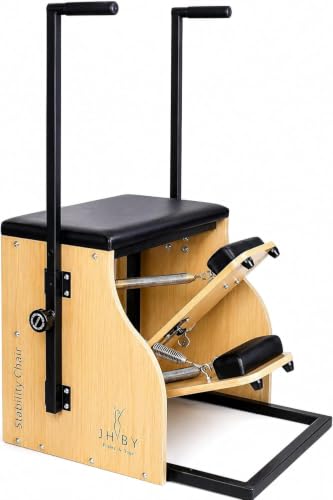
What We Like
- Wood base and metal frame for stability
- Four spring positions adjust resistance
- Padded seat and pedals for comfort
- Detachable pedals for easy storage
Trade-offs
- No handles or bands included for upper-body exercises
With four spring positions and a two-pedal design, this chair lets you adjust resistance to match different exercises without changing components, making it a straightforward option for home Pilates. The wood base and metal frame provide a stable platform, while the padded seat and pedals add comfort during repeated controlled movements. This setup suits someone who wants a simple, stable chair for core and leg work without extra accessories.
The JHBYBMG Pilates Chair uses a two-pedal design, which means both pedals move together during exercises. This chair has four spring positions, so you can adjust the resistance by moving the springs to different attachment points. The wood base and metal frame create a sturdy platform, and the non-slip handles help keep your grip secure during movements.
Product photos
PulSpeed Pilates Wunda Chair
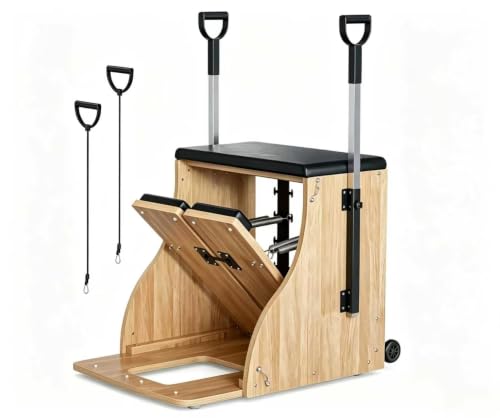
What We Like
- Built-in wheels for easy room-to-room moving
- Split pedal adjusts width and angle for targeting
- 4 springs offer 4 adjustable resistance levels
- Solid wood frame supports up to 400 lbs
Trade-offs
- At 44 inches tall, it stands taller than most chairs
- No single-pedal option for traditional wunda exercises
- Spring count fixed at 4, no extra spring add-ons
A built-in set of wheels turns this Pilates chair into something you can actually roll from room to room without wrestling it. At 30 by 24 by 44 inches, it tucks into a corner or closet when you are done, but those wheels mean you do not have to commit to one spot. The split pedal adjusts both width and angle, so you can shift your stance for squats, lunges, or leg lifts. You can also pair it with one of the four springs, two light, two heavy, to fine-tune the resistance. That 400-pound weight capacity also says it will handle daily use without wobbling.
The taller frame stands 44 inches high, noticeably taller than the Balanced Body EXO Pilates Chair at 24.2 inches. That extra height can make seated exercises feel different if you are used to a lower platform, and the spring system comes with four springs, two light, two heavy, that offer adjustable resistance levels but are not designed to be swapped out for different springs. If you want a chair that moves with you rather than staying put, the wheels and compact footprint make this a practical home choice. Just check your ceiling clearance if you plan to use it in a low room.
Product photos
Faittd Pilates Combo Chair

What We Like
- Split pedals with heavy and light springs
- Locking handles adjust to 3 heights
- Compact maple-faced hardwood laminate frame
- Cactus Springtree System for quick spring changes
Trade-offs
- No listed weight capacity limits heavy users
- Only 2 spring resistances per pedal limits progression
- No dimensions given to confirm small footprint
Two split pedals, each with its own heavy and light spring, let you work each leg independently or together. That dual-spring design means you have two resistance levels per pedal without swapping springs, and the locking handles adjust to three heights so you can find a stable grip for seated or standing exercises. It’s built with maple-faced hardwood laminate and a padded upholstered seat, giving it a polished look that blends into a home gym or living room corner. For someone who wants Pilates versatility but does not have room for a full reformer, this combo chair keeps the essentials close at hand.
Each pedal only offers two spring choices, one light and one heavy, so if you need more granular resistance steps for progressive overload, you might outgrow the range faster than you would on a chair like the Balanced Body Pilates Combo Chair, which typically offers more spring options. That said, for a dual-pedal setup with quick spring changes via the Cactus Springtree System, this is a practical pick for home users who prioritize simplicity over maximum adjustability.
Product photos
Holymuss Pilates Chair with Handles

What We Like
- Solid oak frame for durability
- Supports up to 380 lbs
- Four adjustable spring positions
- Built-in wheels for easy moving
Trade-offs
- At 84 lb, it's heavy to reposition without wheels
- Springs fixed at 30 lb and 60 lb only
A 380-pound weight capacity and a solid oak frame mean this chair is built for serious, long-term use without wobble or worry. The four spring positions let you dial in resistance from light to challenging, so you can progress gradually for more core work. That sturdy construction and adjustable spring system make it a natural fit for anyone who wants a premium home setup that feels like studio gear, not a compromise.
At 84 pounds, it’s heavier than several chairs in this guide, though the built-in wheels help you roll it into a corner when you’re done. If you plan to move it between rooms often, the lighter Balanced Body EXO Pilates Chair (55 lb) might be easier to handle. But if you want a rock-solid oak frame that stays put during intense sessions and can hold up to years of use, this chair delivers that stability without rattling or shifting.
LeisureKing Pilates Combo Chair

What We Like
- Split pedals for isolated side training
- 5 adjustable handle heights for fit variety
- 4 spring positions suit different body types
- Quiet-rolling casters for easy relocation
Trade-offs
- At 50.2 inches tall, needs ceiling clearance
- 220-lb weight limit restricts larger users
The split-pedal design on this LeisureKing chair lets you work each side independently, which is a huge advantage if you’re recovering from an injury or just notice one leg tends to slack off during squats. With 5 handle heights and 4 spring positions, you can dial in the resistance and range of motion to match your height and strength level without feeling like the chair was built for someone else entirely. The included wooden stick also connects the pedals for smoother transitions between stretches. That way you’re not stuck doing only unilateral work. This is a chair that rewards patience and precision, and it’s built to help you correct imbalances rather than just crank through reps.
At 50.2 inches tall, this chair demands a room with enough vertical clearance to use the handles comfortably, and its 220-pound weight capacity is lower than some other options. The wood frame provides stable support, so it stays steady during use. For lighter or average-weight people focused on rehab or balanced strength training, the split-pedal design allows you to isolate each side and assess imbalances, a feature that makes it a practical tool for targeted work. Just measure your ceiling first.
How We Evaluated Pilates Chairs For Home Use
Our evaluation is research-based: we examined manufacturer specifications, studied expert round-up recommendations, and identified recurring patterns in owner feedback for each model.
The four criteria that mattered most were resistance range, build quality and weight capacity, footprint and portability, and exercise versatility. Resistance range determines how long the chair stays challenging as you progress. Build quality affects stability and safety, especially at higher resistance levels. Footprint and portability decide whether the chair fits your room and can be stored or moved easily. Exercise versatility covers pedal configurations, handle options, and included guidance.
A research-led evaluation has honest limits. Owner feedback can be subjective, and specifications do not capture how a chair feels during a dynamic workout. We prioritized models with clear, verifiable specs and consistent feedback across multiple sources. For deeper context on the broader category, our Pilates chair reviews cover additional models and comparisons.
What To Look For In Pilates Chairs For Home Use
Choosing a Pilates chair for home use means weighing resistance options, build materials, and the space you have available. The right chair fits your body, your ceiling height, and your strength level.
Look for a Pilates chair with at least 4 adjustable resistance levels. It also needs a weight capacity that exceeds your body weight by a safe margin. If space is tight, choose a model with a footprint under 30 x 30 inches. Check seat height and ceiling clearance before buying.
Resistance Range and Progression
The number of resistance settings determines how long the chair grows with you. Budget chairs often have 2 or 3 fixed spring positions, while premium models offer 4 to 8 adjustable levels. More settings let you progress in smaller increments, which is safer for joints and better for building control. Split-pedal chairs add unilateral training, letting you work one leg at a time to correct imbalances.
Build Quality, Weight Capacity, and Weight
Solid wood frames, especially oak, offer the best durability and stability, often supporting 350 pounds or more. Heavier chairs stay planted during explosive movements but are hard to move between rooms. Lighter chairs are easier to relocate but may shift during use. Check that the frame material and joint construction match your body weight and workout intensity.
Footprint, Portability, and Ceiling Clearance
Measure your workout area before buying. Most Pilates chairs have a footprint between 24 and 30 inches wide and 24 to 28 inches deep. Seat height ranges from 22 to 28 inches, and total height can reach 47 inches. If your ceiling is under 7 feet, a lower-profile chair is safer. Built-in wheels make moving the chair between rooms much easier, especially for heavier models.
- Measure your floor space and ceiling height before ordering.
- Check the chair’s weight and whether it has wheels if you plan to move it.
- Verify that the seat height matches your leg length for comfortable use.
- Look for a warranty that covers the frame and springs for at least one year.
A Pilates chair that is too tall for your ceiling or too heavy to move will collect dust, no matter how well-built it is.
Pilates Chairs For Home Use Compared
The table below compares the best Pilates chairs for home use across key specs so you can see at a glance which model fits your space, strength goals, and budget.
| Product | Dimensions | Pedal Design | Resistance Levels |
|---|---|---|---|
| Balanced Body EXO Pilates Chair | 29.5 x 23.5 x 24.2 in | Single-pedal or split-pedal | 8 |
| Balanced Body Pilates Combo Chair | 28.5 x 27.5 x 25.5 in | 2 pedals with 2 springs each | Widest incremental choices |
| PAETA Pilates Combo Chair | 31.0 x 28.0 x 24.0 in | Split, Detachable | 30 lb & 60 lb |
| AeroPilates Precision Pilates Chair | 29.5 x 28.25 x 47 inches | Single and dual | N/A |
| VEVOR Pilates Split-Pedal Chair | 24.6 x 24.6 x 9.4 inches | Split-pedal | 4 adjustable positions |
| JHBYBMG Pilates Chair | N/A | Two-pedal | Four attachment positions |
| PulSpeed Pilates Wunda Chair | 30.0 x 24.0 x 44.0 in | Split pedal | 4 adjustable resistances |
| Faittd Pilates Combo Chair | N/A | 2 split pedals | Widest range of incremental resistance |
| Holymuss Pilates Chair with Handles | 29.9 x 23.9 x 26.1 in | Split pedals, detachable | 2×60 lb + 2×30 lb |
| LeisureKing Pilates Combo Chair | 27.9 x 19.7 x 50.2 in | Split pedals with connecting stick | 4 positions |
Frequently Asked Questions
What is the difference between a Pilates chair and a reformer?
A Pilates chair uses springs and pedals for resistance in a compact, chair-shaped frame, while a reformer is a larger carriage-and-rail system that slides. Chairs take up less floor space and are better for home use, but reformers offer more range of motion for certain exercises. Our guide to home reformers covers the reformer option in detail.
How much space do I need for a Pilates chair at home?
Most Pilates chairs need a floor area of about 24 by 28 inches and a ceiling height of at least 7 feet. You also need enough clearance around the chair to extend your legs and arms during exercises. Measure your room and the chair’s dimensions before buying.
Can a Pilates chair replace a full gym workout?
A Pilates chair provides a full-body strength and conditioning workout, targeting the core, legs, glutes, and upper body through spring resistance. It is excellent for low-impact training, but it does not replace heavy weightlifting or cardiovascular machines. Many users combine a chair with at-home Pilates workouts for variety.
What weight capacity should I look for in a Pilates chair?
Look for a weight capacity that is at least 50 pounds above your body weight to allow for safe, intense spring resistance. Chairs with solid oak frames typically support 350 to 400 pounds, while lighter builds may cap at a lower limit. Check the manufacturer’s stated limit before purchasing.
Are split-pedal Pilates chairs better than single-pedal chairs?
Split-pedal chairs let you work one leg at a time, which helps correct muscle imbalances and target each side independently. Single-pedal chairs are simpler for beginners and traditional Wunda chair exercises. Your choice depends on whether unilateral training is a priority for your home routine.
The Bottom Line
The Balanced Body EXO Pilates Chair is the best overall choice for most home users who want a compact, adjustable chair with guided instruction. Its 8 resistance levels and 55-pound weight make it versatile enough for progressive training without dominating your floor space.
If you need a wider resistance range for precise tuning, the Balanced Body Pilates Combo Chair offers two pedals with light and heavy springs. For a rock-solid oak frame that supports heavier users, the PAETA Pilates Combo Chair delivers stability with built-in wheels for occasional moves.
The single most important factor when buying a Pilates chair for home use is matching the resistance range and weight capacity to your current strength and future goals. A chair that is too limited in resistance will stall your progress, while one that is too heavy to move or too tall for your room will sit unused.
