
10 Best Resistance Bands For Pull Ups in 2026
This post contains affiliate links. As an Amazon Associate, we earn from qualifying purchases.
The SUNPOW Pull Up Assistance Bands Set is our Best Overall pick because it offers five color-coded resistance levels from 5 to 145 lbs, giving you the widest progression range for building pull-up strength. For a versatile multi-band set that lets you combine bands for heavier loads, check out the Serious Steel Fitness Assisted Pull-up Band Set. If you need quick height adjustments and a stable foot rest, the Ally Peaks Pull Up Assistance Bands is an innovative adjustable design.
The hardest part of learning pull-ups is that first rep. Resistance bands bridge that gap by taking some of your body weight, letting you practice the movement pattern and build strength through a full range of motion. Getting the right resistance level matters more than brand names, too much assistance and you don’t build strength, too little and you can’t complete a rep.
This guide is research-based, drawing on manufacturer specifications and patterns in owner feedback across ten top-rated sets. We break down what to look for, compare the key specs, and answer the most common buyer questions to help you find the right bands for your strength level and training goals.
Top 10 Resistance Bands For Pull Ups in the Market
Certain content that appears on this site comes from Amazon. This content is provided "as is" and is subject to change or removal at any time.
The Best Resistance Bands For Pull Ups, Reviewed
SUNPOW Pull Up Assistance Bands Set

What We Like
- 5 color-coded resistance levels from 5-145 lbs
Trade-offs
- No foot pedal or anchor included for pull-up assist
- No carrying case included for travel
The 180-inch length on these bands is the single most practical feature for pull-up progression. With five resistance levels spanning from a light 5-30 lbs green band all the way up to a heavy 50-145 lbs purple band, you can start with just a little help and gradually reduce support as your strength builds.
The trade-off for that generous length is portability: at 180 inches, these bands take up more space than the shorter 41-inch bands found in sets like the Serious Steel Fitness Assisted Pull-up Band Set.
Product photos
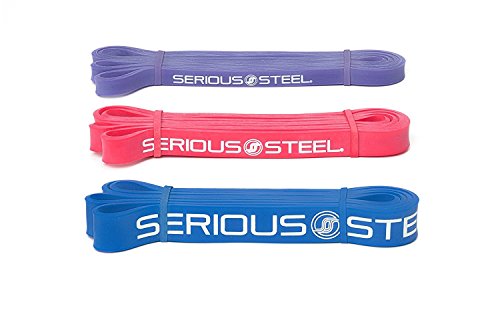
Serious Steel Fitness Assisted Pull-up Band Set
What We Like
- Three bands cover 5-80 lb assistance range
- 100% natural latex with low allergen proteins
- Combine bands to match heavier resistance
- 41-inch length fits under foot or knee
Trade-offs
- Only three bands limit fine progression steps
- Latex sensitivity risk for allergic users
The trade-off is that three bands offer fewer resistance steps than a five-band set, which may matter if you want more precise progression. For most people starting assisted pull-ups or mixing in dips and muscle-ups, this trio covers the useful range without extra complexity. It’s a straightforward kit that matches its description.
Product photos
Gymreapers Resistance Bands Military Set

What We Like
- Five color-coded bands for easy selection
- Durable natural latex rubber construction
- Wide resistance range from 20 to 150 lbs
- Lightweight and portable for travel
Trade-offs
- Bands are only 41 inches long, limiting some exercises
- No included carrying case or storage bag
With five bands ranging from 20-35 lbs up to 60-150 lbs, this set covers a wide spectrum of resistance levels. That means you can start with lighter assistance for pull-ups and gradually work your way up to heavier banded lifts like squats and deadlifts. The natural latex rubber feels durable and the color-coding makes grabbing the right band quick, so you spend less time fumbling and more time moving. It’s a practical choice if you want one set that handles both pull-up progression and strength training without feeling flimsy.
At 3.2 pounds, this band set is heavier than the WODFitters set at 2.1 pounds, so if you’re packing for a trip, the WODFitters set is easier to toss in a bag. The bands are 41 inches long, which is a standard length for many pull-up assistance bands, the Serious Steel Fitness, Ally Peaks, WODFitters, and REP Fitness sets all use the same 41-inch length. For gym or home use where you want a reliable range of resistances for banded lifts, this set gets the job done without fuss.
Ally Peaks Pull Up Assistance Bands
What We Like
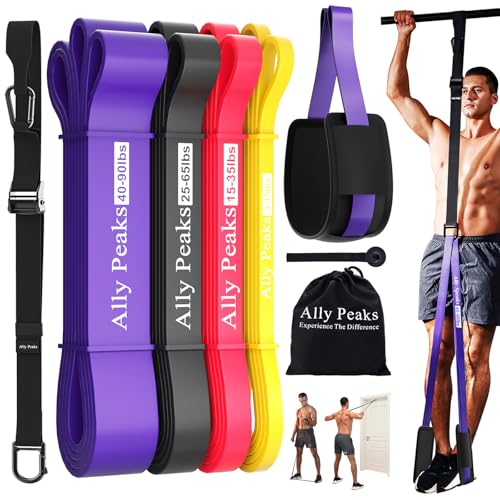
- One-second quick-adjust length button
- Upgraded fabric feet/knee rest for safety
- 4 bands with 11 assistance levels up to 410 lbs
- Military-grade nylon strap rated 700+ lbs
Trade-offs
- Only 4 bands vs. 5 in some competitors
The quick-adjust button on the strap lets you change the length instantly, which is a convenience not found on many pull-up bands. The 4 resistance bands give 11 assistance levels up to 410 lbs, so you can start with a heavy boost and dial it down as you build strength. The fabric foot rest has an expanded entry that stays open naturally, making it easier to step in and out even when you are tired. This design suits anyone who wants to fine-tune assistance on the fly without fumbling with knots or loops.
If you prioritize quick adjustments and a secure foot rest over having one extra band level, this is a practical choice. For those who want maximum band variety and minimal hardware, the SUNPOW set may feel simpler.
WODFitters Pull-Up Assistance Bands

What We Like
- Four bands cover 10-125 lbs resistance
- 41-inch length fits most pull-up bars
- Combine bands for progressive assistance
- Lightweight at 2.1 lbs for travel
Trade-offs
- Only four bands limit fine resistance steps
- No included carry bag or storage case
- Thickest band at 1.75 inches feels bulky
The four-band set weighs 2.1 pounds, so it’s light enough to toss into a gym bag for travel. The bands are 41 inches long, which matches the length of many other pull-up bands on the market. Compared to a five-band set like SUNPOW, you get fewer resistance levels, but the four bands still cover a wide range from 10 to 125 pounds of assistance.
Product photos
REP Fitness Resistance Bands 2.0 Set
What We Like
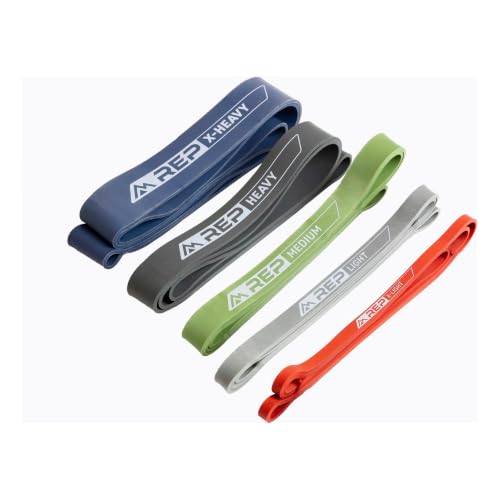
- Five bands from X-Light to X-Heavy
- 41-inch length works with pull-up bars
- Durable layered latex construction
- Earth-tone colorway for easy ID
Trade-offs
- 41-inch bands shorter than some long-band sets
- Latex material not suitable for latex allergies
- No included door anchor or carrying case
A five-band set spanning 5 to 150 pounds of resistance means you can start with the lightest loop for assisted pull-ups and work your way up to the heaviest for banded bench press or squats. The 41-inch length is what REP Fitness chose for looping over a pull-up bar, so you won’t be fighting a band that’s too short to reach. This range of resistance levels makes it a practical choice for home gym owners who want one set that covers rehab, mobility, strength training, and pull-up assistance without buying separate bundles.
The downside is that 41-inch bands don’t offer the extra length some people prefer for anchoring under both feet during pull-ups, which is where a longer set like the SUNPOW 180-inch bands can feel more generous. But if you’re after a set that covers every resistance level from gentle stretching to heavy accommodating resistance, the REP Fitness bands deliver that range. Just be aware that latex is the material here, so if you have a latex sensitivity, you’ll want to look elsewhere.
Jamestry 5-Level Resistance Bands
What We Like
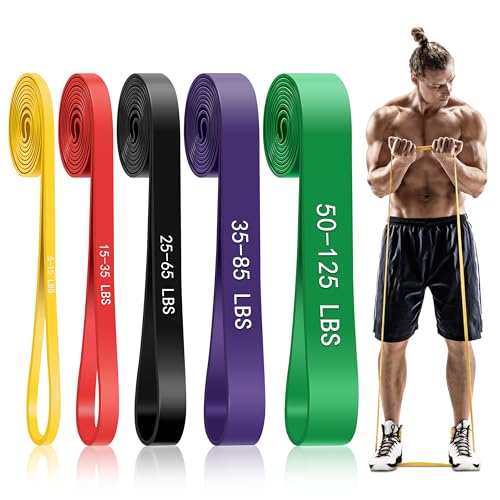
- TPE material resists slipping when sweating
- 5 resistance levels from 5 to 125 lbs
- Compact and portable for gym bag
- Resists deformation from repeated use
Trade-offs
- Narrow 0.2-inch width feels less sturdy than wider bands
- Only 81.9 inches long, limiting some tall-person stretches
At 81.9 inches long, these bands offer enough loop to anchor under a door or around a pull-up bar without feeling cramped. The TPE material is the real standout here: it resists slipping when you sweat, so you’re not constantly adjusting mid-set, and it holds its shape even after repeated stretching. For someone easing into pull-up assistance or full-body resistance work, the five levels from 5 to 125 lbs give you room to progress without buying separate sets. It’s a thoughtful choice for home gyms where noise and grip matter more than raw snap.
The 0.2-inch width is a design choice that keeps the bands lightweight and portable, but it means they are not as wide as some other resistance bands on the market. If you are doing heavy banded squats or explosive drills, you may prefer a wider band for a different feel. Additionally, TPE material is used for its slip resistance and durability, but it has a different stretch characteristic than natural latex, which some users may notice during fast movements. For assisted pull-ups and general strength training, this set works well, but powerlifters or those seeking maximum tension may want to look at other options.
Product photos
LEEKEY Pull Up Assistance Bands 4-Pack
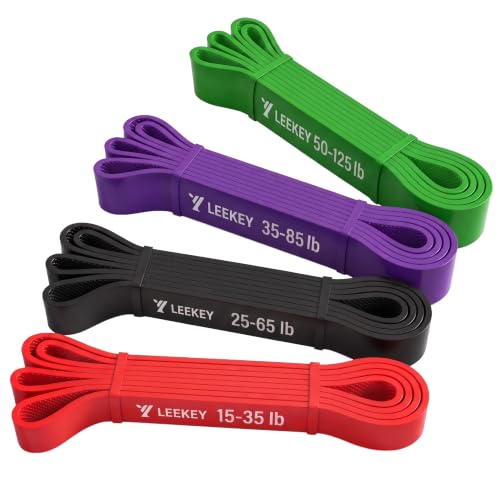
What We Like
- Latex-free synthetic rubber for sensitive users
- Four resistance levels cover 15-125 lb
- Includes carry bag for travel
- Smooth even resistance from first stretch
Trade-offs
- Only four bands vs. five in many sets
- 32.2-inch length limits anchor options for tall users
The LEEKEY set uses layered synthetic rubber instead of natural latex, which means you get smooth, even resistance from the first inch of stretch without worrying about allergic reactions. That latex-free construction is the main reason to pick this set over others if your skin or breathing reacts to natural rubber. With four bands spanning 15 to 125 pounds, you can start with the red band for assisted pull-ups and gradually drop to lighter bands as your strength builds. The included carry bag makes it easy to toss in a gym bag or suitcase, so you can keep progressing whether you are at home, the office, or on the road.
The bands are only 32.2 inches long, noticeably shorter than the 41-inch loops from Serious Steel Fitness, which means taller users or anyone who prefers a wide stance may need to adjust how they anchor the band around a pull-up bar. You get four bands instead of five, so the resistance jump between levels is bigger and fine-tuning is more limited. But if latex sensitivity rules out natural-rubber bands, this latex-free set covers a 15-125 lb range and includes a carry bag and exercise guide, making it a practical choice for home, gym, or travel.
Product photos
Tribe Lifting Long Resistance Bands Set

What We Like
- Layered natural latex holds shape
- 3x thicker than TPE alternatives
- 5 resistance levels for progression
- Compact and portable for travel
Trade-offs
- Long bands need a tall anchor point
- No included storage bag or case
The layered natural latex construction here is three times thicker than cheap TPE bands, which means you get a loop that keeps its snap rep after rep instead of cracking or tearing mid-pull-up. That durability focus makes this set a great fit for anyone who trains regularly and doesn’t want to replace bands every few months. The five resistance levels let you start with heavy assistance and gradually work your way toward unassisted reps, all while the bands stay consistent in feel across workouts.
The five resistance levels let you start with heavy assistance and gradually work your way toward unassisted reps, all while the bands stay consistent in feel across workouts. The Tribe set weighs 2.5 pounds total, which is light enough to toss in a bag for travel or gym sessions. If you want a set that prioritizes longevity over extra length, this is the one to reach for.
Product photos
ALongSong Pull Up Assistance Bands With Foot Pedal
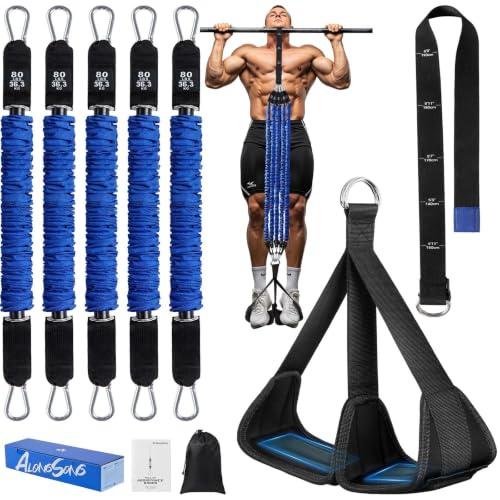
What We Like
- Wide reinforced foot pedal for stable support
- Height-adjustable measured strap for precision fit
- 5 heavy-duty bands each rated 80 lbs
- Portable with travel-friendly carry bag
Trade-offs
- Foot pedal adds setup time compared to band-only designs
- 5 bands at 80 lbs each limits fine resistance tuning
- Requires a standard pull-up bar for attachment
A reinforced foot pedal that stays planted under your feet is the standout feature here. It keeps you stable and confident while you focus on pulling yourself up, rather than wobbling or slipping off a narrow loop. The height-adjustable strap (marked for users from 4’11” to 6’3″) lets you dial in the exact tension length. That way the resistance feels even throughout the movement, not slack at the top and tight at the bottom.
The catch is that the pedal and strap system means a bit more fiddling before you start compared to a simple loop band you just hook over the bar. For anyone who values foot stability and adjustable tension range over raw speed of setup, this design offers a stable foot platform and adjustable strap length.
Product photos
How We Evaluated Resistance Bands For Pull Ups
We built this guide by analyzing manufacturer specifications, studying expert round-ups on pull-up training, and identifying common patterns in owner feedback. Since we don’t test bands in a lab, our evaluation focuses on what the data tells us: resistance ranges, material quality, band dimensions, and real-world durability reports from users.
The three criteria that mattered most were resistance range and progression steps, band length and material, and portability. A wider range of resistance levels lets you start lighter and gradually reduce assistance as you get stronger. Band length affects how the band sits under your foot or knee during an assisted pull-up motion. Material quality determines how long the bands hold their tension without snapping or deforming.
An honest limit of a research-led evaluation is that we cannot verify durability claims firsthand. We rely on what owners consistently report after weeks and months of use. We also note that latex allergies affect some users, which is why we included a dedicated latex-free option in our list.
What To Look For In Resistance Bands For Pull Ups
Choosing the right resistance band for pull-ups comes down to matching the assistance level to your current strength, ensuring the band fits your body and equipment, and picking a material that will last.
Look for a set with at least four resistance levels so you can progress in small steps. Bands should be at least 41 inches long to sit comfortably under your foot or knee. Natural latex offers the best durability, but TPE or synthetic rubber works for users with allergies.
Resistance Levels and Progression
The most important factor is having enough resistance options to start where you are and gradually reduce assistance. A single band might get you through your first pull-up, but without lighter bands you’ll stall. Sets with five or more bands, like the SUNPOW set, let you move from heavy assistance (taking 50-80 pounds off your body weight) down to light assistance (just 5-15 pounds) as your strength improves. If you’re heavier or weaker, look for sets that combine bands to reach higher total resistance.
Band Length and Material
For pull-up assistance, band length matters because you need enough slack to loop the band over the bar and step into it. Most standard bands are 41 inches long, which works for most users. Taller individuals or those with high pull-up bars may need longer bands. Material-wise, natural latex is the gold standard for durability and elasticity. TPE (thermoplastic elastomer) offers better slip resistance when you sweat, while synthetic rubber is the go-to for anyone with a latex allergy.
Portability and Storage
If you plan to take your bands to the gym or train outdoors, portability becomes a real concern. Many sets don’t include a carrying case, which is a common complaint in owner feedback. Bands made from layered latex are heavier and bulkier than TPE bands. The lightest sets weigh around 2 pounds for four bands. A simple drawstring bag or mesh pouch keeps them organized and prevents them from tangling in your gym bag.
Practical Checks Before Buying
- Measure your body weight and estimate how much assistance you need (subtract 10-30% for a starting point).
- Check that the band length fits your pull-up bar height and your leg length.
- Verify the material type if you have latex sensitivities.
- Look for color-coded bands so you can grab the right resistance quickly mid-workout.
A good rule of thumb: start with a band that lets you complete a few controlled reps with good form, then drop to the next level when you can do several more reps.
Resistance Bands For Pull Ups Compared
The table below compares ten resistance band sets across the specs that matter most for pull-up training, so you can see at a glance which set matches your needs.
| Product | Number of Bands | Resistance Range | Band Length | Material |
|---|---|---|---|---|
| SUNPOW Pull Up Assistance Bands Set | 5 bands | 5-145 lbs | 180 inches | Natural Latex |
| Serious Steel Fitness Assisted Pull-up Band Set | 3 bands | 5-80 lb | 41.0 inches | 100% Natural Latex |
| Gymreapers Resistance Bands Military Set | 5 bands | 20-35 lbs to 60-150 lbs | 41.0 inches | Natural latex rubber |
| Ally Peaks Pull Up Assistance Bands | 4 bands | 11 levels, Up to 410 lbs Assistance | 41.0 inches | Military-grade nylon |
| WODFitters Pull-Up Assistance Bands | 4 bands | 10-125 lbs total | 41 inches | N/A |
| REP Fitness Resistance Bands 2.0 Set | 5 bands | 5-150 lb | 41 inches | Layered latex rubber |
| Jamestry 5-Level Resistance Bands | 5 levels | 5-125 LBS | 81.9 inches | TPE |
| LEEKEY Pull Up Assistance Bands 4-Pack | 4 bands | 15-125 lb total | 32.2 inches | Synthetic rubber, latex-free |
| Tribe Lifting Long Resistance Bands Set | 5 bands | N/A | N/A | 100% natural latex |
| ALongSong Pull Up Assistance Bands With Foot Pedal | 5 bands | 5x80Lbs each | N/A | Latex |
Frequently Asked Questions
What resistance band should I use for pull-ups?
Start with a band that takes off enough weight so you can complete 3-5 controlled reps. A good starting point is a band rated for 40-60 pounds of assistance for most men, or 20-40 pounds for most women. You want the band to support you without doing all the work, your muscles should still feel challenged.
Can I combine multiple bands for more resistance?
Yes, most band sets allow you to stack bands for heavier assistance. Loop two or three bands over the bar together and step into all of them. This is useful if you’re heavier or very weak in the pull-up motion. Some sets like the Serious Steel Fitness set are specifically designed for combining bands.
How long do resistance bands for pull-ups last?
With proper care, quality natural latex bands typically last several months of regular use. Store them away from direct sunlight and extreme temperatures, and avoid stretching them past their rated limit. Check for small tears or fraying before each use, and replace bands that show signs of wear. Quality resistance bands made from layered latex tend to outlast single-layer or TPE bands.
Are resistance bands good for learning pull-ups?
Resistance bands are one of the most effective tools for beginner pull-ups. They let you practice the full movement pattern while building strength, unlike lat pulldown machines that train a different motion path. The key is to gradually reduce the band resistance as you get stronger, not to rely on the same band forever.
The Bottom Line
The SUNPOW Pull Up Assistance Bands Set is our Best Overall pick for anyone serious about building pull-up strength. With five resistance levels spanning from 5 to 145 pounds, it offers the widest progression range of any set we evaluated. It works for everyone from absolute beginners to advanced lifters who want to add assisted reps to their training.
If you’re on a tighter budget or want a simpler setup, the Serious Steel Fitness Assisted Pull-up Band Set gives you three high-quality bands that combine for heavy resistance. For those with latex allergies, the LEEKEY Pull Up Assistance Bands 4-Pack offers a synthetic rubber alternative that still covers 15 to 125 pounds. And if you value convenience and safety, the Ally Peaks Pull Up Assistance Bands with its quick-adjust button and fabric foot rest is worth paying more for.
The single most important factor in choosing resistance bands for pull-ups is getting enough resistance levels to progress from heavy assistance down to light support. Without that range, you’ll hit a plateau. Start with a band that lets you practice with good form, then gradually work your way down until you’re ready for your first unassisted pull-up.
