
10 Best Baseball Rebound Nets in 2026
This post contains affiliate links. As an Amazon Associate, we earn from qualifying purchases.
For solo baseball practice, a rebound net is the difference between chasing balls and actually getting reps in. The PowerNet 7×7 Baseball Practice Net takes the best overall spot because it combines a huge 49-square-foot hitting surface with a setup time under two minutes, all in a portable package. For players who want target zones for fielding, the GoSports 6×4 Baseball Rebounder is a smart choice, while the Franklin Sports MLB Pitchback Rebounder offers heavy-duty stability for dedicated garage sessions.
The real challenge with these nets isn’t finding one, it’s finding one that matches your space, your drills, and your tolerance for setup hassle. A net that takes ten minutes to assemble will collect dust. A rebounder that blows over in a breeze will frustrate you. We looked at frame construction, net durability, portability, and the specific drills each model supports to cut through the noise.
This guide is based on manufacturer specifications, expert round-ups, and patterns in owner feedback across dozens of models. We focused on what actually matters for a solo player: how fast it goes up, how well it returns the ball, and whether it stays put when you hit it hard. You will find detailed breakdowns of each pick, a comparison table, and buying tips to help you choose confidently.
Top 10 Baseball Rebound Nets in the Market
Certain content that appears on this site comes from Amazon. This content is provided "as is" and is subject to change or removal at any time.
The Best Baseball Rebound Nets, Reviewed
PowerNet 7×7 Baseball Practice Net

What We Like
- 49 sq. ft. hitting surface
- Sets up in under 2 minutes
- Includes carry bag with shoulder strap
- Steel frame and fiberglass bow poles
Trade-offs
- No strike zone target included for pitch location
- 84-inch frame requires ample setup space
A 7×7 foot net with 49 square feet of knotless polyester means you can take full swings without worrying about the ball sneaking through gaps. The steel-and-fiberglass bow frame sets up in under two minutes with no tools, so you can go from trunk to training in the time it takes to find your glove. This is the net to grab if you want a big, portable hitting surface that holds multiple buckets of balls for continuous practice, for batting, pitching, or fielding practice indoors or out.
The trade-off for that light 12-pound portability is stability: on breezy days the included ground stakes help, but a heavier frame like the GoSports 7×7 at 14 pounds sits a bit more planted without extra anchoring. Still, the PowerNet’s quick breakdown into a compact carry bag makes it the easier companion for players who need to haul their practice net to the field, park, or backyard and get started fast.
GoSports 7×7 Baseball Practice Net

What We Like
- Pops up in under 90 seconds
- Bow frame folds down fast for storage
- Includes attachable strike zone for pitching
- Ground stakes prevent sliding on grass
Trade-offs
- 14 lbs is heavier than some similar 7×7 nets
- Requires grass or dirt for stake anchoring, not hard surfaces
Under 90 seconds from bag to full 7×7 net is the kind of promise that actually holds up when you’re sneaking in practice before dinner or hauling gear to the field. The bow-style frame pops into shape without wrestling with poles or puzzling over instructions, and the included carry bag means it disappears into the trunk just as fast. That quick setup, paired with a detachable strike zone for pitching accuracy and metal stakes to keep the net planted on grass, makes this a natural fit for anyone who values time over tinkering.
The trade-off for that speed is weight, at 14 pounds, it’s a couple pounds heavier than the YeahChi 7×7 net, so if you’re carrying it far from the car, you’ll notice. The bow frame also flexes a bit more than a rigid square frame when you really rip a line drive, though the fiberglass poles and powder-coated steel are built to take repeated hard hits. For the player or parent who wants a net that sets up fast, stays put, and packs away without a fight, this is the one to grab.
GoSports 6×4 Baseball Rebounder

What We Like
- Three target zones for varied fielding drills
- Heavy-duty powder-coated steel frame
- Tear-resistant all-weather netting
- 5-minute assembly with included stakes
Trade-offs
- No angle adjustment for rebound path
- Weighs 13.2 pounds, less stable in wind than heavier models
The three target zones on this 6×4 rebounder let you practice pop flies, line drives, and grounders without adjusting the net angle. That means you can set up a quick fielding session in the backyard and get returns to work on footwork and glove positioning. The powder-coated steel frame and tear-resistant all-weather netting are built for outdoor use, and the 5-minute assembly gets you started fast. For pitchers, the center strike zone provides a target to dial in mechanics, making it a versatile tool for both pitching and fielding practice.
The trade-off is that the rebound angle is fixed, so you cannot adjust the trajectory like you can with the Franklin Sports All-Angle Pitchback Rebounder. That means you may need to move your throwing position to vary drill difficulty. But if you want a rebounder with three target zones that does not require adjusting the net angle, this GoSports model delivers consistent returns.
Product photos
Franklin Sports MLB Pitchback Rebounder

What We Like
- 1.25" steel tubing frame
- 30-ply heavy-duty PE netting
- Integrated self-stick strike zone ribbon
- Folds flat for storage
Trade-offs
- At 22.7 lb, heavier than most rebounders
A 1.25-inch steel frame and 30-ply polyethylene netting make this rebounder noticeably sturdier than the typical pitch-back you see in backyards. That extra heft means the frame stays planted when a line drive hits the strike zone ribbon, and the net won’t sag or tear after a season of hard throws. It is built for regular solo practice where you want the ball to come back at the same angle every time, not wobble or tip over. The integrated self-stick ribbon lets you mark your target at any height, so you can work on low fielding drills or chest-high pitching accuracy without guessing.
At 22.7 pounds, this rebounder is built like a tank, heavy enough to stay planted during hard throws, but that also means you’re not tossing it in a bag between drills. The fold-flat design helps with storage, but hauling a steel-framed panel this weighty is a trade-off for portability. If you’ve got a permanent spot in the garage or backyard and want a net that won’t budge under repeated impact, this is the one to grab.
Product photos
Franklin Sports All-Angle Pitchback Rebounder

What We Like
- Infinite angle adjustability for varied drills
- Heavy-duty steel frame and 30 ply netting
- Easy click-in assembly and fold-flat storage
- Includes attachable strike zone target
Trade-offs
- At 19.2 pounds, less portable than lighter rebounders
- Smaller footprint than 7×7 practice nets
The Franklin Sports All-Angle Pitchback Rebounder offers infinite angle settings, so you can dial in grounders, line drives, or pop flies with a simple adjustment. That kind of versatility makes it a great training tool for solo practice, whether a pitcher works on accuracy or a fielder sharpens reaction time. The steel frame and 30 ply netting add durability, so it can handle repeated hard throws without wearing out quickly.
At 19.2 pounds, it’s heavier than some portable rebounders, so you won’t want to move it around constantly. It also has a smaller hitting surface compared to a 7×7 net like the PowerNet 7×7, which is better suited for batting practice. If you want a focused rebounder for pitching and fielding drills with adjustable returns, this is a capable option.
Product photos
YeahChi 7×7 Baseball Net

What We Like
- 7-layer rip-resistant mesh netting
- Includes bright yellow strike zone target
- Tool-free quick assembly and disassembly
- 2-year warranty included
Trade-offs
- Narrower base than some 7×7 nets.
- Heavier than the SKLZ Fielding Trainer Rebounder.
A 7-layer rip-resistant mesh netting means this net can take repeated fastballs and softballs without tearing, which is exactly what you want when you’re working on your pitching or batting drills day after day. The YeahChi 7×7 Baseball Net offers a full 7×7 catching area, a bright yellow strike zone target to sharpen your accuracy, and a bow frame that sets up in minutes without any tools. It’s ideal for backyard practice or taking to the field when you want a reliable training partner that won’t break the bank.
A 7×7-foot net offers a generous target area for pitching, batting, and fielding drills, and the bow frame design helps it hold its shape during repeated impacts. The 7-layer mesh netting resists tearing from baseball and softball strikes, so it stands up to frequent use. Owners mention that the frame is stable on level ground, but you might need to anchor it with a sandbag or stakes if you’re practicing on a windy day.
Heonay 7×7 Baseball Net
What We Like
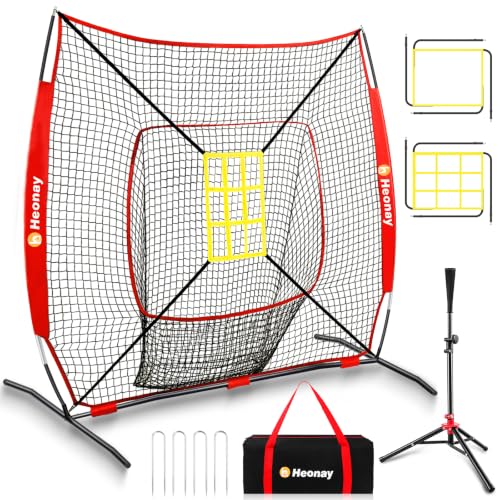
- 36% larger catching area than 6×6 nets
- 5-minute tool-free setup by one person
- Includes batting tee and strike zone target
- Non-slip feet and stakes for stability
Trade-offs
- At 13.5 lbs, not the lightest for frequent carrying
A 7×7 foot catching area, 49 square feet in total, means this net swallows way more wild pitches and sliced hits than the typical 6×6 model. You spend less time chasing balls and more time actually training. That extra reach is the main reason it works so well for backyard batting practice or pitching drills, especially with younger players whose aim is still finding its way. The kit comes ready to roll: an adjustable batting tee, a strike zone target, four ground stakes, and a storage bag are all in the box. One person can have the whole thing set up in about five minutes without any tools. For anyone who wants a generous, forgiving target that gets them swinging fast, this is a practical choice.
The trade-off here is portability. At 13.5 pounds, the Heonay is a few pounds heavier than the YeahChi 7×7 net (which comes in at 11.8 lbs), so if you plan to haul it from the garage to the park every weekend, the extra weight is something to feel. The fiberglass poles keep the frame light enough to carry, but they can flex more than an all-steel frame when you really crank a line drive into the netting. Still, for the player who values a huge catching area and a complete, out-of-the-box setup over absolute featherweight portability, this net delivers exactly what the name suggests.
Product photos
SKLZ Fielding Trainer Rebounder

What We Like
- Three ball-return settings for varied drills
- Lightweight 7.0 lb steel frame
- UV and weather-resistant bungee net
- Quick setup and fold-down for storage
Trade-offs
- 4 x 4.5-ft net is smaller than full-size practice nets
- Requires stakes or sandbags for stability on grass
Three adjustable return settings, ground balls, line drives, and fly balls, mean this 4 x 4.5-foot rebounder can challenge every part of your fielding game during solo sessions. Weighing just 7.0 pounds with a steel frame and UV-resistant bungee net, it sets up quickly in the backyard or at the park and folds down just as fast when you are done. That lightweight portability and the yellow target area make it ideal for a player who wants to sharpen reaction time and footwork without needing a practice partner or a bulky setup.
At 4 x 4.5 feet, the hitting zone is noticeably smaller than a standard 7×7 practice net like the PowerNet 7×7. It works best for close-range fielding reps rather than full batting practice. If your priority is solo infield or outfield drills where you want realistic ball returns and quick adjustments between grounders and flies, this SKLZ rebounder delivers exactly that in a package you can carry one-handed.
Suteck 4×4.5 Baseball Rebounder
What We Like
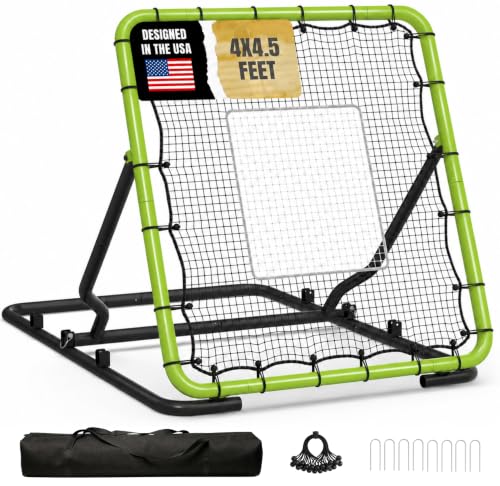
- Sets up in 5 minutes, no tools
- Three rebound angles for varied drills
- Comes with carry bag and stakes
- Bungee cords keep net taut
Trade-offs
- Stakes only anchor on firm, level grass
- Smaller 4×4.5 ft size limits drill variety
- No strike zone target included
The 4×4.5-foot frame folds down small enough to toss in a trunk, and the included carry bag means you can actually grab it on your way out the door. That portability is the whole point here: you get three rebound angles, grounders, line drives, and pop flies, so a single net covers everything from beginner fielding drills to sharper reaction work as you improve. It’s the kind of tool that makes solo practice feel less like a chore and more like a quick backyard session between other plans.
The included ground stakes keep the frame anchored on firm, level grass, but loose dirt or soft turf may let it shift during drills. At 22.7 pounds, the Franklin Sports MLB Pitchback Rebounder is heavier; the Suteck is lighter and easier to move around. If your priority is a net that travels with you rather than lives in one spot, this design fits that need.
Product photos
WICTTISPOSI 7×7 Baseball Net
What We Like
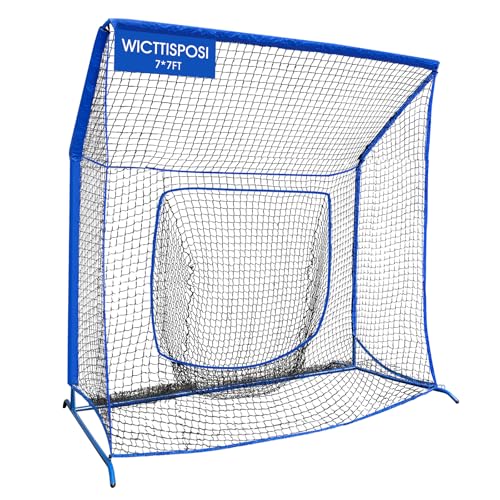
- Central target pocket for hitting and pitching
- Withstands 30,000+ impacts without tearing
- Pre-assembled elastic cords for quick setup
Trade-offs
- At 18.5 lb, heavier than many 7×7 nets
The cube-shaped net uses left, top, and right panels to keep stray balls from missed swings or wild throws inside, so you spend less time chasing them. A central target pocket gives you a clear aim point for hitting or pitching, and the 7-ply nylon mesh is rated for ball speeds up to 130 mph and over 30,000 impacts before tearing. That durability means you can practice alone without constantly retrieving balls, especially in a backyard where losing one over the fence is a real risk. The 25mm thickened steel frame and elevated feet help it stay put on uneven ground, so it works on grass or gravel without tipping.
This net is built for containment, not rebounding. If your main goal is to stop balls from scattering everywhere and you don’t need a pitch-back feature for fielding practice, this design works great.
Product photos
How We Evaluated Baseball Rebound Nets
To separate the useful nets from the flimsy ones, we examined frame materials, netting ply counts, assembly mechanisms, and portability specs. We also studied patterns in owner feedback to understand which models hold up over a season and which ones frustrate users with poor stability or slow setup. This approach means we rely on what is documented.
Four criteria mattered most for this category. Setup speed is critical, a net that takes more than five minutes to assemble is one you will use less often. Frame and net durability determines whether the net survives hard throws and weather exposure. Portability (weight, carry bag, fold-down size) matters for players who move between home, field, and practice space. Drill versatility separates a basic net from a true training tool. Strike zones, angle adjustments, and multiple return settings all play a role.
The honest limit of a research-led evaluation is that we cannot speak to long-term wear patterns or real-world wind resistance in every backyard. What we can do is point you toward the models that the specs and owner consensus suggest will serve you best, and flag the trade-offs that matter for your specific setup. For a deeper look at how these models compare, our rebounder net reviews cover the full lineup.
What To Look For In Baseball Rebound Nets
A great baseball rebound net is one you can set up alone, hit hard, and trust not to tip over. Focus on the frame, the netting, and how fast you can go from storage to first pitch.
Focus on a steel frame with at least 1-inch tubing for stability, netting of 30-ply or higher for tear resistance, and a setup time under five minutes. Weight matters: lighter nets are easier to carry but need staking; heavier models stay put on their own.
Frame and Build Quality
The frame is the backbone of any net. Look for powder-coated steel tubing, 1.25-inch on heavy-duty models like the Franklin Sports MLB Pitchback Rebounder, or 1-inch on lighter portable nets. A bow-frame design with fiberglass poles (like the PowerNet 7×7) offers a good balance of strength and collapsibility. Avoid nets with thin aluminum or plastic joints; they are the first to fail under repeated impact.
Netting and Tear Resistance
Netting is measured in ply count, and higher is better for withstanding hard throws. A 30-ply polyethylene net (found on the Franklin Sports models) will outlast a standard net by a wide margin. Some models claim to withstand over 30,000 impacts. Look for UV-resistant and all-weather treatment if the net will live outdoors. Tear-resistant netting with reinforced stitching around the edges is a sign of a net built to last.
Portability and Setup
- Check assembly time: under 5 minutes is ideal; under 2 minutes is excellent.
- Look for a carry bag with a shoulder strap for easy transport.
- Confirm the folded size fits in your car trunk or garage storage space.
- Consider weight: under a certain weight is very portable; over a certain weight is stable but harder to move.
- Check if the net requires staking or if it stands on its own on hard surfaces.
A good rule: if you dread setting it up, you will not use it. Prioritize models that advertise tool-free assembly and fold-flat storage.
Baseball Rebound Nets Compared
The table below compares the models side-by-side on the specs that matter most for solo training: size, weight, setup time, and key features.
| Product | Net Size | Frame Material | Weight |
|---|---|---|---|
| PowerNet 7×7 Baseball Practice Net | 7 x 7 ft | Steel and fiberglass | 12.0 lbs |
| GoSports 7×7 Baseball Practice Net | 7 x 7 ft | Powder-coated steel | 14.0 lbs |
| GoSports 6×4 Baseball Rebounder | 72 x 48 inches | Powder-coated steel | 13.2 pounds |
| Franklin Sports MLB Pitchback Rebounder | 68" x 48" | 1.25" steel tubing | 22.7 pounds |
| Franklin Sports All-Angle Pitchback Rebounder | N/A | 1.25" steel tubing | 19.2 pounds |
| YeahChi 7×7 Baseball Net | 7 x 7 feet | Sturdy bow frame with reinforced base | 11.8 pounds |
| Heonay 7×7 Baseball Net | 7×7 ft | Steel with fiberglass poles | 13.5 lbs |
| SKLZ Fielding Trainer Rebounder | 4 x 4.5-Foot | Steel | 7.0 pounds |
| Suteck 4×4.5 Baseball Rebounder | 4×4.5ft | N/A | N/A |
| WICTTISPOSI 7×7 Baseball Net | 84 x 43.2 x 84 in | 25mm thickened steel | 18.5 lb |
Frequently Asked Questions
What size baseball rebound net should I get?
A 7×7-foot net is the standard for batting and pitching practice because it offers a large catching area that forgives off-center throws. If you are focused on fielding drills, a smaller rebounder in the 4×4.5 to 6×4 range is more portable and easier to position for grounders and line drives. Choose based on your primary drill type.
How do I keep a baseball rebound net from tipping over?
Most nets include ground stakes for grass or dirt surfaces. For hard surfaces like driveways or patios, look for models with non-slip feet or wide-base frames. Heavier nets are naturally more stable. In windy conditions, sandbags or additional anchoring is recommended for any portable net.
What is the difference between a practice net and a rebounder?
A practice net simply catches the ball and stops it, making you retrieve it. A rebounder returns the ball to you at a controlled angle, allowing for continuous solo drills. Rebounders are better for fielding practice; practice nets are better for batting and pitching where you want to track the ball’s path without it bouncing back.
Can I use a baseball rebound net for softball?
Yes, most full-size 7×7 baseball nets work well for softball practice. The larger catching area is actually an advantage for softball’s slightly larger ball. For rebounder-specific drills, check that the net tension and frame can handle the weight of a softball, though most steel-framed models are fine.
How do I set up a baseball rebound net by myself?
Look for models with bow-frame or pop-up designs that do not require threading poles through sleeves. The PowerNet 7×7 and GoSports 7×7 both set up in under two minutes with one person. Avoid nets that require multiple people to tension the netting or align complex pole systems if you will primarily set up alone.
The Bottom Line
The PowerNet 7×7 Baseball Practice Net is the best overall choice for most players because it combines a generous hitting surface, fast setup, and solid portability in one package. It works well for backyard batting practice, pitching sessions, and fielding drills when paired with a rebounder attachment. If you need a dedicated fielding trainer, the SKLZ Fielding Trainer Rebounder is a lightweight, adjustable option that excels for solo grounder and fly ball work.
Budget-conscious players should look at the YeahChi 7×7 Baseball Net, which includes a strike zone target and a 2-year warranty at a lower price point. For those who want heavy-duty backyard stability, the Franklin Sports MLB Pitchback Rebounder‘s 22.7-pound frame and 30-ply netting will outlast lighter models. Our best baseball rebounders guide covers more specialized options if you need a pure rebounder rather than a practice net.
The single most important factor in choosing a baseball rebound net is honestly assessing how often you will set it up. A net that takes two minutes to assemble gets used daily. One that takes ten minutes collects cobwebs. Pick the model whose setup time and portability match your actual routine, not the one with the most features.
