
10 Best Treadmill Cross Country Runners in 2026
This post contains affiliate links. As an Amazon Associate, we earn from qualifying purchases.
For cross country runners, the best treadmill is the 3G Cardio Elite Runner X Treadmill, thanks to its oversized 22″ x 62″ running platform and Ortho Flex Shock Suspension System that mimics forgiving trail surfaces. We also highlight the Horizon Fitness 7.0AT for its targeted cushioning and the NordicTrack Commercial 2450 for its realistic incline/decline training.
The problem with most home treadmills is that they prioritize gym-style walking or jogging, not the specific demands of a cross country runner. You need a machine that handles longer strides, provides joint-friendly shock absorption for high mileage, and offers terrain simulation for hill and trail prep.
This guide is research-based, drawing on manufacturer specifications, expert round-ups, and patterns in owner feedback to find the models that truly serve a cross country runner’s workload. We break down the ten best options so you can pick the one that fits your training style and space.
Top 10 Treadmills For Cross Country Runners in the Market
Certain content that appears on this site comes from Amazon. This content is provided "as is" and is subject to change or removal at any time.
The Best Treadmills For Cross Country Runners, Reviewed
3G Cardio Elite Runner X Treadmill

What We Like
- Oversized 22" x 62" running platform
- Ortho Flex Shock Suspension System
- 4.0 HP commercial-grade motor
- Low 7.5" step-up deck height
Trade-offs
- At 366 lbs, very heavy to move
- Non-folding design takes permanent floor space
The real trade-off is size and permanence. But if you have the room and your priority is a rock-solid, low-maintenance platform that can handle heavy daily use and a 400-pound user capacity, the 3G Cardio Elite Runner X delivers exactly that. It does all this without any subscription fees or gimmicks.
Horizon Fitness 7.0AT Treadmill

What We Like
- 3-Zone Variable Response Cushioning for joint comfort
- QuickDial speed and incline controls
- 20" x 60" extended running deck
Trade-offs
- At 257 lbs, moving it is a two-person job
- No built-in screen for streaming classes
The 20-inch-wide by 60-inch-long running deck gives you room to find your stride without feeling cramped, and the QuickDial controls let you bump speed or incline mid-run without fumbling with buttons. The 3-Zone Variable Response Cushioning is listed as a feature, and the extended deck supports longer runs. This is a treadmill built for runners who want a cushioned surface and responsive controls, especially if you’re training for longer distances.
The trade-off is that at 257 pounds, you’re not casually rearranging your workout space, and there’s no integrated touchscreen for guided runs, you’ll need to bring your own tablet or phone for entertainment. Compared to the NordicTrack Commercial 2450, which is a different model with its own feature set, the Horizon focuses on the mechanical experience of running. If you want a cushioned deck and don’t mind supplying your own content, this is a smart fit.
NordicTrack Commercial 2450 Treadmill

What We Like
- -3% decline to 12% incline range
- 24" tilting and pivoting touchscreen
- RunFlex cushioning for joint support
- Folding frame with smooth assisted lowering
Trade-offs
- 268.2 lb makes it hard to move alone
- iFIT Pro Membership required for auto-adjust features
- Bluetooth HR monitor sold separately for ActivePulse
A -3% decline to 12% incline range means you can simulate real terrain, downhill recovery, rolling hills, steep climbs, right in your living room. That’s the biggest draw here for anyone training for events where elevation changes are part of every run. The 24″ touchscreen tilts and pivots so you can follow off-treadmill classes like yoga or strength without straining your neck. RunFlex cushioning provides advanced shock absorption and joint support, reducing impact for a more comfortable run.
At 268.2 pounds, this is a machine you set up and leave, not one you shuffle around the garage weekly. The folding frame helps reclaim floor space, but you’ll still want a friend or a furniture dolly for initial placement. That weight supports a -3% decline to 12% incline range, which brings realistic downhill and uphill terrain training into your home. If you want both declines and inclines without leaving home, this treadmill’s range is the reason to choose it.
Product photos
SOLE F63 Folding Treadmill

What We Like
- Quiet brushless motor for low noise
- Generous 20×60 cushioned deck
- Folds easily with hydraulic assist
- Bluetooth connectivity and USB-C charging
Trade-offs
- Ships via freight with curbside delivery only
- Heavier build at 75 inches long requires space
A 20 by 60 inch cushioned deck with 18mm of padding means your joints get real relief during long runs. The quiet brushless motor keeps the noise low enough that you can watch a show without cranking the volume. That combination makes it a natural fit for anyone who wants to log steady miles at home without disturbing housemates or neighbors. The 15 incline levels give you plenty of grade work for building endurance, and the Bluetooth connectivity lets you follow structured workouts through the SOLE+ app if you like guided sessions.
The trade-off here is size and delivery hassle. At 75 inches long, this treadmill needs a dedicated spot even when folded, and the curbside freight delivery means you will need to wrangle it inside yourself or pay extra for assembly. Compared to the Horizon 7.0AT, which is 76 inches long and ships with a different delivery model, the SOLE F63 offers a brushless motor and a cushioned deck. If you have the space and do not mind a bit of setup work, the quiet operation and joint-friendly surface make it a strong choice for consistent home training.
Peloton Treadmill

What We Like
- Speed and incline knobs for hands-on control
- 24-inch swivel touchscreen for multiple workout types
Trade-offs
- Requires 78.7 inches of clearance behind the tread
- Weighs 275 pounds, needs lifting aids to move
For a cross country runner who wants to mix road miles with indoor cross-training, the ability to switch between running intervals and bodyweight drills on one screen keeps momentum going without the usual gym shuffle.
This is a heavy, space-demanding piece of gear. At 275 pounds, you will want help setting it up and a dedicated spot with at least 78.7 inches of clearance behind it, tight for a cramped home gym. Compared to the Horizon 7.0AT, which is lighter at 257 pounds, the Peloton asks more of your floor plan. And the All-Access Membership is required to unlock those live and on-demand classes, so factor that into your monthly budget. If your training relies on guided variety and you have the room, this treadmill offers interactive coaching with real running.
Product photos
3G Cardio Pro Runner X Treadmill

What We Like
- Foldable design saves floor space
- Heavy-duty 350 lb user capacity
- Low 6.5" step-up height
- Ortho Flex suspension reduces impact
Trade-offs
- At 216 lbs, moving it requires effort
- 3.0 HP motor limits extreme sprint training
- No built-in entertainment screen
A 350 lb user capacity and a 20.5″ x 58″ running belt tell you right away this is a serious machine built for bigger frames and longer strides. The foldable design saves floor space, and the low 6.5″ step-up height makes getting on and off feel natural. The Ortho Flex suspension softens each foot strike so your joints don’t take the full punch. This treadmill suits someone who wants a sturdy, spacious deck but needs to store it after use.
The trade-off for that foldable frame is weight: at 216 pounds, you’re not casually moving it between rooms. The 3.0 HP motor powers speeds from 0 to 12 mph, which works for steady runs and interval workouts. No built-in screen means you’ll rely on your own tablet or phone for entertainment, which many runners prefer anyway.
Life Fitness Integrity Series Treadmill CLST

What We Like
- 400 lb max user weight capacity
- 3.5" precision crowned steel rollers
- Integrated reading rack
Trade-offs
- At 83 inches long, needs ample floor space
- No folding mechanism for storage
- Heavy commercial build limits portability
A 400-pound maximum user weight tells you this treadmill was built for the long haul. That capacity, paired with 3.5-inch precision crowned steel rollers front and back, means the Integrity Series CLST handles steady daily miles without wobble or premature wear. The integrated reading rack is a small touch, but it shows Life Fitness thought about real-world use between intervals.
This treadmill demands a dedicated spot in your home or facility, measuring 83 inches long and without a folding deck. Compared to the Horizon Fitness 7.0AT, which folds and weighs 257 pounds, the Life Fitness CLST is a commitment to a fixed setup. If you need to stow your treadmill after each run, the Horizon is the more practical choice. But if you want a commercial-grade platform that doesn’t compromise on stability or program depth, the CLST delivers exactly that.
QYDS US 3.5 HP Treadmill
What We Like
- 400+ lb weight capacity
- 20% auto incline for hill training
- Adjustable height handles (37-43 in)
- Pause/resume workout feature
Trade-offs
- Max speed 8.7 MPH limits fast interval work
- Running belt 41 in long, short for tall runners
- Console lacks advanced workout programs
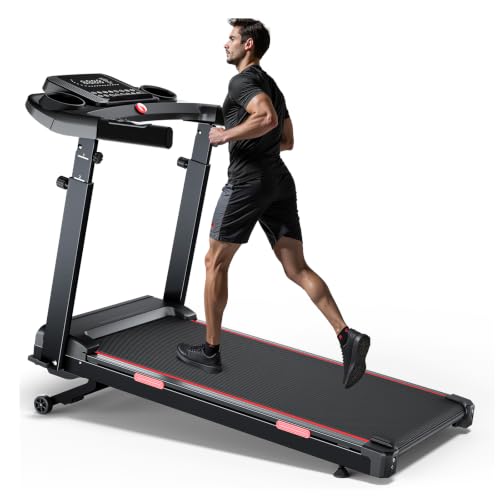
The trade-off is speed and stride length. At 8.7 MPH top speed, faster runners will max out before they break a real sweat. And the 41-inch running belt is shorter than what you get on many dedicated distance machines, so taller runners with a long stride may feel cramped during longer efforts. If your training stays in the moderate-pace, high-incline zone, that is fine. If you need to open up your legs at higher speeds, this is not the deck for you.
Product photos
Renestar Treadmill with Auto Incline

What We Like
- 25-level auto incline up to 25%
- Extra-wide 17.7" belt for secure strides
- 3.5 HP brushless motor runs below 45 dB
- 6 shock absorbers reduce joint impact
Trade-offs
- Short 47.3" belt limits long-stride runners
- 112 lb weight makes relocation awkward
- 28" height offers no deck tilt for taller users
A 25% auto incline with 25 separate levels lets you simulate steep mountain climbs right in your living room. The 3.5 HP brushless motor stays below 45 dB, so early morning sessions won’t disturb others, and the six shock absorbers cushion each footfall to protect your knees during incline work. For a runner who wants to build leg strength and endurance without pounding pavement, this setup delivers focused, joint-friendly climbing.
The running belt is 47.3 inches long, which is shorter than many full-size decks, so if you have a long stride or like to open up your pace on flat intervals, you’ll feel cramped. The 112-pound frame also makes it heavier to move than some folding models, though the 15-minute assembly helps offset that.
Product photos
WELLFIT Heavy Duty Treadmill
What We Like
- 400 lb weight capacity
- 4.0 HP brushless motor
- 15-level auto incline
- Folds with hydraulic system
Trade-offs
- Short 43-inch running belt limits stride
- Top speed 8.8 MPH not for fast intervals
- Heavy 92.6 lbs to move when unfolded
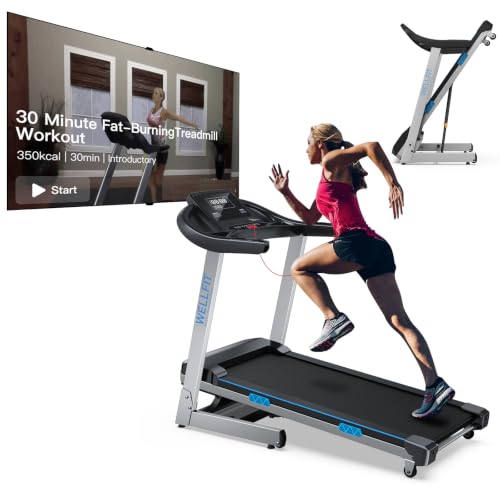
A 400-pound weight capacity and reinforced alloy steel frame mean this treadmill is built to handle heavier runners without wobble or flex. The 4.0 HP brushless motor keeps pace steady from walking up to 8.8 MPH, while the 15-level auto incline adds climbing challenge for cross-country training. It suits runners who need a stable, durable platform that doesn’t compromise on safety or incline variety.
The 43-inch running belt is short for longer strides at speed. Compared to many full-size treadmills with longer decks, the WELLFIT forces a shorter gait, making it better for steady climbs than sprint intervals. At 92.6 pounds and folded, it’s manageable with the hydraulic drop, but you won’t want to move it daily. Best for heavier runners who prioritize stability and incline over stride length.
Product photos
How We Evaluated Treadmills For Cross Country Runners
We started by analyzing deck dimensions, motor power, and cushioning systems from manufacturer data. Cross country runners need a longer belt for natural stride mechanics and a motor that can sustain pace without overheating during hour-long runs. We then cross-referenced these specs with expert opinions from coaching forums and fitness publications that focus on endurance athletes.
Our core criteria were running surface size, shock absorption quality, incline/decline range for terrain simulation, and build durability. A 20-inch width is the minimum for comfortable strides, while a 60-inch length accommodates taller runners. Cushioning systems like variable-zone response or Ortho Flex suspension reduce the repetitive impact that builds up over high-mileage weeks.
Because this is a research-led evaluation and not a lab test, we relied on verified owner feedback patterns to confirm real-world performance. Consistent praise for a quiet motor or a stable deck at high speed told us more than a spec sheet alone could. For a deeper look at the options, check our guide on treadmills for serious runners.
What To Look For In Treadmills For Cross Country Runners
The right treadmill for cross country training balances a long, wide deck with a cushioning system that spares your joints and a motor that keeps up with sustained effort.
Look for a minimum 20″ x 60″ running surface, a motor of at least 3.0 continuous horsepower, and a cushioning system designed for high-mileage impact absorption.
Running Surface Size
The most important spec is the deck. Cross country runners take longer strides than the average jogger, especially on downhills and during interval surges. A belt that is at least 20 inches wide and 60 inches long gives you room to settle into a natural gait without worrying about stepping off the back.
The 3G Cardio Elite Runner X offers a generous 22″ x 62″ platform, while the Horizon 7.0AT provides a solid 20″ x 60″ space. If you are over six feet tall, prioritize models at the longer end of that range.
Cushioning and Impact Absorption
High mileage on a treadmill means thousands of foot strikes on a rigid surface. Look for a purposeful cushioning system, like the 3-Zone Variable Response on the Horizon or the Ortho Flex Shock Suspension on the 3G Cardio. It absorbs shock at the heel and offers a firmer push-off at the toe. This matters more for cross country runners than casual users because your weekly volume multiplies the stress on knees and hips. Some runners also prefer the feel of shoes with extra midsole cushioning for indoor sessions.
Incline and Decline Range
Cross country is never flat. A treadmill that only goes uphill misses half the training picture. The NordicTrack Commercial 2450 stands out with a -3% decline to 12% incline range, letting you simulate downhill running to strengthen eccentric muscle control. For steep hill repeats, the Renestar offers a 25% max incline. If terrain simulation is central to your training, prioritize a model with both positive and negative grades.
Motor Power and Noise
A cross country run can last an hour or more, so the motor needs to handle sustained speeds without overheating or sounding like a jet engine. A 3.0 HP motor is the baseline; the 4.0 HP units on the 3G Cardio Elite Runner X and the WELLFIT give you extra headroom for long tempo runs. If you run early in the morning or share a home, a quiet brushless motor, like the one in the SOLE F63, keeps the noise down.
- Measure your room to confirm the treadmill’s length plus at least 6 feet of rear clearance.
- Check the user weight capacity against your body weight plus any gear you carry.
- Decide if you need a folding frame for storage or can dedicate permanent floor space.
- Look at the warranty on the motor, frame, and labor before buying.
The single most important rule: buy a deck that fits your stride, not your budget.
Treadmills For Cross Country Runners Compared
The table below compares the ten treadmills across the specs that matter most for cross country runners, so you can see at a glance which models fit your training needs.
| Product | Running Surface | Max User Weight | Weight |
|---|---|---|---|
| 3G Cardio Elite Runner X Treadmill | 22" x 62" | 400 lbs | 366 lbs |
| Horizon Fitness 7.0AT Treadmill | 20" x 60" | N/A | 257 lbs |
| NordicTrack Commercial 2450 Treadmill | N/A | N/A | 268.2 lbs |
| SOLE F63 Folding Treadmill | 20 x 60 inches | 325 lbs | N/A |
| Peloton Treadmill | 59 inches | 300 lb | 275 lb |
| 3G Cardio Pro Runner X Treadmill | 20.5" x 58" | 350 lbs | 216.0 pounds |
| Life Fitness Integrity Series Treadmill CLST | N/A | 400 lbs | N/A |
| QYDS US 3.5 HP Treadmill | 41 x 16.1 in | 400+ lb | N/A |
| Renestar Treadmill with Auto Incline | 47.3" x 17.7" | 300 lbs | 112.0 pounds |
| WELLFIT Heavy Duty Treadmill | 18 x 43 in | 400 lbs | 92.6 pounds |
Frequently Asked Questions
What size treadmill deck do I need for cross country running?
A minimum of 20 inches wide by 60 inches long is recommended. Taller runners or those with long strides should look for 22-inch-wide and 62-inch-long decks, like the one on the 3G Cardio Elite Runner X, to maintain a natural gait without feeling confined.
Is incline training on a treadmill good for cross country?
Yes. Incline training builds leg strength, improves running economy, and simulates the hills you face on outdoor courses. Models with auto incline up to 12% or higher, like the NordicTrack Commercial 2450, let you program hill repeats without manual adjustments.
Do I need a treadmill with a decline feature?
A decline feature is useful but not essential. Running downhill on a treadmill with a negative grade, like the -3% on the NordicTrack 2450, helps strengthen the quadriceps and prepares your legs for the eccentric load of real descents. It is a bonus for serious competitors.
How much horsepower do I need for daily cross country training?
At least 3.0 continuous horsepower is recommended for consistent daily use. A 4.0 HP motor, as found on the 3G Cardio Elite Runner X, provides extra durability for longer runs and heavier runners without straining the machine over time.
Can I use a treadmill for cross country-specific workouts?
Absolutely. You can program interval sessions, hill repeats, and steady-state tempo runs on most treadmills. For structured plans, look into treadmill workouts that mimic race pace changes and terrain shifts.
The Bottom Line
The 3G Cardio Elite Runner X Treadmill is our best overall pick for cross country runners who want a spacious, commercial-grade deck and a cushioning system that protects joints during high-mileage weeks. Its 22″ x 62″ platform and 4.0 HP motor handle the stride length and sustained effort that distance training demands.
If your budget is tighter or you need a foldable frame, the Horizon Fitness 7.0AT delivers excellent joint-friendly cushioning at a more accessible price point. For runners who want to train on realistic terrain, the NordicTrack Commercial 2450 offers the widest incline and decline range in this lineup.
The single most important factor is deck size. A treadmill that cramps your stride will compromise your form and slow you down. Measure your space, check the belt dimensions, and choose the model that lets you run free.
