
10 Best Inversion Table For Lower Back Pain in 2026
This post contains affiliate links. As an Amazon Associate, we earn from qualifying purchases.
If you are dealing with lower back pain, the TEETER ComforTrak EP-560 Inversion Table is our best overall pick. It is FDA-registered for back pain relief, built with a heat-treated steel frame, and features wrap-around ankle cups for a secure, comfortable hang. For those who want maximum spinal decompression with trigger-point options, the Teeter FitSpine LX9 is our best body slide decompression pick. Budget-conscious shoppers should look to the YOLEO Gravity Inversion Table, our best budget pick.
The challenge with lower back pain is that not all inversion tables offer the same level of support, safety, or therapeutic benefit. You need a table that matches your specific condition, whether it is general tightness, sciatica, or a herniated disc, and fits your home’s ceiling height and storage space.
This guide is research-based. We evaluated specifications, manufacturer documentation, expert round-ups, and patterns in owner feedback to find the 10 best inversion tables for lower back pain. We break down what matters most so you can choose with confidence.
Top 10 Inversion Tables For Lower Back Pain in the Market
Certain content that appears on this site comes from Amazon. This content is provided "as is" and is subject to change or removal at any time.
The Best Inversion Tables For Lower Back Pain, Reviewed
TEETER ComforTrak EP-560 Inversion Table
What We Like
- FDA-registered for back pain relief
- Wrap-around ankle cups for secure fit
- Heat-treated steel, UL Safety Certified
- Folds for storage without disassembly
Trade-offs
- At 65 lb, it is heavy to move
- Requires 86 inches of vertical clearance
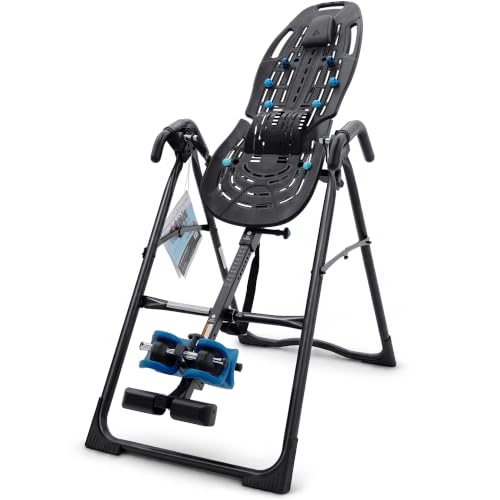
Registered with the FDA as a 510(k) medical device, this table is indicated for conditions like herniated disc, sciatica, and spinal stenosis. That means the design has been reviewed for a specific therapeutic purpose, not just general stretching. The ComforTrak backrest allows maximum body slide for better decompression, while the wrap-around ankle cups and two-position foot platform help you settle in without fidgeting. For someone with persistent back pain who wants a table with medical registration, this is a relevant choice.
The trade-off is size and weight. At 65 pounds and 86 inches tall, this is not a tuck-behind-the-couch table; it needs dedicated floor space and a bit of effort to fold and store. The YOLEO Gravity table weighs 45.2 pounds, so the Teeter is heavier. But that heft comes from heat-treated steel and UL safety certification, plus a frame tested to last 10x longer than the competition. If you plan to use it daily and want something that feels solid session after session, the extra weight is a fair exchange for that stability.
Teeter FitSpine LX9 Inversion Table
What We Like
- FitSpine backrest enables maximum body slide
- 8 acupressure nodes for trigger-point release
- EZ-Reach ankle system reduces forward bend
- Free Teeter Move training app included
Trade-offs
- At 74.1 lb, it is heavy to relocate
- Requires 87-inch ceiling height for full use
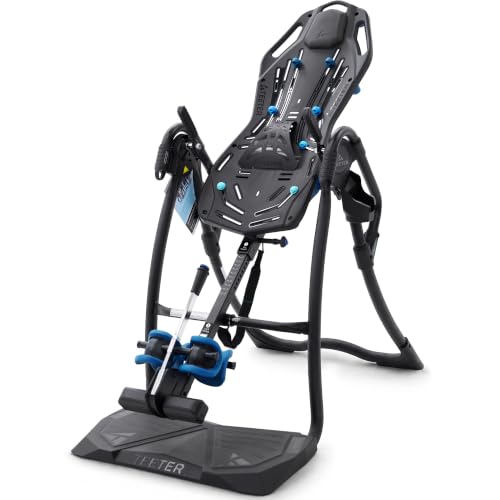
The FitSpine backrest’s maximum body slide is the key reason this table stands apart for lower back relief. As you invert, your spine can lengthen naturally along the curved surface, which targets decompression more directly than a flat board. The eight acupressure nodes at varied heights and the Lumbar Bridge with adjustable arch support give you ways to focus traction and release tension where you need it most. This is a premium pick for someone who wants more than just hanging upside down, it gives you tools to customize the stretch to your own tight spots.
At 74.1 pounds, this inversion table is heavy to move around, so you won’t want to haul it from room to room daily. It also needs a full 87 inches of ceiling clearance, which rules out basements with low joists or compact apartments. If your space and floor plan allow it, the LX9’s decompression-focused design and included accessories make it a more targeted tool for lower back pain.
Innova Health and Fitness ITM5900 Inversion Table

What We Like
- Full-spine heat and massage pad
- 6-position pin system with protective cover
- 300 lb weight capacity
- Ergonomic ankle holding system
Trade-offs
- At 60 lbs, it is heavy to move
- No built-in storage or folding mechanism
- Heat and massage require power outlet nearby
A patent-pending vertical massage pad that covers the entire spine and includes a contour lumbar pad means this table brings heat and vibration therapy directly to your lower back while you invert. That makes it a smart pick if you want more than just a stretch. The multi-mode heat and massage settings let you dial in a session that targets tight muscles and sore spots without needing a separate device. It suits anyone who values passive relief alongside decompression, especially if you’re between 4’10” and 6’6″ and up to 300 lbs.
At 60 pounds, this table is heavier than some other models, so moving it around a room or storing it upright takes more effort. It also lacks a folding mechanism, which limits where you can keep it. Still, the six-position pin system with a protective cover is designed for easier positioning and safer inverting compared to strap systems, and the ergonomic ankle holders reduce pressure on your feet when you’re upside down. If heat and massage are priorities, this table delivers them without compromise.
Innova ITM6000 Therapeutic Inversion Table
What We Like
- Dual heat and massage for neck and back
- Patented no-pinch ankle holders
- True Balance System for easy inverting
- Protective cover on adjustment pin
Trade-offs
- At 69 lb, it's heavier than many alternatives
- Assembly required out of the box
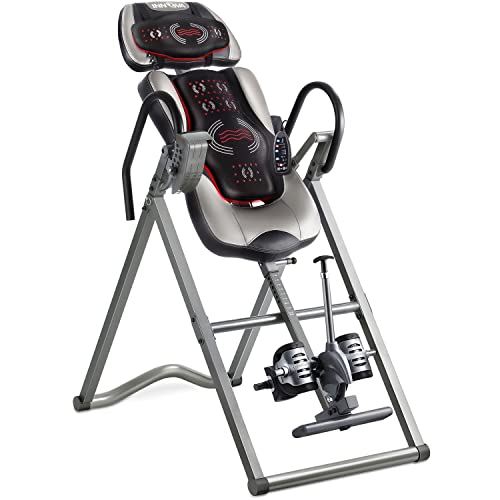
A dual heat and massage pad that targets both your neck and lower back at once is the standout reason to consider this table. That means you can relax into a stretch while gentle warmth and vibration work the muscles that often tighten up with back pain. It handles users up to 6ft 6in and 300 lb, and the True Balance System makes tipping back feel controlled rather than clumsy. For someone who wants therapeutic extras built right in, this brings comfort that simpler tables skip.
The six-position pin system gives you gradual angles to find your sweet spot, but you will need to set aside time for assembly before your first use. If you prioritize heat and massage over portability, this table delivers those features without needing add-on accessories.
Product photos
Verakare ITM5850 Advanced Inversion Table

What We Like
- Full-spine vertical massage pad with heat
- Contour integrated lumbar pad for lower back
- 6-position pin system with protective cover
- Ergonomic ankle holding system with longer knob
Trade-offs
- Assembly required before first use
- No UL safety certification listed
The trade-off is that you will need to set it up yourself before you ever hang upside down. Assembly is required, and while the specs don’t list a finished weight, the combination of a massage pad and frame likely makes it heavier than a basic gravity table. Compared to the Teeter ComforTrak EP-560, which comes UL safety certified and weighs 65 pounds, the Verakare doesn’t carry that same independent safety stamp. If you want a simpler, no-frills decompression table that is easier to move around, the Teeter might suit you better. But if heat and massage are what your lower back is begging for, the Verakare ITM5850 delivers that combo no other pick here offers.
YOLEO Gravity Inversion Table
What We Like
- Memory foam backrest for comfort
- Adjustable lumbar support
- Foldable for easy storage
- Triple safety protection system
Trade-offs
- 300 lb capacity limits larger users
- No heat or massage features included
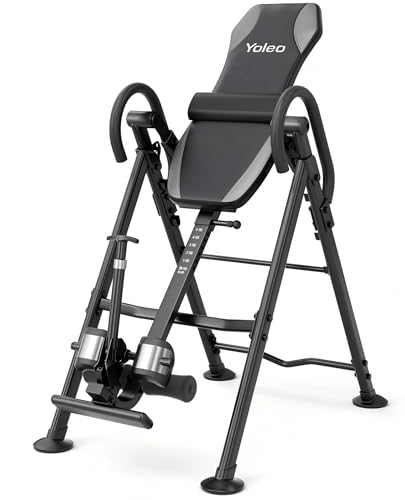
With a 300-pound weight capacity and a memory foam backrest, this table supports a wide range of body types while the padding helps reduce pressure points during use. The adjustable lumbar support and ratchet ankle lock let you customize the fit for users from 4’1″ to 6’2″, so multiple family members can share it without constant readjustment. If you want a simple way to relieve lower back tension and don’t need built-in heat or massage, this table covers the basics effectively.
At 45.2 pounds, it’s lighter than the Teeter FitSpine LX9 but still requires some effort to move if you plan to fold and store it after each session. You also won’t find heat or massage features like those on the Innova ITM5900, so if those extras are essential, you’ll want to consider other models. For someone who values a sturdy frame, easy angle adjustments, and a comfortable backrest over add-ons, this is a practical entry into inversion equipment.
Product photos
Yagud Inversion Table
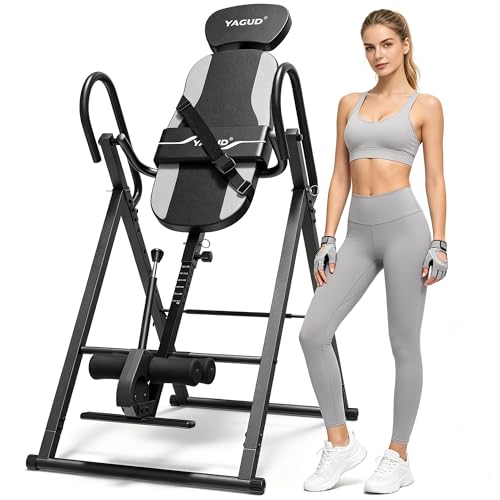
What We Like
- Quadruple safety locking system
- Enclosed ankle mechanism blocks debris
- Rock-solid triangle square steel frame
- 14-position height selector beam
Trade-offs
- At 53 lbs, moving it takes effort
- 265 lb capacity limits larger users
- No heat or massage features included
Four independent anchor points, an adjustable ankle lock, a double-secure safety belt, a six-position rear crossbar, and a rotary knob plus steel safety pin work together to keep the frame planted and your body secure at any angle. That quadruple locking system is a key reason this table suits anyone who wants to invert without worrying about wobble or accidental release. It works especially well if you’re sharing the table with family members ranging from 4.3 to 6.5 feet tall. The enclosed ankle mechanism also blocks dirt and pet hair from entering the core mechanical joints, which helps prevent internal wear and keeps operation smooth over time.
Teclor Inversion Table for Back Pain Relief
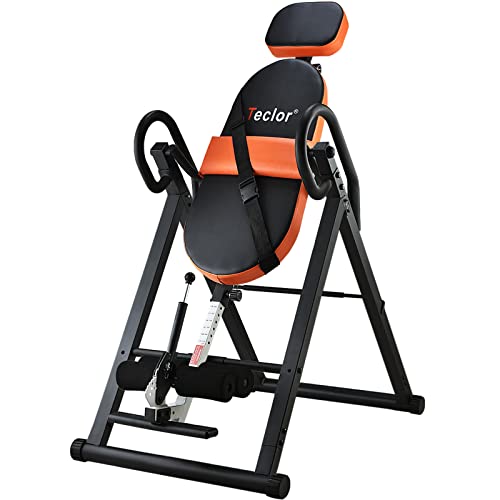
What We Like
- Wider and longer backrest for ergonomic support
- Adjustable height from 4'3" to 6'8"
- Foldable design for easy storage
- Safety belt for extra security
Trade-offs
- No built-in heat or massage features
- No ankle lock ratchet system like some competitors
The backrest on this inversion table measures 30.3 inches long and 15.3 inches wide, which gives you a broad, stable surface to lie on during decompression sessions. That extra width and length means your spine gets consistent support from your shoulders down to your lower back, reducing pressure points that can develop on narrower tables. Many users find this design especially helpful for longer stretching routines, as the ergonomic shape keeps them comfortable without needing to shift position repeatedly. It is a practical approach that prioritizes comfort over extra features.
You won’t get heat or massage features here. The Innova ITM5900 offers those if that matters to you. The ankle holders are comfortable, but the Teeter FitSpine LX9 uses a different ankle lock design that some may find faster to use. With a steel frame rated for 350 pounds and a safety belt included, the Teclor provides reliable support. The backrest is shaped for ergonomic comfort, so it works well if back support is your main concern.
Product photos
Verakare ITX9560 Heavy Duty Inversion Table
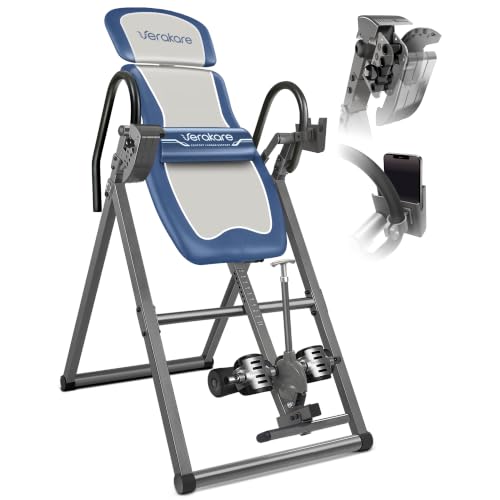
What We Like
- Reversible ankle holders for custom fit
- True Balance System eases inversion
- 6-position pin system with protective cover
- Accommodates heights from 4'10" to 6'6"
Trade-offs
- Heavy at 300 lb capacity, not lightweight to move
- Assembly required before first use
- No heat or massage features included
This is a no-frills build, there is no heat or massage like the Innova ITM5900 offers, and it requires assembly. But it does give you a customizable ankle hold and a patented protective cover over the adjustment pins. For someone who prioritizes adjustability over extra features, it delivers what matters.
Product photos
JAGJOG Inversion Table for Back Pain Relief
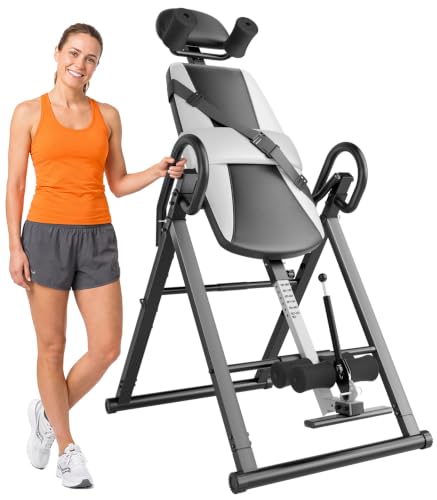
What We Like
- Ratchet ankle lock with safety pin
- Soft foam ankle rollers reduce pressure
- 6-angle settings for gradual progression
- Foldable design for easy storage
Trade-offs
- At 49 lb, moving it around takes effort
- No heat or massage features included
The ratchet ankle lock with a safety locking pin means your feet stay put while you’re upside down, and the soft foam rollers cut down on pressure around the ankles. That combination makes this table a smart pick if you’re nervous about slipping or discomfort during inversion. With a 300 lb capacity and height adjustment from 4.3 to 6.6 ft, it fits a wide range of body types. The six angle settings let you start at a gentle tilt before working deeper. The lumbar support and padded headrest add comfort for daily stretching routines at home.
At 49.0 pounds, this isn’t a table you’ll want to haul around the house regularly. It folds for storage, but you’ll still feel the heft when moving it. Compared to the Teeter FitSpine LX9, which has a different ankle support design and back pain kit, the JAGJOG focuses on simplicity and security without extra bells like heat or massage. If you want a straightforward, secure inversion table that doesn’t overcomplicate things, this fits the bill, just plan to set it up in one spot and leave it there.
Product photos
How We Evaluated Inversion Tables For Lower Back Pain
To build this list, we started with manufacturer specs, weight capacity, frame material, safety certifications, and ankle-lock mechanisms, then cross-referenced those against patterns in owner feedback and expert recommendations. We looked for tables that consistently helped people manage lower back pain without creating new problems like ankle discomfort or instability.
The three criteria that mattered most were safety and stability, spinal decompression effectiveness, and comfort features. A table that wobbles or pinches is dangerous, so we prioritized models with secure locking systems and sturdy steel frames. For decompression, we looked at backrest design, especially tables like the Teeter FitSpine that allow body slide for a deeper stretch. Comfort features like heat, massage, and padded ankle rollers made a real difference for longer sessions.
A research-led evaluation has limits. Your experience may vary based on your height, weight, and specific back condition. We always recommend checking your ceiling height and consulting a doctor before starting inversion therapy, especially if you have a diagnosed spinal issue.
What To Look For In Inversion Tables For Lower Back Pain
Finding the right table means balancing safety, comfort, and your specific pain points. Here is what we learned matters most.
Look for a table with a certified safety lock, a backrest that supports your full spine, and ankle holders that do not pinch or slip. Ceiling height and weight capacity are deal-breakers you must measure before buying.
Safety and Stability
A wobbly inversion table is dangerous. Look for a steel frame, preferably heat-treated like the TEETER ComforTrak, and a safety locking system that engages without hesitation. The Yagud Inversion Table features a quadruple safety locking system and an enclosed ankle mechanism that blocks debris, which is excellent for households where multiple people use the table.
Weight capacity matters too; most tables top out at 300 lb, but the Verakare ITX9560 also supports 300 lb with a heavy-duty frame. Always confirm the capacity includes your body weight plus any clothing or gear.
Spinal Decompression and Backrest Design
The backrest determines how much stretch your spine gets. The Teeter FitSpine LX9 uses a FitSpine backrest that enables maximum body slide, which means your spine lengthens naturally as you invert. It also includes 8 acupressure nodes for trigger-point release. Wider backrests, like the one on the Teclor Inversion Table, provide ergonomic support for broader shoulders and taller users. For lower back pain specifically, a backrest with lumbar support, like the adjustable pad on the YOLEO, can target the area that hurts most.
Heat, Massage, and Extra Features
If your lower back pain involves muscle tension, a table with built-in heat and massage can make inversion therapy more effective. The Innova Health and Fitness ITM5900 includes a full-spine heat and massage pad, while the Innova ITM6000 offers dual heat and massage for both neck and back. The Verakare ITM5850 has a full-spine vertical massage pad with heat and a contour integrated lumbar pad. These features require a nearby power outlet and add weight, but owners report they help loosen tight muscles before and during inversion.
- Measure your ceiling height, most tables need 84 to 87 inches of vertical clearance.
- Check the ankle lock system: ratchet-style locks (like the JAGJOG) are secure and easy to adjust.
- Look for a foldable design if you plan to store the table between sessions.
- Consider the table’s weight, heavier tables (60+ lb) are more stable but harder to move.
A good rule of thumb: buy the safest table that fits your ceiling and your budget, then use it consistently for a few minutes a day.
Inversion Tables For Lower Back Pain Compared
The table below compares our top picks side by side, covering weight, capacity, safety features, and standout extras so you can see at a glance which inversion table fits your needs.
| Product | Weight Capacity | Weight | User Height Range |
|---|---|---|---|
| TEETER ComforTrak EP-560 Inversion Table | 300 lb | 65.0 lb | N/A |
| Teeter FitSpine LX9 Inversion Table | N/A | 74.1 lb | N/A |
| Innova Health and Fitness ITM5900 Inversion Table | 300 lbs | 60.0 lbs | 4'10", 6'6" |
| Innova ITM6000 Therapeutic Inversion Table | 300 lbs | 69.0 pounds | 4ft 10in to 6ft 6in |
| Verakare ITM5850 Advanced Inversion Table | 300 lb | N/A | 4ft-10in to 6ft-6in |
| YOLEO Gravity Inversion Table | 300 lbs | 45.2 lbs | 4 ft 1 in, 6 ft 2 in |
| Yagud Inversion Table | 265 lbs | 53 lbs | 4.3-6.5 ft |
| Teclor Inversion Table for Back Pain Relief | 350 lbs | N/A | 4'3" to 6'8" |
| Verakare ITX9560 Heavy Duty Inversion Table | 300 lb | N/A | 4ft-10in to 6ft-6in |
| JAGJOG Inversion Table for Back Pain Relief | 300 lb | 49.0 pounds | 4.3 to 6.6 ft |
Frequently Asked Questions
Can an inversion table really help with lower back pain?
Yes. Inversion therapy uses gravity to decompress the spine, which can reduce pressure on discs and nerves. Many owners of tables like the TEETER ComforTrak report relief from sciatica and herniated disc pain. However, results vary, and anyone with high blood pressure, glaucoma, or spinal conditions should check with a doctor first.
How long should I use an inversion table for back pain?
Most experts suggest starting with a minute or two at a low angle and gradually working up to several minutes per session. Listen to your body; if pain increases, stop. Consistent daily use tends to work better than long, infrequent sessions.
What is the difference between inversion tables and inversion chairs?
Inversion tables support your full body and allow a complete hang, which provides deeper spinal decompression. Inversion chairs only tilt your upper body and are gentler, but they do not offer the same stretch for the lower back. For back pain, a table is usually the better choice.
Do I need a table with heat and massage for lower back pain?
Not necessarily, but it helps. Heat relaxes tight muscles before you invert, and massage can release trigger points. If your pain is mostly muscular, a table like the Innova ITM5900 or Verakare ITM5850 may speed relief. If your pain is disc-related, a table with a good backrest and body slide, like the Teeter FitSpine LX9, is more important.
What should I look for in ankle holders on an inversion table?
Look for ankle holders that are padded, secure, and easy to reach without bending far. The TEETER ComforTrak uses wrap-around ankle cups that distribute pressure evenly, while the JAGJOG features a ratchet ankle lock with soft foam rollers. Avoid tables with hard plastic or narrow holders that can pinch or cut off circulation.
The Bottom Line
For most people dealing with lower back pain, the TEETER ComforTrak EP-560 Inversion Table is the best overall choice. Its FDA registration, heat-treated steel frame, and wrap-around ankle cups make it a safe, durable option for daily use. It is not the lightest or most compact table, but it is built to last and consistently helps owners manage sciatica, herniated discs, and general back tightness.
If your budget is tighter, the YOLEO Gravity Inversion Table offers a comfortable memory foam backrest and adjustable lumbar support at a more accessible price point. For those who want maximum decompression and trigger-point relief, the Teeter FitSpine LX9 is worth the extra investment, provided you have the ceiling height and floor space.
The single most important factor? Measure your ceiling and buy a table that fits safely. An inversion table that is too tall for your room or too heavy for you to set up will collect dust, not relieve pain. Choose wisely, start slow, and give your spine the daily break it deserves.
