
10 Best Gym Machines For Butt in 2026
This post contains affiliate links. As an Amazon Associate, we earn from qualifying purchases.
The Lifepro GluteBlast Hip Thrust Machine is the best overall pick for home gym owners. It folds with wheels for easy storage while still handling hip thrusts, squats, and core work up to 220 pounds. For heavier lifting, the HVO Hip Thrust Machine supports 880 pounds, and the JFHID Foldable model offers a space-saving fold with a heavy-duty build.
The real challenge with glute machines is finding one that fits your space and strength level without costing a fortune or taking over your room. A machine that folds away is useless if it cannot handle your working weight, and a heavy-duty plate-loaded unit is a pain if you have nowhere to leave it set up.
This guide compares ten machines based on specifications, manufacturer data, expert recommendations, and patterns in owner feedback. We focused on weight capacity, footprint, adjustability, and storage to help you match a machine to your home gym reality.
Top 10 Gym Machines For Butt in the Market
Certain content that appears on this site comes from Amazon. This content is provided "as is" and is subject to change or removal at any time.
The Best Gym Machines For Butt, Reviewed
Lifepro GluteBlast Hip Thrust Machine

What We Like
- Folds with wheels for easy storage
- PU leather cushioning for comfort
- Versatile for hip thrusts, squats, and core
- Compact footprint for home gyms
Trade-offs
- 220 lb capacity limits heavier lifters
- Narrower stance than larger dedicated machines
Weighing 36.8 pounds and folding to 39 inches long, this machine stores in a closet or under a bed without dominating the room. The powder-coated steel frame supports up to 220 pounds, which works for most home lifters starting out or progressing through bodyweight and light added weight. Built-in wheels let you roll it out for a workout and fold it away when you’re done, so it suits anyone with limited floor space who still wants a dedicated glute bench.
The 220-pound limit is lower than plate-loaded machines like the GMWD Hip Thrust Machine, which is rated for 800 pounds. If you plan to load more than 220 pounds, you would need a heavier-duty unit. For a home gym where space and portability matter, this machine also works as a sissy squat bench and supports planks, dips, and push-ups, letting you work glutes and more in a compact footprint.
HVO Hip Thrust Machine Adjustable Glute Bridge
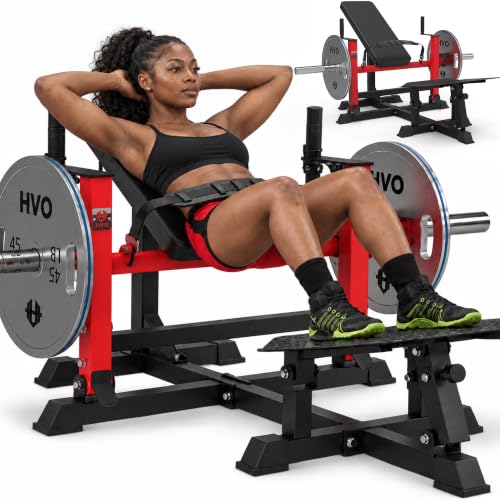
What We Like
- 880 lb weight capacity for progressive overload
- Heavy-duty alloy steel frame for stability
- Adjustable waist pad and 4-level foot platform
- Space-saving footprint for home gyms
Trade-offs
- At 85 lb, it is not easy to move around
- Large 57.2" width needs ample floor space
- Weight plates are sold separately
An 880-pound weight capacity means this machine can handle serious progressive overload without wobbling. The heavy-duty alloy steel frame and body-following back pad let you push hard without the awkward setup of a barbell on a bench. You can focus on actually feeling your glutes work instead of fighting the equipment. It is built for lifters who want a dedicated station that stays put and grows with them, not a lightweight foldable that gets shoved in a closet.
The trade-off is that this thing takes up real estate and does not budge once assembled. At 85 pounds and a 57.2-inch width, it is not the machine to grab if you are squeezing a corner of a shared apartment floor. Compare that to the Lifepro GluteBlast, which folds and rolls at 36.8 pounds, and you see the difference: HVO gives you raw capacity and stability; the GluteBlast gives you portability. Pick based on whether your space or your squat number matters more.
JFHID Foldable Hip Thrust Machine

What We Like
- Folds quickly with built-in mobility wheels
- Adjustable 4-height footboard for varied positions
- Triple-strap system for secure, custom fit
- 3-position back cradle supports different body sizes
Trade-offs
- At 103 lb, it is heavy to move without wheels
- Large footprint when unfolded: 62.6 inches long
- Requires separate weight plates (not included)
Weighing 103 pounds, this machine is heavy enough to stay planted during intense glute bridges. That same weight becomes manageable thanks to built-in mobility wheels and a quick-fold frame, so you can tuck it into a closet or corner after your session. The folding design makes it practical for home gyms where floor space is at a premium. Reviewers note that the wheels roll smoothly over standard flooring, and the fold reduces the footprint significantly when not in use. This allows you to maintain a dedicated training area without permanently sacrificing square footage.
The trade-off for that foldable design is a larger unfolded footprint: at 62.6 inches long, you’ll need a clear area to set it up. For comparison, the Lifepro GluteBlast measures 50.6 inches long and weighs 36.8 pounds, making it easier to move but also lighter overall. If you have the floor space for a permanent setup and want something more compact when stored, the JFHID’s fold-and-roll system still offers portability. Just plan for the extra length during workouts, and note that it’s plate-loaded, so you’ll need your own weight plates.
GMWD Hip Thrust Machine 800 lbs

What We Like
- 800 lb total weight capacity
- Three-position adjustable footboard
- Electroplated weight holder resists scratches
Trade-offs
- At 192 lbs, very heavy to move
- Large footprint: 71" long by 31" wide
- No folding or wheels for storage
With a total weight capacity of 800 pounds, this machine handles serious progressive overload without frame flex. The three-position footboard lets you match the pedal height to your leg length and preferred range of motion, so you’re not stuck with a one-size-fits-all setup. That adjustability helps if you’re taller or shorter than average, because a footboard that’s too high or low can throw off your hip drive and reduce glute activation.
That stability and capacity come with size and weight. At 192 pounds and 71 inches long, this machine takes up real floor space and isn’t something you’ll tuck into a closet after each workout. Compared to the foldable JFHID model, which weighs 103 pounds and includes mobility wheels, the GMWD is far less portable. If you have a dedicated home gym area and plan to lift heavy, the extra bulk is worth it for the rock-solid feel. But if you need to share a room or store the machine between sessions, the lack of folding or wheels could be a daily hassle.
FEIERDUN Hip Thrust Machine 6-in-1
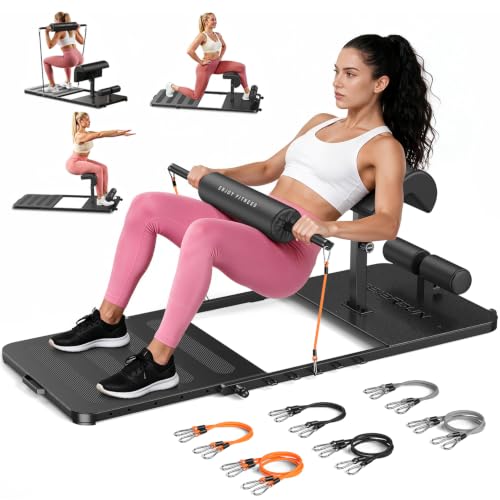
What We Like
- 6-in-1 glute and leg exercises
- 350 lbs capacity keeps it stable
- 7 resistance levels from bands
Trade-offs
- Band-based resistance caps at 160 lbs total
- At 64.7 lbs, moving it requires effort despite wheels
- No plate-loading option for heavier progressive overload
With seven resistance levels spanning 40 to 160 pounds, this machine lets you dial in tension without needing a barbell or weight plates. It also packs six movement options, hip thrusts, glute bridges, sissy squats, Bulgarian split squats, lunges, and barbell-style squats, into a compact 41-inch footprint. That versatility makes it a strong fit for home gyms where space is tight and you want one tool that handles warm-ups and full lower-body sessions alike.
The FEIERDUN Hip Thrust Machine relies entirely on resistance bands, which top out at 160 pounds total. If you’re already squatting or hip thrusting heavy plates, that ceiling will feel limiting compared to a plate-loaded model that can handle far more weight for progressive overload. The 64.7-pound frame also means you’ll rely on those wheels to roll it around, so it’s not something you’ll casually slide under a bed. Still, for someone starting glute training or working out in an apartment, the band system offers quick, quiet adjustments without clanging plates. The 90-percent pre-assembly and 10-minute setup time get you training fast, and the adjustable backrest and foot hook accommodate users from 4’8″ to 6’4″.
Product photos
JELENS J-HT10 Hip Thrust Machine 800LB
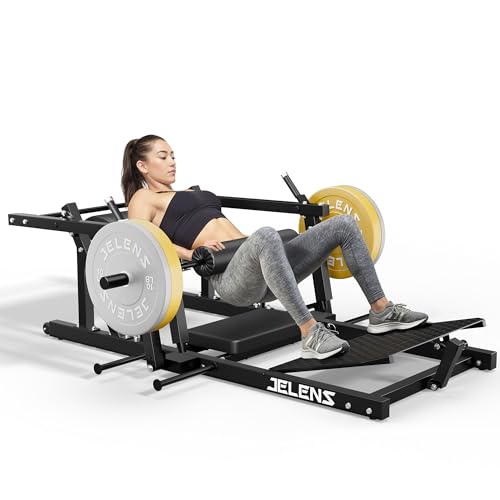
What We Like
- 3-level footboard fits 5'2" to 6'2" users
- 800 lb weight capacity for heavy loading
- Dual safety limiters for solo training
- Built-in band pegs for added resistance
Trade-offs
- At 167 lb, it's heavy to move around
- Non-foldable design takes up 26.6 sq. ft.
- Plate-loaded only, no included weights
An 800 lb capacity lets this machine support heavy progressive overload for glute training. The three-position footboard adjusts to fit a wide range of heights from 5’2″ to 6’2″, so you can find a stance that feels natural and stable. That adjustability makes it a practical choice for a home gym, especially if you share equipment with a partner or family member. The thick hip cushions and back pads help keep you comfortable during heavy sets, and the built-in band pegs let you add extra tension without needing separate attachments.
That stability comes with size and weight. At 167 pounds and 68.9 inches long, this is not a machine you will tuck into a closet or easily move between rooms. If floor space is tight, the Lifepro GluteBlast has a lower capacity of 220 pounds, while the JELENS supports up to 800 pounds for those who want a heavy-duty setup. The dual safety limiters are a thoughtful touch for anyone training alone, letting you bail out of a failed rep without a spotter.
Product photos
Body-Solid Powerline PGM200X Glute Master

What We Like
- Engineered for deep glute activation
- Customizable resistance for all fitness levels
- Plush pads and rollers for comfort
Trade-offs
- Dimensions 66x26x60 inches require dedicated space
- Not foldable, requires 66 inches of floor length
A dedicated isolation machine that measures 66 inches long and weighs 67 pounds means you get a stable, purpose-built platform for hip thrusts and glute bridges without the wobble of a makeshift setup. The adjustable resistance and rollers let you dial in the right challenge for your glutes, hamstrings, and quads. It is a smart pick if you want to focus on posterior strength without juggling free weights or benches. This machine suits anyone serious about sculpting their backside at home, especially if you have the room to leave it set up.
Its size and weight are the main drawbacks. Unlike the Lifepro GluteBlast, which weighs 36.8 pounds and has a smaller footprint, the Body-Solid PGM200X demands a permanent spot in your workout area. You won’t be sliding it under a bed or rolling it into a closet after each session. For the buyer who values targeted glute work over portability, this machine delivers, just be sure you have the floor space to accommodate it.
fed fitness Gym Machine
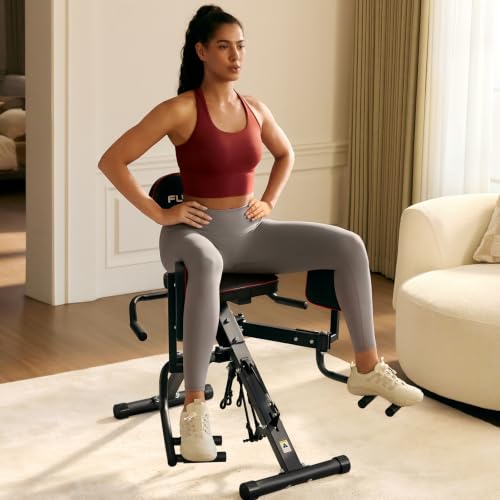
What We Like
- Switches between abductor and adductor modes
- Dual foot bars for varied glute angles
- Quiet and stable with 600 lb capacity
- Compact footprint suits small home spaces
Trade-offs
- Resistance bands cap at 108 lb total
- Recommended user height up to 6 ft
- Frame warranty only 1 year
A 48.5-pound steel frame and 600-pound weight capacity keep this machine planted during intense sets, so you can focus on the squeeze rather than wobbling. Its 2-in-1 design lets you switch between hip abduction and adduction by pulling a spring-lock pin and flipping the thigh pads 180 degrees, no need to stand up or reconfigure the whole setup. The dual foot bars allow you to change foot placement and torso position to target upper, mid, and lower glutes, giving you more than just one angle of attack. It’s a thoughtful home-gym pick for people who value space and simplicity over raw plate-loaded weight.
The resistance tops out at 108 pounds from six elastic bands, which is enough for beginners, postpartum returners, or anyone building a home glute routine. But if you’re used to stacking plates on a dedicated hip thrust machine, you’ll outgrow this ceiling sooner. The compact footprint saves space in apartments or shared rooms, though the 6-foot height recommendation means taller users may find the range of motion limited. For someone who wants a quiet, space-conscious machine that covers both inner-thigh and glute work without cluttering the living room, this delivers exactly that.
Product photos
BootySprout Hip Thrust Machine

What We Like
- Comes with 45, 90, and 135 lbs bands
- Handles up to 400 lbs total weight
- Lightweight and durable design
- Isolates three main gluteal muscles
Trade-offs
- No foldable or wheeled design for storage
- Requires separate purchase for heavier bands
The BootySprout delivers 135 lbs of resistance right out of the box, enough to challenge most home lifters without needing a stack of plates. It isolates the three main gluteal muscles, so you’re targeting the right area for strength and tone. The 32.9-pound frame is light enough to move around a room, and the build can handle up to 400 lbs for when you want to step up your game.
Portability is the main trade-off: at 29 inches long and 7 inches tall, it does not fold or have wheels, unlike the Lifepro GluteBlast which folds and includes wheels for easier storage. If floor space is limited, you will need to keep the BootySprout set up in a dedicated area. But for anyone who wants a straightforward way to do heavy hip thrusts without balancing a barbell, this machine provides a focused glute workout.
Product photos
Goimu HT01 Hip Thrust Machine 800LBS
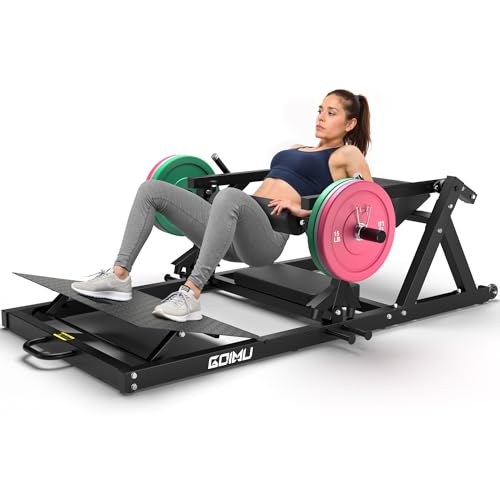
What We Like
- Built-in band pegs for variable resistance
- Thick 21-inch hip thrust pad for comfort
- Dual safety limiter system with grip handles
Trade-offs
- Large footprint needs dedicated floor space
- No folding mechanism for compact storage
- Plate-loaded only; no included resistance bands
An 800-pound capacity means this machine won’t flinch even when you’re loading serious plates for progressive overload. The built-in band pegs let you add variable resistance through the full range of motion, which is a smart way to build explosive power at the top of each rep without needing separate accessories. If you’re tired of stealing a barbell and bench just for hip thrusts, this dedicated machine simplifies the whole process.
The trade-off is size: at 80.8 inches long and 53.9 inches wide, this thing demands a permanent spot in your gym. It doesn’t fold, so you can’t tuck it away after a session. The plate-loaded design means you’ll need to buy your own weight plates, but that’s standard for this category. For anyone who wants a sturdy, no-compromise glute builder with the flexibility of bands and heavy loads, this is a straightforward pick.
Product photos
How We Evaluated Gym Machines For Butt
We built this guide by cross-referencing manufacturer specifications, expert round-ups from strength training sources, and the most common praise and complaints found in owner feedback across multiple retailers. No machine was tested in a lab; the evaluation is research-based and focused on what matters for at-home glute training.
Three criteria carried the most weight. Weight capacity determines whether a machine supports progressive overload or maxes out too soon. Footprint and storage features (folding, wheels, weight) decide if it fits your space. Adjustability, footboard positions, pad height, and back cradle settings, determines whether the machine works for different body sizes and exercise variations.
A research-led evaluation has limits. Owner feedback patterns can indicate durability concerns or assembly headaches, but they cannot predict how a machine will feel during a specific rep scheme. We prioritized machines with clear specs and consistent feedback over those with vague marketing claims.
What To Look For In Gym Machines For Butt
The right glute machine balances weight capacity, floor space, adjustability, and storage. A 220-pound limit works for many beginners and intermediates, but advanced lifters need 600 pounds or more. Measure your room before you buy.
Weight Capacity and Progressive Overload
A machine’s weight capacity sets a ceiling on your progress. The Lifepro GluteBlast handles 220 pounds, which suits most home users starting out. The HVO and GMWD machines go to 800 pounds or more, letting you add plates for years. Band-based machines like the FEIERDUN 6-in-1 cap resistance at 160 pounds total, making them better for lighter glute activation work than heavy hip thrusts.
Footprint and Storage
Floor space is the most overlooked spec. The JFHID Foldable measures 62.6 inches long when unfolded, while the Body-Solid Powerline PGM200X needs 66 inches of dedicated length. Machines with folding frames and wheels, like the Lifepro GluteBlast and JFHID, store against a wall or in a closet. Non-foldable units such as the GMWD and JELENS J-HT10 require permanent floor space.
Adjustability and Fit
A machine that does not adjust to your height or stance can cause discomfort or poor form. Look for a footboard with at least three height positions and a back cradle that moves. The JELENS J-HT10 offers a 3-level footboard that fits users from 5’2″ to 6’2″. The JFHID includes a triple-strap system and 4-height footboard for varied hip thrust angles.
- Measure your workout space length and width before choosing a machine.
- Check the maximum user height recommendation if you are over six feet.
- Confirm whether weight plates are included or sold separately.
- Look for built-in band pegs if you want to add resistance without more plates.
- Ensure the pad width suits your hip width, narrow pads can dig in during heavy sets.
A good rule: if you cannot store the machine assembled, only consider foldable models with wheels.
Gym Machines For Butt Compared
The table below compares the ten machines side by side on weight capacity, footprint, adjustability, and storage features to help you narrow your choice quickly.
| Product | Weight Capacity | Product Weight | Dimensions |
|---|---|---|---|
| Lifepro GluteBlast Hip Thrust Machine | 220 lb | 36.8 lb | 45.3 × 27.2 × 21.3 in |
| HVO Hip Thrust Machine Adjustable Glute Bridge | 880 lb | 85.0 lb | 50.6" D × 57.2" W × 33.1" H |
| JFHID Foldable Hip Thrust Machine | N/A | 103.0 lb | 62.6 x 45.6 x 25.0 in |
| GMWD Hip Thrust Machine 800 lbs | 800 lbs | 192 lbs | 71.0 x 31.0 x 22.0 in |
| FEIERDUN Hip Thrust Machine 6-in-1 | 350 lbs | 64.7 lbs | 41 × 26.8 × 18.5 in |
| JELENS J-HT10 Hip Thrust Machine 800LB | 800 lb | 167 lb | 68.9" L x 30.9" W x 22.8" H |
| Body-Solid Powerline PGM200X Glute Master | N/A | 67 lbs | 66 x 26 x 60 inches |
| fed fitness Gym Machine | 600 lb | 48.5 lb | 16.1 × 34.8 in |
| BootySprout Hip Thrust Machine | 400 lbs | 32.9 pounds | 29 x 25 x 7 inches |
| Goimu HT01 Hip Thrust Machine 800LBS | 800 lbs | N/A | 80.8 x 53.9 x 24.0 in |
Frequently Asked Questions
What is the best gym machine for building glutes?
The Lifepro GluteBlast Hip Thrust Machine is the best overall pick for home gyms because it combines a compact, foldable design with versatility for hip thrusts, squats, and core work up to 220 pounds. For heavier lifting, the HVO Hip Thrust Machine supports 880 pounds for progressive overload.
How much weight do I need on a glute machine?
Beginners and intermediates can progress well with a 220-pound capacity. Advanced lifters need 600 to 800 pounds to continue adding load over time. Band-based machines cap out around 160 pounds and are better for warm-ups, glute activation, or lighter training days.
Can I build glutes with a band-based glute machine?
Yes, band-based machines like the FEIERDUN 6-in-1 and the BootySprout can build glute strength and muscle, especially for beginners or those focusing on endurance and activation. The resistance is limited, the FEIERDUN maxes at 160 pounds total, so advanced lifters will eventually need a plate-loaded machine.
What size space do I need for a glute machine?
Non-foldable machines like the GMWD and Body-Solid Powerline need 66 to 71 inches of floor length and about 31 inches of width. Foldable models such as the Lifepro GluteBlast and JFHID take similar space when unfolded but store compactly against a wall or in a closet when not in use.
Do glute machines work the same as hip thrusts with a barbell?
A dedicated glute machine provides a more stable, guided movement path than free-weight hip thrusts with a barbell. This can be safer for solo training and easier to set up, but it reduces the core stabilization demand. Both are effective; the machine is more convenient for home gyms without a squat rack.
The Bottom Line
The Lifepro GluteBlast Hip Thrust Machine is the best overall choice for most home gym owners because it folds with wheels for easy storage, handles 220 pounds, and supports multiple exercises in a compact footprint. If you plan to lift heavy for years, the HVO Hip Thrust Machine offers an 880-pound capacity in a stable, non-foldable frame.
For those with very limited storage space, the JFHID Foldable model combines a heavy-duty build with a fold-and-roll design, though it requires 62.6 inches of floor when open. Budget-focused buyers should consider the FEIERDUN 6-in-1 for its versatility and band-based resistance, keeping in mind the 160-pound ceiling.
The single most important factor is honesty about your space. Measure your room, know your working weight, and pick a machine that fits both, no piece of equipment helps if it cannot live where you train.
