
10 Best Soundproof Exercise Mats in 2026
This post contains affiliate links. As an Amazon Associate, we earn from qualifying purchases.
The TroyStudio Thick Sound Absorbing Interlocking Floor Mats earn our Best Overall spot because their high-density foam achieves an NRC 0.87 rating for serious sound absorption while staying thin enough to fit under most equipment. For heavy lifting, the AIRHOP Ultra-Thick Rubber Top Gym Flooring handles dropped weights, and the ProsourceFit Exercise Puzzle Mat protects floors on a budget.
The real challenge with a home gym is keeping the noise down so you don’t wake the kids or annoy the neighbors below. Sound travels through floors and walls, and a thin yoga mat won’t stop the thud of a dropped dumbbell or the vibration of a treadmill.
We built this guide by studying manufacturer specifications, owner feedback patterns, and expert recommendations on soundproofing. You get ten mats ranked by density, thickness, and noise reduction, so you can match the right one to your workout and your living situation.
Top 10 Soundproof Exercise Mats in the Market
Certain content that appears on this site comes from Amazon. This content is provided "as is" and is subject to change or removal at any time.
The Best Soundproof Exercise Mats, Reviewed
TroyStudio Thick Sound Absorbing Interlocking Floor Mats

What We Like
- High density for strong sound absorption
- NRC 0.87 reduces echo and reverb
- Interlocking design prevents slipping
- Cuttable with a knife for custom fit
Trade-offs
- At 0.4 inches, less cushion than thicker mats
- Small 11-inch tiles mean more seams to align
Constructed from dense polyester felt with a density of 150kg/m3, these tiles absorb sound energy effectively, reducing reverb and echo in a room. The felt material also dampens vibration from instruments like pianos and speakers, which is why they are a common choice for music studios. With a noise reduction coefficient of 0.87 and an average absorption coefficient of 0.78, they provide a noticeable improvement in acoustic clarity without requiring permanent installation. Owners report that the interlocking design keeps the surface flat and wrinkle-free, while the 0.4-inch thickness adds a layer of impact resistance for hardwood floors.
The trade-off is that 0.4 inches of felt offers less cushion than thicker mats like the AIRHOP Ultra-Thick Rubber Top Gym Flooring, which gives a full inch of padding. For activities that involve heavy equipment or high impact, a thicker mat might provide more shock absorption. But for lighter use such as a stationary bike or a chair mat, the TroyStudio tiles deliver strong soundproofing in a slim, easy-to-cut package that fits tight spaces.
Product photos
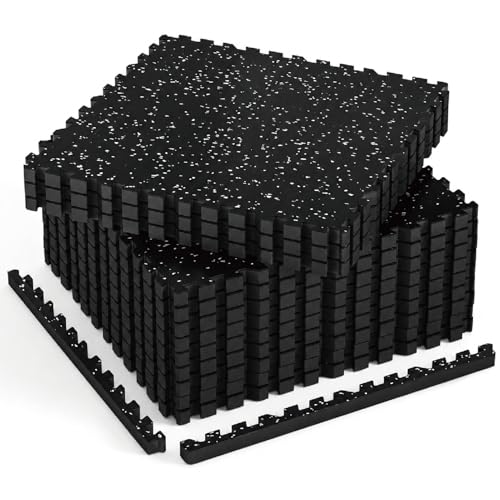
AIRHOP Ultra-Thick Rubber Top Gym Flooring
What We Like
- 1-inch dual-layer for heavy impact
- Textured rubber top resists sweat
- Interlocking edges stay connected
- Includes detachable border strips
Trade-offs
- Needs 24-48 hour airing for scent
- Heavy at 29 pounds for 12 tiles
A full inch of dual-layer construction, with a rubber top heat-pressed to dense EVA foam, provides cushioning for joints during high-intensity training and helps absorb impact noise from treadmills or plyometric jumps. That thickness also helps protect floors from dropped weights, making it a practical choice if you train in an apartment or basement where noise reduction matters. The textured rubber surface delivers reliable traction even under sweaty conditions, and the interlocking tiles click together in minutes without tools, so you can set up a dedicated zone that stays connected during vigorous movement.
That rubber-and-foam combo can smell fresh out of the box; the manufacturer recommends airing the tiles for a day or two before laying them down, which is a minor planning step. Also, while the top layer handles general high traffic well, very heavy stationary machines with small feet might benefit from an extra equipment mat on top to prevent indentation. Compared to the ProsourceFit Extra Thick 1-inch mat, which is all EVA foam, the AIRHOP’s rubber top gives it far better durability against sliding and wear, making it the heavier-duty option for serious lifting.
Product photos
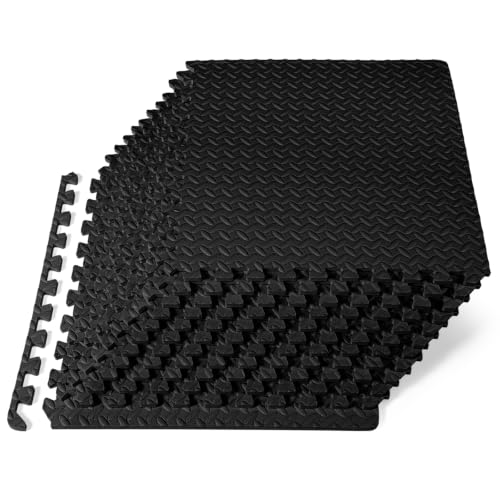
ProsourceFit Exercise Puzzle Mat
What We Like
- Non-toxic, phthalate-free EVA foam
- Water-resistant and noise-reducing design
- Lightweight interlocking tiles for easy assembly
- Includes end borders for a polished look
Trade-offs
- Only 1/2 inch thick limits soundproofing
- Best results only on flat, hard surfaces
At just half an inch thick, this ProsourceFit puzzle mat keeps your floor protected without turning your workout space into a marshmallow. The high-density EVA foam cushions joints during bodyweight moves or light dumbbell work, and its water-resistant surface wipes down fast after a sweaty session. For someone setting up a home gym on a leaner budget, the 48-square-foot coverage with twelve tiles gives you plenty of room for yoga, stretching, or a small circuit area. You get a lot of space without overspending on features you might not use.
The trade-off shows up when you compare it to the thicker AIRHOP 1-inch rubber-top option. That extra half inch makes a real difference for sound absorption under heavy equipment or high-impact moves, and the rubber surface handles treadmill weight without dimpling. It’s a smart, affordable starting point for lighter training, especially if your floors are already flat and you don’t need serious noise control.
Product photos
AIRHOP Upgraded Rubber Top Exercise Mats

What We Like
- Textured rubber top resists slipping
- Interlocking locks stay secure during use
- Waterproof surface wipes clean easily
- Recycled rubber handles heavy equipment
Trade-offs
- At 29 lbs, the set is heavy to move
- Heavy 29-lb set makes rearranging the layout a chore
A 0.56-inch dual-layer design with a textured rubber top and high-density EVA foam bottom means this mat protects your floor from scratches and scuffs. It also keeps heavy gear like dumbbells or a treadmill from sliding around. That combination makes it a smart pick if you want reliable grip and shock absorption without paying a premium for extra thickness. It covers 48 square feet with 12 interlocking tiles, so you can set up a dedicated workout zone in a garage, basement, or home gym without worrying about gaps forming mid-session.
At 29 pounds for the 12-tile set, this flooring is heavy enough that rearranging your gym layout requires real effort. The 0.56-inch thickness provides solid cushioning for steady strength training, yoga, and cardio, but buyers who want maximum impact absorption for heavy deadlifts or jumping should check thicker options. The dual-layer rubber-and-EVA design keeps equipment from scratching the floor and stays non-slip during workouts, which is what most home gym users actually need.
Product photos
ProsourceFit Extra Thick Exercise Puzzle Mat

What We Like
- 1-inch thick EVA foam cushioning
- Non-skid textured surface for traction
- Water-resistant and noise-reducing
- Includes 12 end borders for clean edges
Trade-offs
- Only 24 sq ft coverage limits large setups
- Tiles shift apart during intense workouts.
The ProsourceFit Extra Thick Exercise Puzzle Mat uses 1-inch high-density EVA foam, which provides cushioning and support for home gym floors. The non-skid textured surface helps keep you stable during workouts, and the water-resistant design handles sweat without soaking in. With 24 square feet of coverage from six tiles and 12 end borders for a finished look, this mat is easy to assemble and portable for apartment or home use.
If your setup stays mobile and you prioritize shock absorption and quiet over maximum equipment weight, this is the extra-thick pick that gets the job done.
Product photos
SUPERJARE Large Exercise Equipment Mats

What We Like
- Extra-large tiles reduce seams
- Dual-layer rubber and EVA foam
- Noise reduction up to 30-50%
- Non-slip, waterproof surface
Trade-offs
- 0.56 in thickness less than 1 in options
- 9 tiles only; fewer than some kits
- Heavier than thin foam mats
With 56.3 square feet of coverage from just nine tiles, this mat lets you cover a large area with fewer seams than most puzzle mats. Each tile measures 30.1 inches square, which means less shifting and edge lifting during heavy lifts or cardio. The dual-layer build, rubber on top, EVA foam underneath, handles dropped dumbbells and jumping while protecting your floor and joints.
The SUPERJARE mat’s 0.56-inch thickness provides substantial cushioning for most workouts, though the 1-inch AIRHOP Ultra-Thick offers more padding for heavy weight drops. The larger 30-inch tiles reduce seams and edge lifting, making installation faster and more secure. For general strength training, HIIT, or yoga, this mat balances coverage, stability, and noise reduction effectively.
Nisorpa Rubber Exercise Equipment Mats

What We Like
- 1-inch thick full rubber construction
- Anti-vibration pads reduce noise
- Crush-resistant for heavy equipment
- Waterproof and easy to clean
Trade-offs
- Only 4 tiles cover a small area
- No interlocking edges, uses separate buckles
A full inch of dense rubber makes these tiles effective at reducing vibration. That thickness and material mean heavy gear like treadmills or squat racks won’t damage your floor, and the floors below you stay quieter. For anyone living above a neighbor or just wanting a stable platform for noisy machines, this is the kind of solid foundation that turns a rattle into a whisper. The anti-vibration feature is real, and the crush-resistant build helps protect your floor from stress-related wear.
Coverage and assembly are the main compromises here. With only four 20-inch tiles, you’re covering just over 2.5 square feet, so this set works best under a single machine rather than a whole gym area. The separate buckles take a bit more patience than interlocking puzzle edges, though they do let you reposition tiles easily. Compared to the AIRHOP 1-inch Ultra-Thick Rubber Top Gym Flooring, which gives you 48 square feet of interlocking coverage in a similar thickness, the Nisorpa is better suited for a targeted anti-vibration spot under a washing machine or one heavy piece of gear rather than a full workout zone.
Product photos
Marcy Exercise Equipment Mat

What We Like
- Non-slip textured top grips equipment
- 1/4 inch foam cuts noise and vibration
- Lightweight at 5 pounds, easy to move
- Wipes clean with a damp cloth
Trade-offs
- At 0.2 inches, thinner than many soundproof mats
- Fixed 60 x 36 inch size limits larger machines
The half-inch foam layer absorbs the thump and hum from a running treadmill or a spinning flywheel before it reaches the floor, which matters if you live upstairs or share walls. The non-slip textured top keeps your machine planted, and the flat bottom grips the floor so nothing wanders mid-stride. At just five pounds, you can roll it up with one hand and stash it when the room needs to be a living room again. This mat is built for the person who owns a standard treadmill or bike and wants a simple, lightweight protector that quiets things down without turning their space into a gym floor factory.
Thickness is the main compromise here. At 0.2 inches, this mat is thinner than some alternatives, which means less cushion for heavy impact or for machines that really pound the ground. It may not deaden sound as deeply for a runner going all out. But for most home gym setups, the Marcy mat does exactly what it promises: it protects your floor, cuts the noise that bothers downstairs neighbors, and stays put. It is a focused tool for a specific job, not a universal gym floor solution, and that focus is what makes it work so well for treadmill owners who want something light and effective.
Product photos
Amazon Basics Treadmill Mat

What We Like
- Non-slip surface keeps equipment secure
- Reduces noise and vibration
- Wipe-clean maintenance is effortless
- Fits most home treadmills and bikes
Trade-offs
- At 0.3 inches thick, minimal cushioning
- Single fixed size limits custom layouts
The 0.3-inch thickness of this mat is just enough to protect your floor and quiet down the thumping of a treadmill or stationary bike, but don’t expect any plush cushioning underfoot. It’s a straightforward slab of high-density PVC that does exactly what a floor protector should: stay put, soak up vibration, and wipe clean in seconds. If you want a no-fuss way to keep your workout area from damaging your flooring or annoying the neighbors downstairs, this is the kind of simple solution that just works.
That thin profile is the main compromise. Compared to the TroyStudio interlocking tiles at 0.4 inches thick, the Amazon Basics mat is thinner, which may affect its cushioning for some uses. It’s also a single 72 x 30-inch rectangle, so you can’t piece together a custom shape for odd spaces. But if your priority is a budget-friendly, slip-resistant pad that slides under your treadmill and stays out of the way, this mat delivers exactly what it promises without the fuss of puzzle pieces.
Product photos
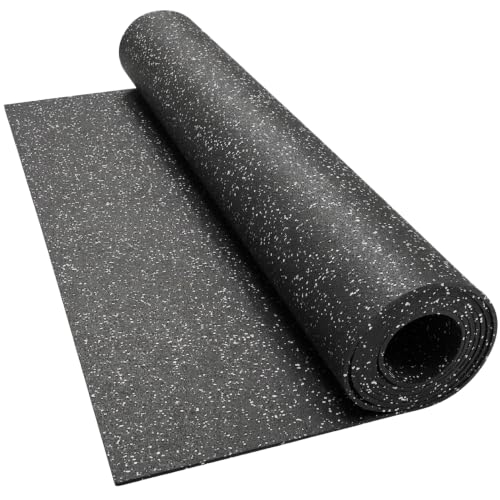
Go4Cork Rubber Gym Flooring Roll
What We Like
- Made from recycled truck tire rubber
- Slip-resistant even when wet
- Sound-dampening and shock-absorbing
- Glue-down install stays permanently in place
Trade-offs
- Permanent glue-down install is not portable
- At 1/4 inch, less cushion than thicker mats
- Requires 24-48 hour acclimation before install
A single 3.5 x 10 foot roll covers 35 square feet in one continuous sheet, so there are no separate tiles to shift or curl at the edges under heavy equipment. The recycled truck tire rubber buffings and virgin rubber give it a smoother finish with fewer contaminants and less odor than whole-tire crumb rubber. That matters if you are sensitive to smells in a home gym or studio. It bonds permanently with adhesive, so once it is down, it stays down, ideal for a dedicated space where you do not plan to rearrange.
Glue-down installation is permanent, so this is not the mat to toss in a closet or take to a new apartment. Compared to interlocking tile options like the ProsourceFit Exercise Puzzle Mat, the Go4Cork roll offers a single-piece surface with no gaps between tiles but demands more commitment to set up. At a quarter-inch thick, it cushions impact and dampens noise and vibrations, but if you need more cushion for heavy drops or high-impact moves, a thicker tile might suit you better. For a fixed gym floor that uses recycled materials, this is a practical choice.
Product photos
How We Evaluated Soundproof Exercise Mats
Our research started with the physics of sound: mass and density stop impact noise, while open-cell foam absorbs airborne noise. We combed through product specs, manufacturer data sheets, and patterns in thousands of owner reviews to find which mats actually deliver on their noise-reduction claims.
Three criteria mattered most. First, density and material, a solid rubber mat stops vibration better than soft foam, so we prioritized dense constructions for heavy equipment. Second, thickness, a one-inch mat absorbs a dropped plate far better than a quarter-inch one, but thinner mats fit under machines without raising them too high. Third, surface texture and edge design, interlocking edges must stay connected during burpees, and textured tops keep equipment from sliding.
The honest limit of a research-led evaluation is that we cannot measure decibel reduction in a lab. We rely on published NRC ratings, owner reports about neighbor complaints, and expert round-ups on how to soundproof a home gym to separate marketing claims from real-world performance.
What To Look For In Soundproof Exercise Mats
Choosing the right mat means balancing noise control with your specific workout style. Here is what matters most.
Focus on density first, then thickness. A dense rubber mat stops impact vibration better than thick foam. Match the mat type to your equipment: interlocking tiles for general floors, single sheets for machine pads, and ultra-thick rubber for heavy drops.
Density and Material Composition
Soundproofing relies on density. A dense rubber mat absorbs the energy of a dropped barbell, while lightweight EVA foam mostly muffles foot scuffs and light movement. The TroyStudio mat uses high-density foam with an NRC of 0.87, meaning it absorbs most sound waves. For heavy impact, the AIRHOP Ultra-Thick and the Nisorpa mats use solid rubber that stops vibration effectively.
Foam mats like the ProsourceFit options are lighter and easier to move, but they compress under heavy equipment. If your gym has a treadmill, squat rack, or Olympic bar, look for rubber mats that resist crushing over time.
Thickness and Impact Absorption
Thickness directly affects how much thud reaches the floor below. A quarter-inch mat like the Marcy or Amazon Basics cuts vibration from a treadmill motor but does nothing for a dropped dumbbell. Half-inch mats like the SUPERJARE offer a middle ground with decent dampening for moderate workouts.
Full one-inch mats like the AIRHOP Ultra-Thick and ProsourceFit Extra Thick are the standard for home gyms where weights get dropped. That extra half-inch of foam or rubber absorbs the shock before it travels through the subfloor. For renters on upper floors, this thickness is often the difference between a quiet workout and a noise complaint.
Surface Texture and Stability
A mat that slides or buckles under your feet is dangerous. Look for interlocking edges that stay connected during lateral movements and textured surfaces that grip your shoes and equipment. The TroyStudio and AIRHOP mats use interlocking tabs that prevent creeping, while the Nisorpa uses separate buckles that hold firm under a single machine.
The Go4Cork roll uses a glue-down install that eliminates movement entirely, making it a permanent solution for dedicated gym spaces. For portable setups, check that the interlocking gym tiles have tight tolerances so they don’t separate during a sprint interval.
- Place the mat on a hard, level subfloor for best soundproofing, carpet reduces the mat’s effectiveness.
- Check that the mat extends at least six inches past the footprint of your equipment.
- For heavy gear, choose rubber or dense foam over standard EVA to avoid permanent compression.
- Measure your space before buying to confirm coverage, especially with smaller tile kits.
- Allow new rubber mats to air out for 24-48 hours if they arrive with a strong scent.
A general rule: if you can lift the mat with one hand, it is probably not dense enough to stop heavy impact noise.
Soundproof Exercise Mats Compared
The table below compares all ten soundproof exercise mats by thickness, material, and best use case so you can see at a glance which fits your space and workout style.
| Product | Thickness | Material | Tile Size |
|---|---|---|---|
| TroyStudio Thick Sound Absorbing Interlocking Floor Mats | 0.4 inches | 100% polyester fiber felt | 11 x 11 inches |
| AIRHOP Ultra-Thick Rubber Top Gym Flooring | 1 inch | Rubber top + EVA foam base | 24 x 24 inches |
| ProsourceFit Exercise Puzzle Mat | 1/2 in | High-density EVA foam | 24 x 24 in |
| AIRHOP Upgraded Rubber Top Exercise Mats | 0.56 in | Rubber top + EVA foam bottom | 24 x 24 in |
| ProsourceFit Extra Thick Exercise Puzzle Mat | 1 inch | High-density EVA foam | 24 x 24 inches |
| SUPERJARE Large Exercise Equipment Mats | 0.56 in | Rubber top / EVA foam base | 30.1 x 30.1 in |
| Nisorpa Rubber Exercise Equipment Mats | 1.0 inches | High density full rubber | 19.7 x 19.7 inches |
| Marcy Exercise Equipment Mat | 0.2 inches | Foam | N/A |
| Amazon Basics Treadmill Mat | 0.3 inches | High-density PVC | N/A |
| Go4Cork Rubber Gym Flooring Roll | 1/4 inch | Recycled rubber buffings | N/A |
Frequently Asked Questions
What is the best material for soundproof exercise mats?
Dense rubber offers the best soundproofing for impact noise because its mass absorbs vibration before it travels through the floor. High-density foam works well for airborne noise like music or footsteps but compresses under heavy equipment. For a home gym with dropped weights, choose rubber; for yoga or light bodyweight work, foam is sufficient.
How thick should a soundproof gym mat be?
For a treadmill or exercise bike, a quarter-inch to half-inch mat cuts motor vibration and floor scuffs. For dropping weights or doing plyometrics, one-inch mats provide meaningful impact absorption. Thicker mats also help isolate sound in shared buildings, but they raise the equipment height slightly.
Can I put soundproof mats on carpet?
Most soundproof mats work best on hard, flat surfaces. Carpet reduces the mat’s stability and can dampen the noise-blocking effect because the mat sinks into the pile. If you must use carpet, choose a dense rubber mat with a non-slip bottom, and expect less sound isolation than on a concrete or wood subfloor.
Do interlocking puzzle mats reduce noise effectively?
Interlocking mats reduce noise when they are made from dense material and installed on a level floor. The seams can let sound leak through if the tiles separate during use. Look for mats with tight-fitting tabs and consider taping the seams for a more complete sound barrier.
What is the difference between soundproofing and noise reduction in exercise mats?
Soundproofing blocks sound from leaving the room entirely, which requires significant mass and sealed edges. Noise reduction lowers the volume of impact and vibration but does not eliminate it. Most exercise mats are noise-reducing, not fully soundproof, meaning they make workouts quieter for neighbors but do not create a silent room.
The Bottom Line
The TroyStudio Thick Sound Absorbing Interlocking Floor Mats are the best overall pick for most home gym owners because they combine high-density sound absorption with a low profile that fits under equipment without raising it awkwardly. If your workouts involve dropping heavy weights or running on a treadmill in a shared building, the AIRHOP Ultra-Thick Rubber Top Gym Flooring gives you the one-inch rubber construction that stops vibration cold.
For budget-conscious shoppers, the ProsourceFit Exercise Puzzle Mat offers decent noise reduction and floor protection for light to moderate workouts. The single most important factor in choosing a soundproof mat is matching the density and thickness to the actual impact your workout produces. A foam mat under a squat rack will compress and fail, while a rubber mat under a yoga session is overkill.
