
10 Best Exercise Bikes For Knee Pain in 2026
This post contains affiliate links. As an Amazon Associate, we earn from qualifying purchases.
If knee pain has sidelined your workouts, the right exercise bike can keep you moving without making things worse. The Niceday Recumbent Exercise Bike earns our Best Overall nod for its 16 resistance levels that allow gentle progression and a deeply supportive ergonomic seat. For those needing the lowest joint impact, the YOSUDA Recumbent Bike offers a protective design, while the CURSOR FITNESS Upright Bike provides a quiet, adjustable option for riders who prefer an upright position.
The challenge with knee pain is finding cardio that strengthens without aggravating the joint. Too much impact or the wrong bike geometry can turn a good session into a setback. The right bike uses smooth, adjustable resistance and a comfortable riding position to let you build strength safely.
This guide is built on a research-based evaluation of specifications, manufacturer documentation, and patterns in owner feedback. We focused on the features that matter most for knee-friendly cycling so you can choose with confidence.
Top 10 Exercise Bikes For Knee Pain in the Market
Certain content that appears on this site comes from Amazon. This content is provided "as is" and is subject to change or removal at any time.
The Best Exercise Bikes For Knee Pain, Reviewed
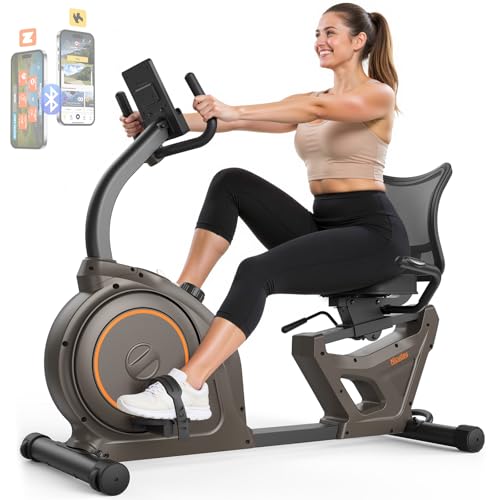
Niceday Recumbent Exercise Bike
What We Like
- 16 resistance levels for gentle progression
- Ergonomic seat and mesh backrest
- Quiet magnetic flywheel operation
Trade-offs
- At 84 lb, moving it takes effort
- No preset workout programs included
- Mechanical knob, not digital resistance control
Stability is critical when working around knee pain, because the last thing you want is to tense up gripping the handlebars for balance. The ergonomic seat combines a high-density soft sponge cushion with a breathable mesh backrest, so you can sit back comfortably during longer sessions. An 8-position adjustment lets you dial in leg extension precisely, avoiding overreach that can aggravate sensitive joints.
The trade-off is that this bike is heavy at 84 pounds, so rearranging your room requires the transport wheels and some effort. It also uses a manual resistance knob rather than digital presets, which keeps things simple but means you adjust by feel instead of tapping a screen. Compared to the YOSUDA Recumbent Bike, which has a 350-pound limit and a lighter 58.4-pound frame, the Niceday feels more substantial for larger users or anyone who wants extra stability during recovery. If you prefer programmable workouts, the Sunny Health & Fitness Smart Recumbent Bike offers app integration, but the Niceday still connects to Kinomap and Z-WIFT via Bluetooth for guided sessions.
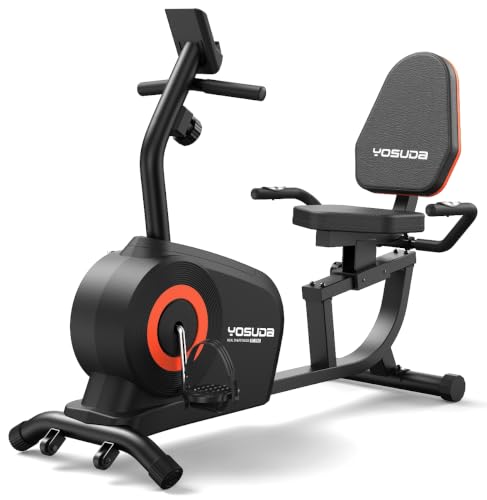
YOSUDA Recumbent Exercise Bike
What We Like
- Recumbent design protects knees and lower back
- Adjustable seat fits riders from 4'9" to 6'2"
- Quiet magnetic resistance for distraction-free workouts
- 350 lb capacity with stable steel frame
Trade-offs
- Seat adjusts with a knob, not a quick-release lever
- Heavier than some comparable recumbent bikes at 58.4 lbs
A 350-pound capacity on a light commercial-grade steel frame means this recumbent bike handles heavier riders without wobble or flex. That stability is exactly what you want when knee pain makes every pedal stroke feel precarious. The recumbent design, developed with input from rehabilitation professionals, is meant for low-impact exercise that protects joints, making it a comfortable option for seniors, larger-bodied users, pregnant women, and those with knee or lower back concerns. That adjustable seat slides to fit anyone from 4’9″ to 6’2″, so different household members can find their ideal riding position.
At 58.4 pounds, this bike is lighter than several competing recumbent models, which makes it easier to reposition on a hard floor but also means it won’t anchor itself as firmly during hard pedaling. The 16 levels of magnetic resistance let you dial in effort from easy to challenging, and owners say the drivetrain stays quiet enough for use while others are in the same room.
Product photos
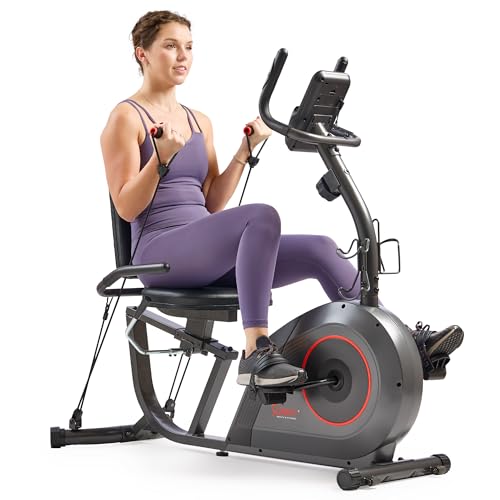
Sunny Health & Fitness Smart Recumbent Bike
What We Like
- Includes two 20 lb resistance bands
- Quiet magnetic belt-drive mechanism
Trade-offs
- 300 lb capacity is lower than some alternatives
- At 63.9 lb, moving it requires effort
The magnetic belt-drive keeps things whisper-quiet, and the padded seat with flip-away side handle makes getting on and off easy, especially if your knees need a gentler start. It also comes with two 20 lb resistance bands, so you can work your upper body while pedaling, turning a low-impact leg session into a full-body one.
Weight capacity is a trade-off: 300 lb is workable for many, but if you need more room, the Niceday recumbent bike supports 400 lb. At 63.9 pounds, this Sunny model is lighter than the Niceday (84 lb), so it’s easier to reposition, but it also feels less planted during vigorous pedaling. For someone who values a rich, free app experience and doesn’t need the highest capacity, this is a smart, quiet companion for knee-friendly cardio.
Schwinn Fitness 230 Recumbent Bike

What We Like
- Enhanced Bluetooth for app-based tracking
- 16 levels of magnetic resistance
- Contoured seat with large vented back
Trade-offs
- At 80 lbs, moving it is a two-person job
- Explore the World route feature requires a paid subscription
This makes it a strong fit for anyone who wants structured, app-guided workouts without leaving home. The contoured seat with a large vented back supports a relaxed riding position, which helps keep pressure off sore knees during longer sessions.
At 80 pounds, this bike stays planted during pedaling but is a chore to move compared to lighter options like the YOSUDA Recumbent Bike. The telemetry heart rate system works with both a chest strap and grip sensors, so you can choose the method that fits your routine. If app connectivity and route variety matter more than portability, this bike delivers a smooth, low-impact ride.
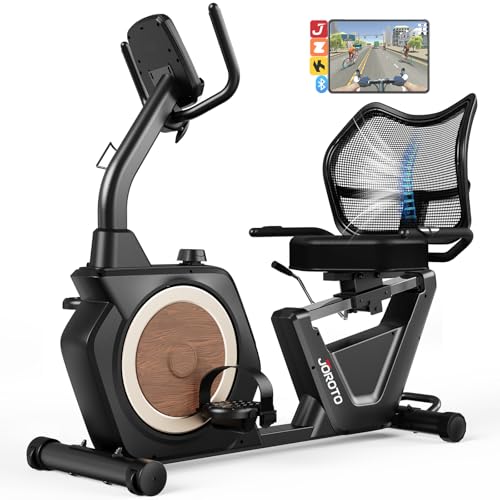
JOROTO Recumbent Exercise Bike
What We Like
- 400 lb weight capacity for heavier riders
- 16 magnetic resistance levels for quiet use
- Wide step-through design for easy mounting
- Bluetooth sync with JOROTO app and Zwift
Trade-offs
- At 83 lb, it is heavier than some recumbent bikes, making transport wheels necessary for moving
- No built-in fan or water bottle holder mentioned
A 400-pound weight capacity makes this recumbent bike one of the sturdiest options for heavier riders or anyone who wants a frame that feels rock-solid under load. The heavy-duty steel build and wide step-through design mean you can step on and off without awkward balancing acts, which is a real comfort if your knees are already complaining. With 16 magnetic resistance levels and an 11-pound flywheel, you get whisper-quiet pedaling that won’t disturb the household, suitable for gentle recovery spins or tougher endurance sessions. The included smart app sync with the JOROTO app, Kinomap, and Zwift adds a layer of motivation that turns a stationary bike into a virtual ride, keeping boredom at bay.
The sturdy frame and high capacity come with a weight cost: at 83 pounds, this bike is heavier than some models like the YOSUDA Recumbent (58.4 lb). The transport wheels are essential if you plan to move it between rooms. It also has a width of 26 inches, which is similar to many competitors, so measure your space to be sure. For someone who needs a bike that can handle a heavier rider or wants a quiet, app-connected machine that feels built to last, the JOROTO delivers where it counts. If portability or a smaller footprint is your priority, the lighter YOSUDA might be a better fit.
Sunny Health & Fitness Programmable Recumbent Bike

What We Like
- 24 pre-built workout programs
- Programmable resistance via digital console
- Quiet electro-magnetic belt drive
- Free SunnyFit app with 1,000+ workouts
Trade-offs
- 300 lb capacity is lower than some competitors
- At 61.8 inches long, requires more floor space
- No built-in touchscreen; relies on phone app
Twenty-four pre-programmed workouts and programmable resistance let you tailor intensity precisely, which is helpful for riders who want structured guidance without manual adjustments. The electro-magnetic belt drive is designed for quiet operation, making it suitable for shared living spaces. The free SunnyFit app adds over a thousand trainer-led sessions, giving you variety to keep your routine fresh.
The 300-pound weight limit and 55-pound frame are lighter than the Niceday Recumbent Bike, which supports 400 pounds and weighs 84 pounds for added stability. At over five feet long, this model requires a dedicated floor area. But if your priority is guided, programmable workouts with built-in routines and app integration, it offers a structured experience.
NordicTrack 10 Recumbent Bike

What We Like
- 26 digital resistance levels for precise intensity
- 10" HD touchscreen with iFIT workouts
- Cushioned seat with lumbar support
- Extra-wide pedals with adjustable straps
Trade-offs
- Requires iFIT Pro Membership for full features
- Heavier than many recumbent bikes at 157 lb
The 26 digital resistance levels let you dial in exactly the right amount of effort, from gentle recovery spins to more challenging cardio. That precision, paired with the 10-inch HD touchscreen and iFIT’s library of guided workouts, provides a structured training experience. The cushioned adjustable seat with lumbar support helps keep you comfortable during longer sessions, and the extra-wide pedals with straps help keep your feet stable and aligned.
The full interactive experience requires an iFIT Pro Membership, so you’re committing to a monthly subscription to unlock the streaming classes and entertainment features that make this bike shine. At 157 pounds, it’s also noticeably heavier than something like the Niceday Recumbent Bike, which means moving it around the room takes more effort, but that weight also contributes to stability during workouts. If you value guided training and don’t mind the subscription, this bike delivers an engaging ride.
Product photos
CURSOR FITNESS Recumbent Exercise Bike
What We Like
- Ultra-quiet 25dB magnetic resistance
- Ergonomic spine and lumbar support
- Real-time heart rate sensors
- Sturdy 350 lb steel frame
Trade-offs
- No app connectivity for guided workouts
- Heavier than some similarly sized bikes at 62.8 lb
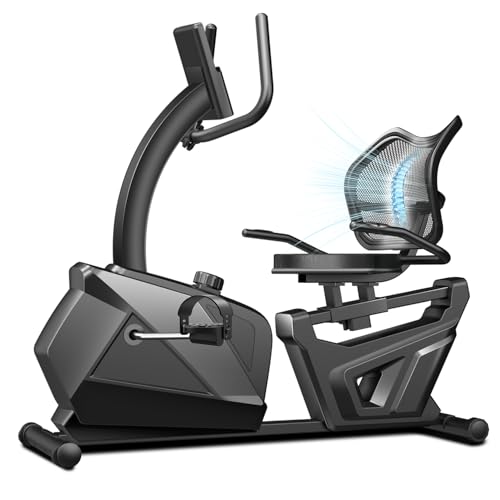
Running below 25 decibels, this recumbent bike is one of the quietest options you’ll find for home use. You can pedal during a late-night session or early morning without waking anyone up. The ergonomic curved backrest is designed to follow your natural spine, which means it absorbs vibration and reduces pressure on your lower back, making it a thoughtful choice if knee pain has you looking for gentle, low-impact movement. Magnetic resistance offers 16 levels split into clear zones (warm-up through muscle building), so you can start easy and gradually build strength without harsh noise or sudden jolts.
At 62.8 pounds, it’s heavier than the YOSUDA Recumbent Bike (58.4 lb), and while it has transport wheels, you’ll still need some effort to roll it between rooms. There’s also no app or Bluetooth connectivity, so if you prefer tracking workouts on your phone, you’ll rely on the built-in LED display for time, distance, calories, and pulse data. That said, the heart rate handle sensors let you check your pulse mid-ride without stopping, a nice touch for pacing yourself during recovery rides. Best for someone who prioritizes silence and spinal comfort over digital bells and whistles.
Product photos
CURSOR FITNESS Exercise Bike
What We Like
- 4-way adjustable seat and handlebar
- Quiet belt drive under 25 dB
- Tool-free assembly in 30 minutes
Trade-offs
- No recumbent seat for extra back support
- 300 lb capacity lower than some recumbent models
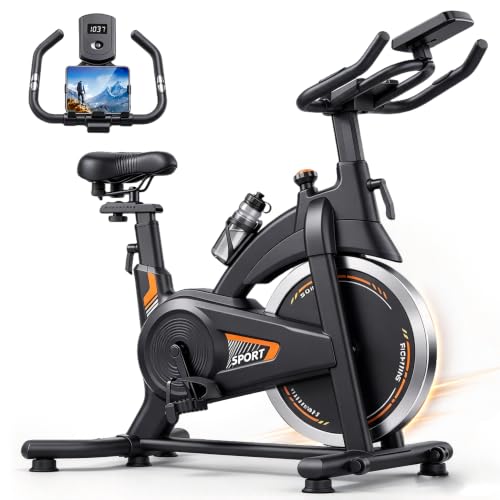
The 4-way adjustable seat and 5-level handlebar let you dial in a riding position that keeps your knees tracking straight, which is the whole point when you’re dealing with pain. It suits riders from 4’8″ to 6’2″, so most body types can find a comfortable fit without forcing an awkward angle. The belt drive stays below 25 dB, meaning you can pedal through a movie or an early morning session without waking the house.
This is an upright bike, not a recumbent. If your knee pain comes with lower-back issues, the more reclined seat on something like the Niceday Recumbent might feel gentler. At 39.7 pounds, the CURSOR is lighter than most recumbent options, which makes it easier to move. The 300-pound weight limit is adequate for most, but several recumbent competitors in this guide support 350 to 400 pounds. For low-impact rides where joint comfort is the priority, this bike delivers where it counts.
Product photos
TRMDDF Recumbent Exercise Bike
What We Like
- Ergonomic reclined seat and backrest
- Near-silent magnetic resistance system
- Fits users from 4'9" to 6'3"
- 400 lb weight capacity
Trade-offs
- At 77 lb, it's heavy to move regularly
- Mechanical resistance knob lacks preset programs
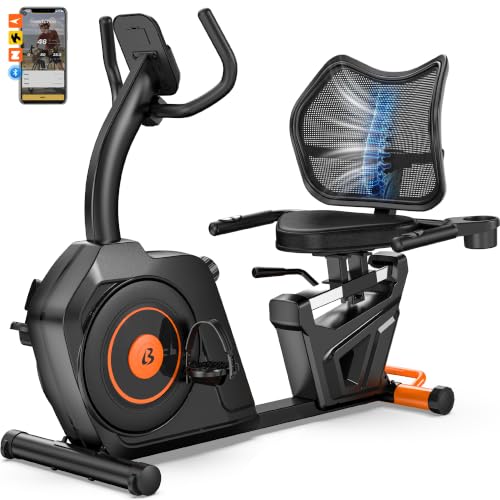
A 400-pound weight capacity and an ergonomic reclined seat with a supportive backrest mean this bike is built to keep your hips, knees, and lower back comfortable during longer rides. If joint-friendly, low-impact cardio is your priority and you want a bike that cradles your body rather than forcing you to lean forward, this model delivers exactly that.
At 77 pounds, the bike is heavy enough that you will want to use the built-in transport wheels when moving it. The mechanical resistance knob is straightforward to adjust mid-ride, but it does not offer preset workout programs. For someone focused on steady home cardio without extra complexity, that simplicity works well.
Product photos
How We Evaluated Exercise Bikes For Knee Pain
We started by looking at the core specifications of each bike: resistance type and range, seat adjustability, frame stability, and weight capacity. Manufacturer documentation told us about intended use and design philosophy. We then cross-referenced these details against patterns in owner feedback to understand what works in real homes.
The three criteria that mattered most were joint-friendly geometry, resistance smoothness, and adjustability. A recumbent bike naturally reduces knee strain by keeping the rider in a supported, reclined position. Magnetic resistance systems offer the smoothest, quietest ride. And a bike that adjusts to your exact height and leg length prevents awkward reaching that can cause pain.
A research-led evaluation has limits. If a bike has a common complaint about seat comfort or resistance noise, we note it. This approach gives you a clear picture of what to expect before you buy.
What To Look For In Exercise Bikes For Knee Pain
Choosing an exercise bike for sore knees means looking past flashy screens and focusing on the frame, the resistance, and the fit. The right bike lets you pedal smoothly through a full range of motion without forcing your knees into awkward angles.
Look for a recumbent bike with a well-padded seat and backrest, magnetic resistance with at least 8 levels, and a frame that supports your weight comfortably. Adjustability in the seat and handlebars is non-negotiable for protecting your knees.
Recumbent vs. Upright: Which Frame Protects Your Knees?
The frame style is the single biggest decision. Recumbent bikes place you in a reclined, seated position with your legs out in front. This takes pressure off the knees and lower back, making them the top choice for anyone with chronic pain or recovering from an injury. An upright bike mimics a traditional bicycle, which can be harder on the knees if the seat is too low or the resistance is too high.
Most of our top picks are recumbent for this reason. The YOSUDA Recumbent Bike and the Niceday Recumbent Bike both offer excellent lumbar support and a natural leg extension. If you prefer an upright position, the CURSOR FITNESS Exercise Bike offers 4-way adjustability to find a knee-friendly fit.
Resistance Type and Range: Why Magnetic Matters
Magnetic resistance is the gold standard for knee-friendly workouts. It uses magnets to create drag without friction, resulting in a smooth, silent pedal stroke. This lets you increase resistance gradually, which is critical for strengthening the muscles around the knee without a sudden, jarring load.
The Niceday Bike offers 16 levels of magnetic resistance, giving you plenty of room to progress. The NordicTrack 10 Recumbent Bike goes further with 26 digital levels for precise intensity control. Friction-based resistance systems can feel jerky and are harder to dial in, so we recommend sticking with magnetic for pain management.
Seat Comfort and Adjustability
A comfortable seat is not a luxury when you have knee pain, it is a necessity. If you are sliding around or your hips are misaligned, your knees will take the brunt. Look for a contoured, padded seat with a supportive backrest on recumbent models. The Schwinn 230 Recumbent Bike has a contoured seat with a large vented back that owners praise for long rides.
Adjustability is just as important. The seat should move forward and backward to match your leg length. The YOSUDA Bike fits riders from 4’9″ to 6’2″ thanks to its adjustable rail. A quick-release lever is nice, but a knob adjustment is fine if you are the only rider.
- Check that the seat moves forward and backward, not just up and down.
- Sit on the bike and pedal backward to feel if your knee tracks naturally.
- Confirm the weight capacity supports you and any other household members.
- Make sure the pedal straps or cages keep your feet secure without being restrictive.
- Measure your floor space and compare it to the bike’s footprint.
If the seat cannot move far enough forward or backward, your knees will hurt. Make adjustability your first check.
Exercise Bikes For Knee Pain Compared
The table below compares the key specs of our top ten exercise bikes for knee pain, helping you quickly find the right fit.
| Product | Weight Capacity | Resistance Levels | Product Weight |
|---|---|---|---|
| Niceday Recumbent Exercise Bike | 400 lbs | 16 | 84.0 pounds |
| YOSUDA Recumbent Exercise Bike | 350 lbs | 16 magnetic | 58.4 pounds |
| Sunny Health & Fitness Smart Recumbent Bike | 300 lb | 16 magnetic | 63.9 lb |
| Schwinn Fitness 230 Recumbent Bike | N/A | 16 | 80.0 lbs |
| JOROTO Recumbent Exercise Bike | 400 lbs | 16 magnetic | 83.0 pounds |
| Sunny Health & Fitness Programmable Recumbent Bike | 300 lb | 16 | 55.0 lb |
| NordicTrack 10 Recumbent Bike | N/A | 26 Digital | 157.0 lb |
| CURSOR FITNESS Recumbent Exercise Bike | 350 lb | 16 magnetic | 62.8 lb |
| CURSOR FITNESS Exercise Bike | 300 lb | N/A | 39.7 pounds |
| TRMDDF Recumbent Exercise Bike | 400 lbs | 16-level | 77.0 lbs |
Frequently Asked Questions
Is a recumbent or upright bike better for knee pain?
A recumbent bike is generally better for knee pain because it keeps your legs in front of your body, reducing the angle of knee flexion and taking pressure off the joint. The supportive seat and backrest also help you maintain proper form, which is crucial for avoiding further irritation.
How much resistance do I need for knee rehab?
You do not need a huge range, but you need smooth, incremental steps. Eight to 16 levels of magnetic resistance is plenty for most people. The key is being able to increase resistance by a tiny amount at a time so you can strengthen the muscles around your knee without overloading it.
Can an exercise bike make my knee pain worse?
Yes, if the bike is not set up correctly or if you push too hard too fast. An improperly adjusted seat can force your knee into an awkward angle. Start with zero resistance and a short, 5-minute session to see how your knee responds before increasing intensity.
What is the best type of resistance for knee-friendly cycling?
Magnetic resistance is the best choice. It provides a smooth, friction-free pedal stroke that is easy on the joints. Friction-based pads can cause a jerky or uneven feel that can aggravate knee pain. All of our top picks use magnetic resistance for this reason.
Do I need a bike with preset workout programs?
Not necessarily, but they can help. Preset programs take the guesswork out of pacing, which is useful when you are managing pain. The Sunny Health & Fitness Programmable Recumbent Bike offers 24 pre-built workouts. If you prefer to control intensity yourself, a simple bike with manual resistance is fine.
The Bottom Line
The Niceday Recumbent Exercise Bike is the best overall choice for most people managing knee pain. Its 16 smooth resistance levels, ergonomic seat, and quiet magnetic flywheel make it easy to start slow and build strength without aggravating your joints. It is a stable, supportive platform for recovery and long-term fitness.
If you need a higher weight capacity or want app connectivity, the JOROTO Recumbent Bike supports up to 400 lb and syncs with Zwift. For those on a budget who still want excellent joint protection, the YOSUDA Recumbent Bike offers a comfortable ride with a 350 lb capacity. Riders who prefer an upright position should look at the CURSOR FITNESS Exercise Bike for its extensive adjustability and quiet belt drive.
The single most important factor is fit. A bike that does not match your body will put stress on your knees no matter how good its specs are. Prioritize adjustability, start with low resistance, and listen to your body. That is the path to pain-free cycling.
