
10 Best Hot Yoga Mats in 2026
This post contains affiliate links. As an Amazon Associate, we earn from qualifying purchases.
For hot yoga, a standard mat turns into a slippery hazard. The Gaiam Cork Yoga Mat wins Best Overall because natural cork actually grips better as it gets wet, resists odors, and stays stable on studio floors. For those who want moisture-wicking traction without cork, the Gaiam Dry-Grip Yoga Mat is a top choice, while the HIGHTOP Hot Yoga Mat delivers sweat-activated grip at a budget-friendly price.
The real problem in a heated class isn’t flexibility, it’s staying upright. Sweat pools, mats slide, and poses suffer. What matters is a surface that grabs back when you’re dripping, plus enough cushioning to protect your joints without sacrificing stability.
This guide is research-based. We looked at manufacturer specs, materials science, and patterns in owner feedback to find the mats that hold up under heat and humidity. You’ll get clear picks for every need, from extra-wide surfaces to eco-friendly options.
Top 10 Hot Yoga Mats in the Market
Certain content that appears on this site comes from Amazon. This content is provided "as is" and is subject to change or removal at any time.
The Best Hot Yoga Mats, Reviewed
Gaiam Cork Yoga Mat

What We Like
- Natural cork resists sweat and odor
- Grip improves when damp from heat
- Eco-friendly TPE backing adds stability
Trade-offs
- At 0.2 inches, minimal padding for hard floors
- Cork surface needs moisture to optimize grip
A natural cork top that grips better when slightly damp is the key feature for hot yoga. The cork becomes softer and easier to grip as temperatures rise, so your hands and feet stay planted even in a steamy class. At 2.0 pounds and 68 inches long, it’s light enough to carry to the studio. The TPE bottom is non-slip, and the cork blocks dirt and odors for a hygienic surface. If you want a mat that works with your sweat, this one delivers without any issues.
At 0.2 inches thick, this mat is on the thinner side, so practicing on tile or hardwood might leave your knees and elbows feeling the floor. For hot yoga, though, the natural cork surface resists sweat and odor, and reviewers note it becomes easier to grip when slightly damp, ideal for heated classes. Just keep in mind you may want extra padding if your floor is unforgiving.
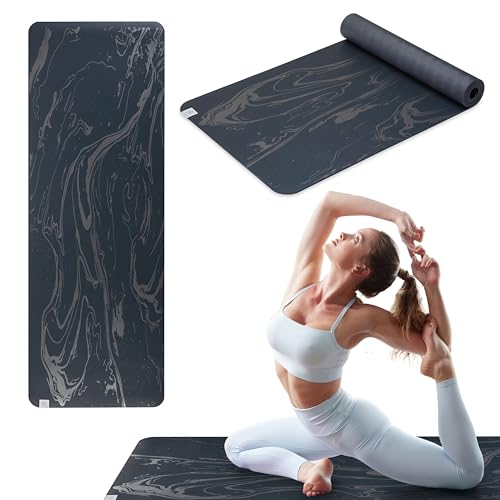
Gaiam Dry-Grip Yoga Mat
What We Like
- Moisture-wicking topcoat for sweaty grip
- Cushioned support for joints and spine
- Lightweight and easy to carry
- Suitable for hot yoga, Pilates, and fitness
Trade-offs
- At 4.8 lb, heavier than many travel mats
- Dimensions suggest a compact mat, not full-length
The moisture-wicking topcoat is the standout feature here, designed to pull sweat away from your skin so your hands and feet stay planted even in a dripping hot yoga class. That means no sliding out of downward dog halfway through your flow, and no need for a separate towel draped over the mat. The rubber base adds cushioning for your knees, wrists, and spine, which helps you hold poses longer without discomfort. At 4.8 pounds, it’s light enough to toss over your shoulder and carry to the studio, but still feels stable underfoot.
At 24.1 inches long, this mat is much shorter than standard 68- to 72-inch options like the Liforme Printed Yoga Mat. Taller users or anyone who likes to stretch out in savasana will find their feet hanging off the end. The listed dimensions suggest it’s designed for compact use rather than full-body coverage. For a longer surface with similar sweat-resistant grip, the Liforme is an alternative but weighs more and costs more.
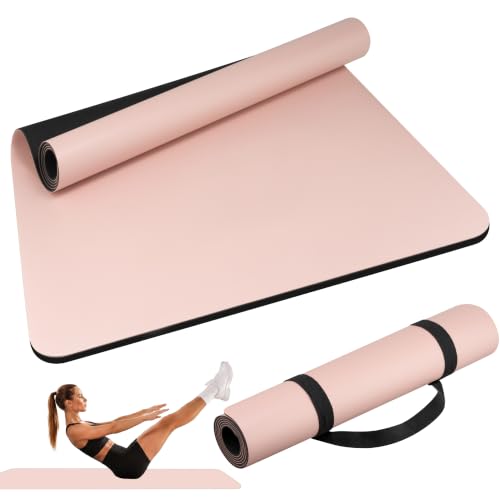
Wimwum Professional PU Yoga Mat
What We Like
- Extra-wide 27" surface for spacious movement
- PU top layer grips more as you sweat
- Natural rubber base stays flat and non-slide
- 5mm thickness balances stability and cushioning
Trade-offs
- At 6.8 lbs, it's heavy for frequent carrying
- Porous PU top shows temporary sweat marks
- Not a lightweight travel mat
A 27-inch width gives you nearly three extra inches of space compared to standard 24-inch mats. That extra room means broader shoulders and wide stances feel natural instead of cramped, especially during flow sequences where you need to shift your hands and feet without creeping off the edge. The PU top layer provides a grip that becomes stronger as you sweat, so in a hot yoga class you can hold your Downward Dog without needing a towel. At 5mm thick, it’s firm enough for balance poses yet soft enough to protect knees on hardwood floors, and the natural rubber base stays flat and never slides during dynamic movements.
The trade-off is weight. This mat is 6.8 pounds, which is noticeably heavier than lighter options like the Gaiam Cork Yoga Mat (2.0 lbs). That heft gives you the stability you want for a solid practice, but it’s not the mat you toss in a backpack for a quick lunchtime session. The carrying strap helps, and it’s simple to wipe clean after sessions. However, if you walk to the studio or hop between classes, the weight will remind you it’s built for home or studio use first. Choose this if you value a rock-solid, spacious practice surface over portability.
Product photos
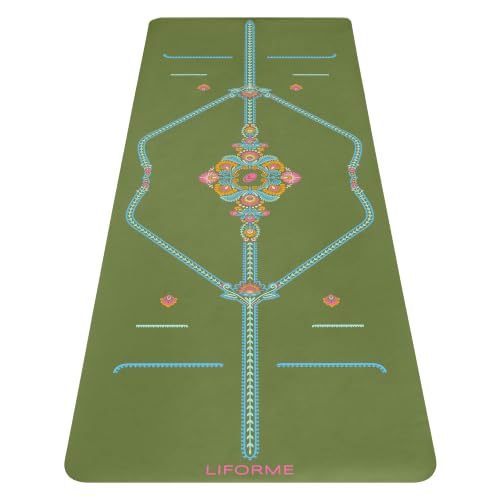
Liforme Printed Yoga Mat
What We Like
- Patented AlignForMe alignment guides for precision
- GripForMe surface improves grip as you sweat
- Eco-friendly, PVC-free, non-toxic materials
- Includes complimentary yoga bag for transport
Trade-offs
- At 5.5 lb, heavier than many hot yoga mats
The Liforme Printed Yoga Mat’s patented AlignForMe markers give you visual cues for foot and hand placement in every pose, so you can focus on form without guessing where your limbs should go. This makes it a smart pick for yogis who want to build confidence and precision, especially in fast-paced hot yoga where sweat can make you second-guess your alignment. The GripForMe surface actually turns moisture into traction, so the more you sweat, the more stable you feel, no slipping mid-warrior.
At 5.5 pounds, it’s noticeably heavier than a cork mat like the Gaiam Cork Yoga Mat (2.0 lb), so toting it to class adds a bit of heft even with the included bag. The 4.2 mm thickness offers a balance of stability and comfort, though some yogis with sensitive knees may prefer a thicker mat for extra padding on hard floors. For the yogi who values precise alignment and a grip that works with sweat instead of against it, this mat earns its spot as a premium choice.
HIGHTOP Hot Yoga Mat

What We Like
- Grip improves with sweat
- Non-slip TPE bottom stays put
- 6mm cushion for knees and wrists
- Eco-friendly vegan suede and TPE
Trade-offs
- Narrower (24") than many premium mats
- Suede needs spritzing for best grip
- Not as wide for broader frames
A vegan suede top that gets grippier as you sweat means this mat actually rewards a hot, sweaty practice instead of turning into a slip-and-slide. The 0.2-inch padding cushions knees and wrists without sacrificing the ground feel you need for balancing poses, and the TPE rubber bottom locks onto any floor so your downward dog stays put. For anyone who wants a reliable hot yoga mat without spending a chunk of their monthly budget, this is the kind of practical gear that makes showing up to class feel a little easier.
At 24 inches wide, this mat is noticeably narrower than the 26.8-inch mats from Liforme or Wimwum. If you tend to spread your hands and feet wide in wide-legged poses, you might find yourself reaching off the edge. The suede surface also works best with a quick spritz of water before you start, which is a small extra step but worth it for the grip. Compared to the Gaiam Cork mat, this one gives you better sweat-activated traction and more cushioning, though the cork option stays naturally odor-resistant without any spritzing.
Product photos
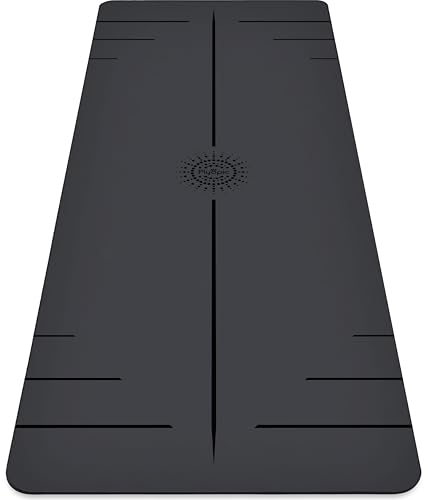
Plyopic Ultra Grip PRO Yoga Mat
What We Like
- Extreme wet grip for sweaty sessions
- PoseMap alignment for hands and feet
- Dense natural rubber cushions knees
- Vegan-friendly and PVC-free
Trade-offs
- At 5.3 lb, heavier than cork or TPE mats
- 0.2 in thickness offers less padding than thicker mats
The UltraGrip material keeps your hands and feet planted even as sweat builds, so you can hold poses through the sweatiest hot yoga sessions without sliding. The natural rubber base and integrated fiber layer lock the mat to the floor, preventing bunching or shifting during transitions. PoseMap alignment lines provide clear reference points for hands, feet, and center across thousands of poses, letting you check positioning and symmetry at a glance. For regular hot yoga practitioners, this mat maintains secure contact as moisture increases.
At 5.3 pounds, this mat is heavier than the 2-pound Gaiam Cork Yoga Mat, so lugging it to class takes more effort. Its 0.2-inch thickness offers less padding for knees and wrists than thicker mats, though the dense natural rubber cushions hard-floor pressure. If you prioritize grip over portability and prefer a firmer surface, this mat delivers where it counts. Compared to the Liforme Printed Yoga Mat, which also has alignment markings and a similar weight, the Plyopic offers a different balance of features at a lower price point.
Product photos
Ellylife Natural Rubber Yoga Mat
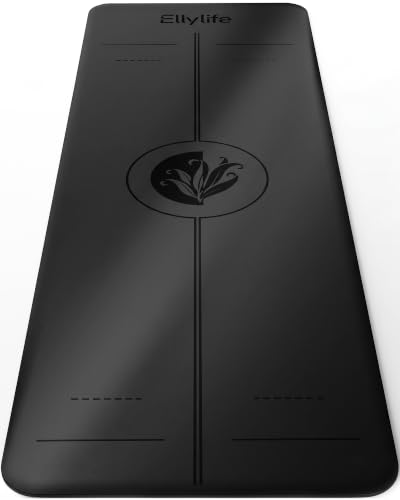
What We Like
- PU top stays grippy when sweaty
- Natural rubber bottom resists slipping
- Alignment lines for form checks
Trade-offs
- At 7.3 lb, heavier than most mats
- 5 mm thickness is moderate, not plush
At 74.8 inches long and 26.8 inches wide, this mat gives you more room to move than many standard mats, with plenty of space for stretching out or adjusting poses. The PU top surface stays grippy even when you sweat, and the natural rubber bottom holds firm on wood, tile, or concrete, so you won’t slide around during practice. The alignment lines printed on the surface let you quickly check your form and adjust the angles of your pelvis, spine, and limbs as you move.
At 7.3 pounds, this mat is noticeably heavier than a cork or TPE mat, so bringing it to class is more of a commitment than a grab-and-go. If you practice at home or don’t mind the extra heft for a longer surface, this mat delivers where it counts.
Product photos
Umineux Extra Thick Cork Yoga Mat

What We Like
- 10 mm thick cushions joints and knees
- Cork surface improves grip when sweaty
- Sustainable cork and TPE materials
- Lightweight with two carrying straps
Trade-offs
- At 3.4 lb, heavier than some cork mats
- Not suitable for those who prefer a thin, close-to-the-floor mat
With a 10-millimeter thickness, this mat offers noticeable cushioning for knees and joints during poses that put pressure on them. The cork surface is designed to soften as temperature rises, which can help maintain grip in warm conditions. Beginners or anyone with sensitive joints may appreciate the extra padding without losing stability.
At 3.4 pounds, it is heavier than some thinner mats, but the included carrying straps make transport manageable. The 72-inch length suits many practitioners, though those over six feet may want to check dimensions before buying. If joint comfort and sweat-friendly grip are priorities, this mat provides a plush foundation.
Heathyoga TPE Yoga Mat
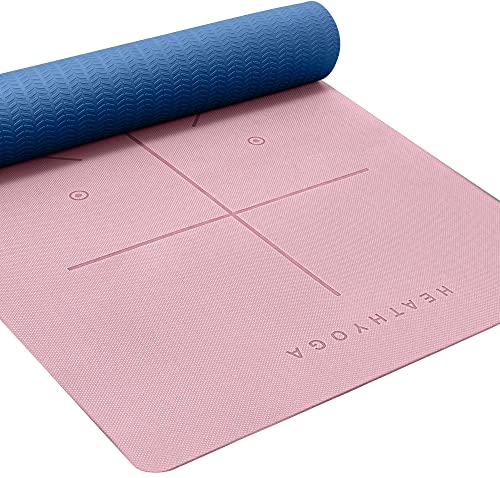
What We Like
- Eco-friendly TPE with SGS certification
- Double-sided non-slip grip for stability
- Body alignment lines guide proper form
Trade-offs
- At 6 mm, less cushion than thicker mats
- Heavier than cork mats at 2.8 pounds
A 2.8-pound TPE mat with alignment lines means you get a portable, eco-friendly surface that helps you find proper posture without wrestling with a heavy roll. The double-sided non-slip grip keeps you planted during flows. The SGS-certified material skips latex, PVC, and heavy metals, so it’s a cleaner choice for anyone trying to reduce their environmental footprint while still getting decent cushioning at 6 mm thick. This is the mat to grab if you want a budget-conscious, sustainable option that still guides your alignment and travels easily.
For the price-conscious eco-buyer who prioritizes portability and alignment over plush comfort, this mat delivers solid value without the heavy price tag or heavy weight. At 6 mm thick, it offers less cushion than thicker mats, so if your knees or wrists need extra padding for long holds, you might want a thicker alternative. The TPE surface is free from latex, PVC, and heavy metals, making it a healthier choice for your practice.
Plyopic All In One Yoga Mat

What We Like
- Built-in towel layer for sweat grip
- Eco-friendly SGS certified materials
- Reversible for gym use with footwear
Trade-offs
- 5.1 pounds is heavier than many travel mats
- Thin 0.1 inches offers minimal joint padding
The Plyopic All In One Yoga Mat solves a problem every hot yoga practitioner knows: the slip-slide struggle between sweaty skin and a slick mat. It’s ideal for anyone who sweats heavily in Bikram or Vinyasa and wants one piece of gear that handles moisture without extra fuss.
At 0.1 inches, this mat offers very little cushioning for knees, elbows, or hips on hard studio floors. If you need padding for sensitive joints or restorative poses, a thicker mat like the Liforme Printed Yoga Mat (listed at 4.2mm thick in its description) provides more comfort, though without the sweat-grip surface. The Plyopic also weighs 5.1 pounds, which is heavier than some alternatives like the Gaiam Cork Yoga Mat at 2.0 pounds, so it’s less ideal for carrying to class on foot. But for the hot yoga devotee who prioritizes grip over plushness and doesn’t mind the extra weight, this two-in-one design cuts out the towel hassle entirely.
Product photos
How We Evaluated Hot Yoga Mats
We started with the physics of a hot studio. A mat’s grip changes when moisture hits it, so we focused on materials that improve with sweat, cork, polyurethane (PU), and natural rubber. We cross-referenced manufacturer claims with patterns in owner feedback to confirm which mats perform as described.
Our three core criteria were grip under wet conditions, stability on hard floors, and durability in repeated hot classes. We also weighed thickness for joint protection, weight for portability, and width for comfort. A mat that slides or smells after a few sessions didn’t make the cut.
No research-led evaluation can replace personal practice, but we can tell you what the data shows. If you want to compare more options, our roundup of best hot yoga mats covers additional models and price points.
What To Look For In Hot Yoga Mats
The right hot yoga mat balances grip, cushioning, and weight. Here’s what to check before you buy.
A hot yoga mat should get grippier when wet, stay put on the floor, and resist odors. Cork, PU, and natural rubber are the top materials for this, while open-cell suede needs a spritz to activate.
Grip Material
Cork and polyurethane (PU) are the gold standards for wet traction. Cork’s natural texture becomes tackier as it absorbs moisture, while PU top layers create a chemical bond with sweat. Natural rubber bases anchor the mat to the floor. Avoid standard PVC or TPE if you sweat heavily, they get slick. For a deeper look at traction-focused options, check our guide on non-slip hot yoga mats.
Thickness and Cushioning
Hot yoga mats range from 0.1 inches (travel-friendly) to 10 mm (joint-saving). Thin mats (0.2 inches) give you the closest feel to the floor for balance poses, but your knees will complain. Thicker mats (5-6 mm) are the sweet spot for most people, offering cushion without wobble. If you have sensitive joints, a 10 mm cork mat like the Umineux Extra Thick is worth the weight.
Size and Portability
Standard mats are 24 inches wide and 68 inches long, but taller practitioners need extra length (72+ inches) and broader frames want width (27 inches). Weight matters: a 3-pound mat is easy to carry to class, while a 7-pound mat is better for home use. If you’re a Bikram regular, some of the best mats for Bikram are designed specifically for high-heat endurance.
- Check the mat’s weight if you commute to a studio, every pound adds up.
- Measure your height and stance width against the mat’s dimensions.
- Look for alignment lines if you practice solo and need form feedback.
A mat that suits your body type and carrying habits will get used more often than one that doesn’t.
Hot Yoga Mats Compared
The table below compares all ten mats on the specs that matter most for hot yoga: grip material, thickness, weight, and key features.
| Product | Dimensions | Thickness | Weight | Material |
|---|---|---|---|---|
| Gaiam Cork Yoga Mat | 68 x 24 in | 0.2 in | 2.0 lb | Cork top, TPE bottom |
| Gaiam Dry-Grip Yoga Mat | N/A | N/A | 4.8 lb | Rubber with moisture-wicking topcoat |
| Wimwum Professional PU Yoga Mat | 72 x 27 in | 5mm | 6.8 lb | PU top / Natural Rubber base |
| Liforme Printed Yoga Mat | 72.8 x 26.8 in | 4.2 mm | 5.5 lb | Eco-polyurethane / natural rubber |
| HIGHTOP Hot Yoga Mat | 72 x 24 in | 6mm | 2.4 lb | Vegan suede & TPE rubber |
| Plyopic Ultra Grip PRO Yoga Mat | 72 x 26 in | 0.2 in | 5.3 lb | Natural rubber + UltraGrip fiber layer |
| Ellylife Natural Rubber Yoga Mat | 74.8 x 26.8 in | 5 mm | 7.3 lb | Natural rubber + PU top |
| Umineux Extra Thick Cork Yoga Mat | 72 x 26 in | 10 mm | 3.4 lb | Cork top, TPE bottom |
| Heathyoga TPE Yoga Mat | 72 x 26 in | 6mm | 2.8 lb | TPE |
| Plyopic All In One Yoga Mat | 71.0 x 25.5 in | 0.1 in | 5.1 lb | Natural rubber |
Frequently Asked Questions
What makes a yoga mat good for hot yoga?
A good hot yoga mat uses materials that get grippier when wet, like cork, polyurethane, or natural rubber. It should also resist odors and stay put on slippery studio floors. Standard PVC mats become slick with sweat.
How thick should a hot yoga mat be for hot classes?
Most hot yoga practitioners prefer 5 to 6 mm of cushioning. This balances joint protection with stability for standing poses. Thinner mats (0.2 inches) offer better ground feel but less padding, while 10 mm mats are best for sensitive knees.
Can I use a regular yoga mat for hot yoga?
You can, but it won’t perform well. Most standard mats are made of PVC or TPE, which become slippery when wet. You’ll likely need a towel on top, and the mat may break down faster from heat and moisture.
How do I clean a hot yoga mat after class?
Wipe it down with a mild soap and water solution after each use. Cork mats need a gentle spray and air drying, while PU and rubber mats can handle a quick wipe with a damp cloth. Avoid machine washing or harsh chemicals.
What is the difference between cork and PU yoga mats?
Cork is naturally antimicrobial and resists odors, and its grip improves with moisture. PU (polyurethane) top layers also get tackier when wet but may show sweat marks temporarily. Cork is lighter and more eco-friendly, while PU often pairs with a rubber base for extra stability.
The Bottom Line
The Gaiam Cork Yoga Mat is our Best Overall pick for most hot yoga practitioners. Its natural cork surface grips harder as you sweat, resists odors, and the TPE backing keeps it stable on the floor. It’s ideal if you want a lightweight, eco-friendly mat that doesn’t need a towel to function.
If your practice demands something different, we have you covered. The Gaiam Dry-Grip Yoga Mat is best for travelers who want moisture-wicking grip in a compact package. The HIGHTOP Hot Yoga Mat is the budget-friendly option that still delivers sweat-activated traction and decent cushioning. For those with sensitive joints, the Umineux Extra Thick Cork Yoga Mat provides 10 mm of padding.
The single most important factor in a hot yoga mat is how it handles moisture. Pick a material that grips when wet, and everything else, cushion, size, weight, becomes a preference you can adjust. For more on the gear that makes hot yoga work, see our full list of hot yoga gear essentials.
