
9 Best Yoga Apparel in 2026
This post contains affiliate links. As an Amazon Associate, we earn from qualifying purchases.
The Manduka PRO Yoga Mat is our best overall pick because it combines a lifetime durability guarantee with a closed-cell surface that resists moisture and bacteria. For studio yogis who carry their mat daily, the lightweight Manduka PROlite Yoga Mat is a smart alternative, while the Gaiam Essentials Yoga Mat delivers solid cushioning at a budget-friendly price.
Choosing a yoga mat means balancing thickness, grip, weight, and material. A home practitioner might prioritize durability and easy cleaning, while a hot yoga student needs sweat-activated traction. A traveler wants something light enough to sling over a shoulder without sacrificing stability.
We built this guide by studying manufacturer specifications, material science, and patterns in owner feedback across dozens of mats. Our goal is to help you match the right mat to your specific practice style, whether you are a beginner stretching at home or a seasoned studio regular.
Top 9 Yoga Apparel in the Market
Certain content that appears on this site comes from Amazon. This content is provided "as is" and is subject to change or removal at any time.
The Best Yoga Apparel, Reviewed
Manduka PRO Yoga Mat

What We Like
- Lifetime durability guarantee
- Closed-cell surface resists moisture
- No-slip dot pattern on bottom
Trade-offs
- At 7.5 lb, heavy to carry daily
- Only recommended with Manduka mat cleaner
The closed-cell surface seals out moisture from sweat or accidental spills, which means the mat resists absorbing odors and bacteria between cleanings. For home practitioners who want to roll out the mat and start without extra prep, this feature reduces the need for frequent deep cleaning. A quick wipe with Manduka Yoga Mat Wash & Refresh is all that’s recommended to keep it hygienic, and other cleaners are not advised. This construction contributes to the mat’s lifetime durability, as moisture can’t degrade the dense PVC foam over time.
The trade-off is weight: at 7.5 pounds, this is a sturdy mat that you feel carrying to and from class or across the house. If portability matters more than stability, the Manduka PROlite shaves off nearly three pounds with a 4.7mm thickness and the same lifetime durability, making it easier to sling over a shoulder. But for home use or a dedicated studio spot, the PRO’s extra width and cushioning give you room to spread out and a surface built to last. It’s the kind of mat you buy once and rely on for years, so you can focus on the practice itself.
Product photos
Manduka PROlite Yoga Mat

What We Like
- Closed-cell surface resists moisture and bacteria
- Non-slip dot bottom stays put on floors
- Lightweight 4.6 lb for easy studio carry
Trade-offs
- At 71 inches, shorter than some taller practitioners
- 4.7mm cushioning feels firm for floor poses
- Only 24 inches wide limits sprawling movements
The 4.7mm thickness strikes a balance between feeling the floor and protecting your knees during poses. The closed-cell surface resists moisture, keeping the mat cleaner and more hygienic between sessions. It’s made in an emissions-free German facility from OEKO-TEX certified PVC, so it’s latex-free and built with quality materials. The non-slip dot pattern on the bottom keeps the mat firmly in place on studio or home floors, letting you focus on your practice without sliding. This mat is designed for yogis who want a reliable, lightweight piece of gear that holds up over time without absorbing sweat or odors.
The trade-off for that lightweight portability is a narrower, shorter footprint than some options. At 71 by 24 inches, it’s fine for most bodies, but if you’re over six feet or like to spread eagle, you’ll find your toes or fingers hanging off the edge. The PROlite keeps your bag light and your practice steady, as long as you don’t need the extra real estate.
Gaiam Essentials Yoga Mat
What We Like
- Textured non-slip surface for grip
- 6mm cushioning supports joints
- Extra-long 72-inch length
- Lightweight with carrying sling
Trade-offs
- PVC material needs airing out before use
- Requires 2-3 days of airing out before first use
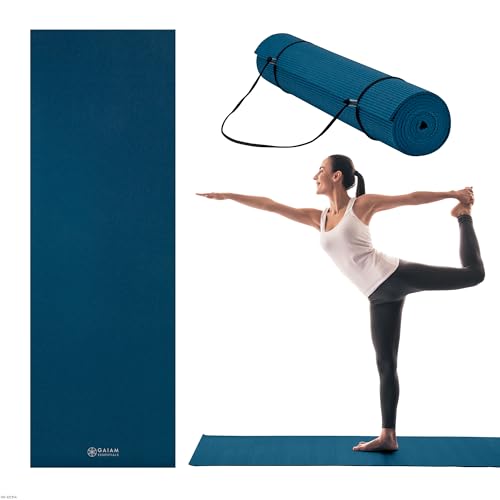
A 6mm thick mat strikes a smart balance between joint-friendly padding and stability for standing poses like Warrior or Tree. That quarter-inch of cushioning protects your knees, wrists, and hips on hard floors without making you wobble in balance work. It’s a thoughtful setup for anyone who wants reliable grip and enough comfort to finish a full Vinyasa or Pilates session without sore spots. The textured non-slip surface keeps hands and feet planted, and the included carrying sling makes it easy to toss over a shoulder and head to the studio or park.
At just three pounds, this mat is lighter than you might expect for a dense PVC mat, making it easier to carry to class or the park than some thicker foam options like the Gaiam Essentials Thick Yoga Mat. That denser material gives it a stable, grounded feel during standing poses and floor work, so it won’t shift under you. You do need to unroll it and let it air out for a couple of days before first use, a small upfront step common with new PVC mats. If you want a no-fuss, budget-friendly mat that won’t slide around and actually cushions your joints, this one delivers where it counts.
JadeYoga Harmony Yoga Mat

What We Like
- Non-slip natural rubber grip
- Free of PVC and harsh chemicals
- Made in USA with sustainable rubber
- Tree planted with every purchase
Trade-offs
- Thinner than many cushioned mats
- Open-cell rubber absorbs sweat and dirt
The 3/16-inch thickness and open-cell natural rubber give this mat a non-slip surface that provides optimal stability, helping you maintain poses with confidence. It is free of PVC, phthalates, and heavy metals, so you avoid harsh chemicals during practice. Plus, every mat sold means a tree planted, which makes the eco-friendly choice feel tangible.
The open-cell rubber surface delivers a grip that improves with sweat, but it comes with less cushioning than thicker mats like the Manduka PRO. If you have sensitive knees or spend a lot of time in prone poses, you might want to double up on padding. The open-cell surface also absorbs moisture and dirt more readily than closed-cell mats, meaning it will need regular cleaning with a gentle wash. At 68 inches long, it’s a bit shorter than the 71-inch Manduka PRO, which could be snug for taller practitioners. But for grip-first yogis who value sustainability, this mat delivers exactly what it promises.
Product photos
Liforme Printed Yoga Mat
What We Like
- Patented alignment markers guide proper form
- Grip improves with sweat for hot yoga
- Eco-friendly, non-toxic, PVC-free materials
- Comes with free yoga bag
Trade-offs
- Thinner cushioning than thicker 6mm options
- Heavier than many competing yoga mats at 5.5 pounds
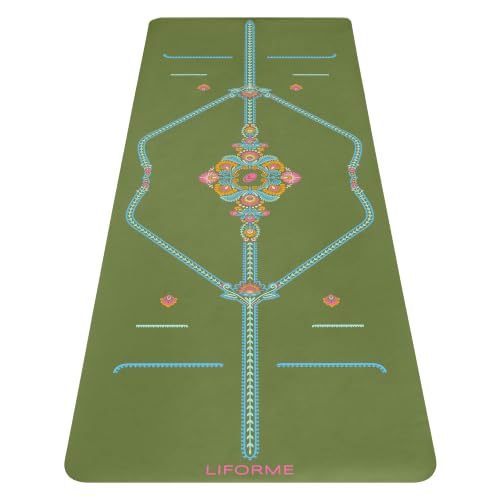
The patented AlignForMe system printed right on the surface means you can check your hand and foot placement mid-pose without guessing, helpful for alignment in a home practice or crowded studio. At 72.8 inches long and 26.8 inches wide, it offers noticeably more room than standard 24-inch-wide mats, so taller yogis or those who like a wide stance won’t feel cramped. The eco-polyurethane top layer actually grips better as you sweat, which makes this a natural fit for hot yoga or any practice where palms get slippery.
At 4.2mm thick, this mat’s cushioning feels firmer under knees and elbows than thicker mats like the Manduka PRO (6mm). If you spend a lot of time in prone poses or have sensitive joints, you might want to add a towel or pad underneath. At 5.5 pounds, it’s not the lightest to carry around, though the included bag helps. For someone who values precise alignment feedback and a grippy, planet-friendly surface, this mat delivers a thoughtful design that supports steady progress without gimmicks.
Gaiam Essentials Thick Yoga Mat

What We Like
- 10mm NBR foam cushions joints
- Textured surface reduces slipping
- Lightweight with carrying strap
- Easy to wipe clean
Trade-offs
- Initial foam odor needs 24-48 hours to air out
- Too soft for stable standing poses or vigorous yoga flows
With 10mm of high-density NBR foam, this mat helps reduce pressure on knees, hips, and joints during floor work, stretching, or low-impact yoga. That extra thickness makes it a natural fit if you’re starting out, working on hard tile or wood, or just want a forgiving surface for Pilates and recovery routines. The textured surface helps reduce slipping on most hard floors during dry workouts. And at just over two pounds with a strap included, it’s easy to roll up and carry between rooms or to a class.
Plush comfort comes with a softer feel, so if you’re transitioning into standing balances or more dynamic flows, you might miss the firm, grounded stability of something like the Manduka PRO. There’s also a brief new-mat odor that needs a day or two of airing out. For anyone prioritizing joint comfort over precision, especially on hard floors, this is a practical, budget-friendly choice.
Amazon Basics Extra Thick Yoga Mat

What We Like
- Half-inch thick NBR foam cushioning
- Lightweight at 2.2 pounds
- Textured grip surface for traction
- Includes elastic carrying strap
Trade-offs
- Hand wash only; no machine cleaning
- NBR foam lacks the durability of natural rubber mats.
A half-inch of NBR foam is the standout feature here, it turns hard floors into a forgiving surface for knees, hips, and elbows during floor poses or core work. That extra thickness also makes it a practical choice if you’re starting out or returning to yoga after a break, because it reduces the shock of weight-bearing stretches. The textured surface helps keep the mat from sliding around, and at 2.2 pounds with a carrying strap, it’s easy to toss over your shoulder and take to a studio or park. For someone who wants cushion without a heavy investment, this mat delivers the comfort that lets you focus on your breathing instead of your joints.
The mat’s 1/2-inch NBR foam cushioning provides comfortable padded support for yoga and floor exercises, making it a practical choice for home workouts. At 2.2 pounds, it’s light enough to carry with the included elastic strap, but the hand-wash-only care means you’ll need to wipe it down after each session to maintain hygiene. The textured grip surface helps keep the mat in place during use, suitable for all fitness levels.
Product photos
CAP 1/2 Inch Thick Yoga Mat
What We Like
- 1/2-inch thick NBR foam cushions joints
- Latex-free for easy care
- Textured surface adds grip
- Includes carrying strap for transport
Trade-offs
- Shorter length than many competing mats at 68 inches
- NBR foam lacks the density for high-stability standing poses
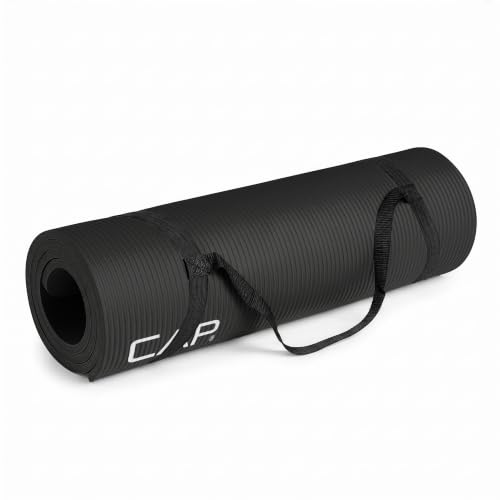
Half an inch of high-density NBR foam means you can press your knees, elbows, or hips into the floor and feel cushioned rather than hard tile or wood. That extra padding makes this mat a natural fit for anyone who spends time on all fours during Pilates, stretching, or core work, or who simply wants a forgiving surface for home workouts without spending a lot. The textured top helps keep you from sliding around in downward dog. The included strap lets you roll it up and carry it to the gym or studio without fuss.
The plush feel comes with a trade-off: this mat weighs 2.1 pounds and measures 68 inches long, making it lighter and shorter than the Manduka PRO, which weighs 7.5 pounds and is 71 inches long. That extra weight in the Manduka can help keep a mat in place during vigorous movement, while the CAP’s lighter build may shift more easily on some surfaces. For floor-based routines where comfort matters more than competition-grade grip, this is a smart, budget-friendly way to protect your joints.
Product photos
Retrospec Solana Thick Yoga Mat

What We Like
- Half-inch thickness cushions joints and knees
- Non-slip surface keeps poses steady
- Easy to clean with mild soap
- Free of phthalates, heavy metals, and latex
Trade-offs
- 24-inch width feels narrow for wider stances
- Initial odor requires airing out before use
A full half-inch of cushioning means this mat takes the sting out of kneeling poses, hip openers, and any move where your joints meet the floor. That extra padding relieves pressure on hands, knees, and hips, so you can hold poses longer without discomfort. It also stays put during practice thanks to a non-slip surface that grips both your hands and the floor beneath. For anyone dealing with sensitive joints or just wanting a plusher surface for restorative yoga, stretching, or Pilates, this mat delivers real comfort without sacrificing stability.
The half-inch thickness is the main reason to buy this mat, it cushions joints, hips, hands, and knees so you can hold poses longer without discomfort. At 2.7 pounds, it’s light enough to carry with the included strap, and the non-slip surface keeps you steady during practice. The BPA-free material is easy to clean with gentle soap and water, and any initial odor fades after airing it for a day or two. For home or studio use, this mat delivers the extra padding that makes floor work more comfortable.
Product photos
How We Evaluated Yoga Apparel
We focused on four criteria that matter most when choosing a yoga mat: material composition, cushioning thickness, grip performance, and portability. Each mat was assessed against its intended use case, from restorative floor work to vigorous vinyasa flows.
Material tells you how long a mat will last and how it handles sweat. Closed-cell PVC mats like the Manduka PRO resist moisture and bacteria, making them easy to clean. Open-cell natural rubber mats like the JadeYoga Harmony offer superior grip but absorb sweat and require more care. NBR foam mats provide thick cushioning at a lower cost but lack the density for stable standing poses.
Thickness and weight are trade-offs you cannot avoid. A 6mm mat offers a good middle ground for most practitioners, while 10mm mats cushion joints for floor poses but feel too soft for balance-intensive sequences. Heavier mats stay put on the floor but are a burden on the walk to the studio. This is a research-led evaluation, not a hands-on test, so we rely on verified specifications, expert round-ups, and consistent patterns in long-term owner experiences.
What To Look For In Yoga Apparel
A yoga mat is your foundation for every pose, so choosing the right one matters more than the brand on the label. Focus on the material, thickness, and grip that match your practice style and environment.
Look for a mat that balances cushioning with stability: about 4mm for travel and studio use, 6mm for all-around practice, and 10mm for joint-sensitive floor work. Closed-cell surfaces resist moisture; open-cell rubber grips better when wet.
Material and Durability
The material determines how long your mat lasts and how it handles sweat. Closed-cell PVC, used in the Manduka PRO and PROlite, resists moisture and bacteria, meaning it will not absorb sweat or develop odors over time. These mats also come with a lifetime guarantee, reflecting their build quality. Natural rubber mats like the JadeYoga Harmony offer excellent grip but are open-cell, so they absorb sweat and dirt and need more frequent cleaning. NBR foam mats are budget-friendly and thick but less durable than PVC or rubber.
Thickness and Cushioning
Mat thickness ranges from about 3mm to 10mm. Thinner mats provide better stability for standing poses and are lighter to carry. Medium mats (6mm) offer a good balance for most styles. Thick mats (10mm) cushion knees and joints for floor-based yoga, Pilates, and stretching, but they can feel unstable for balancing poses like tree or warrior III. If you practice on carpet, a thicker mat helps prevent your hands and feet from sinking.
Grip and Texture
Grip comes from the surface texture and the material itself. Natural rubber provides the best dry and wet grip, which is why the JadeYoga Harmony is a favorite among hot yoga practitioners. PVC mats often have a textured surface that improves with use. Some mats, like the Liforme, use a polyurethane top layer that becomes grippier when wet. A non-slip bottom, usually a dot pattern, keeps the mat from sliding on hardwood or studio floors.
- Check the mat’s length against your height; a 72-inch mat suits most people, but taller practitioners may need a longer option.
- Consider the carrying weight if you walk or bike to the studio; 4-6 pounds is manageable for daily transport.
- Look for a carrying strap or bag included with the mat, especially for thicker models that do not roll as tightly.
- Read care instructions before buying; some mats can be wiped clean, while others require hand washing and air drying.
A good rule of thumb: if you mostly do standing flows, prioritize stability and grip over cushioning. If you spend more time on your back or knees, prioritize thickness.
Yoga Apparel Compared
The table below compares the key specifications of our top nine yoga mats, helping you see the differences in thickness, weight, material, and best use at a glance.
| Product | Thickness | Dimensions | Weight | Material |
|---|---|---|---|---|
| Manduka PRO Yoga Mat | 6 mm | 71 x 26 in | 7.5 lb | OEKO-TEX certified PVC |
| Manduka PROlite Yoga Mat | 4.7mm | 71 x 24 in | 4.6 lb | OEKO-TEX certified PVC |
| Gaiam Essentials Yoga Mat | 6 mm | 72 x 24 inches | 3.0 pounds | 6P-free PVC |
| JadeYoga Harmony Yoga Mat | 3/16'' | 68 x 24 in | 4.2 lb | Natural rubber |
| Liforme Printed Yoga Mat | 4.2 mm | 72.8 x 26.8 in | 5.5 lb | Eco-polyurethane / natural rubber |
| Gaiam Essentials Thick Yoga Mat | 10mm (2/5 in) | 72 x 24 inches | 2.1 pounds | NBR foam |
| Amazon Basics Extra Thick Yoga Mat | 0.5 inches | 73.2 x 24.3 inches | 2.2 pounds | NBR foam |
| CAP 1/2 Inch Thick Yoga Mat | 0.5 inches | 68 x 24 inches | 2.1 pounds | Latex-free NBR foam |
| Retrospec Solana Thick Yoga Mat | 0.5 inches | 72 x 24 inches | 2.7 pounds | BPA-free, phthalate-free, latex-free |
Frequently Asked Questions
What thickness yoga mat should I get?
For most practitioners, a 6mm mat offers the best balance of cushioning and stability. If you practice primarily on hardwood floors or have sensitive joints, a 10mm mat provides extra padding. For studio use or travel, a thinner mat is lighter and more portable.
How do I clean my yoga mat?
Cleaning depends on the material. Closed-cell PVC mats can be wiped with a diluted soap solution or a specialized mat cleaner. Open-cell natural rubber mats require gentle hand washing and air drying. NBR foam mats should be hand washed and never machine washed, as the agitation can break down the foam.
What is the difference between open-cell and closed-cell yoga mats?
Closed-cell mats have a non-porous surface that resists moisture, sweat, and bacteria, making them easy to clean and hygienic for shared studio use. Open-cell mats have a porous surface that absorbs sweat, which improves grip when wet but requires more frequent cleaning and can develop odors over time.
Which yoga mat is best for hot yoga?
For hot yoga, look for a mat with excellent wet grip. Natural rubber mats like the JadeYoga Harmony provide superior traction when wet. The Liforme Printed Yoga Mat also uses a polyurethane top layer that becomes grippier with sweat. Avoid thick NBR foam mats, as they can become slippery when wet.
How long should a yoga mat last?
A high-quality PVC mat like the Manduka PRO can last a decade or more with proper care, backed by a lifetime guarantee. Natural rubber mats typically last several years before the rubber begins to degrade. Budget NBR foam mats may need replacement after months of regular use.
The Bottom Line
The Manduka PRO Yoga Mat is the best overall choice for home practitioners and studio regulars who want a stable, durable mat that resists moisture and bacteria. Its lifetime guarantee makes it a buy-once investment for anyone who practices several times a week. If you carry your mat to the studio daily, the Manduka PROlite saves over two pounds without sacrificing the closed-cell surface that keeps your mat clean.
For budget-conscious beginners, the Gaiam Essentials Yoga Mat delivers 6mm of cushioning and a 72-inch length at a price that leaves room for a block and strap. Those who prioritize eco-friendly materials should consider the JadeYoga Harmony, which pairs non-slip natural rubber grip with a tree-planting program. The single most important factor is matching the mat to your practice environment: a home yogi needs durability, a studio yogi needs portability, and a hot yoga practitioner needs grip that improves with sweat.
