
10 Best Foldable Yoga Mats in 2026
This post contains affiliate links. As an Amazon Associate, we earn from qualifying purchases.
For yogis who travel, commute, or store gear in tight spaces, the Manduka eKO Superlite Travel Yoga Mat earns the Best Overall spot with its ultra-light 2 lb foldable design and reliable natural rubber grip. The KEEP Foldable Yoga Mat wins Best Space-Saving Design for its flat-laying, zero-curling fold, and the PAIDU Foldable Yoga Mat takes Best Extra Wide for practitioners who need a broader 26-inch surface.
The real challenge with foldable mats is balancing portability against cushioning and grip. A mat that folds small enough for a backpack often sacrifices thickness, while a plush mat can be too heavy or bulky to carry. You need a mat that matches your specific practice surface and travel style.
This guide is research-based, drawing on specifications, manufacturer documentation, expert round-ups, and patterns in owner feedback. We ranked ten foldable mats across key criteria to help you find the right balance of weight, thickness, grip, and portability for your routine.
Top 10 Foldable Yoga Mats in the Market
Certain content that appears on this site comes from Amazon. This content is provided "as is" and is subject to change or removal at any time.
The Best Foldable Yoga Mats, Reviewed
Manduka eKO Superlite Travel Yoga Mat

What We Like
- Ultra-light 2 lb foldable design
- Natural rubber with textured grip
- Closed-cell surface locks out moisture
- 99% latex-free and eco-friendly
Trade-offs
- 1.5mm offers minimal cushioning for hard floors
- Narrower 24-inch width limits side-to-side space
- Requires special cleaner; avoid soap and soaking
At 2 pounds and 1.5mm thick, this mat folds into a compact shape that fits easily into a travel bag or suitcase. The textured orange peel surface on natural tree rubber provides reliable grip, and the closed-cell surface resists moisture absorption, keeping the mat hygienic during use. For yogis who travel frequently or need a mat that packs small without losing traction, the Manduka eKO Superlite offers portability and dependable grip in one lightweight package.
At just 1.5mm thick, this mat is about as thin as they come, so it folds flat and slips into a carry-on or daypack without adding bulk. That minimal cushioning works fine on carpet or studio floors, but on tile or wood you’ll feel every hard surface through it. If you want more padding, the KEEP Foldable Yoga Mat has a 0.3-inch TPE layer for extra comfort during floor poses. For travelers who prioritize packability and a reliable grip over plushness, this mat makes practicing anywhere genuinely easy.
For the frequent traveler or anyone who wants a reliable grip on the go without the bulk of a standard mat, this foldable design fits easily into luggage or a daypack. Its lightweight construction and natural rubber surface make it a practical choice for yoga on the road.
Product photos
KEEP Foldable Yoga Mat
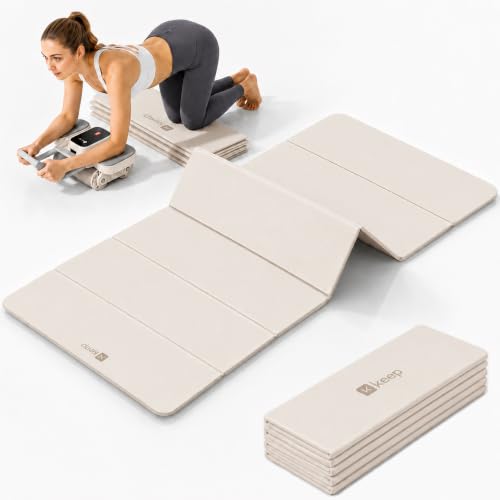
What We Like
- Lays perfectly flat with zero curling
- Folds in 1 second for compact storage
- Double-sided non-slip water ripple texture
- SGS-certified, eco-friendly TPE material
Trade-offs
- At 0.3 in thick, less cushion than 10 mm mats
- Narrower 24 in width limits side-to-side space
A 7 mm high-density TPE core gives this mat a balanced feel, soft enough to protect knees and elbows during floor work, yet firm enough for standing poses. Its real standout is the folding design: the mat lays perfectly flat right out of the bag, no curled edges fighting you, and folds up in about a second to tuck under a sofa or into a closet. That makes it a natural fit for anyone who works out at home and needs their gear to disappear between sessions, or for those who want a mat that won’t roll up on them mid-flow. The double-sided water ripple texture adds grip even when things get sweaty, and the SGS-certified TPE means no funky chemical smells to deal with.
This mat folds into a compact block that stores under a sofa or in a closet, saving valuable home space. Its 7mm thickness provides cushioning for joints during floor work, and the double-sided water ripple texture keeps you stable even when you sweat. The mat is made from SGS-certified TPE material that is free of harsh chemicals, so it won’t smell or irritate your skin.
Product photos
PAIDU Foldable Yoga Mat
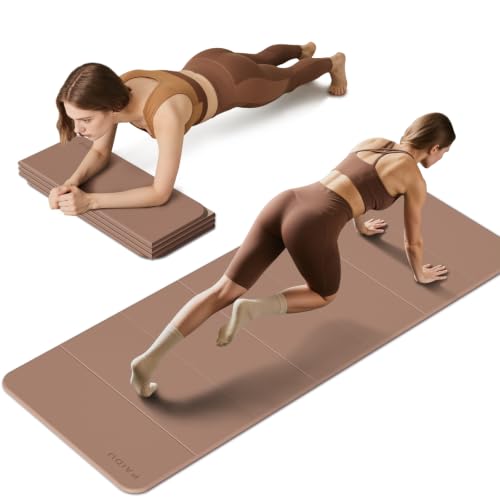
What We Like
- Extra wide 26-inch surface
- Folds to 1/7 original size
- Double-sided anti-slip texture
- SGS-certified eco-friendly TPE
Trade-offs
- At 2.6 lb, heavier than travel-focused mats
- Requires hand washing with oil-free soap and no prolonged sun exposure
At 75 inches long and 26 inches wide, this mat offers more surface area than many standard mats, which helps keep your hands and feet on the mat during wide-legged poses. The 10 mm thickness provides cushioning that can reduce pressure on your body during floor exercises, and the double-sided anti-slip texture, lines on one side, dots on the other, adds stability. That extra width and thickness make it a practical choice for taller users or anyone who finds typical mats too narrow.
At 2.6 pounds, this mat is heavier than travel-focused options like the Manduka eKO Superlite Travel Yoga Mat at 2.0 pounds. But the PAIDU folds in three seconds and reduces to a seventh of its original volume, so it still fits in a gym bag or suitcase. If you want a spacious, cushioned surface for your practice and don’t mind a little extra weight, this mat works well.
READAEER Foldable Yoga Mat
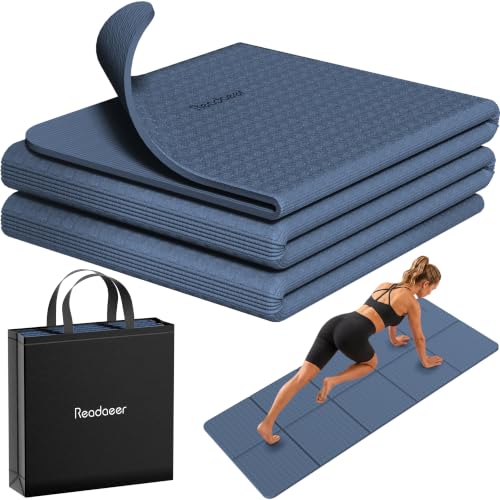
What We Like
- Lightweight at 1.7 pounds
- Foldable with included storage bag
- Double-sided anti-slip texture
- 6mm cushioning for joint protection
Trade-offs
- Narrower than some extra-wide mats
- Thinner than 10mm options for hard floors
Weighing 1.7 pounds, this mat is light enough to carry in the included storage bag without adding noticeable heft to your luggage. The 6mm TPE padding cushions joints during floor poses while folding neatly into the bag for travel. For anyone who practices yoga on the go, at a park, hotel room, or outdoor class, this mat makes transport easy without sacrificing basic comfort.
At 0.24 inches thick, this mat is noticeably thinner than 10mm options from PAIDU or Stepwaver, so on hard floors you might feel pressure points during longer sessions. The double-sided anti-slip texture helps keep you stable, with a polygonal pattern on the top and a wave texture on the bottom. For a travel mat that folds flat and stays light, it’s a practical choice.
HAPBEAR Foldable Yoga Mat
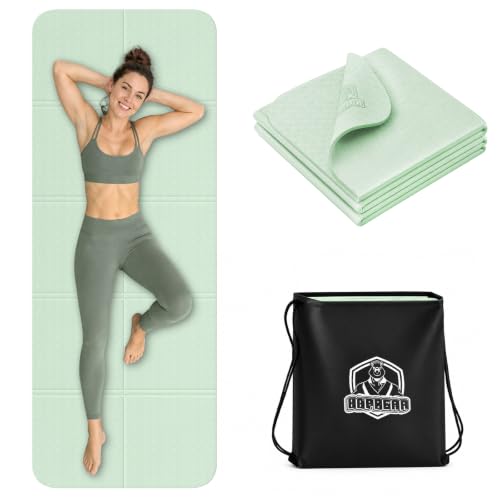
What We Like
- Double-sided non-slip grip
- Eco-friendly TPE material
- Folds to 70% smaller than rolled mats
- Waterproof, sweat-resistant surface
Trade-offs
- At 6mm, less cushioning for hard floors than thicker mats
- Narrower width (24 in.) limits side-to-side movement
A 6mm thickness strikes a smart balance between portability and joint protection. It has enough rebound to cushion joints during floor work, yet it is slim enough to fold into a compact block that slips into a suitcase or closet corner. That foldable design, paired with a double-sided non-slip grip that stays put on hardwood or tile, makes this a practical pick for anyone who wants an eco-friendly mat that travels well without sacrificing stability during sweaty sessions. The TPE material is phthalate- and latex-free, so it avoids the rubber smell that some alternatives carry.
The trade-off comes in width and thickness: at 24 inches and 6mm, you get less sprawling room and cushion than the PAIDU Foldable Yoga Mat (26 inches wide, 10mm thick). That PAIDU suits taller practitioners or those who prefer extra padding for restorative poses. But if your priority is a mat that folds down small, cleans up in seconds, and still offers reliable grip on smooth floors, this one delivers. It is a straightforward, no-fuss companion for daily yoga, Pilates, or stretching, especially when space or eco-consciousness matters more than maximum plushness.
Product photos
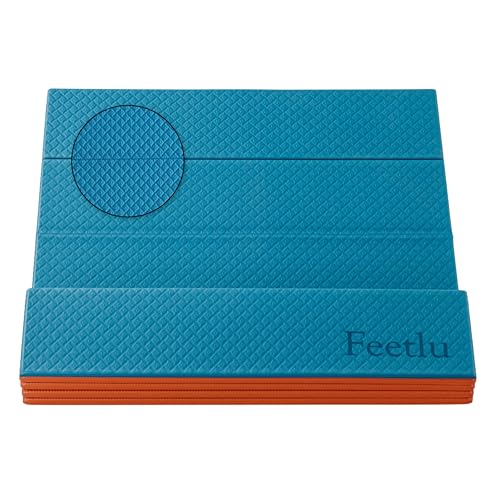
Feetlu Original Foldable Yoga Mat
What We Like
- ITS-certified non-toxic POE material
- Smart accordion-fold for quick storage
- Non-slip double-textured surface
- Sweat-resistant and easy to wipe clean
Trade-offs
- At 6mm, thinner than some extra-thick options
- Narrow 24-inch width limits movement for wider stances.
The Feetlu Original uses POE foam certified by ITS for safety and quality, which means it meets a recognized standard for materials used in exercise equipment. At 6mm thick and 2 pounds, it’s light enough to toss in a bag and carry to the studio, yet still offers enough cushion to keep your knees and wrists happy on a hard floor.
The trade-off is that 6mm is noticeably thinner than the 10mm options from brands like PAIDU or Stepwaver. So if you spend a lot of time on your back or do poses that press bony spots into the ground, you might feel the floor more. The accordion-fold system folds up without needing a strap, and the mat is designed to open flat without curling. The 24-inch width is the same as many other foldable mats in this category. For someone who values a certified, portable mat that packs neatly and cleans up fast, this is a strong everyday companion.
Product photos
POUYRBA Foldable Yoga Mat
What We Like
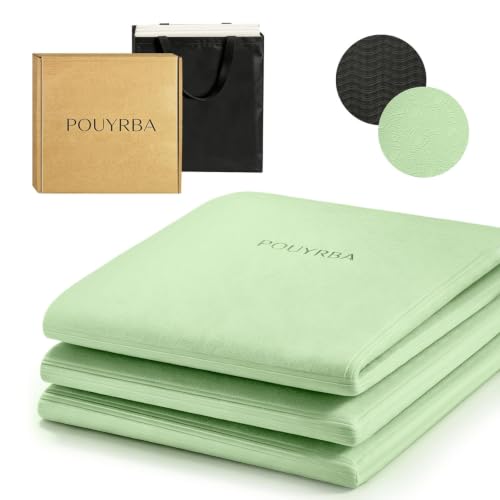
- Folds to 13x13x4 inches
- Double-sided non-slip surfaces
- 6mm TPE with shock absorption
- Comes with carry bag and gift box
Trade-offs
- At 0.24-inch thick, less cushion than thicker mats
- Narrower than 26-inch-wide mats for broader stances
The folded size of 13 by 13 by 4 inches makes this mat compact enough to fit in a weekend bag, and the included carry bag and carton box add convenience for travel. The 6mm TPE layer provides shock absorption for joints during yoga or Pilates, while the double-sided non-slip surface keeps it stable on hardwood, tile, or carpet. It is a practical choice for someone who practices on the go and values portability over extra cushioning.
The 0.24-inch thickness means less cushion than some thicker mats, so if your practice involves kneeling or lying on hard floors, you may feel the floor more. The 24-inch width is standard for travel mats but offers less room for wide stances than wider options. If your priority is a mat that packs small and provides reliable grip with eco-friendly materials, this one works well as a compact travel companion.
Product photos
READAEER Foldable Fitness Yoga Mat
What We Like
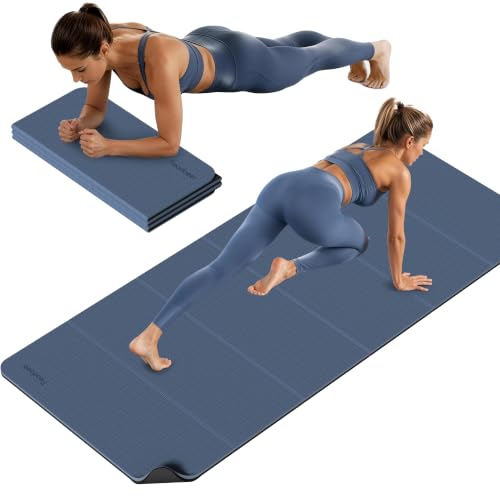
- 10mm extra thick cushioning
- Double non-slip design for stability
- Folds for easy carry and storage
Trade-offs
- At 3.0 lb, heavier than ultra-thin travel mats
A full 10mm of TPE foam gives you twice the thickness of traditional mats, so your knees, wrists, and hips get real support during floor poses or planks. That extra cushioning, paired with a generous 26-inch width and nearly 75-inch length, provides plenty of room to stretch out without worrying about slipping off the edges. It works well for yoga, Pilates, and full-body workouts at home or the gym, and the folding design makes it convenient to store and carry.
Weight is the main trade-off here: at 3 pounds, this mat is noticeably heavier than the Mantra Yoga Travel PRO (1.5mm, 2.6 lb) or other ultra-thin foldable mats designed for packing light. If you’re hiking to a studio or squeezing it into a carry-on, the extra heft and thickness might feel bulky. But for everyday use where comfort matters more than ultralight portability, the READAEER delivers durable, non-slip support that keeps you steady through every move.
Mantra Yoga Travel PRO Mat

What We Like
- Includes knee pad and carry bag
- Eco-friendly natural rubber and microfiber
- Grip improves with sweat for hot yoga
- Machine-washable for easy care
Trade-offs
- At 1.5mm, very little cushioning for hard floors
- Heavier than some travel mats (2.6 lbs vs 2.0 lbs)
A 1.5mm thickness means you feel the floor directly, which helps balance postures but offers almost no padding for knees or tailbone. That trade-off makes sense for travelers who want something that folds small and packs light, and the included knee pad and bag make it a complete grab-and-go kit. The natural rubber base grips the floor well, and the microfiber top layer actually gets stickier as you sweat, so it suits hot yoga or vinyasa flows where you really need traction.
The downside is that 2.6 pounds is heavier than the Manduka eKO Superlite Travel Yoga Mat (2.0 pounds), so if every ounce matters in your luggage, you might prefer the lighter option. But the Mantra Travel PRO gives you a knee pad and a bag right in the box, which the Manduka doesn’t include. If you want a ready-to-travel set with sweat-activated grip and don’t mind a little extra weight, this is a practical, eco-friendly kit that covers the basics without extra shopping.
Product photos
Stepwaver Foldable Yoga Mat

What We Like
- Waterproof closed-cell surface
- Quick-rebound POE material
- Extra thick 10 mm cushioning
- Folds for compact storage
Trade-offs
- At 4.7 lb, heavier than most travel mats
- Folded size still too large for small backpacks
A closed-cell, waterproof surface means sweat, spills, and post-workout grime stay on top instead of soaking into the foam. So a quick wipe with a damp cloth is all it takes to keep the mat fresh. The 10 mm POE foam cushions joints during floor poses while still feeling stable enough for balancing work, and its 75-inch length gives taller practitioners room to stretch without hanging off the end. For anyone who practices in humid spaces, outdoors, or simply hates a mat that smells after a few sessions, this is the obvious choice.
Portability is the main trade-off here. At 4.7 pounds, the Stepwaver is noticeably heavier than the KEEP Foldable Yoga Mat, so if you’re carrying your mat to a studio every day by foot or bike, that extra pound or two adds up. The folding design does help it fit into a trunk or under a sofa, but it’s not as backpack-friendly as lighter, rollable options. That said, the waterproof surface and thick cushioning make it a better home-gym or car-to-studio companion than the ultra-light Manduka eKO Superlite, which is only 1.5 mm thick and lacks a waterproof surface.
Product photos
How We Evaluated Foldable Yoga Mats
Our evaluation focused on what matters most when a mat needs to fold: weight, thickness, grip, and how well it packs. We examined manufacturer specs for each mat’s dimensions, material composition, and weight, then cross-referenced those numbers against the needs of different practice styles. Patterns in owner feedback helped us identify real-world durability and grip performance that specs alone cannot capture.
The four criteria that mattered most were portability (weight and folded size), cushioning (thickness and material feel), grip (surface texture and slip resistance), and durability (material quality and ease of cleaning). A mat that excels at travel but slides on a studio floor fails the core purpose, just as a thick, grippy mat that weighs five pounds defeats the point of a foldable design.
Because this is a research-led evaluation rather than a hands-on test, we relied on verified product data and aggregated user experiences. This approach gives you a reliable starting point, but your personal preference for surface feel and cushioning is best confirmed in person if possible.
What To Look For In Foldable Yoga Mats
Choosing the right foldable mat means weighing how you practice against how you carry it. These are the key factors to consider before you buy.
Focus on weight and folded size for travel, thickness for joint comfort on your typical floor, and grip material for your sweat level. A mat that folds flat suits home storage; a roll-fold mat packs smaller for bags.
Weight and Folded Dimensions
The whole point of a foldable mat is easier transport. Travel-focused mats like the Manduka eKO Superlite weigh around 2 pounds, while extra-thick options can reach 3 to 4.7 pounds. Folded size matters too: some mats fold to the size of a laptop bag, while others are better suited for a duffel. If you plan to carry your mat daily, look for a weight under 2.5 pounds and a folded footprint that fits your bag. For a deeper look at ultra-light options, see our guide to lightweight yoga mats.
Thickness and Cushioning
Thickness ranges from 1.5 mm to 10 mm in foldable designs. Thin mats (1.5-3 mm) pack smallest and are stable for balance poses, but offer minimal padding for hard floors or sensitive joints. Thicker mats (6-10 mm) cushion knees, elbows, and hips during floor work, but weigh more and fold into a bulkier package. If your practice is mostly on carpet or a studio floor, a thinner mat works. For hardwood or tile, aim for at least 6 mm of cushioning.
Grip and Material
Grip comes from the surface texture and the material itself. Natural rubber offers excellent traction, especially when damp, but can have a scent and requires special cleaning. TPE (thermoplastic elastomer) is lighter, eco-friendly, and grippy when dry, but may get slippery with heavy sweat. POE material is non-toxic and waterproof. For hot yoga or sweaty sessions, look for double-sided non-slip textures or materials that improve grip when wet. Our guide to non-slip yoga mats covers the best grippy options in more detail.
Storage and Maintenance
- Measure your storage space: fold-flat mats suit shelves and drawers; compact-fold mats fit backpacks.
- Check cleaning instructions: some rubber mats need special cleaners; TPE and POE mats wipe clean easily.
- Consider odor: natural rubber mats may have a scent that fades over time; synthetic materials are usually odorless.
- Look for included accessories: carry bags, knee pads, or straps add value for travel.
A good rule: the mat you carry more often is the one you will use more. Prioritize portability if you travel; prioritize cushioning if you practice on hard floors.
Foldable Yoga Mats Compared
The table below compares the key specs of our top ten foldable yoga mats side by side, so you can quickly see which one fits your weight, thickness, and portability needs.
| Product | Thickness | Dimensions | Material |
|---|---|---|---|
| Manduka eKO Superlite Travel Yoga Mat | 1.5mm | 71 x 24 in | Natural tree rubber |
| KEEP Foldable Yoga Mat | 7 mm | 72 x 24 x 0.3 in | High-density TPE |
| PAIDU Foldable Yoga Mat | 10 mm | 75 x 26 x 0.4 in | TPE (SGS certified) |
| READAEER Foldable Yoga Mat | 6mm | 72 x 24 inches | TPE |
| HAPBEAR Foldable Yoga Mat | 6mm | 72 x 24 in | TPE |
| Feetlu Original Foldable Yoga Mat | 6mm | 72 x 24 inches | Non-toxic POE |
| POUYRBA Foldable Yoga Mat | 6mm | 72x24x0.24in | Eco-friendly TPE |
| READAEER Foldable Fitness Yoga Mat | 10 mm | 74.8 x 26.0 in | TPE |
| Mantra Yoga Travel PRO Mat | 1.5 mm | 72" L x 24" W | Natural rubber + microfiber |
| Stepwaver Foldable Yoga Mat | 10 mm | 75 x 26 in | POE (closed-cell) |
Frequently Asked Questions
What is the best thickness for a foldable yoga mat?
The best thickness depends on your practice surface and joint sensitivity. For hard floors, 6 mm to 10 mm provides adequate cushioning for knees and hips. For carpet or studio floors, a thinner mat around 1.5 mm to 3 mm works well and packs much smaller. Travelers often compromise at 6 mm for a balance of portability and comfort.
How do I clean a foldable yoga mat?
Cleaning depends on the material. TPE and POE mats can be wiped down with a damp cloth and mild soap. Natural rubber mats like the Manduka eKO Superlite require a specialized cleaner and should never be soaked or submerged. Always check the manufacturer’s care instructions to avoid damaging the material or losing grip.
Are foldable yoga mats as durable as rolled mats?
Foldable mats can be just as durable, but the folding crease is a potential wear point over time. High-quality mats like the KEEP Foldable Yoga Mat are designed to lay completely flat without curling, which reduces stress on the fold. Materials like TPE and natural rubber hold up well with proper care, while cheaper foams may develop permanent creases.
Can I use a foldable yoga mat for hot yoga?
Yes, many foldable mats work well for hot yoga, especially those with moisture-wicking or sweat-activated grip. The Mantra Yoga Travel PRO Mat improves grip as you sweat, making it a strong choice for hot classes. Look for closed-cell surfaces that lock out moisture and prevent bacteria buildup, and check that the mat is easy to wipe clean after each session.
What is the difference between a foldable and a rolled yoga mat?
Foldable mats fold into a compact square or rectangle, making them easier to store in tight spaces and carry in a backpack or tote. Rolled mats are cylindrical and often require a strap or bag for transport. Foldable mats tend to be thinner and lighter, while rolled mats offer more thickness and cushioning options. The choice comes down to whether portability or plushness matters more to your practice.
The Bottom Line
The Manduka eKO Superlite Travel Yoga Mat is our Best Overall pick for travelers who need the lightest possible foldable mat with reliable grip. At just 2 pounds, it disappears into a carry-on or daypack, and its natural rubber surface keeps you stable on studio floors or travel surfaces. It is not for hard-floor practice without extra padding, but for portability, it is unmatched.
If your priority is home storage and a mat that lays perfectly flat, the KEEP Foldable Yoga Mat offers a zero-curling design that tucks into a shelf or drawer in seconds. For those who need extra width or joint cushioning, the PAIDU Foldable Yoga Mat provides a 26-inch surface and the READAEER Foldable Fitness Yoga Mat delivers 10 mm of cushioning for sensitive knees and hips. Budget-conscious travelers should explore affordable portable mats that balance cost and quality.
The single most important factor is honesty about your practice space. If you mostly practice on hardwood, prioritize thickness over ultra-light weight. If you travel weekly, prioritize portability and accept a thinner mat. The right foldable mat is the one you will actually carry to class, not the one that stays in the closet.
