
10 Best Non Slip Yoga Mats For Hot Yoga in 2026
This post contains affiliate links. As an Amazon Associate, we earn from qualifying purchases.
For hot yoga, the Gaiam Dry-Grip Yoga Mat is our best overall pick because its moisture-wicking topcoat stays grippy when wet, eliminating the need for a separate towel. The IUGA Pro Non Slip Yoga Mat earns our anti-tear durability award, while the YOGATI Yoga Mat is our budget-friendly choice for beginners.
The real challenge of hot yoga is maintaining traction as sweat pools on the mat. Standard mats turn slick, forcing you to pause and wipe down or risk slipping out of a pose. A mat designed for wet conditions uses materials like polyurethane or natural rubber that actually improve grip when damp.
This guide is based on manufacturer specifications, material science, and patterns found in owner feedback across hundreds of reviews. We focused on grip performance when wet, durability under repeated sweat exposure, and portability for class commuters. You will find the right mat for your practice without guesswork.
Top 10 Non Slip Yoga Mats For Hot Yoga in the Market
Certain content that appears on this site comes from Amazon. This content is provided "as is" and is subject to change or removal at any time.
The Best Non Slip Yoga Mats For Hot Yoga, Reviewed
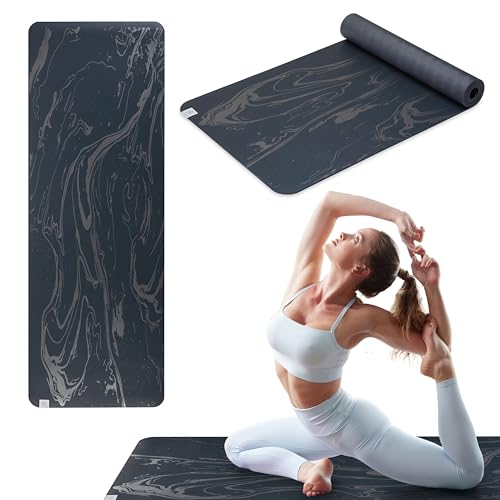
Gaiam Dry-Grip Yoga Mat
What We Like
- Moisture-wicking topcoat stays grippy when wet
- Cushioned rubber base supports joints
- Lightweight and easy to carry
- Reduces need for a separate towel
Trade-offs
- At 4.8 lb, heavier than some travel mats
- Rubber base can have a noticeable smell initially
The moisture-wicking topcoat on this mat is designed to stay non-slip even when you’re sweating, making it a practical choice for hot yoga, Bikram, or any high-sweat session. The rubber base provides cushioning and support for hands, feet, knees, wrists, elbows, and spine during floor exercises, which helps improve comfort and balance. Weighing 4.8 pounds, it’s lightweight and easy to carry to class, so you don’t feel like you’re hauling a heavy load.
The mat’s dimensions are listed as 24.1 inches long, which is unusually short for a yoga mat, so taller practitioners may find their hands or feet hanging off in wide-legged poses. Compared to the Liforme Printed Yoga Mat, which offers a longer surface and alignment marks, the Gaiam keeps things simpler and lighter but sacrifices length. If your main priority is a grip that stays non-slip during hot yoga, this mat delivers on that promise.
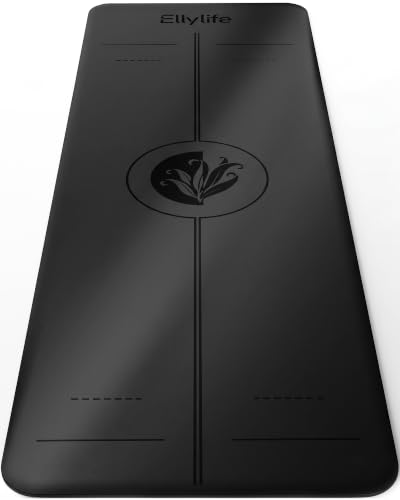
Ellylife Yoga Mat
What We Like
- Eco-friendly PVC-free construction with SGS certification
- PU top stays grippy when wet from sweat
- Extra-large surface for freedom of movement
- Alignment lines help check form without mirrors
Trade-offs
- At 7.3 lb, heavier than many hot yoga mats
- No carrying strap or bag included for transport
The natural rubber bottom stays firmly in place on wood floors, tile, or concrete, so you can move through poses without your mat creeping away. The PU top keeps its grip even when you sweat, which matters for hot yoga or any sweaty practice. Alignment lines printed on the surface let you quickly check your form and adjust your pelvis, spine, and limbs, helping both beginners and experienced practitioners train more efficiently. The mat is PVC-free and SGS-certified, meaning the materials meet eco-friendly standards.
At 7.3 pounds, this mat is noticeably heavier than options like the Gaiam Cork at 2.0 pounds, so if you walk or bike to class, you’ll feel the difference in your bag. The trade-off is a larger surface, 74.8 inches long and 26.8 inches wide, giving you more room than many comparable mats. Owners report it unrolls flat and stays flat with no curling or creasing, which makes it a practical choice for home practice or car-transported classes.
Product photos
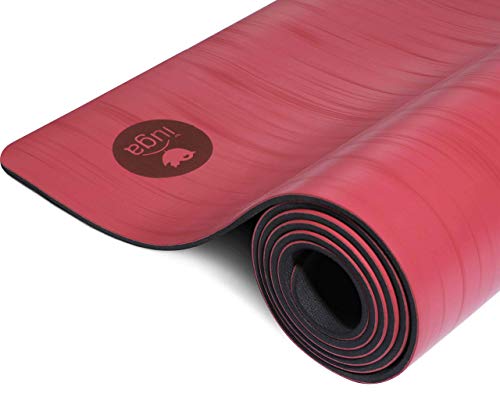
IUGA Pro Non Slip Yoga Mat
What We Like
- Anti-tear mesh layer resists ripping
- PU top absorbs sweat for grip
- Eco-friendly natural rubber base
- Lightweight 2.5 lbs with carry strap
Trade-offs
- 5mm thickness less joint cushion than thicker mats
- Natural rubber can have a distinct smell initially
The anti-tear mesh core helps this mat resist damage during demanding poses and workouts, so you can press into downdog or use it for weight training with less worry about wear. The PU top layer absorbs sweat to maintain grip, which keeps you stable during hot yoga. At 2.5 pounds with a carry strap included, it’s light enough to toss in a gym bag and take anywhere. This mat suits someone who wants durability without the bulk and a non-slip surface that holds up in sweaty conditions.
At just 2.5 pounds, this mat is half the weight of many travel mats, making it easy to carry to class or stash in a gym bag. The 5mm thickness cushions joints on hard floors like tile or wood, though it’s not as plush as thicker mats for those with sensitive knees. Compared to the 7.3-pound Ellylife Yoga Mat, the IUGA is far more portable, and its anti-tear mesh layer helps it hold up during high-intensity workouts without stretching or warping.
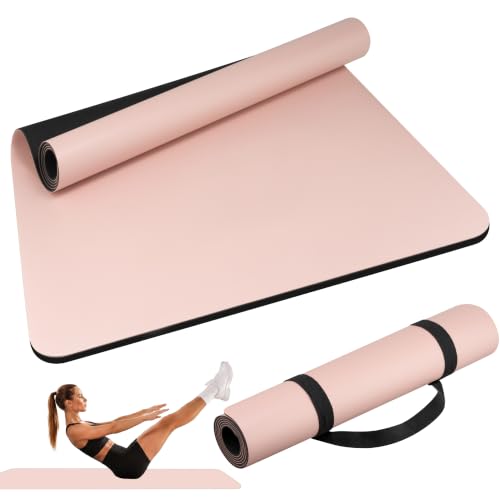
Wimwum Professional Yoga Mat
What We Like
- Grip strengthens with sweat
- 6.8 lb natural rubber stays flat
Trade-offs
- Heavy for carrying to class
- 6.8 lbs is heavy for yoga class travel
A 6.8-pound natural rubber core means this mat stays planted on the studio floor no matter how dynamic your flow gets. The PU top layer is engineered to grip harder as you sweat, so you can hold Downward Dog or transition through Ashtanga without slipping or needing a towel. That dense weight and textured surface make it ideal for hot yoga practitioners who prioritize stability over portability and want a mat that won’t bunch, curl, or slide mid-sequence.
The trade-off is that same weight: at 6.8 lbs it’s noticeably heavier than lighter options like the Gaiam Dry-Grip (4.8 lbs). If you walk to class or switch studios often, you’ll feel the difference even with the included carrying strap. For anyone who practices at home or drives to a studio and wants a rock-solid, sweat-activated grip, this is a straightforward pick.
Product photos
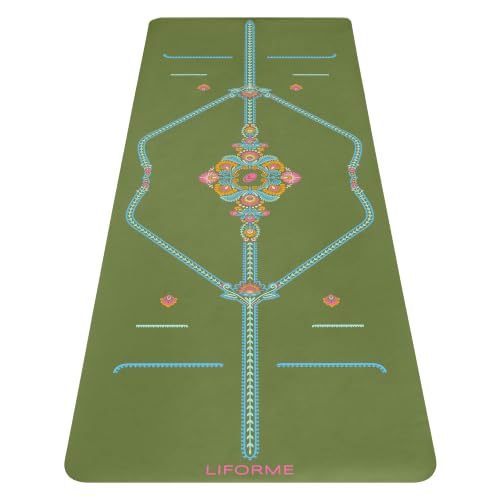
Liforme Printed Yoga Mat
What We Like
- Grip improves with sweat
- Patented alignment markers for form
- Eco-friendly, PVC-free materials
- Comes with free yoga bag
Trade-offs
- At 5.5 lb, heavier than some mats
- Thinner 4.2mm cushioning for joints
The patented AlignForMe markers printed right on the surface give you visual cues for hand and foot placement in every pose. That is a huge help when you are sweating through a hot class and trying to keep your form honest. At 72.8 inches long and 26.8 inches wide, there is plenty of room for taller yogis or wider stances, and the eco-polyurethane top actually gets grippier as you perspire, so you won’t slide in downward dog. This mat suits anyone who values precise alignment and wants a non-toxic, planet-friendly build without sacrificing performance.
The trade-off is that 4.2mm of cushioning is on the thinner side compared to the 5mm or 6mm options like the Ellylife Yoga Mat, which offers more padding for sensitive knees or wrists. At 5.5 pounds it is not the lightest mat to carry, though the included bag helps. If joint comfort is your top priority, you might want a thicker mat, but for hot yoga where grip and alignment guidance matter most, this Liforme is a thoughtful choice that rewards attention to detail.
HIGHTOP Hot Yoga Mat

What We Like
- Grip improves with sweat
- Non-slip TPE rubber bottom
- Lightweight at 2.4 lb
- Moisture-absorbent & easy clean
Trade-offs
- Narrower than many competitors at 24 in
- Requires spritzing water for best grip
At 2.4 pounds, this mat is easy to roll up and carry to class without feeling like you are hauling a gym floor. The vegan suede surface is designed to get grippier the more you sweat, so those downward dogs in a hot room actually feel more secure as the session goes on. That combination of portability and wet-weather grip makes it a smart pick for anyone who commutes to hot yoga or wants a mat that travels easily between home and studio.
The trade-off for that featherweight feel is a narrower 24-inch width, which leaves less room for wide-stance poses compared to wider mats like the IUGA Pro at 26 inches. It also uses a 6mm cushion, which is decent for joint comfort but not as plush as thicker options if you have sensitive knees or wrists. If you prioritize packability and a surface that locks in when you drip, this is your match. If you need extra width or maximum padding, you might prefer a heavier, wider mat.
Product photos
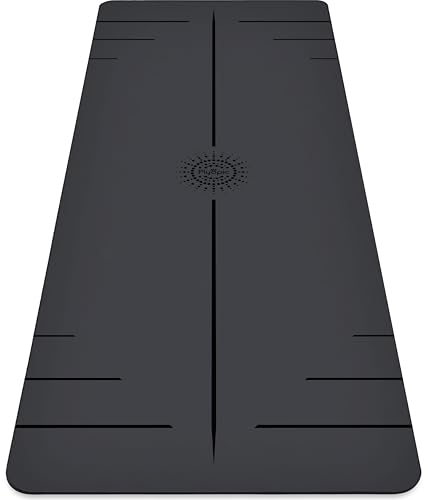
Plyopic Ultra Grip PRO Yoga Mat
What We Like
- Extreme dry and wet grip
- PoseMap alignment lines for positioning
- Natural rubber cushions sensitive knees
- Vegan-friendly and PVC-free
Trade-offs
- At 5.3 lb, heavier than some travel mats
- 0.2-inch thickness offers less plush cushioning
The UltraGrip material keeps your hands and feet secure as moisture builds, so you can hold a pose without fighting the mat during sweaty hot yoga or dry flows. The dense natural rubber base cushions hard-floor pressure under your knees and wrists, while the PoseMap alignment lines give clear reference points for hands, feet, and center across thousands of poses. This mat is a practical choice for yogis who want reliable traction and guidance at a price that avoids the three-figure tag.
At 5.3 pounds and 0.2 inches thick, this mat is heavier than the HIGHTOP Hot Yoga Mat (2.4 lb), so it is less convenient to carry to a studio. The thin profile means less padding than thicker mats, fine for most standing poses, but if you spend a lot of time on your knees or elbows, you might feel the floor beneath you. This mat suits hot yoga practitioners who prioritize grip over portability or pillowy cushioning.
Product photos
Gaiam Cork Yoga Mat

What We Like
- Natural cork resists sweat and odor
- Grip improves when slightly damp
- Lightweight at only 2.0 pounds
- Sustainable cork and TPE materials
Trade-offs
- Narrower than many hot yoga mats (24 in)
- Thin 0.2-inch cushioning for hard floors
- Shorter length (68 in) limits tall users
A 2.0-pound mat made of natural cork feels almost like bringing a piece of the forest floor to class. The cork surface actually gets grippier as you sweat, so during hot yoga your hands and feet won’t slide when the temperature climbs. It also naturally resists odor, which means you don’t have to worry about that lingering damp-mat smell after a sweaty session. For anyone who practices in a heated room or prefers a more sustainable material, this is a thoughtful choice that keeps hygiene simple.
The biggest trade-off is size: at 68 inches long, this mat is shorter than many alternatives, so taller practitioners may find their heels or toes hanging off the edge during poses. It’s also only 0.2 inches thick, which means on a hard floor you’ll feel every seam and grain, great for stability, but not for joint cushioning. The cork surface, however, gives you a naturally grippy, sweat-resistant layer that actually gets softer and easier to hold onto when you start to heat up.
YOGATI Yoga Mat

What We Like
- Textured closed-cell surface stays put when sweating
- Dense foam cushions joints without sacrificing stability
- Laser-etched alignment lines guide hand and foot placement
- Lightweight 1.9 lb with included carrying strap
Trade-offs
- At 24 inches wide, narrower than many hot yoga mats
- TPE material lacks the wet-grip of natural rubber
At just 1.9 pounds, this mat is light enough to carry to the studio, park, or beach without tiring you out before class. The textured closed-cell surface holds hands and feet steady through flows, planks, lunges, and downward dog, so you stay secure in every pose. For a beginner or budget-conscious yogi, it delivers cushioning for joints, alignment markings to guide form, and a slim profile that rolls tight fast, all without the cost of heavier rubber mats.
The trade-off shows in the 24-inch width, which is narrower than competitors like the Ellylife or Liforme mats, so broad-shouldered practitioners might find their hands slipping off the edges in wide-legged poses. The dual-layer TPE material is not natural rubber, so it won’t have the same grip in wet conditions as those pricier options. Still, for the yogi who wants a lightweight, portable mat that keeps you steady through the basics, this is a smart way to start without overcommitting.
Product photos
Plyopic All In One Yoga Mat

What We Like
- Sweat-grip surface for hot yoga
- Eco-friendly SGS-certified materials
- Reversible for gym use with footwear
Trade-offs
- At 0.1 in thick, less cushion for joints
- Limited edition designs sell out quickly
- Narrower than some competitors at 25.5 in
The Plyopic All In One Yoga Mat is designed for people who actually sweat, with a surface that grabs moisture rather than repels it, so you feel stable in downward dog and smooth through transitions. Its eco-friendly natural rubber construction is soft against skin and SGS-certified, making it a thoughtful choice for anyone who wants performance without the chemical smell. It also flips over for use with footwear, doubling as a workout mat for gym exercises.
The trade-off here is thickness: at 0.1 inches, this mat is thin. If your knees or hips need extra padding on a hard floor, you might want to pair it with a towel or look elsewhere. Compared to the IUGA Pro Non Slip Yoga Mat, which offers 0.2 inches of cushion, the Plyopic prioritizes ground feel and stability over comfort. Hot yoga regulars who want a sweat-gripping surface and firm floor connection. Not ideal for those needing thick cushioning for joint comfort.
Product photos
How We Evaluated Non Slip Yoga Mats For Hot Yoga
This evaluation is based on manufacturer documentation, material specifications, and patterns in owner feedback. We examined each mat’s top-layer material, base construction, weight, dimensions, and any proprietary grip technologies. This research-based approach helps you compare options without needing to try every mat yourself.
The three criteria that mattered most were wet-grip performance, durability, and portability. Wet-grip determines whether a mat becomes more stable or more slippery as you sweat. Durability covers how well the surface resists peeling, tearing, and odor after repeated hot sessions. Portability affects whether you will actually bring the mat to class.
A research-led evaluation has honest limits. Owner feedback can be subjective, and individual experiences vary with body chemistry, studio humidity, and floor type. We prioritized consistent patterns across many reviews rather than isolated complaints. The best mat for you depends on your specific practice style and commute.
What To Look For In Non Slip Yoga Mats For Hot Yoga
The right mat keeps you stable when everything else is slippery. Focus on surface material, thickness, weight, and size to match your practice and lifestyle.
Choose a mat with a polyurethane (PU) or natural rubber top layer for grip that improves when wet. Avoid standard PVC mats, which become slick with sweat.
Surface Material
The top layer determines how your hands and feet stay planted. Polyurethane (PU) tops are the gold standard for hot yoga because they absorb moisture and become tackier when wet. Natural rubber also grips well with sweat but can have a distinct smell initially. Cork surfaces resist odor and improve grip when slightly damp, though they wear faster than PU. Avoid standard PVC closed-cell mats unless you plan to use a towel on top.
Thickness and Cushioning
Thicker mats (5mm to 6mm) provide more joint cushioning for poses like kneeling or lying on your back. Thinner mats (3mm to 4mm) offer better floor feel and stability for balancing poses but offer less padding for sensitive knees. A 5mm mat is a solid middle ground for most practitioners. Keep in mind that extra thickness adds weight, which matters if you carry your mat to class.
Weight and Portability
If you walk, bike, or take public transit to the studio, weight matters. Lightweight mats under 3 pounds are easier to carry but often sacrifice cushioning or width. Heavier mats over 5 pounds stay flat on the floor and offer more durability but become a burden on longer commutes. Check whether the mat includes a carrying strap or bag, as this makes transport much easier.
Size and Dimensions
Standard yoga mats are 68 inches long and 24 inches wide. Taller practitioners may need a 72-inch or longer mat. Wider mats (26 inches or more) provide extra room for wide-legged stances and arm positioning. A mat that is too short or narrow will force you to adjust your practice or step off the mat entirely.
- Measure your height plus six inches to find the minimum mat length you need
- Check the mat width against your shoulder span for comfortable arm placement
- Confirm the mat fits inside your studio locker or carrying bag
- Look for alignment lines if you practice without mirrors
- Consider the floor space available in your home practice area
A mat that is too heavy to carry or too short to use will end up collecting dust, not sweat.
Non Slip Yoga Mats For Hot Yoga Compared
The table below compares all ten mats across the specifications that matter most for hot yoga, including weight, thickness, and surface material.
| Product | Surface Material | Base Material | Weight |
|---|---|---|---|
| Gaiam Dry-Grip Yoga Mat | Moisture-wicking topcoat | Rubber | 4.8 lb |
| Ellylife Yoga Mat | PU top | natural rubber bottom | 7.3 lb |
| IUGA Pro Non Slip Yoga Mat | PU top | natural rubber base | 2.5 lbs |
| Wimwum Professional Yoga Mat | PU top | Natural rubber base | 6.8 lbs |
| Liforme Printed Yoga Mat | Eco-polyurethane | Natural rubber | 5.5 pounds |
| HIGHTOP Hot Yoga Mat | Vegan suede | TPE rubber | 2.4 lb |
| Plyopic Ultra Grip PRO Yoga Mat | N/A | Natural rubber + fiber layer | 5.3 lb |
| Gaiam Cork Yoga Mat | Natural cork | Eco-friendly TPE | 2.0 lb |
| YOGATI Yoga Mat | Textured closed-cell | Dual Layer TPE | 1.9 pounds |
| Plyopic All In One Yoga Mat | N/A | Eco-friendly natural rubber | 5.1 lb |
Frequently Asked Questions
What makes a yoga mat non-slip for hot yoga?
A non-slip mat for hot yoga uses a top layer material like polyurethane or natural rubber that becomes grippier when wet. Standard PVC mats lose traction as sweat accumulates, while these materials absorb moisture and create a tacky surface. The mat’s bottom layer should also have a strong rubber grip to prevent sliding on studio floors.
How thick should a hot yoga mat be?
Most yoga mats for hot yoga range from 3mm to 6mm thick. A 5mm mat offers a good balance of joint cushioning and stability for balancing poses. Thinner mats around 3mm provide better floor feel but less padding for knees and joints, while thicker mats over 6mm can feel unstable in standing poses.
Do I need a yoga towel with a non-slip mat?
Many modern non-slip mats with polyurethane tops eliminate the need for a separate towel. These mats are designed to absorb sweat directly into the surface layer. However, some practitioners still prefer a towel for extra moisture management or as a hygiene barrier between classes.
How do I clean a non-slip yoga mat after hot yoga?
Most non-slip mats can be wiped down with a diluted vinegar solution or a mild mat cleaner after each use. Avoid soaking the mat or using harsh chemicals that can break down the surface layer. Let the mat air dry completely before rolling it up to prevent mildew and odor.
What is the difference between open-cell and closed-cell yoga mats?
Open-cell mats have a porous surface that absorbs sweat and increases grip when wet, making them ideal for hot yoga. Closed-cell mats have a smooth, non-porous surface that repels moisture but becomes slippery when wet. Open-cell mats require more frequent cleaning but perform much better in sweaty conditions.
The Bottom Line
The Gaiam Dry-Grip Yoga Mat is the best overall choice for hot yoga practitioners who want reliable sweat-resistant grip without the bulk of a separate towel. Its moisture-wicking topcoat and cushioned rubber base make it suitable for most class formats, from gentle flow to intense power yoga.
If your priority is durability and lightweight portability, the IUGA Pro Non Slip Yoga Mat offers an anti-tear mesh layer at just 2.5 pounds. Budget-conscious beginners should look at the YOGATI Yoga Mat, which provides alignment guides and dense foam cushioning at an accessible price point.
The single most important factor in choosing a hot yoga mat is the surface material. A polyurethane or natural rubber top layer that grips better when wet will transform your practice, while a standard PVC mat will leave you fighting for traction. Invest in the right material first, then consider weight, thickness, and size.
