
10 Best Yoga Mats For Beginners in 2026
This post contains affiliate links. As an Amazon Associate, we earn from qualifying purchases.
For a new yogi, the Manduka Begin Yoga Mat is the best overall pick. It combines a lightweight, portable design with an eco-friendly TPE surface and a center alignment stripe that helps you check your form. The Gaiam Essentials Thick Yoga Mat delivers extra cushioning for sensitive joints, while the Liforme Printed Yoga Mat offers built-in alignment guides for learning poses.
Starting yoga means learning new movements on a surface that should support you, not fight you. A mat that slips, feels too thin, or is awkward to carry can turn a promising first class into a frustrating one. The right mat makes practice feel stable and comfortable from day one.
This guide is based on manufacturer specifications, expert round-ups, and patterns in owner feedback across dozens of mats. We focused on the features that matter most to beginners: cushioning, grip, weight, and size. You will find clear recommendations for different needs and budgets.
Top 10 Yoga Mats For Beginners in the Market
Certain content that appears on this site comes from Amazon. This content is provided "as is" and is subject to change or removal at any time.
The Best Yoga Mats For Beginners, Reviewed
Manduka Begin Yoga Mat

What We Like
- Reversible dual-color design
- Center alignment stripe for form
- Lightweight at 2.1 lb
- Eco-friendly TPE foam cushioning
Trade-offs
- 5mm cushioning is minimal for sensitive joints
- Not machine washable; wipe-down only
A 5mm thickness hits the sweet spot between portability and joint comfort for someone new to yoga. At just 2.1 pounds, this mat is genuinely easy to carry to class or unroll in a living room. The reversible design with a center alignment stripe gives you a visual cue to check your foot and hand placement without staring at the person next to you. It’s made from eco-friendly TPE foam that stays latex-free, so it’s a safe choice for anyone with sensitivities. The lightweight build means even a kid or older adult can handle it solo. If you want a mat that helps you build good habits from day one without feeling like you’re wrestling with a heavy roll of carpet, this one fits the bill.
The trade-off for that easy portability is a shorter length and thinner padding compared to some other beginner-friendly mats. At 68 inches, it works fine for most average-height people. But if you’re tall or like to spread out during savasana, you might find your heels hanging off the edge. The Gaiam Essentials Thick Yoga Mat stretches to 72 inches and adds a 10mm cushion for extra knee protection during kneeling poses. The Begin Mat is a wipe-down-only mat, so you’ll want to avoid soaking it. For the beginner who values lightweight convenience and a built-in alignment guide over maximum padding or extra length, this is a smart, confidence-building place to start.
Gaiam Essentials Thick Yoga Mat

What We Like
- 10mm extra-thick cushioning for joints
- Textured non-slip surface for stability
- Lightweight with carrying strap
- Easy to clean with damp cloth
Trade-offs
- Initial odor requires 24-48 hours of airing out
- 24-inch width feels narrow for larger body types
The 10mm high-density NBR foam delivers plush cushioning that helps reduce pressure on knees, hips, and joints on hard floors. That makes it a natural fit if you’re new to yoga, doing Pilates, stretching, or any low-impact floor work. The textured surface helps reduce slipping on most hard floors during dry workouts. The included carrying strap makes it easy to roll up and move between rooms.
Gaiam Premium Yoga Mat

What We Like
- 6mm cushioning for joint comfort
- Textured non-slip surface for grip
- Free downloadable yoga class included
Trade-offs
- PVC material has initial odor (needs airing)
- 24" width is standard, not extra wide
A 6mm thickness provides extra cushioning for joints during floor poses, while the textured non-slip surface helps maintain grip. At 3.1 pounds, it’s portable enough for studio or home use. The included free downloadable yoga class offers guidance for beginners, and the printed design adds visual appeal.
The trade-off is that 68 inches and 24 inches wide are standard dimensions, so taller users or those who prefer more space may find it limiting. Compared to the Manduka Begin at 5mm, this Gaiam adds 1mm of cushioning, which can improve comfort during longer holds. Plan to unroll it for 2-3 days before first use to let any initial PVC odor dissipate.
MRZZATA Extra Long Wide Yoga Mat

What We Like
- Extra-long and wide for tall users
- Double-sided non-slip grip
- 7mm cushioning for comfort
- Includes dual-use carrying strap
Trade-offs
- Heavier than standard mats at 2.5 lb
- 7mm thickness less cushioning than thicker options
At 84 inches long and 32 inches wide, this mat gives taller practitioners the extra real estate they need to stretch out fully without their hands or feet hanging off the edge. The 7mm TPE construction offers a nice balance of cushioning for knees and joints while still keeping you close enough to the floor for stable balance in standing poses. The double-sided non-slip surfaces, wavy on the bottom, textured on top, mean you won’t slide around even when you start sweating through a flow.
The 2.5 lb weight is manageable with the included carrying strap, making it easy to bring to class or store at home. For those who prioritize extra cushioning, the 7mm thickness is less than some other mats on the market, such as the Gaiam Essentials model at 10mm, so users with sensitive knees may want to consider a thicker option. For tall beginners who need the length and width more than maximum padding, this is a practical, well-gripped choice that won’t leave you feeling cramped.
Product photos
Liforme Printed Yoga Mat
What We Like
- Patented alignment guides for proper form
- Grip improves with sweat for stability
- Eco-friendly, non-toxic, PVC-free materials
- Includes complimentary yoga bag
Trade-offs
- At 5.5 lbs, heavier than basic beginner mats
- 4.2mm thickness offers less cushion than thicker mats
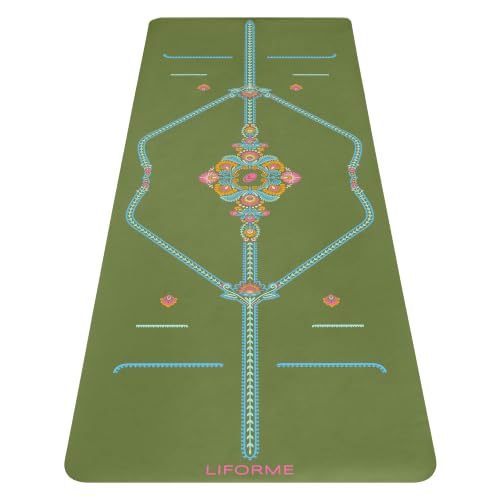
The Liforme Printed Yoga Mat’s patented AlignForMe markers provide visual cues printed on the surface to guide hand and foot placement, which can help yogis of all shapes and sizes improve precision. The GripForMe surface is designed to become grippier as you sweat, offering stability during practice. The mat is built with a non-toxic, PVC-free eco-polyurethane surface and a sustainably sourced natural rubber base, using durable, eco-friendly, non-toxic inks. At 72.8 inches long and 26.8 inches wide, it offers more length and width than many standard mats, giving taller users extra room to stretch out.
The trade-off is that 4.2mm of cushioning is thinner than the 10mm padding on the Gaiam Essentials Thick Yoga Mat, so if you prefer more cushioning, that mat may be a better fit. At 5.5 pounds, this mat is heavier than the Manduka Begin Yoga Mat at 2.1 pounds, so carrying it requires more effort, though the included yoga bag helps with transport. This mat is suited for yogis who value alignment guidance and a grippy, eco-friendly surface, and who are comfortable with a firmer, less cushioned practice.
GRAND BASICS Instructional Yoga Mat

What We Like
- 75 poses printed directly on mat
- Extra 1/4-inch thickness cushions joints
- Includes carrying strap for portability
Trade-offs
- Heavier than many beginner mats at 3.7 pounds
Seventy-five illustrated poses printed right on the surface mean you can follow along without craning your neck to watch an instructor or fumbling with a phone screen. The 1/4-inch thickness adds noticeable cushioning for knees and tailbone, which makes holding poses more comfortable during longer sessions. This mat is ideal for anyone teaching themselves yoga at home or wanting a visual reference during class. The included carrying strap helps offset the 3.7-pound weight, so you can still toss it over your shoulder and head to the studio.
All that printed guidance comes with a bit of extra heft compared to lighter options like the Manduka Begin Yoga Mat, which weighs only 2.1 pounds. Still, for a beginner focused on learning proper alignment and pose names, the built-in reference guide makes practice feel more self-directed and less intimidating.
Amazon Basics Extra Thick Yoga Mat

What We Like
- Extra thick 0.5-inch cushioning
- Lightweight at 2.2 pounds
- Textured surface for grip
- Portable with carrying strap
Trade-offs
- Hand wash only; no machine care
- Narrow 24-inch width limits movement for taller users.
A half-inch of NBR foam means this mat delivers serious cushioning for beginners who want comfort during floor exercises or yoga. At 2.2 pounds, it’s light enough to carry with the included strap, so you can take it to a studio or park without feeling like you’re hauling equipment. The textured surface helps keep you stable, which is reassuring when you’re still figuring out your balance in downward dog.
The Amazon Basics Extra Thick Yoga Mat is made from NBR foam that stretches and springs back into shape, providing comfortable padded support and shock absorption for yoga, gym workouts, and everyday exercises. At 0.5 inches thick, it offers generous cushioning for floor work, though NBR foam is not as dense as some other materials. For comparison, the Gaiam Essentials Thick Yoga Mat measures 0.4 inches thick and weighs 2.8 pounds, while this Amazon Basics mat weighs just 2.2 pounds. The textured grip surface helps keep the mat in place during workouts. An elastic carrying strap is included so you can roll it up and sling it over your shoulder to a gym, studio, or park.
Product photos
CAP 1/2 Inch Thick Yoga Mat
What We Like
- Half-inch thick NBR foam cushions joints
- Latex-free material for easy care
- Textured surface adds grip during poses
- Carry strap included for storage
Trade-offs
- At 68 inches, shorter than some mats
- 24-inch width limits side-to-side movement
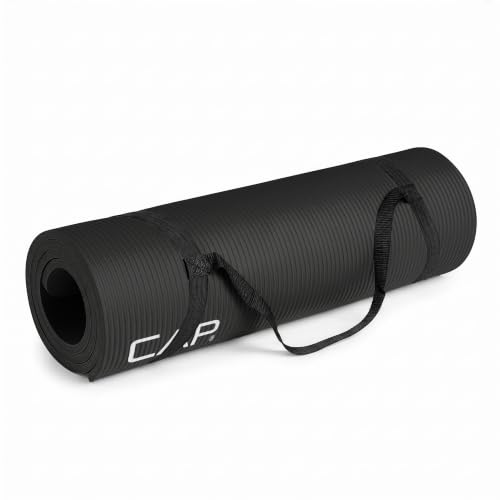
A full half-inch of NBR foam means your knees, elbows, and hips get serious padding against hard floors, which is exactly what you want when you’re learning poses that put weight on those spots. This mat is built for comfort first, with a textured surface that helps you stay put during planks and stretches. The latex-free material is a thoughtful touch for anyone with sensitivities, and it wipes clean without fuss. If your main worry is sore joints or a hard floor beneath you, this thick cushion gives you room to explore yoga and floor exercises without wincing.
The CAP 1/2-inch-thick yoga mat uses high-density NBR foam to cushion knees, elbows, and hips during floor exercises, making it especially comfortable for poses and stretches that put pressure on those areas. The 68-by-24-inch surface provides enough room for yoga, Pilates, and core workouts. A carry strap is included so you can roll it up and take it to the gym or studio. Reviewers note that the textured surface helps with grip and stability during poses, and the latex-free material wipes clean after use.
Product photos
Retrospec Solana Thick Yoga Mat

What We Like
- BPA-free, phthalate-free, latex-free
Trade-offs
- Narrow 24-inch width limits side-to-side space
- Initial odor requires airing out before use
Half an inch of cushioning means your knees, hips, and wrists won’t complain during floor poses or kneeling stretches, exactly what a beginner needs to stay comfortable while finding their balance. And because it’s BPA-free, phthalate-free, and latex-free, you get a clean foundation without worrying about off-gassing or skin sensitivity. That combination of thick padding and material safety makes this a thoughtful pick for anyone starting yoga at home.
That plush feel comes with weight: at 2.7 pounds, it’s a bit heavier than a thinner mat like the Manduka Begin, so carrying it to a studio or class adds some heft. The 24-inch width also means taller or broader beginners might find their hands or feet creeping off the edges during wide-legged poses. Just give it a day or two to air out the initial smell before your first session.
Product photos
KEEP Non-Slip Large Yoga Mat
What We Like
- Extra-wide 32" surface for roomy poses
- 7mm thick padding protects joints
- Double-sided non-slip for wet or dry
- Eco-friendly TPE, no plasticizers
Trade-offs
- 7mm thickness less cushioned than 10mm options
- Requires airing out before first use
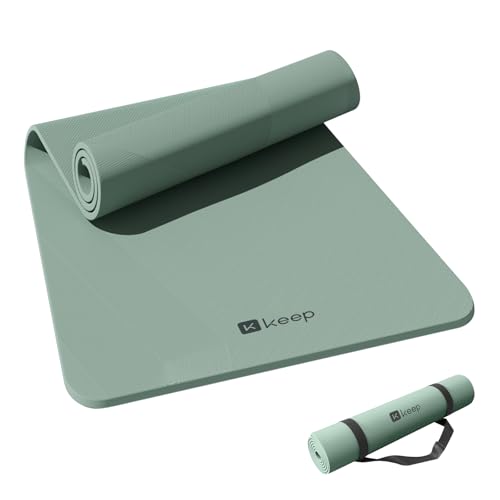
The 32-inch width is the main feature that sets this mat apart from many standard options. Most basic yoga mats are 24 inches wide, which can feel restrictive when you’re in wide-legged poses or simply want extra room to move without worrying about the edge. The 7mm TPE padding cushions knees and elbows during floor poses, and the double-sided non-slip texture helps keep you stable on both dry and damp surfaces. It’s a practical choice for anyone who wants a spacious, secure foundation for their practice.
Seven millimeters of padding places this mat in a practical middle ground between the 5mm mats that offer more ground feel and the 10mm options that prioritize plushness. That thickness provides noticeable cushioning for knees and elbows during floor poses without making you feel disconnected from the floor. The 32-inch width is genuinely generous, giving practitioners of all sizes room for wide stances and dynamic movements without worrying about slipping off the edge. It is a well-rounded, everyday mat that accommodates a range of body types and practice styles.
Product photos
How We Evaluated Yoga Mats For Beginners
We built this guide by comparing technical specs from manufacturers, studying expert round-ups from yoga instructors, and analyzing patterns in owner feedback. No mat was tested in a lab or used in a studio by our team. Instead, we looked for consistent strengths and trade-offs reported across many sources.
Three criteria mattered most. First, cushioning thickness: a mat that is too thin hurts knees and wrists, while one that is too thick can make standing poses feel unstable. Second, grip and texture: a non-slip surface is critical for safety and confidence, especially as you start sweating. Third, weight and portability: a heavy mat discourages practice away from home, while a very light mat may not hold up as well over time.
A research-led evaluation has limits. We cannot report how a mat feels after months of daily practice or how it holds up in a hot studio. What we can do is surface the features and trade-offs that real owners consistently mention, so you can match a mat to your own priorities.
What To Look For In Yoga Mats For Beginners
Choosing your first yoga mat is simpler when you know what to check. Focus on thickness, grip, size, and material, and you will find a mat that supports your practice without complicating it.
The best beginner yoga mat balances enough cushioning for comfort with enough stability for balance. Look for 5mm to 6mm thickness as a starting point, a textured or naturally grippy surface, a width and length that fits your height, and a material that matches your sensitivity and portability needs.
Thickness and Cushioning
The thickness of your mat directly affects how your joints feel during poses. Mats range from about 3mm to 10mm. A 5mm mat like the Manduka Begin offers a good middle ground for most beginners. If you have sensitive knees or practice on hard surfaces, a 10mm mat like the Gaiam Essentials Thick provides noticeable relief. Keep in mind that very thick mats can make balancing poses like tree pose feel less stable, because your feet sink into the surface.
Grip and Material
Grip keeps you from sliding during downward dog or warrior poses. Many beginners worry about slipping, so a textured surface or a material that gets grippier with moisture is valuable. The category of non-slip yoga mats covers mats designed specifically for this. PVC mats tend to be grippy but have a stronger initial odor that needs airing out. TPE mats are lighter and more eco-friendly but may feel slightly less tacky when wet.
Size and Portability
Standard mats are 68 inches long and 24 inches wide. If you are over 5’8″, you will likely want a longer mat like the MRZZATA Extra Long Wide. Wider mats, such as the KEEP Non-Skip Large at 32 inches, give you room for side-to-side movements. Weight matters too: a lightweight mat around 2 pounds is easy to carry to class, while a heavier mat with more cushioning is better for home use. For those who travel, travel yoga mats offer an ultralight option.
- Check the mat’s length against your height; your head and feet should both fit on the mat.
- Lay on the mat and spread your arms to see if the width feels restrictive.
- Lift the mat in its carrying strap to see if the weight feels manageable for your commute.
- Unroll the mat and sniff for strong chemical odors; some materials need 24 to 48 hours of airing.
- Press your palm into the mat and slide it to test the grip before your first full practice.
A good rule of thumb: your mat should feel like a stable, comfortable foundation that you can roll up and carry without hesitation.
Yoga Mats For Beginners Compared
The table below compares all ten mats side by side, so you can quickly see how they differ in thickness, weight, and best use.
| Product | Thickness | Weight | Dimensions | Material |
|---|---|---|---|---|
| Manduka Begin Yoga Mat | 5 mm | 2.1 lb | 68 x 24 in | TPE foam |
| Gaiam Essentials Thick Yoga Mat | 10mm | 2.8 lbs | 72" x 24" | NBR foam |
| Gaiam Premium Yoga Mat | 6mm | 3.1 pounds | 68" x 24" | PVC |
| MRZZATA Extra Long Wide Yoga Mat | 7 mm | 2.5 lb | 84 x 32 inches | TPE |
| Liforme Printed Yoga Mat | 4.2mm | 5.5 pounds | 72.8 x 26.8 inches | Eco-polyurethane + natural rubber |
| GRAND BASICS Instructional Yoga Mat | 1/4 inch | 3.7 pounds | 68 x 24 inches | PVC |
| Amazon Basics Extra Thick Yoga Mat | 0.5 inches | 2.2 pounds | 74 x 24 inches | NBR foam |
| CAP 1/2 Inch Thick Yoga Mat | 0.5 inches | 2.1 pounds | 68 x 24 inches | NBR foam |
| Retrospec Solana Thick Yoga Mat | 1/2 inch | 2.7 pounds | 72 x 24 inches | BPA-free, phthalate-free |
| KEEP Non-Slip Large Yoga Mat | 7mm | 2.8 lb | 72" x 32" x 7mm | TPE |
Frequently Asked Questions
What thickness yoga mat should a beginner choose?
Most beginners do well with a 5mm to 6mm mat. This thickness cushions wrists and knees without making standing poses feel wobbly. If you have very sensitive joints or practice on a hard surface, a 10mm mat offers more padding. The yoga mat thickness guide explains the trade-offs in detail.
How do I clean a yoga mat?
Most beginner mats can be wiped down with a damp cloth and mild soap. Avoid machine washing unless the manufacturer specifies it is safe. PVC and TPE mats both respond well to a quick spray of water and vinegar, followed by air drying. Always let the mat dry fully before rolling it up to prevent mildew.
Should I buy a yoga mat with alignment guides?
Alignment guides printed on the mat can help beginners check hand and foot placement without looking up at an instructor. The Liforme Printed Yoga Mat and the GRAND BASICS Instructional Mat both include guides. They are especially useful for home practice where you do not have a teacher to correct your form.
What is the difference between PVC and TPE yoga mats?
PVC mats are durable, grippy, and widely available, but they often have a strong initial odor and are less eco-friendly. TPE mats are lighter, recyclable, and usually odor-free, but they may wear out faster and can be less grippy when wet. Your choice depends on whether portability and environmental impact matter more than long-term durability.
How long should a yoga mat be for a tall beginner?
Standard mats are 68 inches long, which suits people up to about 5’8″. Taller beginners should look for mats around 72 to 74 inches. The MRZZATA Extra Long Wide Mat is a good example. A mat that is too short forces you to place your head or feet on the floor during poses like savasana.
The Bottom Line
The Manduka Begin Yoga Mat is the best overall choice for new yogis who want a lightweight, portable mat with alignment guidance and eco-friendly materials. It suits most body types and practice styles, especially if you plan to carry your mat to a studio or class.
If your main concern is joint comfort on hard surfaces, the Gaiam Essentials Thick Yoga Mat gives you the most cushioning at a reasonable weight. For tall beginners or those who want built-in pose guides, the MRZZATA Extra Long Wide and the Liforme Printed Mat offer targeted solutions.
The single most important buying factor is thickness. Get that right for your body and floor type, and everything else, grip, size, material, falls into place. Start there, and your first practice will feel steady and comfortable.
