
10 Best Yoga Mats For Bikram in 2026
This post contains affiliate links. As an Amazon Associate, we earn from qualifying purchases.
For Bikram, a standard mat turns into a slip-and-slide the moment you start to sweat. The Liforme Printed Yoga Mat wins as the best overall because its polyurethane surface actually grips harder when wet, and the built-in alignment markers help you hold poses in a hot room. For a lighter carry, the Gaiam Dry-Grip Yoga Mat is the best for sweaty sessions, and the Retrospec Laguna Yoga Mat earns the best eco-friendly pick for its moisture-absorbing top layer.
The problem with Bikram is that it is a battle against heat and humidity. Your mat needs to stay planted underfoot, absorb sweat without becoming slick, and provide enough cushion for standing poses on a hard studio floor. A mat that fails on grip forces you to compensate with muscle tension, which wastes energy you need for the sequence.
This guide is research-based. We looked at manufacturer specs, expert round-ups, and patterns in owner feedback to find mats that actually perform in a hot room. We focused on grip technology, cushioning thickness, material durability, and portability, the four factors that matter most when the thermostat climbs.
Top 10 Yoga Mats For Bikram in the Market
Certain content that appears on this site comes from Amazon. This content is provided "as is" and is subject to change or removal at any time.
The Best Yoga Mats For Bikram, Reviewed
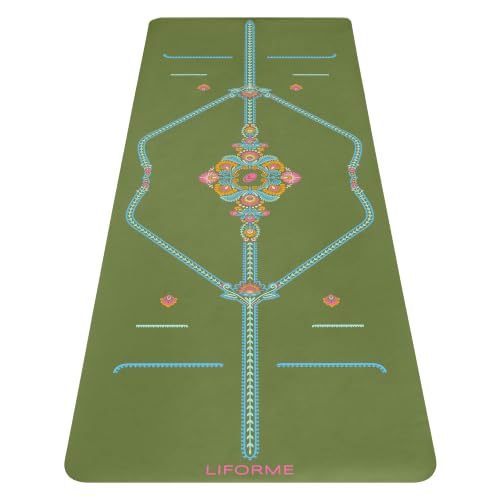
Liforme Printed Yoga Mat
What We Like
- Sweat-activated grip for hot yoga
- Patented alignment markers guide form
- Eco-friendly, non-toxic materials
- Includes complimentary yoga bag
Trade-offs
- At 5.5 lb, heavier than ultralight mats
- 4.2 mm cushioning less plush than 6 mm mats
The GripForMe surface actually gets grippier as you sweat, which is exactly what you want when your palms start slipping in a hot yoga class. At 72.8 inches long and 26.8 inches wide, it gives you plenty of real estate for wide-legged poses without your hands or feet creeping off the edge. The patented AlignForMe markers are printed right into the surface, so you can check your foot and hand placement without breaking your flow. It’s built on a natural rubber base with an eco-polyurethane top, and the whole thing stays non-toxic and PVC-free. For anyone serious about hot yoga who wants a mat that works with the heat instead of fighting it, this is the one to beat.
The trade-off is weight and thickness. At 5.5 pounds and 4.2 millimeters, it’s heavier than the Heathyoga TPE mat (2.2 lb) and not as cushioned as the Manduka PRO (6 mm). If you’re walking to the studio or stacking your mat on a shelf every day, that extra pound or two matters. And if your knees or wrists need more padding on a hard floor, you might find yourself reaching for a towel to fold under them. But for the core Bikram experience, where grip and alignment matter more than carrying weight or pillow-soft cushioning, those compromises are easy to live with.
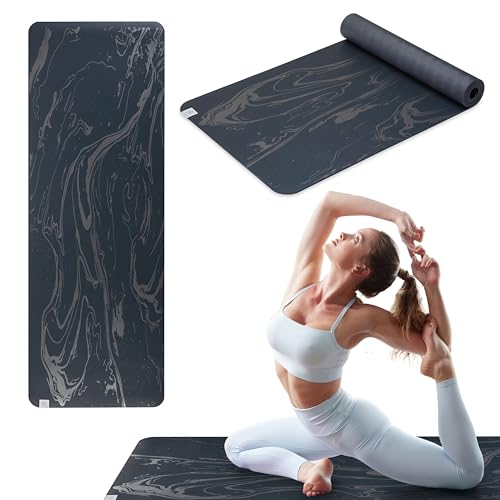
Gaiam Dry-Grip Yoga Mat
What We Like
- Moisture-wicking topcoat stays non-slip when sweaty
- Lightweight and easy to carry to studios
- Cushioned support for joints and stability
- Reduces need for separate towel in hot yoga
Trade-offs
- 4.8 lb is heavier than some travel mats
- 24.1-inch width is narrow for wide-shouldered users
The moisture-wicking dry-grip topcoat is the standout feature here, actively pulling sweat away from your skin to keep you planted in every pose, exactly what you need during hot yoga. It’s designed to reduce the need for a separate towel, so you can focus on your breath and alignment instead of slipping around. At 4.8 pounds, it’s light enough to toss over your shoulder and carry to class, yet the rubber base gives you enough cushioning for knees and wrists during long holds.
Size is the trade-off: at just over 24 inches long, this mat is noticeably shorter than standard options like the Liforme Printed Yoga Mat (72.8 inches). Taller practitioners may find their feet hanging off the edge during lying poses. That compact length does make it easier to stuff into a gym bag, but if you’re over average height, you’ll want to check the dimensions before committing. For hot yoga regulars who prioritize grip over real estate, the Dry-Grip delivers where it counts.
Retrospec Laguna Yoga Mat

What We Like
- Moisture-absorbing PU top for hot yoga
- PVC-free and eco-conscious materials
- 5mm thickness cushions knees and wrists
- Non-slip grip channels away sweat
Trade-offs
- At 7.0 pounds, heavier than many mats
- Rubber bottom can have a strong initial smell
A 5mm thick mat with a moisture-absorbing PU top means you get real grip during sweaty Bikram sessions without needing to constantly adjust your stance. The PVC-free, eco-conscious construction also makes it a thoughtful pick if you want to reduce your environmental footprint without sacrificing performance. This mat suits anyone who prioritizes sustainable materials and needs reliable traction in a hot room, especially if you value a little extra cushioning for your knees and wrists during long holds.
Weighing 7 pounds, the Retrospec Laguna is noticeably heavier than the Liforme Printed Yoga Mat (5.5 pounds), so carrying it to and from class might feel like a small workout in itself. If you’re okay with a bit of extra weight, the Retrospec Laguna gives you a solid, earth-friendly grip that holds up to the heat.
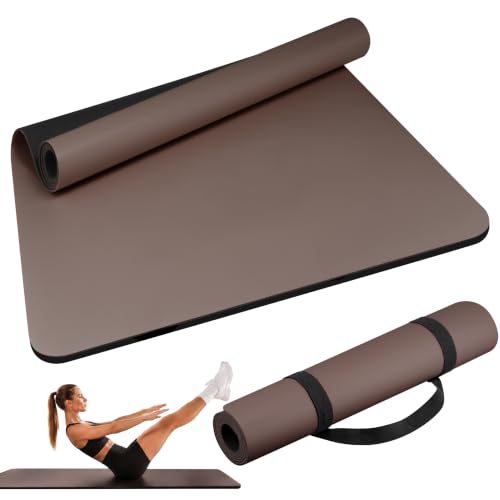
Wimwum Professional Yoga Mat
What We Like
- 5 mm thickness balances cushion and stability
- Natural rubber base stays planted
Trade-offs
- Heavy 6.8 lb weight limits portability.
No towel needed, no sliding around, just steady poses even when you’re dripping. That 5 mm thickness gives enough padding for floor work without making you feel unstable in standing balances, and the natural rubber base keeps the mat planted on studio floors. It’s a straightforward design built around one job: keeping you locked in when things get sweaty.
Darker colors help hide them, but it’s worth knowing if you prefer a pristine look. Compared to the lighter Liforme mats, the Wimwum is noticeably heavier at 6.8 pounds, which makes it less ideal for carrying to class every day unless you don’t mind the extra weight.
Product photos
Liforme Special Yoga Mat

What We Like
- Revolutionary GripForMe material stays grippy when wet
- Eco-friendly, PVC-free, non-toxic materials
- Patented alignment design for practice precision
- Includes free yoga bag for portability
Trade-offs
- At 5.5 lb, heavier than some travel-friendly mats
- 4.2 mm thickness offers less cushioning than thicker mats
The Liforme Special Yoga Mat’s GripForMe material is described by the manufacturer as the grippiest yoga mat available, staying non-slip even when wet with sweat, which makes it a strong choice for hot yoga where maintaining traction is critical. Its patented alignment design helps you position hands and feet correctly without looking, supporting focus on breath and form. For yogis who practice in a heated room and want a mat that stays put no matter how much you perspire, this is about as reliable as it gets.
Weighing 5.5 pounds, this mat is noticeably heavier than many alternatives, such as the 2.2-pound Heathyoga TPE mat, which makes it less ideal for carrying to a studio. Its 4.2 mm thickness provides a stable, grounded feel during standing poses but offers less cushioning than thicker mats like the 6 mm Gaiam Premium or Manduka PRO options. Practitioners who prioritize portability or require extra padding for sensitive joints may find those other mats more suitable for their needs.
Mandelbrot X Yoga Mat

What We Like
- Extra large 72" x 24" size
- Reversible textured non-slip surface
- Easy to clean and resists odors
- Weighs only 2.0 pounds
Trade-offs
- Narrower than some competitors at 24 inches wide
- 5 mm thickness offers less cushion for knees
At just 2.0 pounds, this mat is the lightest in the roundup by a wide margin. That makes it a fantastic choice if you carry your mat to and from the studio or stash it in a gym bag. The 5 mm thickness provides a balance of padding and portability, and the reversible textured surface is described as extremely non-slip, wet or dry. For practitioners who value portability and a non-slip surface, this mat offers those features without excess weight.
Product photos
Gaiam Premium Yoga Mat

What We Like
- Extra-thick 6mm cushioning for joints
- Textured non-slip surface for grip
- Lightweight at 3.1 pounds
- 6P-free PVC, a healthier material choice
Trade-offs
- 24-inch width is narrower than many Bikram mats
A 6mm thickness provides extra cushioning for joints during yoga or fitness routines, while the textured non-slip surface helps with traction and grip. At 3.1 pounds, it’s lightweight enough to carry to class easily. The 6P-free PVC material is a healthier choice, free of several common phthalates.
At 68 inches long and 24 inches wide, this mat is shorter and narrower than several competitors, so taller users or those who spread out in poses may find it limiting. The Liforme Printed Yoga Mat, for instance, offers 72.8 by 26.8 inches of space. For most people, though, the extra cushioning and light weight make it a practical everyday choice for yoga or floor workouts.
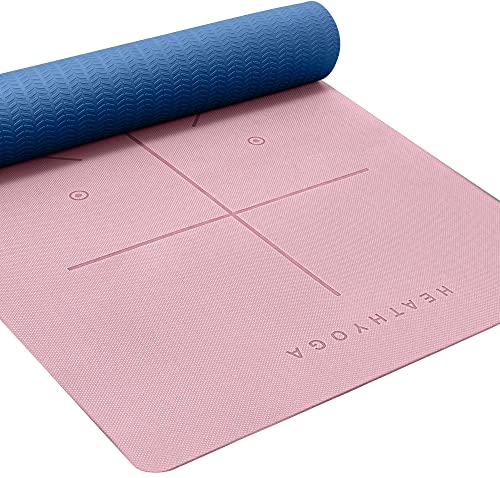
Heathyoga TPE Yoga Mat
What We Like
- Body alignment lines for proper positioning
- Double-sided non-slip grip for stability
- Eco-friendly TPE material, free of latex and PVC
- Includes strap for easy portability
Trade-offs
- Less dense than rubber mats for intense hot yoga
- Narrower than some premium mats for wide stances
The alignment lines on this mat help guide your feet and hands into proper positions, which is useful for maintaining posture during practice. Made from eco-friendly TPE, it’s free of latex and PVC, so there’s no chemical smell in a warm room. The double-sided non-slip grip provides traction on both sides, and at 72 inches long and 26 inches wide, it offers ample space for most users.
At 2.8 pounds, this mat is light enough to carry to class. Compared to the Gaiam Dry-Grip mat (4.8 lb), the Heathyoga is lighter, but both offer non-slip surfaces. The alignment system provides visual cues for positioning. If you prefer a heavier mat that stays put on the floor, the Manduka PRO (7.5 lb) is a denser option, but for portability and guided positioning, this mat works well.
Product photos
IUGA Yoga Mat Thick Non Slip
What We Like
- Middle-layer mesh resists tearing
- Eco-friendly TPE, no latex or PVC
- Lightweight 1.8 lbs with carry strap
Trade-offs
- 6mm thickness less cushioning than thicker mats
- No alignment markings for pose guidance
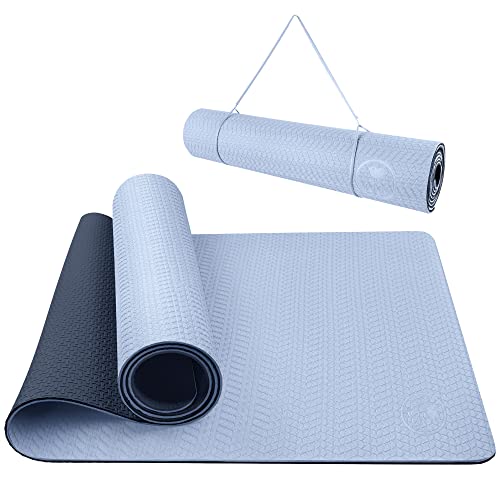
At just 1.8 pounds with a free carry strap, this mat is genuinely easy to take to a hot yoga studio or pack for travel, no wrestling with a heavy roll. For someone who wants a lightweight, eco-friendly mat that won’t slide around during Bikram, this hits the right notes without weighing you down.
If you have broad shoulders or like spreading your feet wide in standing poses, you might find the edges a bit tight. The middle-layer mesh adds tear resistance, which is designed to enhance durability. It’s a smart pick for portability and eco-consciousness, just not the most spacious choice for those who prioritize extra real estate.
Product photos
Manduka PRO Yoga Mat

What We Like
- Lifetime durability guarantee
- Closed-cell surface resists moisture
- No-slip dot pattern on bottom
- Ultra-dense 6mm joint cushioning
Trade-offs
- At 7.5 lb, heavy to carry to class
- Closed-cell top can feel slick when wet
A 6mm thickness with ultra-dense cushioning means your knees and elbows won’t ache after a long session, even on hard studio floors. The closed-cell PVC surface resists moisture for a cleaner practice, and the lifetime durability guarantee backs up its reputation as a mat that outlasts your practice. This is the mat for someone who wants one purchase to carry them through years of practice, not a lightweight travel mat that needs replacing every season.
Weight is the trade-off: at 7.5 lb, this mat is heavier than many alternatives, so lugging it to and from the studio feels like an extra workout. The closed-cell top seals out moisture, which keeps the mat hygienic, but some users may find it less grippy when their palms are wet compared to other mats. If you drive to class and prioritize stability and longevity over portability, this is your mat. If you walk or bike to the studio, you might prefer something lighter.
Product photos
How We Evaluated Yoga Mats For Bikram
We started by reading through manufacturer specifications and expert commentary on what makes a mat suitable for hot yoga. The key differentiator in Bikram is how the surface behaves when wet, most mats become slippery, but the best ones use open-cell polyurethane or a moisture-wicking topcoat that turns sweat into grip. We cross-referenced these claims with patterns in owner feedback to see which mats held up over months of daily classes.
The four criteria that mattered most were grip in wet conditions (the non-negotiable), cushioning thickness for joint comfort on hard floors, material durability against sweat breakdown, and weight for carrying to and from the studio. A mat that fails on any one of these makes Bikram harder than it needs to be. We also noted eco-friendly materials and alignment features as valuable bonuses.
A research-led evaluation has limits. We relied on what owners consistently report. We prioritized mats where the feedback aligned with the manufacturer’s claims. For a deeper look at the category, check our hot yoga mat reviews for more detail on how specific mats handle the heat.
What To Look For In Yoga Mats For Bikram
Choosing a mat for Bikram comes down to how it handles sweat, how much cushion your joints need, and how far you carry it. Here is what to check before you buy.
Look for a mat with a moisture-absorbing or moisture-wicking surface that gets grippier when wet, not slick. Aim for 4-6 mm of cushioning for joint protection on hard floors. Keep the weight under 5 lb if you walk to class.
Grip and Sweat Management
The surface material is everything in Bikram. Open-cell polyurethane (PU) tops, like the one on the Liforme mats, absorb moisture and create a tacky feel as you sweat. Closed-cell PVC mats, like the Manduka PRO, resist moisture but can feel slippery until broken in. A middle ground is the Gaiam Dry-Grip’s moisture-wicking topcoat, which channels sweat away from the surface. If you prefer to use a towel, consider yoga mat towels designed for hot classes to add extra moisture control.
Cushioning and Thickness
Bikram studios typically have hardwood or tile floors. A mat that is too thin leaves your knees and wrists aching after standing poses and floor work. The Retrospec Laguna and Wimwum mats offer 5 mm of cushion, which is a good balance of comfort and stability. The Gaiam Premium goes to 6 mm for extra joint protection. Thicker mats can feel unstable for balancing poses, so 4-6 mm is the sweet spot for Bikram.
Portability and Weight
You will likely carry your mat to and from the studio. The Manduka PRO is built like a tank at 7.5 lb, which is fine for a home practice but heavy for a daily commute. The Mandelbrot X Yoga Mat weighs only 2.0 lb and is easy to sling over a shoulder. If you take the bus or walk, weight matters more than durability. Most of the mats in this guide fall between 3 and 7 lb, so choose based on how far you carry it.
- Check the mat’s length: standard 68 inches works for most people under 5’10”, but taller practitioners need 72 inches.
- Look at the width: 24 inches is standard, but some mats are narrower and can feel cramped in wide-legged poses.
- Consider the material smell: natural rubber mats can have a strong initial odor that fades over time.
- Verify the included extras: some mats come with a carrying strap or bag, which saves you from buying one separately.
- See if the mat is reversible: a textured surface on both sides gives you two grip options as the mat wears.
A good rule of thumb: if the mat’s surface feels tacky when you press your palm into it dry, it will likely grip better when wet. If it feels slick dry, it will be dangerous in a hot room.
Yoga Mats For Bikram Compared
The table below compares the ten best yoga mats for Bikram side by side, so you can see how grip type, thickness, weight, and special features stack up at a glance.
| Product | Thickness | Weight | Material | Dimensions |
|---|---|---|---|---|
| Liforme Printed Yoga Mat | 4.2 mm | 5.5 lb | Eco-polyurethane / natural rubber | 72.8 x 26.8 in |
| Gaiam Dry-Grip Yoga Mat | 4.0 in | 4.8 lb | Rubber cushioning | 24.1 x 4.5 x 4.0 in |
| Retrospec Laguna Yoga Mat | 5 mm | 7.0 lb | PU top, rubber bottom, PVC-free | 25.0 x 5.0 x 5.0 in |
| Wimwum Professional Yoga Mat | 5 mm | 6.8 lb | PU top layer, natural rubber base | 72 x 27 x 0.2 in |
| Liforme Special Yoga Mat | 4.2 mm | 5.5 lb | Eco-polyurethane & rubber | 72.8 x 26.8 x 0.2 in |
| Mandelbrot X Yoga Mat | 5 mm | 2.0 lb | N/A | 72 x 24 in |
| Gaiam Premium Yoga Mat | 6 mm | 3.1 lb | 6P-free PVC | 68 x 24 in |
| Heathyoga TPE Yoga Mat | 6 mm | 2.8 lb | TPE (eco-friendly) | 72 x 26 in |
| IUGA Yoga Mat Thick Non Slip | 6 mm | 1.8 lb | TPE (no latex, no PVC) | 72 x 24 x 6mm |
| Manduka PRO Yoga Mat | 6 mm | 7.5 lb | Closed-cell PVC | 71 x 26 in |
Frequently Asked Questions
What makes a yoga mat good for Bikram?
A good Bikram mat has a surface that grips when wet, not one that becomes slippery. Open-cell polyurethane tops absorb sweat and get tackier, while moisture-wicking coatings channel perspiration away. The mat should also be at least 4 mm thick to cushion joints on hard studio floors and light enough to carry to class.
How thick should a yoga mat be for hot yoga?
For Bikram, 4 to 6 mm is ideal. Mats under 4 mm offer too little cushion for kneeling and prone poses on hardwood floors, while mats over 6 mm can feel unstable for standing balance poses. The 5 mm thickness found on mats like the Retrospec Laguna and Wimwum Professional offers a good compromise.
Can I use a regular yoga mat for Bikram?
You can, but you will likely struggle with slipping. Standard PVC mats are closed-cell and do not absorb moisture, so they become slick when wet. Many Bikram practitioners end up buying a dedicated mat with a polyurethane top or a moisture-wicking coating to avoid sliding out of poses.
How do I clean a yoga mat used for hot yoga?
Most Bikram mats can be wiped down after class with a mild soap and water solution or a mat-specific spray. Mats with open-cell tops like the Liforme need gentle cleaning to avoid damaging the absorbent surface. Avoid machine washing or soaking, which can delaminate the layers.
What is the difference between a hot yoga mat and a regular yoga mat?
A hot yoga mat is designed with a surface that grips better when wet, while a regular mat becomes slippery. Hot yoga mats also tend to have better moisture management, either through an absorbent top layer or a moisture-wicking coating. They are often denser to prevent bunching during sweaty sequences.
The Bottom Line
For most Bikram practitioners, the Liforme Printed Yoga Mat is the best overall choice. Its sweat-activated grip and alignment markers solve the two biggest problems in a hot room: staying planted and keeping your form correct when fatigue sets in. It is a mid-range investment that pays off in confidence on the mat.
If you need something lighter for carrying to a studio, the Gaiam Dry-Grip Yoga Mat is the best for sweaty sessions and weighs under 5 lb. If you prefer eco-friendly materials, the Retrospec Laguna Yoga Mat offers a PVC-free PU top and 5 mm of cushion at a budget-friendly price. For those who want a mat that will outlast their practice, the Manduka PRO has a lifetime guarantee.
The single most important factor for Bikram is grip. Everything else, cushion, weight, eco-friendliness, comes second to a surface that keeps you stable when the sweat starts flowing. Choose the mat that matches your priority, and your practice will thank you.
