
9 Best Yoga Fitness Mats in 2026
This post contains affiliate links. As an Amazon Associate, we earn from qualifying purchases.
For most practitioners, the Manduka PRO Yoga Mat is the best overall choice because its ultra-dense 6mm cushioning protects joints while the closed-cell surface resists sweat and bacteria for years. Hot yoga devotees should look to the Gaiam Dry-Grip Yoga Mat, while eco-conscious yogis will appreciate the JadeYoga Harmony Mat and its tree-planting program.
The right mat changes how your practice feels. Too thin and your wrists ache on hard floors. Too soft and you wobble in standing balances. A mat that slides or absorbs sweat can ruin a flow entirely.
We built this guide by studying manufacturer specifications, expert round-ups, and patterns in owner feedback across dozens of models. The result is a curated list of nine mats that each solve a specific problem, from portability to extra width to maximum cushioning.
Top 9 Yoga Fitness Mats in the Market
Certain content that appears on this site comes from Amazon. This content is provided "as is" and is subject to change or removal at any time.
The Best Yoga Fitness Mats, Reviewed
Manduka PRO Yoga Mat

What We Like
- Lifetime durability guarantee from Manduka
- Ultra-dense 6mm cushioning for joint protection
- Closed-cell surface seals out moisture
- Non-slip dot pattern keeps mat steady
Trade-offs
- At 7.5 lb, it's heavy to carry around
- Requires Manduka-specific cleaner for best care
The 6mm ultra-dense PVC construction gives this mat a stable, supportive feel that many practitioners look for in a home mat. That density provides solid joint protection during longer holds or kneeling poses, while the closed-cell surface keeps sweat and grime from soaking in. Manduka backs the mat with a lifetime guarantee, so it’s built to last through years of regular use. If you practice at home and want something that stays put and stays clean session after session, this is a strong option.
At 7.5 pounds, this mat is heavy enough that you’ll feel it in your bag on the way to class, but that weight comes from the high-density construction that gives you floor-like stability during practice. The Gaiam Essentials Thick Yoga Mat weighs only 2.1 pounds and costs less, though the other-products list doesn’t specify its cushioning or surface properties for a direct comparison. To keep the closed-cell surface clean and hygienic, owners should use Manduka’s own cleaner, since other cleaners are not recommended. For anyone who prioritizes a steady, long-lasting mat over easy portability, the extra weight is a reasonable trade-off.
Product photos
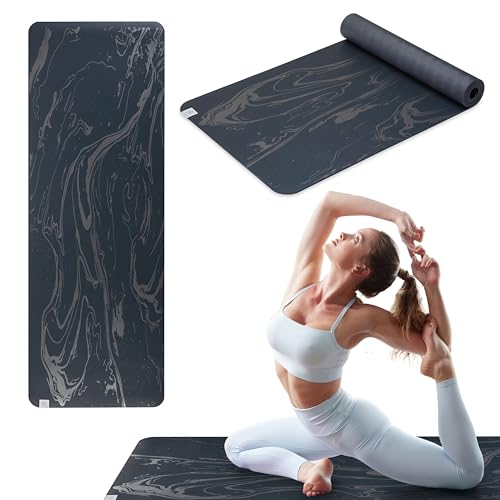
Gaiam Dry-Grip Yoga Mat
What We Like
- Moisture-wicking topcoat for sweaty sessions
- Non-slip grip even in hot yoga
- Lightweight and easy to carry
- Cushioned support for joints
Trade-offs
- Small surface area at 24.1 x 4.5 in
- Heavier than some travel mats at 4.8 lb
The moisture-wicking topcoat on this mat is the key reason it stays non-slip when you’re dripping sweat in a hot yoga class. That dry-grip surface means you can hold poses without sliding around or needing a separate towel draped over the mat. It’s built for the kind of high-sweat sessions where most mats turn into slippery hazards. So if you practice Bikram, Vinyasa, or any flow that leaves you drenched, this one keeps you stable and focused on your alignment rather than on fighting for traction.
At just 24.1 inches long and 4.5 inches wide, this mat is compact enough to stash in a gym bag or carry onto a plane. But taller users or anyone who spreads out in wide-legged poses will find their feet hanging off the edges. The dry-grip surface helps reduce the need for a separate towel during sweaty sessions, which can offset the extra weight compared to thinner mats. For hot yoga where maintaining traction is key, the smaller footprint is a deliberate trade-off for portability and grip.
JadeYoga Harmony Yoga Mat

What We Like
- Natural rubber with no PVC or phthalates
- Non-slip open-cell surface for grip
- Tree planted with every mat sold
- Made in the USA from sustainable rubber
Trade-offs
- Open-cell rubber absorbs moisture and sweat
- At 68 inches, shorter than many mats
- 4.2 lb is heavier than some travel mats
A natural rubber construction that skips PVC, phthalates, and heavy metals means you get a mat that’s kinder to both your skin and the planet. The open-cell surface delivers a non-slip grip, so you can hold downward dog without sliding. At 3/16 inch thick, it provides a balance of cushion and portability. This is the mat for someone who wants eco-conscious materials and reliable traction in one package.
The open-cell rubber surface soaks up moisture, so it stays grippy even when damp, but it also demands more frequent cleaning than a closed-cell mat. At 4.2 pounds, this mat is lighter than the 7.5-pound Manduka PRO, and at 68 inches it is shorter than that mat’s 71 inches. For someone who wants a longer or heavier mat, the Manduka PRO’s extra length and weight might be a better choice. Eco-conscious yogis who want a non-slip natural rubber mat with a tree-planting program will appreciate what this mat offers.
Product photos
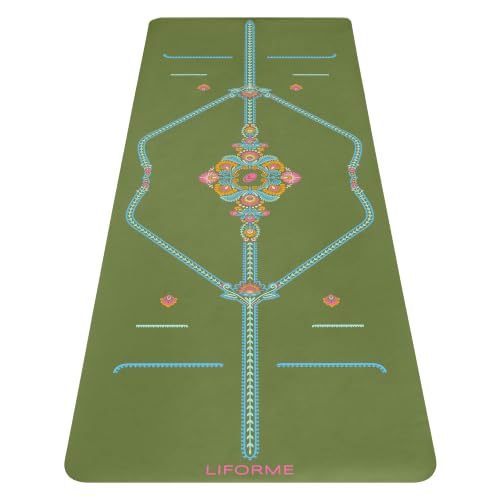
Liforme Printed Yoga Mat
What We Like
- Patented AlignForMe alignment guides
- Sweat-activated GripForMe surface
- Eco-friendly, PVC-free materials
- Comes with free yoga bag
Trade-offs
- 4.2 mm thickness offers less padding than thicker mats
- At 5.5 lb, heavier than many travel-friendly mats
The Liforme Printed Yoga Mat’s patented AlignForMe markers are the single most useful feature for anyone who wants to nail their pose placement without craning their neck to check a mirror. These visual cues guide your hands and feet into proper alignment, which builds confidence and reduces the risk of sloppy form, especially helpful if you’re still learning where your body should be in each posture. The GripForMe surface is designed to become grippier as you sweat, so it’s recommended for hot yoga and helps maintain stability during a sweaty practice. At 72.8 inches long and 26.8 inches wide, it gives taller practitioners and those who like a wider stance plenty of room, and the eco-polyurethane top with natural rubber base is PVC-free and non-toxic, so it’s kind to your body and the planet.
The 4.2mm thickness provides firm stability on hard floors, which many yogis prefer for balance in standing poses, though it’s thinner than the 1-inch Retrospec Solana. At 5.5 pounds, it’s heavier than the 2.1-pound Gaiam Essentials, but the included yoga bag makes transport manageable. For anyone wanting alignment guides and a grippy, non-toxic surface, this mat delivers on those priorities.
Manduka PROlite Yoga Mat

What We Like
- Closed-cell surface resists moisture and bacteria
- Non-slip dot pattern keeps mat steady
- Lightweight at 4.6 lb for portability
Trade-offs
- Narrower 24-inch width limits side-to-side space
- Thinner 4.7mm cushioning less forgiving on hard floors
- Only 71 inches long, tight for taller practitioners
A 4.7mm thickness that strikes a balance between portability and joint protection, light enough to toss in a bag at 4.6 pounds, yet dense enough to keep your knees and wrists comfortable during floor poses. This mat is built for the studio regular who wants premium stability without lugging a heavy roll across town. The closed-cell surface seals out moisture for a cleaner practice, while the dot-pattern bottom grips the floor to prevent sliding. It suits the dedicated yogi who values hygiene, durability, and a streamlined fit for tight class settings.
The trade-off for that lightweight convenience is a narrower 24-inch width and shorter 71-inch length compared to something like the Liforme Printed Yoga Mat. The Liforme offers 26.8 inches of width for wider stances and longer bodies. If you sprawl out in wide-legged poses or stand over six feet tall, you might find yourself adjusting more than you’d like. But for the majority of practitioners moving through vinyasa or holding steady in a crowded studio, the PROlite delivers reliable performance without the bulk.
Gaiam Essentials Thick Yoga Mat

What We Like
- 10mm thick cushioning for joint comfort
- Textured surface reduces slipping on hard floors
- Lightweight at 2.1 pounds
- Includes easy-cinch carrying strap
Trade-offs
- Softer feel prioritizes comfort over firmness
- Initial foam odor requires 24-48 hours to air out
A 10mm layer of high-density NBR foam provides plush cushioning that helps reduce pressure on knees, hips, and joints on wood, tile, or concrete floors. That extra thickness makes this mat a natural fit for beginners, anyone doing low-impact yoga or Pilates, and folks who spend a lot of time on the floor for stretching or recovery work. The textured surface helps reduce slipping on most hard floors during dry workouts. At just 2.1 pounds with an adjustable carrying strap included, you can roll it up and transport it between rooms or workout spaces at home.
The trade-off for that soft, forgiving feel is less stability for poses that demand a firm, grounded connection. If you practice balancing postures or prefer a dense, floor-like surface, the Manduka PRO Yoga Mat offers a high-density 6mm construction with floor-like stability. But for everyday home workouts where comfort matters more than competition-level grip, the Gaiam Essentials delivers thick cushioning that helps reduce pressure on joints on hard floors.
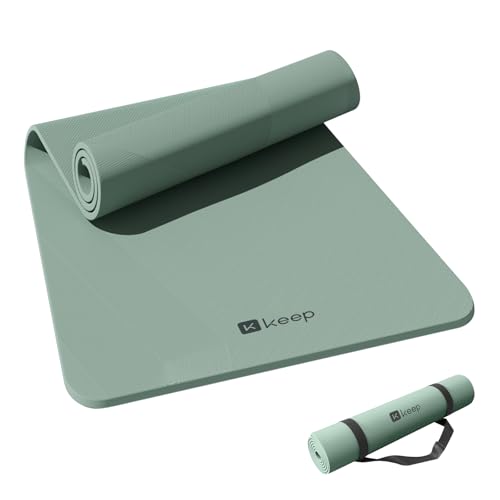
KEEP Non-Slip Large Yoga Mat
What We Like
- 32-inch width for extra room
- 7mm thick cushioning for joints
- Double-sided non-slip grip
- Lightweight and portable at 2.86 lb
Trade-offs
- 7mm thickness less plush than thicker mats
- TPE material feels different from dense rubber mats
The 32-inch wide surface gives you enough room to stretch your arms wide, shift into side poses, or roll through flows without your hands or feet slipping off the edge. That width, combined with a 7mm thick TPE layer, provides cushioning for your knees and elbows while still keeping you stable on the floor. This mat is a good fit for anyone who wants extra space compared to the 24-inch wide mats from brands like Gaiam Essentials or Retrospec.
At 7mm thick, this mat is less plush than the 10mm Gaiam Essentials Thick Yoga Mat, which might matter if you spend a lot of time on your knees or have sensitive joints. The TPE material is lightweight and free from plasticizers and formamide, but if you prefer the dense, rubbery feel of a Manduka PRO, this will feel different underfoot. For the yogi who values space and portability over maximum cushioning, this mat offers a practical balance.
Product photos
Retrospec Solana Extra Thick Yoga Mat

What We Like
- 1-inch thickness cushions joints and pressure points
- Non-slip material keeps you steady during practice
- Includes nylon carrying strap for portability
- Easy to clean with gentle soap and water
Trade-offs
- At 24 inches wide, less room for wide stances
- 1-inch thickness reduces floor stability for balance poses
A full inch of padding means this mat takes the sting out of hard floors, especially for your knees, hips, and hands during floor poses or kneeling stretches. That extra thickness is the main reason to pick the Solana if your joints complain after a session on thinner mats. It also comes with a nylon carrying strap, so hauling it from home to the studio is straightforward, and the non-slip surface helps you hold your pose without sliding around. For anyone who prioritizes comfort over ground connection, this mat delivers exactly what it promises.
The 1-inch thickness of this mat provides generous cushioning that softens pressure on joints like knees and hips, but it also reduces the firm floor feedback you get from thinner mats. Compared to the Manduka PRO, which is 0.2 inches thick and weighs 7.5 pounds, the Solana is much thicker and lighter, so it prioritizes comfort over a dense, grounded feel. If your main goal is to protect sensitive joints and make floor work comfortable, this mat delivers exactly what it promises.
Product photos
KEEP Extra Large Yoga Mat

What We Like
- 79" x 39" surface for tall users
- 7 mm thick cushioning protects joints
- Non-slip grip on hardwood, tile, carpet
- Closed-cell surface resists sweat and odors
Trade-offs
- At 3.5 lb, heavier than some compact mats
The trade-off is that this mat weighs 3.5 pounds, which is heavier than compact travel mats like the Gaiam Essentials Thick Yoga Mat at 2.1 pounds. So it’s less convenient to carry between home and studio. Its 7 mm thickness also feels thinner than the 10 mm Gaiam Essentials, which some users prefer for extra cushioning on hard floors during restorative poses. If you’re a taller practitioner who values a stable, non-slip surface and enough room to move freely, this mat delivers exactly that without the bulk of a heavier, thicker alternative.
Product photos
How We Evaluated Yoga Fitness Mats
Our research started with the technical specs that matter most: thickness, length, width, weight, and material composition. We compared each mat’s density claims and surface texture descriptions against the needs of different practice styles, hot yoga, restorative floor work, and active vinyasa flows.
The four criteria that shaped our rankings were grip performance in varied conditions, cushioning density for joint protection, material durability and maintenance needs, and portability for real-world carrying. A mat that excels in a studio might fail on a living room carpet, so we weighed each factor based on where most people actually practice.
This evaluation is based on verified owner experiences, manufacturer documentation, and patterns across expert recommendations to identify which mats perform as expected.
What To Look For In Yoga Fitness Mats
Choosing a yoga mat means balancing thickness, grip, material, and size against your body and practice style. The right choice depends on where you practice, how often, and what feels stable under your hands and feet.
Look for a mat that keeps you stable in every pose, cushions your joints on hard floors, and resists the sweat or wear your practice produces. The best mat is the one you actually roll out.
Thickness and Cushioning
Mat thickness directly affects joint comfort and balance feedback. Standard mats run 4mm to 6mm, which works for most practices on carpet or studio floors. Thicker mats, 8mm to 10mm, protect knees and wrists during floor poses but can make standing balances feel unstable. Extra-thick mats prioritize comfort over precision, making them ideal for restorative or yin yoga. Our guide on choosing the right mat thickness breaks down the trade-offs for different body types and practices.
Material and Grip
PVC mats offer durability and closed-cell surfaces that repel moisture, making them easy to clean. Natural rubber mats provide excellent grip but absorb sweat, requiring more maintenance. TPE (thermoplastic elastomer) is a lightweight, recyclable option that balances grip and portability. For hot yoga, a sweat-activated grip surface or moisture-wicking topcoat keeps you stable as you heat up. Our guide to yoga mat materials explains the pros and cons of each type.
Size and Portability
Standard mats measure 68 inches by 24 inches, but taller practitioners need 72 inches or more. Extra-wide mats give larger body types or wide-legged poses room to spread out. Weight matters if you carry your mat to a studio, 2 to 5 pounds works for daily travel, while 5 to 7 pounds suits home-only use. For yogis who practice in different locations, portable yoga mats offer a lighter alternative without sacrificing grip.
- Measure your height plus 6 inches to ensure full-body coverage on the mat.
- Check your studio floor type, hardwood and tile demand more grip than carpet.
- Consider how the mat rolls and stores: thick mats can be bulky to carry.
- Look at the care instructions before buying, some natural mats require specific cleaners.
A mat that fits your height and practice space will get used more often than one that doesn’t.
Yoga Fitness Mats Compared
The table below compares thickness, weight, material, and surface size for every mat in our lineup, making it easy to spot which one fits your body and practice.
| Product | Dimensions | Weight | Material |
|---|---|---|---|
| Manduka PRO Yoga Mat | 71 x 26 in | 7.5 lb | OEKO-TEX certified PVC |
| Gaiam Dry-Grip Yoga Mat | N/A | 4.8 lb | Rubber with moisture-wicking topcoat |
| JadeYoga Harmony Yoga Mat | 68 x 24 in | 4.2 lb | Natural open-cell rubber |
| Liforme Printed Yoga Mat | 72.8 x 26.8 in | 5.5 lb | Eco-polyurethane / natural rubber |
| Manduka PROlite Yoga Mat | 71 x 24 in | 4.6 lb | OEKO-TEX certified PVC |
| Gaiam Essentials Thick Yoga Mat | 72 x 24 inches | 2.1 pounds | NBR foam |
| KEEP Non-Slip Large Yoga Mat | 72"Lx32"Wx7mm | 2.86 lb | TPE |
| Retrospec Solana Extra Thick Yoga Mat | 72 x 24 inches | 2.2 pounds | Latex-free, BPA-free |
| KEEP Extra Large Yoga Mat | 79" x 39" x 0.3" | 3.5 lb | TPE |
Frequently Asked Questions
What thickness yoga mat is best for beginners?
A mat between 6mm and 7mm offers a good balance of cushioning and stability for beginners. Thinner mats can cause wrist and knee discomfort during floor poses, while very thick mats may feel unstable in standing balances. Beginners practicing on hard floors benefit most from the extra padding.
How do I clean a yoga mat without damaging it?
Mix a few drops of mild dish soap with water in a spray bottle, lightly mist the mat, and wipe it down with a soft cloth. Avoid harsh chemicals, bleach, or soaking the mat, which can break down the surface over time. Natural rubber mats need extra care, use a dedicated rubber mat cleaner to prevent drying and cracking.
What is the difference between open-cell and closed-cell yoga mats?
Closed-cell mats have a sealed surface that resists sweat, bacteria, and odors, making them easy to clean and ideal for hot yoga. Open-cell mats, typically made of natural rubber, absorb moisture for better grip but require more frequent cleaning and can develop odors if not aired out properly.
Can I use a yoga mat on carpet?
Yes, but a thinner mat may shift or bunch on thick carpet. A mat with a textured underside or one that is at least 6mm thick provides more stability on carpeted floors. Some practitioners place a non-slip rug pad underneath for extra grip.
How long should a quality yoga mat last?
A well-made PVC or natural rubber mat can last three to five years with regular use and proper care. Mats used daily in hot yoga may wear faster due to sweat exposure and frequent cleaning. The Manduka PRO carries a lifetime guarantee, reflecting its expected durability.
The Bottom Line
The Manduka PRO Yoga Mat is the best overall pick for home practitioners who want a stable, long-lasting surface with reliable joint protection. Its lifetime guarantee and dense 6mm cushioning make it a buy-once investment for anyone who practices regularly on hard floors.
If your budget is tighter, the Gaiam Essentials Thick Yoga Mat delivers impressive 10mm cushioning at a fraction of the cost, with a lightweight build that includes a carrying strap. Hot yoga practitioners should grab the Gaiam Dry-Grip, while tall yogis need the extra length of the KEEP Extra Large Yoga Mat.
The single most important factor in choosing a mat is honesty about where and how you practice. A mat that works beautifully in a carpeted home studio may slide on a gym’s hardwood floor. Pick the one that matches your actual routine, not the one that looks best on a shelf.
