
How to Start Working Out at the Gym for Beginners
This post contains affiliate links. As an Amazon Associate, we earn from qualifying purchases.
How to start working out at the gym for beginners: two to three full-body sessions a week, and a load that leaves two or three reps in reserve. The Delphi consensus for novices agrees on 2-3 days a week, 1-2 sets, and 8-14 reps at 60-70% of your one-rep max.
The “two or three reps in reserve” clause is the part that decides whether you’re back on Thursday. A set that ends with your form still intact leaves you sore enough to notice and not sore enough to skip. Michigan’s resistance training handout builds its entire progression rule around momentary muscle fatigue, and it’s the reason the number on the weight pin matters less than how close you came to fatigue.
What follows is what the research actually says about how to start working out at the gym for beginners, covering frequency, sets, reps, and load, including the places where the major sources flatly disagree. Then the five-movement template I hand to every beginner, and the progression rule that keeps it working past week six.
Key Takeaways
- Two to three full-body days beat any split early on; the sources in the research land between two and three days a week, with Michigan allowing even one day.
- Start at 40-50% of 1RM if you’ve been sedentary, not the 60-70% figure written for people with some training base.
- One to two sets per movement is plenty for month one. The set-count argument doesn’t matter until showing up is automatic.
- Write the weight and reps down every session. Progression is arithmetic, and your memory is a liar.
- Stop the set when form breaks, not when a rep target says so. That’s Michigan’s line, and it ends more sets than any timer.
The Delphi Consensus Rated 77 Exercises. Only 41 Cleared the Bar for Beginners.
Seventy-seven exercises went in front of an expert panel, and 41 came back approved for novices. The other 36 lost points on complexity. Teaching them well takes more coaching than a beginner gets in the first month.
Expert consensus places machine exercises at an average difficulty of 3.7 out of 10, band exercises at 4.1, and dumbbell exercises at 6.5. The leg extension was the only movement rated unanimously low in complexity. Formal recommendations for exercise selection by skill level do not currently exist, which leaves the choice to expert consensus rather than a published standard.
That study is a Delphi consensus, meaning a panel of experts rated each movement across several rounds until agreement settled. It’s the closest thing this topic has to a formal exercise-selection standard, and the authors are explicit that nothing formal existed before it. The same panel cut the list to 32 exercises for novices over 60.
Machines, Bands, or Dumbbells: Which Comes First
The order is machines, then bands, then dumbbells. Each one wins a different situation.
Machines win the first two weeks. A 3.7 average difficulty rating reflects a simple fact: the machine fixes the path of the movement, so you only manage force. That’s one less thing to think about while you’re still learning what effort feels like.
Bands come second at 4.1. They’re the right pick if you’re training at home and don’t want a rack in the spare room.
Dumbbells sit at 6.5, and they’re still where you should end up. A dumbbell makes you manage force and balance at once, which is exactly why the difficulty rating jumps. If you’re building a home setup, a pair of Rep Fitness adjustable dumbbells covers the goblet squat and the Romanian deadlift without eating a wall.
The full Delphi study on novice exercise selection is worth reading if you want the movement-by-movement breakdown. The panel also suggests practitioners pick 8-10 approved exercises to build a routine.
How Many Days a Week Should a Beginner Train?
Mayo Clinic, Michigan’s MHealthy program, the Arkansas extension service, and the 2022 Delphi consensus all recommend training at least twice a week, with most landing at two to three days a week (Michigan allows even one day). That’s the closest thing to unanimity this topic has.
Here’s where they actually diverge:
| Source | Frequency | Sets | Reps |
|---|---|---|---|
| Delphi consensus (2022) | 2-3 days/week | 1-2 | 8-14 |
| U-M MHealthy | 2+ non-consecutive days | 1 may be enough | 8-15 to fatigue |
| Mayo Clinic | At least 2 times/week | 1 | 12-15 |
| Arkansas Extension | 2-3 days/week | 2-4 for strength | 8-12 strength, 15-20 endurance |
| Hartford HealthCare | 2-3 days/week | Not specified | Not specified |
Michigan’s handout is the most permissive on frequency and the most specific on recovery. It asks for two or more non-consecutive days, notes that one day is acceptable, and puts 48 hours between sessions. That 48-hour figure is why “three days a week” usually means non-consecutive days such as Monday, Wednesday, Friday.
The Mayo Clinic five-step fitness plan is the shortest version of the same advice: strength work for all major muscle groups at least twice a week, one set of each exercise.
The how to start working out at the gym for beginners question is mostly reconnaissance on your first gym visit. Find the rack, find the water fountain, find the exit. The training starts on visit two.
How Much Weight Should a Beginner Lift?
Ever watched someone load a bar, grind out four ugly reps, then strip it all off and leave? That’s a load problem. Willpower had nothing to do with it.
The Delphi consensus puts novice intensity at 60-70% of 1RM, where 1RM means the heaviest weight you can move once with good form. For sedentary beginners, the number drops to 40-50%.
The Pump It Up free weights guide from the Arkansas extension service splits it the same way: 40% to 50% of 1RM for sedentary beginners or senior adults, 60% to 70% for beginner to intermediate exercisers. Two independent sources, same two tiers.
If you’ve been on a couch for a year, you’re in the 40-50% group. That’s the honest version, and it’s the single most ignored line in beginner programming.
Reading the Load Without a 1RM Test
You don’t need to test a max to use a percentage of one. Pick a weight, do the set, and count what you had left.
Working out how much weight a beginner should lift gets easier once you stop doing math and start reading signals. Four checks, in order of usefulness:
- You finish the set without holding your breath.
- The last rep looks like the first rep. Same speed, same path.
- You could do two or three more if someone asked. That’s your reserve.
- Nothing clicks, pinches, or catches at the joint.
Fail any of the last three and the weight comes down. Not the rep count. The weight.
The Five-Movement First Visit (Two Sets Each)
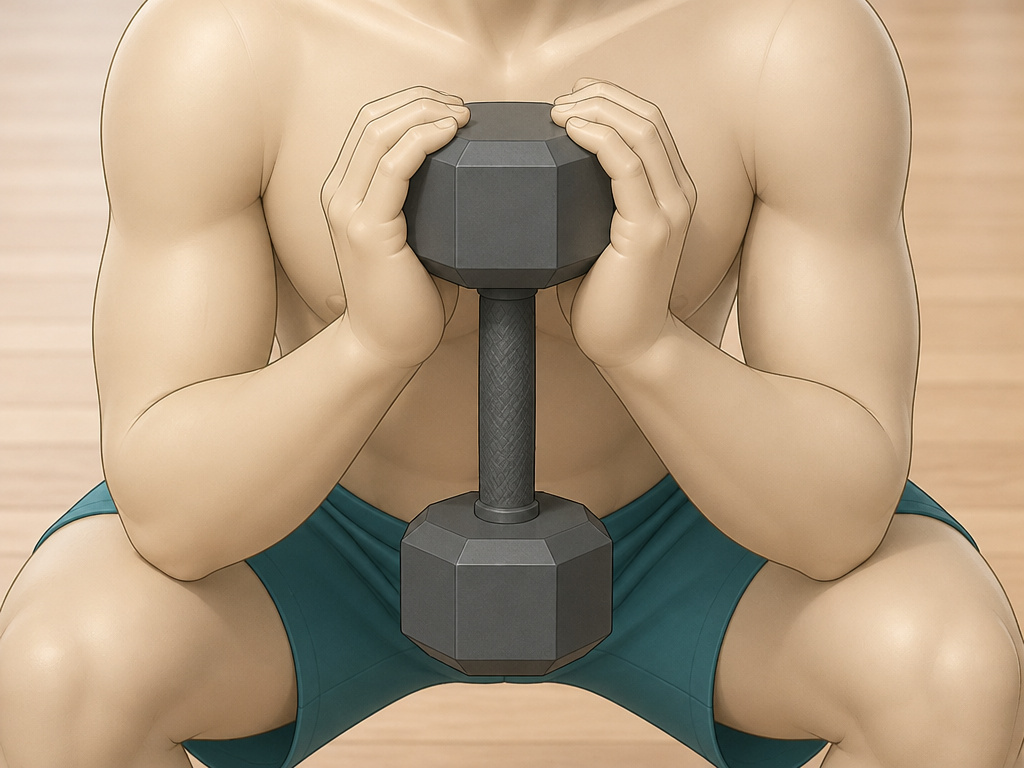
You walk in, the cardio deck is full, the free-weight area has someone doing something alarming with a landmine attachment, and you have 40 minutes before you need to leave. Here’s the route.
My own first real gym day, I did far too many exercises. I didn’t want to look like I didn’t know what I was doing, so I did everything I’d ever seen. I couldn’t sit comfortably for three days, and I skipped the entire next week. Genuinely dumb.
The template I hand out now is five movements, two sets each. You walk out feeling like you could do it again tomorrow, which is the point.
Before you start: Holding your breath under load spikes blood pressure, so Michigan’s handout asks for at least one full breath cycle per rep, exhaling on the push. Locking a joint at the end of a rep puts the load on the joint instead of the muscle, so stop just short of straight. Both mistakes feel fine in the moment and show up the next morning.
- Goblet squat, 2 sets of 8-12. Hold one dumbbell at your chest, elbows inside your knees. Skip the depth and you’ll load the same short range every week and wonder why nothing changes.
- Machine chest press, 2 sets of 8-12. The fixed path is the whole point in week one. Swap this for a barbell bench and the bar path becomes your job, which is a different skill entirely.
- Seated cable row, 2 sets of 8-12. Pull to your belly, not your chest. Row to your sternum and you’ll spend the whole set shrugging instead of rowing.
- Dumbbell Romanian deadlift, 2 sets of 8-12. Hinge at the hips with a soft knee. Bend the knee instead and it turns into a squat with a weight in your hands.
- Plank, 2 sets, held until your hips start to drop. That’s the stop signal, not a clock. A long plank with a sagging lower back trains your spine to tolerate a bad position.
By the second set of goblet squats, your thighs may start to shake. That shake is information, not failure. It means you picked a weight that’s actually doing something.
A short gym bag essentials list beats packing half your drawer: shoes, a towel, water, and something to write on. The first few minutes on the gym floor decide whether you come back, so walk in with the order already in your head.
Skip it if you have a shoulder that catches on pressing; swap the chest press for a machine fly and ask a trainer to watch your first set.
Why Sources Disagree on Sets and Reps
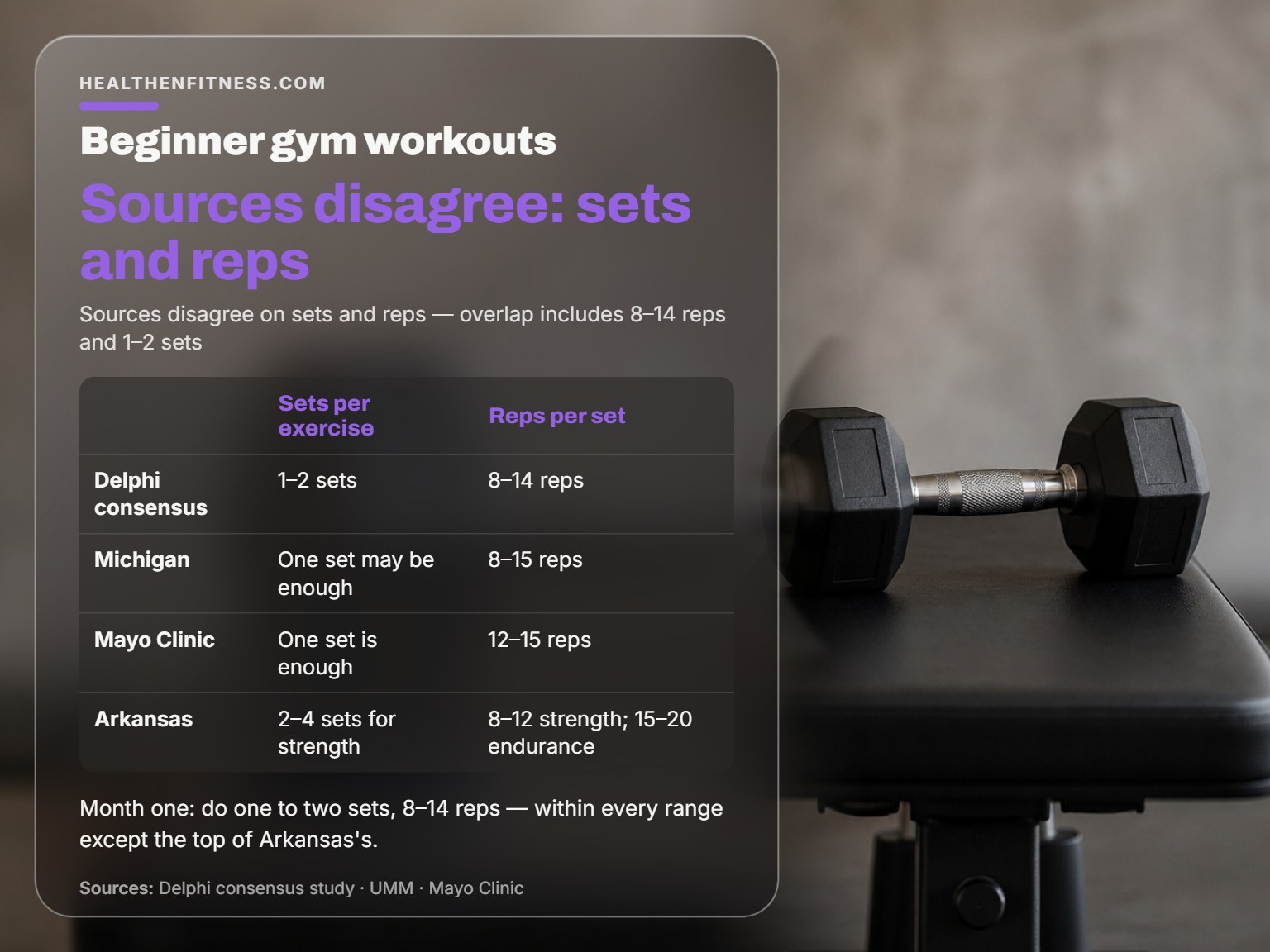
The set-count argument is a distraction in your first month. Every source in the research agrees you can build strength on very little volume. They disagree only about how little.
Where the Set Counts Diverge
Michigan says one correctly performed set per exercise may be enough, with multiple sets giving better results depending on goals. Mayo Clinic says one set is enough for health and fitness benefits. The Delphi consensus prescribes 1-2 sets as the novice standard. Arkansas recommends 2 to 4 sets for strength, while noting a single set can be effective depending on ability and how much weight is on the bar.
Four sources, four positions, one practical answer for month one: do one to two sets. It sits inside every range except the top of Arkansas’s, and it leaves you something to add later.
If you can’t finish two sets of an exercise without your form changing on the last rep, the set count isn’t your problem. Drop the weight and earn two clean sets before you add a third.
Where the Rep Ranges Diverge
Michigan wants momentary muscle fatigue reached within 8-15 reps. The Delphi consensus says 8-14. Mayo says a weight heavy enough to tire the muscle after about 12 to 15. Arkansas splits by goal: 8 to 12 reps for strength and power, 15 to 20 for muscular endurance.
Notice the overlap. Every range lives between 8 and 15, and the real variable is effort, not the number. Pick a rep count inside the 8–14 range, add weight when it feels easy, and you’re inside all four systems at once.
Write It Down: The Progression Rule That Beats Any Program
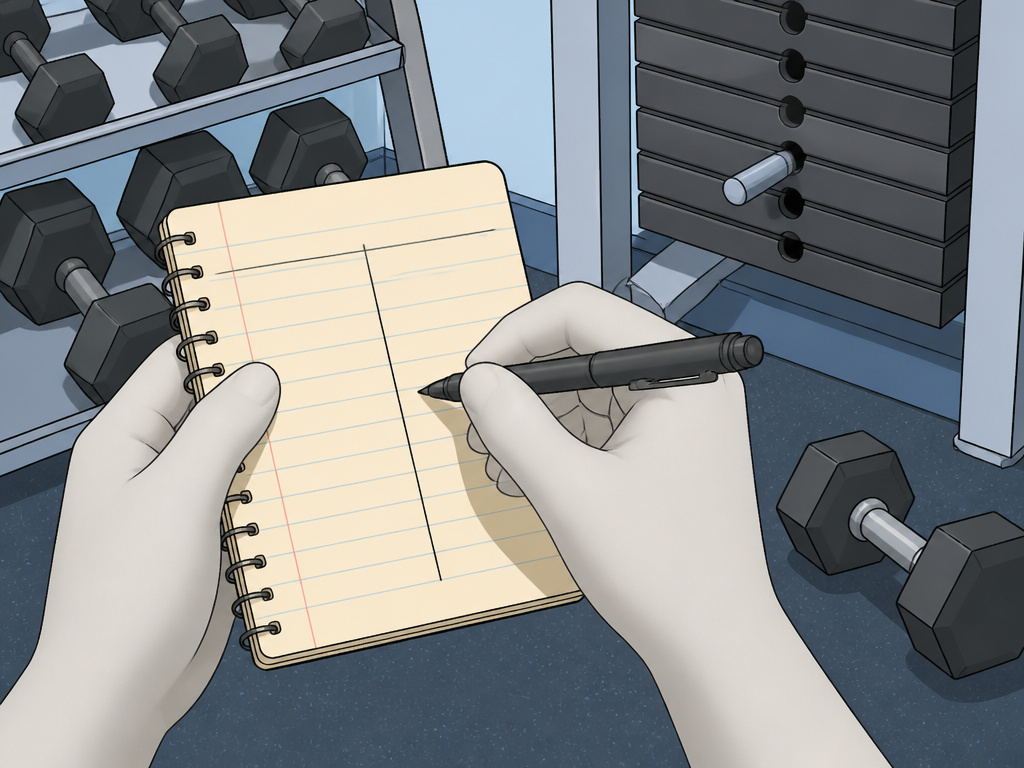
A paper notebook outperforms every program you can buy. Boring works.
Michigan’s handout has the cleanest progression rule in the research: when you can do 15 reps in each set across three consecutive workouts, add the smallest increment available for that exercise. Three good sessions in a row, then a small bump. That’s the whole system.
Here’s what the common failure modes look like in practice:
| What you notice | Likely cause | What to change |
|---|---|---|
| Sore for four days after session one | Too many movements, too many sets | Cut to five movements, two sets |
| The weight feels different every visit | No record of what you lifted | Write weight and reps down |
| Last rep looks nothing like the first | Load too heavy for the rep range | Drop the weight, keep the range |
| Elbow or knee aches at full extension | Joints locked out under load | Stop just short of lockout |
A beginner gym workout plan is just those five movements written down with numbers beside them. The plan isn’t the hard part. The record is.
Change One Thing at a Time
Hartford HealthCare’s rehab network reduces progression to a single rule: change one variable at a time, whether that’s weight, cardio minutes, or an added set. Two changes at once and you can’t tell which one caused the soreness.
What to record, in order of usefulness:
- The weight, exactly as it appears on the pin or the dumbbell handle.
- Reps completed on each set, including the ugly last one.
- Which set felt hardest.
- Anything that pinched, clicked, or ached.
A tracking app works if you want your set history searchable and synced. A paper notebook is faster to open and never asks you to update it. I used to tell myself I’d remember the number. I never once did.
A weight stack that lands with a hollow clack instead of a controlled settle is telling you the lowering half of the rep got skipped. That’s the half that builds the strength. Two counts up, four counts down, per Michigan’s tempo.
The First 30 Days Are About Comfort, Not Intensity
Stefanie Bourassa, a physical therapist at Hartford HealthCare, frames the first month plainly: it’s about getting comfortable, not going hard. Two to three days a week is more than enough when you’re starting.
The warm-up is where the sources split widest. Michigan asks for 3-5 minutes of easy aerobic activity. Mayo Clinic wants enough time to reach a conversational pace you can hold for 5 to 10 minutes without getting overly tired. Hartford suggests 10 to 15 minutes of light movement to get your heart rate up.
All three are describing the same thing at different lengths. Pick the short end on a tight schedule and the long end on a cold morning.
Mobility Work: Five Minutes, Not Fifty
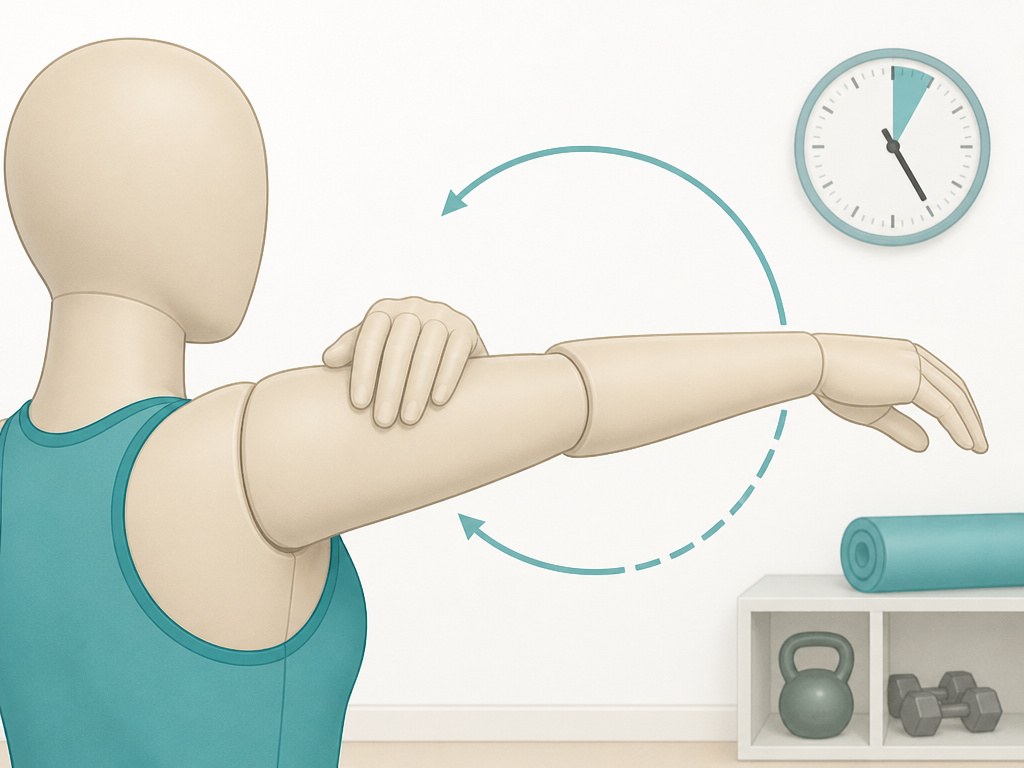
Hartford’s guidance is that even five minutes of mobility work at the start or end of a session makes a difference, and that mobility is a different thing from flexibility or stretching. Michigan closes every session with five minutes of stretching to reduce soreness.
That’s the floor, not a stretching program. Regular mobility work does more for how you move than occasional passive stretching.
If the room itself is the obstacle, gym anxiety fades fastest when you have a route through it. Five movements, in a fixed order, is a route. Walking in without one is how the first stretch of time disappears. If it’s genuinely your first time at the gym in a decade, the warm-up matters more than the workout.
When to Stop a Set, Skip a Day, or Call a Doctor
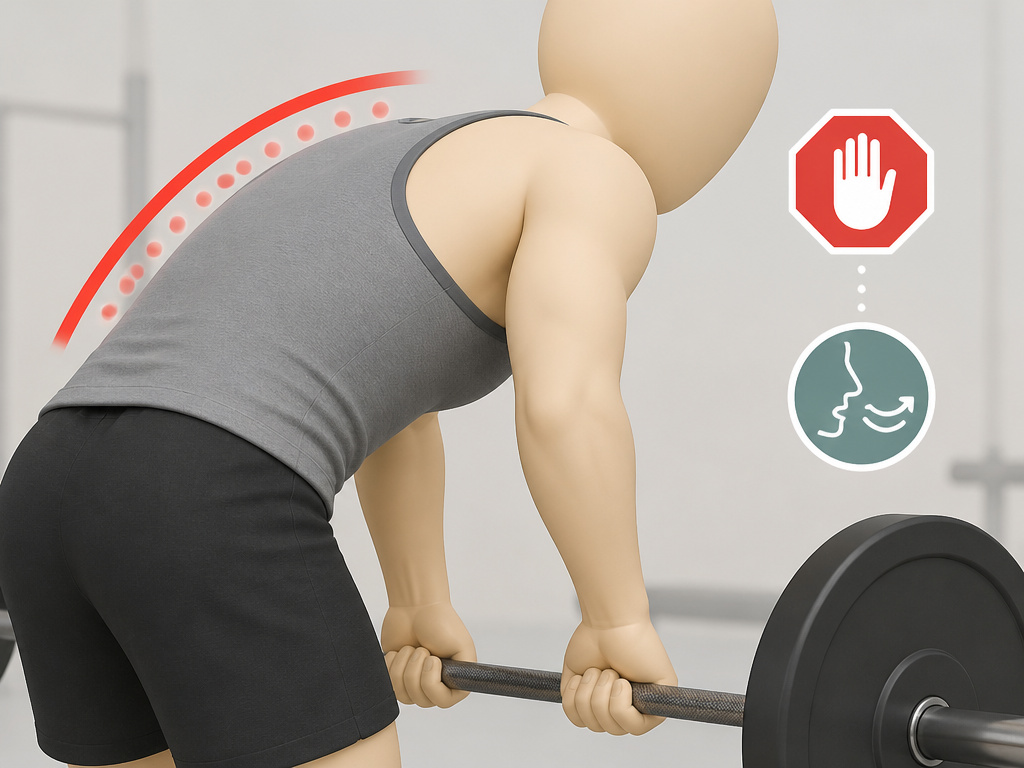
Michigan’s handout has a line that ends more sets than any timer: if you have to alter your form to finish the rep, you’re done. That’s their stopping signal, and it’s a better one than a rep count.
Three Signals to Stop a Set
- Your lower back rounds on a hinge. That’s the set ending, not a cue to try harder.
- One side lags and the weight shifts toward the strong arm. Cut the load and add single-arm work.
- You’re holding your breath to grind out the last rep. Breathe or rack it.
Where this goes sideways: Adding weight because one set felt easy on a good day. Michigan’s rule waits for 15 reps across three consecutive workouts for a reason: one good session is noise, and a jump you didn’t earn can show up as a cranky shoulder.
Screening thresholds are the messiest disagreement in the whole research set. Michigan narrows it to men over 40, women over 50, or anyone with a health problem. The Arkansas extension and healthdirect strength training for beginners both push a broader pre-participation check with a health professional.
If you’re healthy, under those age lines, and have no joint history, start training. If any of those doesn’t hold, get the check first. The gym safety rules that matter most are the boring ones: control the weight on the way down, breathe on the way up, and don’t lock anything out.
Frequently Asked Questions
How many days a week should a total beginner train?
Two to three non-consecutive days covers every source in the research. Michigan’s handout allows one day as acceptable and puts 48 hours between sessions. Three days, spaced Monday-Wednesday-Friday, is the version most beginners can actually sustain.
Should I start with machines or free weights?
Machines first, for roughly two weeks. The Delphi panel rated machine exercises at 3.7 out of 10 for difficulty and dumbbells at 6.5. Once the movement pattern feels automatic, move the same pattern to a dumbbell and accept that it will feel heavier at the same weight.
How sore is too sore after the first session?
Michigan’s handout notes that mild soreness the day after is normal. Soreness that keeps you off your feet, or that’s still climbing on day three, means the first session was too long. Cut the movements before you cut the weight.
Do I need to find my one-rep max?
No. The percentage ranges in the research are guides, not prescriptions you have to test for. Pick a weight, do 10 reps, and check how many you had left. Two or three in reserve means you’re in the right zone.
What if I can’t do a push-up yet?
The Delphi panel didn’t clear any bodyweight push exercise for novices, but the authors note that regressions like knee push-ups and wall push-ups exist and weren’t included in the rating. Start with a machine chest press and work toward an incline push-up.
How long should a beginner workout last?
Arkansas’s extension publication states plainly that no specific duration has been identified for effectiveness. Hartford gives concrete components instead: 10 to 15 minutes of light movement, then strength work, then about 5 minutes of mobility. The five-movement template lands around 35 minutes including warm-up.
The Bottom Line
One rule covers almost everything above: if you finish a session and could do it again tomorrow, you got it right. If you need two days on the couch, you did too much, and the fix is fewer movements, not more willpower.
This all assumes you’re a healthy adult starting from scratch. If a joint already gives you trouble, or you’re coming back from an injury, the screening advice in the last section outranks any template on this page. The Delphi panel’s own authors say their list shouldn’t be treated as doctrine, and they’re right.
This week, do one session. Five movements, two sets, a weight that leaves two or three reps in the tank. Write the numbers down somewhere you’ll find them on Thursday. That’s the whole assignment, and it’s the same one that works in week twenty.
