
10 Best Fitness Trackers For Men in 2026
This post contains affiliate links. As an Amazon Associate, we earn from qualifying purchases.
For most men, the best fitness tracker is the one that actually stays on your wrist and matches how you move. The Fitbit Charge 6 takes the best overall spot because it combines built-in GPS, heart rate that links to gym machines, and Google Wallet for tap-to-pay, all in a familiar, everyday band. Runners should look at the Polar Pacer for its ultra-light GPS tracking, while the Amazfit Helio Strap is built for strength athletes who want rep and set data without a screen.
The problem with picking a fitness tracker for men is that one device can’t do everything well. A tracker that excels at outdoor GPS often lacks detailed strength-training metrics, and a screenless recovery band like the WHOOP 5.0 won’t show you the time. You have to decide what matters most: battery life, display quality, coaching, or a specific sport like running or lifting.
We evaluated these 10 trackers by comparing manufacturer specs, expert round-ups, and patterns in owner feedback. This guide breaks down the key trade-offs so you can match a tracker to your actual routine, whether that is heavy barbell work, marathon prep, or just daily step goals.
Top 10 Fitness Trackers For Men in the Market
Certain content that appears on this site comes from Amazon. This content is provided "as is" and is subject to change or removal at any time.
The Best Fitness Trackers For Men, Reviewed
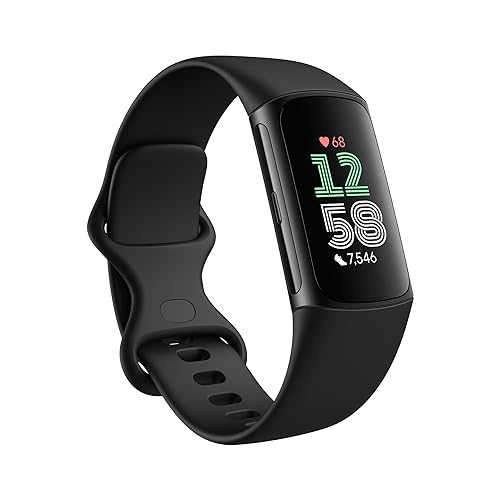
Fitbit Charge 6 Fitness Tracker
What We Like
- Built-in GPS for runs and rides
- Heart rate links to compatible gym machines
- Google Maps turn-by-turn directions
- Google Wallet tap-to-pay on the go
Trade-offs
- Google Health Premium subscription needed after trial
- Subscription required for full features after trial
Built-in GPS lets you map runs and rides without carrying your phone, and with 40-plus exercise modes you can log everything from treadmill sessions to outdoor cycling. Real-time heart rate data can be displayed on compatible gym machines like treadmills and ellipticals, while Google Maps provides turn-by-turn directions during workouts. A stress management score and personalized nightly Sleep Score, plus a Smart Wake alarm, give you a clearer picture of your recovery and daily readiness.
The 3-month Google Health Premium trial is just a taste; once it ends, the deeper coaching features require a paid subscription. That subscription gives you personalized coaching built with Gemini, but if you prefer no strings attached, the Amazfit Helio Strap offers subscription-free tracking with a 10-day battery. The Charge 6 instead brings richer Google integration like Wallet payments and YouTube Music controls, so it’s a trade-off worth making if you want a tracker that does more than count steps.
Amazfit Helio Strap Screenless Tracker

What We Like
- Tracks reps, sets, and rest periods
- Exclusive HYROX Race mode for prep
- 10-day battery lasts through training weeks
- 24/7 heart rate, SpO2, and stress monitoring
Trade-offs
- Requires paired Amazfit smartwatch for uninterrupted data
- No built-in GPS for outdoor runs
A 10-day battery life means you can wear this strap through a full training cycle without hunting for a charger mid-week. That matters when you’re logging strength sessions daily and want recovery data to actually mean something. The Helio Strap tracks reps, sets, and rest periods with precision, and the exclusive HYROX Race mode offers tailored support for race prep. If your focus is on strength training and recovery rather than step counts, this screenless tracker keeps the experience straightforward.
The trade-off is the lack of a screen: you won’t glance down mid-set to see your heart rate or rest timer; you’ll need to check the Zepp App afterward. That’s fine if you’re already logging workouts in a notebook or app, but it feels different from the Fitbit Charge 6, which shows live stats on your wrist. You also lose built-in GPS, so outdoor runners may prefer the Polar Pacer. For dedicated strength training and race prep, though, the Helio Strap delivers exactly what it promises without distractions.
Product photos
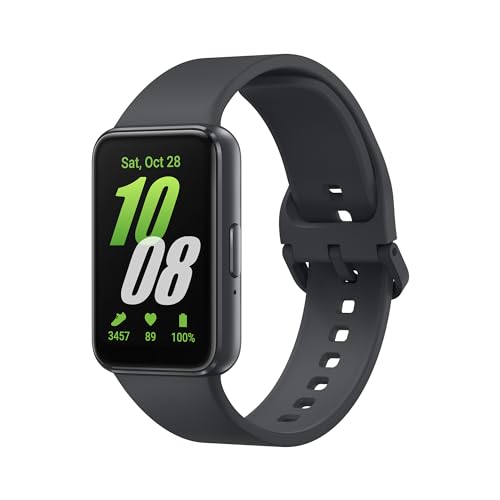
Samsung Galaxy Fit 3 Fitness Tracker
What We Like
- Large, vibrant AMOLED display
- Swim-ready 5ATM water resistance
- Up to 14 days battery life
- 101+ workout modes with auto detection
Trade-offs
- No iPhone or iOS compatibility
- Samsung Pay not supported
- International model has no US warranty
The 1.6-inch AMOLED display is large and high-res, with smooth touch for easy navigation. That screen makes it simple to scroll through 101+ workout modes, and auto detection tracks common exercises without extra input. Battery life reaches up to 14 days, so you can wear it through a full training week and still have charge left for the weekend. It’s a tracker for anyone who wants a clear, colorful readout and doesn’t want to charge frequently.
This fitness tracker is an international model with no US warranty, so you’re on your own if something goes wrong. It also lacks Samsung Pay support and works only with Android devices, iPhone users are out of luck. But for Android owners, the 1.6-inch AMOLED display delivers crisp, bright visuals, and the battery lasts up to 14 days, meaning fewer trips to the charger.
ST-CARE C60 Fitness Tracker

What We Like
- Stainless steel frame for durability and style
- 1.10" AMOLED touchscreen with vivid watch faces
- Magnetic fast charging with 10-14 day battery
Trade-offs
- No built-in GPS for outdoor run tracking
- App ecosystem less established than Fitbit or Garmin
If you want a device that looks sharp at the office and still tracks your steps, heart rate, and sleep without screaming ‘fitness gadget,’ this is the one to grab.
The trade-off? There is no built-in GPS, so if you run or cycle outdoors without your phone, you will not get accurate distance or pace. The health monitoring features like body temperature and blood pressure are nice extras, but they rely on wrist-based sensors that are not as precise as medical-grade gear. Compared to the Polar Pacer, which has dedicated GPS for runners, the ST-CARE C60 leans more toward everyday durability and style. It is a great choice for the guy who wants a tough, good-looking tracker that covers the basics well.
Product photos
Amzhero Health Fitness Tracker

What We Like
- 5ATM waterproof for swimming
- 25 sports modes track variety
- 24/7 heart rate, blood oxygen, pressure
- 15-day standby battery life
Trade-offs
- Blood pressure readings not medical-grade
- No built-in GPS for outdoor routes
- App required for full features
A 1.47-inch HD color display and 25 sports modes make this tracker a practical companion for daily movement, whether walking, hiking, or even swimming thanks to its 5ATM waterproof rating. It also monitors heart rate, blood oxygen, and blood pressure around the clock, handy for anyone who wants a broad view of their body during high-intensity work or long days. For someone starting a fitness habit or looking to keep tabs on general activity without spending on extra frills, this offers a straightforward, capable setup.
One limitation is that it relies on your phone for GPS tracking, so if you run or cycle without your phone, you won’t get precise distance or pace data. Compare that to the Polar Pacer, which has built-in GPS for independent route logging. Best for someone who wants a waterproof tracker with 25 sports modes, 24/7 health monitoring, and 15 days of standby time. Not ideal for those who need built-in GPS for phone-free outdoor workouts.
Product photos
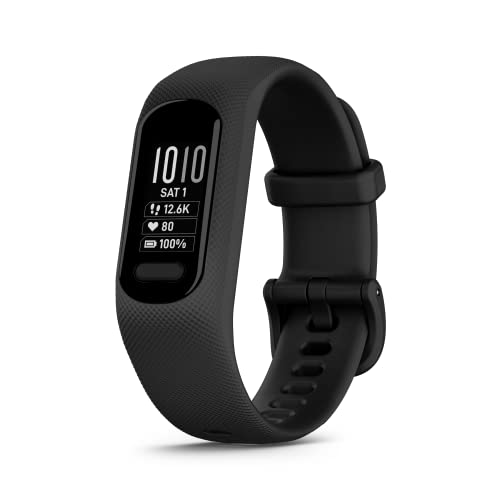
Garmin Vívosmart 5 Fitness Tracker
What We Like
- Up to 7 days of battery life
- Swim and shower safe
- Tracks sleep quality with score
- Body Battery energy monitoring
Trade-offs
- GPS requires a paired smartphone
- No built-in music storage or controls
- Pulse Ox not available in all countries
Seven days of battery life between charges means you can wear this tracker through a full work week and weekend without hunting for a charger. That uninterrupted picture includes heart rate, stress, respiration, and Body Battery energy levels, so you see how your body responds to workouts, late nights, and rest days alike. It’s a straightforward companion for anyone who wants health data without the daily plug-in ritual, and the swim-proof design means you can track laps or just wear it in the shower without worry.
You can wear this tracker all week without hunting for a charger, since it lasts up to 7 days on a charge, and it’s safe for swimming and showering too. The display is bigger and brighter than the previous model, so text is easier to read at a glance, and you get both a touchscreen and a physical button for control. It uses your phone’s GPS to track outdoor walks, runs, and rides, which keeps the tracker itself simple and affordable.
Polar Pacer GPS Fitness Tracker

What We Like
- Ultra-light at 0.1 pounds
- 35-hour battery in training mode
- Always-on MIP color display
- GPS tracks every step and turn
Trade-offs
- No heart rate sensor built in
Thirty-five hours of battery life in training mode means you can log multiple long runs or even a full week of shorter sessions before reaching for the charger. That always-on MIP color display stays crisp in direct sunlight, so you can glance down mid-stride and see your pace, distance, or lap time without fumbling. This is the tracker for the runner who wants reliable GPS tracking and a lightweight build that won’t bounce or drag on the wrist, without paying for smartwatch extras they won’t use. It keeps the focus on what matters: time, pace, distance, and the next mile marker.
The Polar Pacer gives you a crystal clear, always-on MIP color display that stays readable in direct sunlight, unlike the screen on the Samsung Galaxy Fit 3. That means you can check your pace or lap time without squinting on a bright trail. And with up to 35 hours of battery life in training mode, you can run multiple marathons on a single charge without hunting for an outlet. GPS tracks every step and turn, so your route and distance data are reliable even in dense city blocks or forested paths. The trade-off is a simpler feature set aimed squarely at runners who want essential tracking, time, pace, distance, laps, stopwatch, without the extras of an all-day health companion.
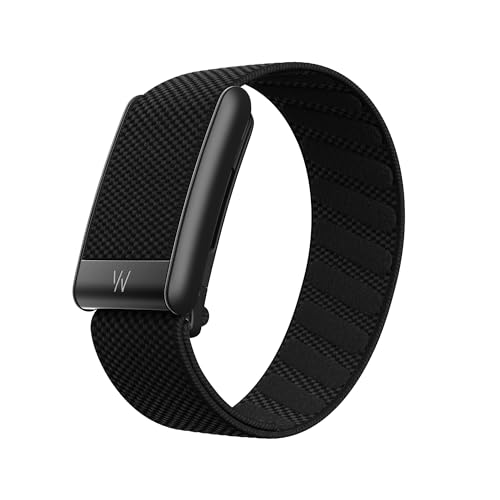
WHOOP 5.0 Screenless Fitness Tracker
What We Like
- 14+ day battery with wrist charging
- AI coach turns metrics into guidance
- Tracks HR, HRV, SpO₂, skin temp
- Healthspan shows aging pace
Trade-offs
- Screenless design means no glanceable display
- Requires 12-month membership to function
The WHOOP 5.0 charges on your wrist without removing the tracker, so your sleep and recovery data keep recording while it tops up. It continuously monitors heart rate, HRV, blood oxygen, and skin temperature, and its AI coach turns over 140 health and fitness metrics into guidance on what to do next. This setup suits anyone who wants to understand how daily habits like training, alcohol, or travel affect sleep and long-term healthspan.
Going screenless means no quick time checks or message glances, so you rely entirely on the app for feedback. Compared to a display-equipped tracker like the Fitbit Charge 6, you lose that at-a-glance convenience but gain continuous monitoring and a coach that adapts to your journal entries. The 12-month membership is baked into the purchase, so there is no upfront hardware cost, but you are committing to a subscription model that not every fitness tracker demands.
Google Fitbit Edge Activity Tracker

What We Like
- Gemini AI coaching adapts to your life
- Built-in GPS tracks outdoor routes
- Quick charge gives full day in 5 minutes
Trade-offs
- AI coaching requires a paid subscription
- Health Guardian features need subscription
- Sleep quality metrics need subscription too
The Google Fitbit Edge’s built-in GPS means you can track outdoor runs without lugging your phone, while the glanceable display keeps stats visible mid-stride. Its Gemini-powered coaching tailors workouts around what’s actually happening in your week, missed a session? It adjusts, not scolds. That personal touch, combined with a week-long battery and a five-minute charge that buys you a full day, makes it a natural fit for anyone who wants guidance that feels like a real coach, not a robot.
The catch is that the coaching and deeper health insights, like tracking blood pressure trends or signs of insulin resistance, live behind a Google Health Premium subscription. That adds an ongoing cost that the screenless WHOOP 5.0 also requires, but the Edge gives you a display and GPS in return. If you’re happy tracking steps and sleep on your own, the Fitbit Charge 6 includes a three-month premium trial. For people who want a fitness tracker that learns and adapts, the Edge’s AI coaching is the differentiator, just budget for the subscription.
Product photos
Garmin CIRQA Smart Band
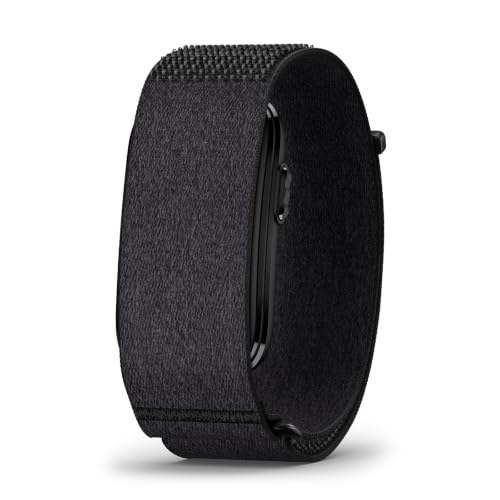
What We Like
- Screenless design reduces distraction
- No subscription needed for full features
- Up to 10 days of battery life
- Automatically detects and adapts to activities
Trade-offs
- Screenless means no glanceable display
- Relies on smartphone GPS for outdoor tracking
- No on-device data review without phone
A single charge carries you from Monday through Friday and into the weekend, which cuts down on one more daily task. The screenless fabric band is designed for all-day and all-night wear, so you can track sleep scores and get personalized coaching through the Garmin Connect app without a display pulling your attention. It tracks over eighty activities through the app and automatically detects workouts, adapting its classification as you confirm or edit them.
The biggest trade-off for a screenless design is that you can’t glance at your wrist for stats mid-set. You’ll need to pull out your phone to see your heart rate or how long you’ve been running. For outdoor runs, it pairs with your smartphone’s GPS rather than having its own, so you’ll want your phone along. Compared to the Amazfit Helio Strap, which also skips a screen and a subscription, the Garmin CIRQA offers training features like workout benefit and training readiness through the Garmin Connect app. That may appeal to those who want to understand how each session affects recovery and performance.
Product photos
How We Evaluated Fitness Trackers For Men
Our research focused on four factors that separate a useful tracker from a desk drawer ornament. We looked at sensor accuracy and GPS reliability, battery life that fits real training weeks, display readability in sunlight and at the gym, and the overall ecosystem, app quality, subscription costs, and phone compatibility.
For men who lift, we prioritized trackers that measure heart rate during strength sets or offer rep counting. For runners, we weighed GPS accuracy and battery drain during long outdoor sessions. Daily wearers needed comfortable bands and screens that don’t wash out under gym lights or office fluorescents.
This is a research-led evaluation, not a hands-on test. We pulled data from manufacturer documentation, expert recommendations at major outlets, and consistent themes in thousands of owner reviews. The best fitness trackers guide on our site covers the broader category if you want to compare more options.
What To Look For In Fitness Trackers For Men
Picking a fitness tracker comes down to matching hardware to your main activity. Here are the three criteria that matter most.
Look for a tracker that matches your primary workout. GPS for runners, rep tracking for lifters, or 24/7 health for all-day wear. Then check battery life, display type, and whether the best features require a subscription.
GPS And Activity Tracking
Built-in GPS lets you run or ride without carrying your phone. The Polar Pacer gets 35 hours in training mode with its GPS on, while the Fitbit Charge 6 and Google Fitbit Edge also have onboard GPS. Trackers without it, like the ST-CARE C60 or Amazfit Helio Strap, rely on your phone’s GPS, which is fine for gym-goers but frustrating for outdoor athletes. For fitness tracker vs smartwatch decisions, a dedicated fitness tracker usually wins on battery and weight.
Battery Life And Charging
A tracker that dies mid-week is useless. The Samsung Galaxy Fit 3 claims up to 14 days, and the ST-CARE C60 offers 10-14 days with magnetic fast charging. The Garmin Vívosmart 5 hits 7 days, which is enough for most training cycles. Screenless options like the WHOOP 5.0 stretch beyond two weeks. If you track sleep, make sure the battery lasts through a full week so you don’t have to charge during your rest night.
Display, Build, And Comfort
Men with active jobs or gym routines should prioritize durability. The ST-CARE C60 uses a stainless steel frame, while the Polar Pacer weighs only 0.1 pounds for running. The Samsung Galaxy Fit 3 has the best screen, a large AMOLED, but it is an international model without a US warranty. Screenless bands like the WHOOP 5.0 and Garmin CIRQA are lighter and less distracting but require checking your phone for data. For smaller wrists, check out our guide to trackers for small wrists.
- Check if your phone is compatible, the Samsung Galaxy Fit 3 does not work with iPhones.
- Decide if you want tap-to-pay (Fitbit Charge 6 has Google Wallet; Galaxy Fit 3 does not).
- For swimming, look for 5ATM water resistance (Amzhero and Galaxy Fit 3 both have it).
- If you lift, look for a tracker with rep counting or a strength mode (Amazfit Helio Strap is built for this).
A tracker that fits your main activity will outperform a more expensive one that doesn’t.
Fitness Trackers For Men Compared
The table below compares all 10 fitness trackers for men side by side, covering battery life, GPS, display, and the key trade-off for each model.
| Product | Display | Battery Life | Water Resistance |
|---|---|---|---|
| Fitbit Charge 6 Fitness Tracker | N/A | N/A | N/A |
| Amazfit Helio Strap Screenless Tracker | Screenless | Up to 10 days | N/A |
| Samsung Galaxy Fit 3 Fitness Tracker | 1.6" AMOLED | Up to 14 days | 5ATM & IP68 |
| ST-CARE C60 Fitness Tracker | 1.10" AMOLED | 10-14 days typical, 30 days standby | 5 ATM |
| Amzhero Health Fitness Tracker | 1.47" HD color | 15 days standby | 5ATM |
| Garmin Vívosmart 5 Fitness Tracker | Touchscreen + button | Up to 7 days | N/A |
| Polar Pacer GPS Fitness Tracker | Always-on MIP color | 35 hours training mode | N/A |
| WHOOP 5.0 Screenless Fitness Tracker | Screenless | 14+ days | IP68 |
| Google Fitbit Edge Activity Tracker | Glanceable display | Up to 7 days | N/A |
| Garmin CIRQA Smart Band | Screenless | Up to 10 days | N/A |
Frequently Asked Questions
Which fitness tracker is best for men who lift weights?
The Amazfit Helio Strap is the best option for strength training. It tracks reps, sets, and rest periods, and it has an exclusive HYROX Race mode for competition prep. It requires a paired Amazfit smartwatch for full data, so it works best if you already own one.
Do I need a fitness tracker with built-in GPS?
Only if you run, hike, or cycle without your phone. The Polar Pacer and Fitbit Charge 6 have onboard GPS. If you always carry your phone during workouts, a tracker without GPS, like the Amzhero or ST-CARE C60, will save you money and still track distance through your phone’s signal.
What is the difference between a fitness tracker and a smartwatch for the gym?
A fitness tracker is lighter, has longer battery life, and focuses on health metrics. A smartwatch adds apps, notifications, and often a larger screen. For pure gym use, a fitness tracker vs smartwatch comparison shows trackers usually win on comfort and battery.
Which fitness tracker has the best battery life?
The screenless WHOOP 5.0 lasts over 14 days and charges on the wrist. Among trackers with a display, the Samsung Galaxy Fit 3 claims up to 14 days, and the ST-CARE C60 offers 10-14 days. The Garmin Vívosmart 5 hits 7 days, which is solid for a band with a screen.
Can I use a fitness tracker for swimming?
Yes, if it has 5ATM water resistance. The Amzhero Health Fitness Tracker and Samsung Galaxy Fit 3 are both swim-ready. The Garmin Vívosmart 5 is also swim and shower safe. Always check the depth rating before taking a tracker into the pool.
The Bottom Line
The Fitbit Charge 6 is the best overall fitness tracker for men because it covers the essentials. GPS, gym machine heart rate sync, Google Wallet, and a comfortable design, without forcing you into a single sport. It is the right pick for guys who run, lift, and want smartwatch features in a tracker form factor.
If you are a runner who wants maximum GPS battery in a lightweight band, the Polar Pacer is a better fit. Strength athletes should look at the Amazfit Helio Strap for rep tracking, and anyone who hates subscriptions can grab the Garmin CIRQA Smart Band for a no-fee experience.
The single most important buying factor is honesty about your main activity. A tracker built for running will frustrate you in the weight room, and a screenless recovery band won’t help you pace a 10K. Match the tracker to your workout, not the other way around.
