
How to Do Front Raises: Form, Height, and Grip
This post contains affiliate links. As an Amazon Associate, we earn from qualifying purchases.
Learning how to do front raises takes restraint: light dumbbells, soft elbows, arms stopping parallel to the ground. Pause at the top, lower under control, and train them once a week at most, because pressing already loads the front delts.
That once-a-week number sounds like a joke if you came up on body-part splits, where every muscle got its own day and its own pile of sets. The front delts don’t work like that. They assist on every press you do, so the raise is a finishing touch on a muscle that already got paid.
What follows is the version I’d teach in person: the setup, the height question that four sources answer four different ways, the grip cue that actually protects the shoulder, and the numbers worth writing on your program card.
Key Takeaways
- Stop at parallel with the ground. Going higher hands the work to your traps, and the delt stops carrying tension.
- Angle the thumbs up about 45 degrees and hold that angle for the whole set, per Men’s Health fitness director Ebenezer Samuel, C.S.C.S.
- Five pounds is a real working weight for plenty of lifters, and 25 or 30-pound dumbbells don’t belong in this movement.
- One session a week is the conservative option, spaced at least 48 hours from any other dedicated front-raise work.
- Shoulder pain changes the plan. Work below shoulder height in a pain-free range, or swap in Y-raises and T-raises.
How to Do Front Raises Without Leaning Back
Three things hold the movement together: a vertical torso, shoulder blades packed down, and a soft bend in the elbows that stays put for the whole rep. Get those locked and the raise becomes a shoulder movement. Lose any one of them and the load drifts somewhere you didn’t plan on.
The front raise is a single-joint shoulder flexion movement. The anterior deltoid drives the arm forward, while the lateral deltoid, upper trapezius, and clavicular pectoralis major assist and stabilize. Because the elbow stays extended, a light dumbbell creates a long lever and a large torque demand at the shoulder joint.
That long lever is why the movement feels harder than the number on the dumbbell suggests. A 2020 EMG study cited by FitCraft of ten competitive bodybuilders doing a seated front raise to shoulder height found the clavicular (upper) part of the pectoralis major about as active as the anterior deltoid. So the raise is a chest exercise too, whether you meant it to be or not.
Before you start: Front raises load the same arc that pinches the supraspinatus tendon under the acromion, so active impingement turns a light set into a painful one. If a raise reproduces a pinch, work below shoulder height or swap in Y-raises and T-raises. After shoulder, elbow, or wrist surgery, get surgeon clearance before adding any load.
Here’s the sequence I’d run:
- Set your feet at shoulder-width and brace your abs. Skip the brace and the dumbbells pull you into a backward lean, which parks the load on your lumbar spine instead of your delt.
- Pack the shoulder blades down and back. Let them drift up toward your ears and the upper traps take over the top third of every rep.
- Start with the dumbbells in front of your thighs, palms facing in. Starting from the side of your body shortens the range and changes the angle at the shoulder.
- Raise with a fixed, soft elbow bend until the arms are parallel to the ground. Straightening the elbow mid-rep lengthens the lever and spikes the torque at the joint.
- Pause at the top, then lower slowly. Dropping the weight fast gives back the tension you just spent the rep building.
Three cues. That’s the whole setup.
How High Should You Raise the Dumbbells?
Samuel at Men’s Health argues for stopping when your arms are parallel to the ground, while Athlean-X, PureGym, FitCraft, Verywell Fit and DMOOSE allow raising to shoulder height or just above; Samuel’s concern is that going higher takes focus off the delts and involves the traps.
This is the one part of the movement where the sources genuinely split, so here’s each position rather than a merged version of them:
| Source | Top position | Reason given |
|---|---|---|
| Men’s Health (Ebenezer Samuel, C.S.C.S.) | Arms parallel to the ground | Higher takes focus off the delts and involves the traps |
| Verywell Fit | Arms horizontal at shoulder height | Pause at the top of the raise |
| Athlean-X | Parallel or above parallel | Lift to shoulder height |
| PureGym | Shoulder height, higher if mobility allows | Hands, arm, and shoulder make a straight line |
| FitCraft | Level with the shoulder or just above | Palm facing the floor, elbow softly bent |
Read that table and you’ll notice three different ceilings hiding in five rows. Verywell Fit and PureGym both land at shoulder height. Athlean-X and FitCraft allow just above. Samuel is the strictest, and he’s the only one who explains what you lose by going higher.
In my experience the strict version wins, because the extra range costs you something you can actually feel. Somewhere just past parallel, the tension slides off the front of the shoulder and into the base of the neck. That’s the trap taking over.
Parallel is enough.
If your goal is width rather than front-delt detail, the work that builds broad shoulders lives in the side delt, not here.
The 45-Degree Thumb Angle and Why Grip Splits the Sources
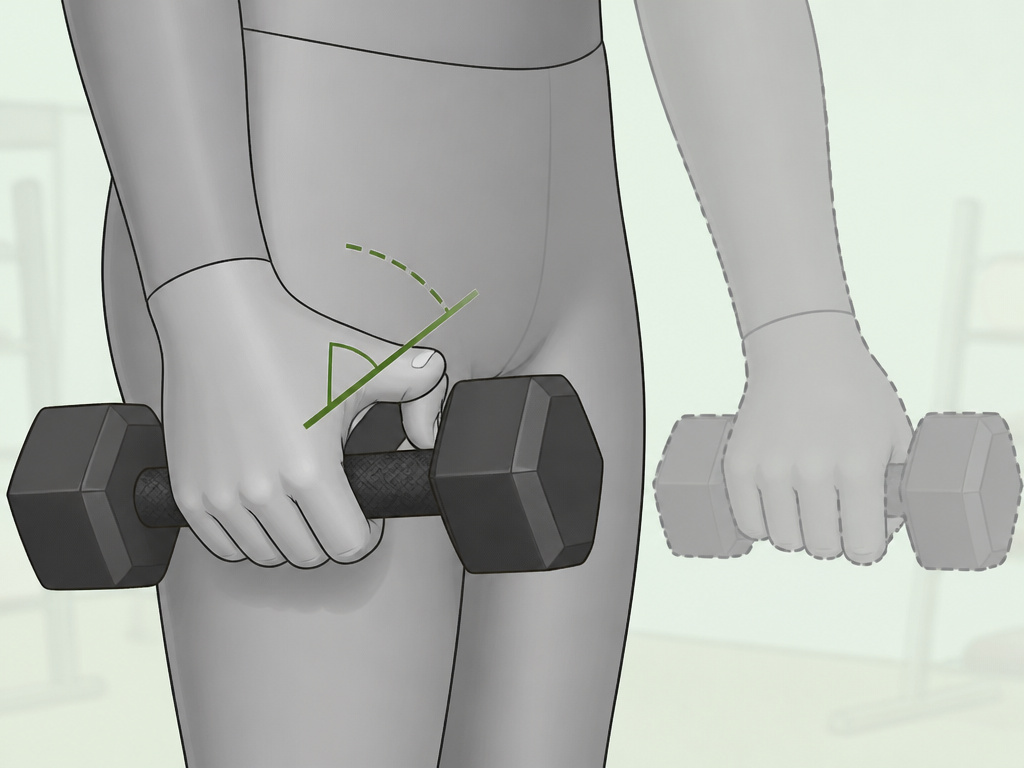
The 45-degree thumb angle is Samuel’s cue, and it’s the one detail most gym floors get wrong. A common mistake is holding the dumbbells flat, parallel to the floor.
Samuel says don’t do that. Samuel asks for the slightest external rotation at the shoulder, thumbs angled up, palms at roughly 45 degrees to the ground for the life of the set.
The other sources land in different places:
- Verywell Fit starts the palms facing the thighs and finishes with them facing down, and notes that a hammer grip (palms facing each other) can prevent impingement, citing the American Council on Exercise.
- Athlean-X starts with palms facing inward and calls for a neutral or overhand grip with palms down throughout.
- DMOOSE accepts either a neutral grip (palms facing each other) or an angled grip (palms facing down).
- FitCraft cues palm facing the floor with a soft elbow bend.
Notice the split: Men’s Health wants palms at a 45-degree angle (thumbs up), while Athlean-X, Verywell Fit, DMOOSE and FitCraft each describe different palm orientations. The disagreement is about how much rotation, not whether to rotate. If the 45-degree angle feels vague in your hands, a hammer grip (palms facing each other) can prevent shoulder impingement, per the American Council on Exercise.
I’d rather see someone finish a set with a 5-pound pair and a clean stop at parallel than grind out swinging reps with a heavier pair. The shoulder doesn’t care what the dumbbell weighs. It cares how long it stays under tension.
Easy to miss: Rotating the wrists mid-set. Pick your angle before the first rep and hold it. Pick your angle before the first rep and hold it for the whole set.
Once the dumbbell version is clean, cable front raises are the natural next step, since the cable keeps tension on the delt at the bottom of the range where a dumbbell goes slack.
Five Pounds Is Probably Your Starting Weight
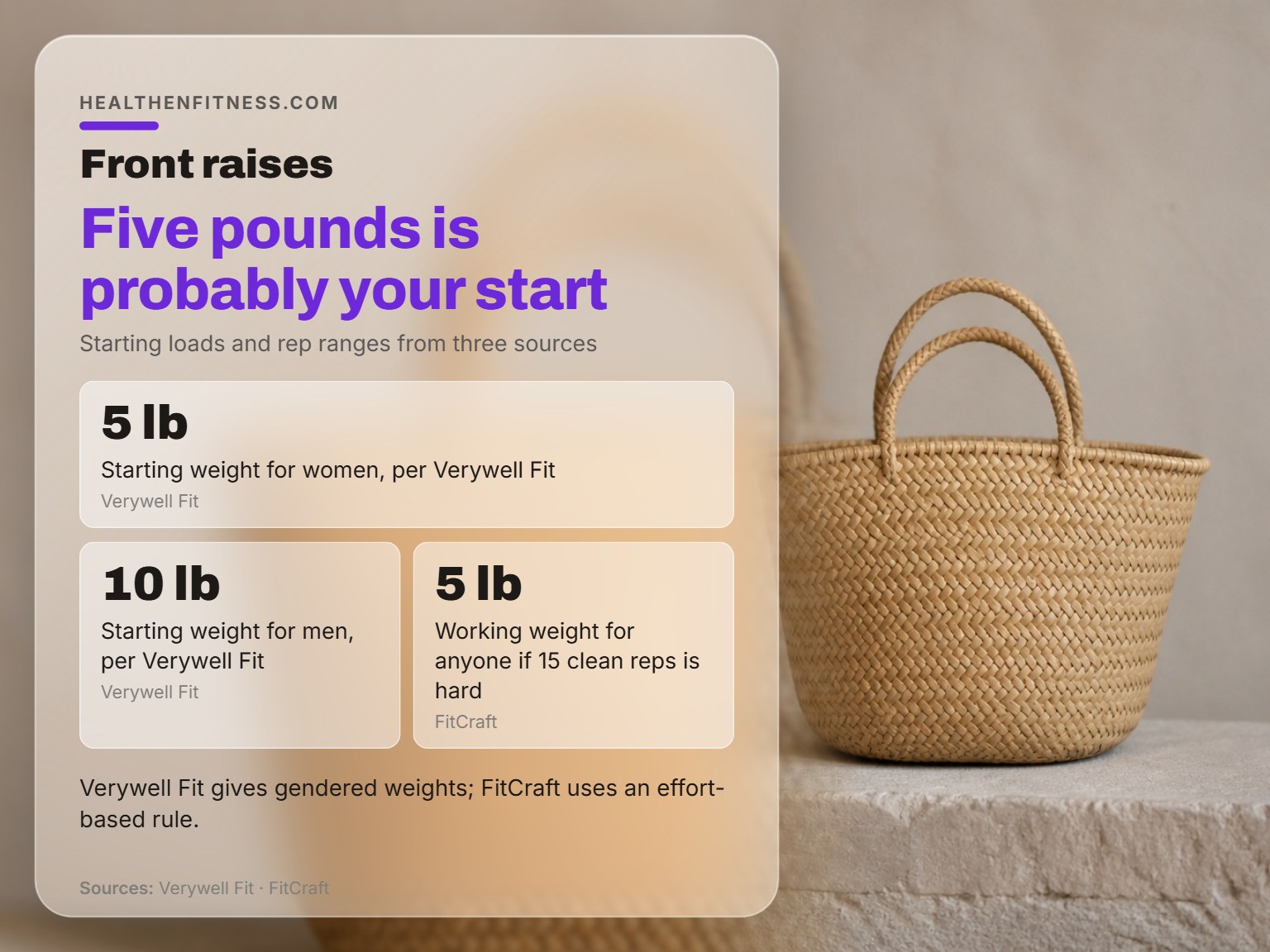
Five pounds. That’s the number Verywell Fit gives women, and FitCraft says it may be the right working weight for anyone if 15 clean reps is genuinely hard.
Men get a 10-pound starting point from Verywell Fit. Samuel goes further in the other direction and says you likely won’t use 30-pound or even 25-pound dumbbells for front raises at all, and that heavy weights belong on overhead pressing days.
| Source | Sets and reps | Starting load |
|---|---|---|
| Verywell Fit | 10-12 reps, 1-3 sets | 5 lb women, 10 lb men |
| Athlean-X | 10-15 reps | Light; heavy weights not needed |
| FitCraft | 3 sets of 12-15 reps | 5 lb if 15 clean reps is a challenge |
| Men’s Health | Not specified | Not 25 or 30 lb dumbbells |
Verywell Fit gives gendered starting weights, while FitCraft uses an effort-based rule; I lean toward the effort-based one. A 5-pound dumbbell that makes rep 15 a grind is doing more for you than a heavier one that you swing.
There’s a simple physical check here, and it’s the one I use. If you sway or rock back on your heels to complete the raise, use a lighter weight. A backward lean shifts load off the anterior deltoid and onto the lumbar spine, which is exactly the trade nobody signed up for.
Where this goes sideways: Chasing a heavier dumbbell turns the raise into a standing swing. The lower back takes the load and the delt gets a free ride.
For a wider menu of loading options at the same joint, these dumbbell exercises cover the delts without adding a single new cue. And if you want the heavy work to go somewhere useful, put it in the overhead press and leave the raise light.
When Front Raises Stop Being Worth It
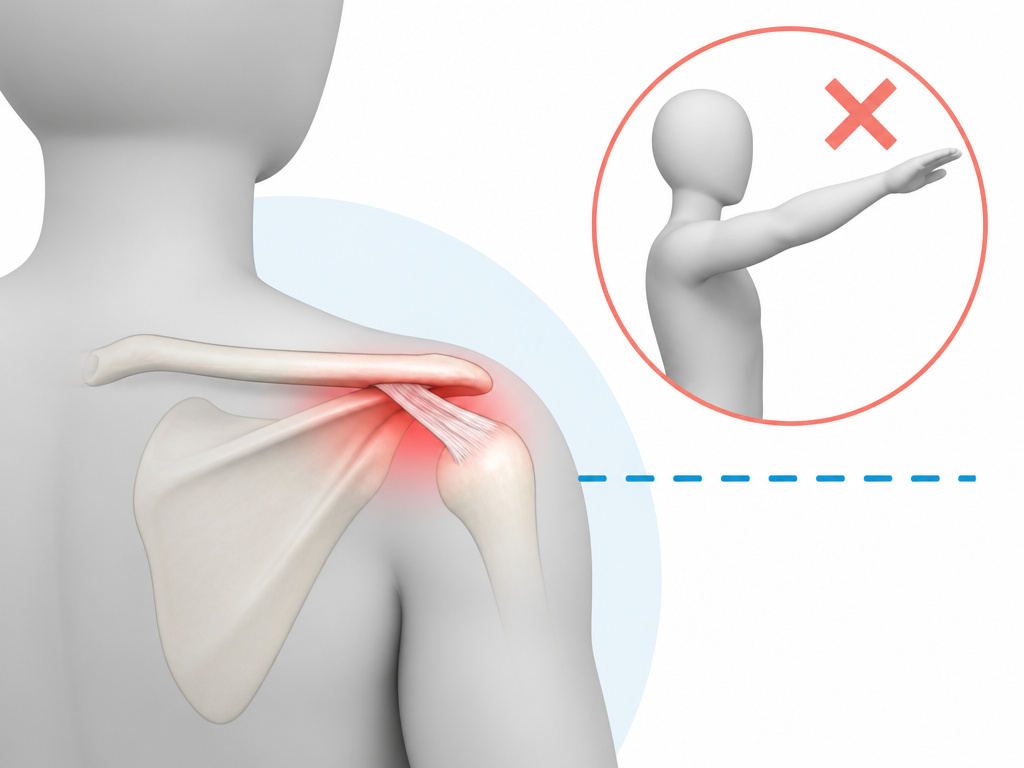
Some shoulders should skip this movement entirely, at least for now.
Active impingement or rotator cuff irritation
Front raises load the anterior deltoid through the same overhead arc that pinches the supraspinatus tendon under the acromion. FitCraft’s guidance is to stop standard front raises, work only in a pain-free range below shoulder height, and substitute scapular drills like Y-raises, T-raises, and W-raises. FitCraft’s guidance is that if symptoms persist for more than a week or two, see a physical therapist before progressing.
Verywell Fit is blunt about the risk side: front raises can result in shoulder impingement and pain with tendinitis or bursitis. If you have a previous or current shoulder injury, that source says to talk with your doctor or physical therapist about whether the movement suits you at all.
After shoulder, elbow, or wrist surgery
Get clearance from your surgeon before any loaded shoulder isolation work. Get clearance from your surgeon before any loaded shoulder isolation work, and follow the timeline your surgeon sets.
I’ll be honest about my limits here. I’ve never rehabbed a post-surgical shoulder, and I’m not going to pretend a generic cue fixes a complicated medical history. That’s a clinician’s call.
Skip it for now.
Where Front Raises Fit in a Week of Training
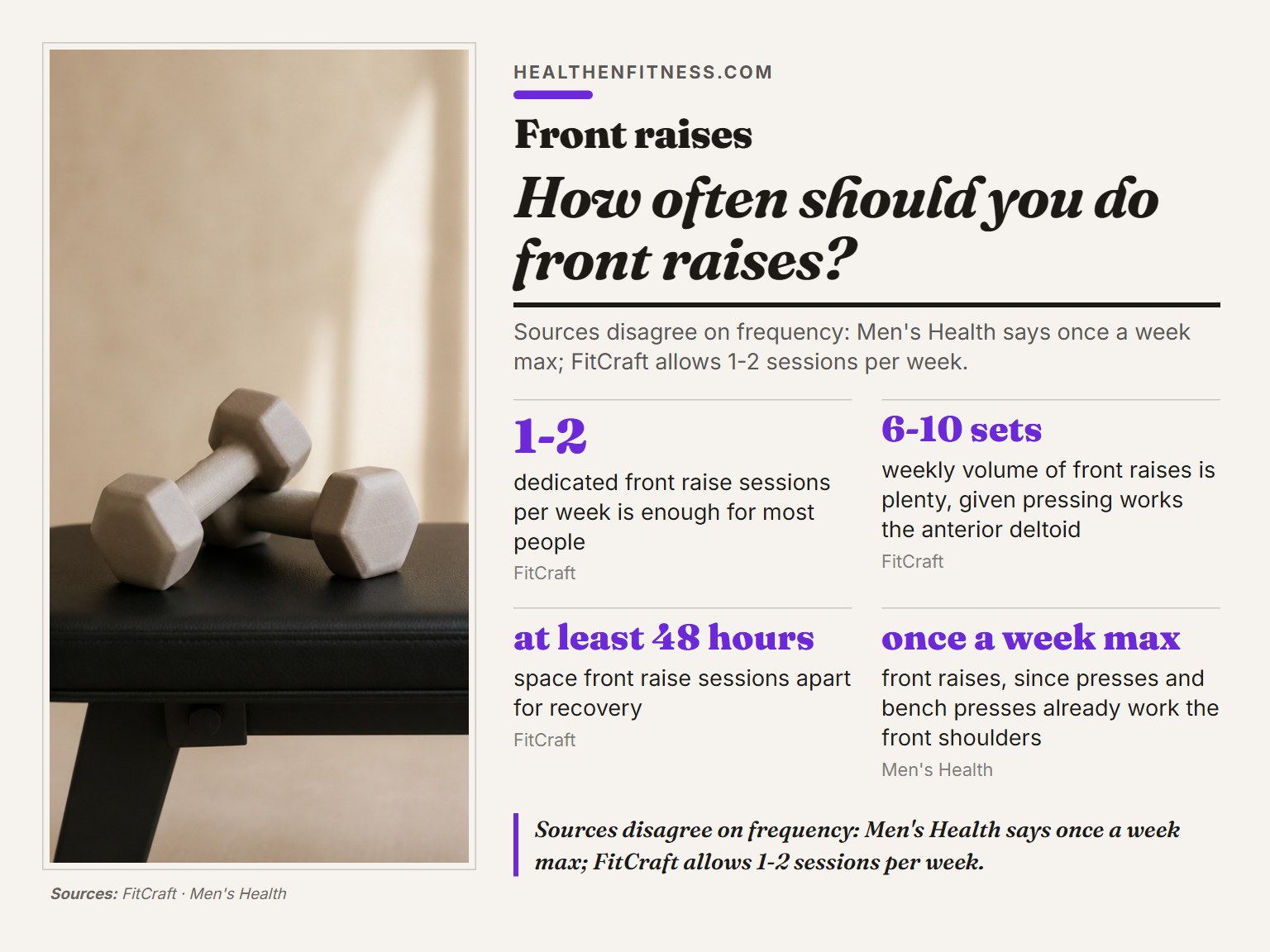
Two numbers decide the schedule: one dedicated session a week, and at least 48 hours of space around it.
The frequency question splits too. Samuel says once a week max, because the front shoulders already get direct work from shoulder presses and assistance from bench presses and other lifts. FitCraft allows one to two dedicated sessions per week and puts weekly volume at 6-10 sets total, spaced at least 48 hours apart.
Both positions agree on the important part: this is a small-volume movement. FitCraft’s reasoning is that the anterior deltoid already gets significant work during pressing, so 6-10 sets on top of that is plenty.
One session is plenty.
Where it sits inside the session matters as much as how often. FitCraft programs the shoulder press before front raises in the same session, since the compound lift deserves the fresh reps. FitCraft programs 2-3 sets of a scapular drill as a warm-up before any pressing or front-raise session.
If you’re building the whole day around this, these shoulder exercises cover the other two heads, and lateral raises belong in the same session for the side delt. If you train at home, this at-home shoulder exercises list keeps the loading light enough to match what a front raise actually needs.
If the last rep looks different from the first, the set is over. Same tempo, same height, same elbow angle, or you stop.
Frequently Asked Questions
Do front raises work the side delts?
They do, but not as the main target. PureGym notes that front raises work the shoulders, with the anterior deltoid as the primary mover. Treat front raises as front-delt work and pick a different movement for width.
How often should I do front raises?
Once a week is the conservative answer, and it comes from Samuel at Men’s Health, who points out that presses and bench presses already load the front shoulders. FitCraft allows one to two dedicated sessions per week with 6-10 total sets, spaced at least 48 hours apart. Start at one and add a second only if recovery allows.
Should I do front raises if my shoulders hurt?
Not through pain. Verywell Fit warns that front raises can cause shoulder impingement and pain with tendinitis or bursitis, and recommends checking with a doctor or physical therapist if you have a current or previous shoulder injury. FitCraft’s version is to work only in a pain-free range below shoulder height and swap in Y-raises, T-raises, and W-raises while symptoms settle.
Can I do front raises with one arm at a time?
Yes. Single-arm front raises are a variation you can try, adding a stability demand that the two-dumbbell version doesn’t have. Single-arm work is a variation you can try; start light the first time.
Do I need to raise the dumbbells above shoulder height?
No source requires it, and the strictest one argues against it. Samuel’s position is that raising beyond arms-parallel takes focus off the delts and involves the traps. PureGym does allow going higher if your mobility permits, so if you have the range and no shoulder symptoms, the choice is yours.
Before You Go
Here’s the threshold that decides your next step. If you can’t hold the top position of a front raise without the dumbbell drifting up or your ribs flaring, the weight is too heavy. Drop it. That test is a useful check on whether the weight is too heavy.
The other thing worth saying out loud: if you’re already pressing twice a week, you may not need front raises at all. Samuel’s argument is that the front delts get direct work from shoulder presses and assistance from every horizontal press, so the raise is a detail movement on a muscle that’s already covered. Adding it is fine. Skipping it is also fine.
So start smaller than you think you need to. Grab the 5s, angle the thumbs up, stop at parallel, and do one set of 10-12 this week. If the last rep looks like the first, you’ve learned how to do front raises properly. Come back in seven days and do it again.
