
10 Best Weightlifting Belts in 2026
This post contains affiliate links. As an Amazon Associate, we earn from qualifying purchases.
For serious strength training, the SBD 13mm Powerlifting Lever Belt stands out as the best overall for its patented Gliding Lever system and competition-grade 13mm leather construction. Powerlifters chasing max lifts will appreciate its rigidity, while those who value a comfortable fit might prefer the SBD 10mm Powerlifting Lever Belt. This guide covers the ten best weightlifting belts for every training style and budget.
Choosing a weightlifting belt means balancing support, comfort, and convenience. A 13mm belt offers maximum rigidity for heavy squats and deadlifts, but a 10mm belt is more flexible for general gym work and warm-up sets. The closure type, lever or prong, also affects how quickly you can adjust between sets.
We built this guide by analyzing specifications, manufacturer documentation, expert round-ups, and patterns in owner feedback across dozens of models. Our goal is to help you find the right belt for your lifting goals, body type, and competition requirements.
Top 10 Weightlifting Belts in the Market
Certain content that appears on this site comes from Amazon. This content is provided "as is" and is subject to change or removal at any time.
The Best Weightlifting Belts, Reviewed
SBD 13mm Powerlifting Lever Belt
What We Like
- Patented Gliding Lever for quick adjustments
- 13mm thickness for max competition support
- Four-layer British leather molds to waist
- Designed with elite powerlifter input
Trade-offs
- Lever closure requires precise sizing upfront
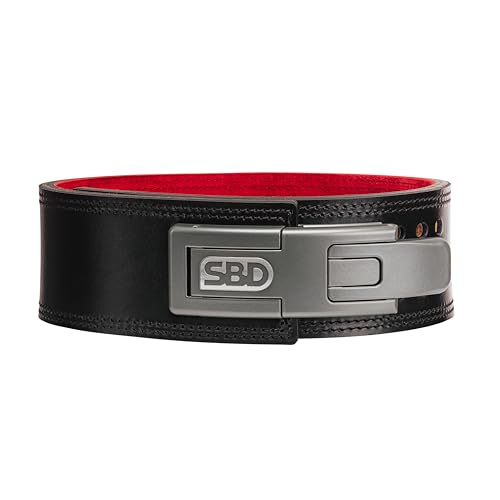
At 13mm thick and 10cm wide, this belt delivers the strongest support allowed in competition, trusted by elite lifters for squats, deadlifts, and bench press. The four-layer British cowhide leather construction molds naturally to your waist over time, so the fit improves with use. It’s built for anyone who wants competition-grade stability and gear that meets the highest standards.
The trade-off is that a 13mm lever belt requires precise sizing upfront. The size guide recommends measuring your waist where the belt will sit while bracing, and choosing a size where your measurement falls in the middle of the guide for easy adjustment. The patented Gliding Lever combines the adjustability of a prong belt with the secure lock of a lever belt, making quick changes between sets straightforward. Compared to a thinner 10mm option like the Gymreapers 10mm IPF Lever Belt, this belt offers maximum thickness for those who prioritize competition-level support over flexibility.
Product photos
Beast Power Gear 10mm Lever Belt

What We Like
- Premium leather resists stretching over time
- Quick locking lever buckle for fast adjustments
- 4-inch width supports core and lower back evenly
- Suede lining adds comfort against skin
Trade-offs
- 10mm thickness offers less rigidity than 13mm belts
- Lever buckle cannot be micro-adjusted like a prong belt
A 10mm thickness and 4-inch width made from premium leather with suede lining means this belt balances sturdy support with enough flexibility to move through your setup without fighting the material. The heavy duty lever buckle snaps shut in seconds, so you can dial in a precise fit fast and focus on the lift rather than fumbling with a prong. That combination makes it a strong fit for lifters who want consistent core bracing for squats and deadlifts. It avoids the bulk of a thicker belt, especially if you train in a gym where speed between sets matters.
A 10mm belt like this one resists stretching so your support stays consistent set after set, but it does not match the rigidity of a 13mm belt such as the SBD 13mm Powerlifting Lever Belt. The lever buckle snaps shut in seconds for a precise, secure fit, but you cannot make small adjustments between sets like you can with a prong belt. For most everyday strength training, this belt delivers reliable support without the extra stiffness.
Gymreapers 10mm IPF Lever Belt
What We Like
- IPF and USAPL competition approved
- Camac steel lever buckle resists bending
- Premium bovine leather with suede exterior
Trade-offs
- 10mm thickness offers less support than 13mm belts
- Lever closure limits quick on-off adjustments
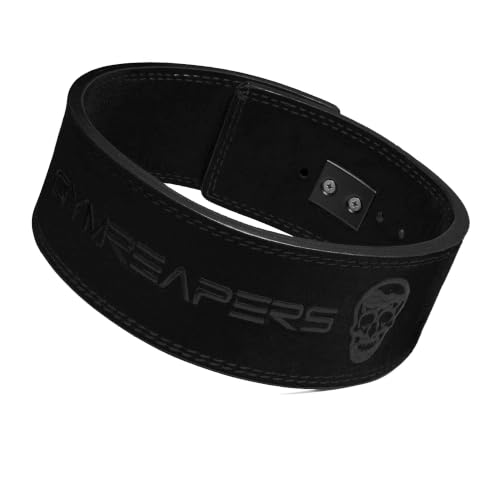
Meeting the requirements of the IPF, USAPL, IPL, and USPA means this belt is legal for competition in all four major federations. You can train in it week after week and then walk onto the platform at a meet without having to switch to a different belt. The same 10mm leather lever belt you break in at the gym is the one you take to the competition. There is no need to adjust to a new feel or fit on meet day. For lifters who compete across federations, that kind of consistency removes one more variable from a heavy attempt.
A 10mm lever belt offers less rigid bracing than a 13mm option like the SBD 13mm Powerlifting Lever Belt, which may matter for max-effort lifts. The lever closure adjusts in clicks rather than increments, so it is not as quick to micro-adjust as a prong-style buckle. For most lifters, the secure fit and consistent tension of the lever outweigh that minor trade-off.
MANUEKLEAR 10mm Lever Belt
What We Like
- Quick one-second lever buckle
- Adjustable from 24 to 45 inches
- Non-slip thick leather construction
- Unisex design for men and women
Trade-offs
- 2.5 pounds is heavier than some belts
- 10mm thickness offers less support than 13mm belts
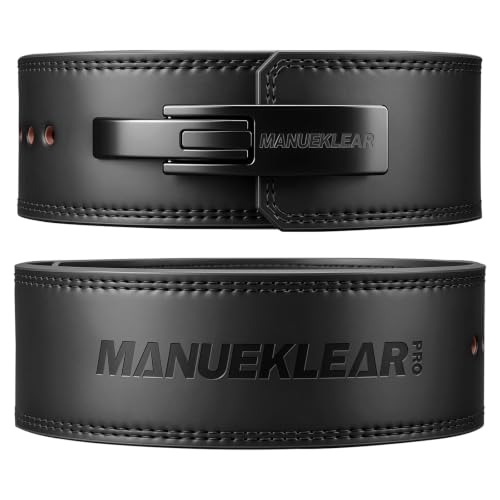
The MANUEKLEAR 10mm Lever Belt adjusts from 24 to 45 inches, so it can fit a range of waist sizes without needing a different belt. The lever buckle locks in one second, which means you can get into position quickly during a squat or deadlift. Lifters who share a belt or change waist size between training cycles will appreciate being able to adjust the fit without hassle.
At 2.5 pounds, the belt has some heft compared to a lighter nylon option, and the 10mm thickness gives good support for most training. That thickness is less rigid than a 13mm belt like the SBD 13mm, so it bends more easily around your torso. For everyday gym work, this balance of weight and flexibility makes it a practical choice.
Product photos
Iron Bull Strength 13mm Lever Belt

What We Like
- 13mm thickness for maximum support
- Non-slip suede leather surface
- New chrome lever is nearly indestructible
- Quick lever release for easy adjustment
Trade-offs
- Only for serious or extreme lifters
- Requires exact waist measurement, not pants size
A 13mm thick suede leather belt gives you the most rigid, unyielding support you can wrap around your core short of a steel brace. That thickness, paired with a full 4-inch height, locks your lower back and abs into a stable cylinder so you can push through heavy squats and deadlifts without worrying about your spine caving in. This belt is built for serious and extreme lifters who want the maximum amount of support the product offers. It is designed for moving the heaviest weight possible, not for someone still figuring out their warm-up sets.
The trade-off is that this belt is overkill for general gym work or moderate strength training. If you are not regularly pulling or squatting near your one-rep max, the 13mm thickness can feel like wearing a fence post around your waist. The lever closure means you need to get your sizing exactly right using a tape measure, not your jeans size. For comparison, the Gymreapers 10mm IPF Lever Belt is a different thickness and may suit lifters who want a less rigid option, but no direct comparison data is available. Stick with the Iron Bull if you are chasing limit strength; choose a thinner belt if you want a more flexible feel between sets.
Iron Bull Strength 10mm Double Prong Belt

What We Like
- IPF-approved for competition use
- Single-cut A-grade suede leather construction
- Double prong buckle for secure fit
Trade-offs
- Double prong takes longer to fasten than lever
- Only available in a 4-inch width, no other size option.
The 10mm single-cut suede leather construction gives this belt a steady, consistent thickness from end to end. That means you get even support around your entire core when you brace against it during a heavy squat or deadlift. That IPF certification also means it’s legal for powerlifting meets, so if you’re training with competition in mind, you don’t have to swap belts when you step on the platform. The double prong design provides a secure closure, and the 4-inch width spreads pressure evenly across your back and abs as stated in the product specs.
For lifters seeking competition-ready support, the double prong closure provides a secure and reliable hold, even under the heaviest loads. While it takes a few extra seconds to buckle compared to a lever belt, the peace of mind during maximal squats or deadlifts is well worth it. This 10mm thick suede leather belt is crafted from a single cut of A-grade material, ensuring consistent firmness and durability. The 4-inch width provides even stabilization across the back, abs, and entire core, reducing stress on the lower back and helping to minimize post-workout soreness. It is IPF certified and approved by USAPL, USPA, and IPL, so you can trust it meets the standards required for sanctioned competition.
RDX IPF Compliant 13mm Lever Belt

What We Like
- IPF compliant for competition use
- 12 precisely spaced adjustment holes
- Multi-layer leather with steel rivets
Trade-offs
- 13mm thickness limits flexibility for lighter lifts
- Must measure waist, pant size leads to wrong fit
A uniform 4-inch width distributes pressure evenly across the torso, core, and back, which helps maintain form during heavy compound lifts like squats and deadlifts. The dual-prong roller buckle is engineered to lock in tight and hold firm throughout a workout, eliminating the need for constant adjustments. Reviewers note that this design keeps the belt securely in place even under heavy loads, allowing full concentration on the lift itself.
That extra rigidity, though, comes with a trade-off: the 13mm version is less forgiving if you want a belt for warm-ups or lighter accessory work. A 10mm belt like the Gymreapers 10mm IPF Lever Belt might feel more manageable in those situations. The 12 adjustment holes give you plenty of fine-tuning, but you absolutely have to measure your waist correctly, pant size will lead you astray.
SBD 10mm Powerlifting Lever Belt
What We Like
- Patented Gliding Lever for quick adjustments
- Low-profile buckle reduces pinching
- Molds comfortably from genuine British leather
- Developed with elite powerlifter input
Trade-offs
- Not ideal for those who need frequent micro-adjustments between sets
- Too stiff for beginners who prefer flexibility
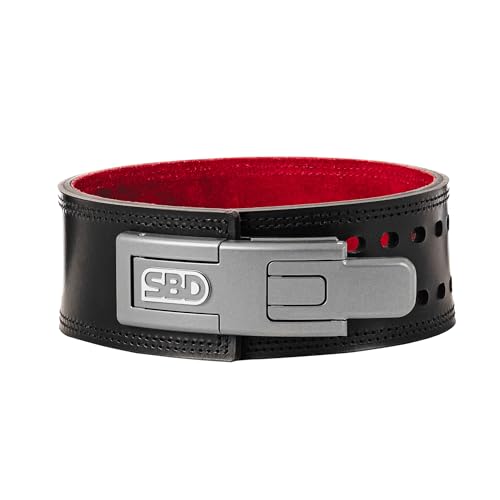
Two cuts of genuine British cowhide leather form the core of this belt. It gives the stiffness to support heavy squats and deadlifts while gradually molding to your waist over time. The patented Gliding Lever lets you tighten or loosen between sets with a quick slide, so you can go from a snug brace for a max squat to a looser fit for bench press without wrestling with prongs or a screwdriver. For lifters who want a lever belt that doesn’t force them to choose between security and ease of adjustment, this design hits a sweet spot.
The patented Gliding Lever Technology combines the adjustability of a prong belt with the secure lock of a lever belt, so you can quickly tighten or loosen during training without unbuckling. For strength athletes who set their fit once and want a reliable closure that won’t shift under heavy loads, the SBD 10mm delivers comfort without compromising support.
Product photos
RDX Cowhide Leather Padded Belt

What We Like
- Genuine cowhide leather construction
- Wide padded back for lumbar support
- Dual-prong steel buckle prevents slipping
- Suede leather inner for comfort
Trade-offs
- 7 mm thickness offers less rigidity than 10-13 mm belts
- Must measure waist, not pant size, for fit
- Leather flap adds bulk near buckle
The 7 mm thickness is softer than the stiffer 10 mm or 13 mm belts you see in competition. That means it bends more easily as you move and won’t dig in as hard when you brace.
The 7 mm leather won’t provide the same stiff feedback as thicker belts like the Gymreapers 10 mm lever belt, which is designed for maximal load support. For near-maximal lifts where intra-abdominal pressure is critical, a stiffer belt may feel more secure. However, for general strength training, cross-training, or anyone wanting lumbar padding without the rigid feel of a competition belt, this RDX offers a supportive experience that’s easy to wear through long sessions.
Product photos
Dark Iron Fitness Genuine Leather Belt
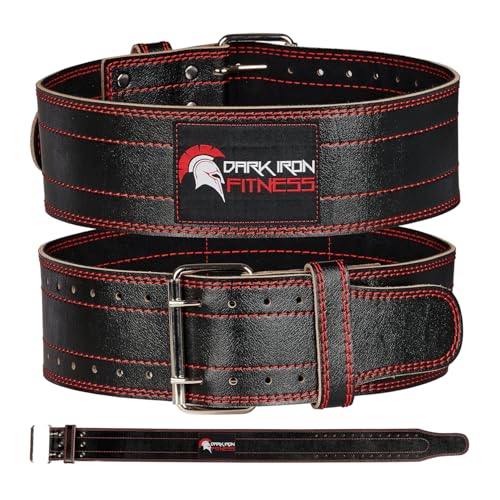
What We Like
- Waist range 22-49 inches suits many body types
- 12 adjustment holes for precise fit
- Double-prong buckle won't slip under heavy loads
- Genuine leather with reinforced double stitching
Trade-offs
- Leather requires break-in period for full flexibility
- No lever closure for quick adjustments between sets
A waist range of 22 to 49 inches with 12 adjustment holes at one-inch intervals means this belt can fit petite women, average-sized lifters, and larger athletes without leaving anyone in an awkward in-between size. The genuine leather construction and double-prong buckle give you the rigid support you want for squats and deadlifts, while the keeper loop keeps the tail out of your way. It is a versatile choice for anyone who shares gym equipment with a partner or whose waist measurement changes across training cycles.
The Dark Iron Fitness belt adjusts from a 22-inch to a 49-inch waist, so it fits everyone from petite women to large powerlifters. With 12 holes spaced an inch apart, you can dial in the fit precisely. The double-prong buckle holds securely during max lifts, but unlike a lever belt, you have to unfasten both prongs to take it off between sets.
Product photos
How We Evaluated Weightlifting Belts
Our research began with a deep look at the technical specs that matter most: thickness, width, material, and closure type. We compared 13mm and 10mm belts to understand how rigidity affects support for different lifts and experience levels. We also examined IPF and USAPL approval lists to confirm which belts are legal for competition.
We then organized the belts by their primary strengths. A lever belt offers quick one-handed adjustments, while a double prong design provides a secure fit that can be micro-adjusted between sets. We also considered comfort features like suede lining and low-profile buckles that reduce pinching during bench press or overhead work.
A research-led evaluation has limits: we cannot replicate the break-in period of a leather belt or measure how a specific model molds to different waist shapes. We rely on consistent owner feedback to identify patterns around sizing, durability, and real-world performance.
What To Look For In Weightlifting Belts
Finding the right belt starts with knowing your training goals. A powerlifter chasing a new PR needs different support than someone who does general strength training or CrossFit. The table below summarizes the key factors to consider.
Thickness (10mm vs 13mm), closure type (lever vs prong), material (leather vs synthetic), and width determine how much support and flexibility a belt provides.
Thickness and Rigidity
Thickness is the single biggest factor in how much support a belt provides. A 13mm belt, like the Iron Bull Strength 13mm Lever Belt, offers maximum rigidity for heavy squats and deadlifts where intra-abdominal pressure is critical. A 10mm belt, such as the Gymreapers 10mm IPF Lever Belt, is more flexible and comfortable for general training, warm-up sets, and lifts where you need to move through a fuller range of motion.
Thinner belts around 7mm, like the RDX Cowhide Leather Padded Belt, provide lumbar padding and flexibility for cross-training but lack the rigidity needed for maximal loads. If you compete in powerlifting, check your federation’s rules. IPF and USAPL have specific thickness requirements.
Closure Type: Lever vs Prong
The closure determines how quickly you can put the belt on and adjust tension between sets. Lever belts, including the best powerlifting belts like the SBD models, use a cam or gliding mechanism that locks with one quick motion. They are ideal for lifters who want consistent tension without fiddling with holes between sets.
Prong belts, like the Iron Bull Strength 10mm Double Prong Belt, use a buckle with teeth that fit into adjustment holes. They allow micro-adjustments but take longer to fasten and unfasten. Double prong designs offer a more secure hold than single prong, making them a good choice for heavy pulling.
Material and Construction
Genuine leather is the gold standard for durability and support. Belts made from multi-layer British leather, like the SBD 13mm, mold to your waist over time for a custom fit. Suede leather, found on the Beast Power Gear 10mm Lever Belt, adds comfort against the skin and resists stretching.
Synthetic materials are lighter and require no break-in period, but they typically offer less rigidity. For lifters who prioritize a comfortable fit without the wait, a suede-lined leather belt provides a good compromise. The top leather belts we reviewed all use premium bovine or cowhide leather that holds its shape under heavy loads.
- Measure your waist in inches at navel height, not your pants size, to get the right belt length.
- Look for reinforced stitching and steel rivets at stress points, especially near the buckle.
- Check the belt width: 4 inches is standard for most lifters, but shorter torsos may need a narrower belt.
- Consider the break-in period: leather belts soften over time, while suede belts are more comfortable from day one.
A belt that fits snugly at your navel when standing upright will provide the best support during your heaviest lifts.
Weightlifting Belts Compared
The table below compares the ten weightlifting belts side by side, highlighting their thickness, closure type, and key strengths to help you narrow down your choice.
| Product | Thickness | Width | Material | Closure |
|---|---|---|---|---|
| SBD 13mm Powerlifting Lever Belt | 13mm | 10cm | British cowhide leather | Patented Gliding Lever |
| Beast Power Gear 10mm Lever Belt | 10mm | 4 inches | Premium leather with suede lining | Heavy duty lever buckle |
| Gymreapers 10mm IPF Lever Belt | 10mm | 4 inches | Premium bovine leather | Camac steel lever buckle |
| MANUEKLEAR 10mm Lever Belt | 10mm | 4 inches | Non-slip thick leather | Lever buckle |
| Iron Bull Strength 13mm Lever Belt | 13mm | 4 inches | Genuine leather | Lever buckle (chrome, 2023) |
| Iron Bull Strength 10mm Double Prong Belt | 10mm | 4 inches | Single-cut suede leather | Double prong buckle |
| RDX IPF Compliant 13mm Lever Belt | 10mm and 13mm | 4 inches | Genuine cowhide leather, multi-layer | Dual-prong roller buckle |
| SBD 10mm Powerlifting Lever Belt | 10mm | N/A | Genuine British cowhide leather | Patented Gliding Lever |
| RDX Cowhide Leather Padded Belt | 7 mm | 4-inch and 6-inch | Genuine cowhide leather | Dual-prong roller buckle, steel |
| Dark Iron Fitness Genuine Leather Belt | N/A | 4 inches | 100% genuine leather | Double-prong metal buckle |
Frequently Asked Questions
When should you start using a weightlifting belt?
Most lifters benefit from a belt once they are squatting or deadlifting near a significant percentage of their one-rep max. Beginners should focus on building core strength and proper bracing technique first. A belt is a tool for heavier loads, not a crutch for poor form.
What is the difference between a 10mm and a 13mm belt?
The thickness determines rigidity. A 13mm belt offers maximum support for heavy squats and deadlifts, making it the choice for powerlifters and serious strength athletes. A 10mm belt is more flexible and comfortable for general training, warm-up sets, and lifts that require more mobility.
Are lever belts better than prong belts?
Lever belts are faster to put on and take off, and they provide consistent tension without needing to find the right hole. Prong belts allow micro-adjustments between sets and are easier to size correctly. The best choice depends on whether you prioritize speed or adjustability.
How should a weightlifting belt fit?
A belt should be snug enough that you can breathe deeply into your belly but not so tight that it restricts your movement. It should sit just above your hip bones and below your ribcage. Measure your waist at navel height and follow the manufacturer’s sizing chart.
Can you use a weightlifting belt for deadlifts?
Yes, a belt can help you brace harder during heavy deadlifts, which reduces spinal shear forces. A 10mm or 13mm belt works well, but some lifters prefer a narrower belt for sumo deadlifts to avoid pinching. Our guide to belts for deadlifts covers specific options.
The Bottom Line
The SBD 13mm Powerlifting Lever Belt is our best overall pick for powerlifters and serious strength athletes who want competition-grade support and the convenience of a patented Gliding Lever. Its four-layer British leather molds to your waist for a custom fit that holds up under maximal loads. If you are training for an IPF or USAPL meet and prefer a 10mm belt, the Gymreapers 10mm IPF Lever Belt is a solid alternative.
For lifters who want a premium leather build with a quick-locking lever, the Beast Power Gear 10mm Lever Belt offers balanced support for heavy squats and deadlifts. Those who need a wide waist range or a versatile fit for shared gym equipment should look at the Dark Iron Fitness Genuine Leather Belt. Budget-minded lifters will find good value in the MANUEKLEAR 10mm Lever Belt, which covers 24 to 45 inches.
The single most important factor in choosing a belt is getting the thickness right for your training. A 13mm belt gives you maximum rigidity for heavy work, while a 10mm belt offers flexibility for general strength training. Measure your waist accurately, pick the closure type that matches your pace, and you will have a belt that supports your progress for years.
