
8 Best Battery Life Fitness Trackers in 2026
This post contains affiliate links. As an Amazon Associate, we earn from qualifying purchases.
The Xiaomi Smart Band 11 Fitness Tracker wins as the best overall. It delivers 21 days of battery life on a single charge without sacrificing a bright, responsive AMOLED display or full health tracking. For those who prioritize maximum battery life above all else, the Allxin 50+ Days Battery Fitness Tracker is the clear choice, while the MIDDOW Screenless Fitness Tracker offers a strong middle ground with 35 days of wear.
The real problem with most fitness trackers isn’t features, it’s remembering to charge them. A tracker that dies mid-week becomes a useless accessory, especially when you rely on it for sleep tracking or morning readiness data. Battery life is the single most practical factor that determines whether a tracker stays on your wrist or ends up in a drawer.
This guide is built on a research-based evaluation of manufacturer specifications, expert round-ups, and patterns found in owner feedback. We focused on eight trackers that genuinely deliver on their battery promises, comparing display types, waterproofing, and health features to help you find the right trade-off for your routine.
Top 8 Battery Life Fitness Trackers in the Market
Certain content that appears on this site comes from Amazon. This content is provided "as is" and is subject to change or removal at any time.
The Best Battery Life Fitness Trackers, Reviewed
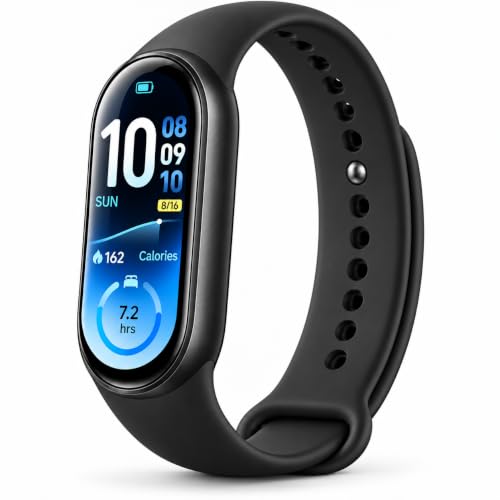
Xiaomi Smart Band 11 Fitness Tracker
What We Like
- 21-day battery on a single charge
- 1.72" AMOLED screen is bright and responsive
- 5ATM waterproof rating for swimming
Trade-offs
- Battery life trails screenless trackers by weeks
The trade-off is straightforward: if you want the longest battery in this guide, the Allxin 50+ Days tracker offers over twice the battery life by removing the screen entirely. But you give up the AMOLED display, the sleep HRV tracking, and the convenience of seeing stats on your wrist. The Xiaomi Smart Band 11 is a strong option because it combines a usable screen with a battery that lasts through a typical work trip or vacation. It is light enough to wear comfortably and delivers the core health features without frequent charging.
Product photos
Allxin 50+ Days Battery Fitness Tracker

What We Like
- 50+ days of battery life
- 176 sports modes for variety
- AI-powered health insights via free app
Trade-offs
- Micro LED shows only essentials, no full touchscreen
Fifty-plus days on a single charge means you can practically forget about charging cables. That energy-efficient chip keeps this tracker running through weeks of workouts, sleep monitoring, and daily wear without the low-battery anxiety that plagues most fitness bands. For anyone who wants health data without the hassle of plugging in every few nights, this is the straightforward, no-fuss option. The minimalist Micro LED display shows time, steps, heart rate, and battery level, so you get the info you need without a bright screen buzzing your wrist all day.
The marathon battery life comes with a simpler display that skips the colorful maps and notifications of a full smartwatch. If you want a larger, more vibrant screen, a model like the Xiaomi Smart Band 11 with its 1.72-inch AMOLED display and 21-day battery might feel more familiar. But if your priority is tracking your activity, sleep, and heart rate for weeks on end with zero charging fuss, the Allxin delivers exactly what it promises. It is a tool for consistency, not distraction.
Product photos
MIDDOW Screenless Fitness Tracker
What We Like
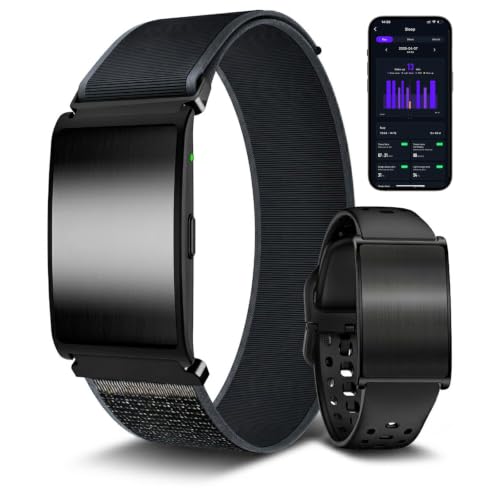
- 35-day battery life
- 176 sports modes
- IP68 water and dust resistance
- No monthly app fees
Trade-offs
- No screen for time or notifications
- Health data is wellness reference only
A 35-day battery life means you can wear this tracker for over a month without hunting for a charger. That makes it ideal if you want to set it and forget it. The screenless design keeps the device lightweight and distraction-free, so it’s a practical choice for those who prefer data logging without a display. With 176 sports modes and IP68 water resistance, it handles sweat, rain, and handwashing. The two included bands let you swap between a breathable woven nylon strap and a silicone strap to match your routine.
You won’t have a screen to glance at during activity, so you’ll need to check the app afterward for your stats. Compared to the Xiaomi Smart Band 11, which offers a 1.72-inch AMOLED screen and 21-day battery, the MIDDOW trades the display for a longer battery life of 35 days. If you prioritize extended wear between charges over on-wrist visibility, this tracker suits that preference.
Product photos
Amazfit Band 7 Fitness Tracker
What We Like
- Alexa voice control on wrist
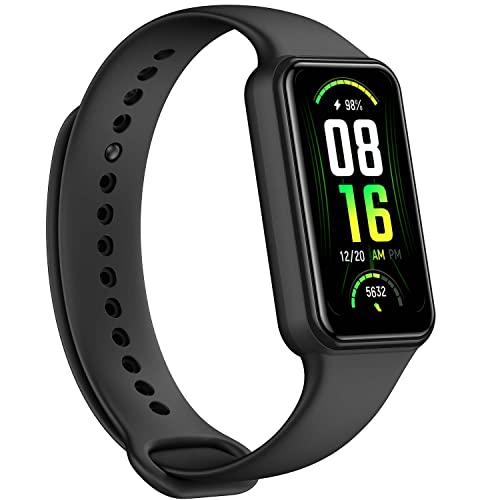
- 1.47" AMOLED screen
- 120 sports modes
Trade-offs
- Battery shorter than screenless trackers
Amazfit packs Alexa right into the Band 7, so you can set timers, check weather, or control smart lights straight from your wrist. It suits anyone who wants a feature-rich daily tracker, heart rate, SpO₂, sleep stages, and 120 sport modes, without obsessing over charging schedules.
Battery life here reaches up to 18 days, which still trails the multi-week or multi-month stamina of screenless picks like the Allxin 50+ Days tracker. For gym sessions, daily walks, and casual swims (it is 5 ATM water resistant), this band delivers a rare mix of screen quality, voice assistant convenience, and battery stamina. That keeps you in your routine, not your charger.
Product photos
Google Fitbit Air Activity Tracker
What We Like
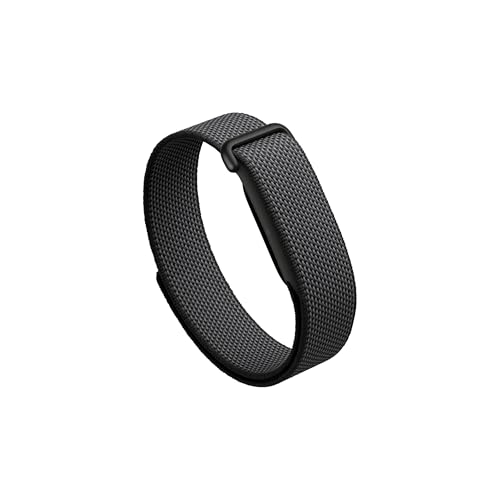
- Ultra-lightweight, micro-adjustable fit
- No screen for distraction-free wear
- Fast charging: 5 minutes for a day
- Works through sleep, work, and play
Trade-offs
- No display for checking stats at a glance
- 7-day battery is short among screenless trackers
- Requires phone to see any data
Up to seven days of battery life in a package that weighs virtually nothing and measures just 0.3 inches thick means you can forget you are wearing it. The screenless design lets you move from a bracelet to a workout band to a sleep band without a display to distract or disrupt your style. Its micro-adjustable band is built for all-day wear through work, play, and sleep, and fast charging gives you one day of battery in just five minutes when you need a quick top-up. This tracker is for anyone who values comfort and simplicity over a screen.
You get no on-device feedback here. Without a screen, you need your phone to see step counts, heart rate trends, or sleep scores. That makes it less convenient than the Xiaomi Smart Band 11, which shows everything on its AMOLED display, but the Fitbit Air also lasts up to a week compared to the Xiaomi’s 21 days. If constant glanceable data matters more than featherlight comfort, the Xiaomi is the better fit. For those who want a tracker that disappears on the wrist and still delivers solid battery life, the Air is a comfortable screenless option.
Product photos
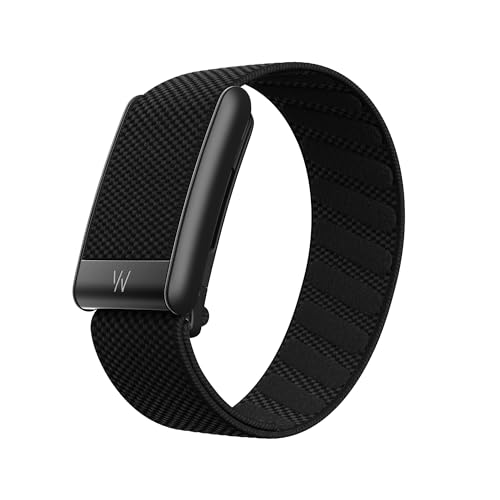
WHOOP 5.0 Screenless Fitness Tracker
What We Like
- AI Coach turns 140+ metrics into actionable insights
- 14+ day battery with on-wrist wireless charging
- 24/7 sleep, stress, and healthspan tracking
- 99%+ heart rate and HRV accuracy
Trade-offs
- Requires ongoing 12-month membership to use
- Screenless design means no glanceable stats or notifications
- Battery life is shorter than several competitors in this guide
A 14+ day battery life paired with a wireless PowerPack that charges on your wrist without removing the tracker means you can stay tracking for two weeks straight. That continuous feed powers the real star here: an AI coach that digests over 140 health and fitness metrics and turns them into personalized next-step advice. For someone who wants more than step counts, who wants to understand how their sleep, recovery, and daily habits connect, this is the most coaching-forward wearable in the guide. It tracks your sleep stages, HRV, skin temperature, blood oxygen, and even calculates your biological aging rate, then adapts its recommendations as you log behaviors in the journal.
The membership model is the main trade-off here. Unlike the Garmin CIRQA Smart Band, which requires no subscription, the WHOOP 5.0 demands a 12-month Peak membership to function at all. That subscription is what unlocks the AI coach and the deep analysis, so you are paying for the brain, not just the band. The screenless design also means you won’t get quick time or notification glances like you would on the Amazfit Band 7. If you want a pure data-driven coach that never needs a charging break mid-week, this is it. Just know you are signing up for a service, not just a device.
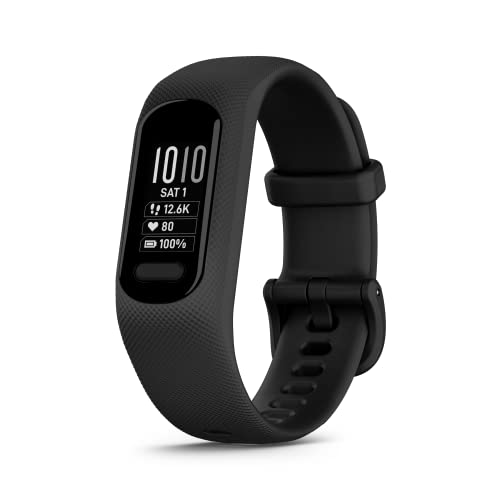
Garmin Vívosmart 5 Fitness Tracker
What We Like
- Body Battery energy level monitoring
- Up to 7 days battery life
- Bright touchscreen with button interface
- Swim and shower safe
Trade-offs
- 7-day battery is short next to 21-day competitors
- Pulse Ox not available in all countries
- Relies on phone GPS for outdoor tracking
Up to seven days of battery life gets you through a typical week without needing to recharge. The Body Battery feature combines heart rate, stress, and activity data into a single energy score so you can decide when to push hard and when to rest. The display is brighter than the previous model, and a physical button works alongside the touchscreen for easier menu navigation. If you want to understand your body’s daily rhythms, this tracker puts that insight front and center.
Battery stamina is the main trade-off here. Seven days is solid, but the Xiaomi Smart Band 11 runs for three weeks on a charge, so if you hate plugging things in, that’s a real difference. The Vívosmart 5 also leans on your phone’s GPS for outdoor routes rather than having its own, which means you’ll want your phone along for runs or rides. For someone who values deep recovery and readiness tracking over absolute battery longevity, this Garmin makes a smart, focused companion.
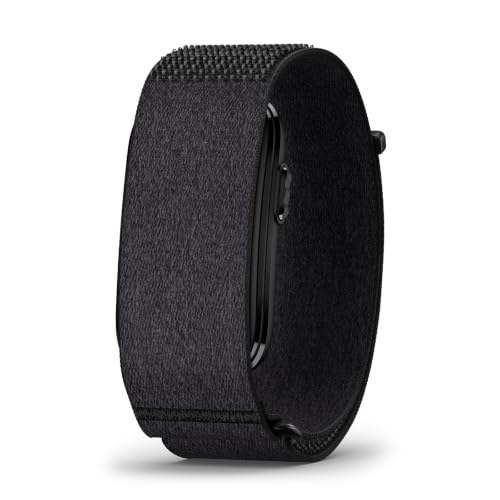
Garmin CIRQA Smart Band
What We Like
- Screenless design minimizes distraction
- Up to 10 days battery life
- No subscription required
- Automatically detects and classifies activities
Trade-offs
- No display means no on-wrist stats during workouts
- Pulse Ox breathing feature not available in all countries
Ten days of battery life means you can wear this band through a full work week and a weekend without hunting for the charger. That freedom is the whole point of a distraction-free tracker, no screen to tap, no notifications to pull you out of a walk or a yoga session. Garmin packs in heart rate monitoring, Body Battery energy tracking, stress insights, and sleep coaching with circadian rhythm alignment, all accessible through the Garmin Connect app. It’s built for anyone who wants the health data without the constant buzz of a smartwatch on their wrist.
You give up glanceable stats mid-workout with this band. With no display, you won’t see your heart rate or lap time until you pull out your phone. But if your goal is to wear something comfortable, forget it’s there, and check your trends later in the app, this band keeps things simple and focused.
How We Evaluated Battery Life Fitness Trackers
Our evaluation started with the manufacturer’s stated battery life under typical use, then cross-referenced those claims against patterns in long-term owner feedback. We also considered charging speed, since a tracker that charges quickly is less likely to be left behind on a busy morning. For each model, we looked at the real-world trade-offs that come with extended battery life, such as a smaller display or fewer smart features.
The criteria that mattered most were battery endurance, display quality, water resistance, and health tracking depth. Battery endurance came first because this is a guide for people who want to charge less often. Display quality mattered because a dim or unresponsive screen undermines the convenience of glanceable stats. Water resistance ensured the tracker could survive sweat, showers, and swims without issue. Health tracking depth helped separate a simple step counter from a genuine fitness companion.
An honest evaluation has limits. This guide relies on documented specifications and the collective experience of thousands of owners. Battery life varies with settings like always-on display and GPS usage, so treat the stated numbers as a reliable baseline rather than a guarantee. For more context on simpler options, see our guide to simple fitness trackers.
What To Look For In Battery Life Fitness Trackers
Choosing a fitness tracker means deciding how much screen you want versus how often you want to charge. The right balance depends on your lifestyle, not just the spec sheet.
Focus on battery life first, then match the display type and health features to your daily routine. A screenless tracker can last weeks, but you trade glanceable stats. A bright AMOLED screen is convenient but needs charging more often.
Battery Life and Charging Speed
Battery life is the headline feature, but charging speed matters almost as much. A tracker that takes two hours to charge is harder to keep on your wrist than one that gets you a full day from a five-minute top-up. Look for models with a stated battery life that matches your charging tolerance.
If you can handle charging once every two weeks, a 21-day tracker like the Xiaomi Smart Band 11 is ideal. If you want to forget about charging for over a month, the Allxin 50+ Days tracker or a screenless option like the MIDDOW is the better fit.
Display Type and Readability
The display is where most battery life trade-offs happen. AMOLED screens offer vibrant colors and sharp text but consume more power, which is why the Xiaomi Smart Band 11 and Amazfit Band 7 deliver around three weeks of life rather than months. Micro LED displays, like the one on the Allxin tracker, use minimal power but show only essential data.
Screenless trackers like the MIDDOW and WHOOP 5.0 trade all display convenience for maximum battery endurance. If you need to see your stats at a glance during a workout, prioritize a bright AMOLED or LCD screen. If you are fine checking your phone, a screenless tracker saves you charging time.
Water Resistance and Durability
Water resistance determines where you can wear your tracker. A 5ATM rating means the device is safe for swimming and shallow diving, which is essential for triathletes or pool swimmers. IP68 ratings, like the MIDDOW’s, protect against dust and submersion but are not rated for continuous swimming pressure. If you swim regularly, look for a 5ATM rating or higher. If you only need protection from sweat and rain, IP68 is sufficient. For a closer look at more streamlined options, our guide to minimalist fitness trackers covers screen-free and low-distraction designs.
Health Tracking Accuracy and Depth
Battery life is useless if the health data is unreliable. Look for trackers that measure heart rate, sleep stages, and stress levels consistently. The WHOOP 5.0 reports over 99% heart rate and HRV accuracy, while the Garmin Vívosmart 5 offers Body Battery energy monitoring for a more holistic view of your readiness.
Screenless trackers often use the same sensors as their display-equipped counterparts, so you are not sacrificing accuracy for battery life. If you want detailed insights without a screen, the WHOOP’s AI Coach transforms raw data into actionable advice, though it requires a subscription.
- Check the stated battery life under typical use, not just standby mode.
- Confirm the water resistance rating matches your activity (5ATM for swimming, IP68 for sweat and rain).
- Verify that the tracker supports the sports modes you actually use, 176 modes are overkill if you only run and cycle.
- Read owner feedback about heart rate accuracy during high-intensity workouts.
- Consider charging speed: a fast-charging tracker is easier to keep topped up.
A good rule of thumb: the more screen you want, the more often you will charge. Decide your charging tolerance first, then pick the best display within that limit.
Battery Life Fitness Trackers Compared
The table below compares all eight trackers side by side, focusing on battery life, display type, water resistance, and key features to help you see the trade-offs at a glance.
| Product | Battery Life | Display | Water Resistance |
|---|---|---|---|
| Xiaomi Smart Band 11 Fitness Tracker | 21-Day | 1.72" AMOLED | 5ATM |
| Allxin 50+ Days Battery Fitness Tracker | 50+ days | Micro LED | IP68 |
| MIDDOW Screenless Fitness Tracker | 35 days | Screenless | IP68 |
| Amazfit Band 7 Fitness Tracker | 18 days | 1.47" AMOLED | 5 ATM |
| Google Fitbit Air Activity Tracker | Up to 7 days | Screenless | N/A |
| WHOOP 5.0 Screenless Fitness Tracker | 14+ Days | Screenless | IP68 |
| Garmin Vívosmart 5 Fitness Tracker | Up to 7 days | N/A | N/A |
| Garmin CIRQA Smart Band | Up to 10 days | Screenless | N/A |
Frequently Asked Questions
Which fitness tracker has the longest battery life?
The Allxin 50+ Days Battery Fitness Tracker offers the longest battery life in this guide, lasting over 50 days on a single charge. It uses a Micro LED display that shows only essential information, which helps conserve power. For a screenless option with strong battery life, the MIDDOW Screenless Fitness Tracker lasts 35 days.
How long does the Xiaomi Smart Band 11 battery last?
The Xiaomi Smart Band 11 lasts up to 21 days on a single charge under typical use. This makes it the best overall option for anyone who wants a bright AMOLED display and full health tracking without charging more than twice a month. Battery life may be shorter with heavy GPS or always-on display usage.
Are screenless fitness trackers as accurate as ones with a display?
Yes, screenless fitness trackers like the MIDDOW and WHOOP 5.0 use the same optical sensors as display-equipped models. The WHOOP 5.0 reports over 99% heart rate and HRV accuracy. The main difference is that screenless trackers require you to check your stats on your phone rather than glancing at your wrist.
Do I need a subscription for the WHOOP 5.0?
Yes, the WHOOP 5.0 requires an ongoing 12-month membership to use the tracker and access its AI Coach insights. The subscription covers the device, the coaching features, and the detailed sleep and recovery analysis. There is no option to buy the tracker outright without the membership.
What is the difference between 5ATM and IP68 water resistance?
5ATM means the tracker is rated for water resistance down to 50 meters, making it safe for swimming and shallow diving. IP68 protects against dust and submersion in water but is not designed for continuous swimming. For pool or open water swimming, choose a 5ATM-rated tracker like the Xiaomi Smart Band 11.
The Bottom Line
The Xiaomi Smart Band 11 is the best overall pick for most people because it balances 21 days of battery life with a bright AMOLED display and comprehensive health tracking. It is ideal for anyone who wants to charge their tracker twice a month while still enjoying glanceable stats, swim-proof durability, and a responsive touchscreen.
If your top priority is maximum battery life, the Allxin 50+ Days tracker is the clear winner, lasting over seven weeks without a charge. For those who want to avoid screen distractions entirely, the MIDDOW Screenless Fitness Tracker offers 35 days of battery life with no monthly fees, while the WHOOP 5.0 provides deeper AI-driven insights for a subscription. For budget-conscious shoppers, our guide to affordable trackers covers value-focused alternatives.
The single most important factor in choosing a fitness tracker is deciding how often you are willing to charge it. Once you set that limit, the right display, water resistance, and health features become much easier to choose. For a broader look at options, check our guide to the best workout wearables.
