
10 Best Beginner Yoga Mats in 2026
This post contains affiliate links. As an Amazon Associate, we earn from qualifying purchases.
The Gaiam Premium Yoga Mat wins as the best overall because its 5mm cushioning protects joints without making you feel unstable, and the textured surface keeps you grounded in every pose. For budget-conscious shoppers, the Amazon Basics Extra Thick Yoga Mat offers generous padding, while the YOGATI Yoga Mat with Alignment Lines helps you learn proper form from day one.
Starting yoga means learning new movements while also figuring out what gear actually helps. A mat that slips, feels too thin, or smells strongly can turn a promising first class into a frustrating experience. The right mat makes it easier to focus on your breath and alignment instead of fighting the floor.
We built this guide by comparing manufacturer specs, studying expert recommendations, and analyzing what real beginners report about durability, grip, and comfort. We focused on the features that matter most when you are just starting: cushioning, traction, weight, and ease of cleaning.
Top 10 Beginner Yoga Mats in the Market
Certain content that appears on this site comes from Amazon. This content is provided "as is" and is subject to change or removal at any time.
The Best Beginner Yoga Mats, Reviewed
Gaiam Premium Yoga Mat

What We Like
- 5mm cushioning protects joints without bulk
- Textured non-slip surface for stable poses
- Made without six harmful phthalates
- Lightweight and portable with carrying strap
Trade-offs
- Requires 2-3 days airing out before first use
- PVC material, not natural rubber or eco-fiber
A 5mm cushion is the sweet spot for beginners: thick enough to soften knees and wrists in kneeling poses, yet thin enough to feel the floor for balance. The textured non-slip surface gives you grip in downward dog without sliding, and the 6P-free PVC means you’re not unrolling a mat soaked in the nastiest phthalates. It’s lightweight at 2.6 pounds and comes with a carrying strap, so you can toss it over your shoulder and head to the park or studio without a second thought. That practical balance of comfort, grip, and portability is why this mat suits anyone starting yoga or Pilates and wanting a reliable foundation.
The 68-inch length works for many, but taller users may find their heels near the edge during savasana. Compared to the YOGATI mat with alignment lines, this Gaiam has 5mm cushioning versus 6mm on the YOGATI. So it offers slightly less padding but a simpler surface without printed lines, which some beginners prefer to avoid distraction. You’ll also need to let it air out for a couple days before your first session, since new PVC mats can have a noticeable smell. For the vast majority of new yogis, though, this is the mat that just works.
Gaiam Essentials Yoga Mat
What We Like
- Lightweight at 3.0 lbs with carrying sling
- 6 mm cushion for joint support
- Non-slip textured surface for grip
- Extra-long 72-inch length for taller users
Trade-offs
- Requires 2-3 days airing out before first use
- Heavier than several other 6mm mats on the market
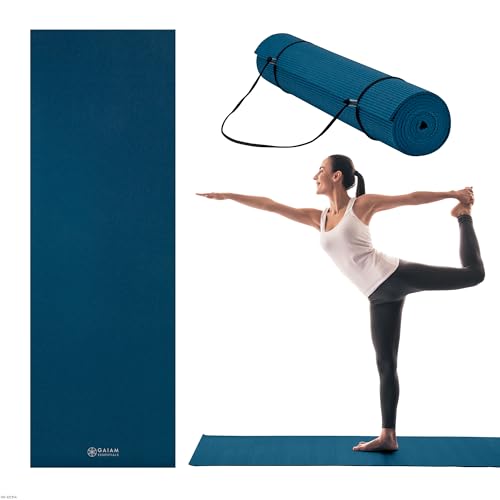
A 6 mm thickness gives this mat a noticeable cushion without turning standing poses into a wobble fest. That balance makes it a smart pick for beginners whose knees and wrists still need forgiveness on hard floors, yet who want enough stability for Warrior or Tree pose. The textured non-slip surface adds reliable grip, and the included carrying sling means you can toss it over your shoulder on the way to class or the park without hunting for a separate bag. At 3.0 pounds and 72 inches long, it’s light enough to carry comfortably and long enough for taller frames to stretch out fully.
The trade-off comes down to material: this mat uses 6P-free PVC, which is a healthier choice than standard PVC but still plastic-based. If you prefer a natural rubber mat, the JadeYoga Harmony offers that, though it weighs 4.2 pounds and costs more. The Gaiam Essentials also asks for a two- to three-day air-out period before first use, so plan ahead. For a beginner who wants lightweight portability, forgiving cushion, and a grippy surface at a budget-friendly value, this mat delivers exactly what the name promises.
YOGATI Yoga Mat with Alignment Lines

What We Like
- Built-in laser-etched alignment guide
- Textured closed-cell surface for grip
- Dense foam cushions joints
- Lightweight with carrying strap
Trade-offs
- 24-inch width is standard, not extra-wide for broad stances
The laser-etched center markings on this mat show exactly where to place your palms and heels, which takes the guesswork out of finding proper form. For a beginner learning poses like downward dog or warrior, that visual cue helps build muscle memory without needing an instructor hovering over you. The dense 6 mm TPE foam softens knees and elbows while staying firm enough to keep your balance steady in standing poses. And the textured closed-cell surface holds you in place even when things get sweaty. It is a smart pick if you want to focus on alignment from day one rather than fixing bad habits later.
The YOGATI Yoga Mat with Alignment Lines uses laser-etched center markings to show where palms and heels belong, helping beginners learn correct form while experienced yogis fine-tune symmetry. It’s a built-in posture guide that no other mat in this comparison offers. Its 6 mm dual-layer TPE foam cushions knees, elbows, hips, and spine against hard ground yet remains firm enough for standing poses like tree or warrior sequences. The closed-cell textured surface stays grippy even when you sweat, keeping hands and feet steady through hot flows, planks, lunges, or downward dog.
Product photos
Manduka Begin Yoga Mat

What We Like
- Reversible design with center alignment stripe
- Lightweight 2.1 pounds for easy carrying
- Eco-friendly TPE foam cushioning
- Latex-free and safe for sensitive users
Trade-offs
- At 68 inches, shorter than some taller users need
- 5mm cushioning is thinner than extra-thick mats
The 5mm thickness provides a middle ground between cushioning and stability, which is helpful for new practitioners who want joint support without feeling unstable during standing poses. The reversible design includes a center alignment stripe that can help guide your form, and at 2.1 pounds, the mat is light enough for a child or older adult to carry to class. It’s made from eco-friendly TPE foam and is latex-free, making it a safe choice for sensitive users.
The main trade-off is length: at 68 inches, taller users may find their feet or head extending past the mat during savasana, especially when compared to the YOGATI mat’s 72-inch surface. The 5mm cushioning also won’t feel as plush as the Amazon Basics extra-thick mat for those with sensitive knees or elbows. But if you want a lightweight, reversible mat with alignment guidance that is easy to clean with mild soap and water, this is a practical option for starting your practice.
Amazon Basics Extra Thick Yoga Mat

What We Like
- Extra thick 0.5-inch cushioning
- Lightweight at 2.2 pounds
- Textured surface for grip
- Includes elastic carrying strap
Trade-offs
- Hand wash only for cleaning
- NBR foam absorbs sweat more than PVC mats
Half an inch of NBR foam makes this mat noticeably thicker than most beginner options, which often hover around a quarter inch. That extra padding absorbs pressure from knees, hips, and elbows during floor poses or core work, so you can hold a plank or kneel through a hip opener without wincing. At just over two pounds and with a built-in carrying strap, it’s easy to toss over your shoulder and take to a studio or park. For someone starting out who values comfort over ultra-firm feedback from the floor, this is a forgiving surface that won’t punish beginner mistakes.
The trade-off with that plush feel is stability. NBR foam is lightweight and forgiving, but it does not offer the same firm, dense feedback as some other mats. The textured surface helps with grip, but if you tend to wobble in standing poses, you may prefer a mat with a denser material. Still, for the price, and for anyone whose main goal is to make floor work feel gentler, this mat delivers exactly what the name promises: extra thick cushioning without the weight penalty.
Product photos
Retrospec Solana Extra Thick Yoga Mat

What We Like
- 1-inch thickness cushions joints and pressure points
- Non-slip material helps maintain steady balance
- Includes nylon carrying strap for portability
- Easy to clean with soap and water
Trade-offs
- Heavier than thinner mats for daily carrying
- Initial harmless odor requires airing out before use
A full inch of cushioning, triple what most beginner mats offer, means your knees, hips, and hands get serious relief during floor poses and kneeling sequences. That thickness also helps you feel stable and supported when you’re still building balance, so you can focus on your breath instead of sore joints. It’s a great fit for anyone who wants a forgiving surface for gentle stretching, restorative yoga, or Pilates, and the included nylon strap makes it simple to roll up and take to a class.
The trade-off is portability: at 2.2 pounds and a full inch thick, this mat is heavier than a slim 5mm option like the Gaiam Premium Yoga Mat, which weighs 2.6 pounds. If you plan to walk to the studio or stash it in a small gym bag, the extra bulk might feel cumbersome. But if your priority is comfort over compactness, especially if you have sensitive joints or spend a lot of time on hard floors, the generous padding makes every practice feel more forgiving.
Circuit Fitness by Marcy Non-Slip Mat
What We Like
- Moisture-resistant TPE resists sweat absorption
- Lightweight 1.5 lb with carry strap
- Longer 74-inch length for taller users
Trade-offs
- Thinner 6mm cushioning on hard floors
- Narrower than some mats at 24 inches wide
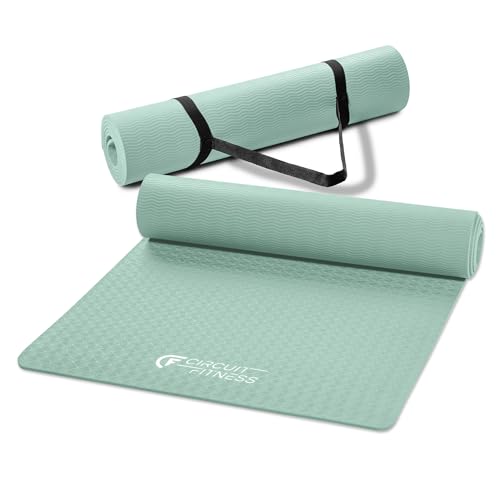
At just 1.5 pounds and with a built-in shoulder strap, this mat practically disappears into your bag, perfect for anyone who commutes to the studio or stashes gear under the couch. For a beginner who values portability over plushness, this is an easy grab-and-go companion.
The lightweight build means less padding: at 6mm, it offers comfort for yoga and Pilates but may feel thin on hard floors during floor exercises. If you want more cushion, the Amazon Basics Extra Thick mat is half an inch thick and weighs 2.2 pounds. Still, the Marcy’s 74-inch length gives extra room to stretch out, a bonus for taller users. Not a luxury mat, but a smart, light option for getting started without carrying extra weight.
Product photos
NewMe Fitness Printed Poses Yoga Mat

What We Like
- 70 illustrated poses printed directly on mat
- Textured top surface for steady traction
- Lightweight at 2.6 lb for easy carrying
- BPA-free, latex-free, phthalate-free materials
Trade-offs
- 5 mm thickness offers less cushion than thicker mats
- Mild initial scent requires 24-48 hour airing
A mat with 70 illustrated poses printed directly on the surface means you never have to pause your flow to check a phone or video. Every pose is labeled in English and Sanskrit, so whether you are learning your first downward dog or brushing up on a forgotten sequence, the guidance is right under your hands and feet. The textured top surface delivers steady traction for hands and feet, and the dual-sided design grips the floor beneath so the mat stays where you place it. At 5 mm thick, it offers comfortable cushioning for knees, hands, and joints during yoga, Pilates, stretching, meditation, and floor workouts. This is a thoughtful pick for visual learners and anyone who wants a screen-free practice at home or in a studio.
The trade-off is that 5 mm of cushioning is thinner than the 6 mm Gaiam Essentials mat you will find elsewhere in this guide. Like most new PVC mats, there is a mild initial scent that needs 24 to 48 hours of airing out before your first session. The material itself is BPA-free, latex-free, and phthalate-free, which helps if you are cautious about what you unroll. If you are new to yoga and value built-in instruction along with a stable, portable mat, this one delivers exactly what it promises.
IUGA Yoga Mat
What We Like
- Double-sided non-slip texture
- Eco-friendly TPE material
- Middle-layer mesh for tear resistance
- Includes free carrying strap
Trade-offs
- Requires mild detergent and air drying
- Not for users who prefer thicker cushioning for hard floors
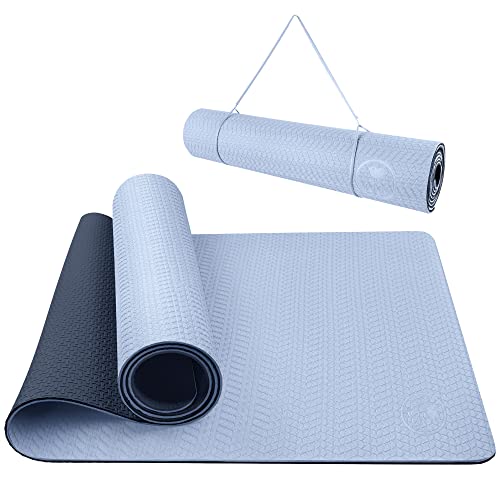
The IUGA Yoga Mat uses SGS-certified TPE material, which means it’s free of latex and PVC, so you get a lightweight, non-toxic surface that’s kinder to both you and the planet. At just 1.8 pounds and 6 mm thick, it’s easy to toss over your shoulder with the included carrying strap, yet still offers enough cushion to protect your knees during floor poses. The double-sided grip (textured top, bone-pattern bottom) helps keep you steady during practice, making this a practical option for anyone who wants eco-friendly gear without sacrificing stability.
The 6 mm of TPE padding won’t feel as plush as thicker mats like the Amazon Basics Extra Thick Yoga Mat (half an inch), especially on hardwood or tile. But that thinner profile means less bulk to carry, and the middle-layer mesh is designed to resist tearing, which should help the mat hold up over time. If you want a non-toxic, portable mat that stays put during practice, the IUGA is worth a look.
Product photos
JadeYoga Harmony Yoga Mat

What We Like
- Natural rubber for superior grip
- No PVC, phthalates, or heavy metals
- Tree planted with each mat sold
Trade-offs
- Heavier than many beginner mats (4.2 lb)
- Open-cell rubber absorbs moisture and sweat
- Thinner cushioning than extra-thick mats
At 4.2 pounds, this mat is noticeably heavier than the Gaiam Essentials (3.0 lb) or the YOGATI (1.9 lb), so if you carry your mat to class or across town, that extra weight adds up. But the trade-off is a natural rubber surface that grips well, even when your palms get sweaty in a hot flow. The open-cell texture is the same material that the manufacturer says is the top choice of yoga teachers worldwide. And it’s free of PVC, phthalates, and harsh chemicals, so you’re not exposing yourself to those substances during your practice.
The thinner 3/16-inch cushioning means you’ll feel the floor more than you would on a 1-inch Retrospec Solana. That’s fine for balancing poses and standing work, but if your knees or wrists are sensitive on hard surfaces, you might want to double up with a towel or look at a thicker mat. Every mat sold also plants a tree through Trees for the Future, so you’re supporting reforestation with your purchase. If you are new to yoga and want grip, natural materials, and a cleaner practice, this is a thoughtful, durable choice that grows with you.
Product photos
How We Evaluated Beginner Yoga Mats
Our research started with the technical specifications that define a mat’s performance: thickness, weight, material composition, and surface texture. We cross-referenced these specs against patterns in owner feedback to understand how each mat holds up during actual practice sessions. We also reviewed expert round-ups from certified instructors to identify which features matter most for new practitioners.
The four criteria that guided our selections were cushioning for joint comfort, surface grip for safety during standing and balancing poses, portability for carrying to and from class, and material quality for durability and ease of cleaning. A beginner does not need a competition-grade mat. They do need reliable traction and enough padding to make floor poses tolerable.
A research-led evaluation has limits, we did not put every mat through a controlled wear test. Instead we relied on manufacturer data about thickness and materials, combined with consistent themes from long-term owner reviews. When multiple users report the same issue, like a mat sliding on hardwood or a smell that lingers, we take that seriously. For a deeper look at how we approach this category, our comprehensive yoga mat guide covers the full selection process.
What To Look For In Beginner Yoga Mats
Choosing your first mat comes down to balancing cushioning, grip, weight, and material. A mat that is too thin hurts your knees; one that is too thick makes balancing harder. The right choice depends on your floor type, how far you carry it, and whether you prefer natural or synthetic materials.
A good beginner mat has enough cushioning to protect joints. It also needs a textured surface that grips the floor and your hands, a weight under four pounds for easy transport, and a material that matches your sensitivity to latex or rubber smells.
Cushioning and Thickness
Thickness directly affects comfort and stability. A 5mm mat like the Gaiam Premium Yoga Mat balances joint protection with a firm surface for standing poses. Thicker mats, such as the 1-inch Retrospec Solana, work well for sensitive knees during kneeling poses but can make balancing poses feel less stable. Our guide to yoga mat thickness levels explains how each thickness range performs on different floor types.
Surface Grip and Traction
A mat that slides on the floor or lets your hands slip during downward dog undermines your practice. Closed-cell PVC mats offer consistent grip without absorbing sweat, while natural rubber mats like the JadeYoga Harmony provide superior traction but can feel grippier when wet. Textured surfaces help beginners who tend to sweat during longer sessions. For more on this topic, check out our recommendations for non-slip yoga mats that prioritize traction.
Material and Portability
The material determines weight, durability, and environmental impact. PVC mats are durable and affordable but require airing out before first use. TPE mats like the IUGA Yoga Mat are lighter and more eco-friendly but may wear faster. Natural rubber mats offer the best grip but are heavier, the JadeYoga Harmony weighs 4.2 pounds. Beginners carrying a mat to a studio should prioritize weight under 3 pounds. Our guide to yoga mat materials breaks down the pros and cons of each type.
- Check the mat’s weight if you plan to carry it to class regularly.
- Confirm the length fits your height, 68 inches works for most, but taller users need 72 inches or more.
- Read care instructions before buying; some mats require hand washing only.
- Allow 2-3 days of airing out for new PVC or NBR mats before your first session.
- Consider a mat with alignment lines if you struggle with foot and hand placement.
A mat that is too thick for your practice style will frustrate you more than one that is slightly too thin.
Beginner Yoga Mats Compared
The table below compares all ten beginner yoga mats across the key specs that matter most for new practitioners, thickness, weight, length, material, and standout features.
| Product | Thickness | Material | Weight |
|---|---|---|---|
| Gaiam Premium Yoga Mat | 5mm | 6P-free PVC | 2.6 lbs |
| Gaiam Essentials Yoga Mat | 6mm | 6P-free PVC | 3.0 lbs |
| YOGATI Yoga Mat with Alignment Lines | 6mm | Dual Layer TPE | 1.9 lb |
| Manduka Begin Yoga Mat | 5mm | TPE foam / natural rubber | 2.1 pounds |
| Amazon Basics Extra Thick Yoga Mat | 0.5 inches | NBR foam | 2.2 pounds |
| Retrospec Solana Extra Thick Yoga Mat | 1 inch | BPA-free, latex-free | 2.2 pounds |
| Circuit Fitness by Marcy Non-Slip Mat | 6mm (1/4 inch) | Closed-cell TPE | 1.5 pounds |
| NewMe Fitness Printed Poses Yoga Mat | 5mm | BPA-free, latex-free, phthalate-free PVC | 2.6 lb |
| IUGA Yoga Mat | 6mm | TPE | 1.8 lbs |
| JadeYoga Harmony Yoga Mat | 3/16'' | Natural open-cell rubber | 4.2 pounds |
Frequently Asked Questions
What thickness is best for a beginner yoga mat?
Most beginners do well with a 5mm to 6mm mat. This range cushions knees and elbows during floor poses while still providing enough stability for standing balances. If you practice mainly on hardwood or have sensitive joints, consider a 1-inch extra-thick mat like the Retrospec Solana.
How do I clean a yoga mat?
The cleaning method depends on the material. PVC and TPE mats can be wiped with a diluted soap-and-water solution and air dried. NBR mats like the Amazon Basics Extra Thick Yoga Mat require hand washing only. Natural rubber mats need gentle cleaning to avoid breaking down the surface. Always check the manufacturer’s care label.
What is the difference between PVC and natural rubber yoga mats?
PVC mats are synthetic, affordable, and durable with good closed-cell grip. Natural rubber mats offer superior traction and are more eco-friendly but weigh more and can trigger latex allergies. PVC mats often require airing out before first use, while natural rubber mats absorb sweat and need more frequent cleaning.
Should I get a yoga mat with alignment lines?
Alignment lines help beginners learn proper hand and foot placement without looking at an instructor. Mats like the YOGATI Yoga Mat with Alignment Lines are useful for standing poses and transitions. If you prefer a clean surface without visual guides, a standard mat works just as well.
How long do beginner yoga mats last?
A well-cared-for PVC or TPE mat typically lasts six to twelve months of regular practice. Natural rubber mats can last longer but require careful cleaning. Signs it is time to replace include peeling surfaces, worn grip, or permanent indentations that affect stability. For a broader selection, our list of best yoga mats includes durable options for every practice level.
The Bottom Line
The Gaiam Premium Yoga Mat is the best overall choice for most beginners because it balances cushioning, grip, and portability without breaking the bank. Its 5mm thickness works on studio floors and home carpets alike, and the textured surface keeps you stable as you learn new poses. If you have sensitive joints or practice on very hard floors, the Retrospec Solana’s 1-inch padding delivers serious comfort.
Budget-minded shoppers will find real value in the Amazon Basics Extra Thick Yoga Mat, while visual learners should consider the YOGATI Yoga Mat with Alignment Lines for built-in form guidance. Eco-conscious beginners have two strong options: the IUGA Yoga Mat for lightweight TPE construction and the JadeYoga Harmony for natural rubber grip with a tree-planting program.
The single most important factor is finding a mat that makes you want to unroll it. A mat that is too thin, too heavy, or too slippery will sit in the corner. Pick one that fits your floor, your body, and your schedule, and the practice will follow.
