
10 Best Chest Exercisers in 2026
This post contains affiliate links. As an Amazon Associate, we earn from qualifying purchases.
For home chest training without a bulky machine, the Lifepro ShredForce Twister Arm Trainer earns our best overall spot. It combines a built-in repetition counter with smooth hydraulic resistance that works for everything from rehab to heavy pressing. The FLYBIRD Twister Arm Trainer offers unmatched 3-in-1 versatility, while the Bells of Steel Chest Expander delivers adjustable spring resistance for progressive strength gains.
Building a strong chest at home usually means choosing between a clunky bench setup or a cheap resistance band that doesn’t offer real progressive overload. The real challenge is finding a compact device that actually challenges your pecs through a full range of motion without taking over your living room.
This guide is based on a deep dive into manufacturer specifications, expert round-ups on effective training methods, and patterns we found in thousands of owner reviews. We evaluated each exerciser on resistance quality, build stability, adjustability, and storage footprint to help you find the right fit for your space and goals.
Top 10 Chest Exercisers in the Market
Certain content that appears on this site comes from Amazon. This content is provided "as is" and is subject to change or removal at any time.
The Best Chest Exercisers, Reviewed
Lifepro ShredForce Twister Arm Trainer

What We Like
- Built-in repetition counter tracks sets
- Stores flat for easy packing
Trade-offs
- Hydraulic resistance lacks the snap of spring-based units
- Heavier than the 2.5 lb EAST MOUNT trainer
A beginner can start at 22 pounds and a seasoned lifter can push up to 440 pounds across ten resistance levels, so this one unit covers both ends of the strength spectrum. The hydraulic system delivers smooth, consistent load through the full range of motion, avoiding the sudden snap you get from spring-based expanders. That steady tension makes it especially useful for chest presses, tricep extensions, and shoulder raises where you want control over every inch of the press. The built-in repetition counter saves you from losing count mid-set, and the whole thing folds flat to about the size of a laptop bag, so it slips into a suitcase or gym duffel without complaint.
FLYBIRD Twister Arm Trainer

What We Like
- 15-level hydraulic resistance from 22 to 440 lbs
- 12 adjustable handle positions fit different arm spans
- Stable triangle frame with double-layer titanium steel
Trade-offs
- Resistance bands not included for 3rd mode
- 6.0 lb weight feels light for heavy-duty bench work
- Handle length adjustment requires manual knob tightening
A 22-to-440-pound adjustable hydraulic cylinder across 15 levels means you can start with a gentle press and work your way up to serious resistance without buying new gear. That range alone makes this twister trainer a smart pick for anyone sharing equipment or progressing through different strength phases. The 12-position sliding handle also lets you match the grip width to your body, which helps keep form honest and shoulders happy.
A 6.0-pound frame makes this model easy to store and carry, and an included backpack adds to its portability. It won’t give you the same anchored feel as a dedicated chest press station like the GMWD Chest Press Machine, which weighs 83 pounds. But for home gyms where space and budget are tight and you want one tool that does chest, arms, and core without cluttering the room, this FLYBIRD earns its keep. Also, the resistance bands for the third mode are not included, so you’ll need to buy those separately if you want the full 3-in-1 experience.
Product photos
Bells of Steel Chest Expander

What We Like
- Adjustable 40-140 lb spring resistance
- Targets chest, arms, and back
- Moderate knurling for grip
- Beginner to advanced friendly
Trade-offs
- Must use two coils per side to avoid damage
- No built-in rep counter or display
Forty to 140 pounds of adjustable spring resistance means you can start light and work your way up without buying new gear. The Bells of Steel Chest Expander uses simple add-or-remove springs, so you control exactly how much force you feel on each row, curl, or fly. That flexibility makes it a natural fit for anyone who wants to build lean chest, arm, and back muscle at home without a bulky machine. The moderate knurling on the handles keeps your grip secure even when your palms get sweaty, which is a small but welcome detail for longer sets.
The trade-off is that springs require a bit more attention than some other designs. You have to remember the manufacturer’s rule: always use at least two coils on each side to avoid over-stretching and damaging the springs. It’s not a dealbreaker, just a reminder that this expander rewards a little patience and attention. If you prefer a set-it-and-forget-it feel with a rep counter, the hydraulic options might suit you better. But if you like dialing in your own tension and keeping things simple, this one earns its spot.
EAST MOUNT Twister Arm Exerciser

What We Like
- Adjustable 22-440 lb resistance via knob
- Stable triangle center design
- Folds for easy storage and carry
- Double-layer steel tube holds 440 lbs
Trade-offs
- No built-in repetition counter
- Triangle base limits placement on narrow surfaces.
An adjustable resistance range from 22 to 440 pounds means this twister can grow with you from light warm-ups to serious pushing strength. The knob adjusts resistance easily, so you can dial in what your chest and shoulders need without swapping parts. That makes it a smart pick if you want one tool that adapts as you get stronger, especially when space or budget is tight.
The EAST MOUNT Twister Arm Exerciser holds up to 440 lbs of bearing capacity, so it can handle heavy resistance without breaking down. You won’t find a repetition counter here, meaning you’ll have to count your reps manually. But if you want a compact trainer that stores easily and adjusts resistance with a simple knob twist, this unit delivers reliable performance without extra frills.
Merach Twister Arm Trainer
What We Like
- Protective housing reduces pinch risk
- Fully sealed hydraulic cylinder for steady resistance
- Stable triangular structure with reinforced rivets
- Ergonomic PU handle, folds for storage
Trade-offs
- At 5.3 lb, heavier than some portable twisters
- Hydraulic cylinder limits max resistance to 440 lb
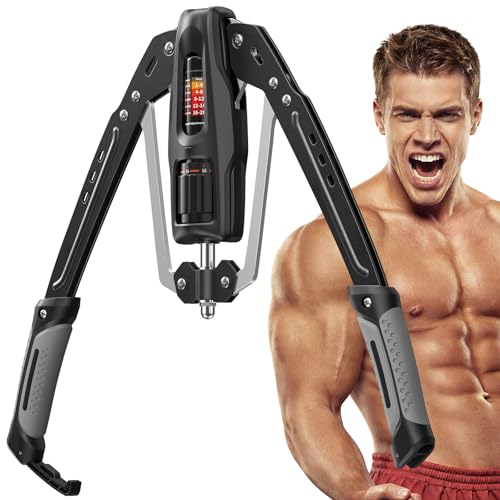
A fully sealed hydraulic cylinder and reinforced triangular frame give this trainer a noticeably solid feel during chest presses and shoulder moves. The protective housing around the cylinder and strength gauge cushions accidental bumps and cuts the risk of pinch injuries, which matters when you’re pushing hard at home without a spotter. With 2-20 resistance levels spanning 22 to 440 pounds, you can start light and work up gradually, ideal for anyone who values steady progression over flashy numbers. The double-layer high-density carbon steel construction adds to the durability, so it should hold up to regular use without bending or leaking.
The Merach is heavier than the EAST MOUNT Twister Arm Exerciser (5.3 lb vs. 2.5 lb), so it’s less suited for tossing in a gym bag between sessions. Still, if your priority is a sturdy, safety-minded chest expander that stays stable during intense reps and stores easily at home, this design delivers exactly that without unnecessary frills.
FLYBIRD CT1 Twister Arm Trainer

What We Like
- 20 resistance levels from 22 to 440 lb
- 12 adjustable handle positions for fit
- 3-in-1: chest, ab roller, band hooks
- Reinforced steel frame for stability
Trade-offs
- Resistance bands not included for extra exercises
- Compact size limits full chest stretch for tall users
Twenty separate resistance levels spanning 22 to 440 lb mean you can start with a light squeeze and climb steadily without ever feeling stuck between jumps. That progressive range is the main reason this trainer suits someone who wants to grow into their equipment rather than outgrow it quickly. The 12-position handles also let you dial in the exact arm span for your height and preferred pressing angle, so both a beginner and an intermediate lifter can find a comfortable groove. On top of that, the triangular steel frame with reinforced rivets keeps everything stable as you push harder. The included ab roller components turn it into a core tool when you want a break from pressing.
The compact 9.1-inch body makes it easy to store, but the pressing motion is narrower than what you get from a full-sized chest fly machine like the GOIMU Chest Fly Machine, which has a 44.9-inch length and 53.5-inch width. You also need to supply your own resistance bands if you want to use the built-in hooks for extra movements, since the package only includes the hydraulic unit, ab roller parts, backpack, knee pad, and tools. For someone who values portability and a wide resistance range over a gym-sized fly motion, this is a smart, space-friendly option.
GMWD Chest Press Machine
What We Like
- 15 adjustable arm heights for precise starting position
- Connecting rod keeps resistance stable through motion
- Scissor-like motion mimics dumbbell press arc
Trade-offs
- At 83 lb, it's heavy to move around a home gym
- Floor footprint is narrow but long at 43.3 inches
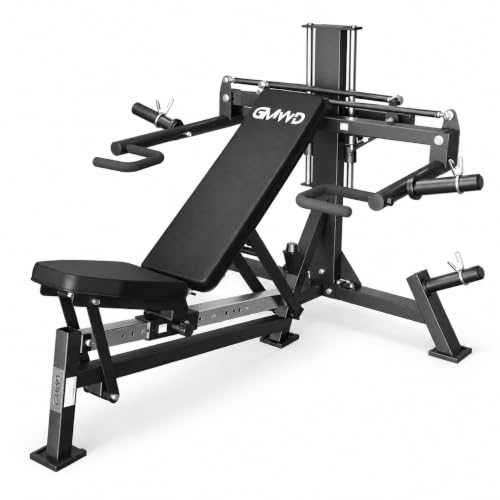
Fifteen arm-height positions let you dial in the exact start point for your shoulder mobility, which is a lifesaver if you’ve ever felt a pinch doing flat bench. This machine suits anyone who wants press-like movement patterns with the safety and stability of a guided path, especially if you train alone or are coming back from an injury.
An 83-pound weight and 43.3-inch length mean this isn’t something you stash in a closet or haul to the garage corner every session. Compared to the GOIMU Chest Fly Machine at 78.3 pounds, the GMWD offers a different motion profile with adjustable arm heights. If your space is tight or you prefer a quick, portable chest workout you can do in front of the TV, a hydraulic twister trainer like the Lifepro ShredForce would take up far less room. For a permanent home gym setup where you want press-like isolation with customizable starting positions, this machine earns its place.
Product photos
GOIMU Chest Fly Machine
What We Like
- 400 lb weight capacity for heavy loading
- 6 adjustable arm positions for custom fit
- Dual overhead resistance cams for independent rows
- High-density padding with premium leather upholstery
Trade-offs
- At 78.3 lb, moving it solo is tough
- Takes up 13.5 sq ft of floor space
- Plate-loaded only, no built-in weight stack
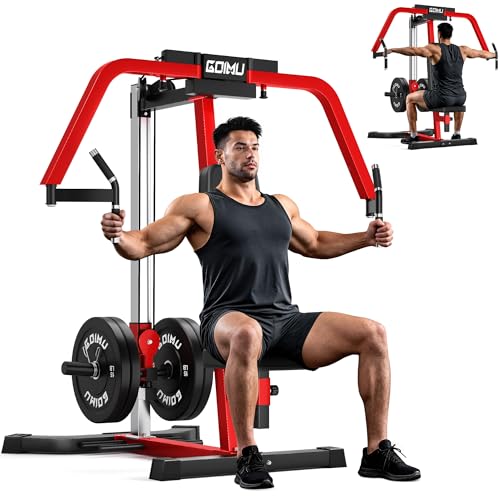
A 400-pound weight capacity on a 14-gauge steel frame means this machine can handle serious loading without wobbling, which matters when you’re pushing for chest and rear delt growth. The six adjustable arm positions and dual overhead cams let you work each side independently, mimicking natural fly and reverse-fly motion. The freestyle design is built for anyone with a home gym who wants a dedicated pec deck that feels like a commercial club piece, not a compromise.
Space and heft are the main considerations here. At 78.3 pounds and covering 13.5 square feet, this isn’t something you stash in a closet or move between rooms on a whim. It’s a long-term investment in focused upper-body work.
Product photos
VortexMotion Twister Arm Trainer

What We Like
- Two-stage adjustable resistance for progressive overload
- Ergonomic anti-slip foam handles for secure grip
- Lightweight detachable design for portability
- Steel core with protective sleeve for safety
Trade-offs
- Resistance range tops out at 110 lbs
- No hydraulic resistance for smoother motion
Resistance that shifts from 70 to 110 pounds in two clear stages means you can start manageable and build up without buying a second tool. That progressive overload sweet spot makes this a smart pick if you’re easing into chest work at home or want something that grows with you. The ergonomic foam grips and steel core wrapped in a protective sleeve keep things safe and comfortable even when you push hard. And because the whole thing detaches into a compact package, it tucks into a closet or travel bag without fuss, perfect for small apartments or office breaks.
The spring-based design delivers consistent power output, but it lacks the hydraulic resistance found in some other trainers, such as the Lifepro ShredForce Twister Arm Trainer, which offers a much wider resistance range. If you prefer ultra-smooth motion or plan to lift well above 110 pounds, the VortexMotion might leave you wanting. But for anyone focused on steady, portable chest training with clear progression steps, this is a straightforward, no-nonsense tool that does exactly what it promises.
Product photos
CALCHELE Power Twister Bar

What We Like
- Non-slip rubber grips with wrist straps
- Carbon steel spring for steady tension
- Four resistance levels from 20 to 132 lbs
- Lightweight and portable for quick workouts
Trade-offs
- Spring-loaded design can snap back if straps unused
- No adjustable resistance within a single unit
- Requires slow controlled movements for safety
A carbon steel spring that delivers firm resistance through every bend and squeeze means this bar gives you constant tension for building chest, arm, and shoulder strength without needing a rack of plates. The non-slip rubber grips and built-in wrist straps help you stay in control when your hands get sweaty, so you can focus on slow, steady reps instead of worrying about the bar snapping back. It suits someone who wants a straightforward, no-fuss upper-body workout at home, during TV time, or while traveling, and who appreciates having four resistance options from 20 to 132 lbs to match their level.
Compare that to the Lifepro ShredForce Twister Arm Trainer, which uses hydraulic resistance adjustable from 22 to 440 lbs in one unit, but at 5.1 pounds it is heavier. The CALCHELE is the lighter, more travel-friendly option for anyone who prefers the simplicity of a spring-loaded bar and does not mind committing to a single resistance level per purchase.
Product photos
How We Evaluated Chest Exercisers
We started by breaking down the three main resistance types, hydraulic, spring, and plate-loaded, to understand how each affects the feel of a chest press or fly motion. Hydraulic systems offer smooth, controlled movement ideal for rehabilitation and steady-state pressing, while spring-based units provide a snappy, explosive feel that some lifters prefer for power work. Plate-loaded machines, like the GMWD and GOIMU picks, deliver the most authentic gym experience but demand dedicated floor space.
Our criteria focused on what actually determines whether a chest exerciser will work for you long-term. Resistance range and adjustability came first, because a device that maxes out too early or skips the lighter settings won’t support progressive overload. Build quality and stability mattered next, a wobbly frame or poorly welded joint is dangerous under load. We also weighed portability and storage, since most home exercisers need to stow their gear between sessions.
We didn’t test these devices ourselves, but we cross-referenced manufacturer specs with expert commentary on proper form and training principles. Owner feedback patterns helped us spot real-world durability issues and comfort concerns that spec sheets don’t capture. This approach gives you a clear, honest picture of what each exerciser offers without pretending we spent weeks in a lab.
What To Look For In Chest Exercisers
Choosing a chest exerciser means balancing resistance type, adjustability, and the space you can dedicate to it. Here is what matters most.
Focus on resistance type (hydraulic for smooth control, spring for explosive feel, plate-loaded for gym-like weight), a wide enough resistance range to let you progress, and a stable frame that won’t tip under load. Storage footprint is the tiebreaker for most home setups.
Resistance Type and Feel
Hydraulic resistance uses fluid cylinders to create smooth, consistent tension throughout the entire pressing motion. This makes it ideal for controlled reps, rehabilitation work, and anyone who wants to avoid the jarring snap of spring-based units. The Lifepro ShredForce and FLYBIRD twister trainers use this system, and it is why they feel closer to a cable machine than to a chest expander.
Spring resistance, found on the Bells of Steel Chest Expander and the CALCHELE Power Twister Bar, offers a different sensation entirely. The resistance ramps up as you compress the spring, delivering maximum tension at the peak of the press. This can feel more natural for explosive movements, but the snap-back risk means you need to control the return phase carefully, especially if you skip the safety straps.
Adjustability and Progressive Overload
A chest exerciser is only useful if it can grow with you. Look for models with multiple resistance levels that you can increase in small, manageable steps. The FLYBIRD CT1 offers 20 levels from 22 to 440 pounds, which covers everything from light toning to serious pressing. The Bells of Steel unit adjusts from 40 to 140 pounds by adding or removing spring coils, though you must use two coils per side to avoid damaging the unit.
For hydraulic models, the adjustment mechanism matters. Knob-based systems, like those on the EAST MOUNT and Merach trainers, let you dial in resistance quickly without swapping parts. Spring-based expanders typically require you to change coil configurations, which takes a bit more time but offers clear, repeatable settings. If you plan to follow a structured chest workout routine, easy adjustability between sets is a real time-saver.
Build Quality and Stability
The frame is everything on a chest exerciser, because an unstable base turns every rep into a balancing act. Look for triangular or A-frame designs that spread the load across three contact points. The FLYBIRD Twister uses a double-layer titanium steel triangle rated to 440 pounds, which is the gold standard for stability in this category. The GMWD and GOIMU machines use heavier steel frames that anchor to the floor, but those are in a different class entirely.
Check the welds and pivot points carefully in owner photos. Reinforced rivets, like those on the Merach trainer, are a good sign. Avoid models with plastic components in the load-bearing path, they can crack under repeated stress. A lightweight unit may be portable, but it will also shift around on the floor during heavy pressing unless it has rubber feet or a wide base.
- Check the weight capacity rating against your current pressing strength plus a 20-pound buffer for progression.
- Look for rubber or foam padding on the base to prevent floor slipping and protect hardwood.
- Verify that handle grips are non-slip and wide enough for your hand size, narrow foam grips can cause discomfort during high-rep sets.
- Measure your ceiling height if you plan to use a chest press machine like the GMWD, which requires vertical clearance for the full range of motion.
- Confirm the folded or disassembled dimensions fit your storage space before buying.
A chest exerciser that feels solid at the store will feel solid a year later. Compromising on build to save space usually means buying twice.
Chest Exercisers Compared
The table below compares all ten chest exercisers across the criteria that matter most for home use. It covers resistance type, weight range, adjustability, and portability, so you can see at a glance which model fits your training style and available space.
| Product | Resistance Range | Weight | Dimensions |
|---|---|---|---|
| Lifepro ShredForce Twister Arm Trainer | 22-440 lb | 5.1 lb | 16.5 x 6.8 x 1.6 in |
| FLYBIRD Twister Arm Trainer | 22-440 lbs | 6.0 lbs | 9.1 x 2.8 x 13.8 in |
| Bells of Steel Chest Expander | 40-140 lbs | N/A | N/A |
| EAST MOUNT Twister Arm Exerciser | 22-440 lbs | 2.5 pounds | 6.3 x 1.0 x 16.5 inches |
| Merach Twister Arm Trainer | 22-440 lb | 5.3 lb | 16.7 x 1.9 x 6.4 in |
| FLYBIRD CT1 Twister Arm Trainer | 22-440 lb | N/A | 9.1 x 2.8 x 13.8 in |
| GMWD Chest Press Machine | N/A | 83.0 pounds | 43.3 x 8.3 x 23.6 inches |
| GOIMU Chest Fly Machine | N/A | 78.3 lb | 44.9 x 53.5 x 65.2 inches |
| VortexMotion Twister Arm Trainer | 70-110 lbs | N/A | N/A |
| CALCHELE Power Twister Bar | 20-132 lbs | 2.7 pounds | N/A |
Frequently Asked Questions
Can chest exercisers replace a bench press?
Not entirely, but they can build significant chest strength and size when used consistently. A chest exerciser like the Lifepro ShredForce or FLYBIRD CT1 provides continuous tension through the full range of motion. Some lifters find that more effective for muscle growth than the lockout phase of a barbell bench press. Pairing a twister trainer with bodyweight chest exercises like push-ups gives you a complete home chest workout without a bench.
How much resistance do I need in a chest exerciser?
Start with a model that covers at least 20 pounds for beginners and intermediate lifters. The FLYBIRD CT1 offers 20 resistance levels from 22 to 440 pounds, which accommodates everyone from rehab patients to advanced athletes. The Bells of Steel Chest Expander covers 40 to 140 pounds, which suits most home users through the first year of consistent training. If you can press more than 150 pounds for controlled reps, look at the plate-loaded GMWD or GOIMU machines.
Are hydraulic chest exercisers better than spring-based ones?
Neither is objectively better, they serve different preferences. Hydraulic systems provide smooth, consistent resistance that feels closer to a cable crossover and is safer for rehabilitation work. Spring-based units like the Bells of Steel Chest Expander deliver a snappier, more explosive feel that some lifters prefer for power development. If you have joint concerns, hydraulic is usually the safer choice because there is no snap-back risk.
Can I use a chest exerciser for other muscle groups?
Many of these devices are designed for multi-muscle use. The FLYBIRD Twister Arm Trainer works as a chest press, ab roller, and band anchor point, making it a true 3-in-1 tool. The Lifepro ShredForce targets shoulders and triceps alongside the chest when you adjust your arm angle. For targeted chest isolation, the GOIMU Chest Fly Machine is purpose-built for fly movements and is one of the best chest exercise machines for home gym quality.
How do I maintain a chest exerciser?
Hydraulic models need minimal maintenance, wipe down the cylinders after sweaty sessions and check for fluid leaks around the seals every few months. Spring-based expanders require periodic inspection for metal fatigue or rust, especially if you store them in a humid garage. For plate-loaded machines like the GMWD, lubricate the pivot points with silicone spray every six months and tighten all bolts after the first few workouts, as the frame settles.
The Bottom Line
The Lifepro ShredForce Twister Arm Trainer is the best overall chest exerciser for most home users. It balances smooth hydraulic resistance, a built-in rep counter, and a flat-storage design that fits under a bed or in a closet. It works for light rehab work and heavy pressing alike, making it a true long-term investment rather than a temporary gadget.
If your budget is tighter, the EAST MOUNT Twister Arm Exerciser delivers the same 22 to 440-pound resistance range as premium models at a fraction of the cost. It lacks the rep counter and feels lighter on the floor, but it folds up small and gets the job done. For home gym owners with dedicated floor space, the GMWD Chest Press Machine offers the most authentic dumbbell-press feel in a guided frame.
The single most important thing to remember is that resistance adjustability matters more than maximum weight. A device you can progress through in small steps will keep challenging your chest for years, while a one-setting expander will collect dust after six weeks. Choose the one that fits your space, feels good in your hands, and lets you add resistance in manageable increments.
