
9 Best Climbing Shoes For Gym Bouldering in 2026
This post contains affiliate links. As an Amazon Associate, we earn from qualifying purchases.
For gym bouldering, the SCARPA Instinct VSR Climbing Shoes earn the best overall spot thanks to their sticky Vibram XS Grip 2 rubber and generous toe rubber that handles hooks and bat hangs. The synthetic upper does not stretch much over time. The SCARPA Drago XT is the best for steep bouldering, while the EVOLV Defy is the best budget-friendly option for newer climbers.
The challenge with gym bouldering shoes is finding the right balance between sensitivity for feeling tiny chips and enough support to stand on small edges for those powerful, dynamic moves. A shoe that feels amazing on a slab can feel sloppy on an overhang, and vice versa.
We break down the nine best options by what they do best.
Top 9 Climbing Shoes For Gym Bouldering in the Market
Certain content that appears on this site comes from Amazon. This content is provided "as is" and is subject to change or removal at any time.
The Best Climbing Shoes For Gym Bouldering, Reviewed
SCARPA Instinct VSR Climbing Shoes

What We Like
- Sticky Vibram XS Grip 2 rubber
- Large toe rubber for hooks and bat hangs
- Synthetic upper won't stretch much
Trade-offs
- Synthetic upper offers less break-in room
- Runs small; sizing up from street shoe recommended
The Vibram XS Grip 2 rubber on this shoe delivers a sticky, confident hold on gym volumes and steep boulder problems, so you can trust your foot placements even on slick plastic. That same rubber wraps a generous patch over the toe, giving you the coverage needed for toe hooks and bat hangs without worrying about wear or slip. For climbers who want a shoe that balances sensitivity with enough structure to handle overhanging routes, this is a versatile pick that works for both casual sessions and focused projecting.
Most VSR owners suggest sizing similar to your street shoe size or larger, since the synthetic upper doesn’t stretch much, so getting the fit right from day one is critical. The Vibram XS Grip 2 rubber is both stiff and sticky, giving you grip for steeper walls and overhanging boulders. A large patch of rubber on top provides coverage for toe hooks and bat hangs.
Product photos
SCARPA Drago XT Climbing Shoes

What We Like
- Vibram XS Grip2 rubber for tiny footholds
- Highly downturned last for overhung boulders
- Microsuede upper for snug fit
Trade-offs
- Synthetic upper stretches very little over time
- Aggressive downturn limits all-day comfort
- Requires ½ to 2 sizes down for best fit
The 3.5mm Vibram XS Grip2 outsole is fine-tuned for extra friction and confidence on the smallest footholds, making it a strong choice for sport climbing and bouldering. The highly downturned, highly asymmetric last directs power to the toe for technical climbs and overhung boulders. It’s built for climbers who want sensitivity and precision on steep terrain, though the aggressive shape means it’s not an all-day comfort shoe.
The Drago XT’s highly downturned and asymmetric shape delivers extra power for technical climbs and overhung boulders. But that aggressive design means it’s not a shoe you’ll want to wear for a full session of slab climbing or long warm-ups. Compared to the Black Diamond Momentum, which uses a neutral last for a flatter profile, the Drago XT is more specialized for overhung routes. If your climbing is mostly vertical or slabby, the Momentum may serve you better. But if you’re focused on technical climbs and overhung boulders, the Drago XT delivers the power and precision you need.
La Sportiva Skwama Climbing Shoes

What We Like
- Split-sole reduces edge deformation
- Sticky rubber toe patch for toe hooks
- P3 System maintains down-turned shape
- Patented S-Heel for secure heel hooks
Trade-offs
- Soft sensitive design offers less edging support
- Down-turned shape less comfortable for all-day wear
A 4mm Vibram XS Grip2 sole and a split-sole construction that spreads when weighted mean this shoe delivers remarkable stick and precision on gym boulder problems. The P3 System maintains the down-turned shape over time, so you get consistent performance on technical moves. That soft, sensitive feel suits climbers who want to sense every chip and smear, especially on routes where toe hooks and heel hooks matter. The microfiber and leather upper breathes well during a long session, and the single hook-and-loop closure makes slipping them on between attempts quick and easy.
The Skwama’s softness means you’ll feel every tiny edge, so if you need a stiff platform for microfootholds, a firmer shoe like the SCARPA Instinct VSR might suit you better. The down-turned last prioritizes performance over all-day comfort, making these ideal for focused bouldering sessions rather than casual top-roping. For the gym climber chasing hard problems and wanting maximum sensitivity without sacrificing heel security, this shoe balances agility and grip in a way that rewards precise footwork.
Product photos
La Sportiva Solution Comp Climbing Shoes

What We Like
- Extra rubber for toe hooking
- P3 system retains downturned shape
- Soft and sensitive for feel
- Precision fit with adjustable strap
Trade-offs
- Very snug high-performance fit
- Lined only in toe and arch areas
The Vibram XS Grip 2 rubber and increased toe coverage make this shoe a specialist for toe hooking on steep gym boulder problems. A single-strap slipper design with a fast lacing system lets you dial in the fit precisely, while the P3 Permanent Power Platform keeps the aggressive downturned shape working for you move after move. This is a soft, sensitive shoe that gives you direct feedback from the wall, so you feel every edge and smear. It suits climbers who spend their sessions on overhangs, volumes, and technical boulders where toe hooks are the difference between sticking the move and peeling off.
The lining only covers the toe box and arch, which keeps the shoe light and breathable but means less cushion elsewhere. Compared to the SCARPA Instinct VSR, which offers a more balanced all-around performance for bouldering and sport climbing, the Solution Comp leans harder into specialized toe hooking and sensitivity. That makes it a fantastic second shoe for gym boulderers who already have a do-everything pair and want something that excels on technical, hook-heavy problems.
Product photos
Black Diamond Momentum Climbing Shoes
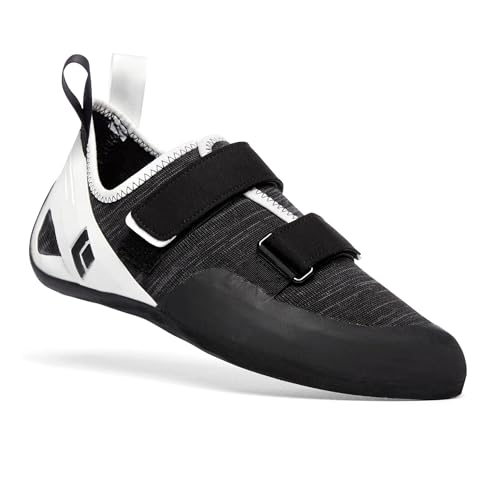
What We Like
- Breathable engineered knit upper
- Two straps for fast on/off
- Soft flex midsole for smearing
- 4.3mm rubber for grip and durability
Trade-offs
- Heavier than the SCARPA Instinct VSR at 0.9 pounds
- Neutral last lacks the downturn of aggressive bouldering shoes
The Momentum uses a 4.3mm rubber sole and a neutral last, both chosen for all-day comfort during long gym sessions or multi-pitch routes. The engineered knit upper breathes well, and the two hook-and-loop straps let you adjust the fit quickly between climbs. This is the shoe you reach for when you want to focus on footwork practice or volume training, not on breaking in a new pair of slippers.
The Momentum’s 4.3mm rubber sole balances grip and longevity, so you can climb all day on plastic or rock without worrying about wear. The soft flex midsole delivers reliable edging support while keeping sensitivity for smearing and technical footwork. That makes it a great choice for long gym sessions or multi-pitch routes where comfort matters more than a super aggressive fit.
Product photos
EVOLV Defy Climbing Shoes

What We Like
- Slight camber and asymmetric fit for precision
- Strap closure for easy on/off
- Medium volume suits average foot shapes
Trade-offs
- Not designed to be downsized for performance
The slight camber and asymmetric shape give you a more precise connection to the hold than a flat beginner shoe, so you can start working on footwork without feeling like you are fighting the shoe. It is a great starting point for anyone who wants a shoe that grows with their first few months in the gym, not one they will outgrow in a week.
The trade-off is that Evolv specifically says not to downsize these for a performance fit, so if you are looking for that aggressive, snug-to-the-point-of-pain feel, this is not it. Compared to the Scarpa Instinct VSR, which is built for a more aggressive, downturned fit, the Defy stays in the comfort zone. That makes it a smarter pick for the climber who wants to focus on learning technique rather than breaking in their gear. It is a relaxed, no-fuss entry into bouldering that lets you keep your street shoe size and just climb.
Ocun Advancer QC Bouldering Shoe
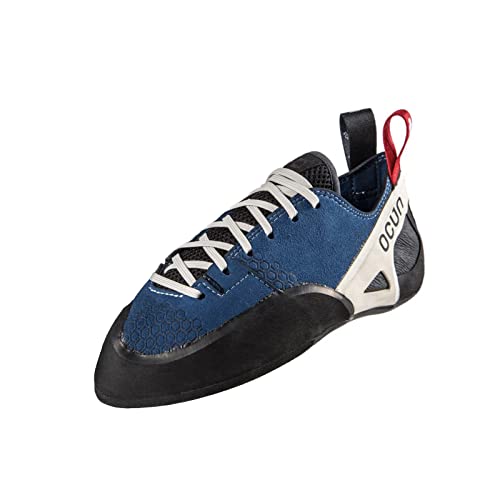
What We Like
- Quick Velcro closure for convenience
- Super sticky CAT 1.5 rubber sole
- Vegan construction with microfiber upper
- Slight downturn for climbing performance
Trade-offs
- Designed for Greek or Roman foot shapes
- Laces on LU model slow down adjustments between climbs
A slight downturn and low asymmetry mean this shoe is ready to help you push into harder bouldering problems without punishing your feet. The quick Velcro closure makes swapping shoes between attempts fast and easy, so you spend less time fumbling and more time on the wall. Ocun designed the Advancer QC for climbers who have outgrown beginner shoes and want more accuracy and support, but aren’t ready for the aggressive downturn of a high-end competition slipper. The CAT 1.5 rubber is sticky enough to trust on small holds, and the microfiber upper keeps the shoe lightweight and breathable for long gym sessions.
Compared to the Scarpa Instinct VSR, which has a more pronounced downturn for heel-hooking on steep angles, the Advancer QC feels more forgiving and comfortable for all-day training. This is a smart step up for anyone focused on steady progression in the gym.
Product photos
adidas KXS27 Climbing Shoe

What We Like
- Aggressive downturn for steep terrain
- Unlined microfiber for easy break-in
- Minimal midsole toe for sensitivity
- Snug fit with hook-and-loop strap
Trade-offs
- Heavy at 2.5 pounds for a climbing shoe
- Aggressive downturn limits all-day comfort
The aggressive downturn shape is the standout feature here, it’s designed to hook onto holds on steep vertical or overhanging terrain, giving you that locked-in feeling when you’re pulling hard on gym boulders. The unlined microfiber upper means you won’t have to suffer through a brutal break-in period, and the minimal midsole under the toes keeps you sensitive to small footholds without losing stability. This shoe is built for climbers who prioritize performance on steep angles over all-day comfort.
At 2.5 pounds, the KXS27 is heavier than the SCARPA Drago XT at 0.9 pounds, which means it can feel more substantial on your feet during long sessions. That extra mass may contribute to a less nimble feel when moving quickly between boulders. The aggressive downturn shape is designed to lock you onto steep terrain, so it’s less suited for slab climbing or casual warm-ups. If you prioritize a lighter, more sensitive shoe for dynamic moves, the Drago XT is a better fit.
Five Ten Aleon Climbing Shoes

What We Like
- Concave toe box for steep climbing
- Ergonomic heel wraps for hooking power
- Hook-and-loop closure for quick adjustments
Trade-offs
- At 2.5 pounds, heavier than many gym shoes
The Five Ten Aleon’s concave toe box is built for steep gym bouldering, letting you toe into small holds on overhanging walls without slipping off. Its ergonomic heel wraps tightly around your foot, reducing dead space so every heel hook feels planted and secure. This makes it a strong match for climbers who rely on precise heel action on tricky volumes or roof problems, where confidence in your back foot matters most. The hook-and-loop closure also means you can yank them on and off quickly between attempts, no laces to fuss with.
At 2.5 pounds, these are heavier than a SCARPA Drago XT (0.9 pounds), so they’re built for stability rather than featherlight sensitivity. The concave toe box and ergonomic heel design target steep climbing and heel hooking, not delicate smearing on slab. If you want to feel every grain of rock, a lighter shoe like the Drago XT would serve you better.
Product photos
How We Evaluated Climbing Shoes For Gym Bouldering
We started by examining the technical specs that matter most in a gym environment: rubber compound, last shape, upper material, and closure system. A shoe’s rubber is its primary contact point, so we paid close attention to compounds like Vibram XS Grip 2 and CAT 1.5 that owners consistently report as sticky and long-lasting on gym holds.
Downturn angle and midsole stiffness were the next criteria. Aggressive downturns help lock onto small holds on overhung terrain, but a flatter last offers better comfort for volume climbing and slab work. We looked at how each shoe’s shape matched the demands of different bouldering styles, from steep roofs to technical vertical problems.
Fit and sizing were the third major factor. Climbing shoes often run small by design, and the amount of stretch in the upper determines whether that tight initial fit becomes comfortable after a few sessions. Durability reports for synthetic versus leather uppers were also considered. This gives a clear picture of what each shoe is built to do and who it is built for.
What To Look For In Climbing Shoes For Gym Bouldering
The right shoe depends on your foot shape, climbing style, and how much you value comfort versus precision. These four criteria will help narrow the field.
Focus on rubber compound, downturn angle, closure type, and upper material. A sticky rubber like Vibram XS Grip 2 helps on small holds, while a moderate downturn suits all-around gym use better than a full aggressive curve.
Rubber Compound
The rubber is what keeps you on the wall. Softer compounds like Vibram XS Grip 2 and CAT 1.5 offer excellent stickiness on slick gym holds and volumes, but they wear faster than harder rubbers. For gym bouldering, where you are constantly pulling on small edges and smearing on volumes, a sticky compound is worth the trade-off in longevity. Owners of shoes with Vibram XS Grip 2 consistently report confidence on tiny footholds that harder rubber would skate off.
Downturn and Last Shape
The downturn of the shoe determines how well it performs on steep terrain versus vertical or slab walls. A highly aggressive downturn, like the one on the adidas KXS27, locks the toes into a curved position that excels on overhangs but can feel uncomfortable for standing on flat volumes.
A moderate or slight downturn, like the Ocun Advancer QC uses, offers a compromise that works for most gym boulderers who climb a mix of angles. The last shape also affects how the shoe fits your foot, narrow lasts suit Greek or Roman foot shapes, while wider lasts accommodate square or Egyptian feet.
Closure System
Velcro straps and slippers offer quick on-and-off between boulder problems, which is a major convenience in a gym setting. Laces provide a more customizable fit but take longer to adjust. Most gym boulderers prefer hook-and-loop closures for speed, though a well-fitted slipper like the La Sportiva Skwama can be just as fast. Consider how often you take your shoes off between attempts, if you climb with friends and chat between problems, straps save time and hassle.
- Check the rubber compound: softer means more grip but faster wear.
- Match the downturn to your climbing style: aggressive for overhangs, moderate for all-around.
- Choose a closure that fits your pace: Velcro for quick changes, laces for precise adjustment.
- Consider upper material: synthetic stretches less, leather molds more to your foot.
A shoe that fits well and matches your typical wall angle will feel more natural than a shoe that is simply “better” on paper.
Climbing Shoes For Gym Bouldering Compared
The table below compares all nine picks side-by-side on rubber compound, downturn, closure, and weight so you can see the differences at a glance.
| Product | Closure | Upper Material | Weight |
|---|---|---|---|
| SCARPA Instinct VSR Climbing Shoes | N/A | Synthetic (minimal stretch) | 0.5 pounds |
| SCARPA Drago XT Climbing Shoes | N/A | Microsuede | 0.9 pounds |
| La Sportiva Skwama Climbing Shoes | Single hook and loop | Microfiber and leather | 1.0 pounds |
| La Sportiva Solution Comp Climbing Shoes | 1 Strap Hook & Loop | Laser-cut leather and microfiber | 1.0 pounds |
| Black Diamond Momentum Climbing Shoes | Two hook-and-loop straps | Engineered Knit | 0.9 pounds |
| EVOLV Defy Climbing Shoes | Strap | N/A | 1.0 pounds |
| Ocun Advancer QC Bouldering Shoe | Quick Velcro (QC) | Microfiber (vegan) | 1.3 pounds |
| adidas KXS27 Climbing Shoe | Hook-and-loop strap | Unlined microfiber | 2.5 pounds |
| Five Ten Aleon Climbing Shoes | Hook-and-loop | N/A | 2.5 pounds |
Frequently Asked Questions
How should climbing shoes fit for gym bouldering?
Climbing shoes should fit snugly with no dead space around the heel or toes, but they should not cause sharp pain. Most gym boulderers downsize half to two sizes from their street shoe size, depending on the brand and model. A shoe that is too loose will reduce precision on small holds, while one that is too tight can cause foot cramps during longer sessions.
What is the difference between a neutral, moderate, and aggressive climbing shoe?
A neutral shoe has a flat last and is comfortable for all-day wear, ideal for beginners or multi-pitch climbing. A moderate shoe has a slight downturn and offers a balance of comfort and performance for gym bouldering and sport climbing. An aggressive shoe has a strong downturn that curves the toes downward, maximizing power on steep overhangs but reducing all-day comfort.
Are soft or stiff climbing shoes better for bouldering?
Soft shoes offer more sensitivity and are better for smearing on volumes and feeling small features on gym holds. Stiff shoes provide more support for edging on tiny footholds and are better for vertical or slab climbing. For gym bouldering, many climbers prefer a soft to medium stiffness for the mix of volumes, chips, and overhangs.
How long do climbing shoes last for gym use?
Gym climbing shoes typically last six months to a year of regular use, depending on the rubber compound, how often you climb, and your footwork technique. Softer rubbers wear faster but offer more grip. Resoling can extend the life of higher-end shoes, but budget-friendly models are often replaced rather than resoled.
Can beginners use aggressive climbing shoes?
Beginners can use aggressive climbing shoes, but they are often less comfortable and may make learning proper footwork harder because the downturn does all the work. A moderate or neutral shoe like the EVOLV Defy is usually a better starting point, as it allows new climbers to develop technique without the discomfort of an aggressive last.
The Bottom Line
The SCARPA Instinct VSR is the best overall climbing shoe for gym bouldering. It delivers the sticky rubber and toe coverage that aggressive boulderers need, with a synthetic upper that maintains its fit over time. It is the right choice for climbers who spend most of their time on overhangs and want a shoe that hooks as well as it edges.
If you are new to bouldering or climbing on a budget, the EVOLV Defy offers a comfortable, easy-to-use entry point that still provides enough precision to build good footwork. For climbers focused on steep bouldering and technical problems, the SCARPA Drago XT or La Sportiva Skwama will give you the sensitivity and downturn to handle the hardest gym problems.
The single most important factor in choosing a climbing shoe is fit. No amount of sticky rubber or aggressive downturn will help if the shoe does not match your foot shape. Take the time to try on different brands and understand how each last works for your foot. Consider pairing your shoes with quality climbing ropes and strength training to round out your gym sessions.
