9 Best Commercial Elliptical Trainers in 2026
This post contains affiliate links. As an Amazon Associate, we earn from qualifying purchases.
For serious gyms and dedicated home workout spaces, the Precor EFX 833 Commercial Elliptical delivers the smoothest, most natural low-impact motion thanks to its patented EFX design and adjustable CrossRamp. The Octane Fitness LateralX Elliptical stands out for lateral training, while the Body-Solid E5000 Elliptical Trainer offers a budget-friendly path to commercial-grade stability. These nine machines represent the best options for facilities that need durability, heavy user capacity, and consistent performance.
Most commercial elliptical trainers are built to withstand thousands of hours of use, but the right choice depends on your specific needs. Floor space, user weight capacity, stride length, and the type of motion (forward, lateral, or converging) all factor into the decision. A machine that excels in a busy gym may overwhelm a smaller home setup.
This guide is based on thorough research into manufacturer specifications, expert round-ups of commercial gym equipment, and patterns in owner feedback from facilities that use these machines daily. We break down the key features, trade-offs, and ideal use cases for each pick so you can match the elliptical to your space and goals.
Top 9 Commercial Elliptical Trainers in the Market

Certain content that appears on this site comes from Amazon. This content is provided "as is" and is subject to change or removal at any time.
The Best Commercial Elliptical Trainers, Reviewed
Precor EFX 833 Commercial Elliptical

What We Like
- Adjustable CrossRamp alters elliptical path height
- Patented low-impact EFX motion feels natural
- Touch and telemetry heart rate monitoring
- Fixed handlebars for focused lower-body workout
Trade-offs
- At 338 pounds, moving it requires planning
- Long 85-inch footprint needs generous floor space
- Fixed handlebars limit upper-body engagement
The patented adjustable CrossRamp technology lets you shift the elliptical path’s height mid-workout, so you can target glutes one minute and quads the next without ever stepping off the machine. That versatility, combined with a low-impact EFX motion that feels smooth and natural, means you get a joint-friendly stride similar to running but without the pounding. Touch and telemetry heart rate monitoring keep tabs on your effort, while the fixed handlebars force your lower body to do all the work, building leg strength efficiently. And at 338 pounds, the frame stays planted even during the most intense intervals.
The trade-off is size and weight: at 85 inches long and 338 pounds, this machine demands a dedicated spot and a friend to help set it up. Compared to the Octane Fitness LateralX, which weighs 465 pounds and is shorter, the Precor is still a heavy piece of equipment that you won’t want to move once it’s placed. If your gym space is tight or you plan to rearrange often, the EFX 833’s footprint might feel like a commitment. But for a commercial setting or a serious home gym where stability and versatility matter most, that solid build is exactly what you want.
Product photos
Octane Fitness LateralX Elliptical

What We Like
- Adjustable 3D motion for lateral training
- HIIT Workout Booster built into programs
- Up to 27% increase in calorie burn from width 1 to 10
Trade-offs
- At 465 lb, very heavy to move or install
- Large footprint at 63 x 42 inches
If you want to build functional strength for sports, daily movement, or just wake up muscles that usually sleep through a workout, the LateralX delivers that side-to-side challenge. The adjustable 3D motion lets you dial in up-and-down, forward-and-back, and lateral movement, so you can shift your focus from calorie burn to muscle activation or back again. It suits anyone who prioritizes movement variety and wants to train for real-life agility, not just steady-state cardio.
This machine is a commitment to your floor space and your back. At 465 pounds, it is the heaviest elliptical in this guide, and moving it into place requires planning and help. The Precor EFX 833, by comparison, weighs 394 pounds and has a longer footprint but a more conventional stride path. If you are outfitting a commercial gym or a dedicated home training area and want to break out of the standard elliptical groove, the LateralX offers a genuinely different movement. But if you need something you can reposition easily or fit into a tight corner, the weight and size are real hurdles.
Precor EFX 835 Converging CrossRamp Elliptical

What We Like
- Converging CrossRamp mirrors natural running stride
- Adjustable ramp incline targets different muscle groups
- Moving handlebars engage upper body fully
- P30 console with simple LED display
Trade-offs
- At 340 pounds, moving it requires planning
- 80-inch length needs generous floor space
The converging CrossRamp technology lets your feet naturally move toward your body’s midline as you stride, which mimics the way you actually run or walk. That means less strain on your hips and knees compared to a fixed-path elliptical, and a motion that feels intuitive from the first step. With 20 resistance levels and a ramp that adjusts from 10 to 35 degrees, you can shift the focus from glutes to quads to calves without ever stopping your workout. This machine suits anyone who values joint-friendly movement over flashy features, especially if you have past injuries or simply want a cardio session that doesn’t fight your body’s natural mechanics.
This machine is a heavy, substantial piece of equipment. At 340 pounds and 80 inches long, you will need a dedicated spot in your home gym or commercial space, and moving it for cleaning or rearranging is not a quick job. The P30 console uses an LED display that shows essential fitness stats with motion controls. If your priority is a smooth, natural stride that reduces impact, this machine delivers exactly that without gimmicks.
Product photos
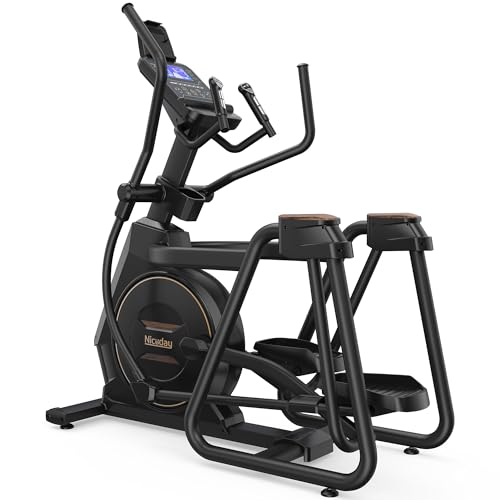
Niceday Commercial Elliptical Exercise Machine
What We Like
- Compact 11 ft² footprint saves floor space
- 400 lb weight capacity supports diverse users
- 21-inch stride length
Trade-offs
- 230 lb weight makes repositioning difficult
This is the pick for home gyms where space is tight but training expectations are not. It brings the resistance and stride length of a club machine into a package that fits beside a wall or in a corner without feeling cramped.
Weight is the main consideration: at 230 pounds, this elliptical is built to stay planted during hard intervals, but moving it to clean or rearrange requires the transport wheels and some effort. Compared to the Precor EFX 833, which stretches 85 inches long, the Niceday sacrifices some stride real estate for its compact layout, though 21 inches still covers most users comfortably. If your priority is a full-body, joint-friendly workout that does not dominate your floor plan, this machine delivers the performance without the footprint penalty.
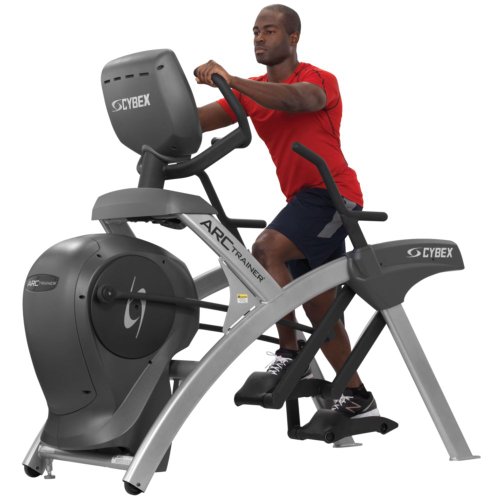
Cybex 625A Arc Trainer
What We Like
- Burns more calories than tested cross trainers
- Three movement zones: Glide, Climb, Stride
- Supports users up to 400 lb
- 10-year frame warranty
Trade-offs
- At 404 lb, moving it requires planning
- Only 1 year labor warranty is short
Research shows the Cybex 625A Arc Trainer burns more calories than any other cross trainer or elliptical tested. That calorie edge comes from its three movement zones. Glide, Climb, and Stride, letting you shift your body angle to target power, strength, or fat loss in a single session. With a 400-pound user capacity and a 10-year frame warranty, this machine is built for heavy commercial use and heavier goals. If your priority is maximizing energy output per minute, this is the trainer that delivers.
Size and weight are the main factors here. At 404 pounds and 62.5 inches tall, the 625A demands a dedicated floor space and a ceiling height check before you commit. Compared to the Precor EFX 833, which is longer but lighter and shorter, the Cybex feels more like a permanent installation than a flexible room fixture. The one-year labor warranty also means any assembly or adjustment issues are your responsibility after the first year. For a gym owner or serious home user who values calorie burn above portability, that trade-off is worth making.
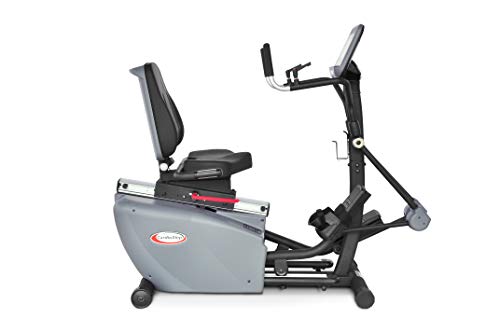
HCI Fitness CardioStep Recumbent Semi-Elliptical
What We Like
- Swivel seat for easy entry and exit
- 450 lb max user weight capacity
- Heart rate control programs included
- Low starting resistance for gradual progression
Trade-offs
- 230 lb weight makes relocation difficult
- No built-in fan or cooling feature
A 450 lb user weight capacity and a 360-degree swivel seat immediately set this machine apart for anyone who needs easy, low-stress access. The swivel seat lets you step on and off from either side without awkward climbing, which is a huge relief if balance or joint mobility is a concern. Add in the semi-elliptical motion with connected arm and leg movement, plus heart rate control programs that keep effort in a safe zone. You have a trainer built for steady, rehabilitation-focused cardio rather than high-intensity intervals.
This is not a space-saving or portable machine. At 230 pounds and 66 inches long, it stays put once you set it down, so plan your floor space ahead of time. If your priority is accessible, low-impact movement with easy on-off access, this machine fits that need.
dynasty fitness 9-4080-4CT-10IN-60BLK Commercial Elliptical Trainer
What We Like
- 40 resistance levels for fine tuning
- 20-inch stride suits taller users
- Self-generating or plug-in operation
- 350 lb user weight capacity
Trade-offs
- At 483 lbs, moving it is a two-person job
- 483 lb weight requires two people to move
A 350-pound user weight capacity and 40 resistance levels tell you this machine is built to handle daily use without flinching. That 20-inch stride length matches what you find in premium gym models, so taller users won’t feel cramped. The full color LCD display and quick-select adjustment keys are included, and the option to run it self-generating or plugged in gives you flexibility in placement. This is the kind of elliptical that works for a bustling home gym or a small studio where reliability matters more than flash.
Pure mass defines this machine: at 483 pounds, this is a piece of equipment you set down and never move again. Compared to the Niceday Commercial Elliptical at 230 pounds, the Dynasty Fitness requires serious floor space and a commitment to its location. The 30-inch width is standard for commercial machines, but if you share your workout area with other gear, measure twice. For someone who wants commercial-grade durability without the full club price tag, this strikes a smart balance between heft and function.
Product photos
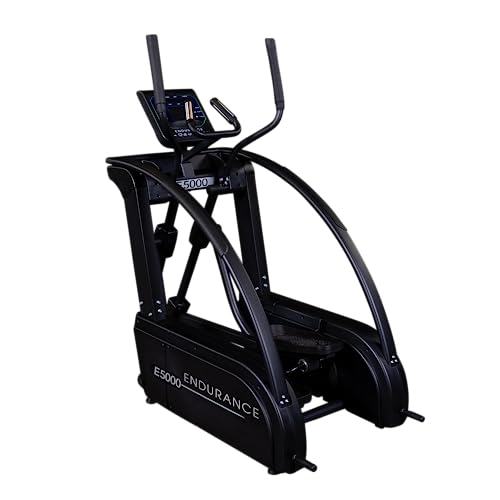
Body-Solid E5000 Elliptical Trainer
What We Like
- Adjustable 17-21 inch stride
- 20 levels of magnetic resistance
- Wireless HRC chest strap included
Trade-offs
- No converging footpath for lateral hip work
- 249 lb frame makes room-to-room moves difficult
A 325-pound weight capacity and adjustable 17-21 inch stride mean this elliptical can handle taller users and heavier footfalls without wobble, which is rare at this budget-friendly tier. The twenty magnetic resistance levels and six preset programs give you enough variety to keep workouts from going stale, while the included wireless heart-rate chest strap lets you lock into a target zone without guessing. For a small gym, hotel fitness room, or serious home setup that needs commercial-grade durability without the commercial price tag, this machine delivers the essential features that matter most.
The stride is also straight-ahead rather than converging like the Precor EFX 835, so you miss that natural hip rotation some users prefer. Still, for the core job of quiet, full-body cardio with enough resistance to challenge a strong rider, the E5000 punches well above its price class.
Product photos
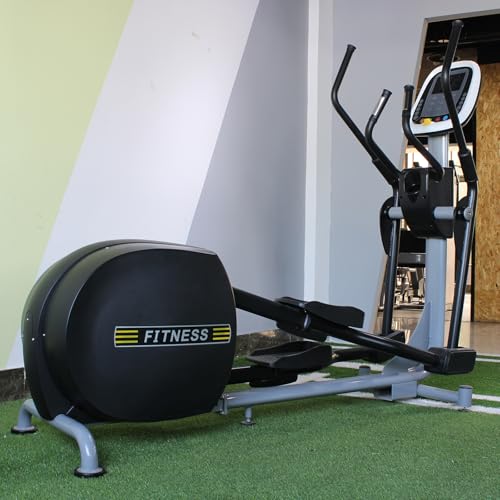
JZOPIDL Commercial Elliptical Machine
What We Like
- 400 lb weight capacity
- 15.5" stride for tall users
- Hyper-quiet 20 dB operation
- 90% pre-assembled setup
Trade-offs
- 10 resistance levels limit fine-tuning
- 260 lb weight makes relocation tough
A 400-pound weight capacity and a 15.5-inch stride mean this machine welcomes taller, heavier users without wobble or compromise. It arrives 90% assembled, so you can be pedaling about 30 minutes after the box lands on your doorstep.
Ten resistance levels limit fine-tuning compared to some competitors with more levels. At 260 pounds, this machine is heavy to move once placed, so choose your spot carefully. Still, for someone who needs a stable, quiet machine with a high weight capacity and generous stride, the 400 lb limit and 15.5-inch stride deliver a solid workout.
Product photos
How We Evaluated Commercial Elliptical Trainers
We started by examining the engineering details that matter most in a commercial setting: frame construction, weight capacity, stride mechanics, and resistance systems. Manufacturer documentation told us about warranty terms, power requirements, and assembly needs. Expert round-ups from fitness-industry sources helped us understand which features hold up under heavy use.
Our criteria focused on four areas. First, build quality and weight capacity, a commercial elliptical must support diverse users without wobbling. Second, motion type and biomechanics, we looked for machines that offer adjustable footpaths, converging arms, or lateral movement to target different muscle groups. Third, footprint and portability, these machines demand serious floor space and planning. Fourth, value relative to features, we weighed resistance levels, console options, and warranty coverage against the investment.
Like any research-led evaluation, this approach has limits. We haven’t logged hours on every machine, and individual preferences for stride feel and console design vary. What we offer is a clear framework based on what the best commercial ellipticals share in common and where they differ, so you can narrow your search with confidence.
What To Look For In Commercial Elliptical Trainers
Choosing a commercial elliptical means balancing durability, motion quality, and floor space. Here is what matters most.
A commercial elliptical should support at least 350 lbs, offer a stride length between 20 and 21 inches for taller users, and provide at least 20 resistance levels for progressive training. Look for adjustable footpaths or converging arms if you want targeted muscle engagement.
Build Quality and Weight Capacity
Commercial-grade ellipticals typically weigh between 230 and 465 pounds. Heavier frames mean less vibration and greater stability during intense workouts. The best commercial-grade machines use welded steel construction and support 350 to 450 pounds. Check the frame warranty, a 10-year warranty signals confidence in the build. A lighter machine may be easier to move but often sacrifices the solid feel that serious gyms require.
Motion Type and Adjustability
Not all elliptical motions feel the same. Standard forward-stride machines work well for general cardio, but adjustable CrossRamps (like on the Precor EFX 833) let you target glutes and hamstrings by changing the incline path. Lateral trainers like the Octane Fitness LateralX engage the inner and outer thighs through side-to-side movement. Converging ellipticals bring the foot pedals closer together at the top of the stride, mirroring a natural running gait. If you want a machine that can serve multiple training goals, look for at least one adjustable motion axis.
Resistance Levels and Console Features
More resistance levels give you finer control over workout intensity. Twenty levels is a good baseline; 40 levels (as on the dynasty fitness model) allow very gradual progression for rehab or advanced training. The console should display time, distance, calories, and heart rate. Some high-end elliptical machines include built-in programs like HIIT Boosters or heart rate control that automatically adjusts resistance to keep you in a target zone. Touch and telemetry heart rate monitoring add convenience.
Footprint and Portability
Commercial ellipticals occupy 6 to 10 square feet of floor space and often exceed 80 inches in length. Before buying, measure your room and account for clearance on all sides. Transport wheels help, but at 230+ pounds, moving these machines usually requires two people. If you plan to rearrange your gym frequently, a lighter model like the Niceday (230 lbs) is more practical than a 465-pound lateral trainer.
- Measure the floor space including the full stride arc, you need room behind and beside the machine.
- Check door widths and hallway turns if the machine must pass through narrow openings.
- Verify the power source: some machines are self-generating (no outlet needed), others require a standard wall plug.
- Look at the warranty: frame warranties of 5 to 10 years are common; parts and labor vary from 1 to 3 years.
- Read the assembly instructions: some machines arrive 90% pre-assembled, others require significant setup time.
A good rule: if the machine feels light enough to move alone, it probably isn’t built for commercial use.
Commercial Elliptical Trainers Compared
The table below compares these nine commercial elliptical trainers across the specs that matter most for gym owners and serious home users.
| Product | Weight | Dimensions | Resistance Levels |
|---|---|---|---|
| Precor EFX 833 Commercial Elliptical | 338 pounds | 85 x 32 x 44 inches | N/A |
| Octane Fitness LateralX Elliptical | 465 lb | 63 x 42 x 1 in | N/A |
| Precor EFX 835 Converging CrossRamp Elliptical | 340 pounds | 80 x 30 x 67 inches | 20 |
| Niceday Commercial Elliptical Exercise Machine | 230.0 pounds | 63.0 x 25.6 x 68.5 inches | 32 |
| Cybex 625A Arc Trainer | 404.0 lb | 62.5 x 32.0 x 62.5 in | N/A |
| HCI Fitness CardioStep Recumbent Semi-Elliptical | 230.0 pounds | 66.0 x 25.0 x 56.0 inches | 32 levels |
| dynasty fitness 9-4080-4CT-10IN-60BLK Commercial Elliptical Trainer | 483 lbs | 76.0 x 30.0 x 72.0 inches | 40 |
| Body-Solid E5000 Elliptical Trainer | 280.0 pounds | 68 x 31 x 69 in | 20 magnetic |
| JZOPIDL Commercial Elliptical Machine | 260.0 pounds | 81.0 x 30.0 x 64.0 inches | 10 |
Frequently Asked Questions
What is the difference between a commercial and home elliptical?
Commercial ellipticals use heavier steel frames, higher weight capacities (350 to 450 lbs), and more durable bearings and belts than home models. They are built for daily use in a gym setting. Home ellipticals are lighter, less expensive, and designed for one or two users per day. The trade-off is that commercial machines are much heavier and harder to move.
How long do commercial ellipticals last?
With regular maintenance, a commercial elliptical can last 10 to 20 years in a gym environment. The frame and drive system are the most durable parts; consoles and moving parts like pedals may need replacement after 5 to 10 years. Heavier use in a busy gym shortens this lifespan, while a home gym machine can last even longer.
Which elliptical burns the most calories?
The Cybex 625A Arc Trainer is designed specifically for higher calorie burn, using a unique arc motion that combines gliding, climbing, and striding. Owner feedback and manufacturer claims suggest it burns more calories than standard cross trainers. For maximum calorie expenditure, machines with lateral motion or adjustable incline also increase energy output by engaging more muscle groups.
Can I use a commercial elliptical at home?
Yes, but only if you have enough floor space and a way to get the machine into your home. Commercial ellipticals often exceed 80 inches in length and weigh over 300 pounds. They do not fold or break down easily for transport. If you have a dedicated home gym with wide doorways, a commercial-grade elliptical can provide years of smooth, quiet operation.
What stride length should I look for?
For most users, a stride length between 17 and 21 inches works well. Taller users (over 6 feet) should look for 20 inches or more to avoid a choppy stride. Shorter users may prefer 17 to 18 inches. Some machines, like the Body-Solid E5000, offer adjustable stride lengths to accommodate multiple users.
The Bottom Line
The Precor EFX 833 Commercial Elliptical is the best overall pick for anyone who wants a proven, stable machine with an adjustable footpath and natural low-impact motion. It suits commercial gyms and serious home setups with generous floor space. If you need lateral training for hip and thigh engagement, the Octane Fitness LateralX Elliptical is the clear choice.
For budget-conscious buyers, the Body-Solid E5000 Elliptical Trainer delivers adjustable stride and heart rate control at a lower investment than most commercial models. Those recovering from injury should consider the HCI Fitness CardioStep Recumbent Semi-Elliptical for its easy-entry swivel seat and low starting resistance.
The single most important factor when buying a commercial elliptical is matching the machine’s footprint and weight to your available space. Measure your room, check your doorways, and plan for delivery before you choose a model. The best elliptical in the world is useless if you cannot get it into your gym.
