
10 Best Cork Yoga Mats in 2026
This post contains affiliate links. As an Amazon Associate, we earn from qualifying purchases.
The Body By Yoga Luxury Cork Yoga Mat takes the Best Overall spot thanks to its thick cork layer that gets grippier with sweat, extra-long 80-inch surface, and durable build that wipes clean easily. For lighter travel, the Gaiam Cork Yoga Mat wins Best Lightweight, while the Ecoga Sustainable Cork Yoga Mat earns Best Eco-Friendly for its naturally antimicrobial surface and included alignment guide.
Cork yoga mats solve a real problem: standard PVC mats get slippery when wet, and natural rubber alone can feel too sticky or heavy. Cork combines a textured, moisture-activated grip with natural antimicrobial properties, making it a smart choice for hot yoga, sweaty practices, and anyone who wants a mat that stays put without chemical treatments.
We researched specifications, manufacturer materials, and patterns in owner feedback across dozens of models to build this guide. You will find clear criteria for choosing the right thickness, size, weight, and grip for your practice, plus honest trade-offs for each pick.
Top 10 Cork Yoga Mats in the Market
Certain content that appears on this site comes from Amazon. This content is provided "as is" and is subject to change or removal at any time.
The Best Cork Yoga Mats, Reviewed
Body By Yoga Luxury Cork Yoga Mat
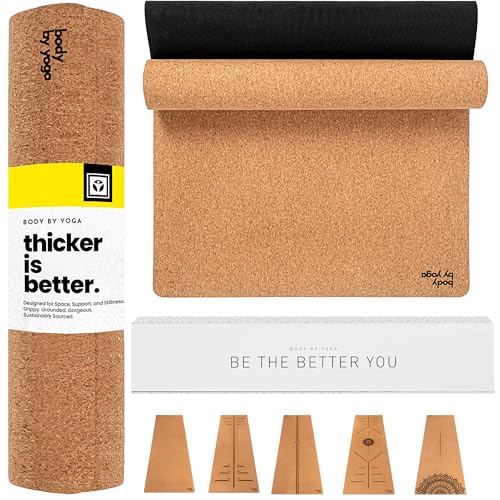
What We Like
- Thicker cork layer for durability and grip
- Extra long and wide (80 x 26 in)
- Non-slip grip improves with moisture
- Cork resists moisture and wipes clean
Trade-offs
- At 9.9 lb, heavier than many mats
- 0.2 in thickness offers less joint cushioning
At 80 inches long and 26 inches wide, this mat gives you enough space to stretch out fully without your feet or hands creeping off the edge during poses. The cork layer is thicker than what you’ll find on most standard cork mats, which means the surface holds up better over time and actually gets grippier as you sweat. A natural rubber base adds heft to keep the mat planted on the floor, even during vigorous hot yoga sessions, and the cork resists moisture so you can wipe it down with just water after class.
The trade-off is weight. At nearly ten pounds, this mat is not something you’ll casually toss in a gym bag and forget about. It’s built for the studio or home practice where you don’t need to carry it far. Compared to the Gaiam Cork Yoga Mat at just two pounds, this one is noticeably heavier to lug around, but that extra weight is what helps it stay put on any surface during practice. If you want a mat that stays stable and fits your whole body, this is the one to grab.
Product photos
Gaiam Cork Yoga Mat

What We Like
- Weighs only 2.0 pounds
- Cork resists sweat and odor
- Non-slip TPE backing
- Sustainable cork surface
Trade-offs
- Narrower and shorter than many mats
- Thin 0.2-inch cushioning for joints
- TPE bottom less durable than rubber
Weighing just two pounds, this Gaiam mat is the lightest cork option among the mats listed in this guide, with the next closest competitor at 3.4 pounds. That makes it a practical choice if you need to carry your mat to a studio or store it in a small space. The cork surface resists sweat and odors, and the non-slip TPE backing helps keep it in place during practice. Its thin profile means it rolls up compactly for easy transport.
At just 2 pounds, this mat is incredibly light, so you can toss it in a tote or backpack without a second thought. The trade-off is its 68-inch length and 24-inch width, which are on the smaller side, taller folks or those who spread out during practice might find their feet or hands creeping off the edge. It’s also only 0.2 inches thick, offering less cushion under knees and elbows than thicker mats, but that keeps it easy to carry anywhere.
Ecoga Sustainable Cork Yoga Mat

What We Like
- Naturally antimicrobial cork surface
- Grip improves with sweat
- Includes canvas carry bag and strap
- Center line aids body alignment
Trade-offs
- At 72 inches, shorter than some competitors
- 5 mm thickness offers less cushion than thicker mats
A 5 mm natural rubber base with a cork top means this mat stays put during practice while the cork gets grippier as you sweat. That combination makes it a smart choice for hot yoga or anyone who wants a surface that won’t slide around. The naturally antimicrobial cork also protects against germs and dust, and it’s easy to clean. A built-in center line helps with body alignment and focus during your session.
The trade-off comes down to size. At 72 by 24 inches, this mat is shorter and narrower than the Body By Yoga Luxury Cork Mat, which offers 80 by 26 inches for taller or wider frames.
Product photos
StrongTek Cork and TPE Yoga Mat

What We Like
- Lightweight 2.2 lb with carry strap
- Sweat-enhanced natural cork grip
Trade-offs
- Narrower 24-inch width limits side-to-side space
- Cork surface requires occasional re-sealing to maintain grip
At just 2.2 pounds with a slim roll and included carry strap, this mat is built for people who actually move their gear. The cork top gains traction as moisture builds, so it works well in hot yoga or a humid studio. The 7 mm TPE base cushions knees and wrists while staying firm enough for stable standing poses. You can toss it in a gym bag or suitcase without a second thought, which makes it a natural fit for commuters, frequent travelers, or anyone who hates lugging heavy gear.
The trade-off for that featherweight portability is a smaller surface. At 24 inches wide and 72 inches long, you get less room for wide stances compared to the Body By Yoga Luxury Cork Yoga Mat, which stretches to 80 by 26 inches. If you prefer sprawling out in warrior poses, you might find yourself adjusting more often. But if your priority is a mat that disappears into your bag and still delivers solid grip and cushion, this one nails the balance.
Product photos
Hatha Yoga Extra Large Cork Yoga Mat
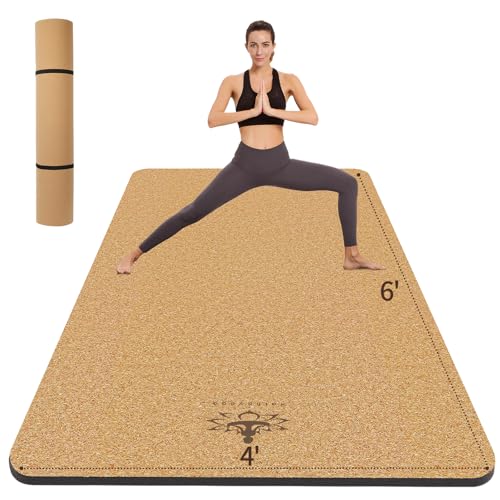
What We Like
- Extra-wide 48-inch surface for freedom
- 1/2-inch thickness cushions joints
- Cork gets grippier when wet
- Eco-friendly Portuguese cork and TPE
Trade-offs
- Heavier than standard mats at 7 lb
- TPE base less durable than natural rubber
At 48 inches wide, this mat offers noticeably more horizontal room than the 24- or 26-inch-wide options listed in the guide. You can spread your arms wide in Warrior II or roll through a side plank without your hand slipping off the edge. The half-inch thickness cushions your joints during floor poses, and the cork surface becomes more grippy as you sweat, making it a strong companion for hot yoga or any practice where things get damp. It’s built for anyone who needs extra room, especially larger bodies or those who simply hate feeling confined during movement.
At 7 pounds, this mat is heavier than a typical travel mat, so it’s better suited for home practice than for carrying across town. The 72-inch length works for most people, while the 48-inch width gives you twice the space of a standard yoga mat, allowing ample room to stretch out freely. The TPE bottom keeps the mat in place on any surface, and the 1/2-inch thickness provides cushioning to protect your joints during barefoot exercises.
Product photos
Rocalt Cork Yoga Mat
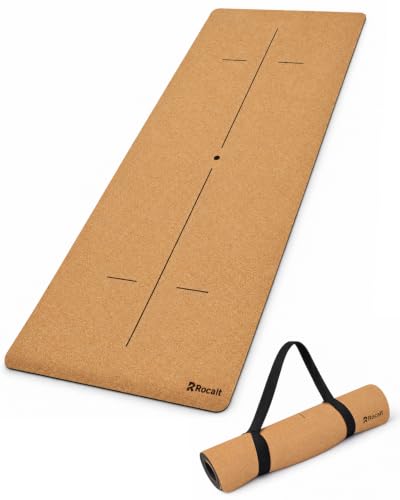
What We Like
- Alignment lines for hand and foot placement
- Non-slip cork surface for hot yoga
- Wider than standard 24-inch mats
- Natural rubber base resists shifting
Trade-offs
- At 9 lb, heavier than most travel-friendly mats
- Natural rubber scent requires airing time
A simple centerline and position markers provide visual references for hand and foot placement, helping you maintain alignment without a busy design. At 72 by 26 inches, this mat offers two extra inches of width compared to a 24-inch mat, giving more room for hand and foot placement during poses. The 6mm cork surface on a natural rubber base resists shifting during poses and transitions, and the non-slip surface helps maintain grip in hot yoga, Pilates, or gentle stretching. If you practice at home or in a studio and want alignment cues, this mat is well suited to that space.
At nine pounds, this mat is best left at home or in a studio rather than carried to a park. A carrying strap is included, but it is heavier than the Gaiam Cork Yoga Mat, which weighs two pounds. The natural rubber base may have a noticeable scent when first unrolled, so plan to air it out in a well-ventilated room before use; airing time varies. For practice where stability matters, the Rocalt fits the bill.
Product photos
Umineux Extra Thick Cork Yoga Mat

What We Like
- Extra 10 mm cushion for joints
- Sweat-resistant cork for hot yoga
- Lightweight at 3.4 lb with straps
- Sustainable cork and TPE materials
Trade-offs
- At 72 inches, shorter than 80-inch options
- No natural rubber base for extra grip
With 10 mm of cushioning, this mat offers noticeably more padding than many cork mats, which typically range from 5 to 7 mm. That extra thickness can make a real difference for knees, elbows, and tailbones during floor poses or kneeling work. The cork surface is designed to soften as it warms up, improving grip during hot yoga sessions, while the TPE bottom helps keep the mat stable on the floor. At just 3.4 pounds and with two straps included, it’s light enough to carry to the gym, a studio, or outdoors without feeling like you’re hauling a heavy roll.
The trade-off for that plush thickness and low weight is a shorter length, 72 inches. Taller practitioners (over about 5’10”) may find their heels or head hanging off the edge during Savasana or long lunges.
Satori Concept Cork Yoga Mat
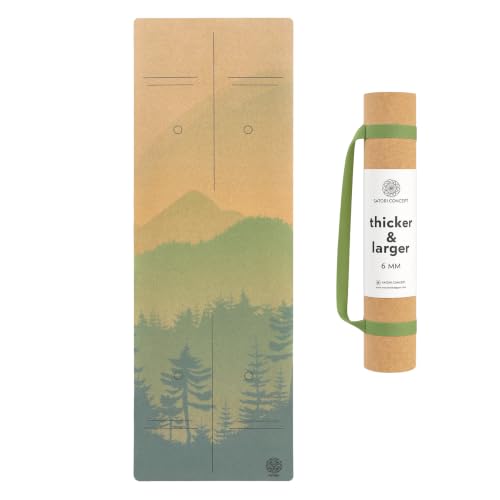
What We Like
- Cork grip strengthens with sweat
- 80-inch length for full stretch
Trade-offs
- At 8 pounds, heavier than most cork mats
- 6 mm thickness is thinner than some prefer
- No alignment lines for pose guidance
An 80-inch length means you can stretch out fully without your feet or head hanging off the mat, which is a rare find among cork options. Most cork mats top out at 72 inches, so this extra 8 inches gives taller practitioners room to move through sun salutations without repositioning. The 26-inch width also offers generous space for wide-legged poses or for keeping props within easy reach. Reviewers mention that the added surface area makes a noticeable difference during flows where you want to spread out without worrying about touching the floor. It’s a practical upgrade for anyone who has felt cramped on a standard-size mat.
Weight is the primary compromise. At 8 pounds, this mat is heavier than some cork mats in this guide, including the 2.2-pound StrongTek Cork and TPE Yoga Mat. The included strap helps with carrying, but the heft is noticeable. For home practice, the weight can be a stability benefit, though commuters may find it less convenient.
ILILI Cork Yoga Mat
What We Like
- Sweat-responsive natural cork grip
- Lightweight 2 lb build for travel
- Matching carry strap included
- Low-maintenance wipe-clean surface
Trade-offs
- 1/4-inch cushioning offers minimal joint padding
- Narrower than extra-wide mats at 26 inches wide
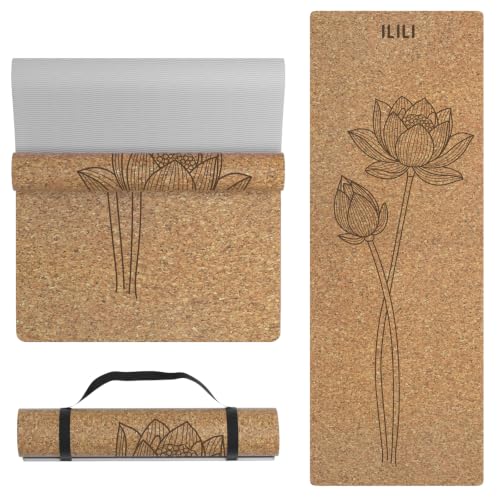
At just 2 pounds with a slim rolled profile, this mat is built for the yogi who commutes to class or stretches in the park. The natural cork surface actually grips better as you sweat, making it a smart pick for hot yoga or heavy-sweat Vinyasa flows where slipping can break your focus. A 72-by-26-inch practice area gives enough room for most solo routines, and the included carry strap means you can sling it over a shoulder and forget it is there.
The ILILI Cork Yoga Mat weighs just 2 pounds, making it easy to carry to a studio or gym. That light build comes with a 1/4-inch cushion that provides some impact absorption but will feel thin on hard floors. Reviewers note the mat rolls into a compact roll and includes a carry strap, so it travels well. For those who prioritize portability and low maintenance, a simple wipe cleans it, this mat delivers without extra bulk.
Product photos
U&M Extra Wide Cork Yoga Mat
What We Like
- Cork grip improves with sweat
- Natural rubber base stays put
- Includes carrying strap
Trade-offs
- Natural rubber base has a strong smell initially.
- 5mm thickness provides minimal cushioning for hard floors.
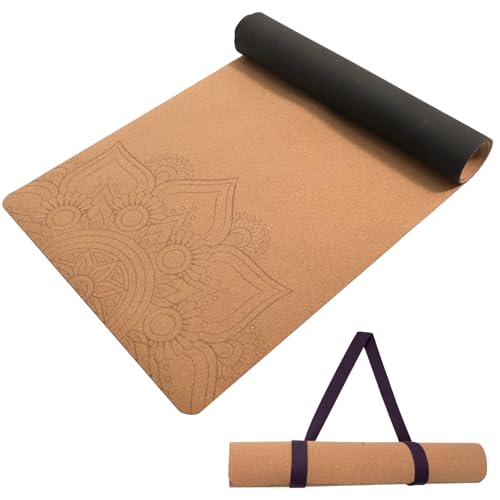
The 26-inch width gives you more room to spread out during poses where you tend to drift off a standard mat. For taller or broader practitioners, that extra width means your hands and feet stay on the cork surface instead of catching the floor. The natural cork top grips better when wet, which makes this a smart fit for hot yoga. The rubber base stays put on any surface, so you are not fighting to keep the mat in place during standing balances.
Heft is the main drawback here. At 7.5 pounds, this mat outweighs the Gaiam Cork Yoga Mat (2 pounds) or the StrongTek Cork and TPE Yoga Mat (2.2 pounds), so carrying it to and from class adds a bit of heft even with the included strap. If you prioritize a stable, wide practice surface over portability or plush padding, this mat delivers exactly that.
Product photos
How We Evaluated Cork Yoga Mats
Our evaluation started with the technical specs: thickness, dimensions, weight, and base material. Cork yoga mats vary widely in these numbers, and each trade-off affects your practice differently. We compared manufacturer descriptions for cork quality, rubber or TPE backing, and included accessories like straps or bags.
We then looked at three criteria that matter most in this category. Grip and moisture response came first because cork’s main advantage is its sweat-activated traction. Size and weight mattered next. A mat that is too short, too narrow, or too heavy for your routine is a mat you will not use. Material durability and maintenance rounded out our focus, since cork and natural rubber require different care than synthetic mats.
This is a research-led guide, not a hands-on test. We synthesized what owners consistently report about each mat’s real-world performance and longevity. Then we matched those patterns against the specs to give you an honest picture of what each pick does well and where it falls short.
What To Look For In Cork Yoga Mats
Choosing the right cork yoga mat comes down to matching three variables to your body and practice style. Those are thickness for joint comfort, size for your height and movement, and the base material for grip and durability.
Focus on thickness (from 5 mm to 10 mm), length and width (standard 68 x 24 in versus extra-long 80 x 26 in or extra-wide 48 in), and base material (natural rubber versus TPE). That way you match your height, joint sensitivity, and preferred practice surface.
Thickness and Cushioning
Cork mats typically range from 5 mm to 10 mm thick. Thinner mats (around 5 mm) offer better stability and ground connection for standing poses but provide less cushioning for knees, elbows, and hips on hard floors. Thicker mats (6 mm to 10 mm) protect joints during supine poses and restorative work but can feel unstable for balancing poses. If you practice mainly on carpet, thinner is fine; on tile or hardwood, consider 6 mm or more.
Size and Portability
Standard cork mats measure 68 to 72 inches long and 24 inches wide. Taller practitioners (over 5’8″) should look for 80-inch options like the Body By Yoga or Satori Concept mats. Extra-wide mats (26 to 48 inches) give side-to-side freedom for wide-stance poses or larger body types. Weight matters too: a 2-pound mat like the Gaiam fits easily in a backpack, while a 9.9-pound mat stays home.
Base Material and Grip
Cork mats use either natural rubber or TPE (thermoplastic elastomer) as the bottom layer. Natural rubber provides excellent floor grip and durability but has a strong initial odor that needs airing out. TPE is lighter and more portable but less durable over time. The cork top layer should feel dense and smooth: lower-quality cork can flake or compress unevenly. Look for mats where the cork is bonded securely to the base.
- Check the mat’s length against your height: you should be able to lie flat without your head or feet touching the floor.
- Weigh the mat if you plan to carry it to a studio: anything over 5 pounds becomes a chore.
- Confirm the base material matches your floor type: rubber grips hardwood but can mark some surfaces.
- Look for a carrying strap or bag if you commute regularly.
- Read about cleaning: most cork mats need only a damp cloth, but some require periodic re-sealing.
A good rule: the cork should feel slightly textured but not rough, and the base should lie flat without curling at the edges.
Cork Yoga Mats Compared
The table below compares all ten cork yoga mats side by side on thickness, dimensions, weight, and base material so you can quickly narrow your options.
| Product | Dimensions | Thickness | Weight | Surface Material |
|---|---|---|---|---|
| Body By Yoga Luxury Cork Yoga Mat | 80 x 26 in | 0.2 in | 9.9 lb | Cork + Natural Rubber |
| Gaiam Cork Yoga Mat | 68 x 24 in | 0.2 in | 2.0 lb | Cork top, TPE bottom |
| Ecoga Sustainable Cork Yoga Mat | 72 x 24 in | 5 mm | 6.6 lb | Cork |
| StrongTek Cork and TPE Yoga Mat | 72 x 24 in | 7 mm | 2.2 lb | Cork + TPE |
| Hatha Yoga Extra Large Cork Yoga Mat | 72 x 48 in | 0.5 in | 7.0 lb | Portuguese cork + TPE |
| Rocalt Cork Yoga Mat | 72 x 26 in | 6 mm | 9.0 lb | Cork |
| Umineux Extra Thick Cork Yoga Mat | 72 x 26 in | 10 mm | 3.4 lb | Cork top, TPE bottom |
| Satori Concept Cork Yoga Mat | 80 x 26 in | 6 mm | 8.0 lb | Natural cork + tree rubber |
| ILILI Cork Yoga Mat | 72 x 26 in | 0.2 in | 2 lb | Natural cork bonded with TPE |
| U&M Extra Wide Cork Yoga Mat | 72 x 26 in | 5 mm | 7.5 lb | Natural cork top |
Frequently Asked Questions
Are cork yoga mats good for hot yoga?
Yes. Cork’s natural texture becomes grippier when wet, which means sweat actually improves your traction instead of making you slide. The material also resists absorbing sweat and odors, so the mat stays fresher longer than standard PVC or rubber mats in a hot studio.
How do you clean a cork yoga mat?
Wipe the cork surface with a damp cloth after each practice. Avoid soaking the mat or using harsh cleaners, which can damage the cork. Some mats with TPE or rubber bases can handle a mild soap solution, but always spot-test first. A few models recommend occasional re-sealing to maintain grip.
Is cork more eco-friendly than PVC yoga mats?
Cork is a renewable material harvested from the bark of cork oak trees without harming the tree, making it a more sustainable choice than PVC, which is petroleum-based. Many cork mats also use natural rubber or TPE backings that are less environmentally intensive than synthetic alternatives. For a deeper look, see our guide to sustainable yoga mats.
What thickness cork yoga mat is best for hard floors?
For hardwood, tile, or concrete floors, look for a mat that is at least 6 mm thick. Thinner mats (around 5 mm) may not provide enough cushioning for knees and elbows during floor poses. If you need extra joint protection, the Umineux Extra Thick Cork Yoga Mat offers 10 mm of padding and is one of the best thick yoga mats for sensitive joints.
Do cork yoga mats smell?
New cork mats have a mild natural scent from the cork itself, which usually fades within a few days. Mats with natural rubber bases, like the Rocalt and U&M Extra Wide, have a stronger rubber odor that requires airing out for a week or more. TPE-based cork mats tend to have the least noticeable smell.
The Bottom Line
The Body By Yoga Luxury Cork Yoga Mat is the best overall choice for most practitioners. Its extra-long 80-inch surface fits taller bodies, the thick cork layer delivers reliable sweat-activated grip, and the sturdy build holds up to regular hot yoga sessions. If you need something lighter for studio commutes, the Gaiam Cork Yoga Mat at just 2 pounds is the best lightweight option.
Budget-conscious shoppers and travelers should look at the ILILI Cork Yoga Mat, which combines sweat-responsive grip with a 2-pound build and included carry strap. For those who want maximum joint cushioning, the Umineux Extra Thick Cork Yoga Mat gives you 10 mm of padding in a lightweight package.
The single most important factor when buying a cork yoga mat is matching the thickness and size to your body and floor type. Get that right, and the natural grip, easy cleaning, and eco-friendly materials will take care of the rest.
