
10 Best Ems Device Smart Muscle Sensing Color Screens (2026)
This post contains affiliate links. As an Amazon Associate, we earn from qualifying purchases.
If you want smart muscle sensing, a color screen, and reliable performance in one package, the AVCOO Color Screen TENS EMS Unit is the best overall choice. It offers 24 modes and 30 intensity levels with a 50-hour battery life, making it ideal for targeted pain relief and recovery. For those wanting extensive mode variety, the Juhdy 5-in-1 TENS EMS Stimulator is our Best Multi-Mode Value, while the Neocarbon TENS Unit Ultra earns the nod for Best For Menstrual Relief.
The challenge with modern EMS devices is finding one that combines an intuitive interface with enough therapeutic options. A color screen makes navigating modes and intensity levels far simpler than fiddling with tiny buttons and cryptic LEDs, but not every unit delivers a display that is actually helpful. You also need to consider battery life, channel count, and whether the device includes the pads you need.
This guide is based on a careful review of specifications, manufacturer documentation, and patterns in owner feedback. We evaluated each device for screen quality, mode variety, battery life, and overall value to help you find the right match for your recovery or pain relief routine.
Top 10 EMS Devices With Smart Muscle Sensing And Color Screens in the Market
Certain content that appears on this site comes from Amazon. This content is provided "as is" and is subject to change or removal at any time.
The Best EMS Devices With Smart Muscle Sensing And Color Screens, Reviewed
AVCOO Color Screen TENS EMS Unit
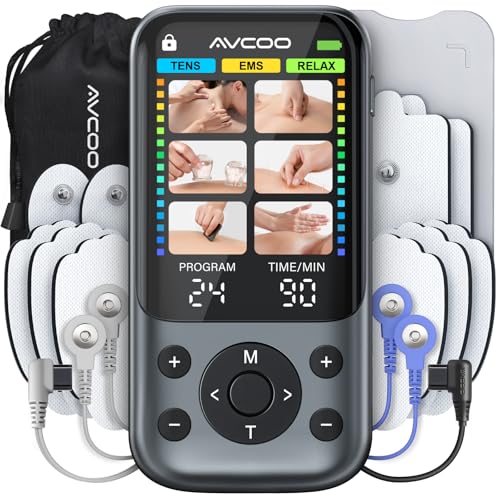
What We Like
- 24 modes and 30 intensity levels
- 50-hour battery life from 400mAh
- Single Type-C port with 4-in-1 cable
- 10 pads in three shapes included
Trade-offs
- Only 1 lead wire for dual-channel operation
- At 0.7 lb, heavier than some pocket-sized units
The kit includes one lead wire for the dual-channel system, so you treat one body area at a time unless you swap pads. If you need to work two spots simultaneously, the Juhdy 5-in-1 offers four channels and 16 pads for broader coverage. But for focusing on one or two problem areas, the AVCOO’s long battery life and clear screen make it a practical daily option.
Product photos
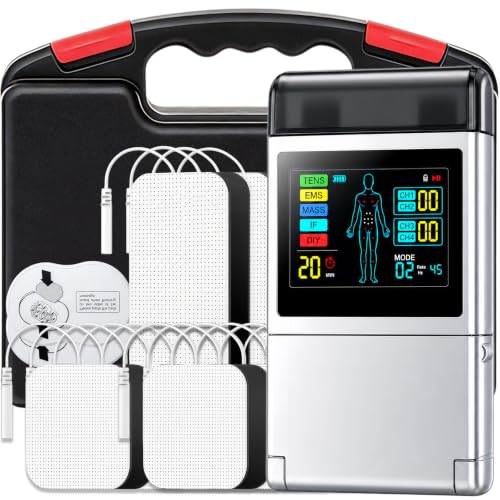
Juhdy 5-in-1 TENS EMS Stimulator
What We Like
- 80 modes with DIY customization
- 4 channels support 8 pads at once
- Large color screen with clear controls
- USB rechargeable with travel bag
Trade-offs
- Two rotary knobs adjust channel groups, not individual pads
- No wireless remote, so you must reach the unit to change settings
Eighty modes and four channels let you cover multiple body areas in one session, such as a tight shoulder and a sore lower back. You can adjust frequency and pulse width for a personalized feel. The large color screen keeps function, program, time, battery and intensity visible at a glance, so the variety doesn’t feel overwhelming. Compared to the AVCOO Color Screen unit, which offers 24 modes and two channels, the Juhdy provides more options for multi-area work, though the two rotary controls adjust channel groups C1/C2 and C3/C4 together rather than each pad individually. If you prefer simple presets, the Comfytemp TFT includes a visual pad placement guide, but for mode variety and channel count, this unit covers a lot of ground.
The two rotary controls adjust channel groups C1/C2 and C3/C4 together, not each pad individually. That means fine-tuning one spot means adjusting its whole pair. Compared to the AVCOO Color Screen unit, which offers fewer modes and only two channels, the Juhdy gives you far more range for multi-area work but demands a little more learning to dial in. If you prefer simple, grab-and-go presets, the Comfytemp TFT with its visual pad guide might feel more intuitive, but for sheer mode variety and channel count at a reasonable value, this one covers a lot of ground.
Product photos
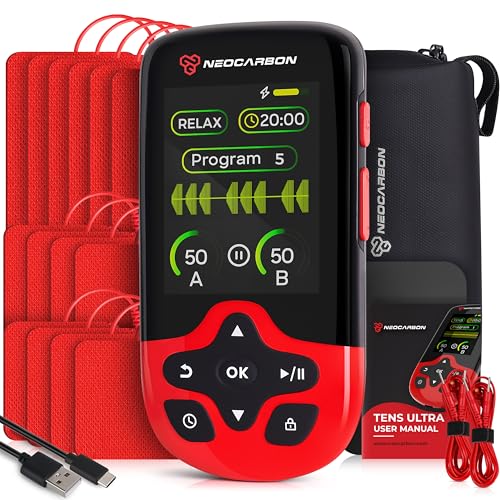
Neocarbon TENS Unit Ultra
What We Like
- Exclusive PMS Steady Mode for cramps
- 60 customizable programs, color screen
- Includes 14 pads, case, USB-C cable
Trade-offs
- Bulkier than some portable units at 10 inches long
- No 4-channel option for larger body areas
The PMS Steady Mode is the standout feature here, a gentle, steady pulse designed specifically to ease menstrual cramps and relax tense abdominal muscles. With 60 programs and 20 intensity levels per channel, you can dial in exactly the rhythm that feels right. The vivid color screen makes navigating those options simple even when you’re curled up on the couch. The battery lasts up to 10 hours per charge, so you won’t need to recharge mid-session. The complete kit with 14 reusable pads, a travel case, and USB-C charging covers everything you need right out of the box. For anyone looking for drug-free relief during that time of the month, this unit puts the focus where it matters most.
At 10 inches long, the Neocarbon Ultra is noticeably larger than the AVCOO Color Screen unit (6.1 inches), so it takes up more space in a gym bag or nightstand drawer. If you primarily need whole-body coverage for back and shoulders, the 4-channel competitor offers two extra channels for more pad placement options. But for targeted menstrual relief, the Neocarbon’s dedicated PMS mode and generous pad count make it the more purpose-built choice. It’s a specialized tool that does one job exceptionally well, and the extended battery means you can rely on it through longer sessions without worrying about a recharge.
Product photos
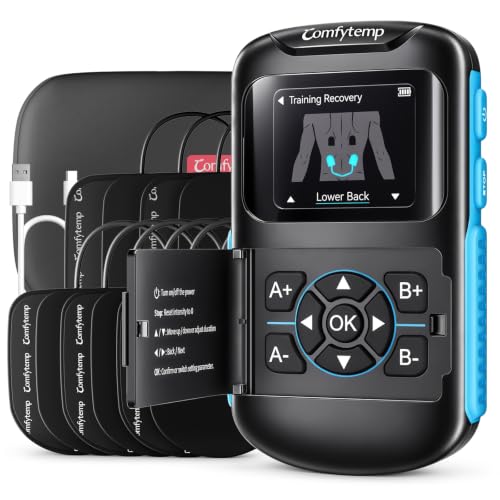
Comfytemp TENS Unit TFT
What We Like
- TFT screen with visual pad placement guide
- USER mode for custom frequency and pulse width
- 10-60 minute timer for session control
- One-Touch Stop and electrode detachment warning
Trade-offs
- Dual channel limits to two body areas at once
- 20 modes fewer than some 60-mode competitors
With 20 modes plus a USER mode, you can dial in frequency from 2 to 80 Hz and pulse width from 120 to 400 μs. That lets you tailor the sensation from a light tingle to deeper muscle work.
Dual-channel means you can treat two areas at once, while some competitors offer four channels. The 20 modes also feel modest next to machines with 60 or 80 presets, though the USER mode partly compensates by letting you build your own. If guided setup and personalized control matter more than sheer mode quantity, this unit is a good fit for people who want clear instructions and adjustable therapy without guesswork.
Product photos
AUVON 3-in-1 TENS Unit
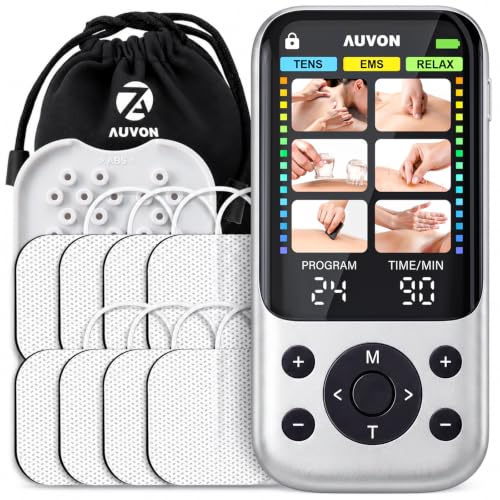
What We Like
- Slim 0.49" metal body
- Large color display with mode illustrations
- Up to 50-hour battery life
- 2-in-1 USB-C port for charging and output
Trade-offs
- Only 24 modes vs. competitors with 60+
- Single dual-channel port limits pad placement flexibility
The device’s slim 0.49-inch body makes it easy to carry in a bag or store in a drawer. With 40 intensity levels and a 400mAh battery that runs up to 50 hours per charge, it covers multiple sessions before needing a recharge via USB-C.
The slim design means fewer modes than some rivals, 24 compared to the 60 on the 4-channel competitor, and no custom frequency option for tweaking pulse width or rate. The single 2-in-1 port handles both channels, which keeps cables tidy but means you can only run two pad sets at once, not four like the NexMedio. If you want maximum program variety or multi-zone simultaneous therapy, look elsewhere. But if your priority is a discreet, easy-to-read device that delivers reliable relief without a learning curve, this is the one to grab.
Bao Liter 4-Channel TENS Unit
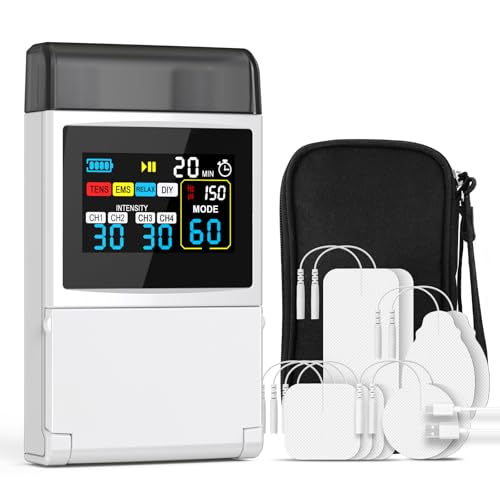
What We Like
- 4 channels cover multiple body areas at once
- 60 modes plus DIY for personalized therapy
- 30 intensity levels for fine-tuned comfort
- Color screen shows mode, channel, timer clearly
Trade-offs
- Two channel controls mean adjusting each pair separately
- DIY mode requires manual adjustment of pulse width and frequency
Four output channels let you run up to eight electrode pads at once, so you can work your lower back, shoulders, and knees all in the same session without repositioning. That kind of simultaneous coverage is what makes this unit a natural fit if you deal with multiple sore spots or just want a full-body recovery routine after a tough gym day. With 60 built-in modes and a DIY option to tweak pulse width and frequency, you have plenty of room to dial in exactly what each area needs. The color screen keeps mode, channel, timer and intensity visible at a glance, which helps when you are fumbling with settings mid-session.
The trade-off is that the two channel controls adjust intensity in pairs, not individually for each pad. That means if your left shoulder needs a gentler zap than your lower back, you will have to find a compromise or run separate sessions. Compared to the Juhdy 5-in-1, which also offers four channels but packs 80 modes, this Bao Liter gives you fewer presets but adds a DIY mode for custom tuning. For someone who values full-body versatility over sheer mode count, the Bao Liter delivers solid coverage without overwhelming you with options.
Product photos
AVCOO 24 Modes TENS Unit
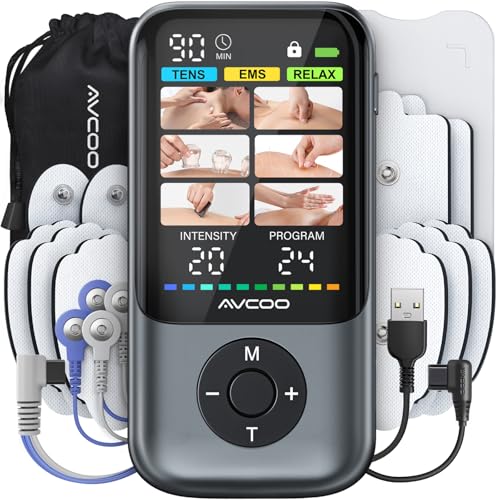
What We Like
- Color screen for easy operation
- Single Type-C port reduces wire tangles
- 10 pads in three shapes included
Trade-offs
- Single-channel design limits pad placement options
- No custom mode for personalized frequency settings
A 300mAh battery that lasts up to 40 hours means you can go days or weeks between charges, even with regular use. That kind of endurance makes this a practical companion for anyone who wants drug-free relief without constantly hunting for an outlet. With 24 modes and 30 levels, there’s enough variety to target everything from a tight neck to a sore lower back. The included ten pads in three shapes let you cover different muscle groups without buying extras right away.
The trade-off here is the single-channel design, which means you’re limited to one pad pair at a time. If you want to treat both shoulders simultaneously or work your lower back and glutes together, you’d need a dual-channel unit like the AVCOO Color Screen TENS EMS Unit that offers two output ports. For focused spot treatment, though, this device keeps things simple and affordable, and the Type-C port eliminates the old frustration of plugging into the wrong socket or wrestling with tangled wires. It’s a straightforward, reliable tool for everyday aches, not a multi-zone therapy station.
Product photos
Uthlusty TENS EMS Machine
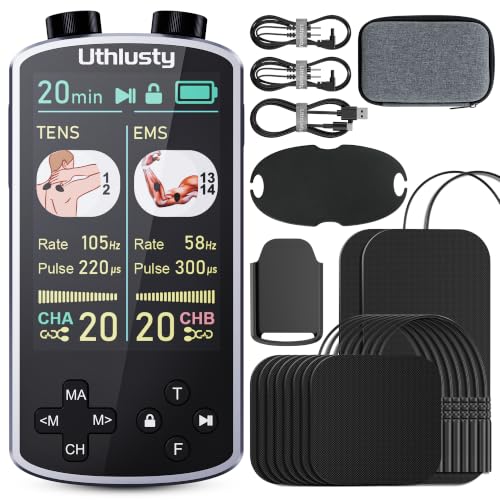
What We Like
- Dual channel treats two areas independently
- 36 modes and 20 intensity levels
- Smart memory function recalls last settings
- Compact, rechargeable, travel-friendly design
Trade-offs
- Timer maxes at 90 minutes, not continuous
- No continuous mode, therapy stops at 90 minutes
The Uthlusty TENS EMS Machine offers 36 preset modes and 20 intensity levels, giving you a wide range of options to adjust stimulation from gentle to strong. The dual-channel design lets you treat two body areas at once with separate controls, so you can work on a sore lower back while also applying EMS to your legs. The smart memory function recalls your last-used mode and intensity, which can save time if you use the same settings regularly.
That’s fine for most people, but if you’re the type who likes to dial in a very specific waveform for deep muscle knots, the Comfytemp TENS Unit TFT offers a custom USER mode with adjustable frequency. Still, for straightforward dual-channel therapy with plenty of preset options and a color screen that’s easy to read, this is a solid, no-fuss choice.
Product photos
VIPFMPET EMS TENS Massager
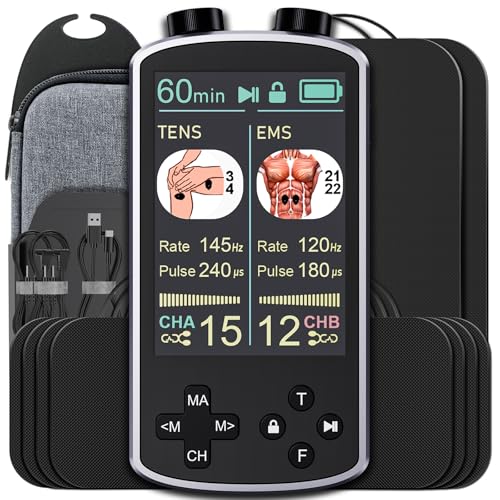
What We Like
- Ultra-compact at 0.1 lb for portability
- 36 modes and 20 intensity levels
- Dual-channel with independent A/B control
- 3.8" color display with memory function
Trade-offs
- Only 10 pads included for varied body areas
- No 4-channel option for larger muscle groups
At just 0.1 pounds and smaller than a smartphone, this EMS unit fits into a jacket pocket or gym bag without adding bulk. That portability, combined with a 3.8-inch color display and 36 modes, makes it a strong choice for someone who wants targeted relief on the go, whether at a desk, after a workout, or during travel. The dual-channel design lets you treat two areas at once with independent settings, and the memory function saves your preferred programs for quick access. It’s built for convenience first, without skimping on customization: adjustable frequency and pulse width let you dial in exactly the sensation you need.
At just 0.1 pounds and small enough to slip into a pocket, this unit is built for portability. It comes with 10 pads and two channels, so you can treat two areas at once, not four like the 4-channel competitor. That means you’ll focus on one or two muscle groups per session rather than covering both legs at the same time. For someone targeting neck, shoulder, or lower back tension throughout a busy day, the slim design and up to 60 hours of battery life make it a genuinely practical travel companion that won’t weigh you down.
Product photos
NexMedio 4-Channel TENS Unit
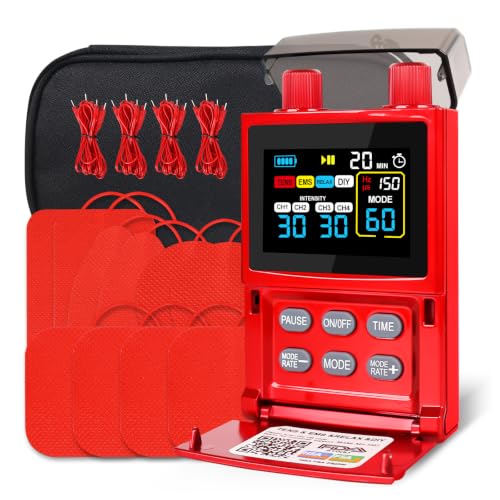
What We Like
- DIY mode lets you set frequency and pulse width
- Separate control for CH1/CH2 and CH3/CH4
- 60 modes and 30 intensity levels for fine-tuning
- Type-C rechargeable with 10 reusable pads
Trade-offs
- Four channels mean more wires to manage during use
- DIY mode requires manual adjustment of frequency and width
The four channels let you control CH1/CH2 and CH3/CH4 separately, so you can adjust intensity for different areas in one session. With 60 modes including TENS, EMS, Relax, and DIY, you have plenty of options to find a routine that feels right. The DIY mode allows you to customize frequency and pulse width, giving you more control than a unit with only preset programs.
The 60 modes and DIY option mean you can fine-tune the experience, but that flexibility comes with a learning curve. The DIY mode asks you to understand frequency and pulse width, which might feel like homework if you just want to press a button and relax. The four-channel setup includes four lead wires, and the storage case helps keep everything organized between sessions.
Product photos
How We Evaluated EMS Devices With Smart Muscle Sensing And Color Screens
We built this guide by analyzing product specs, manufacturer descriptions, and what owners consistently report across their experiences. This research-led approach lets us compare devices fairly without relying on subjective impressions.
The four criteria that mattered most were screen quality and usability, mode and intensity range, battery life and charging convenience, and channel configuration. A clear color screen makes a huge difference in daily use, especially when you are trying to adjust settings mid-session. Mode variety matters because more options mean you can tailor the therapy to different muscle groups or pain types, but too many modes without good organization can be overwhelming.
An honest limit of this evaluation is that we cannot speak to long-term durability or how well each unit handles daily drops and cable strain. Owner feedback helps, but individual experiences vary. For deeper dives into specific categories, check our guides on best EMS stimulators and top stimulation devices.
What To Look For In EMS Devices With Smart Muscle Sensing And Color Screens
Choosing the right EMS device means balancing screen quality, mode variety, battery life, and how many body areas you can treat at once. A beautiful display is useless if the battery dies mid-session, and 80 modes mean nothing if you cannot find the one you need.
Look for a color screen with clear icons or text. You should also want at least 20 modes for versatility, a battery that lasts 10+ hours on a charge, and a channel count that matches your typical treatment area. Two channels cover one or two spots; four channels let you treat multiple areas simultaneously.
Screen Quality and User Interface
The color screen is your primary interface, so it needs to be readable in different lighting and responsive to button presses. Some units use TFT displays that show pad placement guides or mode illustrations, which is a big help for beginners. Others use simpler LCD color screens that show mode numbers and intensity bars. A screen that is too small or dim can make adjusting settings frustrating, especially if you are using the device while moving around.
Mode Count and Customization
More modes generally mean more targeted therapy options, but the quality of those modes matters more than the raw number. Look for modes labeled for specific goals like “massage,” “acupuncture,” “cupping,” or “PMS relief” if those match your needs. Custom or DIY modes that let you adjust frequency and pulse width give you the most control, but they require some understanding of what those settings do. If you prefer a press-and-go experience, a device with well-organized presets is a better fit.
Battery Life and Charging
Battery life varies widely, from around 10 hours to 50 hours on a full charge. A unit that lasts 50 hours means you can use it daily for weeks without recharging, which is a real convenience. USB-C charging is now standard, but some devices use a 2-in-1 port that also serves as the output for the lead wires. This reduces cable clutter but means you cannot charge and use the device at the same time.
Channel Count and Pad Configuration
- Dual-channel devices treat up to two body areas at once with independent control for each channel.
- Four-channel devices cover up to eight pads across four areas, ideal for full-body sessions.
- Single-channel units are best for spot treatment on one area like a sore shoulder or lower back.
- Check whether the device uses one lead wire per channel or a multi-wire setup that can be harder to manage.
If you plan to treat your back and legs in the same session, a four-channel unit is worth paying more for. For single-area use, a dual-channel device gives you plenty of flexibility.
EMS Devices With Smart Muscle Sensing And Color Screens Compared
The table below compares the key specs of our top ten picks, including screen type, mode count, channel configuration, and battery life.
| Product | Modes | Channels | Intensity Levels | Screen |
|---|---|---|---|---|
| AVCOO Color Screen TENS EMS Unit | 24 | Dual | 30 | 3.3" color display |
| Juhdy 5-in-1 TENS EMS Stimulator | 80 total | 4 | 30 | Large color LCD |
| Neocarbon TENS Unit Ultra | 60 total | Dual | 20 per channel | Color screen |
| Comfytemp TENS Unit TFT | 20 modes + USER mode | Dual channel | 20 | TFT color |
| AUVON 3-in-1 TENS Unit | 24 | N/A | 40 | Color display |
| Bao Liter 4-Channel TENS Unit | 60 built-in + DIY custom | 4 | 30 | Color screen |
| AVCOO 24 Modes TENS Unit | 24 | N/A | 20 | Color screen |
| Uthlusty TENS EMS Machine | 36 | Dual Channel | 20 | Upgraded Color Display |
| VIPFMPET EMS TENS Massager | 36 | Dual-Channel | 20 | 3.8" color display |
| NexMedio 4-Channel TENS Unit | 60 | 4 | 30 | Color LCD |
Frequently Asked Questions
What does a color screen add to an EMS device?
A color screen makes it much easier to navigate modes, adjust intensity, and see your timer at a glance. Instead of guessing which mode you selected from a row of tiny LEDs, you see the name or icon clearly. Some screens also show pad placement guides, which is especially helpful for beginners.
How many channels do I need for full-body muscle recovery?
Four channels let you treat up to eight pads across four body areas at once, which is ideal for a full recovery session. If you typically focus on one or two spots like a sore shoulder and lower back, a dual-channel unit will suffice. For simultaneous leg and back coverage, four channels save time.
Can I use an EMS device every day?
Yes, most EMS devices are safe for daily use as long as you follow the recommended session lengths, typically 15 to 30 minutes per area. Give your muscles a break between sessions on the same spot to avoid overstimulation. If you experience any discomfort, reduce the intensity or take a day off.
What is the difference between TENS and EMS modes?
TENS (Transcutaneous Electrical Nerve Stimulation) targets pain relief by interrupting pain signals to the brain. EMS (Electrical Muscle Stimulation) causes muscle contractions to aid in recovery, strength building, or relaxation. Many devices combine both, so you can switch between pain relief and muscle work as needed.
How do I clean and maintain my EMS device and pads?
Wipe the device body with a dry cloth and store it in a cool, dry place. Clean the gel pads with a damp cloth and let them air dry before reattaching them to the backing sheet. Replace pads when they lose stickiness, as poor adhesion reduces effectiveness and can cause uneven stimulation.
The Bottom Line
The AVCOO Color Screen TENS EMS Unit is the best overall choice for anyone wanting a long-lasting, easy-to-navigate device for targeted pain relief and muscle recovery. Its 50-hour battery life and clear color screen remove the common frustrations of low battery and confusing controls. If you need more mode variety or multi-area coverage, the Juhdy 5-in-1 TENS EMS Stimulator offers 80 modes and four channels for a very versatile setup.
Budget-conscious shoppers should look at the AVCOO 24 Modes TENS Unit, our Best Budget Pick, which delivers a color screen and long battery life without the higher price tag. For those focused on post-workout recovery, our guide on recovery stimulators covers options tailored to that need. The single most important factor is matching the channel count to how many body areas you want to treat in one session, everything else follows from that decision.
