
10 Best Exercise Bikes For Bad Back in 2026
This post contains affiliate links. As an Amazon Associate, we earn from qualifying purchases.
For anyone dealing with back pain, the Niceday Recumbent Exercise Bike is the best overall pick. Its 400 lb weight capacity provides a rock-solid foundation, and the ergonomic seat with mesh backrest supports the spine during every ride. The YOSUDA Recumbent Exercise Bike is our Best For Rehab choice, and the Sunny Health & Fitness Smart Recumbent Bike wins Best App Integration.
A bad back makes traditional upright cycling painful. The forward lean compresses the spine, and a hard saddle sends shock through the lower back. A recumbent bike solves both problems by placing you in a reclined, supported position that keeps the spine neutral.
This guide is research-based, drawing from manufacturer specifications, expert round-ups, and patterns in owner feedback. We evaluated over a dozen models to find the ten that genuinely protect the back while delivering effective cardio.
Top 10 Exercise Bikes For Bad Back in the Market
Certain content that appears on this site comes from Amazon. This content is provided "as is" and is subject to change or removal at any time.
The Best Exercise Bikes For Bad Back, Reviewed
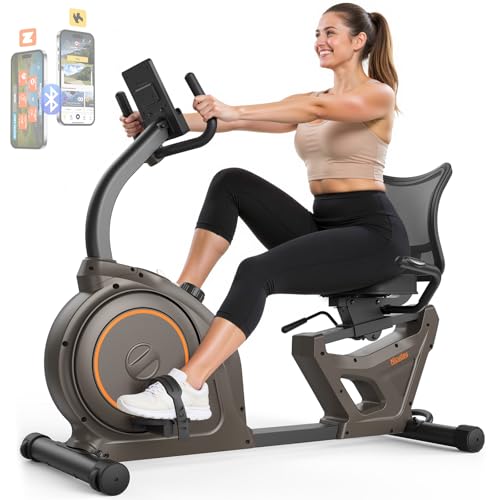
Niceday Recumbent Exercise Bike
What We Like
- 400 lb weight capacity for stability
- Ergonomic seat with mesh backrest
- 16 levels of magnetic resistance
- 90% pre-assembled for easy setup
Trade-offs
- At 84 lb, it's heavy to move around
- No built-in arm exercisers or bands
- Mechanical knob, not digital resistance control
A 400-pound weight capacity on a recumbent bike means this frame is built to stay planted, even during more intense sessions. The ergonomic high-density seat cushion and breathable mesh backrest directly target the comfort needs of anyone with back concerns, letting you pedal without that nagging lower-back pressure. With 16 levels of magnetic resistance and a 15-pound flywheel, you can start with gentle physical therapy-style motion and gradually build up to steady cardio. All while keeping noise low enough for an apartment or shared wall.
At 84 pounds, this bike is noticeably heavier than most competitors, so moving it between rooms requires the integrated transport wheels and some effort. Compared to the YOSUDA Recumbent Bike at 58.4 pounds, the Niceday offers a sturdier feel and a higher weight capacity, but it sacrifices some portability. If you plan to set it up in one spot and leave it, that solid frame is a real advantage. For those who need to tuck the bike away after each ride, the extra heft might be a factor to consider.
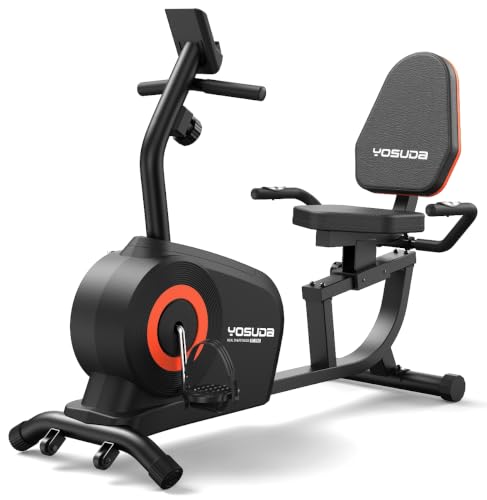
YOSUDA Recumbent Exercise Bike
What We Like
- Joint-friendly design with rehab input
- Adjustable seat fits 4'9" to 6'2"
- Quiet magnetic resistance for home use
- 350 lb weight capacity for stability
Trade-offs
- At 58.4 lb, it's not easy to move
- No included arm exercisers for upper body
- Seat slides but doesn't recline further
The 16 levels of magnetic resistance give you gentle, quiet control from rehab-level ease up to a solid challenge, so you can start with almost no strain on your lower back and build gradually. Developed with input from rehabilitation professionals, the recumbent design cradles your spine in a supported position while the sliding seat lets you dial in leg extension without overreaching. That makes this YOSUDA a natural fit for anyone recovering from back issues or looking for low-impact cardio they can do daily without flaring up old injuries.
The trade-off is that at 58.4 pounds, this bike is heavier than the VANSWE recumbent (53 lb), which matters if you need to shift it between rooms or store it against a wall. But if your priority is a stable, rehab-focused ride that lets you watch TV or read while pedaling pain-free, the YOSUDA delivers exactly that without extra frills.
Product photos
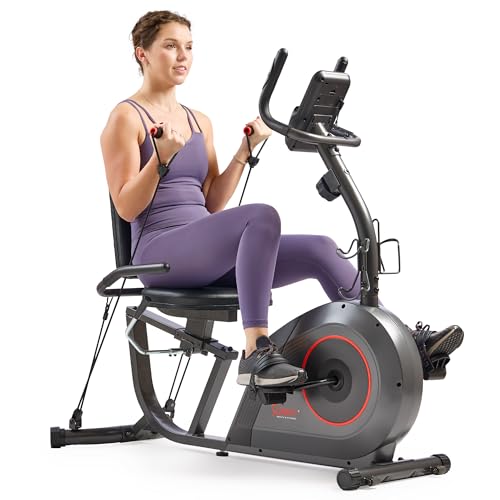
Sunny Health & Fitness Smart Recumbent Bike
What We Like
- Free SunnyFit app with 1,000+ workouts
- Magnetic belt-drive for quiet operation
- Cushioned seat and padded backrest
- Built-in resistance bands for upper body
Trade-offs
- 300 lb capacity lower than several competitors
- At 63.9 lb, it is heavier to move
- Flip-able side handle adds complexity
The free SunnyFit app with over 1,000 trainer-led workouts and 10,000 virtual scenic tours makes this recumbent bike stand out for anyone who wants guided, low-impact cardio without a monthly fee. The magnetic belt-drive keeps things whisper-quiet, and the cushioned seat with padded backrest supports a sore back through longer sessions. Resistance bands built into the frame let you add upper body work without buying extra gear, which is a nice bonus for full-body recovery days.
A 300-pound weight capacity means this bike accommodates most riders, but those over that limit will need a model with a higher rating. At 63.9 pounds, the bike is stable during workouts but requires some effort to move, though the flip-able side handle makes mounting and dismounting easier. For someone focused on app-based training and a comfortable ride, this bike offers a well-rounded package.
VANSWE Recumbent Exercise Bike

What We Like
- 380 lb reinforced steel frame
- Infinite slider seat for custom fit
- Step-through design for easy mounting
Trade-offs
- At 53 lb, lifting into a car is awkward
- 53-pound frame is heavy to lift into a vehicle
A reinforced steel frame rated for 380 pounds keeps the bike planted and wobble-free during use, which is especially important for anyone with back concerns who needs a stable platform. The infinite slider seat lets you dial in leg extension millimeter by millimeter, so you’re not forced into a preset position that could tweak your hips or lower spine. The step-through design makes mounting and dismounting safe and easy, which is a real plus for seniors or anyone in physical therapy.
A 53-pound frame feels solid on the floor but isn’t something you’ll casually move room to room without the transport wheels. Compared to the Niceday Recumbent Exercise Bike, which carries 400 pounds and weighs 84 pounds, the VANSWE is lighter and easier to reposition, but you give up a little top-end capacity. If your height falls outside 5’1″ to 6’1″, the seat rail won’t stretch far enough for a comfortable pedal stroke, so measure your inseam before buying.
Product photos
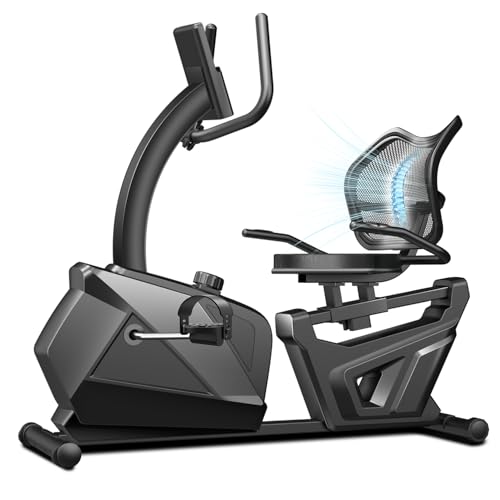
CURSOR FITNESS Recumbent Exercise Bike
What We Like
- Ultra-quiet 25dB operation
- Ergonomic spine and lumbar support
- 16 magnetic resistance levels
- Sturdy 350 lb weight capacity
Trade-offs
- At 62.8 lb, it's heavy to move
- No Bluetooth or app connectivity
A 25dB noise rating means this recumbent bike is genuinely whisper-quiet, you can pedal through a late-night workout or an early morning session without waking anyone else in the house. That quiet operation pairs beautifully with the curved, ergonomic seat back, which is designed to follow your spine’s natural curve and absorb vibration, reducing pressure on your lower back. If you want gentle, low-impact movement that won’t disturb your household or aggravate discomfort, this bike makes a strong case for itself.
The CURSOR FITNESS bike keeps things simple, no app or Bluetooth, so if you want a straightforward, quiet ride that supports your back without digital distractions, this is it. The 16 resistance levels let you ease into a workout or push harder, all at under 25dB, which means you can pedal while someone naps nearby. Other bikes like the Niceday offer app training, but that adds complexity you may not need.
Product photos
JEEKEE Recumbent Exercise Bike
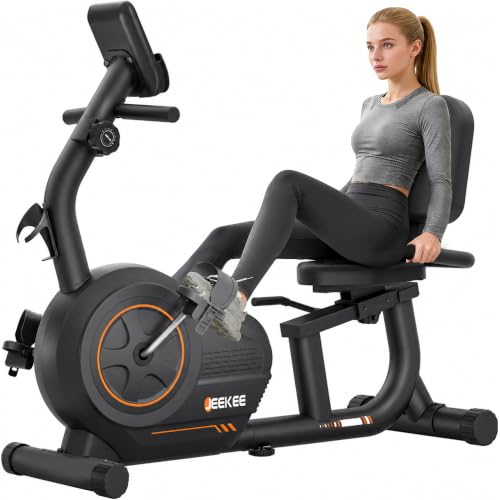
What We Like
- Extra-wide cushioned seat and backrest
- 440 lb weight capacity
- Ultra-quiet under 5 dB
- 9-position sliding seat for tall users
Trade-offs
- Only 8 resistance levels limit challenge
- No app connectivity for workout tracking or guided routines
A 440-pound weight capacity and an extra-wide cushioned seat with an ergonomic backrest make this recumbent bike a standout for anyone who needs to keep their lower back happy during cardio. That supportive seated position, combined with the low-impact pedaling motion, is exactly what a bad back craves, steady, gentle movement without jarring the spine.
Eight magnetic resistance levels top out sooner than the 16-level bikes in this guide, like the Niceday or YOSUDA. So if you want progressive overload for building leg strength, you may outgrow it faster. At 57.3 pounds, it’s lighter than several competitors, which some buyers may consider a downside for stability. Still, for quiet, comfortable, low-impact sessions that are easy on the joints, this bike delivers where it counts.
Product photos
MERACH Recumbent Exercise Bike
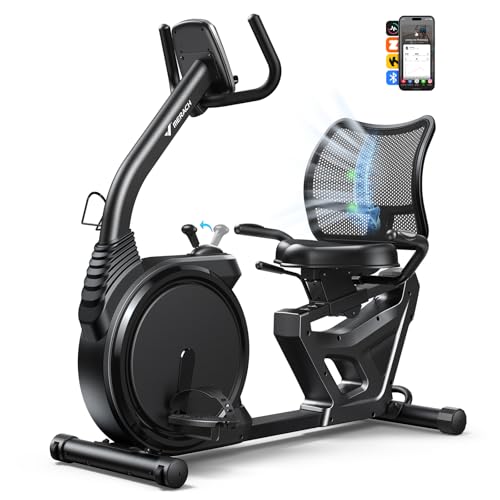
What We Like
- Thicker seat with 8-position adjustment
- Breathable mesh backrest for cool comfort
- Silent dual-belt drive system
- Heart rate handle for zone tracking
Trade-offs
- Resistance uses lever, not push-button or digital
- Only 8 resistance levels, fewer than many competitors
An 8-position adjustable seat and a thicker cushion with a breathable mesh backrest mean this bike prioritizes pressure relief where it matters most for a sensitive back. The 6.6 lb perimeter-weighted flywheel and magnetic resistance keep the ride smooth and quiet, so you can watch a show without disturbing anyone nearby. For someone who needs to dial in their seating position and wants a stable, solid frame that won’t wobble during longer sessions, this setup feels reassuringly planted at 85.5 pounds.
And at 85.5 lb, this is one of the heavier bikes in the guide, so moving it around a room requires a bit more effort. If you value seat comfort and stability over maximum resistance range, and you don’t plan to shift the bike often, this is a focused pick that gets the basics right.
Pleny Folding Exercise Bike
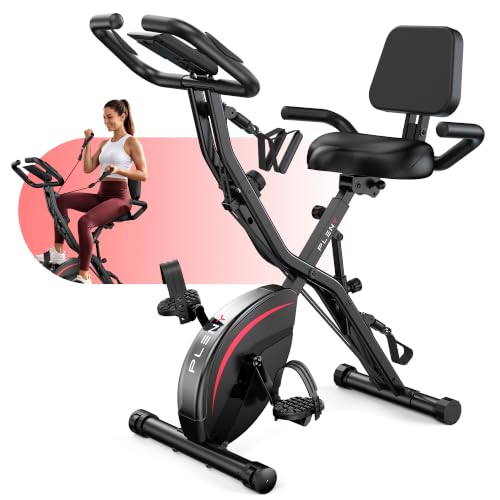
What We Like
- Folds to 20" × 20" footprint
- Cushioned backrest and padded handles
- Built-in resistance bands for full-body work
- 85% pre-assembled, 30-minute setup
Trade-offs
- At 44.8 lb, still heavy to move often
- Backrest is cushioned but not adjustable
The 6.6-pound aluminum flywheel and magnetic resistance keep this bike whisper-quiet at under 15 dB, so you can ride through a late-night session without waking anyone up. That folding X-frame design collapses to a compact 20 by 20 inches, meaning it tucks into a closet corner or under a bed when you are not using it. For anyone with a bad back who lives in a small apartment or shares tight space, that ability to disappear between workouts is a genuine relief. The cushioned backrest and padded handles add comfort for longer rides, and the included resistance bands let you sneak in some upper-body work without needing a second machine.
The trade-off comes down to stability versus portability. At 44.8 pounds, this bike is lighter than most recumbent options like the Niceday (84 pounds), which makes it easier to wheel around, but that lighter frame can feel less planted during aggressive pedaling. Still, for someone who values a foldable, space-saving design and wants a low-impact ride with back support, the Pleny delivers exactly what the name promises.
Product photos
Birdfeel Recumbent Exercise Bike
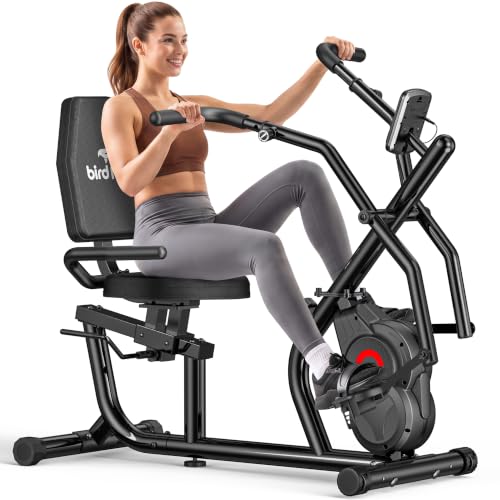
What We Like
- Synchronized arm and leg motion
- 400 lb heavy-duty steel frame
- Adjustable padded seat with backrest
- Ultra-quiet magnetic resistance
Trade-offs
- Only 8 resistance levels limit progression
- No Bluetooth or app connectivity
A 400-pound weight capacity and a synchronized arm-and-leg linkage make this recumbent bike a standout for anyone recovering from an injury or managing a sensitive back. The seated position takes pressure off your spine while the arm handles let you engage your upper body without twisting or straining. It’s a smart pick for seniors or post-rehab users who want a low-impact full-body workout from a stable, padded seat.
The 8-level magnetic resistance is less granular than the 16-level systems found on other bikes in this guide like the Niceday. That means your intensity jumps are bigger, so fine-tuning your effort mid-ride isn’t as smooth. But if your priority is rehab-friendly movement rather than progressive training, the Birdfeel’s arm-leg coordination and quiet ride make it a focused, capable tool.
Product photos
USLIM Recumbent Exercise Bike
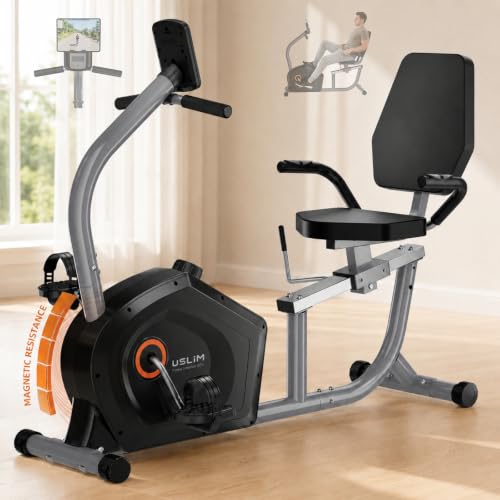
What We Like
- 400 lb capacity on commercial-grade steel frame
- Below 10 dB for quiet training
Trade-offs
- At 51 lbs, moving between rooms needs transport wheels
- No app connectivity for guided workouts
You give up Bluetooth or app features found on the VANSWE model, so if you rely on virtual coaching or tracking beyond the basic LCD, this won’t offer it. At 51 pounds, it’s lighter than the Niceday’s 84 pounds, which makes it easier to reposition using the front transport wheels, but it still needs a dedicated spot. For someone who wants a sturdy, straightforward recumbent bike with high weight capacity and no frills, this delivers solid value without the complexity.
Product photos
How We Evaluated Exercise Bikes For Bad Back
We started by examining each bike’s frame construction, seat design, and resistance system using manufacturer data and expert round-ups. A bike for a bad back needs more than adjustable handlebars, it needs a seat that cradles the lumbar spine and a frame that doesn’t wobble under load.
Three criteria mattered most: seat and backrest support, weight capacity and stability, and ease of mounting. A padded seat with a breathable mesh backrest scored higher than a flat bench-style seat. A 350 lb or higher weight capacity signaled a stiffer, more stable frame. Step-through frames and low step-over height made entry safer for stiff backs.
Research-led evaluation has limits. Our conclusions come from spec sheets, expert consensus, and the patterns in thousands of owner reviews. For a deeper look, see our guides on exercise bikes for back problems and stationary bikes for lower back pain. If you are comparing styles, our comparison of spin and upright bikes explains why recumbent bikes are safer for sensitive spines.
What To Look For In Exercise Bikes For Bad Back
The right bike reduces spinal compression and lets you pedal without bracing your core against pain. Focus on the seat, the frame, and the resistance feel.
Choose a recumbent bike with a padded, adjustable seat and a supportive backrest. Look for a weight capacity of at least 350 lb for stability. Pick magnetic resistance for smooth, joint-friendly pedaling. Ensure the step-through height is low enough for easy mounting.
Seat And Backrest Support
The seat is everything. A flat, narrow seat forces you to engage your lower back muscles to stay upright, exactly what a bad back does not need. Look for a bucket-style seat with lumbar contouring and at least three inches of padding. A mesh backrest is better than solid foam because it breathes and conforms to your spine.
Adjustability matters too. The seat should slide forward and backward so your knees stay slightly bent at the bottom of the pedal stroke. If you are over six feet, check the seat rail length. For more on seat comfort, our guide to exercise bikes with comfortable seats covers the best padded options.
Weight Capacity And Frame Stability
A bike that wobbles or flexes under your weight will make your back muscles work overtime to keep you balanced. That is why weight capacity is a direct proxy for frame stiffness. Bikes rated at 400 lb use thicker steel tubing and wider bases than 300 lb models. The trade-off is weight, a 400 lb capacity bike usually weighs over 60 lb and is harder to move.
Resistance Type And Pedal Feel
Magnetic resistance is the clear winner for back-friendly cycling. It delivers smooth, consistent tension without the friction spikes of felt-pad systems. Look for at least eight resistance levels so you can start very light and progress gradually. Belt-drive systems are quieter than chain drives and require no maintenance.
- Check the step-through height: you should be able to mount without twisting your torso.
- Confirm the pedals have straps or cages so your feet stay planted through the full rotation.
- Look for transport wheels if you need to move the bike between rooms.
- Test the handlebar position: your arms should rest naturally, not reach forward.
- Verify the backrest height covers your mid-back, not just your lumbar.
A good rule: if the seat feels like a car bucket seat, your back will thank you after twenty minutes.
Exercise Bikes For Bad Back Compared
The table below compares all ten exercise bikes for bad back across the specs that matter most: weight capacity, resistance levels, seat type, and noise output.
| Product | Weight Capacity | Resistance Levels | Seat Adjustment |
|---|---|---|---|
| Niceday Recumbent Exercise Bike | 400 lb | 16-level magnetic | 8 positions |
| YOSUDA Recumbent Exercise Bike | 350 lb | 16 magnetic | Slides forward/backward |
| Sunny Health & Fitness Smart Recumbent Bike | 300 lb | 16 levels | Inseam 27.2-35.8 in |
| VANSWE Recumbent Exercise Bike | 380 lbs | 16-Level Magnetic | Infinite Slider Rail |
| CURSOR FITNESS Recumbent Exercise Bike | 350 lbs | 16 magnetic | N/A |
| JEEKEE Recumbent Exercise Bike | 440 lb | 8 magnetic | 9 positions |
| MERACH Recumbent Exercise Bike | N/A | 8-level magnetic | 8 positions |
| Pleny Folding Exercise Bike | 330 lb | Magnetic | N/A |
| Birdfeel Recumbent Exercise Bike | 400 lbs | 8 | N/A |
| USLIM Recumbent Exercise Bike | 400 lbs | 16 magnetic | 4'9"–6'2" |
Frequently Asked Questions
What type of exercise bike is best for lower back pain?
Recumbent bikes are the best choice because they keep your spine in a neutral, supported position. The reclined seat takes pressure off the lumbar discs while the backrest absorbs shock. Upright and spin bikes force a forward lean that can aggravate existing back issues.
Can riding a recumbent bike make back pain worse?
Only if the seat is poorly adjusted or the bike flexes during pedaling. Set the seat so your knees are slightly bent at full extension, and choose a bike with a weight capacity well above your body weight to prevent frame wobble. Start with low resistance and stop if you feel sharp pain.
How long should I ride an exercise bike with a bad back?
Begin with ten to fifteen minutes at low resistance, three to four times per week. Increase duration by five minutes each week as your tolerance improves. Listen to your body, dull muscle fatigue is fine; sharp or radiating pain means stop and adjust your position.
Should I get a recumbent or upright bike for back problems?
Recumbent bikes are almost always the safer choice for back problems. The reclined position eliminates spinal compression from forward leaning. Upright bikes can work if your back pain is mild and you can maintain a straight spine, but recumbent is the default recommendation.
What features help with mounting and dismounting a bike with a bad back?
Look for a step-through frame that lets you swing your leg over without lifting it high. Low step-over height (under 12 inches) and wide, stable base bars make entry safer. Some bikes have a handlebar grip near the seat to help lower yourself down.
The Bottom Line
The Niceday Recumbent Exercise Bike is the best overall pick for anyone with a bad back. Its 400 lb weight capacity, ergonomic mesh-back seat, and 16 magnetic resistance levels give you the stability and comfort needed for steady, pain-free cardio at home. It is especially good for gradual rehab and longer sessions.
If you are recovering from a back injury, the YOSUDA Recumbent Exercise Bike offers a joint-friendly design with a wide adjustable seat range that fits riders from 4’9″ to 6’2″. For heavier riders, the VANSWE Recumbent Exercise Bike has a 380 lb reinforced steel frame and a step-through design that makes mounting easy.
The single most important buying factor is the seat. A supportive, padded seat with a backrest that reaches your mid-back will make the difference between a bike you use daily and one that collects dust. Start there, and let the frame and resistance features follow.
