
10 Best Exercise Bikes For Beginners in 2026
This post contains affiliate links. As an Amazon Associate, we earn from qualifying purchases.
For most new riders, the CURSOR FITNESS Exercise Bike is the best overall choice. It combines whisper-quiet belt drive, a 30-minute tool-free assembly, and a frame that fits riders from 4’8″ to 6’2″. If you want to follow along with live classes, the Schwinn Fitness IC4 Indoor Cycling Bike offers precise magnetic resistance, while the CURSOR FITNESS Recumbent Exercise Bike provides excellent lumbar support for a more relaxed position.
Starting a home cardio routine can feel overwhelming. Between confusing resistance types, weight limits, and assembly horror stories, it is easy to pick a bike that collects dust. The real challenge for beginners is finding a bike that is easy to set up, comfortable to ride, and quiet enough to use without disturbing the household.
This guide is built on manufacturer specifications, expert round-ups, and patterns in owner feedback. We compared ten models across the criteria that matter most to new riders: ease of assembly, noise level, fit range, and stability. No testing was performed; our recommendations are research-based.
Top 10 Exercise Bikes For Beginners in the Market
Certain content that appears on this site comes from Amazon. This content is provided "as is" and is subject to change or removal at any time.
The Best Exercise Bikes For Beginners, Reviewed
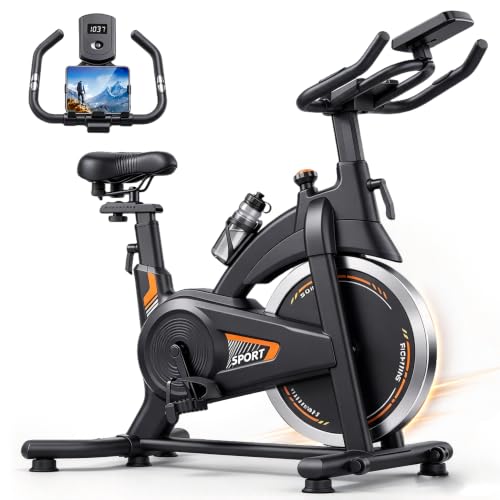
CURSOR FITNESS Exercise Bike
What We Like
- Quiet belt drive under 25 dB
- Tool-free assembly in 30 minutes
- Adjustable seat and handlebar for 4'8"–6'2" riders
- Reinforced steel frame supports 300 lb
Trade-offs
- No heart rate monitor or pulse sensors included
- Resistance is infinite but not magnetic (belt-drive only)
A noise level below 25 dB means you can pedal through a late-night movie or an early-morning Zoom call without anyone hearing a thing. That quiet belt drive, paired with a 300-pound weight capacity and a frame that assembles in under 30 minutes, makes this bike the obvious starting point for anyone who wants to build a home cardio habit without turning their living room into a gym. The adjustability covers riders from 4’8″ to 6’2″, so it fits nearly every beginner who just wants to sit down, clip in, and start moving.
The trade-off is that the bike weighs only 39.7 pounds, which is noticeably lighter than something like the Schwinn Fitness IC4 at 112 pounds. That makes it easy to move around, but if you plan to do mostly seated, steady-state rides, the lighter weight is a non-issue. For someone who wants a heavier platform for high-intensity intervals right out of the gate, the Schwinn might be worth considering. Still, for the price of a few months of a gym membership, this bike delivers a quiet, comfortable, and genuinely beginner-friendly ride.
Product photos
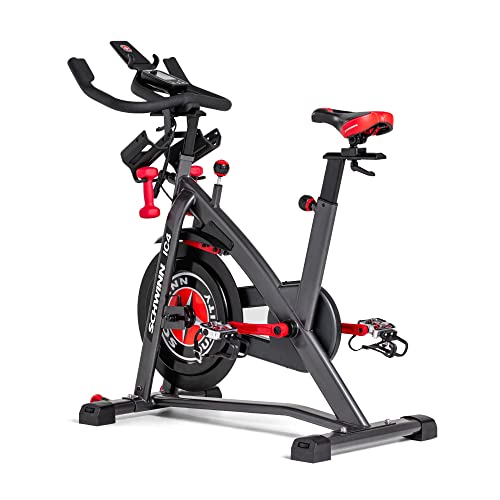
Schwinn Fitness IC4 Indoor Cycling Bike
What We Like
- 100 micro-adjustable magnetic resistance levels
- Dual-sided pedals for cleats or cages
- Full color backlit LCD console
Trade-offs
- At 112 lb, moving it is a two-person job
- Separate subscriptions needed for popular apps
With 100 micro-adjustable resistance levels, this bike lets you fine-tune your effort like a pro spin instructor adjusting a knob mid-class, no big jumps, just smooth increments that match your legs that day. The dual-sided pedals accept both SPD cleats and standard toe cages, so you don’t have to buy new shoes right away. That flexibility makes it a smart pick if you’re not sure yet whether you’ll commit to clip-in cycling shoes.
This bike stays planted during hard sprints thanks to its 112-pound heft, but you won’t be sliding it into a corner after every ride. Compared to lighter options like the CURSOR FITNESS upright bike (39.7 lb), the Schwinn demands a permanent spot. And while the app compatibility is a huge win, each popular platform. Peloton, Zwift, requires its own separate subscription on top of the bike. If you’re the type who just wants to pedal without monthly fees, a simpler magnetic bike might suit you better. But for the beginner ready to follow virtual classes and grow into structured training, this is the one that grows with you.
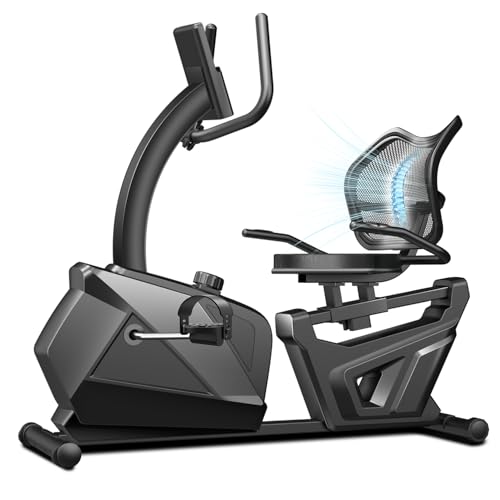
CURSOR FITNESS Recumbent Exercise Bike
What We Like
- Spine-curve lumbar support
- Ultra-quiet 25dB magnetic resistance
- 16 levels for gradual progression
Trade-offs
- No app connectivity for guided workouts
- Pedals lack toe cages or straps
The curved backrest follows your spine’s natural shape, which is a real relief if you’ve ever felt lower-back strain from upright stationary bikes. With 16 magnetic resistance levels that step from warm-up to muscle building, beginners can start at the gentlest setting and climb only when ready.
At 62.8 pounds, the bike is heavy, but the built-in transport wheels make it easy to move around. Unlike the CURSOR FITNESS upright model, this recumbent bike doesn’t include app connectivity, so you won’t get on-screen classes or structured programs. What you do get is a ride rated below 25 dB, quiet enough for shared spaces, and real-time heart rate data from the handle sensors. For a beginner who values comfort and low impact over digital extras, this bike delivers on those priorities.
Product photos
MERACH Exercise Bike

What We Like
- Adjustable 2-way handles and 4-way seat
- App syncs with Zwift and Apple Health
- Under 25dB magnetic resistance
Trade-offs
- At 62 lbs, it's heavy to move frequently
- Resistance is adjusted manually
At 62 pounds, this bike is heavy enough to stay put during intense intervals, and the transport wheels let you roll it aside when needed. Compared to the CURSOR FITNESS upright model at 39.7 pounds, the MERACH requires a bit more effort to reposition, but that weight contributes to the solid feel. The 0-100% micro-adjustment resistance covers everything from gentle warm-ups to high-intensity climbs, and the dumbbell rack lets you add upper-body work mid-ride.
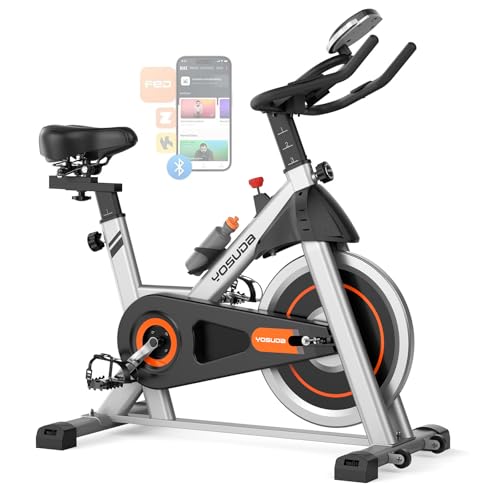
YOSUDA Exercise Bike
What We Like
- 25 lb flywheel for smooth momentum
- Heavy-duty steel frame rated 300 lb
- Belt drive keeps rides quiet
- Adjustable handlebars and seat
Trade-offs
- Friction resistance needs pad replacement over time
- At 59.5 lb, moving it takes effort
A 25-pound flywheel and heavy-duty steel frame give this bike the planted, solid feel that beginners need to build confidence without wobbling. The belt drive keeps things whisper-quiet, so early-morning rides won’t wake anyone up. With a 300-pound weight limit and adjustments for riders from 4’8″ to 6’0″, it’s built to accommodate a wide range of body types and fitness levels right out of the box.
A friction resistance system keeps things simple and effective, but the brake pad is a wear item that will eventually need replacement, unlike a purely magnetic system. At 59.5 pounds, the bike is heavy enough that you’ll want to set it up in a permanent spot rather than moving it between workouts. For someone who wants a stable, no-surprises bike that feels like it belongs in a spin class, this one delivers.
BARWING Stationary Exercise Bike

What We Like
- Folds to 1.8 sq. ft for storage
- 350 lb weight capacity
- Under 20 dB near-silent operation
- 5-in-1 with arm/leg resistance bands
Trade-offs
- At 40 lb, not ultra-light to move daily
- Basic console lacks app connectivity
- No heart rate monitor included
A folded footprint of just 1.8 square feet means this bike tucks into a closet corner or under a desk when you are done, a real win if your living room doubles as a gym. The 350-pound weight capacity and adjustable seat that fits riders from 4’11” to 6’6″ make it welcoming for beginners of all shapes, and the 16-level magnetic resistance keeps things quiet enough for apartment mornings.
The console tracks time, speed, distance, calories, and odometer, but there is no Bluetooth or app connectivity for structured classes, unlike the CURSOR FITNESS upright bike which pairs with an exclusive app. At 40 pounds with transport wheels, it rolls easily from room to room, though it is not the lightest foldable option. If your priority is a space-saving, quiet bike that handles a high weight capacity and lets you pedal at your own pace, this is a straightforward choice.
Product photos
MERACH Recumbent Exercise Bike
What We Like
- Thicker seat with breathable mesh backrest
- 8-position adjustable seat for inseam fit
- Silent dual-belt drive system
- Heart rate handle for zone tracking
Trade-offs
- At 85.5 lb, it's heavy to move
- Only 8 resistance levels limit progression
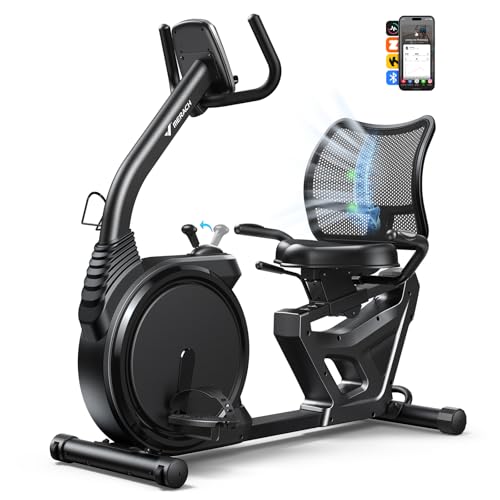
The MERACH Recumbent Exercise Bike’s 8-position adjustable seat and thicker, breathable mesh backrest make it the obvious choice for anyone who wants to sit back and ride without pressure points or a sweaty back. The 85.5-pound frame keeps the bike stable during use. Beginners who value comfort over speed will appreciate the silent dual-belt drive system, which operates quietly in shared spaces. The included iPad holder lets you stream shows during your ride.
The 85.5-pound weight of this recumbent bike makes it a stationary fixture once you find a spot for it, so plan accordingly. It offers 8 resistance levels, which is fewer than the 16 levels on the CURSOR FITNESS Recumbent Exercise Bike. For a recumbent bike that prioritizes comfort and quiet operation, this one delivers.
CHAOKE Exercise Bike

What We Like
- App connectivity for virtual training
- Whisper-quiet magnetic resistance
- Stable triangular and H-shaped frame
- Adjustable seat fits 4.7-5.9 ft riders
Trade-offs
- At 48 lb, it's heavy to move around
- Seat height range excludes taller riders
A 300-pound weight capacity and a heavier flywheel support intense workouts, and the stable triangular and H-shaped frame keeps the bike steady during hard efforts. The magnetic resistance is whisper-quiet, so it won’t disturb others nearby. Pairing with the Kinomap app adds virtual training, racing, and challenges to keep workouts engaging. It’s a practical choice for someone who wants app-based workouts without a high price, while still getting stability and comfort.
The seat height adjustment tops out at 5.9 feet, so taller riders will feel cramped. At 48 pounds, the bike is heavy to move, but the solid build contributes to stability during hard efforts. If you’re under six feet and want app connectivity, this bike delivers quiet operation, stability, and adjustability for most riders.
Sunny Health & Fitness Smart Recumbent Bike
What We Like
- Integrated 20 lb resistance bands for upper body
- Wide cushioned seat with padded backrest
- Easy on/off flip-able side handle
- Quiet magnetic belt-drive mechanism
Trade-offs
- At 63.9 lb, it's heavy to move around
- 300 lb weight limit excludes heavier users
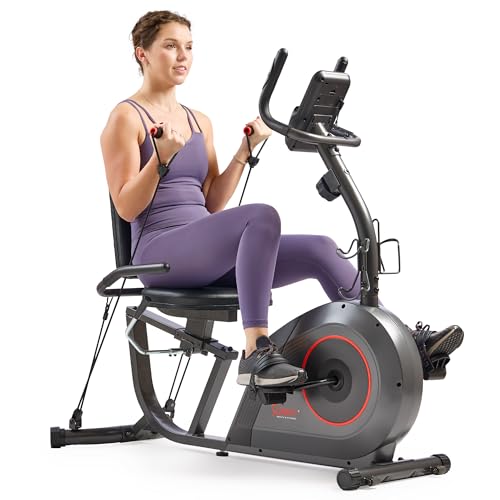
A recumbent bike that lets you work your arms and legs at the same time is rare at this level. The Sunny Health & Fitness Smart Recumbent Bike comes with two 20 lb resistance bands attached through a pulley system, so you can pull, press, and row while your legs pedal. That full-body motion makes it a smart pick for beginners who want more calorie burn without adding a separate machine. The 16 levels of magnetic resistance keep things quiet and smooth, and the cushioned seat with a padded backrest helps you stay comfortable as you build endurance.
Size and weight are the main considerations here. At 63.9 lb, this bike is heavier than the CURSOR Fitness Recumbent Exercise Bike (62.8 lb), and its 46.1-inch length means you’ll need a dedicated spot. It’s not something you’ll want to tuck into a closet after each ride. But if you have the floor space and value a low-impact workout that also challenges your shoulders and back, this recumbent bike delivers a complete session without the joint stress of upright models.
Product photos
NordicTrack T Series 9 Exercise Bike

What We Like
- 16 digital resistance levels for gradual progress
- Dual-sided pedals with SPD and toe clips
- Front-mounted transport wheels for easy moving
- iFIT membership with auto-adjusting resistance
Trade-offs
- At 94.3 pounds, it's heavy to reposition without wheels
- iFIT membership needed for smart features and app sync
- No included tablet or screen, requires your own device
The NordicTrack T Series 9 gives you 16 digital resistance levels, which means you can dial in exactly the right tension for recovery or building cardio endurance. That range of adjustment is a real gift for beginners, because it lets you start light and gradually increase the challenge without ever feeling like you’ve hit a wall. The dual-sided pedals with SPD clips and toe cages mean you can wear cycling shoes or just sneakers, so there’s no pressure to buy extra gear right away. And the front-mounted transport wheels make it possible to roll this 94.3-pound bike out of the way when you need the living room back.
The trade-off here is that the bike’s smart features, like auto-adjusting resistance and syncing with Strava or Apple Health, require an iFIT membership. If you’re someone who just wants to hop on and pedal without a subscription, you can still use the manual resistance controls and the basic LCD display. But compared to the lighter CURSOR FITNESS Exercise Bike at 39.7 pounds, the NordicTrack is noticeably heavier and less portable, so it’s better suited for a dedicated workout corner than for frequent room-to-room moves. For a beginner who values smooth, progressive resistance and doesn’t mind a bit of weight for stability, this bike offers a solid foundation.
Product photos
How We Evaluated Exercise Bikes For Beginners
We started by reviewing manufacturer documentation and spec sheets for every bike on our list. Flywheel weight, frame material, resistance type, and weight capacity were verified against published data. We then cross-referenced these specs with expert recommendations from fitness publications and physical therapists who specialize in beginner exercise equipment.
Three criteria carried the most weight. Ease of assembly came first because a frustrating build can kill motivation before the first ride. We looked for bikes with pre-assembled frames, clear instructions, and assembly times under one hour. Noise level was our second priority, as most beginners ride in shared living spaces. Belt-drive and magnetic resistance models scored higher than chain-driven or friction-pad bikes. Fit range was the third critical factor, with preference given to bikes that adjust for riders between 4’8″ and 6’2″.
A research-based evaluation cannot replace actual experience. We did not ride these bikes or measure noise output in a lab. Our conclusions draw from what other owners consistently report and what the technical specifications reveal. For the best experience, we recommend pairing your choice with a solid guide to learn proper form and setup.
What To Look For In Exercise Bikes For Beginners
The right bike for a beginner balances simplicity, comfort, and quiet operation. Focus on these three areas before anything else.
Look for a belt-drive or magnetic resistance bike that assembles in under an hour, fits your height, and stays quiet enough for TV or conversation at a normal volume.
Resistance Type and Noise Level
The resistance system determines how quiet the bike is and how smooth the ride feels. Belt-drive systems are nearly silent and require no maintenance, making them ideal for apartment dwellers. Magnetic resistance takes this a step further by using magnets to create frictionless tension, which is also very quiet. Friction-pad resistance, found on some budget bikes, creates a slight rubbing sound and the pads wear out over time. Chain-driven bikes are the loudest and least beginner-friendly.
Adjustability and Fit
A bike that does not fit will not get used. Check the seat height range and handlebar adjustment range against your own measurements. The best beginner bikes offer tool-free adjustments so you can tweak the fit between rides. Recumbent bikes trade some adjustability for a more relaxed seating position with back support, which is excellent for seniors or anyone with lower back concerns.
Weight Capacity and Frame Stability
A wobbly bike is unsafe and unpleasant. Look for a steel frame with a weight capacity well above your body weight. Heavier bikes tend to be more stable during standing pedaling, while lighter bikes are easier to reposition. Beginners who plan to ride gently can get away with a lighter frame, but anyone who wants to stand and sprint should prioritize stability over portability.
- Measure your ceiling height if you plan to ride upright
- Check the pedal type: cages are beginner-friendly, SPD cleats require special shoes
- Look for transport wheels if you need to store the bike after each ride
- Confirm the warranty length for peace of mind
A bike that feels solid under you at the store will feel solid six months later.
Exercise Bikes For Beginners Compared
The table below compares all ten beginner bikes side by side, highlighting each model’s resistance type, weight capacity, and standout feature so you can spot the right fit at a glance.
| Product | Weight Capacity | Resistance Levels | Dimensions |
|---|---|---|---|
| CURSOR FITNESS Exercise Bike | 300 lb | N/A | L 31.5 inches, W 21.2 inches, H 43.3 inches |
| Schwinn Fitness IC4 Indoor Cycling Bike | N/A | 100 micro-adjustable | L 48.7 inches, W 21.2 inches, H 51.8 inches |
| CURSOR FITNESS Recumbent Exercise Bike | 350 lbs | 16 magnetic | L 47.1 inches, W 26.2 inches, H 43.5 inches |
| MERACH Exercise Bike | 300 lbs | N/A | L 42.6 inches, W 19.3 inches, H 48.6 inches |
| YOSUDA Exercise Bike | 300 lbs | N/A | L 29.9 inches, W 7.5 inches, H 38.6 inches |
| BARWING Stationary Exercise Bike | 350 lb | 16 magnetic | L 22.0 inches, W 32.0 inches, H 48.0 inches |
| MERACH Recumbent Exercise Bike | N/A | 8 | L 48.0 inches, W 23.6 inches, H 46.5 inches |
| CHAOKE Exercise Bike | 300 lb | N/A | L 5.9 inches, W 5.9 inches, H 5.9 inches |
| Sunny Health & Fitness Smart Recumbent Bike | 300 lb | 16-level magnetic | L 46.1 inches, W 25.6 inches, H 51.8 inches |
| NordicTrack T Series 9 Exercise Bike | N/A | 16 digital levels | L 46.8 inches, W 22.6 inches, H 49.4 inches |
Frequently Asked Questions
Which type of exercise bike is best for a complete beginner?
An upright belt-drive bike is the most straightforward choice. It mimics a traditional bicycle position, requires no special shoes, and the belt drive keeps the ride quiet and maintenance-free. Recumbent bikes are a good alternative for those with back pain or balance concerns.
How much resistance do I need as a beginner?
You do not need many levels to start. Eight to sixteen resistance levels are plenty for the first few months. The key is having a smooth adjustment that lets you increase tension gradually without big jumps. Magnetic resistance offers the smoothest progression.
Should I get a bike with app connectivity?
App connectivity is nice but not essential. Apps like Zwift and Peloton can make workouts more engaging, but many beginners never use them. Start with a basic bike and add a tablet holder if you decide you want app-based classes later.
Is a recumbent bike better for lower back pain?
Yes, recumbent bikes place the rider in a reclined position with a backrest, which reduces strain on the lower spine. The seated posture keeps the back supported and eliminates the forward lean required on upright bikes. The CURSOR FITNESS Recumbent Exercise Bike is a strong choice for this need.
How much space do I need for a stationary bike?
Most upright bikes require a footprint of about 4 feet by 2 feet. Recumbent bikes need more depth, usually around 5 feet by 2 feet. Foldable models like the BARWING Stationary Exercise Bike shrink to under 2 square feet when stored. Always measure your space before buying.
The Bottom Line
The CURSOR FITNESS Exercise Bike earns our Best Overall recommendation because it removes the biggest barriers for new riders: complicated assembly, loud operation, and a narrow fit range. It is the bike we would point a friend to who wants a simple, quiet, adjustable ride without subscription fees or confusing features.
If your budget is tighter or you know you want app-based workouts, the MERACH Exercise Bike offers strong value with Zwift and Apple Health sync. For riders who prefer a reclined position with lumbar support, the CURSOR FITNESS Recumbent Exercise Bike delivers excellent comfort at a fair price.
The single most important factor for a beginner is fit. A bike that adjusts to your height, feels stable, and stays quiet will become part of your routine. Everything else, apps, resistance levels, fancy consoles, is secondary to just getting on the bike and pedaling.
